June 30, 2026
Senegal GDP growth driven by oil has emerged as a defining characteristic of West Africa's evolving economic landscape, where hydrocarbon production creates transformative growth opportunities while exposing structural vulnerabilities that demand strategic management. Understanding how petroleum revenues reshape national economies requires examining both immediate performance gains and long-term sustainability challenges that arise when resource extraction becomes a primary economic driver.
How Resource Wealth Transforms Economic Growth Trajectories
West Africa's economic landscape demonstrates how hydrocarbon discoveries create rapid structural shifts in national growth patterns. The region's transformation mirrors broader global experiences where oil price rally factors influence both production decisions and revenue streams, fundamentally altering development trajectories.
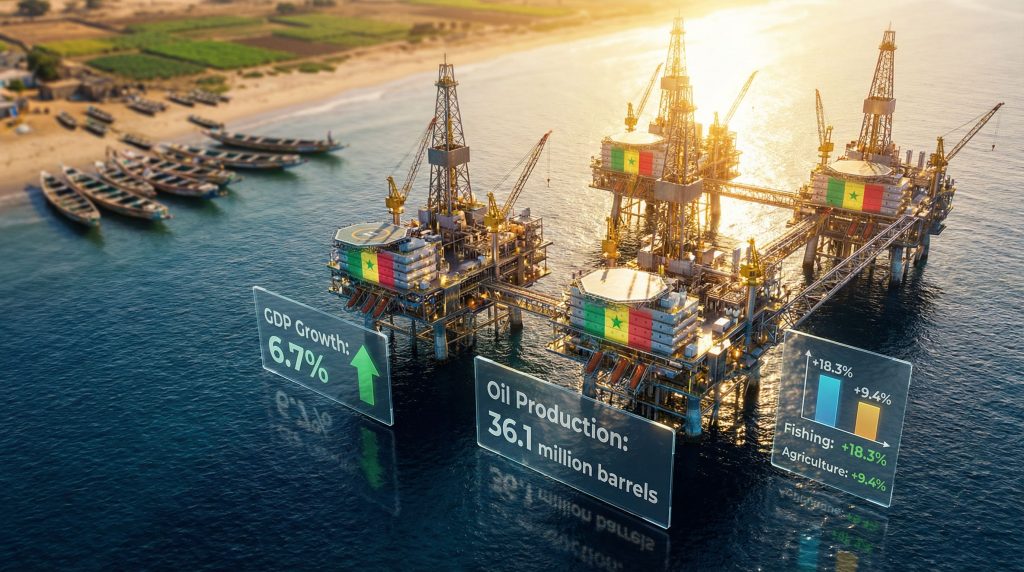
The nation's economic performance in 2025 showcased remarkable expansion, with real GDP growth reaching 6.7% compared to 6.5% the previous year. This acceleration stemmed primarily from oil production that exceeded initial projections, producing 36.1 million barrels against a target of 30.53 million barrels.
Key Economic Indicators (2024-2025):
| Metric | 2024 Performance | 2025 Performance | Change |
|---|---|---|---|
| Real GDP Growth | 6.5% | 6.7% | +0.2pp |
| Oil Production | Target: 30.53M barrels | Actual: 36.1M barrels | +18.2% |
| Inflation Rate | 0.8% | 1.4% | +0.6pp |
| Primary Sector Growth | Moderate | 8.6% | Significant acceleration |
However, this resource-driven expansion masked concerning trends in non-resource sectors. Economic activity outside agriculture and hydrocarbons expanded by only 1.6% in 2025, continuing a downward trajectory observed since 2017. This pattern reflects structural challenges common across resource-rich economies where extractive industries overshadow traditional productive sectors.
The inflation environment remained relatively stable at 1.4% in 2025, up from 0.8% in 2024, staying within Central Bank of West African States target ranges. This price stability occurred despite global commodity pressures, suggesting effective monetary policy coordination within the broader WAEMU framework.
When big ASX news breaks, our subscribers know first
Sectoral Dynamics and Revenue Distribution Patterns
The primary sector experienced remarkable transformation during 2025, contributing 3.6 percentage points to overall growth in the fourth quarter. This expansion extended beyond petroleum extraction to encompass broader agricultural and marine sectors, creating multiplier effects throughout the rural economy.
Sectoral Growth Performance Breakdown:
- Fishing sector: +18.3% annual growth
- Agricultural production: +9.4% expansion
- Livestock operations: +4.8% increase
- Oil and gas extraction: +339.1% surge
The fishing industry's exceptional 18.3% growth rate suggests infrastructure improvements and increased market access potentially linked to petroleum sector investments. Similarly, agricultural expansion of 9.4% indicates improved rural conditions, possibly reflecting increased government spending capacity from hydrocarbon revenues.
Export Revenue Transformation
Oil production fundamentally restructured Senegal's external balance, providing substantial foreign exchange earnings that strengthened the current account position. Furthermore, hydrocarbon exports reduced import dependency pressures while creating fiscal space for government operations and development spending.
The primary sector's year-over-year value-added growth of 8.6% reflected this broader transformation, with livestock contributing 4.8% growth alongside the dramatic agricultural recovery. These gains demonstrate how resource revenues can stimulate traditional sectors through increased domestic demand and improved infrastructure investment.
Structural Vulnerabilities in Traditional Economic Sectors
Despite impressive headline growth figures, persistent weaknesses in non-resource sectors revealed classic symptoms of resource curse economics. The 1.6% growth rate for sectors outside agriculture and hydrocarbons highlighted Dutch Disease dynamics where resource revenues potentially crowd out manufacturing and services competitiveness.
Indicators of Structural Weakness:
- Services sector deceleration across multiple subsectors
- Manufacturing competitiveness decline relative to regional peers
- Reduced net taxes on products indicating fiscal dependency on oil revenues
- Limited productivity gains in traditional export industries
This sectoral imbalance creates vulnerabilities when commodity prices fluctuate or production levels change. The capital-intensive nature of hydrocarbon extraction generates limited direct employment opportunities while traditional labour-intensive sectors struggle to maintain growth momentum.
Real Exchange Rate and Competitiveness Effects
Within the WAEMU monetary framework, oil revenues can appreciate the real exchange rate through increased domestic spending and inflation pressures, potentially making manufactured exports less competitive in regional and international markets. This mechanism requires careful monitoring to prevent erosion of non-resource tradable sectors.
The decline in growth outside primary sectors since 2017 suggests these competitive pressures may already be affecting industrial performance. However, definitive attribution requires detailed productivity analysis across specific manufacturing subsectors.
Long-Term Sustainability and Growth Projections
Economic forecasts indicate significant growth deceleration as oil production's initial impact normalises. Projections suggest GDP expansion will slow to 2.5% in 2026, representing a dramatic adjustment from the 6.7% recorded in 2025.
Growth Trajectory Analysis:
- 2025: 6.7% (hydrocarbon-driven peak performance)
- 2026: 2.5% (projected normalisation period)
- 2027+: Dependent on diversification strategy implementation
This projected deceleration highlights the temporary nature of initial resource production boosts and emphasises the critical importance of economic diversification strategies. The magnitude of the anticipated slowdown underscores how dependent current Senegal GDP growth driven by oil has become on hydrocarbon sector performance.
Fiscal Sustainability Challenges
Despite strong growth performance, debt sustainability concerns have emerged as a significant policy challenge. International financial institutions have highlighted several risk factors that could affect future economic stability.
Critical Fiscal Risks:
- Rising borrowing costs in international markets
- Credit rating downgrade pressures from major agencies
- Limited fiscal space for counter-cyclical policies
- Debt sustainability questions over medium-term horizon
The World Bank assessment noted deteriorating macro-fiscal prospects despite robust economic expansion, indicating that growth alone cannot resolve underlying fiscal imbalances without comprehensive revenue management reforms.
Regional Integration and Comparative Experiences
Senegal's hydrocarbon development occurs within the broader WAEMU monetary union, creating both opportunities and constraints for economic management. The shared currency provides stability during commodity booms but limits independent monetary policy responses to sector-specific shocks.
What Can Regional Partnerships Achieve?
Regional integration within ECOWAS creates potential synergies for hydrocarbon revenue utilisation that extend beyond traditional export markets. Furthermore, these partnerships offer opportunities to address common challenges facing resource-dependent economies.
- Regional energy security enhancement through coordinated infrastructure
- Cross-border transport and logistics development
- Shared technical expertise and regulatory frameworks
- Coordinated environmental protection standards
Other West African oil producers offer valuable comparative lessons. Nigeria's experience demonstrates diversification challenges despite decades of production, while Ghana's institutional innovations in revenue management provide alternative governance models worth studying.
Revenue Management and Institutional Frameworks
Effective hydrocarbon wealth management requires sophisticated institutional mechanisms to address volatility and ensure long-term development benefits. Consequently, successful resource-rich economies have developed comprehensive frameworks that protect against common pitfalls.
Institutional Capacity Priorities:
- Transparent budget processes linking oil revenues to development outcomes
- Independent fiscal oversight institutions with technical capabilities
- Long-term development planning frameworks extending beyond political cycles
- Anti-corruption mechanisms protecting revenue flows
Revenue stabilisation mechanisms become critical when oil prices fluctuate or production levels change. Moreover, sovereign wealth fund structures can help smooth government spending while building assets for future generations when hydrocarbon resources are depleted.
Investment Strategy Considerations
Strategic allocation of resource revenues requires balancing immediate development needs with long-term economic transformation goals. In addition, policymakers must navigate complex trade-offs between current consumption and future productive capacity.
- Infrastructure investment in transport, energy, and telecommunications
- Human capital development through education and technical training
- Private sector support for manufacturing and services diversification
- Regional integration projects enhancing trade and investment flows
The next major ASX story will hit our subscribers first
Economic Diversification Pathways
Successful transition away from resource dependency requires coordinated strategies across multiple sectors. Priority areas for investment include manufacturing value chains linked to agriculture, digital services development, and regional logistics infrastructure.
Manufacturing and Value Addition
Agricultural processing represents a natural diversification pathway given Senegal's strong primary sector performance. For instance, value-added food processing, textile production, and agro-industrial development can leverage existing comparative advantages while creating employment opportunities.
Diversification Strategy Components:
- Manufacturing clusters linked to agricultural output
- Digital services and technology innovation hubs
- Regional transport and logistics infrastructure
- Tourism and cultural heritage development
Technical skills development becomes essential for supporting these diversification efforts, requiring coordination between educational institutions and private sector employers. However, ensuring workforce capabilities match emerging industry requirements presents ongoing challenges that demand sustained policy attention.
Global Context and External Pressures
The broader international environment significantly influences resource-dependent economies through various channels. Global taxes and royalties considerations affect mining and petroleum sectors, while inflation and debt pressures in developed economies impact commodity demand patterns.
Furthermore, energy transition pressures worldwide create uncertainties about long-term hydrocarbon demand, emphasising the importance of diversification strategies. These global dynamics require careful consideration when planning investment strategies and economic policy frameworks.
Regional developments also matter significantly. Saudi exploration licenses and similar initiatives elsewhere affect global supply dynamics and price formation processes, creating ripple effects that influence smaller producers' revenue streams.
Future Outlook and Strategic Priorities
The experience of resource-rich economies globally demonstrates that diversification success depends heavily on institutional quality, policy consistency, and private sector confidence in long-term economic management. Consequently, early implementation of diversification strategies during resource boom periods typically produces better outcomes than reactive measures during price downturns.
According to recent analysis by Energy Capital Power, export performance has strengthened considerably, with total exports rising 155% amid increased gold and hydrocarbon production. This improvement provides additional fiscal resources for diversification investments.
However, Senegal GDP growth driven by oil faces critical junctures ahead. The projected growth slowdown to 2.5% in 2026 emphasises the urgency of comprehensive economic transformation strategies. Without sustained efforts to develop alternative productive sectors, the economy risks experiencing the volatility and structural imbalances common among resource-dependent nations.
Successful navigation of this transition requires coordinated policy implementation across multiple fronts: institutional capacity building, private sector development, human capital enhancement, and regional integration initiatives. The window of opportunity provided by current hydrocarbon revenues demands immediate action to establish foundations for sustained, diversified economic growth beyond the petroleum sector's initial expansion phase.
Looking to Capitalise on Resource-Driven Market Opportunities?
Discovery Alert's proprietary Discovery IQ model delivers real-time alerts on significant ASX mineral discoveries, instantly empowering subscribers to identify actionable opportunities ahead of the broader market. Begin your 14-day free trial today and secure your market-leading advantage as global resource dynamics continue reshaping investment landscapes.