
July 15, 2026
Understanding Sensor-Based Ore Sorting Fundamentals
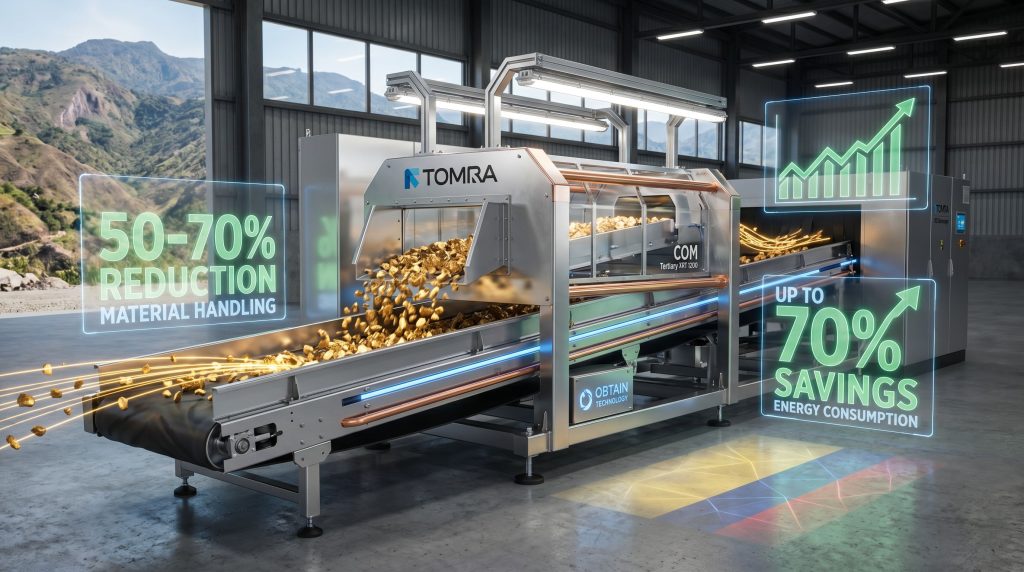
Advanced sensor-based separation technologies are fundamentally reshaping how mining operations approach ore processing efficiency. The integration of AI transforming mining with X-ray transmission systems represents a paradigm shift toward selective material handling, where waste rejection occurs at the earliest possible stage rather than after energy-intensive crushing and grinding cycles. This technological convergence addresses one of the industry's most persistent challenges: the economic burden of processing vast quantities of barren rock alongside valuable ore materials.
X-ray transmission technology operates through sophisticated atomic density differentiation principles that enable real-time mineral identification. When particulate material passes through an X-ray beam, materials with higher atomic numbers absorb significantly more radiation than lighter elements. Gold, with its atomic number of 79 and density of 19.3 g/cm³, creates distinctly measurable absorption signatures compared to typical host rocks like quartz (2.65 g/cm³) or feldspar (2.6 g/cm³).
Modern XRT systems process particles ranging from 6mm to 150mm, achieving throughput rates of 100-300 tonnes per hour depending on system configuration and material characteristics. The technology measures both effective atomic number and density for each individual particle, enabling millisecond-level classification decisions that separate ore-bearing material from waste rock.
Contemporary AI-driven classification systems have transformed traditional threshold-based sorting into adaptive learning platforms. Machine learning algorithms trained on mineral spectral signatures can increase correct particle classification by 5-15% compared to conventional detection methods. These systems process individual particles at speeds exceeding 100 particles per second, with system response times under 50 milliseconds for eject signal activation.
The integration of sensor fusion approaches combines XRT data with additional detection methods including density and conductivity measurements. This multi-sensor strategy enhances accuracy particularly for complex mineralization where visual inspection or single-sensor detection might prove insufficient.
When big ASX news breaks, our subscribers know first
Colombian Gold Mining's Pre-Concentration Potential
Colombia's position as Latin America's fifth-largest gold producer, generating approximately 40-50 tonnes annually, reflects the country's significant mineral endowment concentrated primarily within the Antioquia Department. This region accounts for roughly 60% of national production, with geological characteristics that present both opportunities and challenges for modern processing technologies.
TOMRA's ore-sorting for gold in Colombia represents a significant advancement in regional mining efficiency. Furthermore, this mining innovation trends development demonstrates how international technology partnerships can transform local operations through advanced material separation systems.
Geological Framework of Antioquia Region Deposits
The Antioquia region's narrow-vein underground operations typically encounter ore grades between 2-8 g/tonne gold, with waste-to-ore ratios ranging from 3:1 to 10:1. These hydrothermal vein-hosted deposits occur within metamorphic host rocks including gneiss, schist, and granodiorite, creating substantial density contrasts exploitable by XRT technology.
Primary host rock densities averaging 2.6-2.8 g/cm³ contrast sharply with associated sulfide minerals such as pyrite (5.0 g/cm³) and ore-bearing quartz veins. Typical vein widths span 0.5-3.0 meters, requiring selective mining approaches that generate significant waste material requiring downstream processing or rejection.
The region's mineralization style involves quartz-sericite-pyrite alteration assemblages that create measurable spectral signatures detectable through XRT systems. This geological framework provides optimal conditions for early waste rejection technologies to demonstrate economic advantages.
Economic Drivers Supporting Early Waste Rejection
Energy consumption represents the most compelling economic argument for pre-concentration implementation. Crushing and grinding operations typically consume 40-60% of total mineral processing energy, with electricity costs in Colombia ranging from $0.08-0.12 USD per kWh depending on regional suppliers and consumption volumes.
Pre-concentration systems capable of rejecting 30-70% of material volume before grinding can generate energy savings of $0.50-2.00 per tonne processed. For operations processing 100,000 tonnes annually, this translates to potential energy cost reductions of $50,000-200,000 per year, excluding additional benefits from reduced equipment wear and maintenance requirements.
Equipment wear reduction presents substantial economic opportunities, particularly for crusher and mill liner replacement costs ranging from $50,000-150,000 per major replacement cycle. Reducing material throughput by 30-50% through waste rejection extends equipment operating life by an estimated 15-30%, translating to deferred capital expenditure and reduced maintenance scheduling complexity.
Third-party ore processing arrangements common throughout Colombia create additional economic incentives for efficiency improvements. Colombian mining regulations permit toll-milling arrangements where processing costs are shared based on material volume, making waste rejection before processing economically advantageous for both ore suppliers and processing facility operators.
TOMRA's XRT Technology Specifications and Performance Analysis
Contemporary XRT sorting systems integrate sophisticated belt-based material handling with advanced detection algorithms to achieve industrial-scale ore sorting capabilities. Standard configurations feature belt widths spanning 600mm-1200mm with processing capacities of 50-200 tonnes per hour, variable based on particle size distribution and material characteristics.
The success of TOMRA's ore-sorting for gold in Colombia reflects broader data-driven operations adoption across Latin America's mining sector. Meanwhile, TOMRA Mining's sorting technology has established itself as an industry leader through continuous innovation in sensor-based material separation systems.
Core System Components and Operational Parameters
Optimal particle size processing occurs within the 20-150mm range, where X-ray attenuation measurements provide reliable material differentiation while maintaining efficient pneumatic separation. Belt speeds typically operate between 1.5-3.0 meters per second, with maximum occupancy rates of 30-50% of available belt surface area to ensure proper particle spacing and detection accuracy.
Processing efficiency varies significantly with particle size, with mid-range materials (40-100mm) demonstrating optimal cost-effectiveness. Particles below 20mm risk excessive dust generation and reduced XRT detection reliability, while materials exceeding 150mm may contain heterogeneous compositions that complicate accurate classification.
Detection accuracy rates under controlled conditions typically achieve 88-96% correct classification, dependent on material density contrast, particle size consistency, moisture content below 2%, and mineral composition complexity. False positive rates (material incorrectly rejected as waste) range from 2-10%, while false negative rates (waste incorrectly processed as ore) typically remain below 5%.
AI Enhancement and Real-Time Processing Capabilities
Modern XRT systems incorporate machine learning algorithms that adapt classification parameters based on detected misclassification patterns and changing ore characteristics. These adaptive systems acquire spectral data at rates of 50-200 scans per second depending on belt speed and system configuration.
Real-time processing capabilities enable individual particle classification decisions within 100 milliseconds, supporting continuous operation at industrial throughput rates. The integration of predictive maintenance protocols utilises sensor data to optimise system uptime and prevent unplanned maintenance events that could disrupt processing schedules.
Data acquisition systems capture comprehensive spectral information for each processed particle, enabling post-processing analysis to refine classification algorithms and optimise rejection parameters based on recovered material quality and processing plant feedback.
Pre-Concentration Economics Compared to Traditional Processing Routes
The economic comparison between traditional processing routes and XRT-enhanced pre-concentration requires comprehensive analysis of capital expenditure, operational costs, and productivity improvements across the entire processing flowsheet.
| Processing Stage | Traditional Route | XRT Pre-Concentration | Efficiency Improvement |
|---|---|---|---|
| Material Handling | 100% to crushing/grinding | 30-50% to processing | 50-70% volume reduction |
| Energy Consumption | 100% full processing load | 30-40% reduced load | Up to 70% energy savings |
| Equipment Maintenance | Maximum wear exposure | Reduced tonnage wear | 15-30% life extension |
| Labor Requirements | Standard operations | Enhanced monitoring | Variable skill requirements |
Capital Investment Analysis and ROI Framework
XRT system acquisition costs typically range from $2-5 million USD for installed systems, with additional installation and commissioning expenses of $500,000-1,500,000 depending on site-specific integration requirements. These capital investments must be evaluated against operational savings generated through reduced energy consumption, extended equipment life, and improved processing efficiency.
For mid-tier gold operations processing 100,000-300,000 tonnes annually, payback periods generally range from 3-7 years based on waste-to-ore ratios and local operating cost structures. Operations with higher waste-to-ore ratios and elevated energy costs demonstrate shorter payback periods and improved project economics.
The ROI calculation methodology incorporates energy savings from reduced grinding requirements, deferred equipment replacement costs, and potential throughput increases through processing plant debottlenecking. Additionally, sensor-based mining advancement technologies contribute to improved resource recovery and reduced environmental impact.
Operational Cost Structure Transformation
Pre-concentration implementation fundamentally alters operational cost structures by redirecting processing expenses toward higher-grade material while eliminating costs associated with waste material handling. Crushing energy requirements decrease from typical 3-8 kWh per tonne for all material to selective processing of ore-bearing particles only.
Grinding energy consumption, representing 10-30 kWh per tonne of processed material, shows proportional reductions based on waste rejection efficiency. With average electricity costs of $0.10 per kWh, operations achieving 40-60% waste rejection can realise total energy savings of $0.40-2.80 per tonne of original material processed.
Labour cost implications include increased operator skill requirements for XRT system operation and maintenance, potentially increasing per-tonne labour costs by 50-100% while reducing absolute labour requirements through decreased material handling volumes downstream.
Testing Protocols and Performance Validation
Comprehensive testing protocols ensure XRT technology performance validation before full-scale implementation. Representative sample preparation requires materials spanning the expected particle size distribution with sufficient quantity to demonstrate statistical significance across varying operating conditions.
Laboratory Validation Methodology
Testing procedures typically process 500-2,000 kg of representative material through controlled conditions to establish baseline performance parameters. Sample preparation involves crushing and screening to achieve target particle size distributions while maintaining representative grade distributions and mineralogical characteristics.
Laboratory testing quantifies several critical performance metrics:
- Recovery efficiency: Percentage of valuable minerals correctly identified and retained
- Rejection accuracy: Percentage of waste material successfully removed
- Misplacement rates: Quantification of false positive and false negative classifications
- Grade enhancement: Improvement in feed grade to downstream processing
Moisture content testing evaluates system performance under varying humidity conditions, with optimal operation typically requiring material moisture below 2% to prevent particle adhesion and maintain accurate pneumatic separation.
Field Trial Implementation and Stress Testing
Field trials extend laboratory validation to industrial operating conditions including variable feed rates, contamination exposure, and extended operating periods. High belt occupancy stress testing evaluates system performance when processing volumes approach maximum design capacity.
Variable feed grade scenarios test system adaptability to changing ore characteristics common in underground mining operations where vein intercepts and waste dilution create fluctuating material compositions. Performance consistency across these conditions demonstrates system robustness for commercial deployment.
Contamination and moisture impact assessments quantify system performance degradation under adverse conditions including clay contamination, elevated moisture content, and surface oxidation that could affect particle detection accuracy.
Strategic Mine Planning Integration
Early waste rejection technology integration requires fundamental reassessment of mine planning strategies, particularly regarding cut-off grade optimisation and selective mining sequence development. XRT pre-concentration enables processing of lower-grade material that would otherwise be considered waste, potentially extending mine life and improving resource utilisation.
Cut-Off Grade Optimisation Strategies
Traditional cut-off grade calculations balance extraction costs against metal value, typically resulting in conservative grade thresholds that maximise short-term profitability. Pre-concentration technology enables dynamic grade control by reducing processing costs for lower-grade material through early waste rejection.
Cut-off grade recalculation incorporating XRT economics may justify processing material 0.5-1.5 g/tonne below traditional thresholds, particularly when waste-to-ore ratios exceed 5:1. This grade flexibility enables selective mining of ore shoots and vein peripheries previously considered uneconomic.
Resource classification improvements result from enhanced grade control data and reduced mining dilution through selective extraction techniques. The ability to process variable-grade material economically supports more flexible mine sequencing and improved resource recovery.
Infrastructure and Logistics Optimisation
Reduced material volumes flowing through processing circuits enable infrastructure optimisation including smaller conveying systems, reduced stockpile requirements, and compressed processing plant footprints. Underground operations benefit from reduced haulage requirements when waste rejection occurs at the mine level rather than after surface transport.
Tailings facility capacity optimisation represents a significant long-term benefit, as 30-70% waste rejection proportionally reduces tailings generation and associated environmental management requirements. This reduction extends tailings facility life and reduces closure cost provisions.
Processing plant throughput maximisation occurs when existing grinding capacity processes higher-grade feed material rather than diluted ore-waste mixtures. This debottlenecking effect can increase plant capacity by 20-50% without additional grinding equipment investment.
The next major ASX story will hit our subscribers first
Regional Adoption Potential and Technology Transfer Considerations
Latin America's diverse gold mining landscape presents substantial opportunities for XRT technology deployment across multiple geological settings and operational scales. Beyond Colombia, similar narrow-vein deposits throughout Peru, Brazil, and Ecuador demonstrate comparable characteristics favourable for pre-concentration implementation.
The success of TOMRA's ore-sorting for gold in Colombia demonstrates significant potential for regional technology adoption. However, successful implementation requires sustainable mining transformation strategies that balance technological advancement with environmental stewardship and community development objectives.
Suitable Deposit Types and Regional Applications
Orogenic gold deposits common throughout the Andean chain typically exhibit similar waste-to-ore ratios and geological characteristics to Colombian operations. Metamorphic host rocks provide density contrasts exploitable by XRT technology, while narrow-vein geometries generate waste material suitable for early rejection.
Artisanal and small-scale mining operations represent emerging opportunities for scaled XRT implementations. Smaller processing volumes may justify mobile or modular sorting systems that provide economic benefits without requiring substantial capital investment in permanent infrastructure.
Environmental compliance advantages include reduced mercury usage in artisanal operations through improved grade control and reduced processing volumes. XRT implementation supports formalisation initiatives by improving operational efficiency and reducing environmental impact per ounce of gold recovered.
Technology Transfer and Local Capacity Development
Successful technology deployment requires comprehensive local technical support infrastructure including spare parts inventory, maintenance capabilities, and operator training programmes. Regional service centres must provide rapid response capability to minimise unplanned downtime that could compromise operational economics.
Operator training and certification requirements include both technical operation of XRT systems and interpretation of performance data for optimisation. Local technical institutes may require curriculum development to support growing demand for qualified personnel across regional implementations.
Maintenance and spare parts logistics present particular challenges for remote mining operations common throughout Latin America. Supply chain optimisation requires regional distribution centres and local technical expertise to support preventive maintenance programmes essential for sustained performance.
Comparative Technology Analysis
XRT technology competes with alternative pre-concentration methods including dense media separation, optical sorting, and gravity-based techniques. Each technology demonstrates specific advantages and limitations dependent on ore characteristics, operational requirements, and economic constraints.
Dense Media Separation Comparison
Dense Media Separation (DMS) utilises heavy liquid media to separate materials based on density differences, typically effective for particles larger than 1mm with substantial density contrasts. DMS systems require continuous media recovery and recycling, increasing operational complexity compared to XRT's non-contact sorting approach.
Water consumption represents a significant DMS limitation, particularly for operations in water-scarce regions. XRT systems operate without process water requirements, eliminating water treatment and recycling infrastructure while reducing environmental impact and operational risk.
Maintenance complexity differs substantially between technologies, with DMS requiring heavy media handling systems, pumps, and separation equipment subject to abrasive wear. XRT systems feature fewer moving components and reduced maintenance requirements, supporting improved uptime and operational reliability.
Optical Sorting Technology Limitations
Optical sorting technologies rely on surface reflection and colour differentiation, making them susceptible to surface contamination, oxidation, and lighting condition variations. Particle surface preparation requirements may necessitate washing systems that increase operational complexity and water consumption.
Processing speed limitations affect optical sorting throughput capacity, particularly for fine particle size fractions requiring enhanced detection resolution. XRT systems demonstrate superior performance for subsurface mineral detection where surface characteristics may not accurately represent internal composition.
Environmental condition sensitivity includes lighting requirements and dust control measures necessary for consistent optical detection accuracy. XRT technology operates independently of ambient lighting conditions and demonstrates improved performance in dusty industrial environments.
Implementation Roadmap for Gold Mining Operations
Successful XRT system implementation requires systematic planning encompassing ore characterisation, infrastructure assessment, economic modelling, and operational integration. This structured approach minimises implementation risk while maximising technology benefits across diverse operational environments.
According to TOMRA processing reports, effective pre-concentration strategies can significantly enhance gold recovery efficiency while reducing operational costs across various geological settings and operational scales.
Pre-Installation Assessment Requirements
Ore characterisation studies must quantify particle size distribution, mineral composition, density contrast, and moisture content across expected operating ranges. This analysis determines system sizing requirements and performance expectations under site-specific conditions.
Infrastructure compatibility evaluation includes electrical supply capacity, compressed air availability, and structural support requirements for system installation. Existing conveying systems may require modification to ensure proper material presentation and sorting system integration.
Economic feasibility modelling incorporates site-specific operating costs, energy pricing, and waste-to-ore ratios to quantify expected return on investment. Sensitivity analysis evaluates project economics under varying commodity prices and operating scenarios to assess project risk.
Operational Integration Strategy
Staff training programmes must address both technical operation and maintenance requirements while developing local expertise for long-term technology support. Change management initiatives ensure smooth transition from traditional processing approaches to integrated pre-concentration workflows.
Quality control protocol establishment defines sampling procedures, performance monitoring methods, and corrective action procedures for maintaining optimal system performance. These protocols provide operational guidance and performance benchmarking capabilities.
Performance monitoring systems capture real-time operating data for trend analysis, optimisation identification, and predictive maintenance scheduling. Integrated monitoring enables proactive management and continuous improvement of system performance.
Performance Metrics and Success Indicators
Quantitative performance evaluation requires comprehensive metrics spanning technical efficiency, economic impact, and operational reliability. These indicators provide objective assessment of technology effectiveness and support optimisation initiatives.
The implementation of TOMRA's ore-sorting for gold in Colombia has established new benchmarks for regional mining efficiency. In addition, these technological advances demonstrate how innovative separation systems can transform traditional processing approaches across diverse operational environments.
Technical Performance Quantification
Recovery efficiency measurement tracks the percentage of valuable minerals correctly identified and retained across varying feed grade conditions. Target recovery rates typically exceed 90% for proper system calibration and operation.
Rejection accuracy quantifies waste material removal effectiveness, with target rejection rates of 30-70% depending on ore characteristics and waste-to-ore ratios. Consistent rejection accuracy demonstrates system reliability and calibration maintenance.
Uptime and availability statistics measure operational reliability, with target availability exceeding 90% for commercial viability. Maintenance scheduling optimisation supports maximum system availability while controlling maintenance costs.
Economic Impact Assessment
Cost per tonne processed reduction quantifies direct economic benefits from energy savings, reduced equipment wear, and improved processing efficiency. Target cost reductions range from $0.50-3.00 per tonne depending on local operating conditions.
Energy intensity improvements measure reduced power consumption per tonne of final product, supporting both cost reduction and sustainability objectives. Target energy reductions exceed 30% for operations with favourable waste-to-ore ratios.
Overall Equipment Effectiveness (OEE) gains incorporate availability, performance rate, and quality factors to provide comprehensive operational efficiency metrics. Target OEE improvements of 15-25% demonstrate successful technology integration and optimisation.
Investment Disclaimer: This analysis contains forward-looking statements regarding technology performance, economic projections, and market conditions that involve significant risks and uncertainties. Actual results may differ materially from projected outcomes due to changing commodity prices, operational challenges, technological limitations, or regulatory modifications. Potential investors should conduct independent due diligence and consult qualified professionals before making investment decisions based on pre-concentration technology implementations.
Looking to Capitalise on Advanced Mining Technology Opportunities?
Discovery Alert's proprietary Discovery IQ model instantly identifies ASX companies implementing cutting-edge mining technologies like sensor-based ore sorting, delivering real-time alerts when these innovations create significant market opportunities. Explore how major technological breakthroughs have generated substantial returns for early investors, then begin your 14-day free trial today to position yourself ahead of the market as mining companies adopt transformative processing technologies.