May 14, 2026
How Sensor-Driven Partnerships Transform Modern Mining Operations
The mining industry stands at the intersection of traditional resource extraction and computational intelligence, where partnerships between chemical technology companies and artificial intelligence specialists are creating unprecedented operational capabilities. Unlike conventional equipment supply relationships, these collaborations integrate real-time data processing, autonomous decision-making systems, and predictive analytics to fundamentally reshape how mining operations manage complex metallurgical processes through data-driven operations.
Modern mining partnerships extend far beyond the traditional model of equipment procurement and maintenance contracts. The evolution toward integrated technology ecosystems represents a strategic shift where chemical technology providers expand their capabilities into artificial intelligence domains, creating comprehensive solutions that address multiple operational challenges simultaneously.
The partnership between Draslovka and Avathon exemplifies this transformation, combining chemical expertise with computational knowledge graph technology to deliver AI-powered solutions for mining operations. This collaboration demonstrates how industry leaders are moving from reactive maintenance approaches to predictive operational management systems that optimise performance across multiple variables.
Key characteristics distinguishing next-generation mining alliances include:
• Real-time data integration capabilities across multiple operational streams
• Cross-platform compatibility requirements enabling seamless system communication
• Autonomous decision-making frameworks that reduce human intervention needs
• Predictive maintenance protocols that prevent equipment failures before they occur
When big ASX news breaks, our subscribers know first
The Architecture Behind Computational Knowledge Graphs in Mining
Computational knowledge graphs represent a fundamental advancement in how mining operations process and utilise operational data. These systems ingest information from multiple sources simultaneously, creating interconnected data networks that enable pattern recognition across geological, chemical, and mechanical systems.
The technical architecture underlying these systems involves continuous data collection from on-stream mineralogical sensors, slurry composition analysers, and metallurgical process monitors. This information feeds into machine learning algorithms that identify optimisation opportunities and automatically adjust operational parameters to maintain peak performance.
CKG systems transform mining operations through several key mechanisms:
• Pattern Recognition Capabilities: Advanced algorithms analyse historical and real-time data to identify trends that human operators might miss
• Decision Tree Optimisation: Complex mining environments require multi-variable decision-making that traditional systems cannot handle efficiently
• Autonomous Process Adjustment: Systems can modify reagent dosing, equipment settings, and operational parameters without manual intervention
| Feature | Traditional Systems | CKG-Powered Systems |
|---|---|---|
| Data Processing Speed | Batch/Periodic Updates | Real-time Continuous Analysis |
| Decision Making Authority | Human-dependent Approval | AI-autonomous Implementation |
| Cross-system Integration | Limited Connectivity | Comprehensive Network Integration |
| Predictive Capability | Reactive Problem-solving | Proactive Issue Prevention |
| Operational Efficiency | Manual Optimisation | Automated Performance Enhancement |
Essential Technical Components of Integrated Mining AI Systems
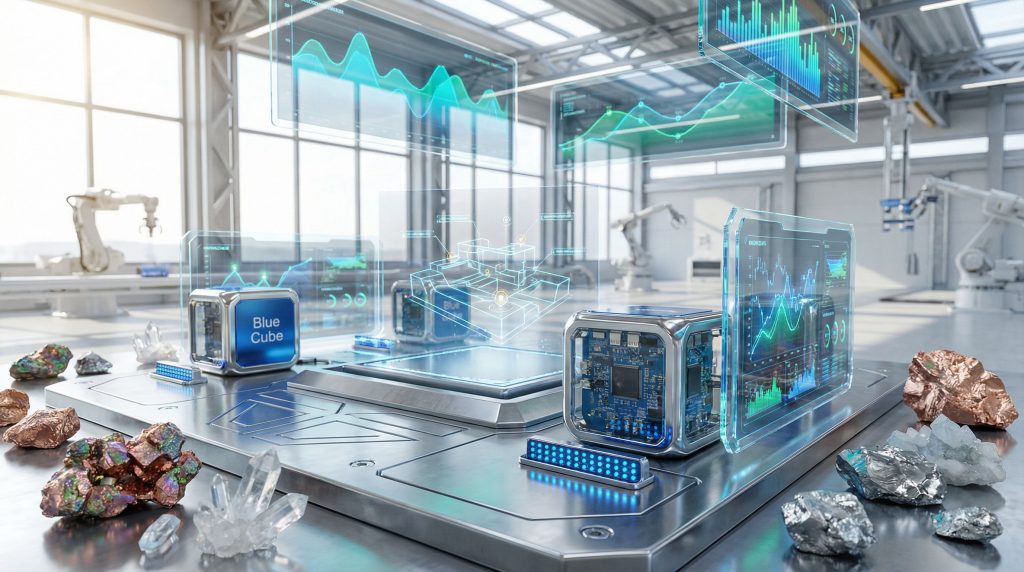
The foundation of AI-powered mining partnerships rests on sophisticated sensor technology integration that enables comprehensive monitoring of metallurgical processes. Blue Cube mineralogical monitoring systems exemplify this approach, providing real-time analysis of ore composition and processing efficiency.
These sensor networks collect data across multiple streams, including flotation circuits, grinding operations, and concentrate handling systems. Quality assurance mechanisms ensure sensor accuracy through continuous calibration protocols and redundant measurement systems that verify data integrity.
MetOptima AI processing frameworks represent the computational core of these systems:
• Reagent Consumption Optimisation: Algorithms analyse ore characteristics and adjust chemical dosing to minimise waste while maximising recovery rates
• Energy Efficiency Enhancement: Systems monitor power consumption patterns and optimise equipment operation to reduce energy costs
• Process Parameter Optimisation: Continuous adjustment of grinding, flotation, and separation parameters based on real-time ore characteristics
Furthermore, autonomous operations management extends beyond individual process optimisation to encompass entire mining workflows. These systems coordinate exploration planning, logistics management, asset maintenance scheduling, and supply chain optimisation through integrated decision-making platforms.
Health and safety monitoring protocols integrate seamlessly with operational systems:
• Environmental compliance tracking ensures adherence to regulatory requirements
• Worker safety monitoring through wearable devices and area sensors
• Emergency response coordination that automatically implements safety protocols when hazardous conditions are detected
Addressing Critical Mining Industry Operational Challenges
Process variability represents one of the most significant cost drivers in modern mining operations, where inconsistent ore grades, changing geological conditions, and equipment performance fluctuations impact overall productivity. AI-powered efficiency partnerships address these challenges through stabilisation mechanisms that maintain consistent throughput regardless of input variations.
Operational efficiency improvements focus on three primary areas:
- Throughput Stabilisation: Advanced control systems maintain consistent processing rates despite ore grade variations and equipment performance changes
- Recovery Rate Optimisation: Machine learning algorithms identify optimal processing parameters for different ore types, maximising valuable mineral extraction
- Equipment Performance Enhancement: Predictive maintenance systems prevent unplanned downtime while optimising maintenance scheduling
Cost management solutions target the largest expense categories in mining operations, including reagent consumption, energy usage, and labour costs. For instance, reagent optimisation algorithms can reduce chemical consumption by 10-15% while maintaining or improving recovery rates, representing significant annual savings for large-scale operations.
Energy optimisation strategies include:
• Power consumption monitoring across all major equipment systems
• Load balancing optimisation to minimise peak demand charges
• Equipment scheduling coordination to reduce overall energy requirements
Consequently, risk mitigation frameworks integrate safety and operational considerations into unified monitoring systems. Equipment failure prediction models analyse vibration patterns, temperature variations, and performance metrics to identify potential failures weeks before they occur, enabling proactive maintenance that prevents costly unplanned shutdowns. This partnership between Draslovka and Avathon demonstrates how Draslovka and Avathon partner to deliver AI-powered solutions that transform traditional mining operations.
Strategic Implementation Approaches for AI Mining Integration
Successful implementation of AI-powered mining partnerships requires systematic approaches that minimise operational disruption while maximising technology adoption benefits. Phase-based deployment strategies enable mining companies to evaluate performance and adjust implementation plans based on real-world results.
Phase 1 implementation focuses on infrastructure assessment and preparation:
• Network Infrastructure Evaluation: Ensuring adequate bandwidth and connectivity for real-time data transmission
• System Compatibility Analysis: Verifying integration capabilities with existing operational systems
• Staff Training Programmes: Developing competency in new technologies and operational procedures
Phase 2 involves pilot programme deployment in controlled environments:
• Limited-scope testing environments that allow performance evaluation without full operational risk
• Performance benchmarking methodologies that establish baseline metrics for comparison
• Feedback loop establishment between operational teams and technology providers
Phase 3 encompasses full-scale integration across all relevant operational systems. This stage requires cross-platform data synchronisation, workflow optimisation, and continuous improvement protocols that ensure long-term success.
Critical success factors include:
• Change management protocols that help operational teams adapt to new technologies
• Performance monitoring systems that track key operational metrics
• Continuous training programmes that maintain staff competency as systems evolve
Evolution of Go-to-Market Strategies in Mining Technology
The commercialisation approach for AI-powered mining partnerships differs significantly from traditional equipment sales models. Joint commercialisation strategies enable technology providers to offer comprehensive solutions that address multiple operational challenges through integrated platforms.
Cross-selling opportunities emerge naturally from integrated technology platforms:
• Chemical optimisation solutions can be bundled with AI analytics platforms
• Sensor systems integrate with data processing and decision-making software
• Maintenance and support services encompass both hardware and software components
Market penetration tactics focus on demonstration of measurable operational improvements rather than theoretical benefits. Case study development and sharing enable potential customers to understand specific performance improvements and return on investment calculations. Moreover, the Canadian mining industry recognises these partnerships as crucial for sector-wide automation advancement.
Industry engagement strategies include:
• Technical paper publication in peer-reviewed mining journals
• Conference presentations at major industry events like MINExpo and PDAC
• Customer reference programmes that showcase real-world implementation results
Customer support integration represents a critical component of successful partnerships, where combined technical support frameworks provide seamless assistance across all system components. Training programme coordination ensures that mining operations personnel receive comprehensive education on both chemical and AI system management.
The next major ASX story will hit our subscribers first
Performance Measurement Frameworks for Mining AI Partnerships
Effective evaluation of AI partnership success requires comprehensive metrics that capture both operational improvements and financial benefits. Recovery rate improvements represent the most direct measure of metallurgical optimisation, with successful implementations typically achieving 2-5% increases in valuable mineral extraction.
Operational performance indicators include:
• Process variability reduction: Measured through standard deviation changes in key parameters
• Throughput consistency: Evaluated through coefficient of variation in processing rates
• Equipment uptime optimisation: Tracked through mean time between failures (MTBF) improvements
| Performance Metric | Traditional Operations | AI-Optimised Operations | Typical Improvement |
|---|---|---|---|
| Recovery Rate Consistency | ±3-5% variation | ±1-2% variation | 60-70% reduction in variability |
| Reagent Consumption Efficiency | Manual optimisation | AI-driven optimisation | 10-15% reduction in consumption |
| Equipment Uptime | Reactive maintenance | Predictive maintenance | 15-25% increase in availability |
| Energy Efficiency | Fixed operational patterns | Dynamic optimisation | 8-12% reduction in energy costs |
Financial impact measurements focus on quantifiable cost reductions and revenue improvements:
• Operating cost reduction percentages across major expense categories
• Reagent consumption efficiency gains measured in dollars per ton processed
• Energy usage optimisation results calculated through utility cost comparisons
• Return on investment calculations that include both capital and operational considerations
Safety and environmental metrics provide additional validation of partnership success, with incident reduction statistics demonstrating improved operational control and risk management. Environmental compliance improvements often result from more precise process control and reduced waste generation.
Long-Term Industry Transformation Implications
The progression toward fully autonomous mining operations represents the ultimate evolution of AI-powered partnerships, where human operators transition from direct process control to supervisory management of automated systems. This transformation requires significant changes in workforce skills and operational procedures, particularly as industry evolution trends continue to reshape mining operations.
Autonomous operations evolution follows predictable stages:
- Sensor Integration and Monitoring: Real-time data collection and basic automated responses
- Process Optimisation and Control: AI-driven parameter adjustment and process optimisation
- Predictive Maintenance and Planning: Automated scheduling and maintenance coordination
- Fully Autonomous Operations: Minimal human intervention in routine operations
Human role transformation in AI-assisted environments emphasises higher-level decision-making, strategic planning, and exception management. Mining professionals increasingly focus on system oversight, optimisation strategy development, and complex problem-solving that requires human judgment and experience.
Skills development requirements for mining professionals include:
• Data analysis and interpretation capabilities for understanding AI-generated insights
• System integration knowledge for managing complex technological ecosystems
• Strategic decision-making skills for optimising AI system parameters and objectives
Industry competitive dynamics are shifting toward technology adoption as a primary source of competitive advantage. Mining companies that successfully implement AI-powered partnerships gain significant operational advantages that compound over time through continuous optimisation and learning. These developments align with broader AI revolution insights reshaping industrial operations globally.
Global supply chain optimisation benefits extend beyond individual mining operations to encompass entire mineral processing and distribution networks. Real-time supply chain visibility improvements enable better demand forecasting, inventory optimisation, and logistics efficiency across the entire value chain.
What are the key preparation strategies for AI integration?
Mining companies preparing for AI partnership integration must address technical infrastructure requirements, organisational readiness, and strategic alignment considerations. Network capacity expansion often represents the most significant technical hurdle, where real-time data transmission requirements exceed existing bandwidth capabilities.
Technical infrastructure development priorities include:
• Network capacity expansion to support continuous data transmission from multiple sensor systems
• Data storage and processing capabilities for managing large volumes of operational data
• Cybersecurity framework enhancement to protect operational systems and sensitive data
How should organisations evaluate technology partners?
Organisational readiness assessment evaluates change management preparation, staff training requirements, and performance measurement system updates needed to support AI integration. Change management preparation becomes particularly important when transitioning from manual to automated operational procedures.
Strategic partnership evaluation criteria help mining companies select optimal technology partners:
• Technology compatibility assessment ensures seamless integration with existing systems
• Vendor stability and support capabilities provide confidence in long-term partnership viability
• Long-term roadmap alignment ensures technology evolution matches operational objectives
Performance measurement system updates must accommodate new metrics and evaluation frameworks:
• Real-time performance monitoring capabilities
• Integrated financial and operational reporting systems
• Continuous improvement tracking and analysis tools
The preparation phase also requires development of internal expertise in AI system management, data analysis, and technology integration. Additionally, mining companies often establish dedicated teams responsible for AI system oversight and optimisation, ensuring maximum benefit from partnership investments whilst advancing sustainable mining transformation initiatives.
The partnership between Draslovka and Avathon represents a significant advancement in mining technology integration, demonstrating how chemical expertise combined with AI capabilities creates comprehensive solutions for modern mining challenges. This collaboration exemplifies the future direction of mining partnerships, where technology integration enables unprecedented levels of operational control and optimisation.
Disclaimer: This analysis is based on publicly available information and industry trends. Specific performance improvements and financial benefits may vary significantly based on individual operational circumstances, ore characteristics, and implementation approaches. Mining companies should conduct thorough due diligence and pilot testing before making major technology investments.
Looking to Stay Ahead of Mining Technology Investments?
Discovery Alert's proprietary Discovery IQ model delivers instant notifications on significant ASX mineral discoveries, helping investors identify companies at the forefront of mining innovation before the broader market catches on. Experience the advantage of real-time alerts by starting your 14-day free trial at Discovery Alert and position yourself to capitalise on the next breakthrough in mining technology partnerships.