
August 8, 2026
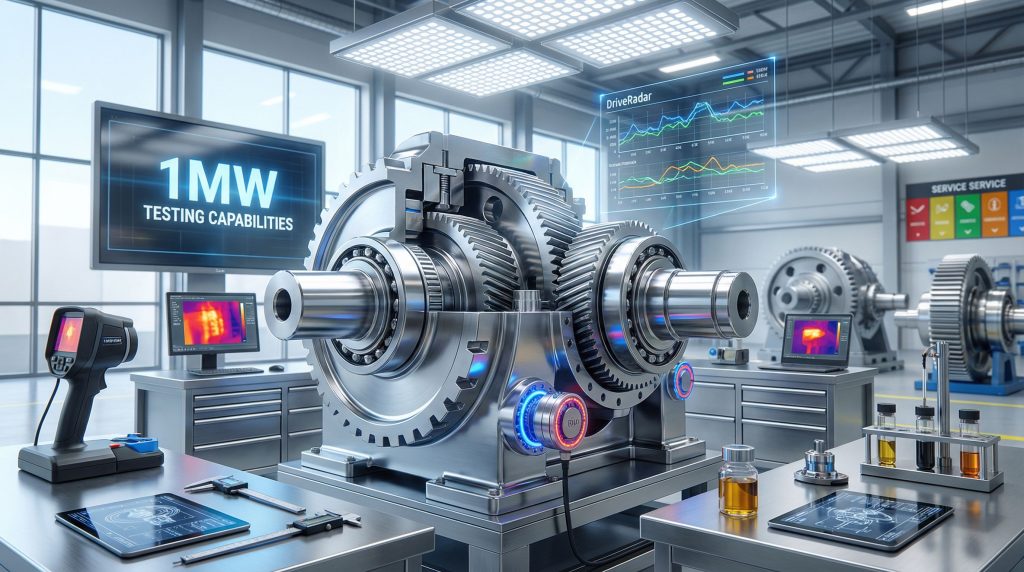
Industrial gearbox systems operate as the mechanical backbone of heavy industry, where precision engineering meets relentless operational demands. These complex assemblies must withstand extreme torque loads, environmental stresses, and continuous operation cycles that would overwhelm conventional mechanical systems. Understanding the fundamental engineering principles behind these critical components reveals why SEW-EURODRIVE industrial gear service approaches have become essential for maintaining operational reliability in sectors where equipment failure carries substantial financial consequences. Furthermore, the mining industry evolution continues to drive demand for increasingly sophisticated maintenance strategies.
Understanding Industrial Gear Service Fundamentals
Critical Components of Modern Gear Systems
Modern industrial drive assemblies extend far beyond basic motor-gearbox configurations. Complete systems integrate multiple mechanical and electronic components working in synchronized operation:
- Industrial gearboxes serve as primary torque multiplication and speed reduction units
- Brake systems provide emergency stopping and positioning control capabilities
- Fluid couplings manage torque transmission while absorbing shock loads
- Variable frequency drives enable precise speed control and energy optimization
- Servo motors deliver high-precision positioning for automated applications
- Mounting hardware including swing bases and torque arms distribute loads effectively
This integrated approach reflects the evolution from simple mechanical drives toward sophisticated mechatronic systems capable of adaptive performance optimization. Moreover, data-driven mining operations increasingly rely on these advanced systems for optimal performance.
Why Standard Maintenance Approaches Fall Short
Traditional maintenance methodologies often prove inadequate for modern industrial gear applications due to the complex interdependencies between components. Standard approaches typically focus on individual component health rather than system-wide performance optimization.
Key limitations include:
- Component isolation where individual parts are serviced without considering system interactions
- Time-based intervals that ignore actual operational stress variations
- Limited diagnostic scope missing early failure indicators in bearing assemblies
- Reactive responses addressing failures after operational impact occurs
Advanced gear service methodologies address these gaps through comprehensive system analysis and predictive maintenance protocols that consider the entire drivetrain as an integrated mechanical ecosystem.
The True Cost of Gear System Downtime
Industrial gear system failures generate costs extending far beyond replacement part expenses. In mining operations, a single conveyor drive failure can halt material transport across entire production chains, resulting in:
| Cost Category | Typical Impact Range |
|---|---|
| Lost production revenue | $50,000 – $500,000 per day |
| Emergency repair mobilization | $10,000 – $75,000 |
| Expedited parts procurement | 200% – 400% of standard costs |
| Secondary equipment damage | $25,000 – $250,000 |
These figures demonstrate why proactive gear service strategies deliver significant return on investment through downtime prevention and extended equipment lifecycles.
When big ASX news breaks, our subscribers know first
How Does Load Testing Transform Gear Unit Reliability?
Beyond Spin Testing: Real-World Performance Validation
Conventional spin testing operates gearboxes under no-load conditions, providing limited insight into performance under actual operational stresses. This approach fails to detect critical failure modes that only manifest under full torque loading conditions.
Load testing addresses these diagnostic limitations by subjecting gear assemblies to rated operational loads, revealing:
- Bearing preload adequacy under radial and thrust load combinations
- Tooth mesh load distribution across gear face widths
- Thermal performance under sustained operational temperatures
- Seal integrity when subjected to operational pressure differentials
- Oil circulation effectiveness during high-temperature operation cycles
This comprehensive validation approach ensures that refurbished or newly assembled units meet performance specifications before field deployment.
Load Testing Specifications and Capabilities
Modern load testing facilities utilize sophisticated testing apparatus capable of simulating real-world operational conditions. SEW-EURODRIVE industrial gear service capabilities demonstrate state-of-the-art testing infrastructure:
| Facility Location | Load Testing Capacity | Torque Rating | Operational Status |
|---|---|---|---|
| Wingfield (SA) | 1MW | 500kNm | Advanced testing facility |
| Mackay (QLD) | Load testing capable | Not specified | Regional service center |
| Newcastle (NSW) | Load testing capable | Not specified | Regional service center |
| Melbourne (VIC) | Service/Assembly | Parts inventory hub | 2-3 day turnaround |
| Brisbane (QLD) | Service/Assembly | Regional support | Service facility |
The 1MW load testing unit at Wingfield represents significant investment in validation technology, capable of generating 500kNm torque loads that replicate the most demanding industrial applications.
Pre-Deployment Quality Assurance Protocols
Comprehensive load testing protocols follow internationally recognized standards including ISO 6336 for gear load capacity calculations and ISO 15243 for bearing performance validation. Testing procedures typically include:
- Baseline performance measurement under gradually increasing loads
- Sustained operational testing at rated torque and speed for extended periods
- Thermal monitoring to validate cooling system adequacy
- Vibration analysis to detect emerging mechanical issues
- Final certification confirming field-ready operational status
This systematic approach ensures that customers receive thoroughly validated drive assemblies ready for immediate installation and operation. Additionally, inspection and maintenance service protocols further enhance reliability through ongoing support.
What Are the Core Service Methodologies for Industrial Gears?
Comprehensive Inspection and Assessment Frameworks
Professional gear service employs multiple diagnostic techniques to assess component condition and predict remaining service life. These methodologies work synergistically to provide comprehensive equipment health assessment:
Vibration Analysis Techniques:
- Overall vibration monitoring using accelerometers positioned at critical bearing locations
- Frequency domain analysis identifying characteristic bearing defect signatures
- Envelope acceleration detecting high-frequency impacts indicating early bearing degradation
- Trend analysis tracking vibration progression over operational cycles
Oil Sampling and Contamination Detection:
- Ferrographic analysis characterizing wear particle size and morphology
- Spectroscopic analysis quantifying metallic wear elements in lubricating oil
- Viscosity assessment determining lubricant degradation levels
- Acid number testing measuring oil oxidation and contamination levels
Thermal Imaging Applications:
- Temperature distribution mapping across gear housing and bearing locations
- Hotspot identification indicating excessive friction or inadequate lubrication
- Cooling system validation ensuring adequate heat dissipation capacity
- Comparative analysis benchmarking thermal signatures against baseline performance
Predictive Maintenance Through Advanced Analytics
Modern predictive maintenance leverages data analytics to transform equipment monitoring from reactive to proactive strategies. DriveRadar technology represents advanced implementation of this approach through continuous data collection and analysis.
The system operates by:
- Real-time data acquisition from multiple sensor inputs monitoring speed, temperature, and load conditions
- Dynamic lifecycle calculation adjusting component life predictions based on actual operational stresses
- Environmental factor integration accounting for temperature, humidity, and contamination levels
- Predictive algorithm processing utilizing historical failure data to refine remaining useful life estimates
This approach enables condition-based maintenance scheduling where interventions occur based on actual equipment condition rather than arbitrary time intervals, optimizing both equipment reliability and maintenance cost efficiency. Consequently, AI in mining operations can further enhance these predictive capabilities.
Emergency Response and Rapid Repair Protocols
When critical gear failures occur, rapid response capabilities minimize operational disruption through coordinated emergency service protocols. Effective emergency response requires:
- 24/7 technical support with immediate failure diagnosis capabilities
- Expedited parts procurement from strategically distributed inventory locations
- Mobile service deployment bringing specialized tools and expertise to customer sites
- Temporary operational solutions maintaining reduced capacity during repair periods
Emergency repair success depends on pre-established relationships with equipment suppliers, comprehensive parts inventory management, and technically qualified service personnel capable of field diagnosis and repair implementation.
How Do Regional Service Networks Optimise Response Times?
Strategic Facility Distribution Across Australia
Effective gear service requires geographic proximity to customer operations, particularly in industries where transportation logistics create significant response time challenges. Australia's vast geographic scale necessitates strategically distributed service infrastructure.
Regional Service Coverage:
| Location | State | Service Capabilities | Response Coverage |
|---|---|---|---|
| Mackay | Queensland | Assembly/Testing/Repair | Central Queensland mining region |
| Newcastle | NSW | Assembly/Testing/Repair | Hunter Valley industrial corridor |
| Melbourne | Victoria | Assembly/Inventory/Distribution | Southeastern manufacturing hub |
| Brisbane | Queensland | Assembly/Service | Southeast Queensland industrial zone |
| Wingfield | South Australia | Advanced Testing/Assembly | South Australian mining/manufacturing |
This distribution strategy positions service capabilities within practical response distance of major industrial operations, enabling same-day emergency response for critical applications.
Specialised Equipment and Workshop Infrastructure
Professional gear service requires significant capital investment in specialised tooling and workshop infrastructure. Essential capabilities include:
- Heavy lifting equipment capable of handling multi-ton gearbox assemblies
- Precision measurement tools for gear tooth geometry and bearing clearance verification
- Load testing apparatus simulating operational stress conditions
- Clean assembly environments preventing contamination during rebuild procedures
- Parts inventory management maintaining critical component availability
The Melbourne facility's 2-3 day spare parts turnaround demonstrates the efficiency gains achievable through proper inventory management and streamlined service processes. Furthermore, specialised industrial gear unit service capabilities ensure comprehensive support for complex applications.
Cross-Manufacturer Service Capabilities
Many industrial sites operate mixed equipment fleets incorporating gearboxes from multiple manufacturers. Service providers offering cross-brand compatibility provide significant value by consolidating maintenance relationships and leveraging technical expertise across different equipment types.
Benefits include:
- Simplified procurement through single-source service relationships
- Standardised maintenance procedures across diverse equipment populations
- Enhanced parts availability through broader supplier relationships
- Technical expertise transfer applying best practices across equipment brands
This approach addresses the reality that most industrial operations cannot practically maintain manufacturer-specific service capabilities for every equipment brand in their facilities.
Which Industries Benefit Most From Professional Gear Services?
Mining Operations and Heavy-Duty Applications
Mining operations subject gear systems to extreme operational stresses that demand specialised service expertise. Critical applications include:
Conveyor Systems and Material Handling:
- Overland conveyors transporting ore across multi-kilometre distances
- Stockyard stackers building and reclaiming material stockpiles
- Ship loaders transferring materials from storage to transport vessels
- Underground belt systems operating in challenging environmental conditions
Crusher and Reclaimer Drive Solutions:
- Primary crushers reducing oversized material to manageable dimensions
- Bridge reclaimers collecting stored materials for processing
- Bucket wheel systems continuous excavation and material transfer
- Grinding mill drives reducing ore to processing-ready particle sizes
A notable example demonstrates the problem-solving capability required in mining applications. A bridge reclaimer travel drive replacement eliminated mechanical clutch reliability issues through industrial gearbox and inverter-driven servo motor integration. The solution delivered:
- Higher repositioning speeds than original equipment specifications
- Eight years zero downtime operational performance
- Eliminated synchronisation issues preventing equipment damage from uneven movement
Manufacturing and Processing Facilities
Manufacturing operations require gear systems supporting automated production processes where precision and reliability directly impact product quality and production efficiency. Applications include:
- Assembly line drives maintaining precise production timing
- Material handling systems moving components through production sequences
- Process equipment drives operating mixers, extruders, and forming machinery
- Packaging machinery requiring synchronised multi-axis motion control
Critical Infrastructure and Continuous Operations
Industries operating continuous processes cannot tolerate unexpected equipment failures. Water treatment facilities, power generation plants, and chemical processing operations require gear service providers capable of emergency response and planned maintenance coordination that minimises operational disruption.
Critical considerations include:
- Redundancy planning ensuring backup systems during maintenance periods
- Scheduled maintenance windows coordinating service during planned downtime
- Rapid mobilisation for emergency repairs when redundancy is unavailable
- Regulatory compliance meeting safety and environmental standards during service activities
What Are the Economic Advantages of Professional Gear Maintenance?
Total Cost of Ownership Analysis
Professional gear maintenance delivers economic value through lifecycle cost optimisation rather than simply minimising immediate maintenance expenses. Comprehensive cost analysis reveals the economic impact of different maintenance strategies:
| Maintenance Approach | Initial Cost | Annual Maintenance | Downtime Cost | 10-Year Total |
|---|---|---|---|---|
| Reactive Maintenance | Low | High | Very High | $750,000 – $1,200,000 |
| Preventive Maintenance | Medium | Medium | Medium | $500,000 – $750,000 |
| Predictive Maintenance | High | Low | Very Low | $350,000 – $500,000 |
These figures demonstrate that predictive maintenance strategies require higher initial investment but deliver substantial long-term cost savings through downtime elimination and extended equipment life.
Productivity Impact of Planned vs. Unplanned Downtime
Unplanned equipment failures create cascading operational disruptions extending beyond the immediate equipment involved. Planned maintenance enables:
- Production scheduling coordination arranging maintenance during low-demand periods
- Resource optimisation having required parts and personnel available
- Quality control ensuring proper repair procedures without time pressure
- Safety compliance maintaining proper safety protocols during maintenance activities
Unplanned failures typically cost 3-5 times more than equivalent planned maintenance due to:
- Emergency parts procurement at premium pricing
- Overtime labour costs for urgent repair implementation
- Production schedule disruption affecting downstream operations
- Potential equipment damage from continued operation with failing components
Energy Efficiency Improvements Through Modern Drive Systems
Modern gear systems integrate variable frequency drives and high-efficiency motors meeting IE3 to IE5 energy standards. Upgrading aging equipment delivers measurable energy savings:
| Motor Efficiency Class | Typical Efficiency | Annual Energy Savings* |
|---|---|---|
| IE2 (Standard) | 90-92% | Baseline |
| IE3 (Premium) | 92-95% | 8-12% |
| IE4 (Super Premium) | 94-96% | 12-18% |
| IE5 (Ultra Premium) | 96-98% | 18-25% |
*Based on 200kW motor operating 6,000 hours annually at current industrial electricity rates
Energy efficiency improvements also reduce thermal stress on gear components, extending operational life and reducing maintenance requirements. Additionally, renewable energy solutions continue to drive demand for more efficient industrial systems.
The next major ASX story will hit our subscribers first
How Do Modern Drive Technologies Enhance Operational Performance?
Variable Frequency Drive Integration
Variable Frequency Drives (VFDs) revolutionise industrial gear system performance by enabling precise speed control and energy optimisation. Key advantages include:
- Soft starting capability reducing mechanical stress during equipment startup
- Speed optimisation matching operational requirements to actual demand
- Energy reduction through load-proportional power consumption
- Process control integration enabling automated response to changing conditions
VFD integration eliminates the need for mechanical clutch systems that frequently malfunction in harsh industrial environments, as demonstrated in mining applications where mechanical complexity creates reliability challenges.
Servo Motor Applications and Precision Control
Servo motor technology enables precise positioning and synchronised motion control essential for automated manufacturing and material handling applications. Benefits include:
- High positioning accuracy within fractional degrees of target positions
- Rapid response to control system commands
- Synchronised multi-axis operation coordinating complex motion sequences
- Feedback integration providing real-time position and speed confirmation
The combination of industrial gearboxes with inverter-driven servo motors creates drive systems capable of both high-torque operation and precise positioning control.
Energy Efficiency Standards (IE3 to IE5) and Performance Benefits
International energy efficiency standards drive continuous improvement in motor technology, delivering operational benefits beyond energy cost reduction:
IE3 Premium Efficiency Motors:
- Reduced heat generation extending bearing and insulation life
- Lower operating temperatures reducing cooling requirements
- Improved power factor reducing electrical infrastructure stress
IE4 Super Premium Efficiency Motors:
- Advanced magnetic materials increasing power density
- Optimised winding designs reducing electrical losses
- Enhanced cooling designs improving thermal management
IE5 Ultra Premium Efficiency Motors:
- Permanent magnet technology delivering highest efficiency levels
- Variable speed optimisation maintaining efficiency across operational ranges
- Integrated sensor technology enabling advanced condition monitoring
What Should Organisations Consider When Selecting Gear Service Providers?
Technical Expertise and Certification Requirements
Professional gear service requires specialised technical knowledge spanning mechanical, electrical, and control system technologies. Essential qualifications include:
- Engineering expertise in gear design, bearing technology, and lubrication systems
- Testing capabilities including load testing and vibration analysis
- Certification compliance meeting industry safety and quality standards
- Cross-platform knowledge supporting multiple equipment manufacturers
- Continuous training maintaining current technology expertise
Service providers should demonstrate comprehensive technical capabilities rather than specialising in narrow equipment categories, enabling integrated solutions for complex applications.
Response Time Guarantees and Service Level Agreements
Effective service relationships require clearly defined response commitments and performance guarantees:
Emergency Response Standards:
- Initial response time for critical failure situations (typically 2-4 hours)
- Technical assessment timeline for failure diagnosis (typically 4-8 hours)
- Parts availability commitments for standard replacement components
- Repair completion estimates based on failure complexity
Preventive Maintenance Scheduling:
- Advance planning windows for scheduled maintenance activities
- Resource allocation guaranteeing required personnel and equipment availability
- Quality assurance standards for completed maintenance work
- Documentation requirements for regulatory compliance and warranty purposes
Cross-Brand Compatibility and Legacy System Support
Industrial operations often incorporate equipment from multiple manufacturers accumulated over decades of facility expansion. Service providers offering cross-brand expertise provide significant operational advantages:
- Consolidated service relationships simplifying procurement and coordination
- Standardised procedures across diverse equipment populations
- Legacy equipment support for aging systems where manufacturer support is limited
- Technology integration bridging older equipment with modern control systems
Many facilities operate equipment with 25+ year service lives, requiring service providers capable of supporting aging technology while integrating modern efficiency improvements.
Frequently Asked Questions About Industrial Gear Services
How often should industrial gear units undergo professional inspection?
Inspection frequency depends on operational severity and application criticality. General guidelines include:
- Critical applications (continuous operation): Quarterly inspections with monthly condition monitoring
- Standard industrial use: Semi-annual inspections with bi-monthly monitoring
- Light-duty applications: Annual inspections with quarterly monitoring
- Severe environments (mining, marine): Monthly inspections with weekly monitoring
Predictive maintenance systems like DriveRadar enable condition-based scheduling where inspection frequency adjusts automatically based on actual equipment condition rather than fixed time intervals.
What are the warning signs that indicate gear system problems?
Early failure detection requires monitoring multiple performance indicators:
Vibration Changes:
- Increased overall vibration levels indicating bearing wear or misalignment
- New frequency peaks suggesting gear tooth damage or bearing defects
- Harmonic pattern changes indicating load distribution problems
Temperature Variations:
- Localised hot spots suggesting bearing preload issues or inadequate lubrication
- Overall temperature increases indicating excessive friction or cooling system problems
- Temperature distribution changes suggesting altered load patterns
Oil Analysis Indicators:
- Increased ferrous particle counts indicating accelerated wear
- Viscosity changes suggesting lubricant degradation
- Contamination presence indicating seal failure or environmental ingress
Operational Performance:
- Increased power consumption indicating mechanical resistance increases
- Speed variations suggesting gear tooth wear or drive system problems
- Unusual noise patterns indicating mechanical distress
Can older gear systems be upgraded with modern control technologies?
Legacy equipment often benefits significantly from technology retrofits that extend service life while improving performance:
Variable Frequency Drive Integration:
- Speed control capability for existing gear systems
- Energy efficiency improvements through load optimisation
- Soft starting reducing mechanical stress during startup sequences
Condition Monitoring Implementation:
- Sensor installation on existing equipment for predictive maintenance
- Data logging systems tracking equipment performance trends
- Remote monitoring enabling off-site condition assessment
Control System Modernisation:
- PLC integration connecting legacy equipment to modern control networks
- Safety system upgrades meeting current regulatory standards
- Process optimisation improving overall system efficiency
Retrofit feasibility depends on mechanical condition and economic justification, with many upgrades delivering payback periods under 18 months through energy savings and reduced downtime.
Future Trends in Industrial Gear Service and Maintenance
IoT Integration and Remote Monitoring Capabilities
Internet of Things (IoT) technology transforms gear system monitoring through continuous data collection and real-time analysis. Advanced implementations include:
- Wireless sensor networks eliminating hardwired monitoring infrastructure
- Edge computing processing data locally to reduce network bandwidth requirements
- Cloud analytics leveraging machine learning algorithms for pattern recognition
- Mobile applications providing real-time equipment status to maintenance personnel
These technologies enable proactive maintenance decisions based on actual equipment condition rather than arbitrary schedules, optimising both reliability and cost efficiency.
Artificial Intelligence in Predictive Maintenance
Machine learning algorithms analyse vast amounts of operational data to identify failure patterns invisible to traditional monitoring approaches:
Pattern Recognition:
- Anomaly detection identifying subtle performance changes indicating emerging problems
- Failure prediction estimating remaining useful life with increasing accuracy
- Root cause analysis identifying primary failure mechanisms from complex symptom patterns
Optimisation Algorithms:
- Maintenance scheduling optimising intervention timing for maximum equipment life
- Parts inventory predicting component demand for improved availability
- Resource allocation coordinating maintenance activities across equipment populations
Sustainability Considerations in Gear System Lifecycle Management
Environmental regulations and corporate sustainability initiatives drive lifecycle thinking in gear system management:
Energy Efficiency Focus:
- Motor efficiency standards continuing to advance toward ultra-premium classifications
- System optimisation considering total energy consumption rather than individual component efficiency
- Heat recovery capturing waste heat for facility heating or process applications
Circular Economy Principles:
- Component remanufacturing extending useful life through professional rebuilding
- Material recycling recovering valuable metals from worn components
- Lifecycle extension through predictive maintenance and proactive component replacement
Carbon Footprint Reduction:
- Local service networks reducing transportation-related emissions
- Preventive strategies minimising emergency logistics requirements
- Technology integration optimising operational efficiency for reduced energy consumption
Modern gear service providers increasingly integrate sustainability metrics into service delivery, supporting customer environmental goals while maintaining operational reliability and cost effectiveness. Indeed, mining sustainability transformation demonstrates the growing importance of these initiatives.
The evolution toward intelligent, sustainable gear service represents the convergence of advanced technology, environmental responsibility, and operational excellence. Furthermore, SEW-EURODRIVE industrial gear service continues to lead these developments through innovative approaches to equipment maintenance and lifecycle management. Organisations investing in these approaches position themselves for competitive advantage in increasingly demanding operational environments where reliability, efficiency, and sustainability determine long-term success.
Looking to Maximise Your Industrial Equipment Returns?
Discovery Alert's proprietary Discovery IQ model delivers instant notifications on significant ASX mineral discoveries, empowering investors to identify actionable opportunities ahead of the broader market. Explore why major mineral discoveries can lead to substantial returns and begin your 30-day free trial today to position yourself strategically in the evolving industrial sector.