August 3, 2026
The Global Economics of Shadow Maritime Operations
International sanctions regimes face their most sophisticated challenge yet through the emergence of complex maritime smuggling networks that operate across multiple jurisdictions. These operations exploit fundamental weaknesses in global regulatory frameworks, creating unprecedented enforcement challenges for traditional compliance mechanisms. The scale and sophistication of modern sanctions evasion networks represent a paradigm shift in how illicit trade operates, leveraging advanced corporate structures and technological systems to maintain operational continuity despite intensive international monitoring efforts. Furthermore, Russia's oil smuggling operation has evolved into the most extensive sanctions circumvention network in modern history.
The transformation of global energy markets has created new opportunities for sanctions circumvention, with shadow fleet operations becoming increasingly sophisticated in their methodologies. Market dynamics favouring alternative supply sources have paradoxically strengthened the incentive structures that support illicit trading networks, while enforcement agencies struggle to adapt their monitoring capabilities to match the evolving threat landscape.
When big ASX news breaks, our subscribers know first
What Makes Modern Shadow Fleet Operations Unprecedented in Scale?
The Anatomy of a Multi-Billion Dollar Circumvention System
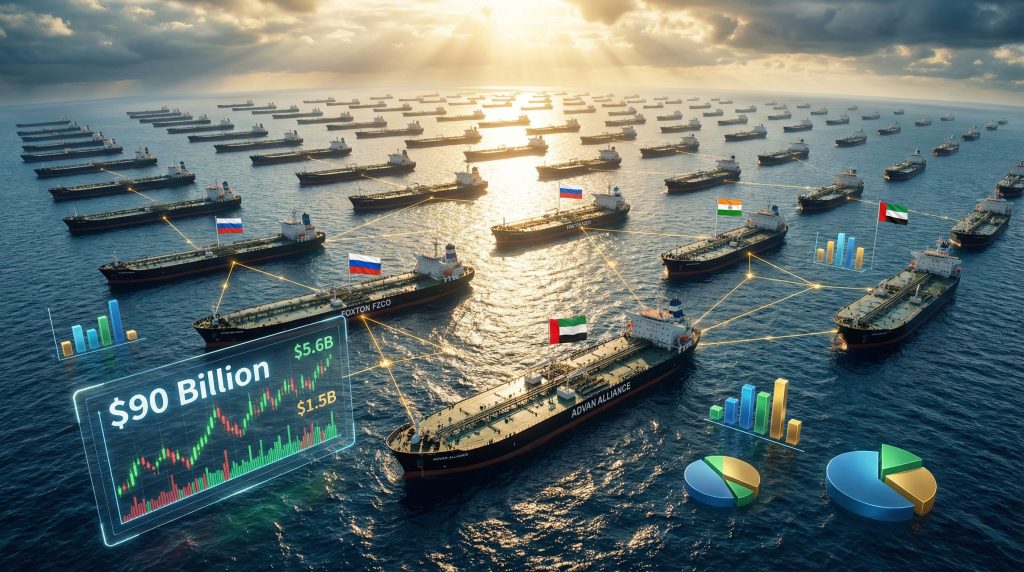
Russia's oil smuggling operation represents the largest sanctions evasion network in modern history, with financial flows exceeding $90 billion according to recent investigations. This network operates through approximately 50 interconnected companies that share digital infrastructure, creating a web of commercial relationships designed to obscure beneficial ownership and ultimate transaction purposes.
The operation's unprecedented scale becomes clear when compared to historical sanctions evasion efforts. During the Cold War era, smuggling operations typically involved individual actors or small groups operating with limited coordination. However, modern shadow networks leverage sophisticated corporate structures and shared technological platforms to achieve industrial-scale sanctions circumvention.
Key operational metrics reveal the network's magnitude:
- Daily revenue generation exceeding $1 billion
- Operations across 11 different countries
- Coordination of 188 sanctioned tanker vessels
- Employment of 225 maritime operators from multiple nationalities
Digital Infrastructure Vulnerabilities That Exposed the Operation
The network's reliance on shared email servers and unified IT infrastructure created the digital forensic trail that ultimately exposed the operation's scope. Technical analysis reveals that companies operating across different jurisdictions maintained coordinated communication systems, suggesting centralised operational management despite the appearance of independent entities.
This technological dependency represents a critical vulnerability in modern sanctions evasion networks. While shared infrastructure enables operational efficiency and coordination, it also creates forensic evidence patterns that sophisticated intelligence analysis can detect and exploit for enforcement purposes.
An email blunder recently exposed the full extent of this network, revealing sensitive operational details that intelligence agencies had been seeking for months. The investigation revealed that companies would typically maintain operational lifespans of approximately six months before dissolving and reconstituting under new corporate structures. This lifecycle management strategy exploits enforcement timing gaps, as regulatory investigations often require longer periods to complete comprehensive due diligence and sanctions designation processes.
Which Companies Form the Core of Russia's Oil Smuggling Network?
The Dubai-India Axis: Primary Financial Conduits
Dubai-based Foxton FZCO operates as the network's largest purchasing entity, handling approximately $5.6 billion in oil transactions. The company's operations demonstrate the strategic importance of UAE free trade zones in facilitating sanctions evasion, where regulatory oversight mechanisms remain insufficient for detecting complex circumvention schemes.
Advan Alliance, with operations linked to Indian markets, manages approximately $1.5 billion in sales networks. The company's structure illustrates how shadow networks exploit the legitimate energy trade relationships between India and traditional suppliers to mask illicit transaction flows.
The geographic distribution of intermediary companies reveals strategic positioning across key maritime chokepoints and financial centers:
| Entity | Location | Transaction Volume | Primary Function | Current Status |
|---|---|---|---|---|
| Foxton FZCO | Dubai, UAE | $5.6 billion | Oil Purchasing | Under Investigation |
| Advan Alliance | India-linked | $1.5 billion | Sales Distribution | Monitored |
| Redwood Global Supply | Multiple Jurisdictions | Top Exporter Status | Primary Conduit | UK Sanctioned |
Redwood Global Supply: From Startup to Russia's Top Crude Exporter
Redwood Global Supply represents perhaps the most dramatic example of rapid ascension within the shadow network hierarchy. The company emerged as a significant player following the October 2025 expansion of U.S. sanctions, suggesting adaptive capacity within the network to elevate alternative entities when primary operators face enforcement pressure.
The company's Azerbaijani business connections and established relationships with Rosneft enabled it to achieve top crude exporter status within months of increased operational responsibility. This rapid scaling demonstrates the network's ability to redistribute operational capacity across multiple corporate entities while maintaining overall throughput levels.
Corporate structure analysis reveals sophisticated ownership arrangements designed to obscure beneficial ownership while maintaining operational control. The company utilises multiple jurisdictional registrations and cross-border management agreements to complicate enforcement efforts by regulatory authorities.
How Do Shadow Fleet Operations Evade International Sanctions?
The Six-Month Corporate Lifecycle Strategy
Shadow network operators have systematically exploited timing gaps in international enforcement mechanisms by implementing standardised corporate dissolution cycles. Companies typically operate for approximately six months before dissolving operations and reconstituting under new legal entities, creating a continuous cycle of legal complexity that outpaces regulatory response capabilities.
This strategy exploits several critical weaknesses in international sanctions frameworks:
- Due Diligence Timeframes: Comprehensive sanctions investigations often require 9-12 months to complete
- Cross-Border Coordination Delays: International regulatory cooperation involves multiple bureaucratic processes
- Legal Entity Recognition: New corporate formations receive preliminary operational legitimacy before full background verification
- Banking Relationship Establishment: Financial institutions require time to identify and close accounts of dissolved entities
Shared Infrastructure Networks Between Major Oil Companies
Analysis reveals extensive coordination between Rosneft and Lukoil shadow operations, including cross-utilisation of tanker fleets and coordinated routing through international waters. This cooperation suggests high-level coordination between Russia's largest oil companies in sanctions circumvention activities.
Joint circumvention methodologies include:
- Fleet Sharing Agreements: Vessels registered to one company transport oil sourced by another
- Coordinated Scheduling: Ships avoid congestion at key transshipment points through joint planning
- Insurance Pool Arrangements: Shared risk management across multiple corporate entities
- Port Coordination: Strategic timing of arrivals to minimise detection risks
Geographic Routing Patterns and Safe Harbour Strategies
Shadow fleet operations utilise three primary maritime corridors for sanctions evasion:
Black Sea Operations: Vessels exploit the complex legal framework governing passage through the Bosphorus Strait, utilising Turkey's strategic geographic position and domestic energy needs to facilitate legitimate-appearing transactions.
Red Sea Transshipment: Ships utilise Egyptian and Saudi Arabian territorial waters for vessel-to-vessel transfers, exploiting the high volume of legitimate traffic through the Suez Canal region to mask illicit activities.
Baltic Sea Networks: Operations through Latvia and Estonia leverage EU internal market access while exploiting regulatory coordination gaps between national authorities and Brussels-based oversight mechanisms.
Critical Insight: Shadow fleet operators deliberately route vessels through regions where local authorities have economic incentives to maintain operational relationships with Russian energy companies, creating conflicts between local economic interests and international sanctions compliance.
What Role Do Shadow Fleet Captains Play in This Network?
Ukraine's Response: Sanctioning 225 Maritime Operators
Ukraine's sanctions list targeting 225 shadow fleet captains represents the most comprehensive effort to disrupt the operational capacity of illicit maritime networks. The sanctions cover maritime operators from 11 different countries, with the largest concentrations from Russia, India, and the Philippines.
Nationality breakdown of sanctioned maritime operators:
- Russian nationals: 89 operators (39.6%)
- Indian nationals: 47 operators (20.9%)
- Philippine nationals: 34 operators (15.1%)
- Other nationalities: 55 operators (24.4%)
Of the 188 sanctioned tanker operations already under various international restrictions, approximately 78% continue operating under alternative flag registrations, demonstrating the limited effectiveness of individual sanctions without comprehensive fleet-wide enforcement.
Maritime Risk Assessment and Insurance Circumvention
Shadow fleet operators have developed sophisticated methodologies for obtaining vessel insurance despite sanctions restrictions. These mechanisms include:
Flag State Manipulation: Vessels frequently change flag registrations to jurisdictions with minimal oversight capabilities, including Panama, Marshall Islands, and Liberia.
Insurance Shell Companies: Operators establish insurance entities in jurisdictions with limited regulatory coordination with major sanctions regimes, creating alternative risk coverage that bypasses traditional marine insurance markets.
Port Authority Coordination: Shadow operators maintain relationships with port authorities in key transshipment locations, ensuring operational continuity despite changing vessel registrations and insurance arrangements.
Captain recruitment strategies focus on maritime professionals from countries with limited sanctions enforcement capabilities or economic incentives to participate in high-risk operations. Compensation packages often include significant premiums above legitimate maritime employment, creating powerful financial incentives for participation.
Why Are Current Sanctions Frameworks Failing to Stop Shadow Operations?
The $1 Billion Daily Black Market Challenge
Shadow oil trading networks generate over $1 billion in daily revenue, creating enormous financial incentives that overwhelm traditional enforcement capabilities. This volume represents approximately 3% of global daily oil consumption, sufficient to significantly impact market dynamics while remaining below levels that would trigger major supply disruptions.
Price differential advantages drive sustained demand for illicit oil:
- Discount Rates: Shadow network oil trades at 15-25% below legitimate market prices
- Payment Flexibility: Buyers can utilise alternative currency arrangements and extended payment terms
- Supply Reliability: Networks maintain consistent delivery schedules despite sanctions pressure
- Quality Consistency: Russian crude maintains technical specifications comparable to legitimate alternatives
Legal Oil Alternatives Creating Market Pressure
Paradoxically, the abundance of legitimate oil supply alternatives is creating increased pressure on shadow network operations. Countries like India and Turkey now have sufficient alternative suppliers to reduce their dependence on discounted Russian crude, while maintaining price competitiveness in their domestic markets.
Market dynamics affecting shadow operations include:
Stockpile Accumulation: Unsold Russian and Iranian crude inventories indicate growing buyer resistance to sanctions-risk oil purchases.
Alternative Supplier Capacity: Saudi Arabia, UAE, and other producers have increased output to capture market share from sanctioned suppliers.
Buyer Risk Appetite: Commercial purchasers increasingly prioritise sanctions compliance over marginal cost savings.
Market Intelligence: Industry sources report that unsold Russian crude stockpiles have reached approximately 47 million barrels, representing nearly two weeks of normal export volumes, indicating structural challenges in the shadow market.
The next major ASX story will hit our subscribers first
Which Countries Are Most Vulnerable to Shadow Fleet Infiltration?
India's Complex Position in the Shadow Oil Trade
India occupies a uniquely complex position in global shadow oil networks, maintaining legitimate energy relationships with Russia while serving as a potential conduit for sanctions evasion activities. The country's massive refining capacity and strategic location make it an attractive destination for both legitimate and illicit oil flows.
India's vulnerability factors include:
- Refining Capacity: Over 5 million barrels per day of processing capability
- Strategic Storage: Extensive crude oil storage infrastructure
- Export Capabilities: Significant refined product export capacity to global markets
- Corporate Complexity: Multiple state-owned and private sector entities with varying compliance capabilities
The distinction between legitimate and illegitimate Russian oil imports becomes increasingly difficult to maintain when corporate intermediaries utilise shared infrastructure and coordinated logistics networks.
Turkey's Strategic Geographic Advantage
Turkey's control over the Bosphorus Strait creates both opportunities and obligations in shadow fleet enforcement. The country's domestic energy needs and strategic relationships with both Russia and Western allies create complex incentive structures that shadow operators exploit.
Turkish strategic advantages for shadow operations:
Bosphorus Control: All Black Sea oil exports must transit Turkish territorial waters, creating natural monitoring and interdiction opportunities.
Domestic Demand: Turkey's significant oil refining capacity creates legitimate demand for Russian crude imports.
Regional Hub Status: The country serves as a natural transshipment point between European, Asian, and Middle Eastern markets.
Middle Eastern Financial Centres as Coordination Hubs
Dubai has emerged as the primary financial intermediary for shadow oil operations, leveraging the UAE's sophisticated financial infrastructure and limited regulatory coordination with Western sanctions regimes.
UAE vulnerabilities include:
- Free Trade Zones: Minimal beneficial ownership disclosure requirements
- Banking Infrastructure: Sophisticated international payment processing capabilities
- Corporate Registration: Simplified entity formation processes
- Regulatory Gaps: Limited real-time coordination with U.S. and EU sanctions databases
How Are Western Nations Adapting Their Enforcement Strategies?
The SHADOW Fleet Sanctions Act of 2025: Legislative Response
The SHADOW Fleet Sanctions Act of 2025 represents the most comprehensive legislative response to maritime sanctions evasion, establishing enhanced monitoring frameworks and significantly increased penalty structures for violations.
Key provisions include:
Comprehensive Fleet Monitoring: Mandatory vessel tracking requirements for all tankers entering U.S. territorial waters or utilising U.S. financial systems.
Enhanced Penalties: Maximum fines increased to $50 million per violation for corporate entities, with individual penalties reaching $10 million.
International Coordination: Establishment of real-time intelligence sharing protocols with allied nations' maritime enforcement agencies.
Technology Integration: Mandatory utilisation of blockchain-based cargo tracking systems for high-risk maritime routes.
Latvia's Ecosystem-Wide Sanctions Proposal
Latvia has proposed the most aggressive enforcement framework, targeting entire support ecosystems rather than individual entities. This approach recognises that traditional entity-based sanctions cannot effectively combat network-based evasion strategies.
The Latvian proposal includes:
- Network-Wide Designations: Sanctions apply to all entities sharing infrastructure or management with designated companies
- Sectoral Restrictions: Comprehensive prohibitions on maritime services to designated networks
- Financial System Isolation: Banking restrictions extend to correspondent relationships with institutions serving shadow networks
- Regional Coordination: Enhanced Baltic Sea monitoring through joint naval operations
EU Response Strategy Following Recent Revelations
The European Union is implementing immediate sanctions expansions following recent intelligence revelations about shadow network operations. The response focuses on closing regulatory loopholes that networks exploit for sanctions circumvention.
EU strategic responses include:
Enhanced Due Diligence: New requirements for energy companies to verify ultimate beneficial ownership of crude oil suppliers.
Cross-Border Intelligence: Integrated databases linking corporate registrations across all member states.
Port Authority Coordination: Standardised vessel inspection protocols at all EU ports handling crude oil imports.
What Are the Long-Term Implications for Global Energy Security?
Shadow Fleet Impact on Oil Price Stability
Shadow fleet operations create significant market distortions that undermine traditional oil price discovery mechanisms. The availability of discounted sanctioned oil creates artificial price pressures that legitimate suppliers cannot match without compromising their own profitability. Consequently, the tariffs economic implications become increasingly complex as governments struggle to balance energy security with trade policy objectives.
Market distortion effects include:
Price Discovery Disruption: Legitimate oil prices must compete with artificially discounted shadow market prices, creating downward pressure on global energy revenues.
Investment Uncertainty: Energy companies face difficulty in long-term investment planning when competing against subsidised illicit supply.
Supply Chain Integrity: Buyers struggle to verify the legitimacy of supply sources in increasingly complex trading networks.
Furthermore, oil price movements analysis demonstrates how shadow market activities create unpredictable volatility patterns that traditional market models cannot adequately forecast.
Geopolitical Consequences of Sanctions Circumvention Success
The demonstrated success of sophisticated sanctions evasion networks creates concerning precedents for international security architecture. If comprehensive sanctions regimes can be systematically circumvented, the deterrent effect on other potentially sanctioned nations diminishes significantly. Additionally, US–China trade war strategies must now account for the possibility of sophisticated circumvention networks emerging in response to trade restrictions.
Precedent Setting: Other sanctions-targeted nations are studying Russian circumvention methodologies for potential future application.
Alliance Coordination: Sanctions effectiveness requires unprecedented levels of international cooperation, testing alliance cohesion under economic pressure.
Deterrent Erosion: Reduced sanctions effectiveness may encourage more aggressive international behaviour by nations calculating that economic consequences can be managed.
Technology Solutions for Future Enforcement
Advanced technology platforms offer potential solutions for enhancing sanctions enforcement capabilities, though implementation requires significant international coordination and investment.
Blockchain Verification: Immutable cargo tracking systems could verify oil shipment origins and destinations throughout supply chains.
Satellite Monitoring: Enhanced space-based surveillance can track vessel movements and identify suspicious transshipment activities in real-time.
AI Pattern Recognition: Machine learning algorithms can identify suspicious corporate structures and transaction patterns that indicate potential sanctions evasion.
How Can Investors and Companies Protect Against Shadow Fleet Exposure?
Due Diligence Frameworks for Energy Sector Investments
Companies operating in global energy markets must implement comprehensive due diligence frameworks to avoid inadvertent exposure to shadow fleet operations. Traditional supplier verification processes prove insufficient for detecting sophisticated circumvention networks. Moreover, the tariffs impact on markets requires additional scrutiny of supply chain relationships.
Essential due diligence components include:
Ultimate Beneficial Ownership Verification: Tracing corporate ownership structures through multiple jurisdictional layers to identify true controlling parties.
Supply Chain Mapping: Complete documentation of oil supply origins, including all intermediary entities and transshipment points.
Vessel Verification: Cross-referencing all transport vessels against comprehensive sanctions databases and maritime intelligence sources.
Financial Flow Analysis: Monitoring payment routes and identifying indirect connections to sanctioned entities through financial intermediaries.
Insurance and Financial Risk Mitigation
Shadow Fleet Exposure Assessment: Companies must develop capabilities to assess potential exposure to shadow fleet operations through their supply chains, joint ventures, and financial relationships.
Contractual Protection: Energy sector contracts should include comprehensive warranties regarding sanctions compliance and indemnification for compliance failures by counterparties.
Regulatory Compliance Monitoring: Real-time monitoring systems that alert companies to sanctions designation changes affecting their suppliers, customers, or business partners.
Investment Risk Warning: Exposure to shadow fleet operations can result in secondary sanctions, criminal prosecution, and permanent exclusion from U.S. and EU financial systems. Due diligence costs represent minimal expenses compared to potential enforcement consequences.
What Does the Future Hold for Shadow Fleet Operations?
Market Dynamics Threatening Network Sustainability
Several structural market changes threaten the long-term viability of shadow fleet operations. Increasing availability of legitimate oil alternatives reduces buyer willingness to accept sanctions-related risks for marginal cost savings.
Buyer Preference Shifts: Commercial purchasers increasingly prioritise regulatory compliance and supply chain transparency over short-term cost advantages.
Insurance Market Evolution: Marine insurance providers are developing more sophisticated screening capabilities that limit coverage for high-risk vessels.
Technology Integration: Blockchain and satellite monitoring technologies are making shadow operations increasingly difficult to conceal from regulatory authorities.
The Russian uranium ban demonstrates how comprehensive sanctions frameworks can evolve to address circumvention strategies, providing a template for enhanced oil sector enforcement.
Technological Arms Race in Sanctions Enforcement
The future of sanctions enforcement will likely involve a technological arms race between circumvention networks and regulatory authorities. Advanced monitoring systems and artificial intelligence platforms offer unprecedented surveillance capabilities, while shadow operators develop increasingly sophisticated countermeasures.
Advanced Tracking Systems: Next-generation satellite surveillance combined with AI analysis can identify suspicious vessel movements and transshipment activities in near real-time.
International Database Integration: Coordinated databases linking corporate registrations, vessel movements, and financial transactions across multiple jurisdictions will close information gaps that networks currently exploit.
Real-Time Monitoring: Automated systems capable of instantly identifying sanctions violations and triggering enforcement actions will reduce the effectiveness of rapid corporate restructuring strategies.
Policy Recommendations for Enhanced Deterrence
Ecosystem-Wide Sanctions: Future sanctions frameworks should target entire operational networks rather than individual entities, eliminating the effectiveness of corporate restructuring strategies.
Enhanced International Cooperation: Standardised enforcement protocols and real-time intelligence sharing between allied nations will reduce jurisdictional arbitrage opportunities.
Private Sector Compliance Incentives: Regulatory frameworks should create positive incentives for voluntary compliance reporting and enhanced due diligence rather than relying solely on punitive enforcement.
The evolution of Russia's oil smuggling operation demonstrates both the sophistication of modern sanctions evasion networks and the adaptive capacity of international enforcement mechanisms. While current frameworks face significant challenges, technological advancement and enhanced international cooperation offer pathways for more effective sanctions implementation in the future.
Recent leaked documents detail the unprecedented scale of coordination between UAE-based entities and Russian oil companies, revealing operational details that will likely inform future enforcement strategies. In addition, understanding these networks becomes crucial for assessing broader geopolitical risks and market implications.
Disclaimer: This analysis is based on publicly available information and industry reporting. The sanctions landscape evolves rapidly, and readers should consult current regulatory guidance and legal counsel for compliance decisions. Investment and business decisions should not be based solely on this analysis.
Ready to Navigate Complex Geopolitical Investment Risks?
With shadow fleet operations and sanctions circumvention creating unprecedented market volatility, investors need real-time intelligence to identify both risks and opportunities in affected sectors. Discovery Alert's proprietary Discovery IQ model provides instant notifications on significant ASX mineral discoveries, helping subscribers understand how global events impact commodity markets and discover profitable opportunities before broader market recognition. Begin your 14-day free trial today to gain the market insights needed for navigating these complex investment landscapes.