
July 23, 2026
Understanding the Shanghai Gold Exchange's Market Position
Physical settlement mechanisms in precious metals trading have fundamentally transformed global monetary dynamics over the past two decades. The Shanghai Gold Exchange has emerged as a pivotal institution in this transformation, representing a significant departure from traditional Western derivative-based systems. While traditional Western exchanges evolved toward derivative-based price discovery, alternative systems emerged emphasizing tangible asset transfer and vault-based ownership verification. This architectural divergence reflects deeper philosophical differences about monetary value, counterparty risk, and the role of physical commodities in modern finance.
Institutional Framework and Regulatory Structure
The Shanghai Gold Exchange operates within a sophisticated regulatory architecture designed to balance market-driven price discovery with state oversight of strategic commodity flows. Established on October 30, 2002, this exchange emerged from China's broader financial liberalisation while maintaining capital account controls through its dual-layer institutional structure.
The People's Bank of China serves as the primary regulatory authority, implementing oversight through the exchange's internal compliance department. This governance model differs substantially from Western approaches, where separate regulatory bodies typically supervise commodity exchanges. The exchange operates under comprehensive regulations that prioritise physical settlement assurance over derivative trading volume.
Key Regulatory Features:
• Self-regulatory organisation status under PBOC supervision
• Mandatory physical settlement for all domestic transactions
• Tiered membership structure with institutional access requirements
• Real-time transaction monitoring and reporting systems
• Integration with China's broader financial infrastructure
The Shanghai International Gold Exchange (SGEI), launched on June 12, 2014, within the Shanghai Free Trade Zone represents a significant innovation in cross-border commodity trading. This international board enables foreign participation while maintaining separation from domestic financial flows, allowing China to preserve capital account control while facilitating global market access.
Furthermore, the dual-auction system operates through two daily fixing sessions at 10:15 AM and 2:15 PM Beijing Time, using call auction mechanisms where buy and sell orders are matched at equilibrium prices. This methodology emphasises transparency through tangible settlement rather than paper-based price discovery common in Western derivatives markets.
Trading Volume Analysis and Market Liquidity Metrics
Market liquidity patterns on the Shanghai Gold Exchange reflect both seasonal consumer demand and institutional portfolio management strategies. Physical withdrawals reached 10,442.49 tonnes in 2023, representing the total amount of gold physically traded and removed from exchange custody, demonstrating substantial real demand for tangible asset ownership.
2024 Performance Metrics:
| Period | Physical Withdrawals | Daily Volume Range | Market Activity |
|---|---|---|---|
| H1 2024 | 4,657.80 tonnes | 300-450M CNY | Sustained institutional demand |
| Q1 2024 | 2,890 tonnes | 380-520M CNY | Elevated seasonal activity |
| Monthly Average | 775 tonnes | 340-410M CNY | Consistent baseline trading |
Seasonal trading patterns demonstrate significant cultural influences on physical gold demand. Chinese New Year typically generates 15-30% surges in retail purchasing during the preceding weeks, as traditional gifting customs drive jewellery and small bar acquisitions. Conversely, summer months experience 20-25% volume reductions due to decreased consumer appetite and reduced institutional activity.
The exchange's daily turnover averaged between 300-450 million yuan in notional value during 2024, with additional volumes processed through the international board. These figures exclude over-the-counter transactions, which constitute a separate but interconnected market segment serving institutional clients requiring customised settlement arrangements.
In addition, physical withdrawal data serves as a leading indicator for global demand trends, providing market participants with transparent insights into actual metal movement rather than derivative positioning. This transparency contrasts sharply with Western markets, where physical holdings are often reported with significant delays through regulatory filings or remain entirely opaque.
When big ASX news breaks, our subscribers know first
How Does Shanghai's Physical Gold Model Differ from Western Exchanges?
The fundamental architecture of Shanghai Gold Exchange operations prioritises actual commodity transfer over financial engineering, creating distinct risk profiles and settlement mechanisms compared to derivative-focused Western markets. This physical-first approach reflects different philosophical assumptions about monetary value and market function.
Settlement and Delivery Mechanisms
Shanghai Gold Exchange contracts mandate physical settlement through a comprehensive vault network maintaining strict purity and custody standards. All domestic trades require actual gold transfer between designated storage facilities, eliminating the cash-settlement options that characterise approximately 95% of COMEX transactions.
Purity Standards and Specifications:
• Au9999 contracts: 99.99% minimum purity for primary trading
• Au9995 contracts: 99.95% minimum purity for secondary markets
• Au100g contracts: 100-gram retail denominations at 99.99% purity
• Standard lot size: 1,000 grams (1 kilogram) for futures contracts
• Minimum settlement: 100 grams for qualified institutional arrangements
The exchange employs 29 designated assay laboratories across China for incoming gold verification, implementing either GB/T 11068-2011 Chinese National Standards or ISO 11426:2008 international protocols. Every deposit undergoes initial assay verification, while 5-10% of withdrawals receive additional random sampling verification.
Settlement timelines operate on T+0 to T+2 cycles, meaning actual gold bars exit one participant's vault account and enter another's within zero to two business days. This contrasts dramatically with Western cash-settled derivatives, where contracts are marked-to-market daily but parties exchange only cash differences rather than underlying commodities.
Comparison of Settlement Models:
| Exchange System | Settlement Type | Timeline | Physical Delivery Rate |
|---|---|---|---|
| SGE Domestic | Mandatory physical | T+0 to T+2 | 100% |
| SGEI International | Physical or cash option | T+2 standard | Variable by client election |
| COMEX | Primarily cash-settled | T+1 cash settlement | ~5% |
| LBMA OTC | Bilateral arrangements | T+2 delivery | Varies by counterparty |
Contract Types and Trading Instruments
The Shanghai Gold Exchange offers multiple contract categories designed to serve different market segments while maintaining physical settlement requirements. However, this comprehensive approach ensures that gold market analysis remains anchored to actual commodity availability rather than speculative positioning.
Au(T+D) deferred delivery contracts function as flexible settlement instruments allowing participants to postpone physical delivery while maintaining ownership rights. These contracts charge daily interest rates for deferral periods but guarantee eventual physical settlement, preventing the indefinite paper-based rollovers common in Western futures markets.
Over-the-counter offerings include forwards, swaps, and leasing arrangements for institutional clients requiring customised terms. However, even OTC transactions ultimately reference physical metal availability and vault capacity, maintaining connection to tangible asset constraints rather than purely financial engineering.
Options trading provides risk management tools while preserving the exchange's physical settlement architecture. Options exercises result in delivery obligations rather than cash payments, ensuring that hedging activities remain anchored to actual commodity availability.
Risk Management Framework:
• Tiered counterparty structure with SGE as legal counterparty
• Member segregation requirements for client holdings
• Real-time settlement monitoring and position tracking
• Physical delivery guarantee through certified vault network
• Insurance requirements for all storage facilities
What Role Does the International Board Play in Global Gold Markets?
The Shanghai International Gold Exchange represents a strategic initiative to establish yuan-denominated pricing power while accommodating foreign participation within controlled parameters. This international board creates alternative settlement pathways outside traditional dollar-based systems, offering institutions and central banks diversification options during periods of geopolitical uncertainty.
Foreign Participation and Market Access
International membership includes 79 institutional members and 81 qualified customers as of 2024, representing banks, refiners, funds, and trading houses from multiple jurisdictions. The Shanghai Free Trade Zone location provides operational advantages including streamlined regulatory compliance and enhanced cross-border settlement mechanisms.
Foreign participants can access both physical settlement through Shanghai vaults or cash settlement in yuan, providing flexibility while maintaining exposure to yuan-denominated pricing. This hybrid approach accommodates different institutional requirements while advancing China's broader financial internationalisation objectives.
Membership Categories and Requirements:
• International financial institutions: Minimum capital requirements and regulatory standing
• Precious metals refiners: Production capacity and quality certifications
• Qualified institutional investors: Asset thresholds and compliance verification
• Market makers: Liquidity provision commitments and risk management standards
Cross-border settlement occurs through designated clearing banks with yuan conversion capabilities, enabling international participants to manage currency exposure while accessing physical gold markets. These arrangements provide alternatives to dollar-based settlement systems, particularly valuable during periods of financial system stress or geopolitical tensions.
Yuan-Denominated Gold Pricing Impact
The Shanghai Gold Benchmark Price, established in 2016, conducts daily yuan-denominated auctions that increasingly influence regional pricing across Asia-Pacific markets. This benchmark challenges the historical dominance of London-based dollar pricing, creating alternative reference points for international transactions.
The benchmark operates through morning and afternoon fixing sessions using electronic auction systems where qualified participants submit buy and sell orders. The resulting equilibrium price provides transparent yuan-denominated reference rates that serve growing demand for non-dollar commodity pricing.
Regional adoption of Shanghai pricing has accelerated among Asian central banks and institutions seeking to reduce dollar exposure in reserve management. Countries participating in China's Belt and Road Initiative increasingly reference Shanghai gold pricing mechanisms for bilateral trade settlements, creating network effects that enhance the benchmark's influence.
Pricing Competition Dynamics:
The emergence of yuan-denominated gold pricing creates competitive pressure on traditional London-based systems, as institutions gain access to alternative reference rates that reduce dependence on dollar-based settlements.
Currency hedging implications affect international traders managing exposure to yuan fluctuations while accessing Shanghai markets. These considerations influence portfolio allocation decisions and risk management strategies, particularly for institutions with significant Asian exposure or those seeking monetary diversification.
Market Performance Indicators and Trading Statistics
Recent performance data illustrates the Shanghai Gold Exchange's growing importance in global precious metals markets, with volume trends reflecting both domestic demand patterns and international institutional participation. Physical withdrawal statistics provide transparent insights into actual market activity rather than derivative speculation.
Recent Volume and Withdrawal Trends
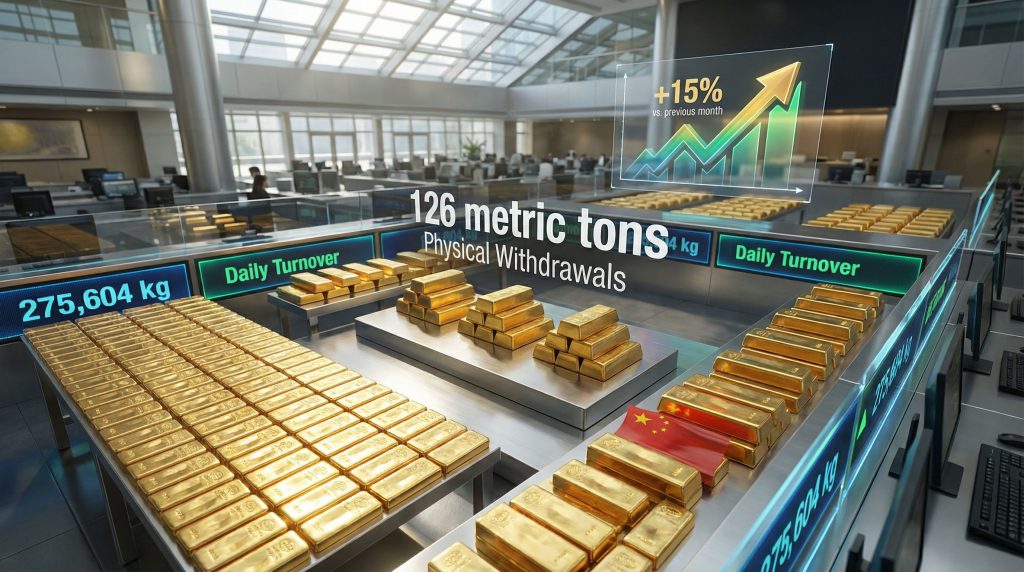
January 2026 demonstrated particularly strong activity across multiple market segments, with physical withdrawals reaching 126 metric tons representing a 15% increase compared to the previous month. This surge reflected both seasonal demand patterns and institutional accumulation strategies, aligning with broader trends in record high gold prices.
Shanghai Gold Exchange Key Metrics (January 2026):
| Performance Indicator | Volume/Amount | Period Comparison |
|---|---|---|
| Physical Withdrawals | 126 metric tons | +15% month-over-month |
| Daily Futures Volume | 456 metric tons | +72% vs. 5-year average |
| ETF Inflows | 38 metric tons | Record monthly beginning |
| Peak Daily Turnover | 275,604 kg | February 11 snapshot |
Daily futures volume averaged 456 metric tons during January, representing a 72% increase compared to five-year historical averages. This elevated activity reflected heightened institutional interest and increased hedge fund participation in yuan-denominated contracts.
Exchange-traded fund inflows reached 38 metric tons in January alone, establishing a record for monthly opening periods. These inflows demonstrate growing institutional confidence in Shanghai-based gold products and increasing integration with global portfolio management strategies.
The February 11 trading session recorded peak daily turnover of 275,604 kilograms, illustrating the exchange's capacity to handle substantial institutional order flow while maintaining orderly market conditions and settlement integrity.
Price Discovery and Market Efficiency Analysis
Shanghai Gold Exchange auction mechanisms prioritise transparent price formation through electronic matching systems that aggregate buy and sell orders at scheduled intervals. The 10:15 AM and 2:15 PM Beijing Time sessions provide regular price discovery windows aligned with Asian business hours.
Arbitrage opportunities between Shanghai and London pricing create natural linkages that prevent significant price divergence while allowing for currency-based variations. These arbitrage mechanisms ensure market efficiency while accommodating different monetary frameworks and settlement systems.
Market maker participation provides continuous liquidity through committed bid-ask spreads, enhancing order execution quality for institutional clients. These market makers operate under regulatory requirements ensuring adequate capital and risk management capabilities.
Market Efficiency Indicators:
• Average bid-ask spreads: 0.02-0.05% during active sessions
• Order execution quality: >98% filled within best bid-ask
• Settlement success rate: 99.7% on scheduled delivery dates
• Price volatility: Generally aligned with global gold markets
Volatility patterns demonstrate correlation with global precious metals markets while exhibiting unique characteristics during Asian trading hours. These patterns reflect both international influences and domestic factors including regulatory announcements and seasonal demand variations.
Strategic Implications for Global Precious Metals Markets
The Shanghai Gold Exchange's evolution represents broader shifts in monetary system architecture, as alternative settlement mechanisms gain traction amid declining confidence in traditional financial institutions. These developments affect central bank reserve management, institutional portfolio allocation, and international trade settlement patterns.
Geopolitical Influence on Gold Trading Patterns
Central bank reserve diversification accelerated following the 2022 Western sanctions on Russian assets, as monetary authorities worldwide reassessed counterparty risks associated with dollar-denominated holdings. Shanghai's physical settlement system offers central banks tangible asset control without reliance on Western custodial arrangements.
Alternative settlement system development gained momentum as countries sought to reduce exposure to potential financial exclusion from dollar-based systems. The Shanghai Gold Exchange provides a functional mechanism for international trade settlement outside traditional Western financial infrastructure.
Furthermore, regional trade bloc integration increasingly incorporates precious metals settlement, particularly within China's Belt and Road Initiative framework. These arrangements utilise Shanghai pricing and settlement mechanisms, creating network effects that enhance the exchange's strategic importance.
Sanctions-Resistant Trading Mechanisms:
• Physical delivery bypasses correspondent banking relationships
• Yuan settlement reduces dollar system dependence
• Vault-based ownership eliminates custodial counterparty risk
• Direct bilateral trading arrangements between central banks
The development of sanctions-resistant trading mechanisms reflects growing demand for financial infrastructure independent of Western oversight. Physical gold trading through Shanghai provides nations with monetary diversification options that maintain value storage capabilities regardless of geopolitical tensions.
Supply Chain and Refining Industry Connections
Chinese domestic gold production integration creates natural supply flow advantages for Shanghai Gold Exchange participants, as approximately 95% of Chinese mine output enters the domestic market through exchange mechanisms. This integration provides pricing efficiency and supply security for Asian consumers, supporting broader trends in global gold production.
Import and export flow management through Shanghai creates centralised oversight of precious metals movements, enabling Chinese authorities to monitor strategic commodity flows while maintaining market-based pricing mechanisms. These controls balance economic efficiency with strategic resource management.
Refining capacity expansion in China supports the exchange's physical settlement requirements while creating regional processing advantages. Chinese refiners increasingly serve Asian markets directly, reducing dependence on Western refining infrastructure and transportation networks.
Supply Chain Integration Benefits:
• Direct mine-to-market pricing without intermediary markups
• Reduced transportation costs and delivery timeframes
• Quality control through integrated assaying and certification
• Strategic inventory management through vault network
Jewellery manufacturing demand patterns increasingly influence Shanghai pricing, as Chinese producers represent significant global market share in finished gold products. This manufacturing integration creates natural demand support for exchange trading activity.
Investment and Portfolio Management Considerations
Institutional investment strategies incorporating Shanghai Gold Exchange products require careful consideration of currency exposure, regulatory compliance, and operational complexity compared to traditional Western gold investments. These factors influence portfolio allocation decisions and risk management approaches, particularly relevant for those seeking comprehensive gold investment guide strategies.
Institutional Investment Strategies
Exchange-traded fund product development continues expanding, with Shanghai-based gold ETFs attracting increased institutional participation. These products offer exposure to yuan-denominated gold pricing while providing liquidity and transparency comparable to Western alternatives.
Pension funds and sovereign wealth funds demonstrate growing interest in Shanghai Gold Exchange products as portfolio diversification tools, particularly those managing yuan-denominated liabilities or seeking exposure to Asian economic growth. These institutional investors appreciate the exchange's physical settlement guarantees and regulatory oversight.
Risk-Adjusted Return Analysis:
• Currency hedging costs affect net returns for non-yuan investors
• Physical settlement provides inflation protection advantages
• Regulatory stability enhances long-term investment confidence
• Liquidity adequate for substantial institutional position sizes
Risk management considerations include currency volatility, regulatory changes, and operational complexity compared to Western alternatives. Institutions must evaluate these factors against potential benefits including diversification, inflation protection, and exposure to Asian economic growth.
Retail Market Access and Individual Trading
Minimum investment thresholds accommodate retail participation while maintaining institutional market quality, with entry points starting at 100 grams for qualified individual investors. These accessible minimums enable broad-based participation in precious metals markets.
Physical delivery options serve smaller investors seeking tangible asset ownership, with vault storage and insurance services available through member institutions. These services bridge the gap between paper investments and physical possession for security-conscious investors.
Retail Access Framework:
• Account opening through qualified member institutions
• Know-your-customer verification and compliance requirements
• Educational resources covering market mechanics and risks
• Customer service support in multiple languages
Tax implications vary by investor jurisdiction and require careful consideration of reporting requirements for foreign precious metals investments. Professional tax advice becomes essential for international retail investors accessing Shanghai markets.
The next major ASX story will hit our subscribers first
Future Market Development and Expansion Plans
Technology integration initiatives focus on enhancing electronic trading capabilities while maintaining the exchange's physical settlement architecture. Blockchain integration proposals aim to improve settlement verification and ownership tracking without compromising operational efficiency, supporting positive gold price forecast trends.
Technology Integration and Digital Innovation
Electronic trading platform enhancements continue expanding order types, execution algorithms, and market data services comparable to global standards. These technological improvements attract sophisticated institutional participants while maintaining user accessibility for smaller investors.
Blockchain integration research explores applications for settlement verification, ownership records, and supply chain tracking. These initiatives could enhance transparency and reduce operational costs while preserving physical delivery requirements central to the exchange's value proposition.
Digital Innovation Priorities:
• Mobile trading applications with institutional-grade security
• Real-time market data and analytical tools
• Automated settlement and confirmation systems
• Integration with international payment networks
Mobile trading application development targets both retail and institutional users, providing secure access to Shanghai gold markets through sophisticated yet user-friendly interfaces. These applications support the exchange's growth objectives while maintaining regulatory compliance and security standards.
Regional Market Integration Initiatives
Belt and Road Initiative precious metals corridors aim to establish Shanghai Gold Exchange as the primary settlement mechanism for participating countries' commodity trade. These initiatives create network effects that could significantly enhance trading volume and international participation.
ASEAN market connectivity projects explore direct trading relationships between Shanghai and Southeast Asian exchanges, potentially creating integrated regional precious metals markets with standardised settlement mechanisms and shared regulatory oversight.
Integration Opportunities:
• Direct settlement arrangements with partner exchanges
• Standardised contract specifications across jurisdictions
• Mutual recognition of membership and trading privileges
• Coordinated regulatory oversight and compliance frameworks
Middle East and Africa expansion strategies target countries seeking alternatives to Western financial infrastructure, leveraging China's growing economic relationships in these regions to establish yuan-denominated commodity trading relationships.
Regulatory Environment and Compliance Framework
Anti-money laundering protocols implement sophisticated transaction monitoring systems designed to detect unusual trading patterns while accommodating legitimate commercial activity. These systems balance regulatory compliance with operational efficiency for international participants.
Anti-Money Laundering and Market Surveillance
Transaction monitoring systems employ advanced analytics to identify potentially suspicious activity patterns, including unusual volume concentrations, pricing anomalies, and settlement irregularities. These systems operate continuously with both automated alerts and human oversight.
Know-your-customer protocols for international participants require comprehensive documentation of beneficial ownership, source of funds, and intended trading purposes. These requirements ensure regulatory compliance while facilitating legitimate business activity.
Compliance Requirements:
• Comprehensive beneficial ownership documentation
• Source of funds verification and ongoing monitoring
• Regular reporting of large positions and transactions
• Cooperation with international regulatory investigations
Market manipulation prevention measures include position limits, price surveillance algorithms, and coordination with international regulatory authorities. These safeguards maintain market integrity while accommodating growing institutional participation and trading volume.
Environmental and Social Governance Standards
Responsible sourcing verification requirements increasingly influence Shanghai Gold Exchange operations, as participants face growing pressure to demonstrate ethical supply chain practices. These standards affect both domestic and international trading relationships.
Environmental impact assessment protocols evaluate the ecological consequences of gold mining and refining activities supporting exchange trading. These assessments inform regulatory decisions and influence member institution policies regarding supplier relationships.
ESG Implementation Framework:
• Supply chain auditing and certification requirements
• Environmental impact reporting and mitigation measures
• Labour standards verification through third-party audits
• Sustainability reporting and transparency initiatives
Labour standards compliance verification becomes increasingly important as international institutional investors incorporate ESG criteria into investment decisions. Shanghai Gold Exchange members must demonstrate adherence to international labour standards throughout their supply chains.
Disclaimer: This analysis is for informational purposes only and should not be construed as investment advice. Precious metals investing involves significant risks including price volatility, currency exposure, and regulatory changes. Past performance does not guarantee future results. Potential investors should conduct thorough due diligence and consult qualified financial advisors before making investment decisions. Market predictions and forward-looking statements involve inherent uncertainty and should be evaluated carefully.
Ready to Capitalise on ASX Gold Discovery Opportunities?
Whilst the Shanghai Gold Exchange demonstrates the power of physical gold markets, Discovery Alert's proprietary Discovery IQ model delivers real-time alerts on significant ASX mineral discoveries, instantly empowering subscribers to identify actionable opportunities ahead of the broader market. Begin your 14-day free trial today and position yourself to capture the next major discovery before the market fully reacts.