August 20, 2026
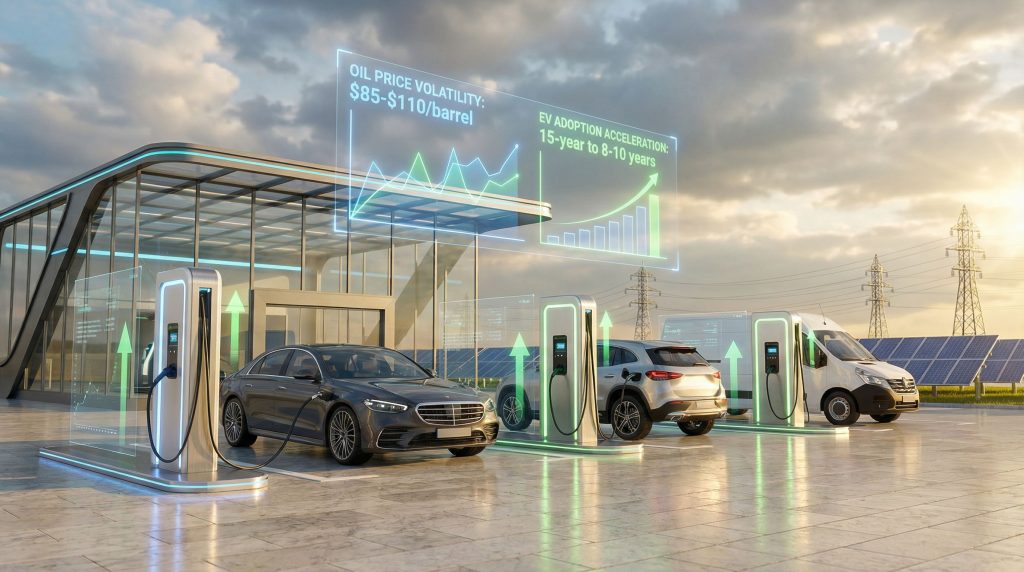
Modern geopolitical tensions reveal how quickly established energy systems can become vulnerability points for entire industrial sectors. When traditional fuel supply chains face disruption, organizations discover that their operational resilience depends heavily on energy source diversification strategies. The automotive manufacturing sector, in particular, finds itself at the intersection of critical minerals energy security concerns and accelerated electrification timelines during periods of international instability. The shift to electric vehicles amid Middle East crisis demonstrates how quickly market dynamics can change when energy security becomes paramount.
How Energy Security Crises Reshape Transportation Economics
Energy market volatility fundamentally alters the economic calculations that drive fleet management and industrial transportation decisions. During periods of geopolitical tension, fuel price uncertainty creates immediate pressure on operational budgets, forcing companies to reassess their long-term energy strategies.
The New Risk-Reward Matrix for Fleet Operators
Fleet operators face dramatically different cost structures when petroleum supplies become unreliable. Traditional fuel dependency creates exposure to price spikes that can increase operational costs by 40-60% during supply disruptions. The shift to electric vehicles amid Middle East crisis suddenly transforms from a long-term sustainability goal to an immediate risk management strategy.
The economic benefits extend beyond simple cost avoidance. Electric fleets offer predictable energy costs through fixed electricity rate contracts, allowing for more accurate budget forecasting during uncertain periods. This predictability becomes particularly valuable when petroleum markets experience rapid price fluctuations due to supply chain concerns.
- Reduced fuel price volatility exposure
- Lower maintenance costs compared to internal combustion engines
- Improved operational flexibility through distributed charging infrastructure
- Enhanced budget predictability via stable electricity pricing
Industrial Energy Demand Rebalancing
Manufacturing facilities discover that electricity offers greater supply security than petroleum products during international crises. Coal-dependent electricity grids, while presenting environmental challenges, typically maintain more stable supply chains than imported oil and gas systems.
Industrial energy managers must balance increased electricity demand from vehicle electrification against existing manufacturing power requirements. This creates opportunities for integrated energy management systems that optimise charging schedules around production cycles, potentially reducing overall energy costs.
When big ASX news breaks, our subscribers know first
What Strategic Advantages Drive Corporate EV Adoption During Crisis?
Crisis periods accelerate decision-making processes that might otherwise take years to implement. Companies recognise that energy diversification provides competitive advantages that extend well beyond immediate cost considerations.
Supply Chain Resilience Through Energy Diversification
Organisations implementing electric vehicle programmes reduce their dependence on single energy sources, creating operational buffers against supply disruptions. Energy portfolio diversification becomes a risk management tool rather than simply an environmental initiative.
Companies that maintain diversified energy sources demonstrate greater operational continuity during supply chain disruptions, particularly when domestic electricity generation remains stable while imported fuels face constraints.
The strategic value becomes evident when considering resource allocation during shortages. Government policies that prioritise household energy needs over industrial requirements create additional pressure on commercial fuel supplies, making electricity-based transportation systems more attractive for business operations.
Competitive Positioning in Uncertain Markets
Early adoption of electric vehicles transforming transportation provides market differentiation when competitors struggle with fuel availability and cost pressures. Companies with established electric fleets maintain operational capabilities whilst others face transportation constraints.
Long-term asset protection represents another strategic consideration. Internal combustion engine vehicles may experience accelerated depreciation when fuel availability becomes uncertain, whilst electric vehicles maintain value through their independence from petroleum markets.
Which Industries Lead the Emergency Electrification Response?
Government emergency directives reveal which sectors receive priority attention for rapid electrification. The automotive manufacturing industry, including component suppliers, typically faces immediate pressure to transition operations during energy crises.
Manufacturing Sector Adaptation Strategies
Manufacturing operations demonstrate particular vulnerability to fuel supply disruptions due to their complex production scheduling requirements. Production optimisation becomes critical when fuel availability for material handling, logistics, and auxiliary systems faces constraints.
The shift to electric systems allows manufacturers to maintain production schedules without concerns about fuel conservation requirements. Electric material handling equipment and transportation systems operate independently of petroleum supply chains, providing operational stability during crisis periods.
Material substitution strategies also emerge during supply constraints. Manufacturers receive guidance to implement alternative materials such as:
- HDPE (High-Density Polyethylene) for packaging applications
- uPVC (Unplasticised Polyvinyl Chloride) for structural components
- UHSS (Ultra-High Strength Steel) replacing aluminium in non-critical applications
- GFRP composites for lightweight structural elements
Technology Sector Pioneer Patterns
Technology companies often lead electrification initiatives due to their operational flexibility and sustainability commitments. Corporate fleet conversions in the technology sector typically focus on employee transportation systems and logistics operations.
Integrated energy management becomes particularly important for technology companies operating large campuses or data centres. These organisations can coordinate electric vehicle charging with existing renewable energy systems and backup power infrastructure.
How Do Regional Energy Policies Accelerate EV Transitions?
Government intervention during energy crises creates immediate policy frameworks that accelerate the shift to electric vehicles amid Middle East crisis beyond normal market timelines. Emergency advisories and resource allocation decisions provide direct guidance to industrial sectors.
Government Intervention Mechanisms
Energy security concerns prompt governments to issue specific directives to automotive manufacturers and component suppliers. These interventions typically include technical guidance on fuel-to-electricity transitions and production optimisation strategies.
Resource prioritisation policies create additional pressure for industrial electrification. When household energy needs receive priority over industrial fuel allocations, businesses face immediate incentives to transition to alternative energy sources. Industries may receive only 80% of their typical fuel allocations, creating operational constraints that favour electric alternatives.
Infrastructure Development Acceleration
Crisis-driven policies often include accelerated infrastructure development programmes. Charging network expansion receives priority treatment as governments recognise the strategic importance of electric transportation systems for economic resilience.
Grid modernisation becomes essential to support increased electric vehicle loads whilst maintaining industrial power requirements. Smart grid technologies enable optimal load distribution between manufacturing operations and vehicle charging systems.
What Role Does Energy Mix Play in EV Effectiveness?
The composition of electricity generation systems significantly impacts the strategic value of electric vehicle adoption during energy crises. Coal-heavy electricity grids may present environmental concerns but often provide more stable supply chains than imported petroleum products.
Grid Composition Impact Analysis
Coal-dependent electricity systems face increased demand pressure from accelerated electric vehicle adoption, but domestic coal supplies typically offer greater security than imported oil and gas. This creates a transition period where environmental considerations may be balanced against energy security priorities.
Renewable energy integration accelerates during crisis periods as governments seek to reduce dependence on imported fuels. Solar and wind capacity expansion supports both electric vehicle charging requirements and broader energy independence objectives.
Charging Infrastructure Optimisation
Smart charging systems become critical for managing increased electricity demand without overwhelming grid capacity. Demand response technologies allow electric vehicle charging to complement rather than compete with industrial power requirements.
Vehicle-to-grid technologies offer additional strategic value by enabling electric vehicles to serve as distributed energy storage systems. During grid stress periods, electric vehicle batteries can provide backup power for critical operations.
| Energy Source | Supply Security | Cost Stability | Infrastructure Requirements |
|---|---|---|---|
| Domestic Coal | High | Moderate | Existing grid capacity |
| Imported Oil | Low | Low | Petroleum distribution |
| Natural Gas | Moderate | Low | Pipeline infrastructure |
| Renewable + Storage | High | High | Grid modernisation |
How Do Supply Chain Disruptions Influence EV Manufacturing?
Energy crises expose vulnerabilities in automotive supply chains, particularly for materials requiring energy-intensive production processes. Aluminium, which requires significant electrical input for production, becomes subject to availability constraints during energy shortages.
Critical Material Availability Assessment
Material substitution strategies become essential when energy-intensive materials face supply constraints. Automotive manufacturers receive guidance to implement alternative materials that maintain product performance whilst reducing dependence on energy-constrained supply chains.
The transition to recycled aluminium represents one approach to material supply security. Furthermore, securing lithium supply becomes critical as nations recognise the strategic importance of battery materials.
Manufacturing Location Strategy
Geographic distribution of manufacturing capacity becomes a strategic consideration during energy supply disruptions. Production facilities in regions with stable electricity generation gain competitive advantages over locations dependent on imported fuels.
Local content requirements may emerge as governments seek to reduce dependence on supply chains that traverse geopolitically sensitive regions. Domestic electric vehicle production receives strategic priority as an element of energy security planning.
The next major ASX story will hit our subscribers first
Which Market Segments Show Fastest EV Adoption During Crises?
Crisis-driven adoption patterns reveal which market segments demonstrate greatest responsiveness to energy supply disruptions. Commercial fleets typically lead adoption due to their sensitivity to fuel cost variations and operational flexibility requirements.
Commercial Fleet Prioritisation
Delivery services face immediate pressure to maintain operations despite fuel supply constraints. Electric vehicles provide operational continuity when petroleum products experience availability or pricing disruptions. In addition, rising fuel prices are driving more Australians to consider electric cars as a viable alternative.
Public transportation systems receive particular attention during energy crises due to their role in maintaining essential services. Bus fleet electrification becomes a priority for maintaining urban mobility when private vehicle fuel consumption faces restrictions.
Consumer Behavior Pattern Analysis
Individual consumers demonstrate accelerated purchase consideration when fuel prices experience rapid increases due to supply disruptions. Range anxiety concerns, traditionally a barrier to electric vehicle adoption, become less significant when petroleum fuel availability faces uncertainty.
Financing model evolution supports crisis-driven adoption patterns. Leasing programmes reduce upfront cost barriers whilst providing consumers with access to electric vehicle technology during periods of fuel market instability.
How Do Geopolitical Scenarios Shape Future EV Strategies?
Energy security planning frameworks increasingly incorporate electric vehicle adoption as a strategic element of national resilience. Crisis scenarios demonstrate the vulnerability of transportation systems dependent on imported petroleum products.
Energy Security Planning Frameworks
Scenario modelling approaches examine multiple crisis situations to identify optimal electric vehicle deployment strategies. These frameworks consider both immediate operational requirements and long-term energy independence objectives.
Electric vehicle fleets serve as distributed energy storage systems that enhance grid resilience during supply disruptions. However, the success of such initiatives depends partly on advances in battery recycling breakthrough technologies that ensure sustainable material flows.
Policy Response Coordination
Emergency preparedness protocols include rapid electric vehicle deployment capabilities for maintaining essential services during energy crises. Cross-border infrastructure coordination becomes essential for supporting international trade continuity through electric transportation systems.
Technology transfer acceleration occurs during crisis periods as nations recognise the strategic importance of electric vehicle manufacturing capabilities. For instance, countries like Canada are implementing comprehensive strategies to address energy transition challenges whilst maintaining economic stability.
Innovation sharing agreements facilitate rapid deployment of charging infrastructure and vehicle production capacity. Consequently, the shift to electric vehicles amid Middle East crisis represents both an immediate response to fuel insecurity and a longer-term strategy for energy independence.
Disclaimer: This analysis examines potential scenarios and strategic considerations related to electric vehicle adoption during energy crises. Actual outcomes may vary significantly based on specific geopolitical developments, technological progress, and policy implementations. Investment and operational decisions should consider multiple factors beyond those discussed in this analysis.
Looking to Capitalise on Critical Minerals Driving EV Acceleration?
Discovery Alert's proprietary Discovery IQ model delivers real-time alerts on significant ASX mineral discoveries, particularly those critical minerals powering the electric vehicle revolution during these volatile energy markets. Visit Discovery Alert's discoveries page to understand how major mineral discoveries have generated substantial returns, then begin your 14-day free trial to position yourself ahead of the market during this unprecedented energy transition.