July 21, 2026
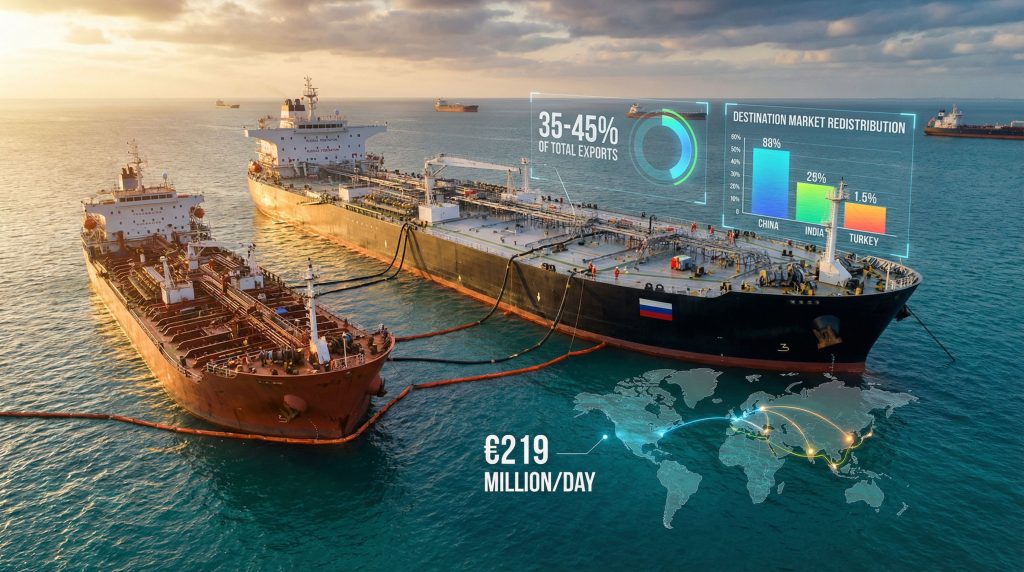
Arctic maritime conditions have fundamentally reshaped global oil logistics, creating operational constraints that extend far beyond traditional supply chain challenges. The convergence of specialized vessel requirements, seasonal navigation restrictions, and evolving regulatory frameworks has generated a complex ecosystem where ship-to-ship transfers of Russian oil products have become essential for maintaining continuous energy flows. Furthermore, these operations demonstrate sophisticated adaptation to both oil market trade disruptions and global tariff impacts.
Operational Dynamics of Harsh Weather Maritime Commerce
The Baltic Sea's winter navigation environment represents one of the most technically demanding operational theaters in global shipping. Ice formation patterns between mid-February and April create vessel classification requirements that dramatically limit available fleet capacity. Ice-strengthened vessels meeting Ice1-Ice2 specifications must coordinate with icebreaker escort services, creating logistical bottlenecks that ripple throughout regional energy export operations.
Critical operational constraints include:
• Non-ice-class vessel exclusions from Baltic ports during peak winter conditions
• Icebreaker dependency for Ice1-Ice2 certified tankers during severe frost periods
• Fleet capacity limitations forcing operational optimisation strategies
• Route efficiency considerations for specialised vessel deployment
The scarcity of appropriately certified vessels creates a fundamental operational paradox. Ice-class tankers essential for Baltic port loading operations represent a finite global resource, yet these specialised vessels operate inefficiently on extended routes to Asian markets. This capacity constraint drives the adoption of transfer strategies that optimise vessel utilisation across different operational phases.
Recent operational data demonstrates the scale of these constraints. In early 2026, severe frost conditions resulted in complete prohibition of non-ice-class vessels from Russian Baltic ports, while ice-strengthened vessels required mandatory icebreaker assistance. Consequently, this regulatory tightening occurred simultaneously with increased demand for energy products, creating acute pressure on available shipping capacity.
When big ASX news breaks, our subscribers know first
Geographic Distribution and Hub Development Patterns
Transfer operations have evolved beyond simple point-to-point logistics into sophisticated multi-hub networks designed to optimise vessel deployment and market access. The geographic distribution of these operations reflects both practical maritime considerations and evolving enforcement environments.
Primary operational locations demonstrate distinct strategic advantages:
| Location | Regional Function | Operational Advantages |
|---|---|---|
| Port Said Anchorage | Mediterranean Gateway | Suez Canal proximity, established infrastructure |
| Togo Waters | West African Hub | Permissive regulatory environment, Atlantic access |
| Al Hoceima, Morocco | Northern African Alternative | Strategic Mediterranean positioning |
| Augusta, Italy | European Access Point | Advanced port facilities, Asian route optimisation |
The evolution of transfer locations reflects adaptive responses to changing operational pressures. LSEG data indicates that operations initially concentrated at Port Said and Togo expanded to include Al Hoceima by February 2026, with Augusta emerging as an additional hub by March 2026. This geographic diversification suggests traders are continuously optimising location selection based on regulatory conditions, weather patterns, and market access requirements.
Specific operational examples illustrate this geographic strategy. Two tankers carrying 240,000 tons of naphtha from Ust-Luga conducted sequential transfers at both Port Said anchorage and Togo waters before final delivery to Singapore. This multi-point strategy demonstrates operational sophistication beyond simple cargo transfer, indicating strategic optimisation across multiple jurisdictions and regulatory environments.
Technical Transfer Methodologies and Vessel Optimisation
Ship-to-ship transfers of Russian oil products operate through carefully orchestrated vessel coordination designed to maximise efficiency while accommodating specialised equipment requirements. The technical aspects of these operations reflect the intersection of maritime engineering capabilities and operational constraints imposed by Arctic navigation requirements.
Vessel capacity documentation from verified operations reveals:
• 240,000-ton tanker operations for large-scale transfers
• 95,000-ton vessel deployment for medium-scale operations
• Sequential multi-location transfer capabilities
• Specialised ice-class vessel optimisation for Baltic loading phases
The operational methodology addresses fundamental efficiency concerns. Ice-class tankers focus exclusively on transport between Russian ports and Mediterranean or Atlantic transfer points, while conventional vessels handle subsequent long-haul delivery to Asian markets. This division of labour prevents ice-certified vessels from operating inefficiently on extended Asian routes while ensuring continuous port access during winter navigation restrictions.
February 2026 operational data shows that naphtha and fuel oil transfers exceeded 200,000 tons across Al Hoceima and Port Said locations alone. The scale of these operations, combined with the geographic distribution across multiple transfer points, indicates systematic rather than opportunistic operational approaches.
Economic Impact Analysis and Market Restructuring
The adoption of ship-to-ship transfers of Russian oil products has created substantial economic implications extending beyond immediate operational costs. These transfer operations represent strategic responses to market access challenges while maintaining commercial viability under constrained conditions.
Asian markets have become the primary destination for Russian refined product exports following the European Union's comprehensive embargo implementation in 2023. This geographic reorientation required fundamental restructuring of traditional shipping routes and logistics networks, with transfer operations enabling continued market access despite vessel and regulatory constraints.
The economic necessity of transfer operations stems from multiple factors:
• Ice-class vessel scarcity creating operational bottlenecks
• Long-haul routing inefficiencies for specialised Arctic vessels
• Market access maintenance requirements under sanctions regimes
• Elevated energy prices supporting complex logistics arrangements
Contemporary energy supply disruptions, including ongoing conflicts affecting Iranian production, have created market conditions where oil price rally insights support the additional costs associated with complex transfer logistics. This pricing environment makes sophisticated transfer operations economically viable despite their inherent complexity and operational risks.
The March 2026 operation involving 95,000 tons of naphtha destined for Augusta transfer demonstrates continued operational expansion. However, the persistence and growth of these operations across multiple geographic locations indicates that transfer methodologies have achieved economic sustainability rather than representing temporary adaptive measures.
Regulatory Environment and Enforcement Pattern Evolution
The regulatory landscape surrounding ship-to-ship transfers of Russian oil products continues evolving as enforcement authorities adapt to changing operational patterns. The geographic migration of transfer operations reflects ongoing adjustments to regulatory pressure and enforcement capabilities across different maritime jurisdictions.
European Union embargo implementation created the fundamental regulatory framework driving transfer operation adoption. The prohibition of Russian oil product imports forced geographic reorientation toward Asian markets, while sanctions on shipping services created additional operational constraints requiring innovative logistical solutions.
"The acute shortage of ice-class vessels, compounded by tightening Western sanctions, has forced traders to push more cargoes through transfer operations according to market sources."
Enforcement pattern evolution demonstrates regional variations:
• Mediterranean waters: Increased monitoring and documentation requirements
• West African locations: Variable enforcement consistency
• Atlantic transfer points: Developing surveillance capabilities
• Asian destination markets: Focus on origin documentation verification
The expansion of transfer operations to Al Hoceima in February 2026 represents geographic adaptation to changing enforcement environments. This location selection indicates traders continuously evaluate regulatory risks and enforcement probabilities when determining optimal transfer locations.
How Do Seasonal Conditions Affect Transfer Operations?
Winter navigation restrictions create operational windows that fundamentally reshape transfer scheduling and vessel deployment strategies. The Baltic Sea's ice formation patterns between mid-February and April establish absolute constraints on vessel access, forcing operational adaptation across the entire supply chain.
What Role Do Specialised Vessels Play in These Operations?
Ice-strengthened vessels meeting Ice1-Ice2 specifications represent the critical link enabling continued operations during Arctic maritime conditions. These specialised tankers must coordinate with icebreaker services during severe frost periods, creating scheduling dependencies that cascade throughout the transfer network.
Fleet Composition and Specialised Vessel Requirements
The vessel fleet enabling ship-to-ship transfers of Russian oil products reflects the specialised requirements of Arctic maritime operations combined with global market access needs. Ice navigation capabilities represent the primary technical constraint determining vessel suitability for Baltic loading operations.
Verified operational data indicates vessel capacity ranges from 95,000 tons to 240,000 tons deadweight, representing the scale requirements for efficient transfer operations. These capacity specifications reflect optimisation between transfer efficiency and vessel availability constraints in the specialised ice-class segment.
Technical requirements for transfer operations include:
• Ice1-Ice2 classification for Baltic port access
• Icebreaker escort coordination capabilities
• Transfer equipment specifications for at-sea operations
• Extended range capacity for multi-hub routing
The operational requirement that ice-strengthened vessels take icebreakers during severe frost conditions creates scheduling dependencies that further constrain available capacity. These technical requirements limit the global fleet of suitable vessels while simultaneously increasing operational complexity and coordination requirements.
Winter 2026 navigation restrictions demonstrated the critical importance of proper vessel classification. The complete prohibition of non-ice-class tankers from Russian Baltic ports during mid-February through April created absolute operational dependencies on properly certified vessels, eliminating flexibility in fleet deployment strategies.
The next major ASX story will hit our subscribers first
Market Psychology and Strategic Adaptation Mechanisms
The persistence and expansion of ship-to-ship transfers of Russian oil products reflect strategic adaptation rather than temporary crisis response. Market participants have demonstrated willingness to accept operational complexity in exchange for maintained market access and supply chain continuity. In addition, these operations align with broader OPEC production outlook considerations affecting global energy markets.
Strategic adaptation indicators include:
• Geographic diversification across multiple transfer hubs
• Operational scale increases throughout 2026
• Multi-location sequential transfer strategies
• Continued investment in specialised vessel capacity
The evolution from single-point transfers to multi-hub sequential operations represents sophisticated logistics optimisation. The documented case of tankers conducting transfers at both Port Said and Togo before Singapore delivery indicates strategic planning extending beyond immediate operational necessities.
Market psychology supporting these operations reflects confidence in long-term viability rather than short-term adaptation. For instance, the continued expansion of transfer locations and operational scale suggests market participants view these methodologies as sustainable business practices rather than temporary measures, contrasting with easing oil prices trend expectations.
Technological Innovation and Operational Efficiency Enhancement
Ship-to-ship transfers of Russian oil products have driven technological innovation in maritime logistics, particularly in areas of transfer efficiency, safety protocols, and route optimisation. The operational demands of multi-hub transfer strategies have accelerated adoption of advanced maritime technologies.
Innovation areas include:
• Transfer equipment optimisation for at-sea operations
• Route planning systems accounting for ice navigation constraints
• Coordination technologies for multi-vessel operations
• Safety protocol enhancement for Arctic maritime conditions
The technical demands of coordinating ice-class vessels with conventional tankers across multiple geographic locations require sophisticated planning and communication systems. These operational requirements have driven investment in maritime technology platforms supporting complex multi-vessel coordination.
Operational efficiency improvements reflect learning curve effects from repeated transfer operations. The scale and frequency of documented transfers indicate that operational procedures have achieved standardisation levels supporting routine commercial operations rather than experimental logistics approaches.
Future Operational Evolution and Strategic Implications
The trajectory of ship-to-ship transfers of Russian oil products suggests continued evolution toward more sophisticated operational networks. Current operational patterns indicate systematic development of transfer capabilities rather than temporary adaptive responses to regulatory constraints.
Emerging operational trends include:
• Geographic expansion of transfer hub networks
• Increased operational scale and frequency
• Enhanced coordination between specialised vessel categories
• Integration with broader Asian market supply chains
The March 2026 expansion to Augusta operations alongside continued Al Hoceima and Port Said activity demonstrates ongoing network development. This geographic diversification suggests strategic planning for long-term operational sustainability rather than reactive adaptation to immediate constraints.
Investment patterns in specialised vessel capacity and transfer infrastructure indicate market participant confidence in long-term operational viability. The continued development of these capabilities despite regulatory uncertainties suggests fundamental structural changes in energy logistics rather than temporary crisis adaptation measures.
Furthermore, these developments occur within a broader context of evolving global energy trade patterns, where transfer operations represent one element of comprehensive supply chain restructuring responding to geopolitical and environmental constraints.
Please note: This analysis involves forecasting and speculation based on available operational data. Market conditions, regulatory environments, and operational patterns may change significantly. Readers should conduct independent research and consider multiple information sources when making business or investment decisions related to energy logistics and maritime operations.
Want to Capitalise on Energy Market Disruptions?
Discovery Alert's proprietary Discovery IQ model delivers instant notifications on significant ASX mineral and energy discoveries, helping investors identify actionable opportunities whilst complex supply chain shifts reshape global markets. Explore how major discoveries can generate substantial returns and begin your 14-day free trial today to position yourself ahead of the market.