May 22, 2026
The Hidden Cost Advantage Reshaping Mining's Competitive Hierarchy
The economics of mining have rarely been more nuanced. Across commodity cycles, operators have traditionally competed on ore grade, labour productivity, and proximity to infrastructure. Yet a structural realignment is underway, one where the ability to control energy expenditure, secure water independence, and demonstrate measurable social returns is beginning to separate tier-one performers from the rest of the field.
This shift is not cosmetic. Institutional investors managing billions in resources-sector mandates are applying increasingly granular ESG scoring frameworks that influence capital allocation, cost of debt, and access to offtake agreements. Furthermore, mining companies unable to demonstrate credible sustainability pathways face growing risk premiums in their financing structures, regardless of the underlying commodity quality of their assets.
Within this context, the Sibanye-Stillwater sustainability strategy offers a particularly instructive case study. The company's 2025 Report Suite, covering the period from January 1 to December 31, 2025, documents a comprehensive set of commitments and measurable outcomes across energy transition, water stewardship, social investment, and portfolio diversification. What emerges is a framework designed not to satisfy compliance checklists but to embed ESG as a direct driver of cost competitiveness and long-term operational resilience.
When big ASX news breaks, our subscribers know first
What Is Sibanye-Stillwater's Sustainability Framework? A Four-Pillar Analysis
At its core, the Sibanye-Stillwater sustainability architecture is structured around four integrated themes: Planet, People, Prosperity, and Governance. These are not independent commitments operating in silos. Rather, they function as an interlocking system where progress in one dimension directly reinforces outcomes in others.
The company's Report Suite 2025 positions these four pillars as foundational to both environmental performance and long-term cost competitiveness, reflecting a deliberate choice to treat sustainability as a business model driver rather than a reputational exercise.
Planet: Climate Leadership and Environmental Stewardship Targets
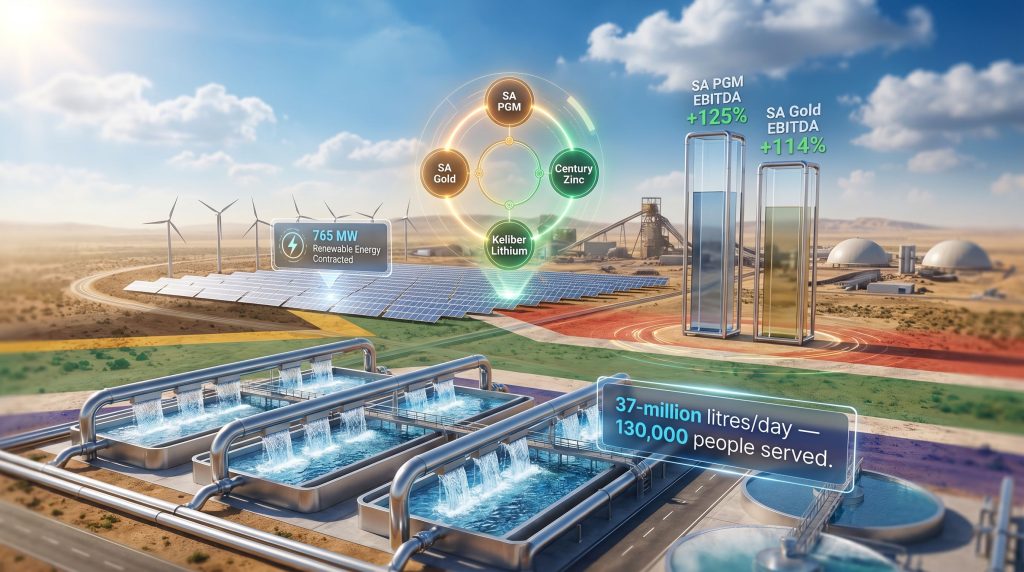
The Planet pillar encompasses the company's energy transition strategy, greenhouse gas reduction targets, and water stewardship programmes. With 765 MW of renewable energy contracted through Power Purchase Agreements and 293 GWh of clean energy already generated in 2025, the company has made tangible progress toward its decarbonisation milestones. The broader case for mining decarbonisation benefits extends well beyond regulatory compliance, encompassing genuine cost savings and competitive differentiation.
A key detail often overlooked in headline reporting is the Scope 1 and Scope 2 emissions baseline against which progress is measured. Sibanye-Stillwater's 2021 combined baseline stood at 7,406,966 tCO₂e, a figure that provides critical context for understanding the scale of ambition behind its 42% reduction target by 2030 and full carbon neutrality by 2040.
People: Social Inclusion, Community Rights, and Workforce Resilience
The People pillar addresses workforce wellbeing, community co-creation, and the company's obligations to host communities. The completion of housing for Marikana widows represents a deeply significant social milestone, acknowledging historical obligations arising from one of the most consequential events in modern South African mining history. In addition, a three-year wage agreement concluded without labour disruption signals mature industrial relations, a meaningful indicator of workforce stability in a sector historically defined by labour volatility.
Prosperity: Shared Economic Value and Post-Mining Economic Development
The Prosperity pillar extends value creation beyond mine gates, encompassing local procurement strategies, community ownership trusts, and post-mining economic development. In South Africa, 21.5% of total procurement, equivalent to R6.4-billion, is directed to local suppliers, generating an estimated 260,000-plus job impact across host communities. This procurement multiplier effect is one of the most underappreciated mechanisms by which mining companies transmit value into regional economies.
Governance: Ethical Accountability, Operational Excellence, and Transparency
The Governance pillar underpins all others, providing the oversight architecture through which commitments are tracked, reported, and held to account. The Report Suite 2025 itself, encompassing detailed operational, financial, and strategic disclosures, is an expression of this commitment to transparency and stakeholder engagement.
How Does Sibanye-Stillwater's Energy Transition Strategy Work?
Renewable Energy Contracting: Scale, Timeline, and Cost Impact
The financial case for Sibanye-Stillwater's renewable energy investment is compelling and often more quantitatively specific than peer company disclosures. The following table summarises the key metrics from the 2025 Report Suite:
| Metric | Detail |
|---|---|
| Total Renewable Capacity Contracted | 765 MW via Power Purchase Agreements |
| Clean Energy Generated (2025) | 293 GWh |
| Annual Energy Cost Savings (from 2028) | R1-billion-plus per year |
| Electricity Cost Advantage vs. Eskom Tariffs | 20%–30% lower at commercial steady state |
| Annual GHG Emissions Reduction (from 2028) | 2.63-million tonnes CO₂ equivalent |
| Share of Total Emissions Reduced | 41% |
| CO₂ Emissions Prevented (2025) | 316,875 tCO₂ |
A less-discussed dimension of this energy strategy is its competitive signalling value. South African mining operators are acutely exposed to Eskom's wholesale tariff trajectory. By locking in Power Purchase Agreement pricing well below forecast wholesale rates, the company is effectively hedging its energy cost base over a multi-year horizon, a form of operational risk management that compounds favourably as grid tariffs continue to escalate. The rapid adoption of renewable energy in mining is, consequently, transforming the sector's long-term cost structure in ways that reward early movers.
Why 2028 Is the Critical Inflection Point for Sibanye-Stillwater's Energy Economics
The year 2028 represents the point at which the company's contracted renewable energy projects are expected to reach commercial operational steady state. At that juncture, the full financial and emissions benefits become realisable simultaneously: R1-billion-plus in annual savings, 2.63-million tonnes of annual CO₂ equivalent reductions, and electricity costs 20% to 30% below forecast Eskom wholesale tariffs.
For investors modelling long-term operational cost trajectories, this creates a measurable inflection point in the company's all-in sustaining cost structure that is not yet fully reflected in near-term consensus forecasts.
Decarbonisation Milestones: 2030 and 2040 Targets Explained
The decarbonisation roadmap spans nearly two decades from its 2021 baseline:
- 2021 Baseline: 7,406,966 tCO₂e (Scope 1 and Scope 2 combined)
- 2024 Achievement: 16% reduction in GHG emissions; 111 GWh in energy savings realised
- 2025 Achievement: 293 GWh of clean energy generated; 316,875 tCO₂ prevented
- 2030 Target: 42% reduction in Scope 1 and Scope 2 emissions from the 2021 baseline
- 2040 Target: Full carbon neutrality across operations
The 2024 milestone of a 16% reduction with 111 GWh in energy savings is particularly instructive because it demonstrates that the company is tracking ahead of a simple linear progression toward its 2030 target. However, achieving the remaining reduction will require accelerating renewable projects from contracted status to full commercial operation, making the 2026 to 2028 execution window the most critical period in the decarbonisation roadmap.
What Is Sibanye-Stillwater's Water Stewardship Strategy?
Six Dedicated Water Treatment Plants: Capacity and Community Impact
Water management in South Africa's mining regions is as much a strategic risk variable as it is an environmental obligation. Municipal water supply volatility, regulatory pressure on industrial water users, and the physical scarcity of freshwater in arid mining corridors make water independence a genuine competitive differentiator.
| Water Infrastructure Metric | Performance Data |
|---|---|
| Dedicated Water Treatment Plants | 6 operational facilities |
| Daily Potable Water Production Capacity | 37-million litres |
| Population Served Daily (equivalent) | 130,000 people |
| SA Gold Water Independence | 94% achieved |
| SA Gold Water-Related Cost Savings | R260-million realised |
| SA PGM Wastewater Treatment Plants | 13 plants recycling ~90% of effluent |
| Reduction in Rand Water Dependency (since 2024) | 40% reduction achieved |
| Water Independence Target by 2028 | 90% across operations |
How South African Gold Operations Achieved 94% Water Independence
The 94% water independence achieved by SA Gold operations reflects years of systematic investment in on-site water treatment and recycling infrastructure. This near-total decoupling from municipal supply means that operational continuity is substantially insulated from Rand Water supply disruptions, tariff increases, or restrictions imposed during drought conditions.
The R260-million in water-related cost savings realised across SA Gold operations quantifies the return on this infrastructure investment, providing a direct financial justification for continued capital allocation toward water treatment capacity.
The SA PGM Wastewater Recycling Model: Turning Effluent Into Operational Input
The SA PGM operations employ 13 wastewater treatment plants that recover approximately 90% of effluent for re-use within mining processes. This closed-loop water management approach transforms what would otherwise be a discharge liability into an operational asset, reducing both freshwater intake requirements and wastewater management costs simultaneously.
The 40% reduction in Rand Water dependency since 2024 demonstrates the pace of progress. Furthermore, the target of 90% overall water independence by 2028 positions Sibanye-Stillwater as one of the more ambitious large-scale operators in the region on this metric. Considering natural capital in mining more broadly, water stewardship of this calibre represents a significant and often undervalued form of asset preservation.
Water Independence as a Risk Management Tool in South Africa's Resource-Constrained Environment
From a risk management perspective, achieving 90% water independence by 2028 effectively reclassifies water supply from an uncontrollable external variable to a manageable internal input. For operations in water-stressed regions, this reclassification has material implications for operational continuity planning, insurance frameworks, and regulatory compliance risk.
How Is Sibanye-Stillwater Delivering Social and Community Value?
The Sibanye-Stillwater Foundation: Social Investment Architecture
The social investment programme is structured through multiple mechanisms operating at different levels of community engagement:
- R55.6-million committed to the Sibanye-Stillwater Foundation in March 2026
- Completion of housing for Marikana widows, fulfilling a long-standing social obligation
- R453-million directed to community and employee ownership trusts, providing direct economic participation mechanisms
- Three-year wage agreement concluded without labour disruption, signalling industrial relations maturity
Local Procurement as a Socioeconomic Multiplier
In South Africa, 21.5% of total procurement, equivalent to R6.4-billion, is directed to local suppliers, generating an estimated 260,000-plus job impact across host communities.
This procurement figure deserves deeper analytical treatment than it typically receives. The 260,000-plus job impact estimate reflects not just direct supplier employment but the secondary multiplier effects through supply chains, household expenditure, and local business activity. In communities where formal employment alternatives are limited, this procurement strategy functions as a de facto economic development programme embedded within normal commercial operations.
Post-Mining Economic Development: Building Livelihoods Beyond the Mine Gate
The Report Suite 2025 emphasises that collaboration with host communities is ongoing to support sustainable livelihoods and long-term post-mining economic opportunities. This framing is significant: it acknowledges the finite nature of mining operations and commits to developing economic alternatives before closure, rather than addressing community transition as an afterthought.
The R453-million in community and employee ownership trust contributions provides a capital base for community-owned economic activity that can persist beyond the operational life of individual mines, representing a more durable approach to post-mining value retention than one-time social investment programmes.
How Are Sibanye-Stillwater's Operations Performing Across Key Commodities?
SA PGM Operations: Production, Cost Pressures, and EBITDA Recovery
The SA PGM operations produced approximately 1.8-million 4E ounces in 2025, including attributable volumes and purchased concentrate, in line with guidance. This result was achieved despite a notable headwind: a 29% decline in surface production attributable primarily to heavy rainfall events and a tailings storage facility transition.
- All-in Sustaining Cost (AISC): R24,193 per 4E ounce ($1,353/4Eoz), a 10% increase driven by PGM-price-linked royalty payments and higher sustaining capital
- 2025 EBITDA: R16.7-billion, representing a 125% increase driven by stronger second-half PGM basket prices
The 10% AISC increase is worth contextualising. A portion of the cost rise reflects higher royalty payments, which are mechanically linked to higher PGM prices. This means the cost increase is partially self-funding through increased revenue, a dynamic that headline AISC comparisons can obscure.
SA Gold Operations: Navigating Seismic Challenges While Leveraging Price Tailwinds
The Kloof mine's seismicity and infrastructure constraints led to deliberate cessation of mining in certain high-risk areas, reflecting the company's stated commitment to safe and sustainable mining practices. This operational discipline came at a production cost:
- Production: 19,668 kg (632,341 oz), a 10% decline inclusive of DRDGOLD surface operations
- Gold price tailwind: 39% year-on-year gold price appreciation more than offset the 14% reduction in gold sold
- 2025 EBITDA: R12.5-billion, a 114% increase year-on-year
Gold reached an all-time high spot price of $5,595/oz in late January 2026, providing extraordinary financial leverage to gold-exposed operations and fundamentally reshaping the profitability profile of the SA Gold segment.
The decision to exclude high-grade but high-risk mining areas at Kloof deserves investor attention. While it reduced near-term production, it also demonstrates a governance discipline that prioritises operational continuity and workforce safety over short-term output maximisation. Long-term mine planning integrity, evidenced by the exclusion of 1.4-million reserve ounces from the official reserve base, reflects the same conservative risk management philosophy.
US PGM Operations: Restructuring Payoff and Return to Profitability
The restructuring of US PGM underground operations in the fourth quarter of 2024 delivered measurable results in 2025:
- Production: 284,069 oz, exceeding annual guidance
- AISC: $1,203/oz, below guidance, demonstrating post-restructuring cost discipline
- Adjusted EBITDA: $249-million (R4.4-billion), marking a return to profitability
- Recycling Operations: Contributed adjusted EBITDA of $228-million (R4.1-billion), supported by tax credits
The recycling operations' contribution is structurally significant. Unlike primary mining, recycling activities carry lower capital intensity, shorter lead times, and more flexible throughput capacity. The $228-million adjusted EBITDA from recycling demonstrates the financial value of the circular economy model as a complement to primary production.
Century Zinc Tailings Operation (Australia): Circular Economy in Action
| Metric | 2025 Performance |
|---|---|
| Payable Zinc Production | 101,000 t, up 22% year-on-year |
| AISC Improvement | 17% improvement to $1,921/t (R34,356/t) |
| Adjusted EBITDA | $88-million (R1.6-billion) |
| Key Drivers | Production stability, firmer zinc prices, lower treatment charges |
The Century operation exemplifies the tailings retreatment model at commercial scale. By extracting residual zinc value from historical mine waste, the operation simultaneously generates revenue, reduces long-term tailings liability, and avoids the permitting, capital, and environmental costs associated with developing a greenfield mine.
The next major ASX story will hit our subscribers first
How Are Mineral Reserves and Resources Evolving Across Sibanye-Stillwater's Portfolio?
Reserve movements in 2025 tell a nuanced story across different commodity segments, with additions in several areas offsetting deliberate exclusions in others.
SA PGM Reserve Growth: The Marikana E4 Upper Group 2 Mechanised Project
Mineral reserves in the SA PGM portfolio increased 4.7% through the Marikana E4 Upper Group 2 mechanised project, adding 2.9-million ounces following completion of a prefeasibility study. The Upper Group 2 reef is a well-established PGM horizon in the Bushveld Complex, and the mechanised mining approach targeted here typically offers lower unit costs than conventional narrow-reef mining methods. The conversion of resource to reserve at this scale represents a meaningful addition to the company's long-term production profile.
SA Gold Reserve Adjustments: Managing High-Risk Areas at Kloof
The deliberate exclusion of 1.4-million reserve ounces at Kloof reflects the same safety-first operational philosophy that drove the production decline in 2025. Removing high-grade but structurally compromised ground from the reserve base is a conservative but defensible accounting decision that prioritises long-term mine planning integrity over headline reserve growth.
New Reserve Declarations Across Emerging Commodities
The portfolio's commodity diversification is reflected in a series of new reserve declarations:
- Keliber Lithium Project (Finland): Exploration activity delivered a 40,000 tonne mineral resource increase, reinforcing Keliber's position as a meaningful contributor to Europe's domestic battery materials supply chain
- Mt Lyell Copper Project (Australia): Feasibility study completion resulted in a copper reserve of 478,000 t, providing a formal development pathway for a historically significant Australian copper asset
- Cooke Tailings Project (South Africa): 25.2-million pounds of uranium oxide mineral reserve declared following completion of the tailings feasibility study, representing an emerging optionality play on nuclear energy demand
The uranium oxide reserve declaration at Cooke is a particularly underappreciated development. As nuclear energy regains strategic importance in global energy transition planning, uranium-bearing tailings assets in politically stable jurisdictions are attracting renewed interest from developers and offtake partners. Indeed, the surging critical minerals demand underpinning the energy transition is making such optionality increasingly valuable to long-term investors.
Sibanye-Stillwater Sustainability Strategy vs. Industry Benchmarks
Comparing ESG Commitments Across Major Diversified Miners
| ESG Dimension | Sibanye-Stillwater Commitment | Industry Benchmark Context |
|---|---|---|
| GHG Reduction Target (2030) | 42% from 2021 baseline | Broadly aligned with Paris Agreement 1.5°C pathways |
| Carbon Neutrality Target | 2040 | Ahead of many mid-tier mining peers |
| Renewable Energy Secured | 765 MW | Significant for a South Africa-based operator |
| Water Independence Target | 90% by 2028 | Above average for water-stressed mining regions |
| Local Procurement Share | 21.5% (R6.4-billion) | Demonstrates meaningful host community economic integration |
What Differentiates Sibanye-Stillwater's Approach in the PGM Sector
Several dimensions distinguish the Sibanye-Stillwater sustainability strategy from sector peers. First, the specificity of its financial quantification: few mining companies disclose electricity cost savings in absolute rand terms against a named grid provider, as Sibanye-Stillwater does with its Eskom tariff comparison.
Second, the operational integration of circular economy principles across multiple jurisdictions, from US PGM recycling to Australian zinc tailings retreatment to South African uranium oxide recovery, positions sustainability as a revenue-generating activity rather than solely a cost-management exercise. Third, the social investment architecture extends beyond philanthropy to structural mechanisms such as community ownership trusts that build lasting economic capacity. This broader mining sustainability transformation is increasingly defining which operators attract long-term institutional capital.
What Does the Future Hold for Sibanye-Stillwater's Sustainability-Linked Value Creation?
Balancing Operational Resilience with Accelerating ESG Commitments Through 2030
The period from 2026 to 2030 will test whether the commitments outlined in the Report Suite 2025 translate into delivered outcomes. The energy transition timeline requires successful commissioning of contracted renewable projects. The water independence target demands continued infrastructure execution. Furthermore, the social investment pipeline must demonstrate measurable community development outcomes rather than simply growing in nominal value.
How Commodity Price Leverage Funds the Sustainability Transition
There is a structural logic to the timing of Sibanye-Stillwater's sustainability acceleration. With gold prices near record levels, SA PGM EBITDA up 125% to R16.7-billion, SA Gold EBITDA up 114% to R12.5-billion, and US PGM operations returning to profitability with $249-million in adjusted EBITDA, the company is generating the cash flows necessary to fund capital-intensive sustainability infrastructure without compromising balance sheet resilience.
The Strategic Role of Green Metals, Battery Minerals, and Recycling in Long-Term Positioning
The emerging commodity portfolio, encompassing Finnish lithium through Keliber, Australian copper through Mt Lyell, South African uranium through Cooke, and PGM recycling in the United States, reflects a deliberate repositioning toward materials critical to the global energy transition.
As multipolar trade dynamics reshape supply chain priorities and beneficiation becomes more strategically important, this diversified green metals and gold platform provides Sibanye-Stillwater with multiple vectors for long-term value creation that extend well beyond conventional PGM and gold mining cycles.
With disciplined capital allocation, improving operational stability across multiple jurisdictions, and 765 MW of renewable energy secured, Sibanye-Stillwater is structurally positioned to convert sustainability commitments into measurable financial and reputational advantages as the global energy transition accelerates.
Key Takeaways: Sibanye-Stillwater's Sustainability Strategy at a Glance
- Energy: 765 MW renewables contracted; R1-billion-plus annual savings expected from 2028; 41% emissions reduction targeted; 2040 carbon neutrality goal
- Water: Six treatment plants; 37-million litres per day capacity; 94% SA Gold water independence achieved; 90% group-wide target by 2028
- Social: R453-million to community and employee ownership trusts; R6.4-billion local procurement; 260,000-plus estimated job impact; Marikana widows housing completed
- Reserves: SA PGM reserves up 4.7%; new copper, uranium oxide, and lithium reserves declared across Australia, South Africa, and Finland
- Financial: SA PGM EBITDA up 125% to R16.7-billion; SA Gold EBITDA up 114% to R12.5-billion; US PGM returned to profitability at $249-million adjusted EBITDA
Frequently Asked Questions: Sibanye-Stillwater Sustainability Strategy
What are Sibanye-Stillwater's main sustainability targets?
The company's primary sustainability targets include a 42% reduction in Scope 1 and Scope 2 GHG emissions by 2030 from a 2021 baseline, full carbon neutrality by 2040, 90% water independence across operations by 2028, and continued expansion of local procurement and community trust contributions.
How much renewable energy has Sibanye-Stillwater contracted?
A total of 765 MW has been contracted through Power Purchase Agreements. In 2025, these projects collectively generated 293 GWh of clean energy and prevented 316,875 tCO₂ in emissions.
What is Sibanye-Stillwater's carbon neutrality timeline?
The company targets a 42% reduction in Scope 1 and Scope 2 emissions by 2030 and full carbon neutrality by 2040, measured against a 2021 baseline of 7,406,966 tCO₂e.
How does Sibanye-Stillwater contribute to local communities in South Africa?
The company directs 21.5% of total procurement (R6.4-billion) to local suppliers, has contributed R453-million to community and employee ownership trusts, committed R55.6-million to the Sibanye-Stillwater Foundation in March 2026, and completed housing for Marikana widows.
What is the Report Suite 2025 and what does it cover?
The Report Suite 2025 is a comprehensive set of reports and supplements covering the period from January 1 to December 31, 2025, providing detailed operational, financial, ESG, and strategic disclosures. It encompasses energy transition progress, water stewardship data, social investment outcomes, mineral reserve updates, and commodity-by-commodity operational performance.
How does Sibanye-Stillwater's water strategy reduce operational risk?
By targeting 90% water independence by 2028, the company materially reduces its exposure to municipal water supply disruptions, Rand Water tariff increases, and drought-related restrictions. The SA Gold operations have already achieved 94% water independence, generating R260-million in cost savings as a direct financial return on water infrastructure investment.
What is the company's approach to post-mining economic development?
The strategy involves building sustainable livelihoods and economic capacity in host communities before operational closure, using mechanisms including community ownership trusts, local procurement programmes, and enterprise development initiatives. The R453-million in trust contributions is specifically designed to provide communities with a capital base for economic activity that persists beyond individual mine operational lifetimes. For further context on how leading operators are approaching this challenge, Sibanye-Stillwater's sustainability pages provide additional detail on their long-term community commitments.
Disclaimer: This article contains forward-looking statements relating to production guidance, financial targets, emissions reduction pathways, and commodity price scenarios. These statements involve known and unknown risks and uncertainties that could cause actual results to differ materially from those projected. Investors should conduct independent due diligence and seek professional financial advice before making investment decisions. Past operational performance is not necessarily indicative of future results.
Want to Spot the Next Major Mineral Discovery Before the Market Does?
Discovery Alert's proprietary Discovery IQ model delivers real-time alerts on significant ASX mineral discoveries — instantly turning complex mineral data into actionable investment insights for both short-term traders and long-term investors. Explore historic examples of exceptional discovery returns and begin your 14-day free trial today to position yourself ahead of the market.