
July 9, 2026
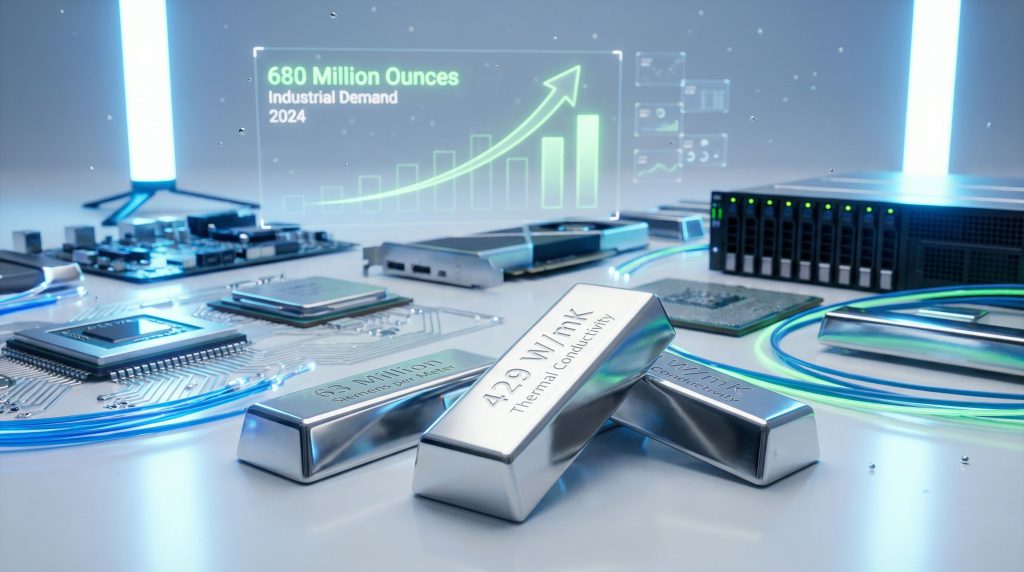
The semiconductor industry stands at the precipice of unprecedented transformation, driven by computational demands that exceed traditional electronic architectures. Modern artificial intelligence systems require materials that can handle extreme electrical loads, thermal stress, and signal integrity requirements far beyond conventional computing applications. This technological revolution has positioned one precious metal as an indispensable component in the digital infrastructure that powers machine learning, neural networks, and data processing at unprecedented scales. The integration of silver in artificial intelligence hardware represents a fundamental shift in material science applications that is reshaping global supply chains.
What Makes Silver Essential for AI Technology Development?
Unmatched Electrical Conductivity Properties
Silver possesses the highest electrical conductivity of any metal at 63.01 million siemens per meter, establishing it as the premium choice for high-frequency applications in AI hardware. This conductivity rating exceeds copper by approximately 5.7%, translating to measurably superior performance in densely packed semiconductor environments where signal integrity is paramount.
The electrical properties that make silver indispensable for AI applications extend beyond raw conductivity measurements. Unlike alternative materials, silver maintains consistent electrical performance across wide temperature ranges, a critical characteristic in AI processors that generate substantial heat during intensive computational tasks.
Wire bonding applications in GPU manufacturing leverage silver's conductivity advantages, particularly in high-current pathways where traditional materials experience voltage drops that compromise system performance. Modern AI accelerators require thousands of interconnections, each demanding materials that can handle increased power delivery without degradation.
Thermal Management in High-Performance Computing
AI processors generate thermal loads that exceed conventional computing by orders of magnitude, necessitating advanced heat dissipation strategies. Silver's thermal conductivity rating of 429 W/m·K represents the highest among all metals, providing approximately 7% superior heat transfer compared to copper alternatives.
Thermal interface materials incorporating silver nanoparticles achieve conductivity ratings of 3-5 W/m·K, compared to unfilled compounds at 0.2-0.3 W/m·K. This dramatic improvement enables AI data centres to maintain processor temperatures within operational specifications whilst maximising computational throughput.
The thermal management challenge in AI infrastructure extends beyond individual processors to entire server architectures. Modern hyperscale data centres operate servers consuming 10-15 kW per unit, with high-end AI servers reaching 20+ kW. Silver-enhanced thermal solutions enable these systems to operate reliably at power densities that would cause failure with conventional materials.
When big ASX news breaks, our subscribers know first
How Are Data Centres Driving Silver Demand Growth?
Infrastructure Requirements Analysis
Global IT power capacity has experienced exponential growth, increasing from 0.93 GW in 2000 to projections approaching 50 GW by 2025. This represents a 5,252% increase that directly correlates with physical infrastructure requirements, including server hardware, networking equipment, and power management systems that incorporate significant silver content.
Global IT Power Capacity Evolution
| Year | Power Capacity (GW) | Growth Rate | Infrastructure Impact |
|---|---|---|---|
| 2000 | 0.93 | Baseline | Traditional computing |
| 2010 | 12.5 | 1,244% | Cloud emergence |
| 2020 | 35.2 | 182% | AI acceleration begins |
| 2025 | 49.8 | 41% | Full AI deployment |
The International Energy Agency projects data centre electricity consumption will increase from 1% of global electricity in 2021 to 2-3% by 2030. This growth trajectory represents not merely increased power consumption, but fundamental changes in computing architecture that demand higher-performance materials throughout the infrastructure stack. Furthermore, the silver market squeeze creates additional pressure on supply chains supporting this infrastructure expansion.
Server Architecture and Silver Integration
Enterprise server motherboards incorporate 2-5 grams of silver in conductive traces, vias, and connector plating. High-performance AI accelerators require increased silver loading due to enhanced power delivery requirements and thermal management needs.
Modern server designs utilise silver in multiple critical applications:
• Printed circuit board traces: Enable high-frequency signal transmission with minimal loss
• Connector plating: Maintains contact resistance below 50 milliohms across 10,000+ insertion cycles
• Thermal compounds: Optimise heat transfer from processors to cooling systems
• Power delivery networks: Handle increased current requirements in AI processors
The evolution toward AI-specific hardware architectures has intensified silver requirements. Custom AI processors from companies developing machine learning accelerators incorporate specialised cooling solutions, high-density interconnects, and power management systems that utilise silver's superior properties throughout the design.
5G Network Infrastructure Dependencies
Fifth-generation wireless networks serve as critical data transmission infrastructure connecting edge devices to centralised AI processing centres. Base stations operating at sub-6 GHz and millimetre-wave frequencies require silver-plated connectors, antenna arrays, and signal processing components to maintain signal integrity at high frequencies.
A typical 5G base station incorporates 50-100 grams of silver distributed across:
• Antenna arrays: Multi-element designs for beamforming and MIMO applications
• RF filters: Frequency-selective components operating at gigahertz frequencies
• Power amplifiers: High-efficiency designs for extended coverage
• Connector systems: Weather-resistant, high-reliability interconnections
The deployment of 5G networks represents a multi-year infrastructure buildout that creates sustained demand for silver-intensive components. Moreover, the silver tariffs impact on global supply chains affects the economics of these infrastructure projects. Network operators have announced thousands of new base station installations annually, each requiring specialised components that leverage silver's electrical and thermal properties.
Which AI Hardware Components Consume the Most Silver?
Printed Circuit Board Manufacturing
The global printed circuit board market, valued at approximately $71-75 billion in 2023-2024, incorporates silver through specialised conductive inks and substrate materials. The conductive inks segment specifically represents $1.5-2.5 billion annually, with silver-based formulations commanding premium positioning due to performance advantages.
PCB manufacturing for AI applications demands higher trace densities, increased layer counts, and enhanced thermal performance compared to conventional electronics. These requirements drive increased silver content per unit, with AI-specific boards incorporating silver in:
• Via-fill applications: Connecting traces between layers in high-density designs
• Surface finishes: Providing oxidation resistance and solderability
• Thermal vias: Enhancing heat transfer through board substrates
• High-frequency traces: Maintaining signal integrity in multi-gigahertz applications
Advanced PCB designs for AI hardware utilise silver-enhanced materials to achieve thermal conductivity improvements of 200-300% compared to standard FR-4 substrates, enabling higher component densities without thermal management failures. Additionally, developments in AI and EV technology have significantly increased demand for these advanced PCB designs.
Semiconductor Packaging Applications
Modern AI processors utilise advanced packaging technologies that incorporate silver in multiple critical applications. Die-attach materials, wire bonding, and thermal interface applications leverage silver's combined electrical and thermal properties to enable reliable operation at power levels exceeding conventional processors.
High-end GPUs designed for AI applications, such as NVIDIA's H100 and H200 processors, incorporate 3-8 grams of silver in substrate and interconnect materials, with additional 2-3 grams in packaging and thermal interface applications. These quantities reflect the increased complexity and power requirements of AI-specific processor designs.
"Silver consumption in semiconductor packaging has increased by approximately 15-20% above traditional electronics usage patterns, driven primarily by AI processor thermal management requirements and increased power delivery specifications."
Wire bonding applications in GPU manufacturing increasingly utilise silver wire for critical power and thermal pathways. A single GPU incorporating 50,000+ pins may require 100-200 bond wires, with silver applications concentrated in high-current connections where electrical resistance must be minimised.
Power Management Systems
Voltage regulator modules and power delivery networks in AI servers incorporate substantial silver content in solder compositions, PCB traces, and capacitor terminations. These systems must handle power delivery requirements that exceed conventional computing by 300-400%, necessitating materials with superior electrical and thermal properties.
Silver-oxide batteries provide reliable backup power for IoT sensors and edge computing devices that support AI infrastructure. These applications require high energy-to-weight ratios and multi-year shelf life characteristics that silver chemistry uniquely provides.
Power management integrated circuits utilise silver in bond wire applications and thermal management solutions, enabling efficient voltage conversion at the high switching frequencies required for AI processor power delivery. However, the silver market transformation continues to influence component pricing and availability across these critical applications.
What Are the Market Dynamics Affecting Silver-AI Demand?
Industrial Consumption Patterns
Industrial silver demand reached approximately 570-620 million ounces in 2024, with electronics applications representing 25-30% of this consumption. The emergence of AI infrastructure has created demand growth rates of 15-20% above traditional electronics expansion patterns, reflecting the structural shift toward more silver-intensive computing architectures.
This demand profile differs significantly from cyclical technology trends. AI data centre construction represents multi-year capital expenditure programmes that are relatively inelastic to short-term price fluctuations. Unlike consumer electronics, where manufacturers can implement design changes or material substitutions, AI infrastructure requires consistent performance specifications that limit flexibility in material choices.
The electronics segment has demonstrated consistent annual growth of 3-5% over the past decade, excluding exceptional periods of AI acceleration. Current projections suggest AI-related applications will contribute an additional 2-3 percentage points of annual demand growth through the remainder of the decade.
Supply Chain Concentration Risks
Global silver production exhibits significant geographic concentration, with five countries accounting for approximately 65-70% of total supply:
• Mexico: Leading producer with extensive primary and byproduct operations
• Peru: Major mining operations with significant byproduct silver from copper mines
• China: Substantial domestic production supporting internal industrial demand
• Russia: Significant production capacity with geopolitical supply considerations
• Poland: European production supporting regional industrial requirements
Approximately 70% of global silver supply originates as a byproduct of copper, lead, and zinc mining operations. This production structure creates supply constraints during periods when primary metal prices discourage mining activity, potentially limiting silver availability during periods of increased AI-related demand.
Electronic waste recycling provides 60-100 million ounces of silver annually, representing 10-15% of total industrial supply. In addition, the ongoing silver market analysis reveals that developed nations achieve recycling rates of 40-50% through formal collection systems, whilst global e-waste recycling remains at 15-20% comprehensive collection rates.
Price Elasticity in High-Tech Applications
Historical analysis demonstrates that industrial silver demand exhibits limited price sensitivity during periods of technological transition. When silver prices exceeded $50 per ounce during 2008, 2011, and 2021-2024 periods, industrial demand typically decreased by only 2-4% per 20% price increase.
Silver in artificial intelligence applications demonstrates even lower price elasticity due to performance requirements that cannot be satisfied by alternative materials. The cost of silver in a high-end AI server represents less than 0.1% of total system value, making material substitution economically unfavourable even during periods of elevated silver prices.
Long-term supply contracts between technology manufacturers and silver suppliers have become increasingly common, providing price stability for multi-year production planning whilst ensuring material availability during periods of supply constraint.
How Does Silver Enable the Renewable Energy-AI Ecosystem?
Solar Panel Integration Requirements
Solar photovoltaic applications consumed approximately 197.6 million ounces of silver in 2024, representing the largest single industrial application for the metal. This consumption has grown dramatically from 11% of industrial demand in 2014 to approximately 29% by 2024, reflecting massive global solar deployment.
Modern solar cell designs utilise 150-200 mg of silver paste per wafer in standard 156mm x 156mm configurations. Next-generation cell technologies including PERC, HJT, and TOPCon architectures achieve higher conversion efficiencies whilst engineering efforts focus on reducing silver loading through:
• Finer conductor linewidths: Reducing trace width from 80-100 microns to 30-50 microns
• Selective emitter designs: Optimising contact patterns to minimise material usage
• Alternative contact materials: Research into hybrid silver-copper compositions
• Screen printing innovations: Improving paste utilisation efficiency
The European Union's renewable energy targets call for 600-750 GW of cumulative solar capacity by 2030, compared to current installations of approximately 200-220 GW. This expansion trajectory will require substantial additional silver consumption despite ongoing efficiency improvements in cell design.
Energy Storage System Components
Grid-scale energy storage systems supporting renewable energy integration incorporate silver in battery management systems, power conversion equipment, and control electronics. These applications have become increasingly important as data centres seek to power AI infrastructure with renewable energy sources.
Smart inverter technology, essential for grid stability with variable renewable energy sources, utilises silver in power semiconductors, thermal management systems, and high-frequency switching components. Grid-scale installations require inverters capable of handling megawatt-scale power conversion with high efficiency and reliability standards.
Battery management systems for utility-scale energy storage incorporate silver in monitoring circuits, safety systems, and power distribution components. These systems must operate reliably for 20+ year service lives whilst maintaining precision control over energy storage and delivery. Furthermore, the silver market stress continues to influence the economics of these long-term infrastructure investments.
What Investment Opportunities Exist in the Silver-AI Nexus?
Mining Sector Exposure Analysis
Primary silver mining companies provide direct exposure to silver price appreciation driven by AI demand growth. Major producers including First Majestic Silver, Hecla Mining, and Pan American Silver operate extensive production capacities that benefit from structural demand increases in industrial applications.
Silver streaming and royalty companies offer leveraged exposure to silver price movements whilst maintaining diversified asset portfolios. These companies provide financing to mining operations in exchange for rights to purchase silver production at predetermined prices, creating exposure to both production growth and price appreciation.
Junior mining companies in strategic jurisdictions present higher-risk, higher-reward investment opportunities. These companies often control early-stage silver deposits that could become valuable production assets if AI-driven demand growth continues accelerating industrial silver consumption.
Technology Sector Silver Intensity
Semiconductor equipment manufacturers represent indirect exposure to silver demand growth through increased equipment sales to AI processor manufacturers. Companies producing specialised packaging equipment, thermal management systems, and advanced assembly tools benefit from expanded AI hardware production.
Data centre real estate investment trusts provide exposure to the physical infrastructure buildout supporting AI development. These REITs own and operate facilities that house the silver-intensive hardware driving artificial intelligence applications, creating correlation between AI adoption and asset valuations.
Cloud service providers including Amazon Web Services, Microsoft Azure, and Google Cloud represent large-scale purchasers of AI infrastructure incorporating significant silver content. Their capital expenditure programmes directly drive demand for silver-intensive hardware components. Research from Silver's AI Boom indicates substantial growth potential in this sector.
ETF and Commodity Investment Vehicles
Physical silver ETFs provide direct price exposure without storage or insurance requirements associated with physical silver ownership. These investment vehicles have attracted substantial institutional capital during periods of industrial demand growth, creating additional price support beyond fundamental supply-demand dynamics.
Silver futures markets enable sophisticated investors to implement leveraged strategies capitalising on price volatility. Options strategies can provide asymmetric exposure to silver price movements whilst limiting downside risk during periods of market uncertainty.
Commodity-focused mutual funds and hedge funds increasingly incorporate silver positions as part of broader inflation hedging and industrial metals exposure strategies. These institutional investment flows can amplify price movements during periods of structural demand growth.
The next major ASX story will hit our subscribers first
What Challenges Could Limit Silver's AI Applications?
Material Science Innovation Risks
Ongoing research into alternative materials presents potential substitution risks for silver applications in AI hardware. Graphene and carbon nanotube technologies demonstrate theoretical electrical and thermal properties that could eventually challenge silver's performance advantages in specific applications.
Copper alloy enhancement programmes by major semiconductor manufacturers aim to improve copper's conductivity and thermal properties through alloying and microstructure optimisation. Whilst these alternatives currently cannot match silver's properties, continued research could narrow performance gaps in certain applications.
Advanced packaging technologies may enable reduced material requirements through improved efficiency in thermal management and electrical interconnection. Three-dimensional packaging, chiplet designs, and advanced cooling solutions could potentially reduce per-unit silver consumption in AI processors.
Recycling Technology Advancement
Improvements in electronic waste processing efficiency could increase silver recovery rates from end-of-life electronics, potentially moderating demand for newly mined silver. Urban mining technologies that recover precious metals from electronic waste streams continue advancing in both efficiency and economic viability.
Circular economy initiatives in technology manufacturing emphasise design for recyclability and material recovery. These programmes could eventually reduce virgin material requirements if implemented broadly across AI hardware manufacturers.
Current e-waste recycling rates of 15-20% globally leave substantial room for improvement. Advanced processing technologies and economic incentives could significantly increase silver recovery from electronic waste streams over the next decade.
Geopolitical Supply Considerations
Trade policy developments affecting silver-intensive components could impact demand patterns and supply chain structures. Tariffs, export restrictions, or strategic mineral classifications could alter the economics of silver usage in AI applications.
Supply chain diversification initiatives by technology companies may influence silver sourcing patterns and pricing dynamics. Efforts to reduce dependence on concentrated supply sources could create new demand patterns and potentially affect regional price premiums.
Strategic mineral reserve policies among major economies could influence silver market dynamics if governments choose to stockpile silver for national security or economic stability purposes.
How Will Future AI Developments Impact Silver Demand?
Quantum Computing Transition Timeline
Quantum computing systems require extensive cooling infrastructure and specialised interconnection systems that incorporate significant silver content. Superconducting quantum processors operate at temperatures near absolute zero, requiring thermal management systems with maximum efficiency heat transfer materials.
Hybrid classical-quantum computing architectures will likely require conventional AI processors operating alongside quantum processing units. These systems will demand high-performance interconnections and thermal management solutions that leverage silver's superior properties.
The transition timeline for quantum computing remains uncertain, with practical applications potentially emerging over the 10-15 year timeframe. During this transition period, conventional AI systems will continue expanding, maintaining strong demand for silver-intensive hardware.
Edge Computing Infrastructure Expansion
Distributed AI processing capabilities are migrating toward edge computing architectures that bring computational power closer to data sources. Edge computing devices require compact, efficient hardware designs that often utilise silver for thermal management and electrical interconnection in space-constrained applications.
Autonomous vehicle computing systems represent a major growth market for edge AI applications. Each autonomous vehicle may incorporate multiple AI processors, sensor fusion systems, and communication modules that utilise silver in critical performance applications.
Internet of Things device proliferation continues accelerating, with projections for 75+ billion connected devices by 2030. Many of these devices incorporate AI capabilities requiring silver-enhanced components for reliable operation in diverse environmental conditions.
Neuromorphic Chip Development
Brain-inspired computing architectures promise dramatically improved energy efficiency compared to conventional AI processors. These neuromorphic chips may require specialised interconnection materials and thermal management solutions that leverage silver's unique properties.
Next-generation AI architecture research focuses on reducing energy consumption whilst maintaining computational performance. Silver's role in these advanced designs may evolve toward more specialised applications requiring its combined electrical and thermal properties.
The development timeline for neuromorphic computing spans multiple years, with commercial applications potentially emerging in the 5-10 year timeframe. This extended development period provides continued demand growth for conventional AI systems utilising current silver-intensive technologies.
Strategic Positioning for the Silver-AI Revolution
Key Investment Thesis Summary
The convergence of artificial intelligence infrastructure requirements with silver's unique material properties creates compelling structural demand growth drivers that extend beyond cyclical technology trends. AI systems require materials capable of handling extreme electrical, thermal, and reliability specifications that silver uniquely satisfies.
Supply-demand projections indicate potential market imbalances as AI infrastructure buildout accelerates whilst silver supply remains constrained by mining capacity and byproduct production structures. This fundamental tension supports price appreciation potential over multi-year investment horizons.
Risk-adjusted return considerations favour exposure to silver through diversified approaches including direct commodity exposure, mining sector equity positions, and technology sector investments with significant silver intensity in their operations and supply chains.
Portfolio Allocation Recommendations
Direct silver exposure through physical holdings or exchange-traded funds provides straightforward participation in price appreciation driven by industrial demand growth. This approach offers portfolio diversification benefits whilst maintaining exposure to both investment demand and industrial consumption trends.
Indirect exposure through carefully selected mining companies and technology sector positions can provide leveraged returns during periods of silver price strength whilst offering operational growth prospects beyond commodity price movements alone.
Hedging approaches utilising options strategies or futures positions can provide protection against commodity volatility whilst maintaining upside participation in structural demand growth trends. These strategies may be particularly valuable for investors seeking exposure whilst managing downside risk.
Disclaimer: This analysis is provided for informational purposes only and does not constitute investment advice. Silver markets exhibit significant volatility and investment outcomes may vary substantially. Readers should conduct independent research and consult qualified financial professionals before making investment decisions. Projections regarding AI development, industrial demand, and silver consumption involve uncertainties that could materially affect actual results.
Ready to Capitalise on the Next Wave of AI-Driven Mineral Discoveries?
Discovery Alert's proprietary Discovery IQ model delivers instant notifications on significant ASX mineral discoveries, enabling investors to identify opportunities in the expanding AI supply chain before broader market recognition. With silver and other critical minerals experiencing unprecedented demand from artificial intelligence infrastructure, access to real-time discovery alerts becomes essential for positioning ahead of market movements. Begin your 30-day free trial at Discovery Alert and secure your advantage in mining investments that could benefit from this technological transformation.