June 13, 2026
Understanding Silver's Dual-Market Investment Framework
Investment markets rarely present assets with such distinct demand structures as silver. While traditional precious metals derive value primarily from monetary functions, silver operates within a sophisticated dual-market system where industrial applications create fundamental demand floors alongside speculative investment flows.
Unlike gold's predominantly monetary role, silver functions as both a strategic industrial input and wealth preservation vehicle. This unique positioning creates investment dynamics that differ substantially from purely financial assets or basic commodities. The metal serves essential functions across renewable energy infrastructure, automotive electrification, and telecommunications networks while maintaining its historical role as a store of value during currency debasement cycles.
Silver's Industrial Demand Architecture
The foundation of silver's investment thesis rests on irreplaceable industrial applications that consume approximately 60% of annual global production. Solar photovoltaic panels require 20 grams of silver per unit for optimal electrical conductivity, while electric vehicle manufacturing consumes 25-50 grams per vehicle across various electronic components and battery systems.
Critical Industrial Applications Include:
- Solar panel manufacturing with minimal substitution alternatives
- Electric vehicle electronic systems and charging infrastructure
- 5G telecommunications equipment and network components
- Medical applications leveraging antimicrobial properties
- Industrial electronics requiring superior conductivity
This industrial consumption base provides meaningful downside price protection. Unlike speculative demand that can evaporate during market corrections, industrial silver consumption remains relatively inelastic to price fluctuations in the short term. Manufacturing processes cannot easily substitute alternative materials without significant retooling costs and performance compromises.
Current Market Positioning and Price Dynamics
Following silver's exceptional performance trajectory through 2025, the metal experienced substantial volatility in early 2026. After reaching nominal highs near $122 per ounce in January, silver corrected approximately 35% to current levels around $79-82 per ounce by April 2026.
Furthermore, recent analysis of the silver market squeeze demonstrates how supply constraints continue to influence pricing dynamics. The silver squeeze strategies employed by institutional investors have created additional volatility patterns that retail investors must understand.
Key Market Metrics for Strategic Analysis:
| Metric | Current Level | Strategic Significance |
|---|---|---|
| Spot Price Range | $78-82/ounce | 34% correction from January highs |
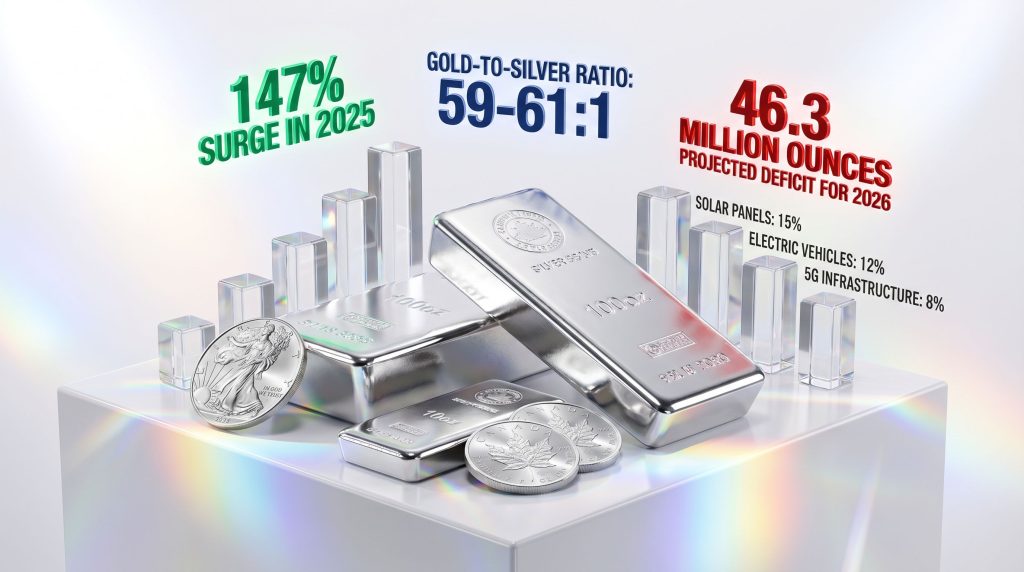
| Gold-Silver Ratio | 59-61:1 | Elevated relative to historical norms |
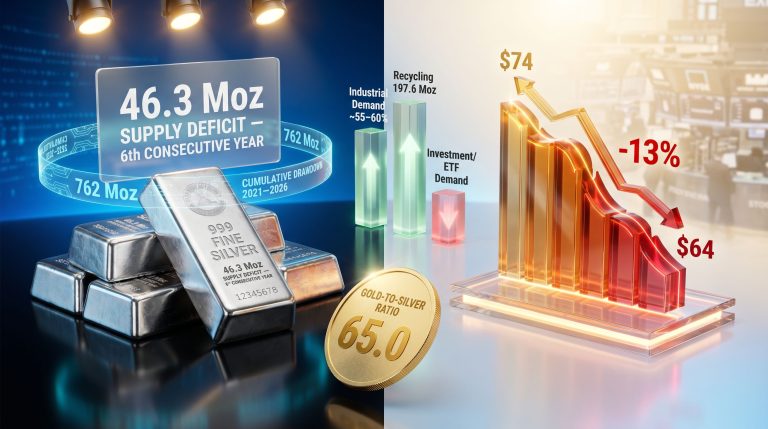
| Annual Supply Deficit | 46.3 million ounces | Sixth consecutive year of shortage |
| Industrial Demand Growth | 8-12% annually | Accelerating through renewable adoption |
The supply deficit represents a critical structural factor. Silver markets have experienced consecutive annual shortfalls where demand exceeds mine production and recycling combined. This deficit has widened 15% compared to previous years, suggesting intensifying supply-demand imbalances that could support higher price levels over multi-year timeframes.
How Economic Cycles Impact Silver Investment Returns
Silver exhibits higher volatility than gold while maintaining correlation patterns that vary across different economic environments. During inflationary periods, silver typically demonstrates beta coefficients of 1.5-2.0 relative to gold, providing amplified exposure to precious metals trends while introducing additional risk.
The metal's dual nature creates complex correlation patterns. Industrial demand links silver to economic growth cycles and technology sector expansion, while monetary demand connects it to currency debasement concerns and portfolio diversification strategies. Consequently, gold-silver ratio insights reveal how this combination can create scenarios where silver benefits from both economic expansion and economic uncertainty.
Additionally, understanding silver vs gold performance patterns becomes crucial for optimal portfolio allocation decisions across different market cycles.
Strategic Portfolio Construction: Format Optimisation
Physical silver investment success depends heavily on format selection that balances acquisition costs, storage requirements, liquidity needs, and tax considerations. Each format serves distinct strategic purposes within comprehensive precious metals allocation frameworks.
Premium Structure Analysis Across Silver Formats
The premium paid above spot price represents the most critical variable in silver bullion buying guide 2026 decisions. These premiums vary significantly based on format, size, and market conditions, directly impacting total returns over investment holding periods.
Current Premium Ranges (April 2026):
| Format Type | Size Options | Premium Range | Optimal Application |
|---|---|---|---|
| Government Coins | 1 oz | 20-25% over spot | Maximum liquidity needs |
| Sovereign Coins | 1 oz | 15-20% over spot | Balanced recognition/cost |
| Silver Rounds | 1 oz | 5-10% over spot | Cost-efficient accumulation |
| Silver Bars | 1-10 oz | 3-8% over spot | Moderate position sizes |
| Large Bars | 100+ oz | 2-4% over spot | Maximum metal per dollar |
These premium differentials compound significantly over multi-year accumulation periods. On a $10,000 silver investment, choosing 100-ounce bars over American Silver Eagles can yield 15-20 additional ounces of actual metal ownership, representing substantial value over long-term holding periods.
Government Coins: Premium Justification Analysis
American Silver Eagles and Canadian Maple Leafs command the highest premiums in physical silver markets, yet this premium often proves justified through superior liquidity characteristics and recognition factors. Government mint backing provides universal dealer acceptance that translates to faster transaction execution and better bid-ask spreads at resale.
For comprehensive guidance on investing in silver for beginners, consider how government coins serve as an ideal starting point for new precious metals investors.
Primary Government Coin Options:
- American Silver Eagles: .999 fine silver with automatic IRA eligibility
- Canadian Maple Leafs: .9999 purity with advanced security features
- Austrian Philharmonics: Popular European option with global recognition
- Australian Kangaroos: Annual design changes with collector appeal
Historical analysis suggests government coins maintain premium recovery rates superior to bars or rounds during market volatility. While the upfront cost appears substantial, experienced dealers report that Silver Eagles and Maple Leafs typically retain 85-95% of their premium at resale, compared to 60-75% recovery rates for private mint products.
Silver Bars: Maximising Metal Accumulation Efficiency
Silver bars provide the most cost-effective method for accumulating maximum silver content per investment dollar. LBMA-accredited refiners produce bars meeting international purity and weight standards, with sizes ranging from 1 ounce to 1,000-ounce institutional formats.
Recognised Refiner Products:
- PAMP Suisse: Swiss quality with Veriscan technology
- Valcambi: Leading European refiner with global acceptance
- Johnson Matthey: Historical reputation for precision manufacturing
- Royal Canadian Mint: Government backing with competitive premiums
- Asahi Refining: Growing market acceptance with competitive pricing
Size selection impacts both cost efficiency and liquidity characteristics. While 100-ounce bars offer minimum premiums, they create challenges for partial position liquidation. Most strategic allocation models suggest 10-ounce bars provide optimal balance between cost efficiency and practical liquidity for retail investors.
Silver Rounds: Middle-Ground Strategic Positioning
Private mint rounds occupy strategic middle ground between coin recognition and bar cost efficiency. Well-established private mints produce rounds with 5-10% premiums while maintaining broad dealer acceptance across most markets.
Quality varies significantly among private mints. Sunshine Minting, SilverTowne, and Highland Mint produce rounds with consistent quality and recognition, while generic or obscure brands may face verification delays and reduced recovery percentages at resale.
However, rounds face IRA eligibility restrictions. Internal Revenue Service regulations require government mint production for coin-based IRA investments, eliminating most private mint rounds from retirement account consideration. This limitation affects portfolio construction for investors prioritising tax-advantaged precious metals ownership.
Risk Assessment and Scenario Planning
Silver investment outcomes depend heavily on how multiple market forces interact across different economic environments. Comprehensive risk assessment requires scenario modelling that accounts for industrial demand shifts, monetary policy changes, and supply-side constraints.
Furthermore, the impact of tariffs impact on silver markets creates additional variables that investors must consider when developing comprehensive silver bullion buying guide 2026 strategies.
Primary Risk Scenario Categories
Industrial Acceleration Scenario (Probability: 35%)
This scenario assumes continued renewable energy adoption acceleration alongside electric vehicle production scaling. Solar installation growth rates of 15-25% annually through 2028 would drive substantial silver consumption increases, potentially creating supply shortages that support $95-120 price targets.
Key drivers include government renewable energy mandates, declining solar installation costs, and automotive industry electrification timelines. This scenario correlates positively with technology sector growth and infrastructure spending initiatives.
Monetary Debasement Response (Probability: 25%)
Central bank policy errors or currency crisis events could trigger significant precious metals demand as portfolio hedging tools. Historical precedent suggests silver can outperform gold by 2-3x during currency debasement cycles, potentially driving prices toward $130-200+ ranges.
This scenario depends on Federal Reserve policy mistakes, emerging market currency instability, or debt crisis developments that undermine fiat currency confidence. Silver's smaller market size creates potential for dramatic price acceleration if institutional investment flows increase substantially.
Economic Slowdown Pressure (Probability: 40%)
Economic contraction scenarios pose the highest probability risk to silver investments. Industrial demand reduction from manufacturing slowdowns could overwhelm investment demand, particularly if deflationary pressures emerge. Price targets under this scenario range $60-75 per ounce.
This scenario correlates with broader commodity weakness, reduced capital expenditure on renewable infrastructure, and potential liquidation of speculative precious metals positions to meet margin calls or cash flow needs.
Storage and Security Risk Management
Physical silver ownership introduces storage, insurance, and security considerations that impact total investment returns. Proper risk management requires matching storage solutions to position size and security requirements.
Home Storage Framework:
- Suitable for positions under $25,000 total value
- Requires fireproof, burglar-resistant safe installation
- Homeowner insurance riders necessary above $2,500
- Annual costs typically 0.1-0.3% of holdings value
Professional Vault Storage:
- Optimal for positions exceeding $50,000
- Segregated storage prevents commingling with other accounts
- Annual fees range 0.5-1.0% depending on provider and services
- Enhanced liquidity options for large position management
Geographic diversification provides additional security for substantial holdings. International storage in jurisdictions like Switzerland or Singapore offers political risk mitigation, though introduces complexity regarding access and potential currency exposure.
Implementation Strategy and Tactical Execution
Successful silver accumulation requires systematic approach that manages timing risk while optimising format selection and cost efficiency. Implementation strategy should align with individual financial objectives, risk tolerance, and time horizon considerations.
Dollar-Cost Averaging Optimisation
Systematic purchase programmes reduce timing risk while capitalising on silver's inherent price volatility. Historical analysis suggests monthly purchase intervals provide optimal balance between transaction cost efficiency and price averaging benefits.
Recommended Systematic Approach:
- Monthly Base Allocation: 1-2% of investable capital
- Volatility Triggers: Additional purchases during 10%+ price corrections
- Format Rotation: Alternate between bars and coins based on premium spreads
- Review Periods: Quarterly assessment of total allocation percentages
This systematic approach helps manage the emotional aspects of precious metals investing while building positions during both strength and weakness. The key involves maintaining discipline during both euphoric advances and fearful corrections.
Sequential Purchase Phasing
Optimal portfolio construction follows logical sequencing that prioritises liquidity establishment before expanding into cost-efficient formats. This phased approach provides flexibility while minimising transaction costs over long-term accumulation periods.
Phase 1: Foundation Building (Months 1-6)
- 60% allocation toward recognised government coins
- 40% allocation toward 10-ounce bars from major refiners
- Focus on establishing liquid base position for emergency access
Phase 2: Efficiency Enhancement (Months 7-18)
- Gradual transition toward larger bar formats
- Maintain 20-30% government coin allocation for liquidity
- Focus shifts toward maximising metal accumulation per dollar invested
Phase 3: Strategic Optimisation (Months 19+)
- Portfolio rebalancing based on evolving market conditions
- Tactical additions during significant market dislocations
- Focus on long-term wealth preservation and portfolio integration
This sequential approach allows investors to learn through experience while building positions that balance multiple objectives across changing market environments.
IRA Implementation Considerations
Self-directed precious metals IRAs require careful attention to compliance requirements while optimising for long-term wealth preservation. IRA silver must meet specific purity standards (.999 minimum) and originate from approved sources.
IRA-Compliant Silver Options:
- American Silver Eagles (automatic qualification)
- Canadian Maple Leafs (.9999 purity exceeds requirements)
- LBMA-accredited bars from approved refiners
- Austrian Vienna Philharmonics with government mint backing
Prohibited IRA Holdings:
- Most private mint rounds lack government mint backing
- Collectible coins with numismatic premiums above bullion value
- Home storage arrangements (disqualifies entire account)
- Non-approved refiner products regardless of purity
IRA silver requires approved custodial storage, typically adding 0.5-1.0% in annual fees. However, the tax-deferred growth potential often justifies these costs for long-term retirement planning, particularly for investors in higher tax brackets.
For detailed information on smart tips for buying gold and silver bullion, consider professional guidance that addresses both tax implications and storage solutions.
Frequently Asked Questions
What Minimum Investment Makes Physical Silver Practical?
Physical silver becomes cost-effective starting around $2,000-3,000 in total position size. Below this threshold, premiums and shipping costs consume excessive percentages of the investment capital. Smaller amounts might be better allocated toward silver ETFs until reaching practical minimums for physical ownership.
Transaction costs including premiums, shipping, and insurance can total 8-15% on small purchases, compared to 3-6% on larger transactions. This cost structure favours larger, less frequent purchases over small, regular additions for positions below $5,000.
How Does Silver Compare with Gold for Portfolio Diversification?
Silver typically exhibits 1.5-2.0x the volatility of gold while providing leveraged exposure to similar macroeconomic themes. Optimal precious metals allocations usually include both metals, with silver comprising 15-30% of total precious metals exposure depending on risk tolerance.
Silver's industrial demand component creates correlation patterns that differ from gold's predominantly monetary role. This can provide enhanced diversification benefits during certain economic cycles, though it also introduces additional complexity and volatility.
What Authentication Methods Verify Silver Purity and Weight?
Professional verification requires XRF (X-ray fluorescence) testing equipment available at reputable precious metals dealers. Basic verification includes checking proper weight, dimensions, and magnetic properties, since silver exhibits diamagnetic characteristics rather than ferromagnetic attraction.
Visual inspection should verify proper hallmarks, weight stamps, and overall appearance consistent with known products. However, sophisticated counterfeits may pass visual inspection, making dealer verification essential for larger transactions or unfamiliar products.
When Should Investors Consider Partial Position Sales?
Strategic profit-taking should consider portfolio rebalancing needs, tax implications, and market cycle positioning. Historical patterns suggest considering partial sales when silver reaches 3-4 standard deviations above long-term moving averages, while maintaining core positions for continued wealth preservation.
Tax considerations favour holding periods exceeding one year to qualify for long-term capital gains treatment. Strategic sales during lower-income years can minimise tax impact, particularly for investors approaching retirement or experiencing temporary income reductions.
Position rebalancing becomes important when precious metals exceed target allocations due to price appreciation. Many experienced investors maintain silver positions between 5-15% of total investment portfolios, taking profits when allocations exceed these ranges while maintaining minimum core positions.
In conclusion, developing a comprehensive silver bullion buying guide 2026 requires careful consideration of multiple factors including format selection, timing strategies, and risk management. Success depends on matching individual investment objectives with appropriate precious metals allocation strategies while maintaining discipline through varying market conditions.
Disclaimer: This analysis is provided for educational purposes and does not constitute investment advice. Silver investments involve substantial risk and may result in partial or complete loss of principal. Consult qualified financial professionals before making investment decisions based on this information.
Looking to Capitalise on Silver's Market Volatility?
Discovery Alert's proprietary Discovery IQ model delivers real-time alerts on significant ASX mineral discoveries, including precious metals opportunities that could benefit from silver's current market dynamics. Subscribers receive instant notifications on actionable investment opportunities powered by advanced AI technology, ensuring they stay ahead of market movements while silver navigates its dual-market investment framework.