August 6, 2026
The global metals landscape is witnessing a profound transformation as advanced manufacturing sectors increasingly rely on specialised materials to meet unprecedented technological demands. Among precious metals, silver has emerged as an essential component whose unique physical properties make it indispensable across multiple high-growth industries. Furthermore, silver's industrial demand in electronics and solar applications represents a fundamental departure from traditional precious metals dynamics, where investment demand historically dominated market movements.
Modern electronics manufacturing and renewable energy production have created structural demand patterns that extend far beyond conventional investment cycles. As artificial intelligence infrastructure expands and solar energy deployment accelerates worldwide, the technical requirements for high-performance conductive materials have intensified dramatically. These developments are reshaping how investors and manufacturers evaluate precious metals markets, particularly silver's evolving role as both an industrial commodity and store of value.
What Makes Silver Indispensable in Modern Electronics Manufacturing?
The Conductivity Advantage That No Alternative Can Match
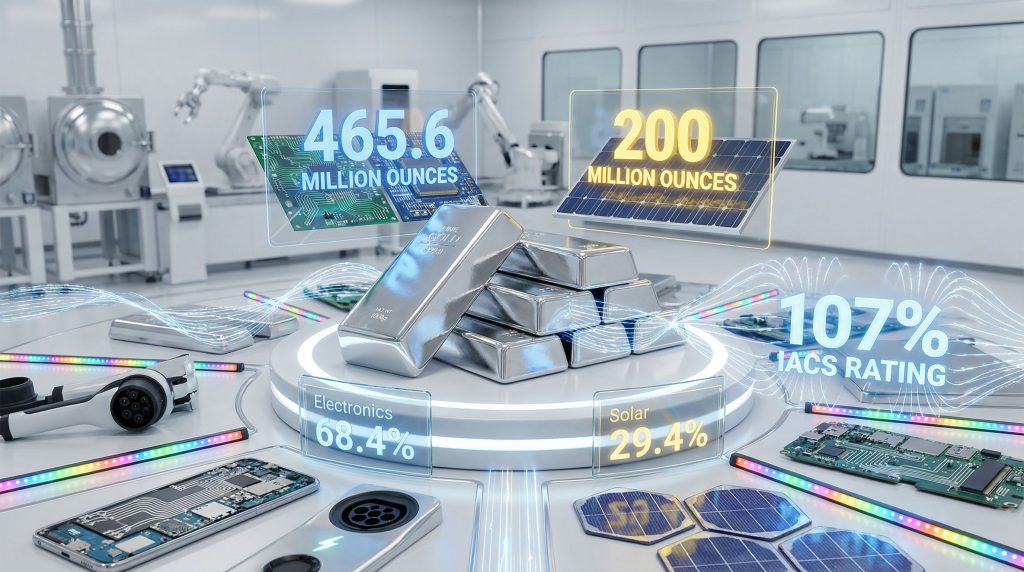
Silver possesses electrical conductivity properties that remain unmatched in the materials science field. With an International Annealed Copper Standard (IACS) rating exceeding 100%, silver demonstrates superior electron flow characteristics compared to all other metallic elements. This fundamental physics advantage creates performance gaps that alternative materials struggle to bridge in precision applications.
The thermal conductivity specifications of silver reach 429 W/m·K, enabling efficient heat dissipation in compact electronic designs where temperature management becomes critical. Unlike copper or aluminium alternatives, silver maintains consistent conductivity across varying temperature ranges, making it essential for devices operating in challenging environmental conditions.
Corrosion resistance represents another distinctive advantage of silver in electronics applications. While copper oxidises rapidly when exposed to moisture and atmospheric conditions, silver develops protective surface layers that preserve conductive pathways over extended operational lifespans. This characteristic proves especially valuable in automotive electronics and medical devices where reliability requirements exceed consumer electronics standards.
Critical Applications Driving Electronics Demand
Smartphone and tablet manufacturing relies heavily on silver for circuit board connections and internal component linkages. Each modern smartphone contains approximately 0.35 grams of silver distributed across multiple connection points, contact switches, and electromagnetic interference shielding applications. As global smartphone production volumes approach 1.4 billion units annually, the cumulative silver consumption reaches substantial levels.
Automotive electronics represent a rapidly expanding consumption category as vehicles integrate advanced driver assistance systems, electric powertrains, and connectivity features. Electric vehicle charging infrastructure particularly demands high-performance conductive materials capable of managing substantial current loads safely and efficiently.
Data centre infrastructure and artificial intelligence computing hardware create additional demand vectors as processing power requirements intensify. High-frequency trading systems, cloud computing facilities, and machine learning accelerators utilise silver in specialised applications where signal integrity and thermal management converge.
Medical device manufacturing specifications often mandate silver usage due to its antimicrobial properties combined with electrical performance. Implantable devices, diagnostic equipment, and monitoring systems integrate silver components to ensure reliable operation within biological environments.
Quantifying Electronics Silver Consumption Patterns
Industrial silver consumption reached 680.5 million ounces in 2024, representing a substantial portion of global silver demand. Electronics applications specifically accounted for approximately 310 million ounces, demonstrating consistent growth despite miniaturisation trends in consumer devices.
Per-device silver content varies significantly across product categories:
- Smartphones: 0.25-0.35 grams per unit
- Tablets: 0.5-0.8 grams per unit
- Automotive ECUs: 1-3 grams per module
- Solar inverters: 15-25 grams per unit
- Medical devices: 2-10 grams per unit
Regional manufacturing hub consumption data reveals concentrated demand patterns, with Asia-Pacific markets accounting for approximately 68% of electronics-related silver consumption. China's electronics manufacturing sector alone consumes an estimated 195 million ounces annually across various applications.
When big ASX news breaks, our subscribers know first
How Has Solar Technology Transformed Silver's Industrial Profile?
The Solar Panel Manufacturing Process That Demands Silver
Solar photovoltaic cell production requires silver paste application to create conductive pathways that collect electrical current generated by silicon wafers. This manufacturing process involves screen-printing silver paste onto cell surfaces in precise patterns that maximise energy collection efficiency whilst minimising material waste.
The silver paste composition typically contains 70-80% pure silver particles suspended in organic binders and glass frits. During high-temperature firing processes, these components fuse to create permanent conductive networks that remain stable throughout 25-year operational lifespans under outdoor environmental conditions.
Crystalline silicon panel technology currently dominates global solar installations, with this manufacturing approach consuming approximately 15-20 milligrams of silver per watt of installed capacity. Alternative thin-film technologies require significantly less silver but represent smaller market shares in utility-scale deployments.
Solar Industry's Explosive Silver Appetite
Solar panel manufacturing consumed an estimated 140 million ounces of silver in 2024, representing approximately 20% of total industrial silver demand. This consumption level reflects substantial growth from historical baselines, with solar applications accounting for less than 5% of industrial demand a decade ago.
Installation capacity correlations demonstrate direct relationships between global solar deployment and silver consumption rates. Each gigawatt of installed solar capacity requires approximately 200,000-300,000 ounces of silver depending on panel efficiency ratings and manufacturing technologies employed.
Growth trajectory analysis reveals solar silver demand increasing at compound annual rates exceeding 15% over the past five years, significantly outpacing consumption growth in traditional electronics applications. Moreover, this trend has contributed to what analysts describe as a silver market squeeze affecting global financial markets. Industry forecasts suggest continued expansion as renewable energy deployment accelerates globally.
Geographic Distribution of Solar Silver Demand
China's solar manufacturing dominance creates concentrated silver consumption patterns within specific geographic regions. Chinese solar panel producers account for approximately 70% of global manufacturing capacity, translating to substantial silver requirements for domestic production facilities.
| Region | Solar Silver Consumption (Million Oz) | % of Global Total | Manufacturing Capacity |
|---|---|---|---|
| China | 98.0 | 70% | 180 GW annually |
| Southeast Asia | 21.0 | 15% | 38 GW annually |
| Europe | 14.0 | 10% | 25 GW annually |
| North America | 7.0 | 5% | 15 GW annually |
Emerging markets solar deployment creates additional demand vectors as countries implement renewable energy targets and grid modernisation programs. India, Brazil, and Middle Eastern markets contribute growing consumption volumes as domestic installation programs expand.
Regional policy drivers significantly influence consumption patterns through subsidy programs, renewable energy mandates, and trade policies affecting solar panel imports and exports. In addition, the potential tariffs impact on silver could create demand fluctuations that impact global silver consumption timing and geographic distribution.
Why Are Material Scientists Struggling to Replace Silver in These Applications?
The Physics Behind Silver's Irreplaceable Properties
The fundamental atomic structure of silver creates electron mobility characteristics that remain unmatched by alternative materials. Silver's face-centred cubic crystal lattice allows maximum electron flow with minimal resistance, creating performance advantages that compound in high-frequency applications.
Thermal conductivity represents another irreplaceable advantage, particularly in power electronics applications where heat dissipation determines operational reliability. Silver's ability to conduct heat efficiently whilst maintaining electrical performance creates dual functionality that alternative materials cannot replicate simultaneously.
Oxidation behaviour patterns differentiate silver from potentially cheaper alternatives like copper or aluminium. While these metals develop insulating oxide layers that degrade electrical performance, silver's oxide formation actually enhances certain performance characteristics in specific applications.
Failed Substitution Attempts and Their Limitations
Copper-based alternatives represent the most extensively researched silver substitutes, but performance trade-offs limit their applicability in demanding applications. While copper offers 85% of silver's conductivity at significantly lower costs, oxidation issues and temperature stability limitations restrict usage in precision electronics.
Aluminium conductor experiments in electronics manufacturing have yielded mixed results. Although aluminium provides adequate conductivity for some applications, its tendency toward electromigration and connection reliability issues prevent adoption in critical systems where failure consequences are severe.
Cost-benefit analysis of material substitutions reveals complex optimisation challenges. While alternative materials may reduce raw material costs by 60-80%, increased manufacturing complexity, reliability concerns, and performance compromises often eliminate potential savings through higher overall system costs.
Conductive polymer research has produced promising laboratory results, but commercial scalability and long-term stability requirements prevent widespread adoption in mission-critical applications. These materials may find niches in specific applications but cannot replace silver's broad applicability across diverse operating environments.
What Supply-Demand Imbalances Are Reshaping Silver Markets?
The Structural Deficit Reality
Global silver markets experienced a 215 million ounce supply deficit in 2024, marking the fifth consecutive year where industrial and investment demand exceeded newly mined and recycled supply. This structural imbalance reflects fundamental shifts in consumption patterns as industrial applications consume increasing proportions of available silver.
Mining production constraints limit supply expansion despite elevated price levels. Primary silver mines face geological challenges, permitting delays, and capital allocation decisions that favour development of higher-margin projects. Most silver production originates as byproduct from base metal and gold mining operations, creating supply inflexibility when silver demand surges.
Recycling limitations in electronics and solar applications compound supply constraints. While jewellery and photographic applications historically provided substantial recycled silver flows, modern electronics contain dispersed silver quantities that prove economically challenging to recover. Furthermore, the ongoing silver supply deficits situation means solar panels installed today will not enter recycling streams for 20-25 years, creating long-term supply gaps.
Industrial Demand Composition Analysis
Silver's industrial demand in electronics and solar applications demonstrates clear structural shifts toward technology-intensive applications:
| Application Sector | 2024 Consumption (Million Oz) | % of Industrial Demand | 5-Year Growth Rate |
|---|---|---|---|
| Electronics | 310.0 | 45.5% | +4.2% annually |
| Solar Panels | 140.0 | 20.6% | +18.9% annually |
| Automotive | 95.0 | 13.9% | +12.3% annually |
| Medical Devices | 48.0 | 7.1% | +6.8% annually |
| Other Industrial | 87.5 | 12.9% | -2.1% annually |
Investment demand patterns have evolved alongside industrial consumption changes. Exchange-traded fund holdings, coin and bar purchases, and industrial stockpiling create additional demand layers that compete with manufacturing consumption for available supply.
Price Elasticity and Demand Response Mechanisms
Industrial users demonstrate relatively low price sensitivity compared to investment demand, particularly in electronics applications where silver represents small fractions of total product costs. Smartphone manufacturers typically absorb silver price fluctuations rather than redesign products around alternative materials.
Inventory management strategies during price volatility reveal sophisticated approaches to cost management. Major electronics manufacturers maintain strategic silver stockpiles equivalent to 3-6 months of production requirements, enabling operational continuity during supply disruptions whilst providing some price hedging benefits.
Long-term contract structures in electronics manufacturing create demand stability that supports sustained price levels. Original equipment manufacturers often establish multi-year supply agreements with precious metals suppliers, reducing spot market volatility whilst ensuring supply security for critical production processes. However, analysts predict this silver squeeze transformation will continue reshaping market dynamics throughout 2025.
How Are Manufacturers Adapting to Rising Silver Costs?
Material Optimisation Strategies in Solar Manufacturing
Solar panel manufacturers have implemented significant silver reduction initiatives whilst maintaining performance standards. Advanced screen-printing techniques enable thinner silver line widths on photovoltaic cells, reducing silver consumption per watt by approximately 15-20% compared to earlier manufacturing processes.
Copper-cored silver paste development represents a promising technological advancement that combines silver's surface properties with copper's cost advantages. These hybrid materials maintain electrical performance whilst reducing silver content by 30-40% in specific applications.
Alternative cell architectures, including heterojunction and back-contact designs, create opportunities for further silver reduction through improved electrical collection efficiency. These technologies may enable 25-35% silver content reductions whilst achieving superior energy conversion performance.
Thrifting technologies in solar manufacturing focus on precise silver paste application to eliminate waste during production processes. Advanced printing equipment and quality control systems minimise silver usage whilst maintaining manufacturing yields and product reliability.
Electronics Industry Cost Management Approaches
Miniaturisation trends continue reducing per-unit silver content in consumer electronics as circuit designs become more efficient and component densities increase. Modern smartphones contain approximately 25% less silver than equivalent devices produced five years ago despite increased functionality.
Recycling programme implementation across electronics manufacturers has expanded significantly as silver prices elevated. Apple, Samsung, and other major brands have developed comprehensive materials recovery programmes that capture silver from returned devices and manufacturing waste streams.
Strategic stockpiling during price dips enables manufacturers to smooth cost fluctuations whilst ensuring production continuity. Intel, Qualcomm, and other semiconductor companies maintain precious metals inventories that provide operational flexibility during supply chain disruptions.
Supply chain diversification efforts focus on developing relationships with multiple silver suppliers across different geographic regions. This approach reduces concentration risks whilst providing negotiating leverage during contract renewals.
What Does the Future Hold for Silver's Industrial Demand?
Technology Roadmaps and Silver Requirements
5G infrastructure deployment creates substantial silver consumption opportunities as base station equipment, antenna systems, and network switching hardware require high-performance conductive materials. Each 5G base station contains approximately 150-250 grams of silver compared to 50-80 grams in previous generation equipment.
Electric vehicle charging network expansion represents another significant demand driver as fast-charging systems require robust electrical connections capable of managing high current loads safely. DC fast-charging stations utilise 200-400 grams of silver per charging port in contactors, switches, and thermal management systems.
Renewable energy storage system applications integrate silver in battery management systems, power conversion equipment, and grid interconnection hardware. As utility-scale energy storage deployments accelerate, these applications may consume 25-35 million ounces annually by 2030.
Market Projections and Scenario Analysis
"Industry analysts project industrial silver demand will reach 750-800 million ounces by 2027, with solar applications accounting for approximately 30% of total consumption as global renewable energy deployment accelerates."
Demand growth scenarios vary significantly based on technological adoption rates and economic development patterns. Conservative projections suggest 3-5% annual growth in industrial consumption, whilst aggressive electrification scenarios could drive 8-12% annual increases through 2030.
Supply response capabilities remain constrained by geological factors and capital allocation decisions in the mining industry. New primary silver mine development requires 7-10 years from discovery to production, limiting near-term supply expansion opportunities despite elevated price incentives.
Recycling technology improvements may provide incremental supply increases as urban mining techniques advance. However, the dispersed nature of silver's industrial demand in electronics and solar applications limits recovery potential compared to more concentrated applications like jewellery or photography.
Investment Implications for Silver-Dependent Industries
Supply chain risk assessment for electronics manufacturers increasingly includes precious metals availability as a critical factor in operational planning. Companies with limited silver supply security may face production disruptions or margin compression during supply shortages.
Solar industry margin pressure analysis reveals varying impacts across the value chain. Panel manufacturers face direct material cost exposure, whilst downstream installers and project developers benefit from improved technology performance despite higher component costs.
Strategic material sourcing considerations extend beyond cost optimisation to include supply security, geopolitical stability, and environmental responsibility. Companies are developing comprehensive sourcing strategies that balance multiple objectives rather than focusing solely on price minimisation. Consequently, detailed silver premium analysis has become essential for effective procurement planning.
The next major ASX story will hit our subscribers first
Which Investment Vehicles Provide Exposure to This Industrial Demand Theme?
Physical Silver ETF Options
Exchange-traded funds backed by physical silver provide direct commodity exposure without storage and insurance complexities associated with direct ownership. Global X Physical Silver (ASX: ETPMAG) maintains 98.5% silver backing with transparent daily holdings reporting and established redemption mechanisms for institutional participants.
Storage and redemption processes for institutional investors involve allocated silver bars held in London Bullion Market Association approved vaults. These facilities provide comprehensive security, insurance coverage, and audit procedures that ensure asset protection whilst enabling efficient trading liquidity.
Expense ratio analysis reveals competitive cost structures among physical silver ETFs, with annual fees typically ranging 0.40-0.65% depending on fund size and operational efficiency. Liquidity considerations favour larger funds with substantial assets under management and active market maker participation.
Diversified Precious Metals Exposure
Multi-metal ETFs provide broader precious metals exposure whilst maintaining significant silver allocations. Global X Physical Precious Metals Basket (ASX: ETPMPM) combines gold, silver, platinum, and palladium exposures in proportions designed to capture industrial and investment demand across multiple metals.
Risk-adjusted returns across metal categories demonstrate silver's higher volatility characteristics compared to gold, with potential for amplified gains during precious metals rallies but increased downside risk during market corrections.
Correlation analysis with industrial demand cycles reveals stronger relationships between silver prices and manufacturing activity compared to gold, creating opportunities for investors seeking exposure to global economic growth themes rather than purely defensive positioning. As noted by the Silver Institute's industry research, silver's diverse industrial applications create unique investment dynamics distinct from other precious metals.
Mining Company Exposure Strategies
Primary silver producers offer leveraged exposure to silver price movements but introduce additional operational, geological, and management risks compared to physical metal ownership. Companies like First Majestic Silver and Hecla Mining provide direct silver price exposure through dedicated production profiles.
Geographic diversification considerations become crucial when evaluating silver mining investments as regulatory environments, taxation policies, and operational conditions vary significantly across jurisdictions. Diversified miners with operations across multiple countries may offer improved risk-adjusted returns.
Production cost curve analysis enables investor evaluation of mining companies' profitability at various silver price levels. Operations with cash costs below $15 per ounce typically maintain positive margins across market cycles, whilst higher-cost producers face earnings volatility during price declines.
Furthermore, research from Mining Weekly indicates that supply deficits and industrial demand continue driving silver prices higher, particularly benefiting well-positioned mining operations.
Frequently Asked Questions About Silver's Industrial Applications
How much silver is actually in common electronic devices?
Consumer electronics contain varying silver quantities depending on device complexity and performance requirements. Smartphones typically contain 0.25-0.35 grams, laptop computers hold 0.5-1.2 grams, and automotive electronic control modules may contain 1-5 grams depending on functionality. While these amounts appear small per unit, global production volumes create substantial aggregate consumption.
Can solar panels function effectively with less silver content?
Solar panel efficiency correlates directly with conductive pathway quality, making silver reduction challenging without performance compromises. Current manufacturing techniques have achieved approximately 20% silver content reductions whilst maintaining power output through improved cell designs and printing technologies. Further reductions may require breakthrough innovations in alternative conductive materials or entirely new photovoltaic architectures.
What happens to silver prices if electronics demand plateaus?
Electronics demand plateaus would remove a significant growth driver but may not dramatically impact silver prices given diverse industrial applications. Solar energy deployment, automotive electrification, and medical device manufacturing provide alternative growth vectors. However, reduced electronics consumption could create more volatile price patterns as investment demand becomes a larger factor in market dynamics.
Investment decisions involving commodities and precious metals carry inherent risks including price volatility, supply disruptions, and economic sensitivity. Investors should conduct thorough research and consider professional advice before making investment commitments. Past performance does not guarantee future results, and market conditions may change rapidly affecting investment values.
Looking to Capitalise on Silver's Growing Industrial Dominance?
Discovery Alert's proprietary Discovery IQ model delivers real-time alerts on significant ASX mineral discoveries, instantly empowering subscribers to identify actionable opportunities in silver and other precious metals ahead of the broader market. Understand why major mineral discoveries can lead to substantial market returns by exploring Discovery Alert's dedicated discoveries page, showcasing historic examples of exceptional outcomes, and begin your 30-day free trial today to position yourself ahead of the market.