May 20, 2026

Understanding Silver's Complex Market Dynamics During Global Uncertainty
The precious metals sector presents a fascinating study in asymmetrical market behaviour, particularly when examining how different metals respond to international tensions. While most investors understand gold's role as a traditional safe haven, silver operates within a fundamentally different framework that creates unique volatility patterns during periods of global instability. This dual nature stems from silver's position straddling both industrial commodity and monetary metal categories, creating price movements that often confound traditional safe-haven expectations.
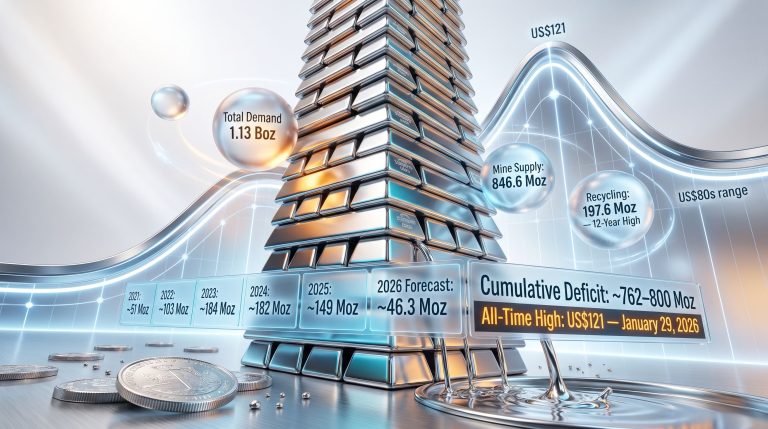
The US-Iran conflict impact on silver prices demonstrates this complexity perfectly. During the February 28 to April 2, 2026 period, silver experienced dramatic price swings that highlighted its vulnerability to both geopolitical uncertainty and industrial demand destruction. From a peak of $121.67 per ounce in late January 2026, silver plummeted to a low of $61.00 by March 23, representing a staggering 49.9% correction from its highs.
Unlike gold, which saw initial safe-haven buying push prices to $5,419 per ounce in the conflict's first two days, silver's industrial dependency created immediate downward pressure as markets anticipated manufacturing slowdowns and reduced commodity consumption. This fundamental difference in market perception explains why silver often underperforms during the initial stages of geopolitical crises, despite its historical monetary properties.
When big ASX news breaks, our subscribers know first
Industrial Dependency Creates Amplified Market Vulnerability
Silver's unique position in global markets stems from its extensive industrial applications, which account for approximately 50% of total global demand. This industrial exposure creates immediate vulnerability when geopolitical events trigger economic uncertainty, as manufacturing sectors typically implement rapid inventory reductions during periods of instability.
The key industrial sectors driving silver demand include:
- Solar panel manufacturing: Photovoltaic cells require 15-20 grams of silver per kilowatt of peak capacity
- Electronics production: High conductivity applications in semiconductors and circuit boards
- Automotive components: Traditional electrical systems plus emerging electric vehicle technologies
- Medical equipment: Antimicrobial properties utilised in healthcare devices and wound care
During the March 2026 crisis period, manufacturing PMI indicators across major economies showed immediate declines as companies deferred capital expenditures and reduced raw material procurement. This demand destruction mechanism operates much faster than supply-side disruptions can materialise, creating the sharp price corrections observed in silver markets.
Furthermore, the interconnected nature of global supply chains means that disruptions in one region can rapidly cascade through entire industrial networks. This silver market squeeze phenomenon becomes particularly pronounced during geopolitical tensions, when companies prioritise cash conservation over inventory accumulation.
Technical Analysis Reveals Systematic Patterns
The silver market's correction followed classic Fibonacci retracement levels with remarkable precision. Market analysis from the period shows that silver breached both the 38.2% and 50% retracement levels, confirming significant technical damage. The next major support level at the 61.8% Fibonacci retracement near $53.67 represents a critical zone where historical buying interest has traditionally emerged.
| Retracement Level | Price Target | Market Significance |
|---|---|---|
| 38.2% | $74.25 | Initial profit-taking phase |
| 50.0% | $61.84 | Peak uncertainty confirmation |
| 61.8% | $53.67 | Potential capitulation zone |
The weekly stochastic oscillator reached oversold territory during the correction but failed to generate a new buy signal, indicating continued technical weakness. However, the daily stochastic did produce a buy signal that survived the April 2 sharp selloff, suggesting potential short-term stabilisation around current levels.
Energy Price Volatility Creates Multi-Layered Market Pressure
The US-Iran conflict impact on silver prices becomes more complex when considering energy market disruptions. On April 2, 2026, following escalation announcements, oil prices surged 12.13% while US 10-year Treasury yields rose to 4.37%. This combination created multiple pressure points for silver markets through interconnected mechanisms.
Primary Energy-Related Impact Channels:
-
Inflation Expectations Acceleration: Energy price spikes historically trigger rapid increases in consumer price index expectations, prompting central banks toward more hawkish monetary policies
-
Manufacturing Cost Increases: Higher energy costs directly impact industrial profit margins, leading to reduced forward production guidance and decreased raw material demand
-
Mining Operation Pressure: Silver mining companies face increased operational costs through higher fuel expenses, particularly affecting operations in energy-importing nations
-
Currency Market Volatility: Energy-importing countries experience trade balance deterioration, leading to currency weakness that affects commodity purchasing power
The cascade effect becomes particularly pronounced when considering that major silver-producing regions like Peru, Mexico, and Poland rely heavily on imported energy. Rising oil prices compress mining margins while simultaneously reducing industrial demand for the refined metal, creating a double-negative impact on silver pricing.
Additionally, recent analysis of silver tariffs impact on global trade flows suggests that energy-related inflation could accelerate protectionist policies, further complicating international silver markets through trade barriers and supply chain fragmentation.
Federal Reserve Policy Amplifies Non-Yielding Asset Challenges
During geopolitical crises, Federal Reserve policy decisions become critically important for precious metals markets. Silver, as a non-yielding asset, faces particular challenges when real interest rates rise or when markets anticipate monetary policy tightening.
Interest Rate Sensitivity Analysis:
The April 2026 Treasury yield spike to 4.37% illustrates how quickly bond market expectations can shift during crisis periods. For silver investors, this creates several challenges:
- Opportunity Cost Increases: Rising real yields make interest-bearing assets more attractive relative to non-yielding silver holdings
- Dollar Strength Pressure: Higher US yields typically strengthen the dollar, making dollar-denominated commodities more expensive for international buyers
- Credit Tightening Effects: Rising yields often signal tighter financial conditions, reducing industrial sector expansion plans
However, this relationship isn't always straightforward. During periods of extreme uncertainty, flight-to-quality flows can overwhelm yield considerations, particularly if investors question the sustainability of government debt levels or currency stability.
Moreover, comprehensive gold‑silver analysis indicates that traditional relationships between interest rates and precious metals can break down during periods of exceptional market stress, as investors seek physical assets regardless of opportunity costs.
Strategic Positioning Framework for Volatile Markets
Navigating silver's complex dynamics requires understanding both short-term technical patterns and longer-term structural factors. The current market environment presents several key considerations for strategic positioning:
Short-Term Tactical Factors:
- Monitor industrial demand indicators from key manufacturing regions
- Track energy price correlations for inflation expectation shifts
- Assess dollar strength relative to other major currencies
- Watch for technical confirmation above the falling 50-day moving average at $82.80
Long-Term Strategic Considerations:
Despite short-term volatility, several structural factors support silver's long-term value proposition:
- Supply Deficit Fundamentals: Global silver production has struggled to keep pace with combined industrial and investment demand
- Technological Demand Growth: Expanding applications in renewable energy and electric vehicle technologies
- Monetary System Evolution: Increasing central bank diversification away from dollar-denominated assets
In particular, silver squeeze trends suggest that institutional awareness of silver's supply constraints is growing, potentially creating more sustained demand patterns that could support higher price floors even during crisis periods.
Risk Management Through Market Cycles
The volatile nature of silver markets during geopolitical events requires sophisticated risk management approaches. Historical analysis suggests several patterns that investors can utilise:
Volume and Momentum Indicators:
During crisis periods, silver markets typically exhibit:
- Elevated trading volumes during initial reactions (often 200-300% above normal levels)
- Momentum oscillators reaching extreme oversold conditions
- Support level tests at psychologically significant price points ($50, $60, $70)
The March 23, 2026 low at $61.00 represents such a psychological level, where previous resistance from decades-long trading ranges becomes potential support.
Supply Chain Resilience and Geographic Considerations
While direct supply disruptions from the US-Iran conflict remain limited, secondary effects impact global silver production through several channels:
Indirect Supply Factors:
- Energy Cost Pressures: Mining operations face increased diesel fuel and electricity costs
- Transportation Disruptions: Shipping route uncertainties affect concentrate movement from mines to refineries
- Currency Volatility: International mining companies experience translation effects from local currency fluctuations
- Investment Capital Allocation: Exploration budgets often face cuts during periods of elevated uncertainty
Silver's concentrated refining capacity in specific geographic regions creates potential bottlenecks during extended geopolitical tensions. Major refining centres in China, Peru, and Mexico could face operational challenges if regional conflicts expand or if trade relationships deteriorate further.
Consequently, understanding gold‑silver ratio insights becomes crucial for investors seeking to position between the two metals based on relative supply vulnerabilities and industrial exposure differences.
The next major ASX story will hit our subscribers first
Technological Demand Evolution and Market Structure
The silver market's structural evolution continues despite short-term geopolitical volatility. Several technological trends provide underlying demand support:
Emerging Applications:
- 5G Infrastructure: Telecommunications equipment requires significant silver content for signal processing
- Electric Vehicle Components: Battery management systems, charging infrastructure, and motor controls
- Advanced Medical Devices: Antimicrobial coatings and precision instruments
- Solar Panel Efficiency: Next-generation photovoltaic technologies may require increased silver loading
These applications represent demand categories that tend to be more resilient during economic downturns, as they're often driven by long-term infrastructure investments and technological replacement cycles rather than discretionary spending.
Furthermore, the acceleration of digital transformation initiatives during crisis periods often increases demand for silver-intensive technologies, creating counter-cyclical demand patterns that help offset traditional industrial weakness.
Central Bank Policies and Monetary System Changes
Extended geopolitical tensions often accelerate structural shifts in global monetary systems, creating new demand patterns for precious metals including silver:
De-Dollarisation Trends:
- Central banks increasingly diversify reserves beyond traditional dollar assets
- Alternative payment systems development reduces dependency on dollar-based trade
- Regional trading blocs create new settlement mechanisms requiring commodity backing
Strategic Stockpile Programmes:
Governments typically respond to supply chain vulnerabilities through:
- Critical materials stockpile accumulation for national security purposes
- Domestic production incentives to reduce import dependencies
- Technology development initiatives to improve resource efficiency and recycling
These policy responses create sustained demand floors for silver that operate independently of traditional market forces, providing additional price support during crisis periods.
International Market Response and Safe Haven Dynamics
The global response to the US-Iran conflict revealed significant disparities in how different regions perceive and price geopolitical risks. European markets, for instance, showed greater sensitivity to energy-related inflation concerns, while Asian markets focused more heavily on supply chain disruption potential.
According to recent analysis from Forbes, "Gold and silver tumbled after Trump vows to hit Iran extremely hard," highlighting how political rhetoric can create immediate market volatility regardless of actual military developments.
Additionally, European business news sources questioned why "safe haven demand faded amid Iran war," suggesting that traditional safe-haven narratives may be evolving in response to changing global economic structures.
Technical Recovery Patterns and Price Projections
The current silver market correction exhibits characteristics suggesting potential completion of the major downside move. Key technical indicators include:
Fibonacci Support Analysis:
The breach of both 38.2% and 50% retracement levels confirms significant technical damage, but also suggests the market has absorbed substantial selling pressure. The 61.8% retracement at $53.67 represents the final major Fibonacci support before reaching the broad psychological support zone around $50.
Moving Average Dynamics:
Recovery above the falling 50-day moving average at $82.80 would signal technical improvement and potential continuation of the rebound from March lows. This level represents critical resistance that must be overcome for bulls to regain control of the intermediate-term trend.
Oscillator Divergences:
While weekly momentum indicators remain in oversold territory, the survival of the daily stochastic buy signal through recent volatility suggests underlying demand is beginning to emerge at current price levels.
Investment Psychology and Market Sentiment
Understanding investor psychology becomes crucial during periods of extreme volatility like the February-April 2026 timeframe. Silver markets often exhibit behavioural patterns that create both risks and opportunities:
Sentiment Cycle Analysis:
- Initial Euphoria (January 2026 highs): Speculative buying drives prices to unsustainable levels
- Reality Check (February-March): Geopolitical events trigger rapid reassessment of risk
- Panic Phase (March 23 lows): Forced liquidation creates oversold conditions
- Stabilisation (March-April): Value buyers emerge as prices reach attractive levels
The current phase appears to be transitioning from stabilisation toward potential recovery, though geopolitical uncertainties continue to create headline risk for renewed volatility.
Long-Term Structural Investment Thesis
Despite short-term challenges from the US-Iran conflict impact on silver prices, several structural factors support the long-term investment thesis for silver:
Supply-Demand Fundamentals:
- Annual supply deficits have persisted for multiple years
- Primary mine production growth remains constrained by capital allocation and geological challenges
- Recycling rates, while improving, cannot offset growing industrial consumption
Macroeconomic Environment:
- Persistent government deficit spending across major economies
- Central bank balance sheet expansion creating currency debasement concerns
- Infrastructure investment programmes requiring significant industrial metal consumption
Geopolitical Risk Premium:
The current conflict environment has established a new baseline for geopolitical risk pricing in commodity markets. Even if immediate tensions subside, the precedent for rapid escalation suggests markets will maintain higher risk premiums for physical assets relative to financial instruments.
Silver's unique position as both an industrial commodity and monetary metal provides portfolio diversification benefits that become more valuable during periods of systemic uncertainty. The metal's volatility, while challenging for short-term traders, creates accumulation opportunities for long-term investors who understand its structural value proposition.
Future Market Evolution and Risk Assessment
Looking ahead, several factors will likely influence how silver markets respond to future geopolitical developments:
Structural Changes in Market Architecture:
- Increased algorithmic trading participation amplifies short-term volatility
- Growing institutional involvement through ETFs creates new liquidity dynamics
- Physical delivery constraints become more apparent during stress periods
- Regional market fragmentation increases pricing inefficiencies
Technology Integration and Market Access:
The democratisation of precious metals investing through digital platforms creates more diverse participant bases, potentially reducing the dominance of traditional institutional players while increasing overall market volatility through retail sentiment swings.
The convergence of technological demand growth, supply constraints, and monetary system evolution suggests silver's role in investment portfolios will continue expanding, regardless of short-term geopolitical disruptions. Successful navigation of these markets requires balancing immediate volatility management with recognition of the longer-term structural forces driving precious metals demand in an increasingly uncertain world.
Understanding the US-Iran conflict impact on silver prices provides valuable insights into how modern precious metals markets function under stress, revealing both vulnerabilities and opportunities that will likely persist as geopolitical tensions remain elevated globally. The lessons learned from this period will prove essential for investors seeking to position themselves effectively in an era of increased international instability and economic uncertainty.
Disclaimer: This analysis is for educational purposes only and does not constitute investment advice. Precious metals markets carry significant risks including potential for substantial losses. Past performance does not guarantee future results. Investors should conduct their own research and consult with qualified financial advisors before making investment decisions.
Want to Stay Ahead of Silver Market Opportunities?
Discovery Alert's proprietary Discovery IQ model delivers real-time alerts on significant ASX mineral discoveries, including silver and precious metals opportunities that could benefit from current market volatility. Transform complex market dynamics into actionable investment insights and position yourself to capitalise on the next major discovery before broader market recognition. Begin your 14-day free trial today and secure your market-leading advantage in precious metals investing.