June 25, 2026
The Meme Commodity Phenomenon: How Retail Capital Rewrites Price Discovery
Commodity markets have always attracted speculative capital, but the mechanics of how that speculation organises and amplifies have changed fundamentally in the social media era. What once required institutional coordination or macroeconomic shocks to produce extreme price dislocations can now be achieved by coordinated retail communities operating across Reddit threads, Discord servers, and X feeds. The silver market in 2026 became the most instructive case study of this dynamic playing out at full scale, and the question now preoccupying market analysts is whether the silver meme trade dead and buried narrative reflects a permanent structural shift, or simply the exhaustion phase of a cycle that will eventually restart.
Understanding what actually happened, why it happened at the speed it did, and what the aftermath reveals about modern commodity market structure is essential context for anyone tracking precious metals or ASX-listed silver equities going forward.
When big ASX news breaks, our subscribers know first
Retail Momentum Trading Meets the Commodity Complex
The migration of meme-trade dynamics from equities into hard commodities was not a random event. It followed a clear evolutionary path. After the GameStop and AMC episodes of 2021 demonstrated that coordinated retail flows could overwhelm institutional short positions in equity markets, the same behavioural architecture began scanning for comparable setups in adjacent asset classes.
Silver presented a uniquely attractive target for several structural reasons. Furthermore, understanding silver's dual role as both a precious metal and an industrial commodity helps explain why it became such a compelling meme trade vehicle:
- It carries a longstanding narrative of institutional suppression, which resonates deeply with retail investor communities already primed for contrarian positioning
- It has a genuine industrial demand story, providing intellectual cover for what is fundamentally a momentum trade
- It trades through highly liquid ETF wrappers like the iShares Silver Trust (SLV), giving retail participants direct price exposure without requiring futures market access
- Its historical volatility relative to gold creates conditions where rapid, large-magnitude price moves are plausible within a credible macro narrative
The social media amplification engine then takes these structural conditions and applies reflexive feedback: rising prices generate content, content generates attention, attention generates buying, buying generates more price rise, which generates more content. This self-reinforcing loop is what distinguishes a meme trade from a conventional speculative cycle.
The 2026 Velocity Signature: Why Was This Rally Different?
Silver's January 2026 price surge was not simply a large move. It was a move defined by its velocity, and that distinction matters analytically. Indeed, the silver squeeze transformation that preceded this episode laid important groundwork for the conditions that enabled such rapid price movement.
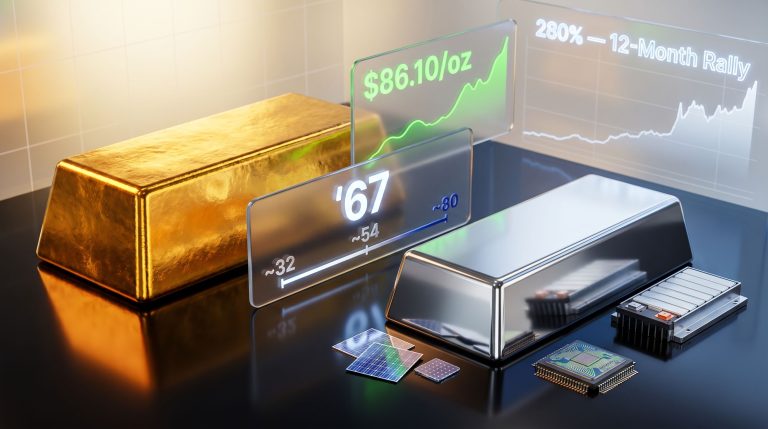
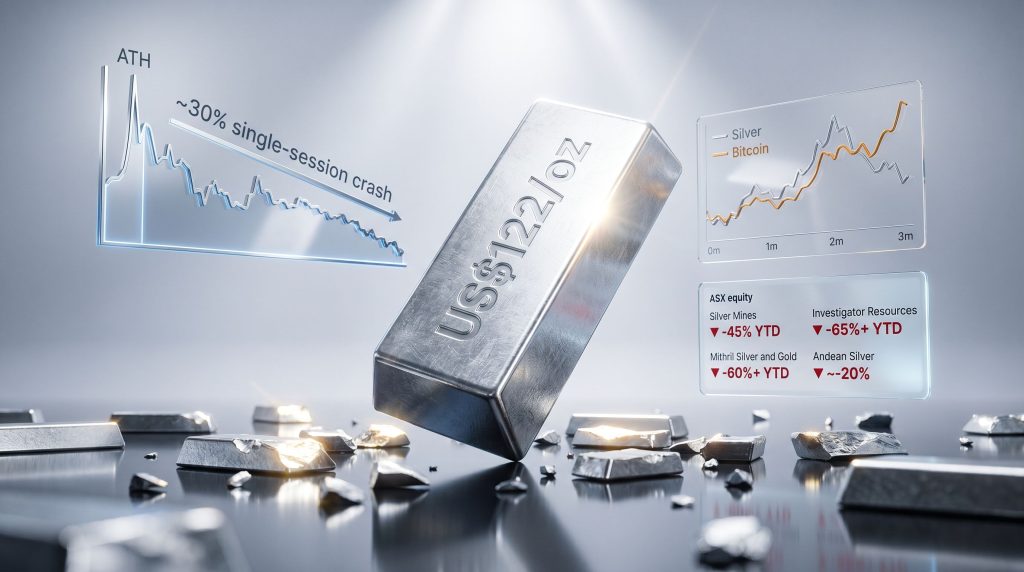
The metal climbed from baseline levels to breach the psychologically significant US$100/oz threshold before printing an all-time high just below US$122/oz, a price level that compressed what would historically represent years of fundamental rerating into fewer than 30 trading sessions. The iShares Silver Trust recorded 375 million shares traded in a single session, a volume figure with no historical precedent that reflects pure momentum-driven participation rather than portfolio rebalancing or hedging flows.
For context, fundamentals-driven silver bull markets, such as the 1979–1980 Hunt Brothers episode or the 2010–2011 industrial demand cycle, developed over multiple quarters with identifiable supply-demand catalysts and progressive institutional participation. The 2026 surge lacked these characteristics entirely. The move was driven by:
- Geopolitical risk premium building from Middle East tensions
- Gold's concurrent bull run providing narrative legitimacy
- Social media coordination amplifying retail entry timing
- Futures market mechanics, particularly delta hedging by options market makers, accelerating the upside velocity
Structural Note: When a commodity compresses multi-year price appreciation into fewer than 30 trading days, the move is definitionally momentum-driven rather than supply-demand driven. The speed of the rally is itself the evidence of its speculative character.
What Do Market Analysts Say About the Velocity?
According to CNBC analysts, silver's surge "feels like a meme trade, not a fundamentals shift" — a characterisation that proved remarkably accurate as the subsequent price collapse unfolded. This assessment reinforces the analytical distinction between momentum-driven and supply-demand-driven price moves.
How Far Has Silver Actually Fallen? The Price Destruction in Numbers
The unwinding of the 2026 silver surge has followed a two-phase pattern that market analysts recognise from prior speculative commodity cycles: an initial violent crash followed by a slow, grinding bleed that ultimately causes more cumulative damage to late entrants than the initial drop.
| Metric | Data Point |
|---|---|
| 2026 All-Time High | Just below US$122/oz |
| Single-Session Crash Magnitude | Approximately 30% intraday decline |
| Price Level at Time of Analysis | Six-month lows |
| Gold Price Context | Below US$4,000/oz (seven-month lows) |
| Iran Ceasefire Price Response | Minimal, near-zero upside reaction |
The Iran ceasefire development is particularly telling. In a market still carrying genuine geopolitical risk premium, a de-escalation of Middle East tensions would normally produce at least a modest, short-lived price response as traders repriced their risk positioning. Silver's near-complete non-reaction confirms that the geopolitical bid has been fully extinguished.
The speculative premium has deflated, and the market is now searching for a fundamental floor rather than a momentum catalyst. Gold's concurrent deterioration below US$4,000/oz to seven-month lows compounds the problem. With gold itself in a sustained drawdown, silver has lost its primary macro tailwind precisely when it most needs one. Consequently, understanding the broader gold-silver market dynamics becomes essential context for gauging where prices may ultimately stabilise.
ASX Silver Equities: The Full Damage Assessment
The transmission of spot price weakness into ASX-listed silver equities has been severe, reflecting both the underlying metal's decline and the additional leverage that equity structures apply to commodity price moves:
| ASX-Listed Silver Equity | Performance |
|---|---|
| Silver Mines | -45% year-to-date |
| Andean Silver | Approximately -20% on a one-year basis |
| Investigator Resources | -65%+ year-to-date |
| Mithril Silver and Gold | -60%+ year-to-date |
Investor Warning: Retail investors who entered ASX-listed silver equities near the January 2026 peak have experienced drawdowns ranging from -20% to over -65%. This distribution of losses is consistent with the late-cycle entry pattern observed in prior meme-driven commodity surges. Past performance is not indicative of future results, and this analysis does not constitute financial advice.
Investigator Resources in particular has produced what analysts describe as a classic momentum-collapse chart formation: a sharp, near-vertical ascent followed by sustained selling pressure with minimal technical support levels holding. These equity-level drawdowns exceed the spot price decline by a significant margin, illustrating how junior mining equities amplify precious metals price cycles in both directions.
Is the Silver Meme Trade Dead and Buried, or Simply Dormant?
The binary framing of the silver meme trade dead and buried question somewhat oversimplifies the analytical challenge. Meme trades do not simply switch off. They exhaust their immediate participant pool, lose their primary narrative catalysts, and enter a dormancy phase where the original speculative cohort either exits at a loss or holds, waiting for conditions to re-engage their thesis.
The Case for Terminal Decline
The structural arguments for the trade being genuinely finished for the foreseeable future are substantial:
- The geopolitical catalyst that provided narrative legitimacy throughout the rally has materially weakened following ceasefire developments
- Gold's concurrent weakness removes the macro precious metals bid that gave silver directional cover
- The meme trade association now functions as a reputational overhang, creating an institutional participation barrier that suppresses recovery potential
- The late-cycle entrant losses documented across ASX silver equities reduce the probability of the same retail cohort re-engaging quickly
- Historical precedents from uranium in 2007 and lithium in 2022 suggest that full speculative premium deflation can take 12 to 24 months to complete after the peak
The Counter-Arguments: Why the Trade May Simply Be Resting
The case for eventual resurgence rests on several observations that deserve serious analytical weight. However, it is important to weigh these arguments carefully against prevailing headwinds:
- Despite the brutal drawdown, spot silver demonstrated a roughly 4% recovery bounce from its six-month lows, indicating that residual speculative demand has not been completely eliminated
- The record 375-million-share SLV session occurred during the volatile phase rather than before it, suggesting that active market participation mechanisms remain intact and could be reactivated
- Market strategists continue to describe silver using language that references its momentum-trade characteristics, implying that the behavioural architecture underpinning the trade has not yet been formally retired
- Meme trades have demonstrated the capacity to restart relatively quickly when macro conditions shift, particularly when the original speculative cohort identifies a new entry narrative
Balanced Framework: The question is not whether the silver meme trade is alive or dead in absolute terms. It is whether the current speculative cycle has run its course. The evidence strongly suggests it has, while leaving open the structural possibility of a future restart under different macro conditions.
The Bitcoin Correlation: What Does It Actually Mean?
One of the more analytically provocative observations about silver's 2026 price behaviour is its near-identical three-month chart trajectory relative to Bitcoin. This correlation has been noted by market commentators and, while superficially striking, requires careful interpretation to avoid misleading conclusions. Experts have dubbed silver the "meme commodity of 2026" following its 60% rally, a characterisation that underscores how deeply the speculative narrative has become embedded in institutional perception of the asset.
Mapping the Shared Capital Pool Theory
The most coherent explanation for the silver-Bitcoin correlation is not that the two assets are fundamentally linked. It is that both are drawing from the same underlying pool of retail speculative capital, and that pool's allocation decisions are being driven by the same macro sentiment cycle.
When Bitcoin captures the dominant momentum narrative, it attracts the marginal retail dollar away from alternative speculative vehicles including silver. When Bitcoin enters consolidation or correction, that capital searches for the next momentum trade, and silver, with its established social media narrative infrastructure from the January 2026 surge, becomes a natural destination.
This framework, sometimes described informally as the shared gas tank theory, has several important implications for traders:
- Silver's next meaningful rally may be structurally dependent on Bitcoin entering a sustained consolidation or drawdown phase
- The correlation is sentiment-driven and therefore subject to sudden breaks when one asset develops an idiosyncratic catalyst
- Treating the correlation as predictive rather than descriptive creates significant positioning risk
The Rotation Cycle in Modern Retail Markets
The broader pattern here reflects something structurally new about retail-driven market dynamics in the mid-2020s. Speculative retail capital now rotates systematically between crypto, meme equities, and commodity plays, with the rotation timing increasingly synchronised through shared social media ecosystems. This creates:
- Faster cycle times than traditional commodity bull and bear markets
- Higher peak valuations relative to fundamental anchors
- More violent and rapid reversals when sentiment shifts
- Cross-asset correlations that have no fundamental basis but are nonetheless real and tradeable in the short term
The next major ASX story will hit our subscribers first
What Would a Genuine Silver Recovery Actually Require?
Separating a speculative bounce from a durable, fundamentals-led silver recovery requires understanding what conditions would need to align simultaneously. In addition, the gold-silver ratio analysis for 2025 and beyond provides a useful lens for evaluating whether any recovery is genuinely underpinned by improving relative value dynamics.
The Fundamental Recovery Checklist
| Required Condition | Current Status | Assessment |
|---|---|---|
| Gold recovery above US$4,000/oz | Not achieved (seven-month lows) | Unfavourable |
| Industrial demand catalyst (solar, EV, electronics) | Structurally intact but not price-moving | Neutral |
| Institutional ETF re-engagement | Absent post-meme association | Unfavourable |
| Clean break from Bitcoin correlation | Not demonstrated | Unfavourable |
| Geopolitical risk premium rebuild | Weakened by ceasefire developments | Unfavourable |
The industrial demand story for silver deserves particular attention because it represents the most durable long-term fundamental argument for the metal. Silver is a critical material in photovoltaic solar panel manufacturing, with each standard solar panel requiring approximately 20 milligrams of silver for its electrical contacts. Global solar capacity expansion, EV charging infrastructure growth, and 5G network buildout all create genuine secular demand tailwinds.
These fundamentals did not disappear when the meme trade collapsed. Furthermore, the persistent silver supply deficits documented heading into 2025 remain a structural feature of the market, even if they are presently insufficient to arrest the speculative-driven drawdown on their own.
The Reputational Rehabilitation Timeline
One dimension of silver's recovery challenge that receives insufficient analytical attention is the reputational damage created by the meme trade association itself. The label is not merely descriptive. It actively shapes how institutional capital allocators perceive and price the asset.
Lithium's post-2022 experience is instructive here. After the lithium price collapse that followed the speculative peak, institutional analysts spent considerable time explicitly distancing their commodity coverage from the meme trade narrative, emphasising supply-demand fundamentals and project economics. The reputational rehabilitation process took the better part of 18 months before fund managers began treating lithium equities as investable on fundamental merits rather than as speculative momentum vehicles.
Silver faces an analogous challenge, complicated by the fact that the meme trade association is now reinforced by the Bitcoin correlation, making the rehabilitation case harder to construct.
Three Possible Silver Trajectories Over the Next 12 Months
| Scenario | Trigger Conditions | Likely Price Direction | Probability Assessment |
|---|---|---|---|
| Continued Bleed | Gold stays weak, Bitcoin dominates retail flows | Further downside toward multi-year support levels | Moderate to High |
| Sideways Consolidation | No major macro catalyst in either direction | Range-bound, low-volatility drift | Moderate |
| Meme Cycle Restart | Bitcoin corrects sharply, gold recovers above US$4,000/oz, retail rotates back | Sharp re-rating with high volatility | Low to Moderate |
Disclaimer: Scenario projections are speculative in nature and do not constitute financial advice. Commodity markets are subject to unpredictable macro, geopolitical, and sentiment-driven forces. Investors should conduct independent research and consult a qualified financial professional before making investment decisions.
Frequently Asked Questions: Silver's 2026 Meme Trade Collapse
What drove silver to its all-time high in January 2026?
The surge to just below US$122/oz reflected a convergence of retail momentum trading, social media coordination, gold's concurrent strength, and geopolitical risk premiums built around Middle East tensions. The move was characterised by extraordinary velocity rather than new fundamental demand, with the iShares Silver Trust recording 375 million shares in a single session at peak momentum.
How significant was the price crash after the peak?
Silver experienced a single-session decline of approximately 30% from its peak, followed by a sustained drawdown that carried prices to six-month lows by late June 2026. The combined effect of the initial crash and subsequent slow bleed has been particularly damaging for investors who entered positions near the top.
Why did the Iran ceasefire fail to support silver prices?
By the time ceasefire negotiations advanced, the geopolitical risk premium that had supported silver's elevated price floor had already been priced out of the market. The absence of any meaningful price response to the ceasefire development is a definitive signal that the speculative catalyst architecture underpinning the trade has materially weakened.
Is the silver-Bitcoin correlation a reliable trading signal?
The correlation reflects shared retail capital flows rather than any fundamental relationship between the two assets. It should be treated as a sentiment indicator describing where speculative capital is currently concentrated, not as a predictive tool for directional positioning. Over-reliance on short-term co-movement correlations introduces significant positioning risk.
What would need to happen for silver to recover sustainably?
A durable recovery would require gold to reclaim levels above US$4,000/oz, institutional capital to re-engage with silver on fundamental rather than momentum grounds, a demonstrated break from the Bitcoin correlation, and industrial demand catalysts sufficient to provide a non-speculative price floor. None of these conditions are currently in place simultaneously.
What is the outlook for ASX silver equities?
ASX-listed silver equities have absorbed drawdowns ranging from approximately -20% to over -65% year-to-date, reflecting the amplified transmission of spot price weakness through equity leverage. Any recovery in these names is contingent on a sustained improvement in silver spot prices and a broader rerating of the precious metals sector. The depth of current drawdowns also creates the mathematical possibility of short-term bounces that do not represent genuine trend reversals.
Key Structural Takeaways
The 2026 silver episode is best understood not as an isolated commodity market anomaly but as a case study in how modern retail market infrastructure interacts with traditional commodity price discovery mechanisms. Several structural conclusions emerge:
- The silver meme trade dead and buried characterisation is accurate for the current speculative cycle, but does not preclude a future restart when macro and sentiment conditions realign
- The ~30% single-session crash and subsequent slow bleed represent textbook post-meme-peak behaviour, analytically predictable once the momentum peak was confirmed
- The Bitcoin correlation is the single most important real-time signal for traders monitoring silver's near-term directional bias
- ASX silver equities have absorbed the full weight of the drawdown, with losses between -20% and -65%+ representing the complete equity-amplified transmission of spot price collapse
- Industrial demand fundamentals for silver, particularly in solar manufacturing and electronics, remain structurally intact but cannot anchor prices in the absence of institutional participation
- The reputational rehabilitation required for silver to attract fundamentals-based institutional capital will likely take considerably longer than the speculative cycle itself
Readers interested in ongoing coverage of silver's price cycle and broader ASX commodities commentary can explore reporting published by The Market Online at themarketonline.com.au, which provides continuing market analysis across the precious metals and mining sectors.
Want to Spot the Next Major ASX Mineral Discovery Before the Market Does?
While silver's meme trade cycle illustrates the risks of chasing momentum without structural conviction, Discovery Alert's proprietary Discovery IQ model cuts through the noise by delivering real-time alerts on significant ASX mineral discoveries — turning complex data across 30+ commodities into clear, actionable insights the moment they're announced. Explore historic discoveries and their remarkable returns to understand why early positioning matters, then begin your 14-day free trial to gain a genuine market-leading edge.