August 11, 2026
Understanding the Strategic Value of Silver Mine Consolidation in North America
Regional consolidation in precious metals mining represents a fundamental shift from traditional exploration-driven growth models toward operational efficiency and infrastructure optimization. When examining the Crescent Mine acquisition specifically, investors must evaluate whether transactions create genuine operational synergies or merely expand resource bases without corresponding value creation.
The silver mining sector faces unique structural challenges that make strategic consolidation particularly attractive for well-positioned operators. Unlike base metals mining, where economies of scale often drive value creation, silver mining success increasingly depends on grade optimization, processing efficiency, and by-product revenue maximization. Furthermore, the silver market squeeze has intensified focus on operational excellence and cost management across the industry.
Infrastructure Leverage as a Competitive Advantage
Modern silver mining economics increasingly favor operations that can maximize existing processing infrastructure rather than building new facilities. Processing capacity utilization rates directly impact per-ounce production costs, with underutilized mills representing significant opportunity costs in capital-intensive industries.
Americas Gold & Silver's consolidated Idaho operations demonstrate this principle effectively. The combined Galena and Coeur mills feature 1,250 tons per day of total processing capacity, while current Galena production operates at approximately 408 tons per day, representing only 32.6% utilization. This substantial available capacity enables the company to process Crescent material without major capital expenditure on new processing facilities.
Key Infrastructure Metrics to Evaluate:
• Current mill utilization rates versus nameplate capacity
• Transportation distances between mining operations and processing facilities
• Shared vendor contracts and technical expertise across properties
• Existing underground development that reduces startup capital requirements
The Galena Complex historically produced over 25 million ounces of silver, with peak annual production of 5.2 million ounces in 2002 at average grades of 729 grams per tonne. This historical performance demonstrates that the existing infrastructure was designed for significantly higher throughput than current operations, providing substantial scalability for consolidated regional production.
Recent infrastructure improvements further enhance this capacity advantage. Phase 1 upgrades to Galena's No. 3 hoisting shaft, completed in September 2025, doubled skipping capacity from 40 tons per hour to 80 tons per hour through motor upgrades and installation of redundant equipment. These improvements position the operation to handle increased material flow from multiple mining sources efficiently.
Mineralogical Compatibility and Processing Synergies
The technical compatibility of ore types between acquired properties and existing operations determines whether consolidation creates immediate value or requires additional capital investment. Identical mineralization enables processing optimization without metallurgical risk.
Both Crescent and Galena contain tetrahedrite mineralization, a silver-copper-antimony mineral that enables direct material compatibility without processing circuit modifications. This mineralogical similarity represents a critical technical advantage that distinguishes the Crescent Mine acquisition from typical mining consolidation trends that often involve disparate ore types requiring separate processing approaches.
Critical Compatibility Factors:
| Factor | Galena Complex | Crescent Mine | Compatibility Assessment |
|---|---|---|---|
| Primary mineralization | Tetrahedrite | Tetrahedrite | Perfect match |
| Silver grades | 496 g/t (2025 YTD) | 594 g/t (historical avg) | Highly compatible for blending |
| Copper content | Present in tetrahedrite | 0.41-0.43% | Compatible recovery circuits |
| Antimony content | ~1% naturally occurring | Present in tetrahedrite | Identical by-product potential |
Crescent's Measured and Indicated resources of 3.8 million ounces of silver contained in 201,000 tons grading 19.1 ounces per ton silver enable optimal blending with Galena's current production. The ability to blend different grade materials from multiple sources provides operational flexibility to optimize mill feed based on market conditions, processing capacity, and recovery optimization.
Historical production records support this compatibility assessment. Crescent produced over 25 million ounces of silver between 1917 and 1981 at average grades of 26 ounces per ton, demonstrating geological grade consistency that supports blending optimization strategies.
When big ASX news breaks, our subscribers know first
How Do Silver Market Fundamentals Support Strategic Acquisitions?
Supply-Side Constraints Driving Consolidation Activity
Global silver mine production faces persistent challenges that create opportunities for well-positioned regional operators. Primary silver mines represent a small fraction of total supply, with most silver produced as a by-product from base metal operations. This structural supply dynamic creates strategic advantages for dedicated silver producers with high-grade primary deposits.
Supply Constraint Analysis:
| Factor | Impact on Supply | Strategic Implication |
|---|---|---|
| Declining ore grades | Reduced output per ton processed | Premium for high-grade deposits |
| Mine depletion | Fewer replacement projects | Value of existing permitted operations |
| Permitting delays | Extended development timelines | Advantage for fully permitted assets |
| Capital intensity | Higher development costs | Preference for restart projects |
Physical supply dislocations continue affecting the silver market throughout 2025, driven by shrinking mine output and robust investment demand. Visible inventories across major global exchanges have contracted, contributing to narrow supply buffers for immediate delivery. The movement of metal between exchanges reflects logistical positioning rather than genuine supply expansion, indicating structural tightness in physical markets.
The relatively small size of the silver market, approximately 1 billion ounces of total annual supply from combined mine production and recycling sources, means modest investment flows can meaningfully impact prices. This market characteristic amplifies the strategic value of high-grade primary silver operations that can respond quickly to favorable price movements.
Exchange inventory contraction represents a particularly significant development for silver markets. Unlike gold, where central bank holdings provide substantial above-ground inventory buffers, silver markets depend heavily on industrial consumption that removes metal permanently from available supply. Moreover, current gold‐silver analysis indicates continued strength in precious metals fundamentals.
Industrial Demand Growth Patterns
Silver's industrial applications continue expanding across multiple sectors, creating structural demand growth beyond traditional jewelry and investment uses. Solar panel manufacturing, electric vehicle components, and data center infrastructure represent significant consumption increases that support long-term price fundamentals.
Industrial Demand Drivers:
• Photovoltaic solar installations consuming 100+ million ounces annually
• Electric vehicle silver content averaging 25-50 grams per vehicle
• 5G infrastructure and data center expansion requiring high-conductivity materials
• Medical device applications leveraging antimicrobial properties
Solar panel production alone has become a major demand driver, with photovoltaic applications representing the fastest-growing industrial consumption category. Silver's superior electrical conductivity and low contact resistance make it essential for solar cell efficiency, particularly in high-performance applications where conductivity losses directly impact energy generation capacity.
Electric vehicle adoption continues accelerating globally, with each vehicle requiring silver for battery management systems, power distribution modules, and high-voltage contactors. The 25-50 gram range per vehicle, multiplied by annual global EV production exceeding 13 million units, creates substantial incremental demand that compounds annually as EV adoption rates increase.
Data center infrastructure expansion, particularly for AI and machine learning applications, requires silver in connector contacts, solder formulations, and electromagnetic shielding. The increasing power densities in modern data centers necessitate high-reliability electrical connections where silver's properties provide critical performance advantages over alternative materials.
What Operational Strategies Maximize Value from Silver Mine Acquisitions?
Production Optimization Through Shared Infrastructure
Successful silver mine consolidation requires systematic optimization of production flows, processing schedules, and resource allocation across multiple properties. Operators must balance grade optimization with throughput maximization to achieve optimal economic outcomes.
Optimization Framework:
-
Grade Blending Strategies – Combining high-grade and lower-grade material to optimize mill feed
-
Production Scheduling – Coordinating mining sequences across properties to maintain consistent mill feed
-
Shared Services – Leveraging technical expertise, vendor contracts, and administrative functions
-
Capital Allocation – Prioritizing development investments based on return profiles
The Crescent Mine acquisition enables Americas to implement sophisticated grade blending strategies using materials from both properties. Crescent's estimated average grades of 19.1-19.4 ounces per ton silver can be blended with Galena's current 496 grams per tonne head grade to optimize processing circuit performance and maximize silver recovery rates.
Operational improvements at Galena demonstrate management's ability to optimize legacy infrastructure. The successful introduction of long hole stoping in Q2 2025 achieved approximately 60% lower cost per ton compared to traditional underhand cut-and-fill methods at comparable dilution levels. This mining technique enables rapid ore production scale-up while leveraging existing development infrastructure.
Recent exploration successes further validate the optimization approach. Discoveries of high-grade veins including the 034 Vein (3.44 meters at 983 grams per tonne silver and 0.74% copper) and 149 Vein (0.21 meters at 24,913 grams per tonne silver and 16.9% copper) demonstrate how systematic exploration within existing infrastructure can identify additional high-grade material for processing optimization.
Technology Integration and Automation Opportunities
Modern mining operations increasingly rely on automation and data analytics to optimize production and reduce operating costs. In addition, consolidated operations can justify technology investments that individual mines cannot support economically.
Technology Implementation Areas:
• Automated ore sorting and grade control systems
• Real-time metallurgical monitoring and process optimization
• Predictive maintenance programs for critical equipment
• Integrated mine planning and scheduling software
The scale advantages from consolidating Crescent and Galena operations enable implementation of advanced data‐driven mining operations that improve both productivity and safety. Automated grade control systems can optimize ore extraction by identifying high-grade zones in real-time, while integrated scheduling software coordinates production across multiple mining areas to maintain optimal mill feed characteristics.
Predictive maintenance programs become particularly valuable when managing multiple underground operations simultaneously. Shared maintenance expertise and equipment across properties reduces downtime risks and enables more sophisticated preventive maintenance scheduling that optimizes equipment utilization rates.
Why Do Critical Mineral By-Products Create Additional Strategic Value?
Antimony as a Strategic Material
Antimony's classification as a critical mineral by multiple governments creates additional revenue opportunities for silver operations that can economically recover this by-product. Limited global production and strategic applications support premium pricing that significantly enhances project economics.
Antimony Market Characteristics:
• Global production concentrated in China (>60% of supply)
• Strategic applications in military and aerospace sectors
• Limited Western production capacity
• Price volatility creating opportunity for domestic producers
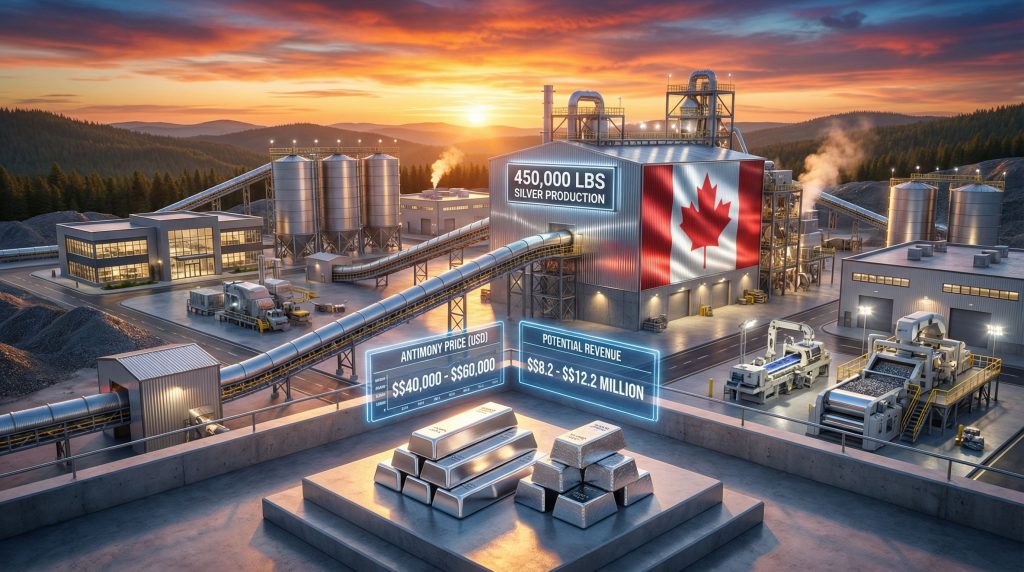
Americas operates the United States' largest active antimony-producing mine at Galena, delivering approximately 450,000 pounds of antimony as a by-product through the first three quarters of 2025. This production occurs at a time when antimony has gained strategic importance for national security applications, flame retardants, and battery technologies.
Galena's tetrahedrite ore naturally contains approximately 1% antimony in an average antimony-to-copper ratio of 0.7. This natural occurrence eliminates the need for separate antimony extraction operations while providing strategic mineral exposure that commands premium pricing in current markets. Consequently, the mining industry evolution toward critical mineral production supports premium valuations for integrated operations.
Recovery Technology and Economic Thresholds
Advanced metallurgical processes enable economic recovery of antimony from silver-copper concentrates that previously treated these materials as waste. Recovery rates above 95% transform by-product streams into significant revenue contributors.
Recovery Economics Analysis:
| Antimony Price (USD/tonne) | Annual Production (lbs) | Potential Revenue (USD) |
|---|---|---|
| $40,000 | 450,000 | $8.2 million |
| $50,000 | 450,000 | $10.2 million |
| $60,000 | 450,000 | $12.2 million |
Breakthrough metallurgical testwork completed in May and September 2025 demonstrated that modern processes can upgrade antimony concentrates from Galena's copper concentrate. Phase 1 flotation testing achieved 90-96% antimony recovery from ore grading approximately 1% antimony, producing a rougher concentrate grading 18.6% antimony.
Phase 2 testing achieved 99.8% antimony extraction from copper concentrate through secondary flotation processes. This recovery breakthrough unlocks approximately US$10 million in annual revenue potential at current antimony prices of US$50,000 per tonne, representing substantial by-product value that was previously uneconomic to capture.
The successful testwork creates two strategic pathways: shorter-term, antimony becomes a payable by-product under new offtake agreements; longer-term, evaluation of potential domestic refining options could yield substantially higher revenue from antimony by-product production, particularly given national security priorities for domestic critical mineral supply chains.
How Should Investors Evaluate Silver Mining Consolidation Opportunities?
Financial Metrics and Valuation Considerations
Silver mining companies trade on multiple valuation metrics that reflect different aspects of their business models. Net asset value, price-to-cash flow, and enterprise value-to-resources provide complementary perspectives on relative value that become particularly important when evaluating consolidation opportunities.
Key Valuation Metrics:
• Net Asset Value (NAV) – Discounted cash flow value of proven and probable reserves
• EV/Resource – Enterprise value relative to total mineral resources
• Price/Cash Flow – Market capitalization relative to operating cash flow
• Silver Exposure Ratio – Percentage of revenue derived from silver sales
Americas Gold & Silver trades at 0.76 times net asset value per share compared to an average of 0.88 times for intermediate to senior silver producers. Despite generating 87% of 2025 revenue from silver, the second-highest exposure globally among producers, the company maintains a market capitalization smaller than several peers with lower silver revenue exposure.
This valuation discount likely reflects integration execution risk from the recent Galena consolidation and the Crescent Mine acquisition. However, successful operational integration could eliminate this discount and create substantial valuation upside as production scales and operational synergies materialize.
The company's institutional ownership exceeding 70% when combined with insider holdings creates a stable shareholder base less susceptible to volatility-driven selling pressure. Major shareholders include Sprott Asset Management, BlackRock, Manulife, and other resource-focused institutional investors with long-term investment horizons.
Management Track Record and Execution Capability
Successful mine consolidation requires proven operational expertise and capital allocation discipline. Management teams with demonstrated track records of operational turnarounds and value creation command premium valuations in volatile commodity markets.
Management Evaluation Criteria:
• Previous experience with similar asset consolidation
• Track record of operational improvements and cost reduction
• Capital allocation discipline and shareholder value creation
• Technical expertise in relevant mining methods and processing
Chairman and CEO Paul André Huet previously led Karora Resources through an 804% stock price increase versus the GDXJ gold junior index following its merger with Westgold Resources. This track record demonstrates proven ability to execute complex mining consolidation transactions while creating shareholder value.
Chief Operating Officer Mike Doolin increased Karora's throughput from 340,000 tons per annum to 1.6 million tons per annum while serving as Senior Vice President of Technical Services. This operational scaling experience directly applies to optimizing combined Galena-Crescent operations and maximizing processing infrastructure utilization.
The management team's recent operational achievements at Galena validate their technical expertise. The doubling of hoisting capacity, successful implementation of long hole stoping, and breakthrough antimony recovery metallurgy demonstrate systematic operational improvement capabilities that create sustainable competitive advantages.
Market Positioning and Competitive Advantages
Silver producers with concentrated exposure to silver prices and strategic positioning in prolific mining districts maintain competitive advantages during favorable market cycles. Geographic diversification must be balanced against operational complexity when evaluating regional consolidation strategies.
Competitive Advantage Assessment:
• Grade Profile – Average silver grades relative to industry benchmarks
• Cost Position – All-in sustaining costs per ounce compared to peers
• Resource Life – Years of production at current rates
• Growth Options – Exploration potential and expansion opportunities
Galena achieved average head grades of 496 grams per tonne year-to-date through 2025, maintaining status as one of the world's highest-grade active silver mines. This grade advantage provides substantial margin protection during commodity price volatility while maximizing revenue per ton processed.
The Idaho Silver Valley location provides additional strategic advantages through established infrastructure, skilled labor availability, and favorable regulatory environment. The district's century-long mining history demonstrates geological continuity and resource endowment that supports long-term operational sustainability.
What Are the Key Risk Factors in Silver Mine Consolidation?
Integration and Execution Risks
Mine consolidation creates operational complexity that can offset potential synergies if not managed effectively. Integration timelines, capital requirements, and production disruptions represent significant execution risks that require careful management and contingency planning.
Risk Mitigation Strategies:
• Detailed integration planning with specific milestones
• Conservative production ramp-up schedules
• Adequate working capital for operational flexibility
• Experienced technical teams familiar with local conditions
The Crescent Mine acquisition benefits from several risk mitigation factors. The property's proximity of 9 miles from Galena processing facilities minimizes transportation complexity, while identical tetrahedrite mineralization eliminates metallurgical integration risks. Existing underground development comprising 12,000+ feet of workings reduces restart capital requirements and accelerates production timelines.
Management's previous experience with mining consolidation and operational optimization provides additional risk mitigation. The successful Galena Complex consolidation completed in December 2024 demonstrates proven ability to integrate acquired assets while maintaining operational continuity.
Market and Commodity Price Volatility
Silver price volatility creates both opportunities and risks for leveraged producers. Operations with high fixed costs and concentrated silver exposure face significant earnings volatility during price cycles, requiring sophisticated risk management approaches.
Volatility Management Approaches:
• Diversified revenue streams including by-product credits
• Flexible cost structures that adjust with production levels
• Conservative financial leverage and adequate liquidity
• Hedging strategies for portion of production when appropriate
Americas' 87% silver revenue exposure creates substantial leverage to silver price movements while concentrating commodity risk. However, significant by-product credits from copper and antimony production provide partial revenue diversification that reduces pure silver price sensitivity.
The company's US$132 million financing completed in October 2024 provides adequate liquidity to manage operational integration and maintain financial flexibility during commodity price volatility. Conservative debt levels enable the company to avoid forced asset sales or dilutive equity issuances during unfavorable market conditions.
Critical mineral by-product exposure through antimony production creates additional revenue stability during silver price weakness. Antimony's strategic importance and limited supply sources support price premiums that partially offset silver price volatility.
The next major ASX story will hit our subscribers first
Strategic Outlook for North American Silver Mining
The combination of supply constraints, industrial demand growth, and favorable regulatory environments positions North American silver producers for potential outperformance during commodity upcycles. Successful consolidation strategies that create genuine operational synergies while maintaining financial flexibility offer compelling risk-adjusted return profiles for investors seeking leveraged precious metals exposure.
Regional consolidation in established mining districts represents a lower-risk approach to production growth compared to greenfield development, particularly when transactions involve fully permitted operations with existing infrastructure. The Crescent Mine acquisition exemplifies how strategic consolidation can create immediate value through infrastructure optimization, grade blending, and shared operational expertise.
The structural characteristics of silver markets, including constrained primary mine supply, growing industrial demand, and limited above-ground inventories, support higher price levels that benefit high-grade primary producers disproportionately. Operations with concentrated silver exposure and strategic positioning in prolific mining districts maintain competitive advantages that compound during favorable price cycles.
Investment Considerations for Silver Mining Consolidation:
• Infrastructure Utilization – Evaluate processing capacity versus current throughput to identify consolidation opportunities
• Mineralogical Compatibility – Assess ore types and processing requirements to validate operational synergies
• Management Execution – Review track records on similar consolidation transactions and operational improvements
• Market Positioning – Analyse grade profiles, cost positions, and competitive advantages in regional contexts
• Risk Management – Consider integration complexity, commodity exposure, and financial flexibility requirements
The key to successful execution lies in management teams' ability to optimise shared resources while maintaining operational flexibility to adapt to changing market conditions. Companies that successfully balance operational integration with strategic positioning in favourable geological districts create sustainable competitive advantages that generate superior returns across commodity cycles.
Furthermore, Americas Gold & Silver's strategic acquisition demonstrates how well-executed consolidation transactions can create immediate value while positioning companies for long-term growth in evolving precious metals markets.
Disclaimer: This analysis is for informational purposes only and should not be considered as investment advice. Commodity investments involve substantial risk of loss, and past performance does not guarantee future results. Readers should conduct their own research and consult with qualified financial advisors before making investment decisions.
Looking to Identify Silver Mining Consolidation Opportunities?
Discovery Alert's proprietary Discovery IQ model delivers real-time alerts on significant ASX mineral discoveries, instantly empowering subscribers to identify actionable opportunities ahead of the broader market. Subscribers gain immediate insights into silver, copper, and critical mineral discoveries that can generate substantial returns, just like the strategic consolidations transforming North American markets. Begin your 30-day free trial today and position yourself ahead of the market with Discovery Alert's cutting-edge technology.