May 16, 2026
Bolivia's transformation from an underexplored territory to a strategic silver supplier exemplifies how macro-economic forces drive resource development in politically stable environments. Furthermore, understanding the silver supply deficits affecting global markets reveals why silver mining in Bolivia presents unprecedented opportunities for investors.
Bolivia's Strategic Position in Global Silver Supply Chains
Production Capacity and Market Influence
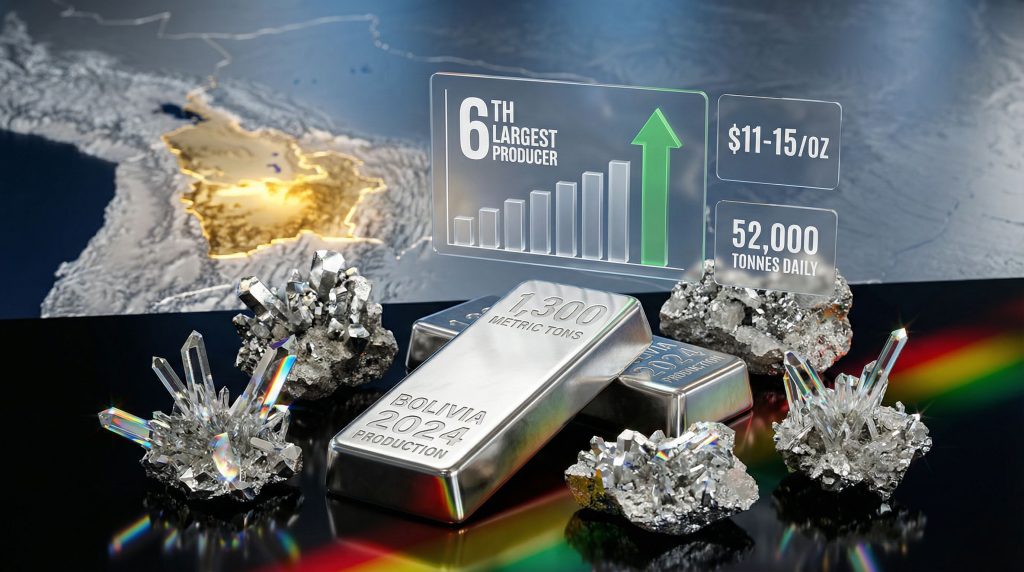
Bolivia ranks among the world's top silver producers, generating approximately 1,300 metric tons annually and positioning itself as a critical supplier within tightening global markets. This production level places Bolivia alongside established mining jurisdictions while offering distinct advantages through lower operational costs and regulatory efficiency.
The nation's silver output contributes significantly to global supply chains serving electronic manufacturing, renewable energy infrastructure, and automotive sectors. Bolivia's current production represents roughly 4.2% of global silver mining output, with expansion potential through advanced-stage development projects that could increase this market share substantially.
San Cristóbal Mine operates as Bolivia's flagship silver producer, processing 52,000 tonnes daily and generating 17.6 million ounces annually. Located in the historic Potosí region, this operation serves as the primary employer in the department, demonstrating the sector's economic importance beyond direct mining revenues through regional employment and infrastructure development.
Competitive Cost Advantages
Bolivia's silver mining economics deliver compelling advantages over established global producers through lower all-in sustaining costs, reduced labour expenses, and streamlined regulatory processes. These structural benefits create sustainable competitive positioning for both existing operations and development projects.
Global Silver Mining Cost Comparison
| Metric | Bolivia | Mexico | Peru | Global Average |
|---|---|---|---|---|
| All-in Sustaining Costs | $11-15/oz | $18-22/oz | $16-20/oz | $17-21/oz |
| Labour Costs (Daily) | $25-35 | $45-60 | $40-55 | $50-70 |
| Regulatory Timeline | 18-24 months | 36-48 months | 24-36 months | 30-42 months |
The Silver Sand Project exemplifies Bolivia's cost competitiveness, with projected all-in sustaining costs below $11 per ounce compared to global averages exceeding $17 per ounce. This cost differential creates substantial profit margins, particularly as silver prices maintain elevated levels above $75 per ounce following January 2026 peaks exceeding $120 per ounce.
Bolivia's regulatory framework supports accelerated project development through mining-friendly policies encouraging foreign investment. Permitting timelines averaging 18-24 months compare favourably against Mexico's 36-48 month processes and Peru's 24-36 month requirements, enabling faster capital deployment and revenue generation.
When big ASX news breaks, our subscribers know first
Industrial Demand Fundamentals Driving Silver Consumption
Electronics and Technology Sector Growth
Industrial applications now consume 59% of global silver output, driven by the metal's unmatched electrical conductivity properties essential for modern technology infrastructure. Unlike copper and alternative metals, silver remains irreplaceable in critical applications requiring optimal electrical performance and reliability.
Electronic devices represent one-third of global silver consumption through electrical pathways and switching mechanisms in smartphones, tablets, and consumer electronics. The rapid expansion of artificial intelligence and data centre infrastructure has created the fastest-growing electronics segment requiring silver for cloud infrastructures, high-speed networking, and cooling systems.
Trevor Keel, Technical Director of The Silver Institute, emphasises that increasing societal connectivity drives sustained electronics demand. "Continued reliance on electronic devices ensures strong silver consumption growth," he notes. This technological dependency creates predictable, long-term demand patterns supporting silver price stability and investment returns.
Renewable Energy Infrastructure Expansion
Solar panel manufacturing represents a major growth driver for industrial silver demand, utilising silver's properties to convert sunlight to electrons and conduct generated electricity efficiently. Global solar installations increased 33% in 2024, with Solar Power Europe projecting continued growth in low double digits through 2029.
Despite reduced U.S. incentives, international renewable energy adoption maintains strong momentum, creating sustained silver consumption for photovoltaic systems. Each solar installation requires substantial silver content for optimal energy conversion efficiency, translating renewable energy growth directly into precious metals demand.
Electric vehicle adoption further amplifies silver consumption, with EVs requiring twice the silver content of conventional vehicles for additional electrical systems and power management components. However, the potential for silver tariffs impact on international trade remains a consideration for industry planning.
Emerging Technology Applications
Wearable technology expansion through smart rings, watches, pendants, and biometric monitoring clothing creates additional silver consumption channels. These devices utilise silver's conductivity for personal air quality monitoring, sleep tracking, and activity measurement systems.
The convergence of multiple technology sectors consuming silver creates supply-demand dynamics favouring producers with low-cost, reliable production capacity. Bolivia's strategic positioning within this demand environment offers investors exposure to sustained consumption growth across diversified industrial applications.
Bolivia's Mining Production Models and Economic Impact
Large-Scale Industrial Operations
San Cristóbal Mine exemplifies Bolivia's industrial-scale silver production capabilities through its 52,000-tonne daily processing capacity and 17.6 million ounce annual output. As the primary employer in Potosí Department, this operation demonstrates mining's role in regional economic development and export revenue generation.
The mine's production contributes substantially to Bolivia's foreign exchange earnings and balance of payments, while providing employment and economic multiplier effects throughout the surrounding region. Its operational scale and consistent output establish Bolivia as a reliable supplier within global silver supply chains.
Industrial mining operations like San Cristóbal provide economic stability through predictable production schedules, established infrastructure, and long-term employment. These characteristics attract international investment and support Bolivia's reputation as a dependable mining jurisdiction.
Cooperative Mining Networks
Over 150,000 workers participate in Bolivia's artisanal and small-scale mining sector, operating under the 2014 Mining Law framework governing revenue distribution and operational standards. This extensive network demonstrates silver mining in Bolivia's grassroots economic importance across rural communities.
Cooperative mining operations integrate with commercial processing facilities through partnership arrangements, exemplified by connections to operations like San Bartolomé. These relationships formalise artisanal production within established supply chains while providing income stability for local communities.
The cooperative model enables widespread participation in Bolivia's mining economy while maintaining environmental and safety standards through regulatory oversight. Furthermore, this approach balances economic development with sustainable mining practices across diverse geographic regions.
Advanced Development Projects
New Pacific Metals advances two world-class silver projects representing significant expansion potential for Bolivia's production capacity. The Silver Sand Project in Potosí region targets 12 million ounces annual production with all-in sustaining costs below $11 per ounce through open-pit mining methods.
The Carangas Silver-Gold Project in Oruro department adds 6.6 million ounces potential annual capacity through multi-zone development incorporating both silver and gold resources. Combined project capacity could position New Pacific among major global silver producers upon development completion.
New Pacific Metals Development Pipeline
- Silver Sand Project: 12 million ounces annually, <$11/oz AISC, permitting stage
- Carangas Project: 6.6 million ounces capacity, 30,000-metre 2026 drilling program
- Combined Impact: Production levels comparable to established global producers
Silvercorp Metals maintains a 28% ownership stake in New Pacific Metals, while Pan American Silver holds 12%, demonstrating institutional confidence in Bolivia's silver development potential. These investments by established precious metals producers validate project economics and management capabilities.
Supply-Demand Imbalance Creates Investment Opportunities
Global Production Shortfalls
Despite global mine production reaching a seven-year high of 844 million ounces in 2025, the World Silver Survey projects a shortfall of 118 million ounces in 2026. This supply deficit reflects accelerating industrial consumption outpacing mining capacity expansion across established producing regions.
Supply constraints emerge from operational challenges in traditional mining jurisdictions, including labour disputes, permitting delays, and logistical complications. These limitations create opportunities for efficient producers in stable jurisdictions to capture market share within tightening supply conditions.
Amit Pabari of CR Forex Advisors notes that "silver supply remains sticky while demand continues growing, creating fundamental imbalances supporting sustained price appreciation." In addition, our comprehensive silver market squeeze analysis reveals how Bolivia's expansion potential positions the country to benefit from these supply-demand dynamics through increased production and export revenues.
Strategic Mineral Classification Impact
The U.S. Geological Survey's designation of silver as a critical mineral essential to national security increases potential for strategic stockpiling by major economies. This classification recognises silver's importance to defence and technology infrastructure while highlighting supply security concerns.
Geopolitical uncertainties drive safe-haven demand for precious metals, with silver benefiting from both industrial necessity and investment portfolio diversification. Precious metals analyst David Morgan suggests potential for 3x price increases from mid-2025 levels as institutions and individuals seek currency disruption hedges.
Bolivia's political stability and mining-friendly investment climate position the country as a preferred supplier for strategic mineral requirements. Unlike jurisdictions facing sanctions, civil unrest, or regulatory uncertainty, Bolivia offers reliable supply chain access for critical silver consumption.
Risk Assessment and Investment Considerations
Operational Risk Factors
Environmental permitting represents the primary operational risk for new mining projects, though Bolivia's streamlined regulatory framework reduces timeline uncertainties compared to other jurisdictions. Community relations and social licence maintenance remain essential for successful project development and long-term operational stability.
Currency exchange rate volatility affects project economics denominated in U.S. dollars, though silver price appreciation generally offsets local currency fluctuations. Mining companies typically employ hedging strategies to manage currency exposure while maintaining operational cost competitiveness.
Infrastructure development requirements include transportation network expansion and processing facility capacity increases to support production growth. However, these investments create short-term capital requirements while establishing long-term operational advantages and regional economic development.
Market Risk Management
Silver price volatility influences project viability and investment returns, though current price levels above $75 per ounce provide substantial margins above production costs. Projects with all-in sustaining costs below $15 per ounce maintain profitability across various price scenarios.
Competition from established global producers requires continued operational efficiency and cost management. Bolivia's structural advantages through lower labour costs and regulatory efficiency provide sustainable competitive positioning against higher-cost jurisdictions.
Technology disruption risks in industrial silver applications remain limited due to the metal's unique physical properties and irreplaceable characteristics in critical applications. Alternative materials cannot match silver's electrical conductivity and reliability across demanding industrial environments.
Investment Portfolio Integration Strategies
Direct Investment Opportunities
Bolivia's silver mining sector offers multiple investment channels through established producers, development companies, and infrastructure projects. New Pacific Metals provides focused exposure to Bolivia's silver development potential through its Silver Sand and Carangas project portfolio.
The company's Vancouver headquarters and dual listing on the Canadian Securities Exchange (NUAG) and New York Stock Exchange (NEWP) facilitate institutional investment access. Management's decade-plus operating experience in Bolivia demonstrates local expertise and stakeholder relationship development.
Jalen Yuan, CEO of New Pacific Metals, emphasises that "the company's strategy focuses on careful project identification and acquisition, thorough geological study, well-planned drilling, and long-term shareholder value creation." This disciplined approach targets sustainable returns through quality asset development rather than speculative exploration.
Portfolio Diversification Benefits
Silver mining investments provide precious metals exposure while capturing industrial commodity demand growth, offering diversification beyond traditional gold holdings. Consequently, examining broader gold and silver analysis helps investors understand Bolivia's emergence as a reliable producer, adding geographic diversification away from traditional mining centres.
The combination of industrial demand growth and supply constraints creates favourable investment conditions for efficient producers with development-ready projects. Bolivia's cost advantages and regulatory efficiency position local operations for sustained profitability across various silver price environments.
Critical minerals classification enhances investment appeal through potential strategic demand and stockpiling programmes by major economies. This designation provides additional price support beyond industrial consumption, creating multiple demand drivers for silver investments.
The next major ASX story will hit our subscribers first
Future Outlook and Strategic Positioning
Production Expansion Projections
Bolivia's silver production capacity could increase substantially through advanced development projects reaching commercial production. Combined Silver Sand and Carangas projects represent potential additional annual capacity of 18.6 million ounces, significantly expanding Bolivia's global market presence.
Infrastructure development supporting increased production includes transportation network improvements, processing facility expansion, and technology transfer opportunities. These investments create long-term competitive advantages while supporting regional economic development.
Export capacity expansion enables Bolivia to capture increased market share within tightening global supply conditions. The country's strategic positioning offers reliable supply chain access for industrial consumers requiring consistent silver deliveries.
Technology Integration Opportunities
Value-added processing development potential includes downstream applications serving electronics, renewable energy, and automotive sectors. Regional supply chain integration with neighbouring countries creates additional economic opportunities beyond raw material exports.
Technology sector partnerships for downstream applications could establish Bolivia as a regional processing centre rather than solely a raw material supplier. This vertical integration approach increases economic value capture while reducing dependence on commodity price fluctuations.
Modern exploration techniques and mining technologies offer significant resource expansion potential across Bolivia's underexplored geological territories. Furthermore, the broader critical minerals energy transition highlights how limited historical exploration suggests substantial additional discoveries through systematic geological mapping and drilling programmes.
Key Investment Considerations
What Makes Bolivia's Silver Sector Attractive to Investors?
Bolivia's silver mining sector combines structural cost advantages, favourable regulatory environment, and access to world-class deposits within a politically stable jurisdiction. Supply-demand fundamentals support sustained profitability through industrial consumption growth and supply constraints in traditional producing regions.
The convergence of renewable energy adoption, electronics sector expansion, and critical mineral designation creates multiple demand drivers supporting long-term silver price appreciation. Bolivia's positioning to capture market share through efficient, low-cost production offers compelling investment returns.
Investment portfolio benefits include precious metals exposure, critical mineral access, and geographic diversification away from traditional mining centres. Bolivia's emergence as a reliable supplier addresses supply chain security concerns while providing exposure to sustained demand growth.
Strategic Implementation Approach
Investors seeking exposure to Bolivia's silver development potential should evaluate management experience, project economics, and regulatory advancement status. Established companies with proven local operating experience offer lower execution risk compared to early-stage exploration ventures.
Due diligence should focus on all-in sustaining costs, resource estimates, permitting progress, and community relations. Projects with sub-$15 per ounce production costs maintain profitability across various price scenarios while providing substantial margins at current price levels.
Long-term positioning in silver mining in Bolivia offers exposure to sustained industrial demand growth, supply-demand imbalances, and critical mineral classification benefits. The combination of these factors creates compelling investment opportunities within an undervalued mining jurisdiction poised for significant growth.
The historic Cerro Rico mountain's mining heritage demonstrates Bolivia's centuries-long expertise in precious metals extraction, while modern operations build upon this foundation with advanced technologies and sustainable practices.
Disclaimer: This analysis is for informational purposes only and should not be considered investment advice. Potential investors should conduct independent research and consult with qualified financial advisors before making investment decisions. Mining investments carry inherent risks including commodity price volatility, operational challenges, and regulatory changes.
Ready to Capitalise on Bolivia's Silver Mining Opportunities?
Discovery Alert's proprietary Discovery IQ model delivers real-time alerts on significant ASX mineral discoveries, instantly empowering subscribers to identify actionable opportunities ahead of the broader market. Begin your 14-day free trial today and secure your market-leading advantage in the precious metals sector.