
May 15, 2026
The Hidden Bottleneck Slowing Mexico's Most Advanced Silver Projects
There is a structural paradox at the heart of Mexico's mining sector that rarely surfaces in commodity price discussions or resource estimate headlines. The country hosts some of the richest silver-bearing geology on the planet, with Sinaloa alone accounting for a disproportionate share of global primary silver output. Yet production volumes are falling, investment timelines are stretching, and developers with fully funded, technically sound projects are being held in a regulatory holding pattern that no amount of drilling success can resolve.
Understanding why this is happening, and what it means for the Vizsla Silver Panuco project permits specifically, requires looking past the resource numbers and into the mechanics of how Mexico's permitting system actually functions in 2026.
When big ASX news breaks, our subscribers know first
Mexico's Regulatory Environment Has Changed Fundamentally Since 2023
The federal mining approval process in Mexico has undergone a structural transformation that many developers initially underestimated. What was once a procedural compliance exercise — submitting documentation against established criteria and awaiting agency sign-off — has evolved into a multidisciplinary evaluation framework where social integration, environmental sensitivity, and institutional credibility carry as much weight as technical soundness.
SEMARNAT, Mexico's Ministry of Environment and Natural Resources, has expanded its mandate considerably. Applications filed years ago under earlier regulatory criteria are now being evaluated against updated water usage standards and revised forestry protection requirements. This retroactive application of new standards has introduced a layer of uncertainty that is particularly challenging for projects that advanced through early exploration under a different regulatory paradigm.
The enforcement signal sent by the cancellation of more than 1,000 non-compliant mining concessions cannot be ignored. It communicates that federal agencies are willing to act decisively when they identify deficiencies, but it also signals an opening for companies that can demonstrate genuine compliance, community engagement, and environmental credibility.
Joel González, Senior Partner at ALN Abogados, has observed that SEMARNAT is increasingly applying updated water and forestry criteria to applications submitted well before those standards were formalised, creating a moving target for developers whose submissions predate the regulatory shift. The challenges of permitting in mining are, consequently, more complex than ever before.
The output data makes the impact of this environment visible. Mexico's mining sector recorded a year-on-year production contraction of approximately 5.8% in 2025, with regulatory uncertainty identified by Pablo Méndez, Managing Partner at EC Rubio, as the primary structural drag on both investment flows and production capacity. This is not a geological story. Mexico's ore bodies have not diminished. The gap between resource endowment and realised production is a permitting and jurisdictional stability story.
Furthermore, silver supply deficits continue to place additional pressure on producers and developers alike, compounding the urgency of resolving regulatory bottlenecks.
Key Market Dynamic: When regulatory friction becomes the binding constraint on production, jurisdictional competitiveness decouples from geological quality. Investors who assess Mexico purely on resource metrics risk systematically underweighting permitting timeline risk.
What Permits the Panuco Project Currently Holds
The Vizsla Silver Panuco project permits picture is layered, and understanding what is already in place versus what remains outstanding is essential for assessing development risk accurately.
Existing Approvals and Their Scope
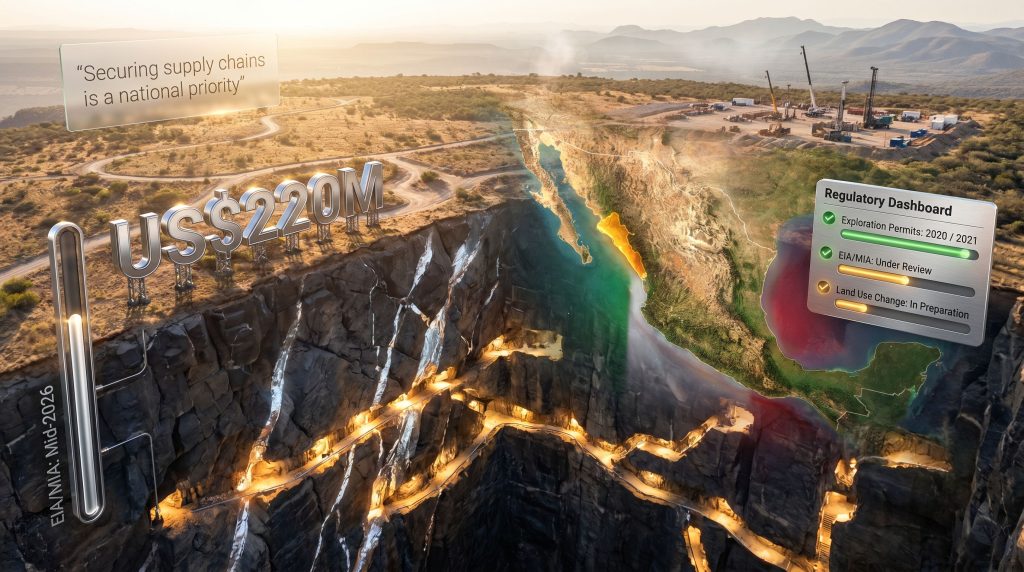
Mine exploration permits issued by SEMARNAT in 2020 and 2021 authorise the ongoing drilling and exploration activities that have underpinned Panuco's resource expansion over the past several years. These permits are genuinely significant because they were secured under a more complex regulatory environment than many peer projects faced at equivalent stages.
An active Informe Preventivo (IP) supplements these permits, covering test mine activities and current site operations. The IP is a preliminary environmental notification instrument in Mexico's regulatory system, functioning as an initial environmental screening mechanism that sits below the full Environmental Impact Assessment in terms of scope and rigour. Its active status means that current operations have regulatory coverage, but this coverage does not extend to construction or commercial-scale production activities.
The Outstanding Permit Stack Before Construction Can Begin
The transition from exploration to construction requires a separate and more demanding set of approvals. The table below summarises the outstanding permit requirements and their current status:
| Permit Type | Issuing Authority | Status | Pathway Significance |
|---|---|---|---|
| Environmental Impact Assessment (EIA/MIA) | SEMARNAT | Under review | Critical path item |
| Risk Assessment | SEMARNAT | Submitted / in progress | Required alongside EIA |
| Land Use Change Approval | Ministry of Environment | In preparation | Required for surface disturbance |
| Local Construction Permit | Municipal/State Authority | Pending EIA outcome | Dependent on federal approvals |
| Explosives Permit | Ministry of National Defense | In preparation | Required for underground operations |
The Environmental Impact Assessment, known in Mexico as the Manifestación de Impacto Ambiental (MIA), is the single most consequential approval in this stack. Every other construction authorisation depends on its successful outcome. A decision on this permit is widely anticipated around mid-2026, which, if positive, would unlock the pathway toward a second-half 2026 construction commencement.
Critically, Vizsla Silver's 2025 year-end summary confirms that no final production decision has been made and that construction at Panuco will only proceed once all required regulatory approvals have been formally received.
Panuco as a Development Asset: Scale, Credentials, and Capital Structure
Technical Foundations and Project Scale
The Panuco project occupies a consolidated land package of 9,865 hectares in Sinaloa, encompassing more than 86 kilometres of total vein strike. This level of consolidation is structurally rare in Mexico's silver development landscape, where fragmented multi-claim structures create title complexity and surface rights complications that routinely delay projects at exactly the stage Panuco is now navigating.
The project is designed as a high-grade, underground silver-primary operation with a gold co-product profile. A positive feasibility study has been completed, providing the technical backbone for both the financing mandate and the regulatory submission process. EPCM and mine design contracts have already been awarded, indicating that execution planning is advancing on a parallel track alongside the outstanding permitting processes.
Capital Structure and the Macquarie Mandate
The financing architecture supporting the Panuco development is a meaningful indicator of institutional confidence in the project's technical and economic merits. A project finance mandate of up to US$220 million with Macquarie represents the largest financing commitment in the company's history and provides a capitalisation pathway that the majority of Mexico-focused junior silver developers cannot access.
However, project finance facilities of this nature are structured around conditions precedent. Permitting milestones sit among those conditions, meaning the drawdown timeline is directly linked to the regulatory calendar. This creates a compressed execution dynamic: engineering and procurement are advancing now, but the capital to fund construction cannot be accessed until the permit stack is cleared.
How Panuco Compares Against Mexico's Junior Silver Peer Group
| Development Metric | Panuco (Vizsla Silver) | Typical Mexico Junior Silver Project |
|---|---|---|
| Land Package | 9,865 ha consolidated | Fragmented multi-claim structures common |
| Vein Strike Coverage | 86+ km | Typically 10 to 30 km at comparable stage |
| Feasibility Study Status | Positive FS completed | Many at PEA or resource estimate stage |
| Project Finance | US$220M Macquarie mandate | Equity-dependent or unfunded |
| Permitting Stage | EIA/MIA under review | Often pre-submission |
Understanding junior mining risks is essential here, as the gap between Panuco and its peer group on nearly every measurable dimension illustrates precisely why capital allocation decisions within this sector require careful scrutiny.
The Federal Policy Shift and the Mexico-US Critical Minerals Framework
Minister Ebrard's Commitment at the XXXVI International Mining Convention
The federal posture toward mining investment has shifted at the ministerial level. Speaking at the XXXVI International Mining Convention in 2025, Economy Minister Marcelo Ebrard confirmed the administration's intention to accelerate mining permit approvals beginning in 2026, framing the initiative explicitly around supply chain security. Three new land use and environmental impact permits were cited as early evidence of this commitment, though the specific projects receiving those approvals were not identified publicly.
This framing matters because it positions mining permit acceleration not as a mining sector accommodation but as a national economic security priority. The political logic is different, and the institutional incentives that flow from it are correspondingly stronger.
The Mexico-US Action Plan on Critical Minerals
Announced in February 2026, the bilateral Mexico-US Action Plan on Critical Minerals establishes a cooperative framework designed to integrate Mexican mining production into North American industrial supply chains for electromobility and advanced manufacturing. This geopolitical alignment creates federal-level incentives to resolve the permitting backlog for projects that can contribute to that supply chain objective.
CAMIMEX, Mexico's principal mining industry association, has been explicit that realising the potential of this bilateral framework requires addressing two structural issues simultaneously: clearing the existing permitting backlog and establishing predictable, clearly defined timelines for environmental and operational approvals within a modernised legal framework.
Industry Perspective: Jurisdictional stability is not simply a regulatory concept in this context. It is the prerequisite condition for Mexico to capture its proportionate share of North American critical minerals investment at a moment when supply chain restructuring is accelerating globally.
Social Resilience: The Permitting Concept Most Developers Underestimate
What Social Resilience Actually Means in Practice
The term social resilience has emerged among Mexican mining law practitioners as shorthand for something considerably more demanding than community consultation or stakeholder engagement. It describes an integrated, cross-functional approach that combines legal strategy, environmental credibility, and sustained community relationship-building across the entire project lifecycle.
Joel González of ALN Abogados has drawn a comparison that captures the operational complexity well. Developing a mining project in Mexico involves navigating water permits, environmental approvals, labour frameworks, community agreements, agrarian authority consultations, and municipal construction authorisations — all simultaneously, across different agencies operating on different timelines with different priorities.
His assessment is that projects structured to treat these challenges as the responsibility of a single department consistently encounter delays, while those built around interdisciplinary teams with genuine institutional depth are better positioned to maintain regulatory momentum.
Santiago Suárez, Partner at Servicios Legales Mineros, has articulated that true regulatory credibility in Mexico today requires technical soundness, social credibility, and a long-term institutional strategy oriented toward generating genuine trust with authorities like SEMARNAT. Formal compliance is a baseline, not a differentiator.
Why This Framework Changes How Investors Should Assess Permitting Risk
The conventional approach to permitting risk assessment in the junior mining sector focuses on whether required applications have been submitted and what the standard processing timelines are. Mexico's current environment makes that framework insufficient. The relevant questions have expanded to include:
- Does the company have dedicated senior leadership with direct institutional experience in the relevant agencies?
- Is the community and agrarian engagement strategy integrated into project management or siloed in a separate function?
- Has the environmental submission been stress-tested against the updated water and forestry criteria that SEMARNAT is now applying retroactively?
- Are the timelines under the financing facility's conditions precedent realistic given the current agency workload and evaluation standards?
The next major ASX story will hit our subscribers first
The Government Relations Appointment: Why Institutional Knowledge Is the Scarcest Asset
Angel Diego Gómez Olmos: Credentials and Strategic Rationale
Against this permitting backdrop, the appointment of Angel Diego Gómez Olmos as Vice President of Government Relations, based in Mexico City, represents a deliberate and strategically calibrated decision. His professional profile is directly relevant to the specific agencies responsible for reviewing the Vizsla Silver Panuco project permits.
Gómez holds dual legal qualifications in Mexico and Spain and brings more than a decade of combined experience across mining law and public administration. His most recent senior role was as General Director of FIFOMI, Mexico's federal mining finance institution. Prior to that, he served as Acting General Director of Mines and as Director of Operations and Tracking of the Mining Sector at the Ministry of Economy.
This is not a government relations hire in the conventional corporate communications sense. It is an institutional navigation appointment. The agencies currently reviewing Panuco's outstanding permits are, in a direct and literal sense, organisations that Gómez previously led or worked within at a senior operational level.
Michael Konnert, CEO of Vizsla Silver, has characterised Gómez's value as stemming from years spent running the very agencies the company is now working with, combined with the relationships and practical process knowledge that direct institutional leadership produces. This kind of inside knowledge of how federal agencies actually function — as opposed to how their procedures are formally described — is exceptionally difficult to replicate and essentially impossible to acquire quickly.
The Broader Model: Government Relations as Executive Function
The decision to establish this as a senior executive role rather than a compliance or legal support function signals a strategic orientation that distinguishes developers who understand Mexico's current environment from those still operating under older assumptions about how permitting works. In addition, silver's dual role as both a precious and industrial metal means that any supply disruption carries consequences well beyond the mining sector itself.
The most defensible competitive advantage for any developer operating in Mexico's regulatory environment right now is not the size of the resource or the grade of the ore. It is the credibility and institutional connectivity of the people engaging with SEMARNAT, the Ministry of Economy, and the General Directorate of Mines on a daily basis. This mirrors broader trends in how companies are approaching their silver expansion strategy across Latin America — prioritising regulatory capital alongside financial capital.
The 2H26 Construction Timeline: Milestones, Dependencies, and Risk Factors
Key Milestones on the Critical Path
- Mid-2026: EIA/MIA decision expected from SEMARNAT, representing the single most important binary event in Panuco's near-term trajectory
- Ongoing through 2026: Active drilling programme continuing to expand the resource base ahead of the final investment decision
- 2H26 target: Construction commencement, conditional on all outstanding regulatory approvals being formally received
- Parallel track: EPCM and mine design contracts already executed, with engineering and procurement advancing ahead of permit receipt
Risk Factors That Could Affect the Timeline
- Delay in SEMARNAT's MIA/EIA review process resulting from the retroactive application of updated water or forestry evaluation criteria
- Conditions precedent under the Macquarie project finance facility not being satisfied within the expected timeframe
- Agrarian authority or community consultation requirements triggering additional rounds of engagement before federal approvals are finalised
- Explosives permit processing through the Ministry of National Defense running on a longer timeline than anticipated
- Broader processing capacity constraints at federal agencies resulting from the sector-wide permitting backlog
Disclaimer: The construction timeline and permit outcome expectations discussed in this article are based on publicly available company disclosures and industry analysis as of mid-2026. Permitting processes involve regulatory discretion and are subject to change. This article does not constitute investment advice. Investors should conduct independent due diligence and consider the material risks associated with junior mining development companies and emerging market regulatory environments.
What Investors Should Monitor as Leading Indicators
For investors tracking the Vizsla Silver Panuco project permits story, the following observable data points carry the most forward-looking signal value:
- SEMARNAT's EIA/MIA decision timing is the binary event with the greatest impact on the construction commencement probability in the second half of 2026
- Progress on Macquarie facility conditions precedent serves as a capital markets proxy for regulatory confidence, since the institution's ongoing engagement with the process reflects independent assessment of permitting trajectory
- Federal agency consultation activity and community engagement milestones are observable proxies for permitting momentum that predate formal approval announcements
- Sector-wide permitting approval rates at SEMARNAT in the second and third quarters of 2026 will indicate whether the ministerial commitment to acceleration is translating into operational throughput at the agency level
The Panuco development story is ultimately a case study in what separates credible junior developers from the broader peer group in a jurisdiction where regulatory navigation has become as technically demanding as the geology itself. Projects with the resource quality, financing structure, technical completion, and institutional engagement to operate at this level simultaneously represent a genuinely differentiated category within Mexico's silver development landscape.
Want to Know When the Next Major Silver Discovery Hits the ASX?
Discovery Alert's proprietary Discovery IQ model scans ASX announcements in real time, instantly identifying significant mineral discoveries across silver and 30+ other commodities — turning complex data into actionable opportunities for investors at every level. Start your 14-day free trial at Discovery Alert today, or explore historic discoveries to understand the extraordinary returns that major mineral finds have delivered.