
July 24, 2026
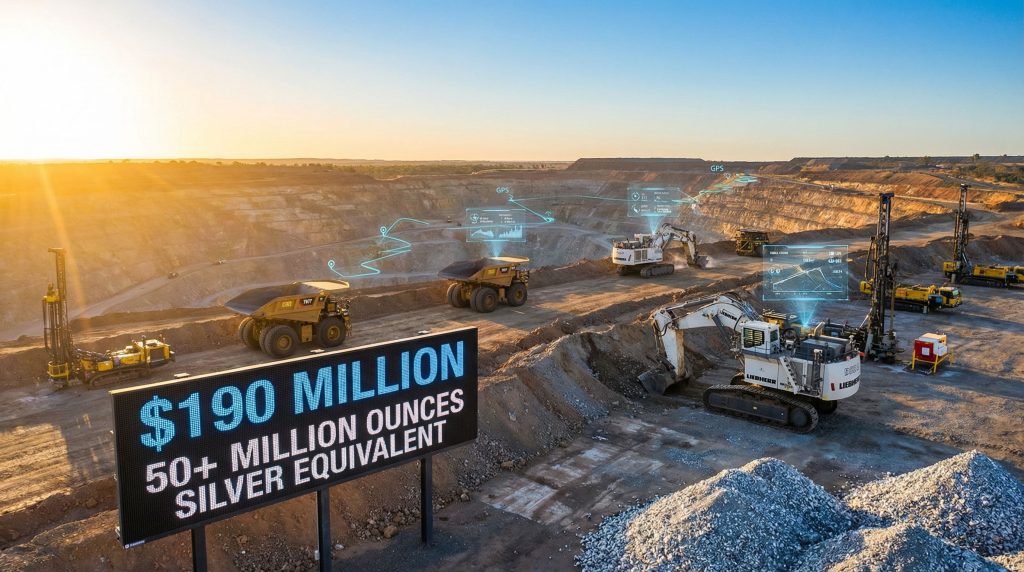
Complex Service Agreements in Modern Silver Mining Operations
The contemporary mining industry operates through intricate contractual frameworks that balance operational risk, technological capability, and market volatility. When examining large-scale precious metals extraction, service agreements represent sophisticated partnerships where contractors assume comprehensive responsibility for primary extraction processes while operators retain commodity price exposure and processing oversight. Furthermore, this structural arrangement creates distinct challenges in fleet management, safety protocols, and performance measurement systems.
Mining service partnerships have evolved beyond traditional equipment rental models into integrated operational frameworks. These arrangements typically span multiple years, encompassing drill-and-blast operations, material handling systems, and equipment maintenance protocols. However, the complexity increases substantially when operations involve restart scenarios, where dormant infrastructure requires systematic rehabilitation alongside new production systems.
When big ASX news breaks, our subscribers know first
Operational Scope Definition in Multi-Million Dollar Mining Contracts
Large-scale mining service agreements establish comprehensive operational boundaries that define contractor responsibilities across multiple technical disciplines. The $190 million contract value represents significant infrastructure commitment, typically structured across five-year initial periods with extension provisions. This financial scale reflects the capital intensity of modern open-pit operations, where equipment fleets, skilled workforce deployment, and technological systems require substantial upfront investment.
Contract Framework Components:
- Primary extraction services: Comprehensive drill-and-blast operations
- Material handling systems: Load-and-haul infrastructure management
- Equipment maintenance: Fleet availability and performance optimization
- Safety management: Incident prevention and regulatory compliance
- Production scheduling: Coordination with processing plant requirements
The service scope excludes processing plant operations, concentrate handling, and transportation logistics, creating clear operational boundaries between contractor and operator responsibilities. Consequently, this division requires sophisticated coordination protocols to prevent bottlenecks at handover points between mining and processing activities.
Processing plant integration represents a critical interface point. The one million tonne per annum capacity establishes production targets that directly influence mining equipment sizing, blast design parameters, and stockpile management strategies. In addition, contractors must align extraction rates with plant throughput capabilities while maintaining operational flexibility for market-driven production adjustments.
Risk Allocation Mechanisms in Mining Service Partnerships
Contemporary mining contracts distribute operational and financial risks through sophisticated allocation frameworks designed to optimize performance incentives while protecting both parties from uncontrollable external factors.
| Risk Category | Contractor Management | Operator Retention |
|---|---|---|
| Equipment performance | Availability guarantees (85-90%) | Production rate flexibility |
| Operational safety | Site compliance protocols | Regulatory approvals |
| Cost escalation | Fixed-price components | Commodity price exposure |
| Geological conditions | Standard mining practices | Resource grade variability |
Performance Measurement Systems
Mining service agreements establish quantitative benchmarks across multiple operational dimensions:
- Production rates: Typically 3,000+ tonnes per operating day for 1 Mtpa operations
- Equipment availability: Industry standard minimums of 85-90%
- Safety performance: Zero-harm objectives with incident frequency targets
- Cost variance: Budget adherence within ±5-10% tolerance bands
The unhedged commodity price position creates interesting dynamics in production decision-making. Operators benefit directly from favourable silver prices, particularly given current silver market squeeze conditions, while contractors receive fixed service fees regardless of commodity performance. This structure incentivizes operators to maximise production during favourable price periods while contractors focus on operational efficiency and cost control.
Technical Complexity in Blast Design and Material Handling
Modern open-pit silver mining requires sophisticated blast design optimization to ensure processed ore meets mill feed specifications while minimising environmental impact. Moreover, drill-and-blast operations must consider geological characteristics, fragmentation requirements, and downstream processing chemistry to optimise overall system performance.
Blast Design Parameters:
- Powder factor optimization: Explosive quantities per tonne of material moved
- Fragmentation control: Size distribution matching processing requirements
- Environmental containment: Vibration and air blast management
- Geological mapping: Structural analysis for blast pattern design
Equipment selection for load-and-haul operations requires careful analysis of production targets, haul distances, and maintenance requirements. Fleet sizing calculations must balance capital efficiency with operational flexibility, typically involving large excavators, haul trucks in the 100-150 tonne capacity range, and supporting light vehicles for supervision and maintenance access.
The May 2026 operational commencement target creates compressed timeline pressure for equipment mobilisation, workforce recruitment, and safety system implementation. Therefore, contractors must coordinate multiple suppliers, complete equipment inspections, and establish operational protocols within defined scheduling constraints.
Processing Integration and Stockpile Management Strategies
Silver mining restarts present unique operational challenges due to the transition from stockpile processing to active open-pit extraction. Initially, production phases utilise existing run-of-mine stockpiles adjacent to the processing plant, requiring careful material characterisation to optimise recovery rates and processing efficiency.
Stockpile ore presents distinct technical challenges compared to fresh material:
- Weathering effects: Extended exposure altering metallurgical characteristics
- Grade variability: Non-uniform distribution requiring blending strategies
- Moisture content: Weather-related changes affecting processing chemistry
- Contamination risks: Foreign material requiring screening protocols
The planned front-end deslime and dewatering circuit addition represents significant process engineering complexity. This modification targets improved mill throughput and leach performance by removing fine clay particles that can interfere with processing chemistry. Furthermore, the six-month refurbishment timeline suggests comprehensive plant modifications requiring detailed engineering studies, equipment procurement, and installation coordination.
Metallurgical Optimization Requirements
Circuit design integration requires sophisticated planning to align with existing processing infrastructure. Additionally, slime recovery systems must maintain valuable mineral retention while dewatering equipment sizing ensures optimal moisture control. Chemical dosing adjustments become essential for modified ore characteristics, particularly when transitioning between stockpile and fresh ore sources.
Workforce Development and Safety Management Frameworks
Large-scale mining operations generate substantial employment opportunities, with estimates suggesting 200+ direct positions across multiple skill categories. Workforce development requires comprehensive training programmes covering equipment operation, safety protocols, and emergency response procedures, reflecting industry evolution trends in modern mining.
Skills Development Categories:
- Heavy equipment operators: Excavator and haul truck certification
- Blast technicians: Explosive handling and blast design specialists
- Maintenance personnel: Equipment servicing and repair capabilities
- Safety coordinators: Incident prevention and regulatory compliance
- Supervisory staff: Production scheduling and quality control
The Cobar Basin's established mining infrastructure provides advantages in workforce recruitment, with regional expertise in precious metals extraction and established training facilities. However, competitive labour markets may create recruitment challenges, particularly for specialised technical positions.
Consequently, safety management systems must integrate contractor and operator protocols to ensure consistent standards across all operational interfaces. This includes equipment inspection procedures, hazard identification protocols, emergency response coordination, and incident reporting systems.
The next major ASX story will hit our subscribers first
Technology Integration and Digital Mining Systems
Contemporary mining operations leverage advanced technology systems to optimise production efficiency, equipment utilisation, and safety performance. Digital integration becomes particularly important in service contract arrangements where real-time performance monitoring enables transparent reporting and dispute prevention, particularly with data-driven mining operations.
Fleet Management Technology
Advanced systems provide comprehensive operational oversight through multiple technological platforms:
- GPS tracking systems: Real-time equipment location and utilisation monitoring
- Production reporting: Automated tonnage measurement and quality tracking
- Maintenance scheduling: Predictive algorithms for equipment servicing
- Fuel management: Consumption monitoring and efficiency optimisation
Advanced blast monitoring systems utilise vibration sensors, air blast measurement, and fragmentation analysis to optimise subsequent blast designs. This technology feedback loop enables continuous improvement in blast outcomes, reducing processing costs through improved fragmentation consistency, particularly with AI in drilling and blasting applications.
Environmental monitoring systems provide continuous compliance tracking for dust emissions, noise levels, and groundwater quality. Furthermore, regulatory authorities increasingly require real-time environmental data, making technology deployment essential for operational approval maintenance.
Market Dynamics and Commodity Price Sensitivity
Silver market fundamentals directly influence mining operation economics, with current price levels around $24-26 USD per ounce providing favourable margins for well-managed operations. Production cost targets typically aim for sub-$18 USD per ounce operational costs, creating substantial profit margins under current market conditions. Additionally, silver demand drivers continue strengthening industrial and investment requirements.
Key Demand Drivers for Silver
Multiple sectors drive sustained silver demand across various applications:
- Industrial applications: Electronics, solar panel manufacturing, medical devices
- Investment demand: Physical silver holdings and ETF investments
- Jewellery manufacturing: Traditional decorative and cultural applications
- Currency hedging: Precious metal portfolio diversification
Supply chain optimisation becomes critical for cost control in remote mining locations. Contractors must establish reliable procurement relationships for explosives, fuel, lubricants, and replacement parts while managing inventory levels to prevent operational delays.
The Cobar Basin's established mining infrastructure provides advantages through existing supplier networks, transportation links, and regulatory familiarity. Regional service providers understand local geological conditions, environmental requirements, and community expectations, reducing operational risks for new projects.
Regional Economic Impact and Infrastructure Considerations
Large-scale mining operations generate substantial economic multiplier effects through direct employment, contractor services, and community spending. The estimated 200+ position employment impact creates downstream benefits for housing, retail services, and local business development.
Economic Impact Categories:
- Direct employment: Mining operation positions and contractor workforce
- Indirect services: Equipment suppliers, maintenance contractors, transportation
- Community spending: Housing, retail, hospitality, and professional services
- Infrastructure development: Road improvements, utility upgrades, communication systems
Mining service contractors often establish regional equipment maintenance facilities, creating permanent infrastructure that supports multiple projects across the mining district. These facilities provide ongoing employment opportunities and technical capability for future project development.
Community engagement protocols require careful management of local stakeholder relationships, environmental concerns, and cultural heritage considerations. Successful mining operations invest substantially in community development programmes, educational initiatives, and environmental stewardship activities.
For detailed technical specifications and project updates, Mining Magazine's coverage provides comprehensive industry analysis. Additionally, official company announcements offer direct insight into contractual arrangements and operational timelines.
Important Note: This analysis is based on publicly available information and industry standard practices. Investors should conduct independent research and consult professional advisors before making investment decisions. Mining operations involve substantial risks including commodity price volatility, regulatory changes, and operational challenges that may affect project economics and investment returns.
Seeking Opportunities in ASX Silver Mining Operations?
Discovery Alert's proprietary Discovery IQ model delivers real-time alerts on significant silver and precious metals discoveries across the ASX, instantly empowering subscribers to identify actionable opportunities ahead of the broader market. Begin your 14-day free trial today and secure your market-leading advantage in the evolving mining sector.