August 6, 2026
Technical Infrastructure Behind Silver Price Discovery
Modern silver pricing emerges from a sophisticated network of global trading systems that operate far beyond the simple supply-demand equations most investors understand. The precious metals market functions through interconnected layers of institutional participants, technological infrastructure, and regulatory frameworks that create the benchmark rates underlying all physical transactions.
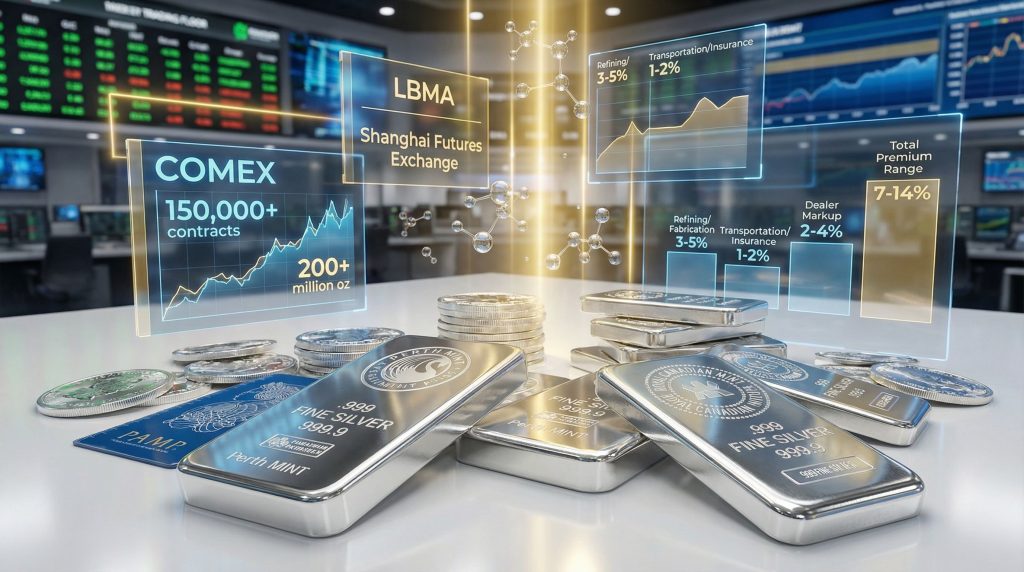
Electronic trading platforms process thousands of silver contracts every second, with algorithms analyzing market depth, order flow patterns, and cross-asset correlations to establish real-time pricing. This technological backbone supports daily trading volumes exceeding 200 million ounces equivalent across major exchanges, creating the liquidity necessary for accurate price discovery.
The complexity increases when examining how these electronic signals translate into physical metal transactions. Unlike digital assets that settle instantly, silver price components must account for the substantial operational machinery required to move, verify, and process actual metal through industrial supply chains.
When big ASX news breaks, our subscribers know first
Advanced Mechanisms of Global Price Formation
Algorithmic Trading and Market Microstructure
Professional trading firms deploy sophisticated algorithms that continuously scan silver markets across multiple time zones, identifying arbitrage opportunities and executing trades within microseconds. These systems analyze futures curves, options volatility surfaces, and inter-commodity spreads to maintain pricing efficiency across global markets.
High-frequency trading represents approximately 40-50% of electronic silver trading volume, creating the tight bid-ask spreads observed in futures markets. However, this algorithmic efficiency exists primarily in paper markets and does not extend to physical silver transactions.
Cross-Exchange Arbitrage Networks
Specialized arbitrage desks monitor price differentials between COMEX silver futures, London spot markets, and Asian trading centers. When price gaps emerge beyond transaction costs, these professionals execute simultaneous buy-sell orders to capture spreads while ensuring global price convergence.
The arbitrage process typically involves:
• Currency hedging to neutralise foreign exchange exposure
• Time zone coordination across 24-hour trading cycles
• Regulatory compliance across multiple jurisdictions
• Credit facility management for settlement guarantees
Institutional Flow Analysis and Price Impact
Large institutional orders significantly influence silver price components through their market impact signatures. Central bank transactions, sovereign wealth fund allocations, and pension fund rebalancing create sustained price movements that extend beyond typical technical analysis patterns.
Professional traders monitor institutional flow indicators including:
• Exchange-traded fund creation and redemption patterns
• Large option position establishments near expiration dates
• Commercial hedging activity from mining companies
• Industrial user procurement cycles and inventory adjustments
Manufacturing Cost Structure Deep Analysis
Energy-Intensive Processing Requirements
Silver refining operations consume substantial electricity for smelting, electrolysis, and quality control processes. With industrial electricity costs averaging $0.08-0.12 per kilowatt-hour globally, energy expenses represent 15-25% of total processing costs for major refineries.
The refining process requires:
• Smelting temperatures exceeding 1,800°F (980°C) for ore concentration
• Electrolytic refining consuming 1.2-1.8 kWh per troy ounce
• Quality assurance testing using X-ray fluorescence and fire assay methods
• Environmental controls for sulphur dioxide and particulate emissions
Specialised Equipment and Infrastructure Costs
Modern silver refineries require multi-million dollar investments in specialised equipment designed for precious metals processing. Furthermore, induction furnaces, electrolytic cells, and automated assaying systems represent significant fixed costs that must be amortised across production volumes.
| Equipment Category | Typical Investment | Annual Capacity | Cost per Ounce |
|---|---|---|---|
| Smelting Infrastructure | $5-8 million | 10-15 million oz | $0.35-0.55 |
| Electrolytic Refinement | $8-12 million | 15-25 million oz | $0.45-0.70 |
| Assaying Laboratory | $2-3 million | Testing capacity | $0.15-0.25 |
| Environmental Systems | $3-5 million | Compliance support | $0.20-0.35 |
Labour Specialisation and Training Costs
Silver refining requires highly trained metallurgists, assayers, and equipment operators who command premium wages within the industrial sector. Specialised knowledge of precious metals chemistry, safety protocols, and quality standards creates barriers to entry and contributes to processing costs.
Training new refiners typically requires 6-12 months of supervised experience, during which productivity remains below optimal levels. This human capital investment adds approximately $0.25-0.45 per ounce to processing costs for major operations.
Complex Logistics and Security Infrastructure
Multi-Layer Transportation Security
Physical silver movement involves sophisticated security protocols that extend far beyond simple armoured car services. Major refineries and dealers coordinate with specialised logistics companies that provide:
• GPS-tracked vehicles with real-time monitoring capabilities
• Armed security personnel trained in precious metals protection
• Secure transfer facilities at airports and border crossings
• Insurance coverage exceeding $50-100 million per shipment
Transportation costs scale with both distance and metal value, creating variable logistics expenses that fluctuate with silver price movements. A typical 1,000-ounce shipment across continental distances incurs $800-1,200 in security and insurance costs.
Inventory Financing and Working Capital Requirements
Silver dealers maintain substantial inventories requiring significant working capital commitments. With silver trading above $30 per ounce, a modest 10,000-ounce inventory represents $300,000+ in tied-up capital requiring financing.
Current commercial lending rates of 6-8% annually translate to daily carrying costs of $50-65 for this inventory level. During periods of market volatility or processing delays, these financing expenses compound rapidly, directly impacting dealer bid-ask spreads.
Warehousing and Storage Facility Operations
Approved silver storage facilities must meet stringent security, insurance, and operational standards established by exchanges and regulatory authorities. These requirements include:
• 24-hour security monitoring with multiple redundant systems
• Climate-controlled environments preventing tarnishing and degradation
• Segregated storage areas maintaining customer metal separation
• Comprehensive insurance policies covering theft, natural disasters, and operational risks
Monthly storage fees typically range from $0.60-1.20 per 1,000 ounces, creating ongoing carrying costs that influence dealer pricing structures and inventory management strategies.
Current Market Stress Factors and Operational Bottlenecks
Refining Capacity Utilisation Analysis
Global silver refining capacity operates at approximately 85-90% utilisation rates, creating processing bottlenecks during periods of increased recycling or mine production. When refineries approach capacity limits, processing times extend from typical 10-14 day cycles to 3-4 weeks or longer.
This capacity constraint affects silver price components through:
• Extended processing queues increasing dealer inventory holding periods
• Premium pricing for expedited processing services
• Geographic arbitrage opportunities as capacity varies by region
• Supply chain delays affecting industrial and investment demand fulfilment
Credit Market Conditions and Financing Availability
Precious metals industry participants rely heavily on revolving credit facilities and letters of credit for operations. Recent tightening in commercial lending markets has reduced available credit while increasing borrowing costs across the supply chain.
Current credit conditions include:
• Interest rates 200-300 basis points higher than 2020-2021 levels
• Stricter lending standards requiring enhanced collateral and documentation
• Reduced credit line availability limiting inventory expansion capabilities
• Shorter renewal periods creating operational uncertainty for dealers
Regulatory Compliance and Documentation Requirements
Increasing anti-money laundering (AML) and know-your-customer (KYC) requirements have added substantial operational costs to precious metals transactions. Enhanced documentation standards require additional staff time and compliance infrastructure.
New regulatory requirements include:
• Enhanced customer identification for transactions exceeding $3,000
• Suspicious activity reporting with detailed transaction documentation
• Cross-border notification requirements for international shipments
• Digital record keeping with extended retention periods
Advanced Bid-Ask Spread Analytics
Volatility-Adjusted Risk Pricing Models
Professional dealers employ sophisticated risk models that incorporate multiple volatility measures when establishing bid-ask spreads. These models analyse historical price movements, implied volatility from options markets, and correlation patterns with other assets.
Key volatility metrics influencing silver price components:
| Volatility Measure | Current Level | Historical Average | Spread Impact |
|---|---|---|---|
| 30-day Realised Volatility | 28-35% | 22-26% | +15-25% |
| Options Implied Volatility | 32-40% | 25-30% | +20-30% |
| Intraday Range Average | 3.2-4.1% | 2.5-3.0% | +10-20% |
| Weekend Risk Premium | 0.8-1.2% | 0.4-0.7% | +5-10% |
Processing Time Risk Assessment
Extended processing times create additional price risk exposure for dealers purchasing silver for resale. Risk management models incorporate processing delays into pricing calculations through time-decay adjustments.
A typical risk calculation for a 1,000-ounce purchase includes:
• Expected processing time: 14-21 days
• Daily volatility risk: 1.8-2.4% price movement potential
• Compounded exposure: $540-960 risk on $30,000 position
• Risk-adjusted bid reduction: $0.55-0.95 per ounce
Market Depth and Liquidity Analysis
Physical silver markets exhibit significantly different liquidity characteristics compared to electronic futures trading. While paper markets provide instant execution for large orders, physical transactions require extended settlement periods and operational coordination.
Market liquidity factors affecting spreads:
• Order size limitations based on available inventory
• Settlement timeline variations across different product types
• Geographic concentration of major dealers and refineries
• Seasonal demand patterns from industrial and investment sectors
The next major ASX story will hit our subscribers first
Strategic Investment Framework Analysis
Long-term Wealth Preservation Strategies
Sophisticated investors approach silver allocation within comprehensive portfolio frameworks that account for spread costs as temporary transaction expenses rather than permanent value destruction. Multi-decade investment horizons allow spread costs to amortise across extended holding periods.
Furthermore, according to Trading Economics commodity data, silver has demonstrated resilience as a wealth preservation asset despite short-term volatility in silver price components.
Strategic considerations include:
• Dollar-cost averaging approaches to minimise timing risks
• Product mix optimisation balancing liquidity and storage costs
• Geographic diversification across multiple storage jurisdictions
• Correlation analysis with other portfolio components
Product Selection and Optimisation Techniques
Different silver products offer varying trade-offs between premiums, liquidity, and recognition. Professional investors analyse these characteristics when constructing physical silver positions.
| Product Category | Typical Premium | Liquidity Rating | Storage Efficiency |
|---|---|---|---|
| 1,000-oz Bars | 2-4% above spot | High | Excellent |
| 100-oz Bars | 3-5% above spot | High | Very Good |
| Government Coins | 6-12% above spot | Very High | Good |
| Private Mint Rounds | 4-8% above spot | Good | Good |
Market Timing and Entry Strategy Optimisation
Advanced investors monitor multiple market indicators to optimise silver purchase timing relative to spread conditions. While perfect timing remains impossible, understanding spread patterns can improve long-term returns.
Additionally, Silver Institute research highlights that "industrial demand cycles create predictable spread variations that informed investors can leverage for improved entry timing".
Effective timing indicators:
• Volatility regime changes often precede spread normalisation
• Credit market conditions influence dealer financing costs
• Seasonal demand patterns create predictable spread variations
• Industrial demand cycles affect overall market liquidity
Infrastructure Evolution and Future Market Structure
Technological Innovation in Physical Metals Markets
Emerging technologies promise to streamline silver transaction processes and potentially reduce the operational costs contributing to wide spreads. Blockchain verification, automated assaying, and AI-driven logistics optimisation represent significant advancement opportunities.
Potential technological improvements include:
• Digital certificates of authenticity reducing verification time and costs
• Automated storage and retrieval systems improving operational efficiency
• Real-time tracking technologies enhancing security and reducing insurance costs
• Predictive analytics for inventory optimisation and demand forecasting
Regulatory Framework Development
Evolving precious metals regulations may create both opportunities and challenges for market structure improvement. Standardised documentation requirements could reduce compliance costs while enhanced transparency measures may improve market confidence.
Market Concentration and Competition Dynamics
The precious metals refining industry exhibits significant concentration among a relatively small number of major participants. Market structure evolution could potentially increase competition and reduce processing costs over time.
Current market characteristics:
• Top 10 refineries process approximately 70% of global silver
• Barriers to entry including capital requirements and regulatory approvals
• Vertical integration trends among major dealers and refineries
• Regional specialisation creating geographic processing advantages
Risk Assessment and Market Psychology
Behavioural Finance Elements in Physical Silver Markets
Physical silver markets exhibit unique psychological dynamics that differ substantially from paper trading environments. The tangible nature of metal ownership creates emotional attachments and decision-making patterns not observed in electronic markets.
Key psychological factors:
• Loss aversion regarding spread costs and timing decisions
• Anchoring bias to historical spread levels during market stress
• Overconfidence in ability to time optimal entry and exit points
• Herding behaviour during periods of market uncertainty
Institutional vs. Retail Market Dynamics
Large institutional participants operate with different cost structures and risk tolerances compared to individual investors, creating multi-tier market pricing that affects silver price components across different transaction sizes.
Institutional advantages include:
• Volume discounts on processing and storage services
• Direct refinery relationships bypassing dealer markups
• Enhanced credit terms reducing financing costs
• Operational expertise optimising transaction timing and structure
This analysis examines silver pricing mechanisms and market dynamics for educational purposes. Physical precious metals investments involve multiple risks including price volatility, storage costs, and liquidity considerations. Individual investment decisions should incorporate comprehensive financial planning and risk assessment appropriate to personal circumstances.
Ready to Capitalise on Silver Market Opportunities?
Discovery Alert's proprietary Discovery IQ model delivers instant notifications on significant ASX mineral discoveries, including silver exploration breakthroughs that could benefit from the pricing dynamics explored above. Discover how major mineral discoveries can generate substantial returns by exploring Discovery Alert's dedicated discoveries page, and begin your 14-day free trial today to position yourself ahead of market movements.