June 10, 2026

The silver price drop 2026 has captivated investors worldwide, as markets witnessed extraordinary volatility that demonstrated both the opportunities and risks inherent in precious metals trading. Silver reached unprecedented highs of US$121.64 per ounce before experiencing a dramatic 37.5% correction to approximately US$76 per ounce, creating significant wealth transfers between investors and highlighting the complex dynamics that drive precious metals markets.
What Drives Silver Price Volatility in Modern Markets?
Market dynamics in precious metals reveal complex interconnections between industrial demand, monetary policy, and speculative trading that create exceptional volatility patterns. Furthermore, silver demonstrates this complexity more dramatically than any other precious metal, operating simultaneously as an industrial commodity and store of value while experiencing price swings that dwarf those of gold or platinum.
Understanding Silver's Dual Nature as Industrial Metal and Store of Value
Silver occupies a unique position within commodity markets, serving critical functions across multiple sectors while maintaining its historical role as a monetary hedge. Industrial applications consume approximately 55-60% of annual silver demand, with the remainder allocated to investment and jewelry purposes, according to The Silver Institute's market assessments.
Solar photovoltaic manufacturing represents one of the largest industrial demand drivers, utilizing 15-20 grams of silver per kilowatt peak capacity. With global solar installations reaching 309 GW in 2023, this sector alone requires between 4,635 to 6,180 million ounces annually, representing a substantial portion of total supply.
Electronics manufacturing contributes another 50-60 million ounces of annual consumption through semiconductor production, circuit boards, and conductive applications. The $581 billion global semiconductor market continues expanding, driving consistent baseline demand that provides price floor support during economic downturns.
Automotive electrification adds emerging demand pressure, with each electric vehicle requiring approximately 20-50 grams of silver for electrical systems and battery management. Given 14.2 million electric vehicles sold globally in 2023, this sector represents accelerating consumption growth.
Safe-haven demand activates during periods of monetary uncertainty, geopolitical tension, or currency devaluation concerns. Unlike industrial demand, which responds to economic growth cycles, investment demand often moves inversely to economic confidence, creating complex price dynamics that professional traders must navigate carefully.
The Role of Speculative Trading in Price Swings
Leveraged speculation amplifies both upward and downward price movements through margin trading in futures and derivatives markets. Recent market events demonstrate how speculative positioning creates self-reinforcing cycles that disconnect prices from fundamental supply-demand balances.
Trading volume concentration, particularly in Chinese markets, intensifies volatility when retail participation increases during price rallies. Higher margin requirements at exchanges including the CME and Shanghai Gold Exchange force position liquidation when prices decline, creating cascading sell-offs that accelerate corrections.
The relatively smaller market size compared to gold creates liquidity constraints that magnify price impact from large trades. Professional fund managers recognize this dynamic, adjusting position sizes and execution strategies to minimize market disruption while building exposure.
Paper trading volumes through ETFs, futures, and derivatives often exceed physical demand by significant multiples. Consequently, this creates price discovery mechanisms that may deviate substantially from underlying supply-demand fundamentals during periods of high speculative interest.
When big ASX news breaks, our subscribers know first
Why Did Silver Experience Such Dramatic Price Movements in Early 2026?
The silver price drop 2026 episode provides a comprehensive case study in how multiple market forces converge to create extreme volatility. Silver reached US$121.64 per ounce before declining to approximately US$76 per ounce, representing a 37.5% correction that eliminated gains accumulated over months of steady appreciation.
The Perfect Storm of Bullish Factors
Industrial demand acceleration from renewable energy expansion provided fundamental support for higher prices throughout 2025. Global renewable capacity additions, particularly in solar installations, created structural demand increases that traditional supply sources struggled to meet.
Supply constraints from major mining operations compounded demand pressures. Approximately 65-70% of silver production occurs as a by-product of copper, zinc, and lead mining, making primary silver supply relatively unresponsive to price incentives in the short term.
Geopolitical tensions drove safe-haven asset allocation toward precious metals, with institutional investors increasing portfolio allocations to hedge currency and counterparty risks. This investment demand layered onto existing industrial consumption, creating supply deficits that supported price appreciation.
Furthermore, monetary policy uncertainty regarding Federal Reserve intentions added precious metals appeal as inflation hedge positioning. Low real interest rates reduced the opportunity cost of holding non-yielding assets like silver, encouraging speculative accumulation.
Technical Triggers Behind the Sharp Correction
| Correction Factor | Impact Level | Timeline |
|---|---|---|
| CME Margin Increases | High | Immediate (24-48 hours) |
| Profit-Taking Activities | Medium | 1-2 weeks |
| USD Strength | Medium | Ongoing |
| Risk-Off Sentiment | Variable | Market-dependent |
Exchange margin requirement changes created immediate selling pressure as leveraged traders faced capital calls they could not meet. The 24-48 hour timeline for margin compliance forced rapid position liquidation regardless of fundamental outlook or long-term price targets.
Profit-taking activities accelerated as traders who accumulated positions during the rally recognized technical resistance levels and began systematic selling. The concentration of speculative positions meant that relatively modest selling pressure triggered disproportionate price impacts.
Federal Reserve policy expectations shifted following reports of Kevin Warsh's potential nomination as Fed Chair. Markets interpreted this selection as signaling sustained anti-inflation focus, creating higher expected interest rates that strengthened the dollar while reducing appeal of non-yielding precious metals.
Algorithmic trading systems amplified price movements through momentum-following strategies and stop-loss order execution. These automated responses created feedback loops that accelerated both the initial decline and subsequent volatility spikes.
How Do Central Bank Policies Influence Silver Price Trajectories?
Monetary policy decisions create the macroeconomic environment within which silver prices operate, influencing both opportunity costs and currency dynamics that affect international commodity markets. Central bank communications regarding inflation targets, interest rate paths, and balance sheet management directly impact precious metals demand.
Federal Reserve Policy Expectations and Precious Metals
Interest rate outlook changes affecting non-yielding assets follow predictable patterns based on real yield calculations. When nominal rates rise faster than inflation expectations, real yields increase, making bonds and savings accounts more attractive relative to precious metals storage costs.
The silver price drop 2026 coincided with shifting Fed Chair expectations, demonstrating how policy personnel changes can immediately affect market pricing. Kevin Warsh's reputation for inflation-fighting orthodoxy created expectations for sustained monetary tightening that reduced precious metals appeal.
Dollar strength implications for commodity pricing operate through multiple channels:
• Direct price impact: Dollar-denominated commodities become more expensive for international buyers when USD strengthens
• Portfolio rebalancing: International investors may reduce commodity exposure to hedge currency risk
• Correlation effects: Stronger dollar typically coincides with higher US interest rates, creating dual pressure on precious metals
Inflation expectations maintain complex relationships with silver demand that vary across economic cycles. During early inflation phases, silver benefits from hedge demand. However, if inflation triggers aggressive monetary tightening, higher real rates can offset inflation hedge benefits.
Global Monetary Policy Coordination Effects
Coordinated central bank actions create synchronised impacts across commodity markets, amplifying both positive and negative price movements. When major central banks align policy directions, the resulting currency and interest rate movements affect global commodity flows.
Regional policy divergence generates arbitrage opportunities that sophisticated traders exploit through currency-hedged commodity positions. In addition, these strategies can create demand patterns that disconnect from traditional geographic consumption centres.
Quantitative easing programmes historically correlate with precious metals demand increases. Expanded money supplies and negative real rates reduce holding costs while increasing inflation hedge appeal. Conversely, quantitative tightening creates opposing pressures.
What Are the Key Industrial Demand Drivers for Silver in 2026?
Industrial consumption patterns determine baseline demand levels that provide price support during investment demand fluctuations. Understanding these applications helps investors assess fundamental value levels and identify potential demand acceleration factors.
Solar Panel Manufacturing and Green Energy Transition
Silver's critical role in photovoltaic cell production creates direct exposure to renewable energy policy implementation worldwide. Each solar installation requires silver for electrical conductivity applications that currently lack cost-effective substitutes.
Global renewable energy capacity expansion targets suggest continued demand acceleration:
• Current global solar capacity: Approximately 1,580 GW as of 2023
• Annual capacity additions: 309 GW added in 2023
• Silver consumption rate: 15-20 grams per kilowatt peak
• Projected annual requirement: 4,635-6,180 million ounces from 2023 installations alone
Government green energy policies translate directly to silver demand through renewable energy mandates, carbon reduction targets, and clean energy investment incentives. Policy acceleration or deceleration creates immediate demand impacts that affect price trajectories.
Technology Sector Consumption Patterns
Electronics manufacturing requirements continue growing alongside semiconductor market expansion, digitisation trends, and emerging technology adoption. The $581 billion global semiconductor industry provides sustained demand baseline regardless of precious metals investment sentiment.
Automotive industry electrification drives new demand sources through:
• Electric vehicle electrical systems: 20-50 grams per vehicle
• Battery management systems: Specialised silver applications
• Charging infrastructure: Grid connection and power conversion equipment
Medical and healthcare applications expand silver usage through antimicrobial coatings, medical device components, and pharmaceutical applications. This sector demonstrates consistent growth independent of economic cycles.
Which Supply-Side Factors Could Trigger Future Price Volatility?
Supply constraints represent structural factors that can create sustained price support or trigger sharp adjustments when production capacity changes. Silver's unique production characteristics, with most output occurring as mining by-products, create supply inelasticity that amplifies demand-driven price movements.
Mining Production Constraints and Capacity Issues
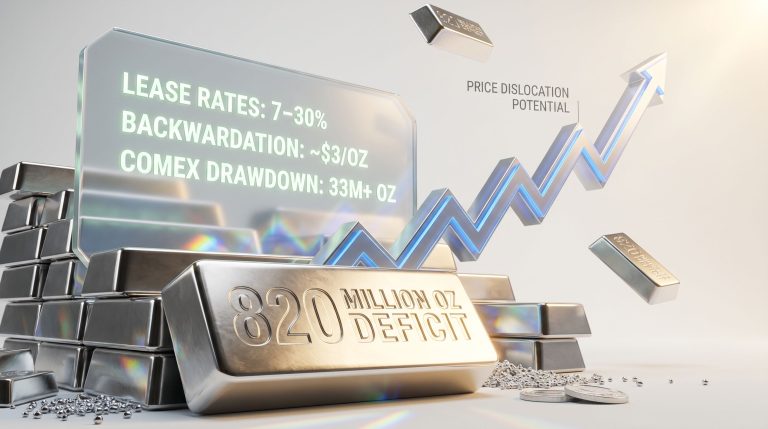
Supply deficits have persisted for consecutive years, creating structural imbalances that support higher price levels despite short-term volatility patterns that reflect speculative positioning rather than fundamental deterioration.
Primary silver mine production limitations affect approximately 30-35% of total supply. However, the remainder comes from by-product production that responds primarily to base metal economics rather than silver prices.
By-product silver from copper and zinc mining dependencies create supply patterns that may not respond appropriately to silver price signals. When base metal mining declines due to commodity cycle factors, silver supply contracts regardless of silver-specific demand conditions.
Recycling rates impact total supply availability but remain relatively low compared to other precious metals. Silver's industrial consumption often involves applications where recovery is technically challenging or economically unviable, limiting recycled supply contributions.
Geopolitical Risks to Silver Supply Chains
Major producing regions concentrate in countries with varying political stability profiles, creating potential supply disruption risks that could trigger price volatility:
• Mexico: World's largest silver producer
• Peru: Major production centre with mining policy sensitivity
• China: Significant producer with domestic demand priorities
• Australia: Stable jurisdiction with established mining operations
Trade policy impacts on silver flows between countries can create regional price disparities and arbitrage opportunities. Export restrictions, import duties, or trade relationship deterioration affects global supply distribution.
Strategic stockpiling by governments represents a supply factor that operates outside traditional market mechanisms. Government accumulation or disposal programmes can create demand/supply imbalances that persist for extended periods.
How Should Investors Approach Silver Price Forecasting Models?
Forecasting silver prices requires multifactor analytical frameworks that account for both industrial demand fundamentals and monetary/speculative factors that drive short-term volatility. Professional investors utilise combination approaches that balance quantitative modelling with qualitative assessment of market dynamics.
Understanding the silver market squeeze helps investors recognise how supply constraints can create rapid price movements that traditional forecasting models may not anticipate.
Fundamental Analysis Framework for Silver Valuation
Silver price forecasting requires analysing industrial demand growth, supply deficit trends, monetary policy impacts, and speculative positioning to develop realistic price targets for investment planning and risk management decisions.
Industrial demand growth rate calculations involve:
• Solar capacity expansion: Annual installation projections multiplied by silver consumption rates
• Electronics growth: Semiconductor market expansion correlated with silver usage patterns
• Automotive electrification: EV adoption rates converted to silver requirements
• Emerging applications: Medical, technology, and industrial innovation impacts
Supply deficit trend analysis methodologies examine:
• Production capacity: Existing mine output plus development pipeline
• By-product relationships: Copper, zinc, lead mining correlations
• Recycling contributions: Recovery rates and technological improvements
• Government stockpile changes: Strategic reserve accumulation or disposal
Correlation studies with other precious metals and commodities reveal market relationships that affect relative pricing:
• Gold-silver ratio analysis: Historical ranges and reversion tendencies
• Copper correlation: Industrial demand relationships
• Currency correlations: USD strength impact patterns
• Interest rate sensitivity: Real yield correlation analysis
Technical Analysis Considerations for Volatile Markets
Support and resistance level identification becomes more complex during high volatility periods, requiring adaptive methodologies that account for increased price ranges and momentum effects.
Volume analysis distinguishes between genuine trend establishment and speculative position building. Rising prices accompanied by increasing volume suggest sustainable trends, while price advances on declining volume may indicate exhaustion.
Risk management strategies for precious metals exposure require position sizing that accounts for volatility characteristics:
• Volatility-adjusted position sizes: Smaller allocations during high volatility periods
• Stop-loss level calculation: Technical levels adjusted for normal price fluctuation ranges
• Correlation monitoring: Portfolio exposure assessment across correlated positions
Investors should also consider the risks associated with shorting precious metals during volatile periods, as unexpected upward movements can create significant losses.
The next major ASX story will hit our subscribers first
What Do Professional Forecasts Suggest for Silver Prices Through 2026?
Professional price forecasting incorporates multiple scenario analysis frameworks that acknowledge uncertainty ranges while providing directional guidance for investment decision-making. Current market conditions create wider-than-normal forecast ranges due to elevated volatility and multiple competing factors.
Investment Bank Price Target Analysis
| Institution | 2026 Target Range | Key Assumptions |
|---|---|---|
| Bullish Scenario | $85-150+ | Strong industrial demand, supply constraints |
| Base Case | $70-80 | Stable fundamentals, moderate growth |
| Bearish Scenario | $60-70 | USD strength, demand substitution |
Methodology differences between conservative and aggressive forecasts reflect varying assumptions about:
• Industrial demand elasticity: How responsive consumption is to price changes
• Substitution possibilities: Alternative materials adoption timelines
• Monetary policy paths: Central bank reaction functions
• Geopolitical stability: Supply disruption probability assessments
Recent price action has exceeded traditional modelling approaches, suggesting that conventional forecasting frameworks may underestimate volatility ranges during periods of high speculative interest or fundamental supply-demand imbalances.
Factors that could invalidate current prediction frameworks include:
• Technology disruption: Alternative materials breakthrough
• Policy shifts: Renewable energy programme changes
• Mining discoveries: Large new silver deposit development
• Currency crises: Major developed market monetary instability
Scenario Planning for Different Economic Environments
Recession scenario impacts create competing effects on industrial versus safe-haven demand. Economic contraction typically reduces industrial silver consumption while potentially increasing investment demand if monetary policy responses involve significant accommodation.
Inflation scenario effects on real versus nominal silver prices demonstrate the importance of purchasing power considerations. High inflation with stable nominal silver prices represents declining real returns that may disappoint inflation-hedge investors.
Growth scenario implications for technology and renewable energy demand suggest potential upside to current forecasts. Economic expansion could accelerate clean energy transition and digitisation trends that drive silver consumption.
Comprehensive silver squeeze analysis reveals how retail investor movements can amplify these fundamental trends through coordinated buying pressure.
What Risk Management Strategies Work Best for Silver Exposure?
Portfolio allocation strategies for precious metals require balancing potential returns against volatility impacts and correlation effects with other portfolio positions. Silver's higher volatility relative to gold demands more careful position sizing and risk monitoring.
Portfolio Allocation Considerations for Precious Metals
Optimal silver allocation percentages vary by investor profile and market conditions:
• Conservative portfolios: 2-5% allocation maximum to limit volatility impact
• Moderate risk portfolios: 5-10% allocation with active rebalancing
• Aggressive growth portfolios: 10-15% allocation with higher risk tolerance
Correlation benefits and diversification effects within portfolios depend on market conditions. During financial stress periods, precious metals correlations with traditional assets often decline, providing genuine diversification benefits.
Rebalancing strategies during high volatility periods require systematic approaches that avoid emotional decision-making:
• Time-based rebalancing: Quarterly or semi-annual allocation adjustments
• Threshold rebalancing: Rebalance when allocations deviate by predetermined percentages
• Volatility-adjusted rebalancing: More frequent adjustments during high volatility periods
Physical Versus Financial Silver Investment Vehicles
ETF tracking efficiency during extreme price movements varies by fund structure and management approach. The Global X Physical Silver Structured ETF demonstrated 11% decline correlating with spot price movements, illustrating typical tracking performance during volatile conditions.
Storage and insurance considerations for physical silver holdings include:
• Secure storage costs: Bank safety deposit boxes or specialised facilities
• Insurance requirements: Coverage for theft, damage, or loss
• Liquidity considerations: Sale execution and transaction costs
• Tax implications: Capital gains treatment and reporting requirements
Futures and options strategies for managing downside risk provide sophisticated tools for experienced investors:
• Protective puts: Downside protection while maintaining upside participation
• Covered call writing: Income generation during sideways price movements
• Spread strategies: Reduced-cost hedging through complex option positions
How Do Macroeconomic Cycles Affect Long-Term Silver Price Trends?
Economic growth phases create distinct patterns in silver demand that reflect the metal's dual nature as both industrial commodity and monetary asset. Understanding these cyclical relationships helps investors develop appropriate timing strategies and risk management approaches.
Economic Growth Phase Analysis
Different economic cycles influence silver's dual demand drivers through predictable mechanisms:
Early expansion phases typically benefit silver through:
• Industrial demand recovery as manufacturing activity increases
• Moderate inflation expectations supporting precious metals appeal
• Low interest rates reducing opportunity costs of non-yielding assets
Mid-cycle expansion creates mixed effects:
• Strong industrial demand from robust economic activity
• Rising interest rates potentially reducing investment appeal
• Currency strength impacts depending on regional growth differentials
Late cycle conditions often favour silver:
• Peak industrial demand from full capacity utilisation
• Inflation concerns driving hedge demand
• Central bank policy uncertainty creating monetary asset appeal
The relationship between GDP growth and industrial silver consumption demonstrates correlation coefficients typically ranging between 0.6-0.8. This indicates strong positive relationships with some independent variation based on technological changes and substitution patterns.
Currency Devaluation and Inflation Protection Properties
Silver's historical performance during currency crises provides evidence for inflation hedge characteristics. However, results vary significantly depending on crisis type and duration. Major currency devaluations typically correlate with precious metals appreciation, but timing and magnitude relationships show considerable variation.
Inflation-adjusted return analysis over different time horizons reveals:
• Short-term (1-3 years): High volatility with mixed inflation protection effectiveness
• Medium-term (5-10 years): Moderate inflation hedge characteristics with significant variance
• Long-term (20+ years): Strong purchasing power preservation relative to fiat currencies
Comparison with other inflation hedges shows relative effectiveness varies by economic environment:
• Treasury Inflation-Protected Securities (TIPS): More stable but lower potential returns
• Real estate: Regional variation with higher transaction costs
• Commodities broadly: Similar inflation sensitivity with different volatility profiles
• Equity markets: Growth potential but cyclical inflation sensitivity
Frequently Asked Questions About Silver Price Volatility
Why is silver more volatile than gold?
Market size differences create liquidity variations that amplify price movements in silver markets relative to gold. Silver's smaller total market capitalisation means that equivalent investment flows create proportionally larger price impacts.
Industrial demand components add cyclical volatility that gold lacks due to its primarily investment-focused demand profile. Silver consumption fluctuates with economic cycles, creating additional price variation beyond monetary factors.
Speculative trading concentration effects occur more readily in smaller markets. This allows individual large traders or coordinated trading strategies to influence prices more dramatically than in larger, more liquid markets.
How quickly can silver prices recover from major corrections?
Historical recovery timeframes from significant price drops vary considerably based on correction causes and market conditions. Technical corrections driven by speculative position unwinding typically recover within 3-6 months if fundamental factors remain supportive.
Fundamental corrections caused by demand destruction or supply increases may require 12-24 months for recovery. The underlying conditions need time to normalise and new equilibrium pricing to develop.
The silver price drop 2026 represents a technical correction scenario where fundamental industrial demand remains intact. This suggests potential for relatively rapid recovery if speculative positioning stabilises and monetary policy uncertainty resolves.
For investors concerned about potential crashes, understanding patterns from previous silver market crash events can provide valuable insights into recovery timeframes.
Factors that accelerate recovery include:
• Industrial demand acceleration exceeding expectations
• Supply disruptions from geopolitical or operational issues
• Monetary policy shifts toward accommodation
• Currency weakness in major economies
What external events pose the greatest risks to silver prices?
Technology disruption threats to industrial demand represent long-term structural risks that could permanently alter silver consumption patterns. Alternative materials development in solar panels, electronics, or automotive applications could reduce demand significantly.
Regulatory changes affecting mining operations, environmental standards, or international trade could impact supply availability or production costs. Mining industry regulations typically develop slowly but create lasting effects on production capacity and operating costs.
Major economic policy shifts, particularly regarding renewable energy support, infrastructure investment, or technology development incentives, directly affect silver demand through industrial consumption channels.
According to recent analysis from Economic Times, silver's dramatic price movements in early 2026 highlighted how quickly market sentiment can shift. Furthermore, social media predictions about silver prices demonstrate the growing influence of retail investor sentiment on precious metals markets.
Disclaimer: This analysis contains forward-looking statements and forecasts based on current market conditions and available information. Silver prices are subject to significant volatility and multiple risk factors that may cause actual results to differ materially from predictions. Past performance does not guarantee future results. Investors should conduct their own research and consider their risk tolerance before making investment decisions. Precious metals investments carry market, liquidity, and storage risks that may result in capital loss.
Want to Stay Ahead of Market-Moving Mining Discoveries?
Discovery Alert's proprietary Discovery IQ model delivers real-time notifications when significant ASX mineral discoveries are announced, helping investors identify opportunities like silver mining breakthroughs before broader market recognition. Start your 14-day free trial today to receive instant alerts on discoveries that could benefit from silver's market volatility and gain access to proven discovery examples showing how early positioning in mining announcements can generate substantial returns.