
July 26, 2026
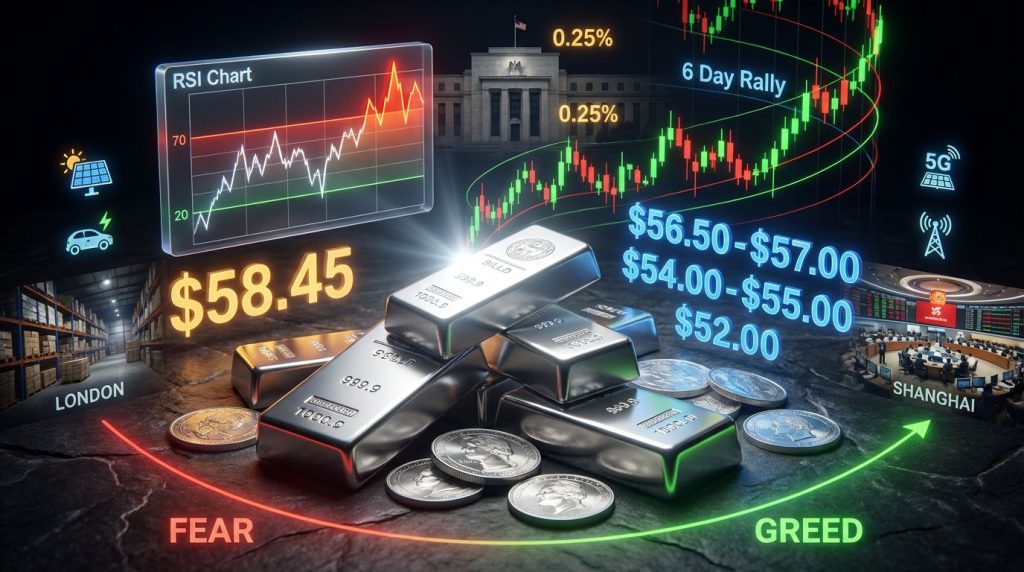
Understanding Market Psychology in Silver's High-Stakes Environment
The recent silver price retreats from record high demonstrate fascinating behavioral patterns when prices approach psychological resistance zones. The recent dynamics surrounding precious metals showcase how investor sentiment drives price discovery beyond traditional fundamental metrics. Market participants often experience heightened emotional responses during extended rally phases, creating conditions where technical indicators diverge from underlying supply-demand equations.
Current silver trading reflects this psychological complexity, with institutional and retail participants responding differently to momentum signals. Professional traders typically reduce position sizes as volatility increases, whilst retail investors may chase performance during breakout phases. This behavioral divergence creates the conditions for sharp corrections following parabolic moves.
When big ASX news breaks, our subscribers know first
What Drives Silver's Volatility After Breaking All-Time Records?
Technical Momentum vs. Fundamental Reality
Silver's recent price action demonstrates the tension between technical momentum and fundamental market conditions. The 14-day relative strength index (RSI) above 70 signals that buying pressure has reached extreme levels, typically indicating an overbought condition that precedes consolidation or reversal phases.
The six-day rally pattern observed in late 2025 created significant psychological pressure on market participants. When precious metals experience rapid appreciation exceeding 8% over two trading sessions, institutional risk management protocols typically trigger position rebalancing. This mechanical selling pressure often coincides with profit-taking behaviour among short-term speculators.
RSI readings above 70 historically correlate with increased probability of near-term price corrections in silver markets. However, during strong trending environments, momentum indicators can remain in overbought territory for extended periods. The key distinction lies in whether the underlying fundamentals support continued price appreciation or if speculative positioning has outpaced intrinsic value creation.
Furthermore, the silver market squeeze impact on global finance demonstrates how extreme positioning can amplify volatility during correction phases.
Market Psychology During Parabolic Moves
Euphoria phases in commodity markets create self-reinforcing feedback loops that amplify price volatility. Silver's behaviour during record-high approaches demonstrates classic signs of parabolic price action, where rational valuation models become secondary to momentum-based trading strategies.
Professional commodity strategists observe that market participation changes dramatically during extreme price movements. Investment demand becomes the dominant driver, whilst traditional industrial and jewellery sectors may reduce procurement due to elevated costs. This shift in buyer composition creates vulnerability to rapid sentiment reversals.
The fear-greed cycle manifests particularly strongly in precious metals markets due to their dual role as industrial commodities and monetary alternatives. When prices approach all-time highs, psychological resistance levels around round numbers create natural points for profit realisation and position restructuring.
How Do Supply Chain Dynamics Influence Silver Price Corrections?
Global Inventory Redistribution Patterns
Silver supply chains exhibit complex geographic dependencies that significantly impact price discovery mechanisms. Recent developments in major trading hubs reveal important structural shifts affecting market liquidity and pricing efficiency.
Shanghai Futures Exchange warehouse inventories reaching decade-low levels indicates sustained supply tightness in Asian markets. This inventory depletion coincides with record silver inflows to London markets during October 2025, suggesting strategic redistribution rather than new supply addition to global markets.
The weakness observed in London's over-the-counter (OTC) market presents a concerning divergence from spot price appreciation. OTC markets typically reflect physical demand from industrial users and investment managers requiring large-scale delivery capabilities. When OTC trading softens whilst futures markets advance, it suggests speculative positioning may be driving price discovery.
Moreover, analysis of silver supply deficits reveals how structural imbalances continue to influence long-term pricing dynamics despite short-term volatility.
Key inventory dynamics affecting silver markets include:
- Regional concentration risk in major storage facilities
- Delivery logistics constraints between trading hubs
- Strategic stockpiling behaviour by institutional participants
- Industrial supply chain adjustments to price volatility
Physical vs. Paper Market Divergence
Investment demand patterns increasingly diverge from physical market fundamentals. Whilst futures markets and ETF inflows support higher prices, actual physical trading volumes suggest industrial and jewellery demand may be moderating at current price levels.
This divergence creates potential instability in price discovery mechanisms. When paper markets lead physical markets significantly, corrections often occur through either paper market retreats or physical market catch-up through increased industrial procurement.
Industrial silver consumption exhibits price elasticity, particularly in non-critical applications where substitution possibilities exist. Solar panel manufacturers, electronics producers, and automotive companies maintain flexible procurement strategies that can quickly adjust to price movements.
The disconnect between spot prices and physical availability creates arbitrage opportunities for sophisticated market participants whilst potentially misleading price signals for long-term investors relying on fundamental analysis.
Why Are Interest Rate Expectations Critical for Silver's Direction?
Federal Reserve Policy Impact on Non-Yielding Assets
Silver's attraction as an investment vehicle correlates inversely with real interest rates, making Federal Reserve policy decisions critical for price direction. Quarter-point rate cut expectations for late 2025 provide fundamental support for precious metals allocations.
Non-yielding assets like silver become more attractive when opportunity costs decline through lower interest rates. The relationship becomes particularly pronounced when real interest rates (nominal rates minus inflation) approach or fall below zero, creating negative carrying costs for cash positions.
Current market pricing reflects near-certainty of Federal Reserve accommodation, with precious metals benefiting from expectations of continued monetary loosening. However, this relationship depends critically on inflation expectations and currency stability measures.
Dollar strength correlations with silver prices demonstrate the international nature of precious metals demand. Marginal dollar index movements can trigger significant silver price responses due to the global pricing mechanism in USD terms.
Macro Environment Assessment for 2025
The macroeconomic environment supporting silver prices includes multiple converging factors beyond traditional monetary policy considerations. Central bank policy divergence across major economies creates currency volatility that traditionally benefits alternative assets.
Key macroeconomic drivers include:
- Inflation hedge demand from institutional portfolios
- Currency debasement concerns across developed economies
- Geopolitical uncertainty affecting traditional safe-haven assets
- Real interest rate calculations favouring non-yielding alternatives
Economic growth concerns create complex dynamics for silver markets. Slower growth typically reduces industrial demand whilst potentially increasing investment demand through safe-haven flows and monetary accommodation expectations.
What Technical Indicators Signal Potential Silver Price Reversals?
Key Resistance and Support Level Analysis
Technical analysis of silver markets requires understanding both momentum indicators and structural support levels that have developed through previous price action.
| Level Type | Price Range | Market Significance |
|---|---|---|
| Record High | $58.45 | Maximum psychological resistance |
| Current Support | $56.50-$57.00 | 20-day moving average convergence |
| Major Support | $54.00-$55.00 | Previous consolidation zone |
| Trend Support | $52.00 | 50-day moving average baseline |
The $58.45 record high represents maximum resistance where profit-taking pressure typically intensifies. Round number psychology suggests additional resistance zones at $60.00 should prices advance beyond current levels.
Support level analysis indicates multiple defence points for bullish positioning. The 20-day moving average around $56.50-$57.00 provides immediate technical support, whilst the previous breakout zone between $54.00-$55.00 offers more substantial downside protection.
Volume and Momentum Divergence Patterns
Trading volume analysis during the record high breach reveals important insights about market participation and sustainability of price advances. Volume patterns often precede price reversals by showing participation changes among different market segments.
Relative strength comparisons with gold and other precious metals provide context for silver's individual performance. When silver significantly outperforms gold on a risk-adjusted basis, it may indicate speculative excess requiring correction.
Institutional vs. retail participation metrics suggest different time horizons and risk tolerances affecting market stability. Heavy institutional selling during retail buying phases often precedes significant corrections.
Key momentum indicators to monitor include:
- Volume-weighted average price relative to current levels
- Moving Average Convergence Divergence (MACD) signals
- Bollinger Band positioning and volatility measures
- On-balance volume trends indicating accumulation or distribution
How Should Investors Navigate Silver Market Corrections?
Risk Management Strategies During High Volatility
Professional commodity strategists emphasise that markets operating beyond rational momentum require enhanced risk management protocols. Current silver market conditions exemplify situations where traditional valuation metrics provide limited guidance for position sizing and timing decisions.
Market analysis indicates that demand expectations have declined across traditional categories whilst investment flows remain the primary price driver, suggesting caution is warranted despite continued institutional interest.
Position sizing calculations during parabolic market phases should account for increased volatility and wider potential price swings. Risk management literature recommends reducing position sizes as volatility increases to maintain consistent portfolio risk exposure.
Effective volatility management strategies include:
- Scale-in approaches to avoid timing concentrations
- Stop-loss placement below technical support levels
- Profit-taking schedules at predetermined resistance points
- Correlation monitoring with other portfolio positions
Portfolio Allocation Considerations
Silver allocation within diversified portfolios requires understanding correlation patterns with traditional assets and other commodities. During market stress periods, correlations often increase, reducing diversification benefits.
Dollar-cost averaging strategies may be appropriate for long-term accumulation goals, whilst tactical timing approaches suit shorter-term trading objectives. The choice depends on individual risk tolerance and investment timeline considerations.
Consequently, investors seeking to understand broader market implications should consider how investor market transformation continues to reshape precious metals allocation strategies during volatile periods.
Hedging strategies for precious metals exposure include currency hedging for international investors and sector rotation approaches that adjust allocation based on relative value metrics across commodity classes.
The next major ASX story will hit our subscribers first
What Are the Long-Term Catalysts Supporting Silver Prices?
Industrial Demand Growth Projections
Silver's industrial applications continue expanding across technology sectors with high growth potential. Solar panel manufacturing represents the largest and fastest-growing industrial demand category, with global renewable energy installations driving multi-year demand growth.
Electric vehicle production requires significant silver content for electrical systems, battery management, and charging infrastructure. Industry projections suggest EV silver demand could increase substantially as global adoption accelerates through the late 2020s.
5G infrastructure deployment and advanced electronics manufacturing create additional industrial demand streams that exhibit low price elasticity due to silver's unique conductivity properties. According to industry data showing unprecedented price increases, these structural demand factors continue to underpin long-term market fundamentals.
Key industrial growth drivers include:
- Renewable energy infrastructure expansion globally
- Electric vehicle adoption across major automotive markets
- Advanced electronics manufacturing for AI and computing
- Medical device applications utilising silver's antimicrobial properties
Supply Side Constraints and Mining Economics
Silver mining economics face multiple challenges affecting long-term supply availability. Primary silver mines represent a minority of global production, with most silver produced as a by-product of base metal mining operations.
By-product silver production creates supply inelasticity, where silver supply responds to copper, lead, and zinc market conditions rather than silver prices directly. This structural characteristic can create supply shortages during periods of strong silver demand growth.
Capital allocation challenges in the mining sector affect new project development timelines. Extended permitting processes and environmental regulations create multi-year lead times for supply response to price signals.
Geopolitical concentration in major silver-producing regions creates supply security concerns for industrial consumers and strategic stockpiling considerations for governments. Furthermore, silver price strategies for navigating these structural constraints continue to evolve as market conditions change.
Frequently Asked Questions About Silver Price Movements
Is This Correction a Buying Opportunity or Trend Reversal?
Historical analysis of post-record silver corrections provides mixed guidance for current market conditions. Previous all-time high breaches have been followed by both consolidation phases and significant corrections depending on underlying fundamental support.
Fundamental support levels suggest current industrial demand and supply constraints provide a foundation for higher prices over multi-year periods. However, the silver price retreats from record high may require price consolidation before sustainable advances resume.
Market sentiment indicators show extreme bullish positioning among speculative traders, which historically precedes corrections regardless of fundamental conditions. Contrarian analysis suggests caution until speculative excess moderates.
How Does Silver Performance Compare to Other Precious Metals?
Gold-silver ratio analysis indicates silver's recent outperformance may have reached extreme levels requiring rebalancing. When silver advances significantly faster than gold, corrections often restore historical ratio relationships.
Platinum and palladium markets face different supply-demand dynamics focused on automotive industrial applications. Cross-asset correlation analysis during market stress periods shows precious metals often move together despite different fundamental drivers.
In addition, comprehensive gold–silver ratio insights provide detailed analysis of how these relationships influence investment positioning strategies during volatile market conditions.
Performance comparison metrics suggest silver exhibits higher volatility than gold whilst providing similar long-term inflation hedge characteristics. This volatility premium requires careful position sizing for risk-adjusted returns.
Investment Outlook: Positioning for Silver's Next Phase
Scenario Analysis for Q1 2025
Bull case scenarios assume continued monetary accommodation combined with supply tightness supporting higher prices. Industrial demand acceleration from renewable energy and technology sectors could provide fundamental support for sustained price appreciation.
Bear case considerations include economic slowdown reducing industrial silver consumption and Federal Reserve policy normalisation increasing opportunity costs for non-yielding assets. Speculative position unwinding could amplify downside moves.
Base case projections suggest consolidation within established trading ranges whilst fundamental supply-demand balances adjust to current price levels. This scenario allows industrial users to adapt procurement strategies whilst investment demand stabilises.
Strategic Considerations for Different Investor Types
Conservative allocation strategies emphasise dollar-cost averaging approaches and position sizing appropriate for portfolio risk tolerance. Silver's volatility requires careful integration with fixed-income and equity allocations.
Growth-oriented approaches may utilise options strategies or leveraged exposure for enhanced returns whilst managing downside risks through defined risk parameters. Recent copper market developments provide additional context for broader commodity market trends affecting precious metals allocations.
Institutional requirements focus on liquidity considerations and correlation characteristics during portfolio stress testing scenarios. Silver's industrial demand provides different risk-return characteristics compared to gold's monetary role.
Investment strategies must account for silver's dual nature as both industrial commodity and monetary alternative, creating complex risk-return relationships that vary across economic cycles and market conditions. For instance, when the silver price retreats from record high, different investor categories may respond with varying strategies based on their individual risk profiles and investment horizons.
Disclaimer: This analysis is for educational purposes only and does not constitute investment advice. Silver prices are highly volatile and can result in significant losses. Investors should conduct independent research and consult qualified financial advisors before making investment decisions.
Looking to capitalise on silver's next major move?
Discovery Alert's proprietary Discovery IQ model delivers real-time alerts on significant ASX mineral discoveries, including precious metals opportunities that could benefit from silver's continued market dynamics. Visit Discovery Alert's discoveries page to understand how major mineral discoveries have generated substantial returns, then begin your 30-day free trial to position yourself ahead of the market during this volatile precious metals environment.