May 16, 2026
Understanding Silver's Explosive Market Dynamics
Global commodity markets are witnessing unprecedented volatility as traditional supply-demand relationships collapse across multiple industrial sectors. The convergence of monetary instability, supply chain vulnerabilities, and accelerating technological transitions has created perfect storm conditions that are fundamentally altering how investors and industries approach resource allocation. This transformation extends far beyond typical market cycles, representing a structural shift that could define the next decade of industrial and financial markets.
The precious metals sector exemplifies these broader disruptions, with silver price surge patterns indicating deep systemic changes in both monetary confidence and industrial demand structures. Unlike previous commodity rallies driven primarily by speculation or short-term supply disruptions, current market dynamics reflect the intersection of currency debasement, technological revolution, and geopolitical realignement.
When big ASX news breaks, our subscribers know first
Industrial Demand Explosion Reshaping Silver Markets
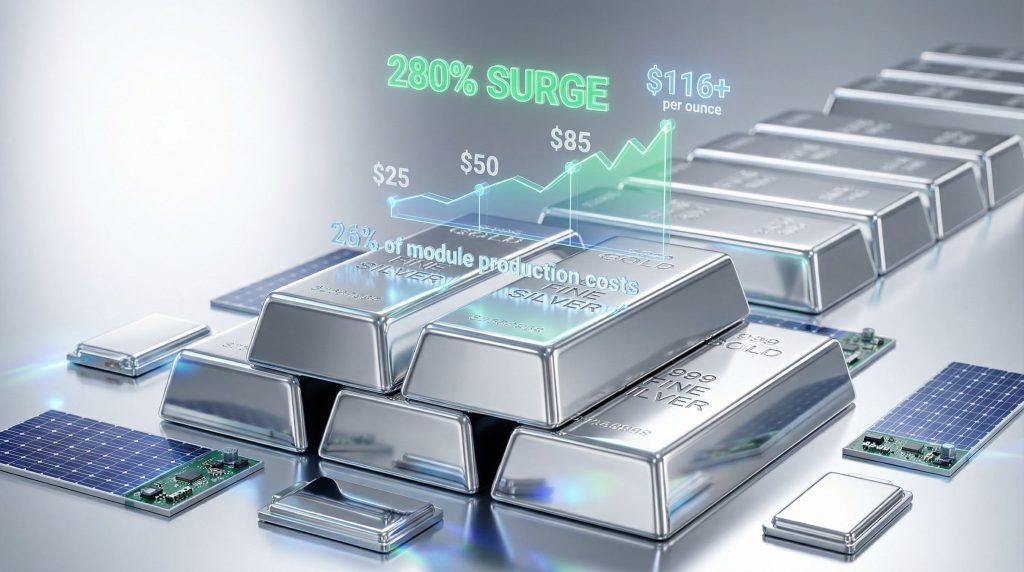
The photovoltaic industry has emerged as the dominant force driving silver consumption, accounting for approximately 25% of total global demand. This concentration creates unprecedented vulnerability as solar panel manufacturing costs have exploded, with silver representing roughly 26% of module production expenses compared to just 3% three years ago. This dramatic shift has forced manufacturers to fundamentally reconsider their production strategies and cost structures.
Key Solar Industry Impact Metrics:
- Annual photovoltaic silver consumption: 125 million ounces
- Price appreciation impact on module costs: +767% increase
- Manufacturing cost pressure forcing technology substitution
- Chinese solar manufacturers developing silver-free alternatives
The electric vehicle revolution compounds these industrial pressures significantly. Each electric vehicle requires approximately 25-50 grams of silver across battery systems, charging infrastructure, and electronic controls. Furthermore, this represents 80% more silver content than traditional internal combustion engines, creating additional demand pressures as global EV adoption accelerates toward projected targets of 30% market share by 2030.
Mining Production Constraints Creating Structural Shortages
Silver's unique position as primarily a byproduct of base metal mining operations creates inherent supply inflexibilities that cannot respond quickly to price signals. Approximately 70% of global silver production comes as a secondary product from copper, lead, and zinc mining operations, meaning silver supply depends heavily on demand for these base metals rather than silver price incentives alone.
Production Bottleneck Factors:
- Mine development timelines averaging 7-10 years for new projects
- Declining ore grades at existing operations reducing silver recovery
- Environmental permitting delays extending project development cycles
- Capital allocation priorities favoring base metals over precious metals projects
Processing capacity limitations further constrain refined silver availability. Additionally, global refining infrastructure operates near 95% capacity utilisation, with expansion projects facing similar timeline and permitting challenges as mining operations. This creates additional supply bottlenecks even when ore production increases. However, these constraints are contributing to significant silver supply deficits that industry analysts expect to persist through 2025.
Currency Instability Driving Safe-Haven Demand
The US dollar's decline to four-year lows has triggered massive capital reallocation into tangible assets, with silver benefiting from its dual nature as both industrial commodity and monetary metal. Currency markets are signaling fundamental concerns about fiscal sustainability, central bank independence, and monetary policy effectiveness across major economies.
Dollar Weakness Indicators:
| Currency Pair | Current Level | Multi-Year High | Percentage Gain |
|---|---|---|---|
| EUR/USD | $1.19 | Strongest since 2021 | +15% |
| GBP/USD | $1.38 | Two-year high | +12% |
| JPY/USD | Intervention levels | Coordinated support | +8% |
Central bank diversification strategies are accelerating this trend as monetary authorities reduce dollar-denominated reserve concentrations in favour of alternative assets including precious metals. While gold remains the primary alternative reserve asset, silver's industrial utility provides additional strategic value for nations seeking supply chain security alongside monetary hedging.
Investment Flows Creating Market Disruption
Retail investor demand has surged to levels not witnessed since the 2008 financial crisis, with physical silver coin and bar sales increasing by 300% year-over-year. This demand reflects growing concerns about currency stability, inflation protection, and portfolio diversification beyond traditional financial assets.
Investment Demand Drivers:
- Inflation hedging requirements as real interest rates remain negative
- Currency devaluation protection amid dollar weakness
- Supply scarcity premiums as industrial demand constrains availability
- Geopolitical uncertainty driving safe-haven asset allocation
Exchange-traded fund flows have accelerated dramatically, with silver ETFs experiencing net inflows of $2.8 billion over the past twelve months. This institutional participation amplifies retail demand pressures and creates additional supply constraints in physical markets. Consequently, the silver market squeeze has intensified as available supplies dwindle.
Technological Innovation and Substitution Responses
Industrial consumers are rapidly developing alternatives to reduce silver dependence as prices reach levels that threaten production economics. Solar manufacturers have accelerated research into silver-free photovoltaic technologies, with some Chinese companies claiming breakthrough innovations that could reduce silver consumption by 20% within two years.
Substitution Technology Development:
- Copper-based conductive materials for certain applications
- Nanotechnology solutions reducing silver content per unit
- Recycling programme expansion to capture electronic waste silver
- Thrifting techniques optimising silver usage efficiency
However, substitution faces significant technical challenges. Silver's unique properties including highest electrical conductivity of any element, superior thermal conductivity, and antimicrobial characteristics make replacement difficult in critical applications. Complete substitution may prove technically impossible or economically unfeasible for many industrial uses.
The next major ASX story will hit our subscribers first
Global Supply Chain Restructuring
Manufacturing industries are fundamentally altering procurement strategies to manage silver price volatility and supply security risks. Companies are implementing forward contracting programmes extending up to 24 months ahead, dramatically longer than traditional 30-90 day purchasing cycles.
Supply Chain Adaptation Strategies:
- Vertical integration into mining and refining operations
- Strategic inventory accumulation despite high carrying costs
- Regional supply chain localisation reducing transport dependencies
- Financial hedging programmes using derivatives markets
These adaptations create additional demand pressures as companies build strategic inventories, effectively removing metal from available supplies. Industry estimates suggest industrial stockpiling has increased silver demand by an additional 15-20 million ounces annually. In addition, sophisticated silver pricing strategies are being deployed to manage this volatile environment.
How Are Companies Managing Price Risk?
Companies are employing increasingly sophisticated approaches to mitigate silver price volatility. For instance, major electronics manufacturers now maintain 3-6 month inventory buffers compared to traditional 30-day stock levels. This strategic shift reflects the new reality of sustained price volatility and supply uncertainty.
Furthermore, financial institutions are developing complex derivative instruments specifically for silver price hedging. These products allow industrial users to lock in future prices while maintaining operational flexibility. However, the effectiveness of these instruments depends on maintaining adequate market liquidity.
Price Forecasting and Market Projections
Financial institutions have dramatically revised silver price targets as structural demand factors become apparent. Major investment banks now project silver reaching $85-150 per ounce within the next twelve months, representing continued upside potential despite recent gains. These projections reflect concerns about a potential silver market crash analysis if supply constraints persist.
Institutional Price Targets:
| Institution Type | Previous Target | Current Target | Timeline |
|---|---|---|---|
| Major Investment Banks | $30-40 | $85-150 | 12 months |
| Commodity Trading Houses | $35-45 | $100+ | 9 months |
| Mining Industry Analysts | $40-50 | $75-120 | 18 months |
These projections reflect fundamental supply-demand imbalances rather than speculative enthusiasm. Annual silver deficits are projected to reach 200+ million ounces by 2027, the largest structural shortage in recorded history. Consequently, analysts are closely monitoring gold-silver ratio insights to understand relative precious metal valuations.
What Factors Could Trigger Higher Prices?
Several catalysts could accelerate the silver price surge beyond current institutional projections. Industrial supply disruptions in major producing regions could create immediate shortage conditions. Additionally, renewed inflation concerns might trigger massive precious metals buying by institutional investors.
The development timeline for new mining projects suggests that supply response will remain constrained for several years. However, accelerated substitution technology deployment could moderate demand growth faster than anticipated.
Investment Strategy Considerations
The current market environment presents unique opportunities and risks across different investment approaches. Physical silver allocation provides direct exposure to supply constraints and industrial demand growth, while mining equity positions offer leveraged upside potential with additional operational risks.
Portfolio Allocation Approaches:
- Conservative investors: 5-10% physical precious metals allocation
- Aggressive investors: 15-25% combined physical and mining equity exposure
- Industrial hedgers: Forward contracting and derivatives strategies
- Institutional portfolios: ETF positions for liquidity and convenience
Risk management becomes critical given silver's increased volatility characteristics. Daily price movements exceeding 5% have become common, requiring careful position sizing and risk controls for all participant categories. For instance, CNBC reports that silver's volatility has reached levels not seen since the 2008 financial crisis.
Should Investors Consider Physical or Paper Silver?
Physical silver ownership provides direct exposure to supply constraints but involves storage costs and liquidity considerations. Paper silver instruments offer greater trading flexibility but carry counterparty risks during market stress periods.
Exchange-traded funds represent a compromise solution, providing precious metals exposure without physical storage requirements. However, ETF structures may face redemption pressures during extreme market conditions.
Geopolitical and Economic Implications
Silver's geographic concentration creates strategic vulnerabilities as major producing regions gain increased economic leverage. Mexico, Peru, and China collectively account for over 60% of global silver production, creating potential supply security risks for consuming nations.
Strategic Considerations:
- Resource diplomacy becoming foreign policy priority
- National security implications of critical material dependencies
- Trade policy integration with resource access agreements
- Domestic mining development receiving government support
The inflationary transmission mechanisms from silver price increases affect multiple economic sectors simultaneously. Solar installation costs are rising globally, potentially slowing renewable energy adoption rates. Electronic device manufacturing faces increased component costs, while automotive production experiences additional expense pressures from EV transition requirements.
Moreover, industry analysis from Finance Magnates suggests that silver's industrial demand profile creates unique inflationary pressures compared to gold's primarily monetary role.
Long-Term Structural Market Changes
Unlike previous silver price surges driven by speculative activity or short-term supply disruptions, current market dynamics reflect permanent structural changes in global demand patterns. The electrification of transportation, renewable energy expansion, and digital technology proliferation create sustained industrial demand growth that cannot be easily reduced through price adjustments.
Permanent Demand Drivers:
- Electric vehicle adoption requiring 80% more silver per unit
- 5G infrastructure deployment using silver-intensive components
- Medical technology advancement utilising silver's antimicrobial properties
- Industrial automation increasing electronic component demand
Supply response capabilities remain constrained by geological realities and environmental regulations. New silver deposits are increasingly difficult to discover and develop, while declining ore grades at existing mines reduce production efficiency over time.
What Makes This Silver Rally Different?
The current silver price surge differs fundamentally from historical rallies due to its industrial demand foundation. Previous price spikes occurred primarily during financial crises or currency devaluation periods, driven by monetary demand.
Today's rally reflects actual physical consumption increases across multiple industrial sectors. This demand cannot be easily substituted or deferred, creating more sustainable price support than speculative buying patterns.
Risk Assessment and Market Outlook
Several factors could moderate silver's advance despite strong fundamentals. Severe economic recession might reduce industrial demand significantly, while accelerated substitution technology deployment could decrease silver requirements faster than anticipated. Central bank policy shifts affecting currency stability represent additional uncertainty factors.
Monitoring Key Risk Indicators:
- Industrial production indices signalling demand changes
- Substitution technology breakthrough announcements
- Central bank policy communication affecting currency markets
- Geopolitical tensions impacting supply chain stability
Market participants should maintain awareness that commodity markets can experience rapid sentiment shifts despite strong fundamental support. Position sizing and risk management protocols become essential given silver's increased volatility characteristics and leverage effects in mining equity positions.
The silver market's current transformation represents a fundamental shift from cyclical commodity trading toward strategic resource allocation. This transition creates both unprecedented opportunities and significant risks requiring careful analysis and appropriate positioning strategies across all market participant categories.
Disclaimer: This analysis contains forward-looking statements and projections that involve substantial risks and uncertainties. Commodity prices are highly volatile and can result in significant losses. Past performance does not guarantee future results. Investors should conduct independent research and consider their risk tolerance before making investment decisions.
Ready to Capitalise on Silver's Explosive Market Dynamics?
Discovery Alert's proprietary Discovery IQ model delivers real-time notifications on significant ASX mineral discoveries, instantly empowering subscribers to identify actionable opportunities in precious metals and industrial commodities ahead of the broader market. Begin your 14-day free trial today and secure your market-leading advantage in Australia's dynamic mining sector.