June 13, 2026
Understanding how to short silver requires knowledge of complex financial instruments that enable traders to profit from declining precious metals prices. Unlike traditional investing strategies that rely on asset appreciation, bearish silver positioning generates returns through systematic price depreciation across various derivative markets.
Modern precious metals markets operate through sophisticated mechanisms that create opportunities for both bullish and bearish positioning. Short selling serves essential market functions including price discovery, liquidity provision, and risk transfer between different categories of market participants. These mechanisms enable efficient capital allocation and help prevent artificial price distortions.
Understanding the Mechanics of Silver Short Selling
Short selling silver involves borrowing the metal or its derivative instruments at current market prices with the obligation to return equivalent quantities at a later date. This fundamental mechanism allows traders to profit when silver prices decline between the initial sale and eventual repurchase. The process differs significantly from traditional investment approaches that require ownership before generating returns.
Key terminology essential for silver shorting includes contango and backwardation market structures. Contango occurs when future delivery prices exceed spot prices, typically reflecting storage costs and financing expenses. Backwardation represents the opposite condition, where immediate delivery commands premium pricing over future contracts. These market structures directly impact the profitability and costs associated with maintaining short positions over extended periods.
Basis trading represents another critical concept, measuring the spread between spot silver prices and futures contract values. This differential fluctuates based on supply-demand imbalances, interest rate variations, and storage capacity constraints. Professional traders utilize basis relationships to optimize entry and exit timing for short positions.
When big ASX news breaks, our subscribers know first
Strategic Motivations for Bearish Silver Positioning
Market participants pursue silver shorting strategies for multiple professional and speculative purposes. Price discovery mechanisms benefit from short sellers who provide counterbalancing forces against excessive bullish sentiment. Without bearish participation, markets risk developing unsustainable price bubbles that ultimately create more severe corrections.
Risk transfer functions allow producers and industrial consumers to manage exposure to adverse price movements. Mining companies frequently implement short positions to hedge future production revenues, while manufacturers utilize bearish strategies to control input cost volatility. This risk redistribution creates more stable operational environments for businesses throughout the silver supply chain.
Portfolio diversification through inverse correlation strategies represents another motivation for silver shorting. During periods when traditional equity investments perform strongly, precious metals often experience relative weakness. Strategic short positions can provide offsetting returns that reduce overall portfolio volatility.
Professional Market Participants in Silver Shorting
Mining companies constitute the largest category of professional silver short sellers. Major producers including Pan American Silver, Fortuna Silver Mines, and First Majestic Silver routinely establish forward-selling programs covering 30-60% of anticipated annual production. These hedging strategies protect against commodity price volatility and ensure predictable cash flow generation.
Industrial manufacturers requiring silver for electronics, solar panels, and medical applications frequently implement cost-hedging strategies through short positions. Companies like Tesla, Applied Materials, and Johnson & Johnson utilize various derivative instruments to manage input price exposure across multi-year production cycles.
Financial institutions maintain precious metals trading desks that execute short positions as part of market-making operations, arbitrage strategies, and client facilitation services. Major banks including JPMorgan Chase, Goldman Sachs, and HSBC regularly participate in silver derivatives markets through both proprietary and client-driven activities.
According to Commodity Futures Trading Commission (CFTC) Commitment of Traders reports, commercial participants consistently maintain significant short positions representing 40-50% of total open interest in COMEX silver futures. This persistent bearish positioning reflects the natural hedging activities of silver producers and industrial consumers.
Primary Methodologies for Silver Short Exposure
COMEX Silver Futures: Direct Market Access
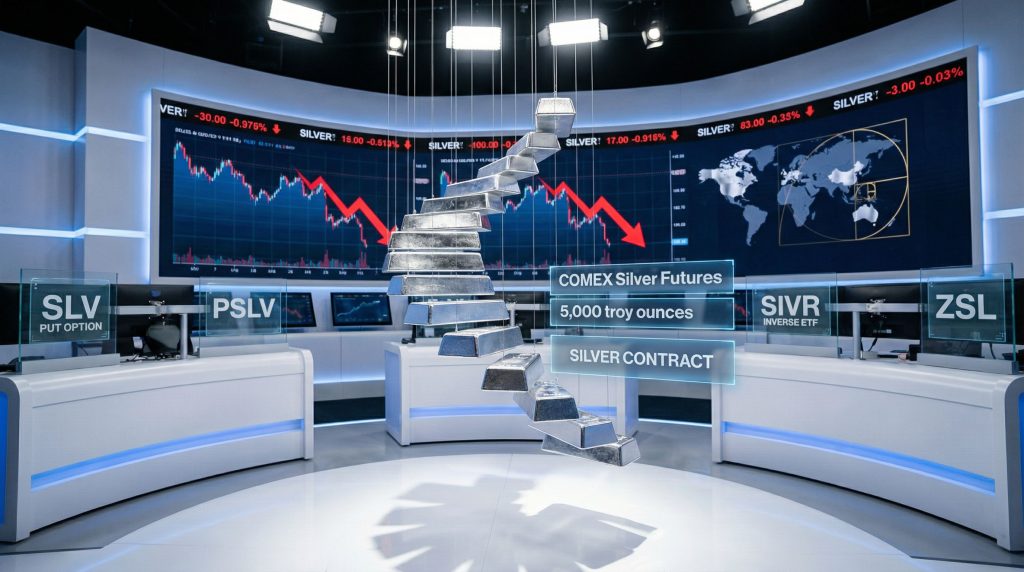
COMEX silver futures provide the most direct mechanism for establishing short positions in precious metals markets. Each contract represents 5,000 troy ounces of silver with standardised delivery specifications and margin requirements. Current margin deposits typically range from $6,000-8,500 per contract, providing approximately 20-30x leverage on the underlying silver value.
COMEX Silver Futures Contract Specifications:
| Specification | Details |
|---|---|
| Contract Size | 5,000 troy ounces |
| Minimum Price Movement | $0.005 per ounce ($25 per contract) |
| Trading Hours | Sunday-Friday, 6:00 PM – 5:00 PM ET |
| Delivery Months | March, May, July, September, December |
| Initial Margin | $6,000-8,500 (varies by broker) |
| Maintenance Margin | $4,500-6,000 |
Contract rollover procedures require careful attention as positions approach expiration dates. Traders must close expiring contracts and simultaneously open positions in subsequent delivery months to avoid physical delivery obligations. The price differential between contract months, known as roll yield, can be positive or negative depending on market structure conditions.
Stop-loss positioning represents a critical risk management component for futures-based short positions. Best practices suggest placing protective orders 3-5% above entry prices to account for normal intraday volatility while avoiding placement at round-number price levels where algorithmic trading activity concentrates.
Inverse Silver ETFs: Simplified Access to Bearish Exposure
Exchange-traded funds designed to move inversely to silver prices provide accessible alternatives to direct futures trading. These instruments utilise derivatives and swap agreements to achieve negative correlation with underlying silver price movements without requiring individual margin management or contract rollover procedures.
ProShares UltraShort Silver (ZSL) targets -2x daily silver returns through leveraged derivative positioning. The fund maintains approximately $45-65 million in assets under management with a 0.95% annual expense ratio. Daily trading volumes typically range from 150,000-300,000 shares with bid-ask spreads of 0.05-0.15% under normal market conditions.
ProShares Short Silver (ZSV) provides -1x daily exposure with similar fee structures and operational mechanics. This conservative alternative reduces volatility while maintaining inverse correlation to silver price movements.
Furthermore, daily rebalancing requirements create mathematical drag effects that impact long-term performance. These instruments target specific daily return multiples, requiring portfolio adjustments that can deviate from simple inverse relationships over extended holding periods. In volatile markets, this rebalancing drag significantly affects returns compared to theoretical performance expectations.
Rebalancing Drag Example:
- Day 1: Silver rises 2%, leveraged inverse ETF falls 4%
- Day 2: Silver falls 2%, leveraged inverse ETF rises 4%
- Net two-day performance shows compounding losses despite neutral silver movement
Put Options: Limited-Risk Bearish Strategies
Put options provide asymmetric risk exposure by limiting maximum losses to premium payments while maintaining unlimited profit potential as silver prices decline. Strike price selection and expiration timing require careful analysis of volatility expectations and time decay impacts.
Time decay (theta) represents a significant consideration for options-based strategies. Silver put options lose value as expiration approaches, requiring sufficiently large price movements to overcome premium erosion. Volatility changes also impact option values independent of directional price movement through vega exposure.
Protective put strategies can hedge existing silver positions while maintaining upside participation. This approach provides portfolio insurance against adverse price movements while preserving profit potential during favourable market conditions.
Alternative International Instruments
Contracts for Difference (CFDs) offer leveraged short exposure through over-the-counter agreements with brokers. These instruments provide flexible position sizing and extended trading hours but involve counterparty risk and financing costs for overnight positions.
CFD structures include bid-ask spreads, overnight financing charges, and rollover fees that impact overall transaction costs. Leverage limits vary by jurisdiction, with European regulations typically restricting retail trader exposure to 10:1 for major commodities.
Important Note: CFD trading faces significant regulatory restrictions in the United States but remains available in most international jurisdictions under appropriate regulatory oversight.
Risk Assessment and Management Framework
Volatility Considerations and Market Dynamics
Silver demonstrates significantly higher price volatility compared to gold and other precious metals. Annualised volatility typically ranges from 18-22% versus gold's 12-15% historical average. This increased volatility amplifies both profit potential and loss exposure for short positions.
Industrial demand components create additional price sensitivity to economic cycles and technological developments. Solar panel manufacturing, electronics production, and medical applications generate substantial silver consumption that fluctuates with global economic conditions.
Currency correlation effects also influence silver prices through dollar strength relationships. Strong USD environments typically pressure commodity prices lower, while dollar weakness often supports precious metals valuations. These correlations can shift during periods of financial stress or changing monetary policy expectations.
Leverage and Margin Risk Management
Position sizing relative to account equity represents the most critical risk management decision for silver short strategies. Conservative approaches limit individual positions to 2-5% of total portfolio value to prevent account-threatening losses during adverse price movements.
Risk Management Checklist:
- Maximum position size defined and enforced
- Stop-loss levels predetermined before entry
- Correlation analysis completed with existing holdings
- Liquidity assessment for various exit scenarios
- Stress testing conducted under historical price movements
Margin call scenarios require particular attention given silver's volatility characteristics. Rapid price increases can trigger forced liquidation at unfavourable levels, particularly for highly leveraged positions or accounts with limited excess equity.
Market Dynamics Influencing Short Position Performance
Supply-Side Analysis and Production Trends
Global silver mine production reached approximately 26,100 metric tonnes in 2024, with geographic concentration among major producing nations creating supply risk considerations. However, understanding silver supply deficits becomes crucial when analysing potential market imbalances:
- Mexico: 5,600 metric tonnes (21% of global production)
- Peru: 3,400 metric tonnes (13% of global production)
- China: 3,200 metric tonnes (12% of global production)
- Russia: 1,500 metric tonnes (6% of global production)
- Poland: 1,400 metric tonnes (5% of global production)
Mining company cost curves and profitability margins directly impact supply responses to price changes. Lower-grade ore processing and energy costs significantly influence production decisions that affect medium-term supply availability.
Geopolitical risks in major producing regions can create supply disruptions that pressure prices higher regardless of demand fundamentals. Short positions face particular vulnerability to unexpected supply constraints that trigger rapid price appreciation.
Demand-Side Factors and Industrial Applications
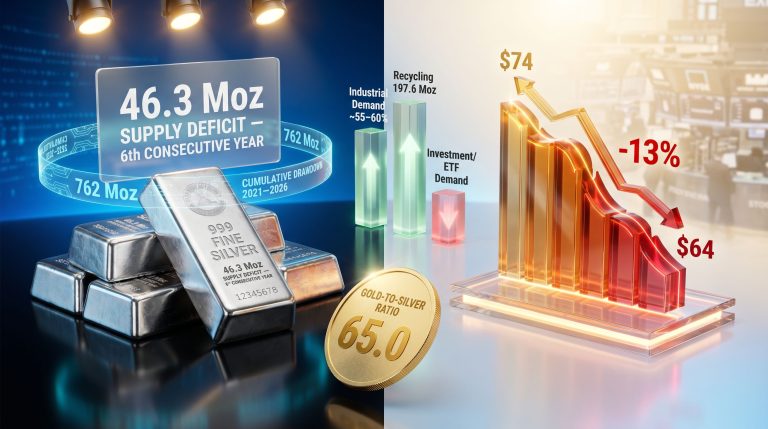
Industrial applications account for approximately 50-60% of annual silver consumption, creating sensitivity to manufacturing cycles and technological adoption rates. Key demand sectors include:
Electronics and Technology:
- Circuit boards and electronic components
- 5G infrastructure development
- Semiconductor manufacturing processes
Renewable Energy:
- Solar panel photovoltaic cells
- Electric vehicle components
- Energy storage systems
Medical and Healthcare:
- Antimicrobial applications
- Medical device manufacturing
- Pharmaceutical production
Investment demand through ETF purchases and physical bullion accumulation adds another variable affecting price dynamics. Investment flows can create rapid price movements independent of industrial supply-demand fundamentals.
Technical Analysis for Short Entry Identification
Key resistance levels and breakdown patterns provide technical signals for potential short entry points. Volume analysis helps confirm price movement validity and momentum sustainability.
Seasonal patterns in silver trading show historical tendencies toward weakness during specific calendar periods. Industrial demand cycles and investment flows create recurring patterns that inform tactical positioning decisions.
Relative strength analysis compared to gold and other metals can identify divergence situations where silver shows particular vulnerability to downward pressure.
Economic Scenarios Supporting Silver Short Strategies
Interest Rate and Monetary Policy Environment
Rising real interest rates reduce the relative attractiveness of non-yielding assets including precious metals. Central bank tightening cycles historically create headwinds for silver prices by increasing opportunity costs of holding non-productive assets.
Strong dollar environments typically pressure commodity prices through currency effects and reduced international purchasing power. Federal Reserve hawkishness and quantitative tightening policies generally create unfavourable conditions for precious metals investment.
Economic Growth and Industrial Demand Scenarios
Industrial recession conditions reduce manufacturing demand for silver across electronics, automotive, and renewable energy applications. Economic slowdowns directly impact consumption patterns that support silver prices.
Technology sector weakness affects silver demand through reduced electronics production and delayed infrastructure investment. Semiconductor cycles and consumer device sales directly correlate with industrial silver consumption.
Market Structure and Sentiment Indicators
Extreme bullish sentiment and positioning often precede significant price corrections in commodity markets. Sentiment surveys and positioning data help identify potential reversal points suitable for short position establishment.
Contango in futures curves signals market expectations of oversupply or reduced demand pressure. These term structure relationships indicate favourable conditions for establishing bearish positions.
Technical overbought conditions and momentum divergence patterns provide additional confirmation signals for potential short opportunities.
The next major ASX story will hit our subscribers first
Cost Analysis and Economic Considerations
Comparative Transaction Cost Structure
Transaction Cost Analysis:
| Method | Initial Cost | Ongoing Fees | Complexity Level | Leverage Available |
|---|---|---|---|---|
| Futures | Margin deposit + commission | Per-trade commission | High | 20-30x |
| Inverse ETFs | Share price + spread | Annual expense ratio | Medium | 1-2x built-in |
| Put Options | Premium payment | Time decay | Medium-High | Varies by strike |
| CFDs | Spread cost | Overnight financing | Medium | Up to 10x |
Futures contracts typically offer the lowest ongoing costs but require active management and rollover procedures. Inverse ETFs provide simplicity at the expense of higher annual fees and rebalancing drag effects.
Options strategies limit risk exposure but face time decay that requires accurate timing for profitability. CFDs offer flexibility but involve counterparty risk and financing costs that accumulate over time.
Tax Implications by Instrument Type
Futures contracts receive Section 1256 tax treatment in the United States, with 60% of gains taxed as long-term capital gains and 40% as ordinary income regardless of holding period. This favourable treatment can improve after-tax returns compared to other instruments.
ETF transactions generate standard capital gains treatment based on actual holding periods. Inverse ETF dividends may receive different tax classification depending on underlying derivative structures.
Options profits face varying tax treatment depending on strategy complexity and holding periods. International CFD taxation varies significantly by jurisdiction and trader classification.
Common Mistakes and Strategy Pitfalls
Timing and Duration Errors
Attempting to time exact market tops represents one of the most frequent errors in silver shorting strategies. Markets can remain irrational longer than individual traders can remain solvent, particularly with leveraged positions.
Holding leveraged positions too long creates compounding risks from daily rebalancing effects and financing costs. Short-term trading instruments require active management rather than passive holding strategies.
Ignoring seasonal demand patterns can result in poorly timed entries during historically strong periods for silver prices. Industrial cycles and investment flows create predictable seasonal variations.
Consequently, understanding tariff impacts on silver becomes essential when assessing potential policy-driven price movements. Central bank intervention potential poses significant risks during periods of financial stress.
Position Management Failures
Inadequate stop-loss discipline leads to catastrophic losses when positions move adversely. Predetermined exit criteria help maintain objectivity during emotional decision-making periods.
Over-leveraging relative to market volatility creates unnecessary account risk even when directional analysis proves correct. Position sizing should reflect potential drawdown scenarios rather than profit maximisation alone.
Ignoring correlation changes during market stress periods can amplify portfolio risk beyond acceptable levels. Silver correlations with equities and currencies shift dramatically during crisis periods.
Alternative Strategies to Direct Silver Shorts
Relative Value and Pair Trading Approaches
Silver-to-gold ratio positioning capitalises on relative price movements between precious metals rather than absolute directional bets. Historical ratios provide reference points for identifying extremes suitable for mean reversion strategies.
Mining stock shorts versus metal longs create market-neutral exposure that isolates company-specific risks from commodity price movements. This approach benefits from operational inefficiencies while maintaining precious metals exposure.
Cross-commodity arbitrage opportunities arise from temporary pricing dislocations between silver and related industrial metals. Copper-silver spreads and platinum-silver relationships occasionally present attractive risk-adjusted opportunities.
Synthetic Short Construction
Collar strategies using options create synthetic short positions with defined risk parameters. Long put and short call combinations replicate short exposure while limiting maximum losses to premium differences.
Covered call writing on existing silver positions generates income while providing partial downside protection. This approach reduces net exposure without requiring separate short instruments.
Spread trading between contract months captures term structure anomalies while reducing directional market exposure. Calendar spreads isolate time-related pricing differentials from absolute price movements.
Long-term Strategic Considerations
Structural Demand Growth Factors
Green energy transition initiatives create substantial long-term demand growth for silver through solar panel manufacturing and electric vehicle production. These trends may limit the effectiveness of extended bearish strategies.
5G infrastructure deployment and electronics proliferation generate sustained industrial demand that supports fundamental price floors. Technology advancement creates new applications that expand silver consumption.
Medical and antimicrobial applications continue expanding through pharmaceutical research and healthcare innovation. These growth sectors provide demand stability independent of economic cycles.
Supply Constraints and Mining Economics
Declining ore grades at existing mines increase extraction costs and limit supply responsiveness to price changes. Environmental regulations add complexity and expense to new mine development projects.
Energy costs significantly impact mining profitability and production decisions. Rising energy prices create cost-push inflation pressures that support higher silver prices over time.
Geopolitical risks in key producing regions introduce supply disruption possibilities that favour long-term silver holders over short sellers. Political instability affects mining operations and export capabilities.
Implementation Framework for Silver Short Strategies
Portfolio Integration and Risk Management
Correlation analysis with existing holdings prevents inadvertent concentration risks during strategy implementation. Silver shorts may amplify losses if held alongside other commodity-sensitive investments.
Risk budgeting methodologies help determine appropriate position sizes relative to overall portfolio objectives and risk tolerance. Professional risk management requires quantitative position sizing rather than arbitrary allocation decisions.
However, implementing comprehensive volatility hedging strategies becomes essential for managing market uncertainty. Rebalancing triggers and exit criteria should be established before position initiation to maintain objectivity during adverse market conditions.
Performance measurement and attribution analysis help distinguish luck from skill in trading outcomes. Regular strategy evaluation enables continuous improvement and adaptation to changing market conditions.
Monitoring and Adjustment Protocols
Key economic indicators require systematic tracking to identify changing market conditions that affect strategy viability. Federal Reserve policy, inflation data, and industrial production statistics directly impact silver markets.
Technical signals for position modification include trend line breaks, momentum divergences, and volume pattern changes. These indicators provide objective criteria for strategy adjustments.
Fundamental changes requiring strategy review include shifts in central bank policies, major industrial demand changes, or significant supply disruptions. Regular strategy assessment ensures continued relevance.
Regular stress testing and scenario analysis help identify potential vulnerabilities before they create actual losses. Historical backtesting provides insight into strategy performance under various market conditions.
Understanding Market Pressures and External Factors
Market participants must recognise that a silver market squeeze can rapidly reverse short positions regardless of fundamental analysis. These events often occur when physical demand exceeds available supply, creating forced covering situations.
Furthermore, silver's dual nature as both an industrial metal and precious metal creates complex pricing dynamics that affect short selling success. Industrial recessions may support bearish positioning, while monetary policy concerns favour precious metals demand.
For instance, inverse silver ETFs provide institutional-quality exposure to bearish silver strategies through professionally managed portfolios. These instruments handle complex derivative positioning while offering daily liquidity for tactical adjustments.
Additionally, professional traders should consider short silver ETF strategies as part of a diversified approach to precious metals exposure. These vehicles provide transparent pricing and regulatory oversight compared to individual derivative transactions.
Conclusion: Strategic Decision Framework
Successfully implementing how to short silver requires comprehensive understanding of market mechanics, risk management principles, and economic factors affecting precious metals pricing. Multiple approaches offer different risk-reward profiles suited to varying investor objectives and market outlook expectations.
Futures contracts provide direct market exposure with maximum leverage but demand sophisticated risk management and ongoing position maintenance. Inverse ETFs offer simplicity and accessibility but include structural costs that limit long-term effectiveness. Options strategies provide asymmetric risk exposure while requiring precise timing and volatility assessment.
Market conditions supporting bearish silver positioning include rising real interest rates, dollar strength, industrial recession scenarios, and extreme bullish sentiment readings. These environments create favourable risk-reward scenarios for well-timed short strategies.
Risk management remains paramount given silver's inherent volatility and the unlimited loss potential of short positions. Position sizing, stop-loss discipline, and correlation analysis form the foundation of professional risk control practices.
Before implementing any silver shorting approach, investors should thoroughly understand instrument mechanics, transaction costs, tax implications, and risk parameters. Professional guidance from experienced commodity traders and financial advisors can help navigate the complexity of precious metals derivatives markets while maintaining appropriate risk controls.
Disclaimer: This analysis is for educational purposes only and does not constitute investment advice. Silver shorting involves substantial risks including potential unlimited losses. Past performance does not guarantee future results. Consult qualified financial professionals before implementing any trading strategies.
Could Silver Market Volatility Create Your Next Trading Opportunity?
Silver's extreme volatility and complex market dynamics present unique challenges that require sophisticated risk management and precise timing. With Discovery Alert's proprietary Discovery IQ model scanning real-time ASX announcements for significant mineral discoveries, investors can quickly identify emerging opportunities in silver miners and related precious metals companies before broader market recognition occurs. Begin your 14-day free trial today to position yourself ahead of market movements and gain the edge needed for successful precious metals investing.