June 16, 2026
Understanding Silver's Industrial Revolution Through Supply-Demand Mechanics
The precious metals landscape has fundamentally shifted as technological advancement converges with monetary policy uncertainty. Silver's unique position as both an industrial commodity and monetary asset creates unprecedented dynamics that traditional forecasting models struggle to capture. Furthermore, the silver price forecast 2026 suggests significant opportunities as multiple market forces align to support higher valuations.
Unlike gold, which serves primarily as a store of value, silver's dual nature exposes it to amplified volatility from both technological disruption and currency debasement cycles. Modern industrial applications have transformed silver from a purely monetary metal into a critical component of emerging technologies.
This transformation occurs precisely as central banks worldwide implement expansionary policies that historically drive precious metals appreciation. In addition, the intersection of these forces creates conditions that technical analysts suggest could propel silver prices toward unprecedented levels by 2026.
When big ASX news breaks, our subscribers know first
What Drives Silver's Price Discovery Mechanism in 2026?
Industrial Demand Acceleration Creates Supply Constraints
Solar photovoltaic manufacturing represents the fastest-growing industrial application for silver consumption. Each solar panel requires approximately 10-20 grams of silver depending on cell technology and efficiency ratings. The International Energy Agency projects global solar capacity additions will maintain 15-17% compound annual growth through 2026.
Cumulative installed capacity could potentially reach 2,300-2,500 GW by year-end. This expansion translates into approximately 130-150 million ounces of annual silver consumption for solar applications alone. Consequently, this represents roughly 8-10% of total global silver supply.
Unlike investment demand, industrial consumption demonstrates price-inelastic characteristics within reasonable ranges. Manufacturers prioritise performance specifications over marginal cost increases, creating sustained demand regardless of price fluctuations.
Key Industrial Applications Driving Demand:
• Photovoltaic cell conductive paste (irreplaceable for efficiency)
• Electric vehicle battery management systems
• 5G infrastructure deployment components
• Medical antimicrobial applications post-pandemic
• Advanced semiconductor manufacturing processes
Electronics and technology sectors create sustained baseline demand that operates independently of financial market cycles. The deployment of 5G networks, expansion of electric vehicle manufacturing, and continued semiconductor advancement require silver's unique electrical conductivity properties. However, these applications currently have no viable substitutes at scale.
Monetary Policy Transmission Mechanisms
Central bank policy adjustments create direct transmission effects on precious metals pricing through currency debasement dynamics. When monetary authorities expand money supply through bond purchasing programs, the resulting currency weakness historically correlates with precious metals appreciation. Furthermore, this pattern has persisted across multiple economic cycles.
Federal Reserve Balance Sheet Data:
• Current balance sheet: $7.4 trillion (December 2024)
• Peak pandemic levels: $8.9 trillion (2021)
• New "reserve management purchases" program launched September 2024
• Initial program scope: $25 billion monthly in Treasury bills
Real interest rates currently trade in negative territory at approximately -0.80% to -1.20% on 10-year Treasury Inflation-Protected Securities. This environment historically favours precious metals allocation as the opportunity cost of holding non-yielding assets decreases significantly.
Economist Peter Schiff of Europacific Asset Management characterises the Federal Reserve's reserve management purchases as quantitative easing under alternative terminology. According to Schiff's analysis, this policy approach will add inflationary pressure to an economy where inflation already exceeds stated policy targets. Consequently, this could force expansion into longer-dated Treasury securities, potentially amplifying the central bank impact on precious metals.
How Do Technical Models Project Silver's 2026 Performance Trajectory?
Quantitative Forecasting Framework Analysis
Silver Price Projection Methodologies for 2026
| Forecasting Method | Target Range | Confidence Assessment | Primary Variables |
|---|---|---|---|
| Supply-Demand Balance | $55-$65/oz | High reliability | Production capacity vs. consumption |
| Technical Chart Patterns | $70-$88/oz | Moderate confidence | Momentum and resistance levels |
| Monetary Debasement Models | $85-$100/oz | Variable confidence | Currency policy expansion |
| Institutional Consensus | $50-$65/oz | High agreement | Conservative economic assumptions |
Schiff's analysis suggests silver could reach $100 per ounce in 2026, representing a 56-64% appreciation from current levels around $61-$64. This projection aligns with the upper range of monetary debasement models. These models assume continued Federal Reserve balance sheet expansion and currency weakness.
The technical foundation for these projections rests on silver's breakthrough above the $50 resistance level. This level previously acted as a multi-year ceiling. Technical analysis indicates this breakthrough establishes $50 as new baseline support. In addition, it creates conditions for measured move calculations toward $75-$100 targets.
When considering the broader context, a comprehensive gold-silver ratio analysis reveals how relative valuation dynamics could further support higher silver prices throughout 2026.
Momentum Indicators and Volatility Characteristics
Silver demonstrates approximately 2.0-2.4x the volatility of gold due to its smaller market capitalisation and dual demand profile. This amplification factor suggests that gold appreciation toward projected $5,000-$6,000 levels could drive proportionally larger silver gains. Furthermore, momentum acceleration could create conditions where the silver price forecast 2026 targets prove conservative.
Recent Price Action Analysis:
• Breakout above $50 "double top" resistance level established
• Current trading range: $61-$64 per ounce (December 2025)
• Support floor established at $50 level
• Measured move targets suggest $75-$100 potential if momentum sustains
The smaller silver market relative to gold creates conditions where institutional allocation shifts can generate outsized price movements. Exchange-traded fund holdings exceed 1 billion ounces, representing significant price influence. However, inflow and outflow patterns correlate strongly with trending market conditions.
What Role Does Supply-Side Geology Play in Price Discovery?
Mining Production Structural Limitations
Global silver production faces geological constraints that traditional economic models often underestimate. Primary silver mines contribute only 30% of total supply, with the remaining 70% derived as byproduct from copper, lead, and zinc mining operations. Consequently, this supply structure creates inelastic response characteristics to silver price signals.
Primary Production Challenges:
• Declining ore grades at existing operations worldwide
• Extended development timelines of 7-10 years for new projects
• Limited major new discoveries in past decade
• Environmental permitting complexity increases
• Rising energy costs pressure profit margins
Since byproduct supply depends on base metal production economics, silver supply could contract regardless of silver price levels. This dependency occurs if copper, lead, or zinc prices decline significantly. Furthermore, this dependency creates unique supply dynamics absent in other precious metals markets.
The implications extend beyond simple supply shortages, potentially creating the type of silver market squeeze impact that could fundamentally alter global financial markets.
Secondary Supply and Recycling Constraints
Silver recycling provides approximately 15-20% of annual supply but faces structural limitations compared to gold recycling. Industrial applications often result in unrecoverable consumption. Silver becomes dispersed in electronic components, solar panels, and medical devices in quantities too small for economic recovery.
Recycling Recovery Challenges:
• Industrial consumption often unrecoverable
• Electronic waste contains silver in trace quantities
• Solar panel recycling infrastructure underdeveloped
• Medical applications represent permanent consumption
This dynamic contrasts sharply with gold, where jewellery and investment products maintain recycling potential throughout multiple economic cycles. Silver's industrial consumption profile creates permanent demand that cannot be satisfied through secondary supply during price increases.
How Do Macroeconomic Conditions Impact Silver Valuations?
Currency Debasement and Interest Rate Environment
When central banks expand monetary bases through quantitative easing or reserve management purchases, precious metals historically function as inflation hedges. Silver's industrial utility provides additional value streams beyond monetary properties. Consequently, this creates dual demand dynamics that can amplify price responses to currency weakness.
Current Monetary Environment Factors:
• Real interest rates negative at -0.80% to -1.20%
• M2 money supply growth decelerating to 2-3% annually
• Federal Reserve implementing "reserve management purchases"
• International central bank coordination decreasing
The opportunity cost calculation for holding non-yielding precious metals becomes favourable when real interest rates trade in negative territory. If inflation continues exceeding interest rate increases, this dynamic intensifies. Furthermore, it supports precious metals allocation across institutional and retail investor portfolios.
Trade policy considerations also present additional variables, particularly how tariffs impact on silver through industrial supply chains and international trade dynamics.
International Monetary System Instability
Geopolitical tensions and international monetary cooperation challenges create additional safe-haven demand for precious metals. Silver benefits from gold's monetary recognition while offering industrial utility. This provides fundamental value support during crisis periods.
Risk Premium Factors:
• Declining foreign central bank Treasury purchases
• International trade settlement diversification
• Currency competition and digital asset development
• Sovereign debt sustainability concerns
These structural changes in international monetary arrangements historically precede precious metals appreciation cycles. Market participants seek assets with intrinsic value characteristics independent of government policy decisions.
What Investment Flow Dynamics Influence Silver Markets?
Exchange-Traded Fund Impact and Institutional Allocation
Physical silver ETFs hold over 1 billion ounces in aggregate, representing substantial market influence through inflow and outflow patterns. These holdings create feedback loops during trending markets. Price appreciation attracts additional investment flows that further support price momentum.
ETF Market Dynamics:
• Holdings exceed 1 billion ounces across all ETFs
• Inflow patterns correlate with price momentum
• Institutional allocation increases create amplified effects
• Retail demand demonstrates price-inelastic behaviour
Portfolio managers increasingly recognise silver's dual industrial and monetary characteristics. Small allocation increases from institutional investors could significantly impact prices. This occurs due to silver's relatively constrained market size compared to traditional asset classes.
For investors seeking specific silver squeeze strategies, understanding these flow dynamics becomes essential for timing and positioning decisions.
Retail Investment Patterns and Physical Demand
Individual investor demand for physical silver products provides price support during market stress periods. This segment demonstrates price-inelastic behaviour characteristics. Investors often increase purchases during price declines as they perceive value opportunities.
Retail Market Characteristics:
• Physical demand remains strong during price pullbacks
• Coin and bar premiums indicate underlying demand strength
• Storage and logistics create supply bottlenecks during surges
• Geographic demand concentration in specific regions
The retail physical market operates somewhat independently of financial markets. This provides demand floor support that becomes particularly relevant during periods of financial market stress. However, it also becomes important during currency uncertainty periods.
The next major ASX story will hit our subscribers first
What Scenarios Could Drive Silver Above $100 in 2026?
Accelerated Monetary Expansion Pathways
If central banks implement more aggressive quantitative easing programs due to economic stress or financial system instability, precious metals could experience rapid appreciation cycles. Historical precedents from 2008-2011 suggest silver outperforms gold during monetary debasement periods. This occurs through volatility amplification effects.
Monetary Acceleration Catalysts:
• Financial system stress requiring intervention
• Economic recession triggering stimulus programs
• International dollar confidence erosion
• Sovereign debt crisis requiring monetisation
Schiff's analysis suggests the Federal Reserve will be "forced to expand that program and buy longer-dated maturities." This creates more powerful momentum for precious metals. Longer-duration bond purchases typically generate larger currency debasement effects.
Industrial Demand Surge Scenarios
Breakthrough technologies requiring significant silver content could create supply shortages that drive prices regardless of monetary policy. Advanced solar cell technologies, quantum computing applications, and expanded medical device usage represent potential demand catalysts. These developments could dramatically reshape the silver price forecast 2026.
Technology-Driven Demand Increases:
• Next-generation solar cell efficiency improvements
• Quantum computing commercial deployment
• Advanced medical antimicrobial applications
• Electric vehicle infrastructure expansion
Industrial users typically accept higher input prices rather than substitute materials when silver's unique properties are essential. This occurs when performance specifications are critical. Furthermore, this creates potential for demand-driven price spikes independent of financial market conditions.
What Are Primary Downside Risk Factors for Silver Prices?
Economic Recession and Demand Destruction
Global economic slowdown could reduce industrial demand while simultaneously strengthening the U.S. dollar through flight-to-quality dynamics. However, recession scenarios often trigger monetary stimulus responses. These create competing upward pressure on precious metals prices.
Recession Impact Variables:
• Industrial demand reduction from manufacturing slowdown
• Dollar strength during initial flight-to-quality phases
• Central bank policy response timing and magnitude
• Consumer discretionary spending impact on electronics
The dual nature of silver creates complex dynamics during recession. Industrial demand destruction competes with monetary demand increases from policy responses and currency concerns.
Interest Rate Normalisation Challenges
If central banks successfully reduce inflation without triggering recession, rising real interest rates could pressure precious metals. This occurs through increased opportunity costs. However, this scenario requires precise monetary policy execution that historically proves difficult to achieve.
Normalisation Risk Factors:
• Real interest rate increases above inflation rates
• Successful inflation reduction without recession
• Currency strength from effective policy implementation
• Reduced safe-haven demand in stable environments
The probability of successful monetary policy normalisation remains disputed among economists. Many suggest that accumulated debt levels make traditional normalisation pathways increasingly difficult to implement.
How Should Investors Position for Silver's 2026 Outlook?
Portfolio Allocation Strategy Framework
Risk-Adjusted Positioning Approaches:
• Conservative allocation: 5-10% precious metals within diversified portfolio
• Moderate allocation: 10-15% with silver overweight relative to gold
• Aggressive allocation: 15-25% concentrated precious metals exposure
• Speculative allocation: 25%+ for investors with high risk tolerance
The optimal allocation depends on individual risk tolerance, investment timeline, and confidence in monetary policy outcomes. Silver's higher volatility characteristics require position sizing that accounts for potential drawdowns. These drawdowns could exceed 30-40% during correction periods.
Physical Versus Financial Instruments
Physical silver provides direct exposure without counterparty risk but involves storage costs and liquidity considerations. Financial instruments including ETFs, futures contracts, and mining stocks offer enhanced liquidity. However, they introduce additional risks including counterparty exposure and tracking errors.
Investment Vehicle Characteristics:
• Physical silver: No counterparty risk, storage costs, liquidity constraints
• Silver ETFs: High liquidity, management fees, potential tracking errors
• Mining stocks: Leverage to silver prices, operational risks, broader market correlation
• Futures contracts: High leverage, margin requirements, rollover complexity
Dollar-cost averaging strategies can reduce timing risk while maintaining upside participation in trending markets. Sharp pullbacks often provide attractive entry points given silver's characteristic volatility patterns. Furthermore, rapid recovery potential makes strategic accumulation particularly attractive.
Mining Sector Performance and Investment Implications
Equity Performance Amplification
Silver mining companies have demonstrated significant outperformance during 2025. The SIL ETF advanced approximately 150% year-to-date compared to silver's physical price appreciation. This amplification reflects operational leverage effects as fixed costs create magnified profit sensitivity to commodity price changes.
Mining Sector Metrics:
• GDX (gold miners) up approximately 140% year-to-date
• SIL (silver miners) up approximately 150% year-to-date
• Operational leverage amplifies commodity price movements
• Earnings growth acceleration expected with higher prices
Schiff anticipates earnings growth acceleration for mining companies as precious metals prices continue advancing. The market appears to undervalue future earnings potential based on projected commodity prices rather than current levels. Consequently, this creates potential for continued mining stock outperformance.
Risk Management Considerations
Mining stocks carry additional risks beyond commodity price exposure. These include operational challenges, environmental regulations, and broader equity market correlation during stress periods. However, they also provide leverage to precious metals appreciation without the storage and insurance costs of physical ownership.
Mining Investment Risk Factors:
• Operational execution and management quality
• Environmental and regulatory compliance costs
• Broader equity market correlation during selloffs
• Geographic and political risk exposure
Investors considering mining stock exposure should evaluate individual company fundamentals. These include reserve quality, production costs, debt levels, and management track records. Rather than simply pursuing broad sector exposure through ETFs, fundamental analysis becomes crucial.
Technical Analysis and Market Psychology Factors
Mainstream Media Coverage and Sentiment Indicators
Mainstream financial media continues to provide minimal coverage of precious metals despite significant price appreciation. This relative neglect suggests the broader investment community has not yet fully recognised the precious metals trend. Furthermore, this potentially indicates continued upside potential.
Media Coverage Analysis:
• CNBC rarely mentions gold or silver despite record highs
• Focus remains on technology stocks and Bitcoin
• Precious metals coverage limited to brief price mentions
• No advocacy or guest experts promoting allocation
According to Schiff's observations, major financial networks avoid promoting precious metals due to advertising relationships. Cryptocurrency companies prefer investor attention directed toward Bitcoin rather than gold or silver. This dynamic may persist until cryptocurrency market conditions change significantly.
Bitcoin Competition and Digital Asset Implications
The relationship between Bitcoin and precious metals presents complex dynamics that could influence silver prices in 2026. While Bitcoin proponents position digital assets as superior alternatives to gold, recent price action shows diverging performance. This challenges the digital gold narrative.
Digital Asset Competition Factors:
• Bitcoin price declining while gold/silver advance
• Digital gold narrative facing performance challenges
• Cryptocurrency advertising influence on media coverage
• Generational preference differences for digital versus physical assets
The failure of Bitcoin to rally alongside precious metals during monetary policy shifts suggests fundamental differences in demand drivers. This divergence could indicate that precious metals maintain distinct value propositions that digital assets cannot fully replicate.
For additional perspective on silver market dynamics, analysts at IG Group provide comprehensive silver outlook analysis that explores technical factors and institutional positioning. Furthermore, Strategic Metals Invest offers detailed price forecasting that examines supply fundamentals and investment flows.
Conclusion: Silver's 2026 Price Trajectory Analysis
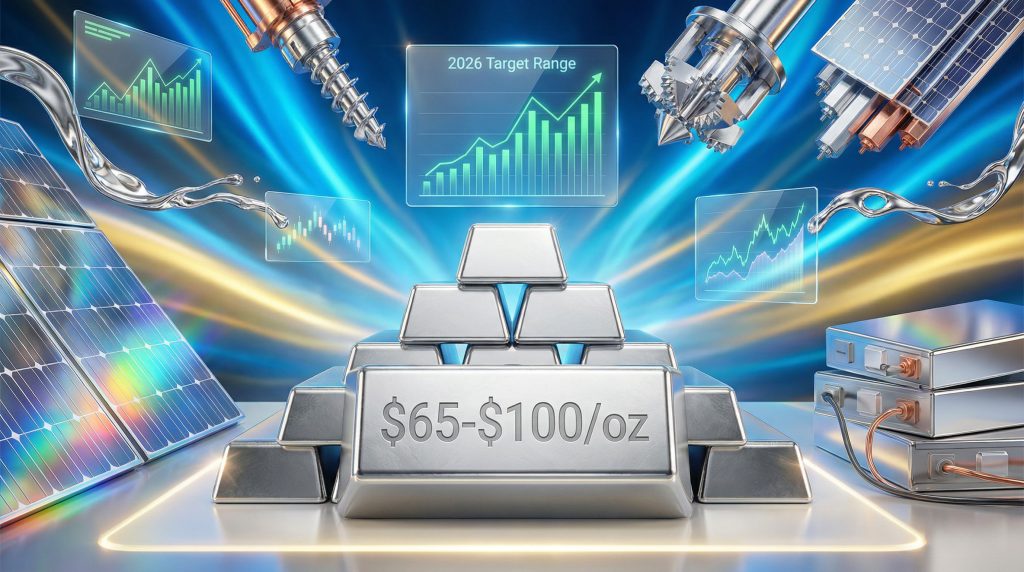
The convergence of industrial demand acceleration, monetary policy accommodation, and supply-side constraints creates a constructive framework for silver price appreciation through 2026. Technical analysis supports target ranges from $65-$100, with momentum indicators suggesting potential for the higher end of this spectrum. However, this depends on favourable monetary conditions.
Key Monitoring Variables:
• Federal Reserve balance sheet expansion pace and scope
• Solar industry installation growth rates and silver intensity
• Mining production capacity and byproduct supply dynamics
• International monetary system stability and dollar confidence
The dual nature of silver as both industrial commodity and monetary asset provides multiple demand drivers that could sustain elevated price levels throughout 2026. Unlike purely financial assets, silver's industrial consumption creates permanent demand. This supports fundamental value independent of investment flows.
Investment positioning should reflect silver's volatility characteristics while recognising fundamental support from supply-demand imbalances and monetary policy conditions. The technical setup, combined with structural changes in global monetary arrangements, suggests 2026 could represent a significant inflection point. This silver price forecast 2026 reflects conditions for silver price discovery mechanisms.
Disclaimer: This analysis contains forward-looking statements and price projections that involve significant uncertainty. Precious metals investing carries substantial risks including price volatility, storage costs, and potential total loss of investment. Past performance does not guarantee future results. Consult qualified financial advisors before making investment decisions.
Looking to Capitalise on Silver's Projected Market Surge?
Discovery Alert's proprietary Discovery IQ model delivers real-time notifications on significant ASX mineral discoveries, providing subscribers with actionable insights to identify silver and precious metals opportunities ahead of the broader market. Explore how major mineral discoveries have generated substantial returns by visiting Discovery Alert's dedicated discoveries page and begin your 30-day free trial today to position yourself advantageously for 2026's projected market movements.