August 22, 2026
The skilled trades shortage in Ontario mining operations has reached critical levels, threatening the province's ability to capitalise on global critical minerals demand and technological advancement opportunities. This workforce crisis encompasses multiple trades specialisations while reflecting broader demographic shifts, technological evolution, and geographic challenges unique to Northern Ontario's resource extraction sector.
Understanding the scope of this transformation requires examining how modern mining operations have evolved from primarily manual extraction processes to sophisticated technological ecosystems requiring hybrid skill sets that combine mechanical expertise with digital literacy.
Critical Skills Shortage Across Ontario Mining Operations
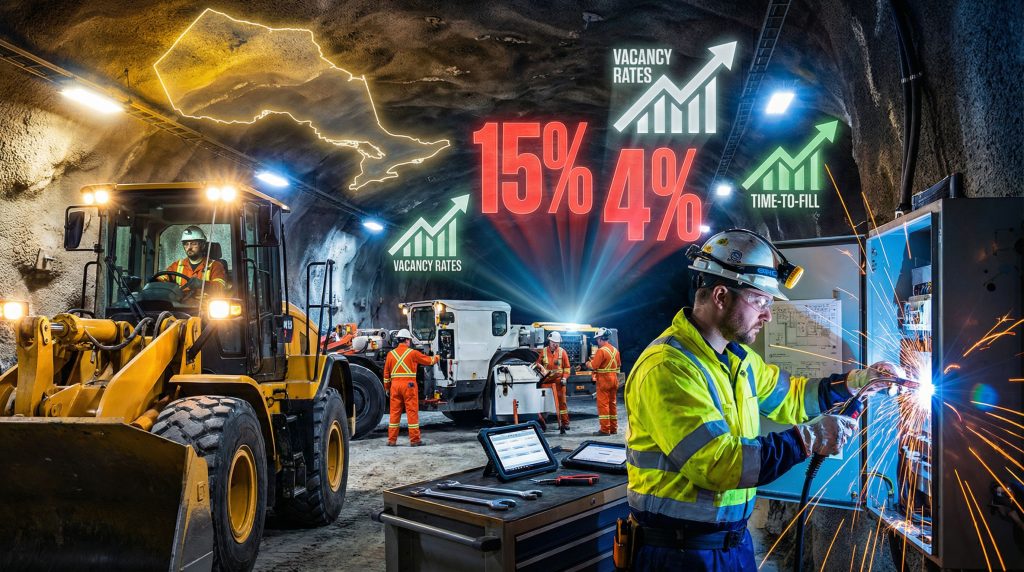
The magnitude of Ontario's skilled trades shortage in Ontario mining operations reflects unprecedented demand intersecting with constrained supply. Current vacancy rates across essential trades positions exceed 15% in many mining districts, with specialised positions remaining unfilled for 40% longer than historical averages since 2020.
Furthermore, Northern Ontario mining regions experience the most acute shortages, particularly in remote districts where geographic isolation compounds recruitment challenges. These shortages span multiple trades categories, from traditional electrical and welding roles to emerging automation and data management positions.
Industrial electricians represent one of the most critical shortage areas, as mining operations depend entirely on complex electrical networks managing extraction equipment, life-safety ventilation systems, and processing facilities simultaneously. Underground operations require electricians certified for hazardous environments, possessing specialised knowledge of high-voltage systems operating under extreme conditions.
Key shortage indicators include:
• Mining electrician positions remaining vacant for 6-8 months on average
• Underground hazardous environment certification requirements limiting candidate pools
• Life-safety system maintenance creating zero-tolerance downtime expectations
• Integration challenges between traditional electrical systems and automated controls
Welding specialists face similar demand pressures, particularly for roles requiring expertise in high-strength steel fabrication for mining equipment designed to operate continuously in harsh underground environments. According to the Ontario Mining Association, the mining sector contributes significantly to provincial employment, yet workforce gaps continue expanding across multiple skilled trades categories.
Equipment Maintenance Professional Shortages
Heavy equipment technicians must now master both traditional mechanical systems and emerging electric vehicle technology, significantly expanding training requirements and limiting qualified candidate availability. Modern mining fleets include traditional diesel-powered equipment alongside battery electric vehicles requiring specialised diagnostic capabilities.
Maintenance scheduling constraints prevent accommodation of equipment failures that halt production, creating high-pressure environments where technician expertise directly impacts operational continuity. This operational reality intensifies recruitment competition as companies seek technicians capable of minimising downtime through preventative maintenance and rapid repair completion.
Consequently, millwrights and mechanics maintain complex mechanical systems processing extracted materials, requiring simultaneous expertise in traditional machinery and automated processing equipment. This dual competency requirement reflects industry evolution trends toward integrated automation while maintaining operational reliance on fundamental mechanical systems.
When big ASX news breaks, our subscribers know first
Technology Integration Reshaping Workforce Requirements
Modern mining operations increasingly integrate robotics, autonomous vehicles, and remote-operated equipment requiring technicians with combined mechanical systems and digital controls expertise. This technological evolution creates entirely new occupational categories while transforming traditional trades roles.
Emerging Technical Specialisations
Automation Systems Specialists represent newly essential roles combining traditional mechanical troubleshooting with sophisticated digital mining operations control system diagnostics. These positions require:
• Programmable logic controller programming and maintenance capabilities
• Robotics operation and troubleshooting expertise
• Integration skills connecting mechanical systems with automated controls
• Safety system validation for autonomous equipment deployment
• Remote operation vehicle system management
Cybersecurity Analysts protect interconnected operational technology systems vulnerable to cyber threats capable of halting production or compromising worker safety. Mining operations now depend on industrial control networks requiring specialised protection protocols different from traditional information technology security approaches.
Data Management Technicians maintain real-time monitoring systems generating massive datasets essential for operational decisions. Corrupted or incomplete data compromises operational efficiency and safety decision-making, making data integrity specialists critical for modern mining operations.
Traditional Trades Evolution
Existing trades now require hybrid skill sets combining traditional craftsmanship with digital literacy. Electricians must understand programmable logic controllers alongside conventional wiring systems, while mechanics work with computerised diagnostic systems whilst maintaining expertise in traditional mechanical troubleshooting.
This skills evolution extends training timelines and creates barriers for career changers seeking entry into mining trades. Workers must achieve competency in both foundational trades skills and emerging technological applications to meet modern operational requirements.
Demographic and Geographic Factors Driving Shortages
Retirement Wave Impact
A significant portion of Ontario's mining workforce was hired during commodity booms spanning the 1970s through 1990s. This demographic cohort approaches retirement simultaneously, creating knowledge transfer challenges alongside numerical workforce reductions.
Experienced workers possess institutional knowledge about specific mining operations, equipment quirks, and safety protocols developed through decades of hands-on experience. Their simultaneous retirement creates training gaps extending beyond technical skills to include operational wisdom difficult to replicate through formal education programmes.
Northern Ontario Geographic Constraints
Mining districts concentrated in Northern Ontario face unique recruitment challenges due to remote locations and limited local population bases. Workers often must relocate significant distances for mining careers, creating barriers for candidates with established community ties or family obligations.
Remote mining operations offer limited amenities and social infrastructure compared to urban centres, making long-term workforce retention challenging. Companies compete not only for skilled workers but for individuals willing to commit to geographic isolation inherent in resource extraction locations.
In addition, transportation infrastructure limitations compound these challenges, as workers in remote mining districts depend on company-provided transportation or personal vehicles capable of navigating challenging terrain and weather conditions.
Training System Limitations and Completion Challenges
Whilst apprenticeship programme enrolment has increased and women's participation has grown approximately 20%, completion rates remain problematic across mining-related trades. Mining apprenticeships require extended on-site training periods that some candidates cannot sustain due to geographic, financial, or personal constraints.
Specialised Certification Requirements
Mining trades often require additional certifications beyond standard Red Seal qualifications, extending training timelines and creating barriers for career changers. Underground operations demand hazardous environment certifications, while specialised equipment requires manufacturer-specific training programmes.
Training progression challenges include:
• Extended apprenticeship timelines accommodating mining-specific certifications
• Limited training facility access in Northern Ontario regions
• High attrition rates during on-site training phases
• Financial pressures during extended training periods with reduced compensation
• Competition from other industries offering shorter training pathways
Skills Transferability Considerations
Workers with mining experience possess highly transferable skills valuable across construction, manufacturing, and energy sectors. This creates competition between industries for the same talent pool, as skilled tradespeople can often command comparable compensation in sectors offering better work-life balance or geographic flexibility.
Mining companies must differentiate their employment value propositions beyond compensation to attract workers who could alternatively pursue careers in urban centres with diverse amenities and career advancement opportunities.
Industry Adaptation Strategies and Recruitment Evolution
Interprovincial Recruitment Initiatives
Companies expand recruitment beyond Ontario boundaries, targeting skilled workers from other provinces with portable certifications whilst offering comprehensive relocation incentives. This strategy addresses immediate workforce needs but creates competitive pressure as other provinces face similar skilled trades shortages.
Successful interprovincial recruitment requires coordination between provincial certification bodies to ensure credential portability and recognition. Red Seal certification facilitates this process for many trades, though mining-specific certifications may require additional validation procedures.
Internal Career Development Programmes
Mining companies develop structured progression routes from general labour positions to skilled trades, providing clear advancement opportunities for existing workers. These programmes leverage operational familiarity whilst addressing immediate workforce needs through internal talent development.
Career pathway components include:
• Mentorship programmes pairing experienced tradespeople with developing workers
• Tuition assistance for trades education and certification programmes
• Guaranteed employment commitments following successful programme completion
• Cross-training opportunities exposing workers to multiple trades specialisations
• Leadership development preparing skilled tradespeople for supervisory roles
Partnership Programmes with Educational Institutions
Industry collaboration with educational institutions focuses on curriculum development addressing specific mining requirements whilst maintaining broad trades applicability. These partnerships ensure training programmes produce graduates with immediately applicable skills rather than requiring extensive on-site orientation periods.
Skills Ontario's mobile trade and technology units bring hands-on experience directly to communities, reducing barriers to trades exposure for potential workers. Four units currently visit schools and events, with two additional units under development to expand programme reach across Northern Ontario.
Policy Framework and Government Initiatives
Skilled Trades Ontario Platform
The 2022 launch of Skilled Trades Ontario created a centralised system streamlining apprenticeship registration and connecting employers with potential apprentices through digital matching capabilities. This platform works in conjunction with apprenticesearch.com, serving 55,000 registered users by facilitating employer-apprentice connections.
Ontario recognises 144 different skilled trades, providing multiple pathways for workers seeking mining careers. This diversity allows workers to develop transferable skills applicable across industries whilst specialising in mining-specific applications.
Indigenous Workforce Development Opportunities
Targeted programmes recognise significant opportunities to engage Indigenous communities in Northern Ontario mining careers, addressing both workforce needs and economic reconciliation objectives. These initiatives acknowledge the geographic overlap between Indigenous communities and mining operations, creating natural partnerships for workforce development.
Skills Ontario conducts specialised conferences for Indigenous students, recognising cultural considerations and community-specific needs in career development programming. These programmes emphasise entrepreneurial opportunities, as many skilled tradespeople establish businesses serving mining operations as contractors.
Federal Critical Minerals Strategy Impact
Canada's critical minerals strategy increases demand for mining workforce whilst providing funding for training programmes, creating both opportunities and challenges for workforce planning. The strategy emphasises domestic mineral processing capabilities, potentially increasing demand for specialised trades in processing facilities.
Ring of Fire development represents a significant workforce expansion opportunity, requiring massive construction and operational workforces for mineral extraction in previously undeveloped regions. This project alone will create thousands of construction positions before operational mining activities commence.
The next major ASX story will hit our subscribers first
Economic Implications and Operational Impact
Production Efficiency Consequences
Unfilled positions force operations to rely on overtime scheduling, temporary workers, and deferred maintenance protocols, reducing overall productivity whilst increasing operational costs. These adaptations compromise long-term equipment reliability and worker satisfaction whilst addressing immediate production requirements.
Operational impact indicators:
• Increased overtime costs exceeding 25% of baseline labour budgets
• Equipment maintenance deferrals creating future reliability risks
• Reduced operational flexibility during peak demand periods
• Training burden increases for existing workforce covering additional responsibilities
• Quality control challenges when inexperienced workers fill critical roles
Safety Protocol Considerations
Workforce shortages compromise safety protocols when experienced workers handle multiple responsibilities or when less experienced workers assume critical roles typically requiring seasoned expertise. Underground mining operations maintain zero tolerance for safety compromises, making workforce adequacy essential for risk management.
Regulatory compliance requirements mandate specific training and certification levels for safety-critical positions, limiting operational flexibility when qualified workers remain unavailable. Companies cannot compromise safety standards to address production pressures, making skilled trades shortage in Ontario mining operational constraints rather than mere efficiency challenges.
Investment and Expansion Limitations
Mining companies report project delays and scaled-back expansion plans due to workforce constraints, potentially limiting Ontario's ability to capitalise on global critical mineral demand. These delays create cascading effects across supply chains and reduce provincial economic growth potential.
Investor confidence depends on operational execution capabilities, making workforce adequacy essential for securing project financing and maintaining market credibility. Skilled trades shortages therefore represent strategic business risks rather than temporary operational inconveniences.
Innovation in Training and Development Solutions
Technology-Enhanced Learning Approaches
Virtual Reality Training Systems allow workers to practice dangerous or complex procedures safely whilst reducing training costs and accelerating skill development. These systems prove particularly valuable for underground operations where safety training traditionally requires expensive facility access and risk exposure.
Mentorship Platforms connect experienced tradespeople with apprentices across geographic distances, facilitating knowledge transfer and career guidance despite operational location constraints. Digital systems enable continuous communication and progress monitoring throughout apprenticeship programmes.
Accelerated Certification Programmes
Intensive training programmes focus on mining-specific skills whilst maintaining safety standards, reducing time-to-competency for career changers entering mining trades. These programmes recognise prior learning and experience to minimise redundant training whilst ensuring mining-specific competencies.
Programme features include:
• Recognition of prior learning assessments reducing training durations
• Mining-specific modules addressing unique operational requirements
• Integrated safety training combining classroom and hands-on components
• Industry-sponsored positions providing immediate employment upon completion
• Flexible scheduling accommodating various candidate circumstances
Future Workforce Evolution and Demand Projections
Critical mineral extraction requirements suggest sustained high demand for skilled trades, with particular growth anticipated in roles supporting electrification and automation technologies. The transition toward battery electric mining equipment creates new specialisation opportunities whilst maintaining demand for traditional mechanical expertise.
Underground operations exceeding 40°C temperatures require specialised HVAC technicians maintaining environmental systems essential for worker safety. These technical requirements illustrate how mining operations demand specialised adaptations of traditional trades skills.
Continuous Learning Requirements
Mining trades of the future will likely require ongoing education and adaptation as technology evolves, creating opportunities for workers willing to embrace continuous skill development throughout their careers. Traditional apprenticeship models may evolve toward modular certification systems allowing incremental specialisation additions.
Emerging competency areas include:
• Battery electric vehicle diagnostics and maintenance
• Automated equipment integration and troubleshooting
• Environmental monitoring system operation
• Cybersecurity awareness for operational technology systems
• Data interpretation skills for predictive maintenance applications
The integration of AI in mining operations will further transform workforce requirements, demanding workers capable of collaborating with intelligent systems whilst maintaining critical thinking capabilities for complex problem-solving scenarios.
According to the Financial Post, Canada's mining sector experiences significant growth alongside persistent labour shortages, emphasising the urgency of comprehensive workforce development strategies. The skilled trades shortage in Ontario mining represents a complex challenge requiring coordinated responses across government, industry, and educational institutions.
Success depends on recognising this issue as a strategic economic priority rather than a temporary operational inconvenience, demanding sustained investment in workforce development infrastructure and innovative training approaches that address both immediate needs and long-term industry evolution requirements.
This analysis reflects current industry reporting and should be considered alongside rapidly evolving labour market conditions. Mining workforce planning involves multiple variables including commodity prices, technological advancement rates, and regulatory changes that may significantly impact future demand projections.
Could Your Investment Strategy Benefit From Early Discovery Intelligence?
Staying ahead in mining investment opportunities requires access to immediate insights when significant discoveries are announced on the ASX. Discovery Alert's proprietary Discovery IQ model delivers real-time alerts on mineral discoveries, transforming complex geological data into actionable investment intelligence for both short-term traders and long-term investors. Begin your 14-day free trial today to gain the market advantage needed for capitalising on the next major discovery opportunity in Ontario's evolving mining landscape.