
August 20, 2026
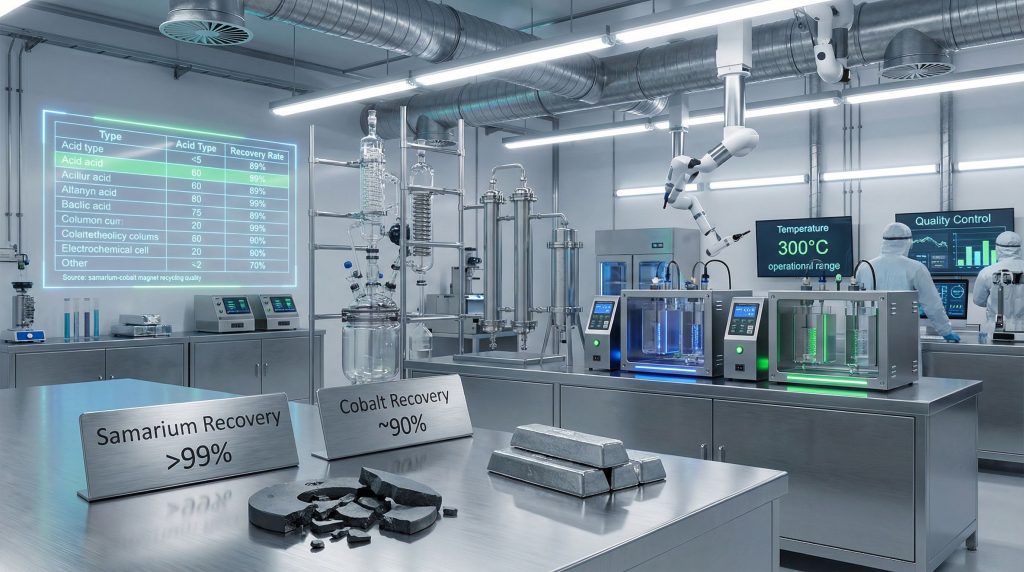
SmCo magnet recycling has emerged as a critical process for recovering strategic materials from these high-performance systems, addressing both resource scarcity and supply chain vulnerabilities that threaten aerospace, defense, and precision manufacturing sectors. Moreover, the establishment of a critical raw materials facility demonstrates the growing commitment to securing essential material supplies.
Traditional neodymium-iron-boron magnets face severe performance limitations when operating temperatures exceed 120°C or when exposed to harsh chemical environments. This technological constraint has created a specialized market niche where samarium-cobalt compositions deliver irreplaceable performance characteristics, maintaining magnetic properties at operational temperatures approaching 300°C while exhibiting inherent corrosion resistance that eliminates protective coating requirements.
SmCo Magnet Performance Characteristics and Applications
Temperature Tolerance and Thermal Stability
SmCo magnets demonstrate exceptional thermal performance through their unique metallurgical structure, with specialised 2:17 phase compositions maintaining magnetic properties at temperatures reaching 350°C under controlled conditions. This thermal capability stems from Curie temperatures ranging between 700-900°C, significantly exceeding the 310-400°C limitations of neodymium-based alternatives.
The thermal coefficient of magnetic remanence for SmCo systems typically measures -0.03%/°C, compared to -0.11%/°C for high-grade neodymium magnets. This superior temperature stability translates directly into consistent performance across extreme thermal cycling conditions encountered in aerospace propulsion systems, military equipment, and industrial processing applications.
| Magnet Type | Max Operating Temp (°C) | Curie Temperature (°C) | Thermal Coefficient (%/°C) |
|---|---|---|---|
| SmCo 1:5 | 250 | 710 | -0.03 |
| SmCo 2:17 | 300+ | 820 | -0.03 |
| NdFeB N52 | 80-150 | 310-400 | -0.11 |
Corrosion Resistance and Environmental Durability
The cobalt content in SmCo magnets provides inherent oxidation resistance that eliminates the multi-layer coating systems required for neodymium magnets. Standard NdFeB magnets require nickel-copper-nickel coatings that add 15-25% to material costs and introduce potential failure modes through coating adhesion problems or galvanic corrosion pathways.
SmCo magnets operate effectively in saltwater environments, high-humidity aerospace conditions, and chemically aggressive industrial atmospheres without surface protection. Furthermore, this coating-free operation reduces manufacturing complexity, eliminates thickness penalties associated with protective layers, and provides superior long-term reliability in mission-critical applications.
Specialised Application Domains
Aerospace Propulsion Systems:
- Turbogenerator assemblies in auxiliary power units operating at sustained 280°C
- High-altitude aircraft electrical systems requiring thermal cycling resistance
- Satellite momentum control devices where failure represents catastrophic mission loss
- Next-generation hypersonic vehicle propulsion components
Military and Defence Equipment:
- Naval integrated power systems for combat vessels operating in saltwater environments
- Submarine periscope mechanisms requiring corrosion immunity and precision control
- Sonar transducer assemblies exposed to high-pressure marine conditions
- Military communication systems deployed in extreme environmental conditions
Industrial Processing Applications:
- Oil and gas downhole instrumentation operating in geothermal wells at 150-200°C
- Automotive turbocharger magnetic bearing systems for ultra-high-performance engines
- Chemical processing sensor systems exposed to corrosive atmospheres
- Precision manufacturing equipment requiring thermal stability and dimensional control
When big ASX news breaks, our subscribers know first
Critical Material Supply Chain Vulnerabilities
Samarium Scarcity and Production Constraints
Samarium represents approximately 0.4-0.5% of typical rare-earth ore compositions, classifying it as a byproduct element whose availability depends on demand for more abundant light rare-earth elements. Global samarium production reaches only 1,500-2,000 tonnes annually in oxide equivalent terms, creating supply constraints that directly impact SmCo magnet availability.
The extraction and purification of samarium from mixed rare-earth concentrates requires specialised liquid-liquid extraction or ion-exchange processes optimised for separating similar lanthanide elements. Additionally, mining operations typically do not optimise processing parameters for samarium recovery, resulting in 10-15% losses during standard rare-earth separation sequences.
Supply Chain Concentration Risks:
- Limited global production capacity concentrated in few geographical regions
- Byproduct status creates supply inflexibility during demand fluctuations
- Specialised separation requirements increase processing complexity and costs
- Strategic stockpile limitations for defence and aerospace applications
Cobalt Geopolitical Dependencies
Approximately 65-70% of global cobalt production originates from the Democratic Republic of Congo, creating significant geopolitical supply chain vulnerabilities. This concentration represents a strategic weakness for SmCo magnet manufacturing, particularly for defence and aerospace applications where supply security is paramount. Recent cobalt supply analysis indicates growing concerns about supply chain stability.
Cobalt price volatility has demonstrated extreme fluctuations, ranging from $7-20 per pound between 2020-2024. The 2016-2018 period witnessed 300% price increases that created 6-12 month lead times for SmCo magnet procurement, directly impacting aerospace and defence programme schedules.
Critical Supply Chain Insight: DRC cobalt production faces ongoing challenges from political instability, labour disputes, artisanal mining complications, and potential export restrictions that can trigger acute supply shortages with minimal warning.
Alternative Cobalt Sources and Limitations:
- Australia, Zambia, Russia, and Canada represent underdeveloped or restricted alternative sources
- Primary cobalt mining operations account for only 25-30% of global supply
- Copper mining byproduct status creates supply inflexibility similar to samarium
- Investment in alternative production capacity requires 5-10 year development timelines
Manufacturing Waste Generation Drivers
SmCo magnets exhibit Mohs hardness values of 5-6, creating brittleness that generates substantial manufacturing scrap during precision machining operations. Typical scrap rates for complex SmCo components range from 10-30% depending on final shape requirements, compared to 2-5% for neodymium magnet manufacturing.
A single large aerospace contract requiring 1,000 precision SmCo rotors may generate 150-250 kg of recoverable manufacturing scrap. End-of-life SmCo magnets from decommissioned military and aerospace systems represent over 100 tonnes annually in domestic systems alone, with most material currently landfilled due to inadequate recovery infrastructure.
Hydrometallurgical Processing Technology
Acid Leaching Systems and Performance
Hydrometallurgical acid leaching represents the most widely investigated approach for SmCo magnet recycling, delivering superior recovery rates with 40-60% lower energy consumption compared to high-temperature smelting alternatives. Processing begins with essential pretreatment steps including demagnetisation at 400-500°C under inert atmosphere and size reduction to optimise downstream leaching efficiency.
Conventional inorganic acid systems demonstrate varying performance characteristics based on chemical mechanisms and environmental considerations:
Hydrochloric Acid Systems:
- Achieve >99% samarium recovery and ~90% cobalt recovery
- Require specialised corrosion-resistant processing equipment
- Generate chloride waste streams requiring advanced treatment
- Provide fastest dissolution kinetics for complex SmCo phases
Sulfuric Acid Systems:
- Deliver variable samarium recovery (70-95%) due to precipitation complications
- Achieve ~85% cobalt recovery with optimised process conditions
- Reduce environmental burden compared to hydrochloric systems
- Create processing challenges through sulfate precipitation reactions
Nitric Acid Systems:
- Provide >95% samarium recovery through oxidative dissolution mechanisms
- Achieve ~88% cobalt recovery with controlled oxidation conditions
- Generate nitrogen oxide emissions requiring specialised treatment
- Create wastewater management challenges for large-scale operations
Environmental Trade-offs and Green Chemistry Alternatives
Emerging organic acid systems utilising citric or malic acid with hydrogen peroxide offer reduced environmental impact while achieving ~85% recovery rates for both samarium and cobalt. These systems demonstrate the fundamental trade-off between processing performance and environmental sustainability in SmCo magnet recycling applications. Current industry innovation trends are driving development of more sustainable processing methods.
| Processing System | Sm Recovery | Co Recovery | Environmental Impact | Energy Consumption |
|---|---|---|---|---|
| HCl Conventional | >99% | ~90% | High (chloride waste) | 8-12 MWh/tonne |
| H₂SO₄ Optimised | 85-95% | ~85% | Moderate | 10-15 MWh/tonne |
| HNO₃ Systems | >95% | ~88% | High (NOx emissions) | 12-18 MWh/tonne |
| Organic Acids | ~85% | ~80% | Low | 15-20 MWh/tonne |
The selection of acid systems requires integrated lifecycle assessment considering recovery performance, environmental burden, processing costs, and regulatory compliance requirements. Recent research indicates that environmental considerations are increasingly driving technology selection for commercial-scale SmCo magnet recycling facilities.
Advanced Separation and Purification Technologies
Precision Separation Methods
Following acid leaching, achieving high-purity separated samarium and cobalt products requires sophisticated separation technologies that can distinguish between chemically similar elements. Solvent extraction systems utilising specialised organic ligands demonstrate exceptional selectivity for separating rare-earth elements from transition metals.
Solvent Extraction Performance:
- Multi-stage counter-current extraction achieves >97% samarium recovery
- Stripping efficiency optimisation enables high-purity product streams
- Organic phase recycling reduces reagent consumption and waste generation
- Process control automation ensures consistent separation performance
Ionic Liquid Advantages:
- Tunable chemical properties optimise selectivity for specific element pairs
- Low volatility reduces emission concerns compared to conventional organic solvents
- Thermal stability enables processing at elevated temperatures
- Regeneration capability reduces long-term operating costs
Deep Eutectic Solvents:
- Environmentally benign compositions from biodegradable components
- Selective recovery mechanisms for both samarium and cobalt
- Room-temperature processing reduces energy requirements
- Cost-effective production from readily available precursor materials
Ion Exchange Systems for Final Purification
Ion exchange technology provides final purification capabilities for producing high-grade samarium and cobalt products meeting aerospace and defence material specifications. Specialised resin systems demonstrate exceptional selectivity for rare-earth elements while maintaining high loading capacity and regeneration efficiency.
Modern ion exchange systems achieve:
-
99.5% purity for separated samarium products
- <50 ppm impurity levels for critical contaminants
- Automated column operations reducing labour requirements
- Closed-loop regeneration minimising chemical consumption
Electrochemical Recycling Innovation
Non-Aqueous Electrochemical Systems
Electrochemical processing represents an emerging alternative to conventional hydrometallurgical approaches, utilising intact SmCo magnets as anodes in non-aqueous electrolyte systems. This innovative recycling technology demonstrates >85% recovery efficiency with potential for optimisation to higher performance levels through advanced process control.
Key Technological Advantages:
- Reduced acid consumption compared to traditional leaching systems
- Modular processing architecture enabling distributed recycling operations
- Lower waste generation through selective electrochemical dissolution
- Potential for direct production of high-purity metal products
Scalability Considerations:
- Capital equipment costs competitive with hydrometallurgical systems
- Process automation potential reduces labour requirements
- Integration capability with existing recycling infrastructure
- Maintenance requirements for specialised electrochemical equipment
Process Control and Optimisation
Electrochemical SmCo magnet recycling requires sophisticated process control systems managing current density, electrolyte composition, temperature profiles, and mass transport conditions. Advanced monitoring systems enable real-time optimisation of recovery rates and product quality while maintaining safe operating conditions.
Critical Process Parameters:
- Current density optimisation for maximum dissolution efficiency
- Electrolyte management preventing precipitation reactions
- Temperature control maintaining stable electrochemical conditions
- Mass transport enhancement through mechanical agitation systems
Industrial Implementation and Economic Viability
Commercial Scale-Up Requirements
Successful SmCo magnet recycling implementation requires careful consideration of feedstock quality, processing capacity, and integration with existing manufacturing systems. Economic viability typically emerges at processing volumes exceeding 50-100 tonnes annually, depending on local material costs and regulatory requirements.
Feedstock Quality Management:
- Material sorting and preparation systems
- Contamination removal and quality control procedures
- Inventory management for consistent processing operations
- Traceability systems for aerospace and defence applications
Processing Capacity Planning:
- Economies of scale analysis for different technology options
- Capacity utilisation optimisation across varying feedstock availability
- Maintenance scheduling and equipment reliability considerations
- Quality assurance systems meeting industry specifications
Economic Performance Drivers
At current market prices, recovered cobalt from SmCo magnets represents approximately $400-600 per kilogram material value, while samarium achieves $3,000-4,000 per kilogram in magnet-grade form. Break-even economics typically require 80-90% combined recovery rates with total processing costs below $2,000 per tonne of input material.
Economic Analysis: The strategic value of recovered materials often exceeds pure commodity pricing due to supply security benefits, reduced import dependencies, and guaranteed material availability for critical applications.
Revenue Optimisation Factors:
- Material purity premiums for aerospace-grade products
- Long-term supply contracts with defence manufacturers
- Processing efficiency improvements through technology advancement
- Waste minimisation reducing disposal costs and environmental liabilities
The next major ASX story will hit our subscribers first
Supply Chain Integration and Strategic Impact
Manufacturing Integration Opportunities
SmCo magnet recycling can integrate directly into existing manufacturing operations through dedicated scrap recovery systems and quality-controlled material flows. Blending ratios of recycled content in fresh magnet production typically range from 10-30% depending on application requirements and quality specifications.
Integration Strategies:
- On-site scrap processing for large aerospace manufacturers
- Regional recycling centres serving multiple smaller producers
- Closed-loop systems minimising material transport and handling
- Quality certification programmes ensuring recycled material performance
Defence and Aerospace Supply Security
For defence and aerospace applications, SmCo magnet recycling provides strategic supply chain resilience that extends beyond economic considerations. Consequently, domestic recycling capacity reduces dependence on foreign material sources while maintaining certified supply chains for classified or export-controlled applications. The implementation of a comprehensive critical minerals strategy becomes essential for long-term supply security.
Strategic Benefits:
- Reduced import dependencies for critical defence programmes
- Geographic diversification of material supply sources
- Rapid response capability during supply chain disruptions
- Technology base maintenance for national security applications
Technology Development and Market Outlook
Process Innovation Trends
Advanced SmCo magnet recycling technologies are progressing toward hybrid systems combining multiple separation mechanisms, automated process control, and waste minimisation objectives. Process intensification through integrated operations reduces capital requirements while improving overall recovery performance.
Innovation Priorities:
- Artificial intelligence optimisation of separation parameters
- Continuous processing systems reducing batch-to-batch variation
- Zero-waste processing objectives through complete material recovery
- Energy efficiency improvements reducing operating costs
Regulatory and Market Drivers
Regulatory frameworks promoting circular economy principles are creating compliance incentives for SmCo magnet recycling implementation. Carbon footprint reduction mandates, critical materials designations, and defence supply chain requirements are accelerating investment in recycling infrastructure development. Furthermore, the establishment of a national critical minerals reserve supports these initiatives.
Market Development Factors:
- Environmental regulations favouring recycling over primary production
- Defence procurement preferences for domestic material sources
- Investment incentives for critical materials processing capacity
- International trade restrictions affecting primary material imports
Implementation Strategy for Industry Adoption
Technology Selection Framework
Organisations considering SmCo magnet recycling programmes must evaluate technology options based on processing scale, feedstock characteristics, product quality requirements, and regulatory constraints. Hydrometallurgical systems offer proven performance for large-scale operations, while electrochemical approaches provide flexibility for smaller facilities.
Decision Criteria:
- Processing volume requirements and capacity planning
- Capital investment availability and financing options
- Technical expertise and operational capabilities
- Environmental compliance and permitting requirements
Partnership and Development Strategies
Successful SmCo magnet recycling implementation typically requires collaboration between material producers, recycling technology providers, and end-user manufacturers. Strategic partnerships can share development risks while accelerating commercial deployment of proven technologies. Advanced magnet recycling processes demonstrate the importance of collaborative approaches.
Collaboration Models:
- Joint ventures between aerospace manufacturers and recycling companies
- Technology licensing agreements for proven process systems
- Research partnerships with academic institutions and national laboratories
- Industry consortium development of shared recycling facilities
Disclaimer: This analysis presents current technical and economic information regarding SmCo magnet recycling technologies. Market conditions, material prices, and regulatory requirements may change significantly over time. Organisations considering recycling investments should conduct detailed feasibility studies with current market data and professional technical consultation.
The advancement of SmCo magnet recycling from laboratory research to commercial viability represents a critical development for maintaining strategic material security in aerospace, defence, and high-performance industrial applications. As supply chain vulnerabilities continue to challenge global manufacturing systems, recycling technologies provide essential resilience through domestic material recovery and processing capabilities.
Want to Capitalise on Critical Materials Investment Opportunities?
Discovery Alert's proprietary Discovery IQ model delivers real-time alerts on significant critical minerals and rare earth discoveries across the ASX, transforming complex geological data into actionable investment insights. With growing demand for strategic materials like samarium and cobalt driving market opportunities, subscribers gain immediate access to potentially transformative discoveries before broader market recognition. Begin your 30-day free trial today at Discovery Alert to secure your market-leading advantage in this rapidly evolving sector.