July 20, 2026
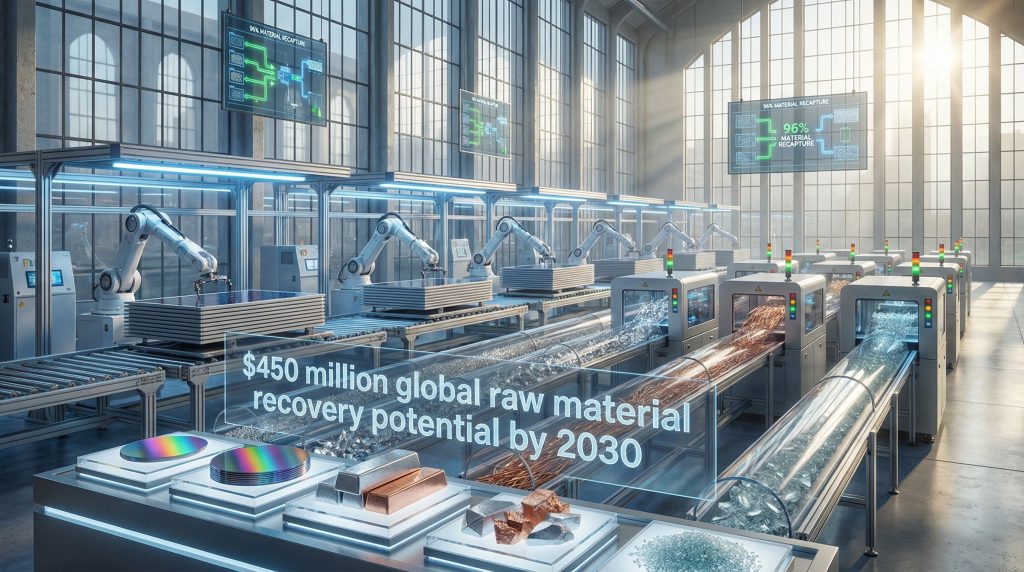
The renewable energy revolution has created an emerging challenge that few anticipated during the early solar boom: managing millions of photovoltaic panels as they reach retirement age. Modern waste management solutions must evolve to handle complex multi-material assemblies that contain both valuable metals and potentially hazardous substances, making solar panel recycling initiatives essential for sustainable energy development.
Understanding Solar Panel End-of-Life Management Systems
Material Composition and Recovery Potential
Photovoltaic modules contain diverse materials with varying recovery complexities and economic values. The aluminium framing typically represents the largest recoverable mass, while silicon wafers contain the most technologically sophisticated materials requiring specialised processing techniques.
Glass components form the protective layers and backing materials, representing substantial bulk volume in waste streams. These materials can achieve high recovery rates through established glass recycling processes, though solar-grade specifications may require additional purification steps.
Critical materials embedded within panels include:
• Silver contacts for electrical conductivity
• Copper wiring in electrical assemblies
• Encapsulant polymers binding cell layers
• Junction box components with electronic circuits
• Sealants and adhesives securing module integrity
The semiconductor industry's growing demand for recovered silicon creates additional value opportunities, particularly as manufacturing costs increase for virgin materials. Furthermore, specialised thin-film technologies contain rare elements like tellurium and indium, making their recovery strategically important for supply chain security.
Waste Volume Projections and Timeline Analysis
Panel retirement schedules follow installation patterns from previous decades, creating predictable waste stream volumes. Early commercial installations from the 1990s and early 2000s are approaching end-of-life phases, while the massive installations from 2010-2020 will create peak waste volumes in the 2030s and 2040s.
Regional timing variations reflect different market development phases. European markets with earlier adoption cycles face immediate recycling infrastructure needs, while newer solar markets have time to establish comprehensive systems before peak waste generation periods.
Degradation patterns vary significantly based on environmental conditions, installation quality, and technology types. While manufacturers typically warranty 25-30 year lifespans, actual performance degradation may trigger earlier replacement in commercial applications seeking optimal efficiency returns.
When big ASX news breaks, our subscribers know first
How Do Solar Panel Recycling Technologies Work?
Processing technologies for photovoltaic modules must separate multiple material layers while preserving the economic value of recovered components. Successful operations combine mechanical disassembly with chemical and thermal processing to maximise material recovery rates.
Mechanical Disassembly Processes
Initial processing typically begins with frame removal using specialised tools designed for aluminium extrusion systems. Junction boxes require careful disconnection to preserve electronic components for separate e-waste processing streams.
Glass separation represents the most technically challenging mechanical step, requiring precise techniques to avoid contaminating silicon layers. Advanced facilities employ automated systems that can process multiple panel types without manual reconfiguration.
Material sorting systems use various technologies:
• Optical sorting for material type identification
• Magnetic separation for ferrous components
• Eddy current separation for non-ferrous metals
• Density separation for polymer materials
• Size classification for consistent processing feeds
Thermal and Chemical Processing Methods
Thermal processing breaks down adhesive bonds between layers, typically requiring controlled temperature profiles to avoid material degradation. Different adhesive chemistries respond to specific thermal conditions, making process optimisation critical for multi-technology facilities.
Chemical processing employs various approaches depending on target materials. In addition, acid systems can extract metals from silicon surfaces, while solvent-based processes target polymer encapsulants and backing materials.
Environmental controls become essential during chemical processing, requiring sophisticated air handling and waste treatment systems. Closed-loop chemical systems minimise waste generation while maintaining processing effectiveness.
Advanced Recovery Technologies
Electrolytic processing enables high-purity metal recovery by applying controlled electrical currents through chemical solutions. This approach proves particularly valuable for silver and copper recovery, where purity requirements justify additional processing costs.
Plasma treatment systems represent emerging technology capable of completely breaking down molecular bonds in complex materials. While energy-intensive, these systems can achieve near-complete material separation with minimal chemical inputs.
Research into dissolvable sealant technologies aims to simplify future recycling by enabling water-based disassembly. These innovations require coordination between panel manufacturers and recycling facility operators to establish compatible systems.
What Are the Leading Recycling Program Models?
Industry approaches to solar panel recycling have evolved into several distinct organisational models, each addressing different aspects of the waste management challenge. Program effectiveness varies significantly based on regional regulations, industry maturity, and available infrastructure.
Manufacturer-Led Stewardship Programs
Extended Producer Responsibility frameworks place recycling obligations directly on panel manufacturers, creating incentives for design improvements and end-of-life planning. These programs typically operate through industry consortiums that share infrastructure costs across multiple manufacturers.
Certification standards ensure participating facilities meet environmental and safety requirements while achieving target recovery rates. However, standardised processes enable manufacturers to work with multiple facilities without extensive individual oversight.
Industry consortiums provide several advantages:
• Shared infrastructure investment reducing individual company costs
• Standardised procedures across multiple recycling facilities
• Collective bargaining power for transportation and processing contracts
• Coordinated research and development for recycling improvements
• Risk sharing for early-stage facility development
Third-Party Recycling Networks
Independent recycling operations focus specifically on processing efficiency and material recovery optimisation. These facilities often handle multiple types of electronic waste, providing economies of scale for specialised equipment investments.
Nationwide collection systems enable efficient aggregation of panels from diverse sources, including residential installations, commercial projects, and utility-scale facilities. Professional collection services understand transportation regulations and safety requirements for potentially damaged panels.
Specialised equipment processing extends beyond panel disassembly to handle associated components like inverters, transformers, and extensive cable systems. Consequently, comprehensive processing capabilities provide complete solutions for decommissioning projects.
Regional Pilot Project Structures
Public-private partnerships combine government coordination with private sector operational expertise. These collaborations often focus on developing recycling infrastructure in regions lacking existing facilities, reflecting current industry innovation trends.
State-level coordination helps establish consistent regulations and processing standards across jurisdictional boundaries. Multi-state cooperation becomes essential as collection areas may span regulatory jurisdictions while processing facilities serve broader regional markets.
Environmental justice community integration ensures recycling facilities provide local economic benefits while maintaining strict environmental standards. Community engagement processes address concerns about facility siting and operational impacts.
Which Materials Offer the Highest Recovery Value?
Economic viability of solar panel recycling initiatives depends heavily on the market value of recovered materials relative to processing costs. Material recovery priorities must balance high-value targets with volume-based revenue streams to achieve sustainable operations.
High-Value Metal Extraction
Silver contacts represent the most valuable material per unit weight, though quantities per panel remain relatively small. Specialised extraction processes must achieve high recovery rates to justify the additional processing complexity and chemical inputs required.
Copper recovery from electrical components provides more predictable value streams due to established recycling markets and consistent demand. Processing techniques for copper extraction integrate well with existing e-waste recycling infrastructure.
Precious metal content varies significantly across panel technologies, with some specialised applications containing valuable materials not present in standard silicon panels. Facility operators must understand technology differences to optimise processing approaches.
Bulk Material Processing Economics
Aluminium frame recycling provides the most reliable revenue stream due to established markets and straightforward processing requirements. Standard aluminium recycling infrastructure can handle solar panel frames with minimal modifications.
Glass recovery markets depend on achieving sufficient purity levels for construction and manufacturing applications. Contamination from adhesives or other panel components can significantly reduce glass value or eliminate market opportunities entirely.
Silicon purification for semiconductor industry reuse requires sophisticated processing to achieve electronic-grade specifications. While technically challenging, high-purity silicon commands premium prices that can justify advanced processing investments.
Critical Material Strategic Importance
Rare earth element recovery addresses supply chain security concerns while providing potential premium pricing for specialised materials. Processing capabilities for these materials often require partnerships with specialised metallurgical facilities.
Tellurium and indium availability has become increasingly important as thin-film technologies gain market share. These materials face supply constraints that make recovery operations strategically valuable beyond immediate economic returns.
Lead removal and safe disposal protocols remain mandatory regardless of economic value, requiring comprehensive environmental management systems. Proper hazardous material handling adds operational costs that must be offset by valuable material recovery.
How Are Different Regions Developing Recycling Infrastructure?
Geographic variations in recycling approaches reflect different market maturity levels, regulatory frameworks, and waste generation timelines. Regional approaches must accommodate local conditions while building toward comprehensive national systems.
North American Market Development
State-level policy frameworks create a patchwork of requirements and incentives that recycling operations must navigate. Leading states have implemented mandatory recycling requirements, while others rely on voluntary industry initiatives.
According to the Australian Government's solar panel recycling initiatives, federal infrastructure legislation includes provisions for renewable energy waste management, though funding allocation processes remain under development. Tax incentive structures aim to encourage private sector facility development without direct government investment.
Regional coordination challenges arise from different state regulations governing waste transportation and processing. Interstate commerce requirements for recycling materials add complexity to multi-state collection and processing operations.
Asia-Pacific Regional Approaches
Circular economy integration connects solar panel recycling with broader renewable energy manufacturing hubs. Co-located facilities can process waste materials directly into new panel production, creating closed-loop material flows.
Design-for-disassembly manufacturing standards encourage panel designs that facilitate recycling processes. Industry collaboration between manufacturers and recycling operators drives innovation in both product design and processing technology.
Cross-border material flow coordination becomes essential as recycling facilities may serve multiple countries within trade agreement frameworks. For instance, harmonised standards and procedures reduce regulatory barriers to efficient material movement.
European Union Regulatory Framework
WEEE Directive compliance establishes comprehensive requirements for electronic waste management, including specific provisions for solar equipment. Producer responsibility organisations coordinate industry compliance while maintaining competitive neutrality.
Furthermore, battery recycling advancements in European markets demonstrate successful circular economy implementation that solar panel recycling initiatives can emulate. Common technical standards enable facility operators to serve multiple markets without extensive regulatory customisation.
Extended Producer Responsibility implementation varies among member states, creating different operational requirements for manufacturers and recycling facilities. Harmonisation efforts aim to reduce regulatory complexity while maintaining environmental effectiveness.
What Are the Economic Barriers and Solutions?
Financial challenges represent the primary obstacle to scaling recycling programs across all market segments. Cost structure optimisation requires addressing transportation, processing, and market development challenges simultaneously.
Cost Structure Analysis
Transportation expenses for panel collection create significant barriers, particularly for residential and small commercial installations. Aggregation strategies must balance collection costs against processing efficiency to maintain economic viability.
Processing facility capital investment requirements include specialised equipment, environmental controls, and safety systems. High upfront costs necessitate long-term volume commitments that may exceed current waste generation levels in many regions.
Labour costs for manual disassembly operations reflect the complexity of separating multi-layer panel constructions. However, automation investments can reduce ongoing labour requirements but increase capital costs and technical complexity.
Key cost factors include:
• Collection route optimisation for transportation efficiency
• Facility throughput capacity utilisation rates
• Material contamination levels affecting processing costs
• Environmental compliance and safety system operation
• Market volatility in recovered material pricing
Market Development Strategies
Volume aggregation enables processing facilities to achieve economies of scale while reducing per-unit collection costs. Coordinated collection programs can combine materials from multiple sources to justify transportation and processing investments.
Secondary market development for recovered materials requires establishing quality standards and reliable supply relationships. Industrial users need consistent material specifications and delivery schedules to incorporate recovered materials into production processes.
Integration with existing electronic waste streams provides opportunities to share infrastructure costs while leveraging established collection and processing capabilities. Consequently, regulatory alignment ensures solar materials can utilise existing e-waste management systems.
Policy Support Mechanisms
Extended producer responsibility fee structures provide funding for recycling infrastructure development while creating market signals for improved panel design. Fee levels must balance adequate funding with competitive manufacturing costs.
Research and development funding priorities support technology advancement for processing efficiency and material recovery optimisation. Public-private partnerships can accelerate innovation while sharing development risks.
International trade facilitation for recycled materials removes barriers to global markets for recovered components. Standardised material specifications and certification systems enable broader market opportunities.
The next major ASX story will hit our subscribers first
How Do Second-Life Applications Extend Panel Utility?
Extending operational lifespans through reuse applications provides alternatives to immediate recycling while maximising asset value. Second-life markets require different performance criteria and regulatory frameworks than original installations.
Performance Assessment for Reuse
Efficiency testing protocols establish minimum performance thresholds for continued operation in secondary applications. Testing procedures must assess electrical output, safety systems, and structural integrity to ensure reliable operation.
Electrical safety certification for secondary applications requires comprehensive inspection and testing protocols. Reused equipment must meet current safety standards even when original certifications may have expired or become obsolete.
Warranty and liability frameworks for used equipment create challenges for both sellers and buyers. Insurance requirements and performance guarantees must reflect reduced reliability expectations while providing adequate protection for system operators.
Off-Grid Application Markets
Electric vehicle charging station installations provide opportunities for panels with reduced efficiency levels. Off-grid charging applications can accommodate lower performance while providing valuable service in remote locations.
Remote power system implementations often prioritise cost over peak efficiency, making second-life panels economically attractive. Agricultural and industrial applications may have different operational requirements that accommodate older technology performance levels.
Backup power solutions can utilise panels with degraded performance for emergency applications where continuous operation requirements differ from primary grid-connected systems. These applications demonstrate how decarbonisation benefits extend beyond primary renewable energy systems.
Grid Integration Challenges
Regulatory compliance for used equipment varies significantly across jurisdictions and utility interconnection requirements. Some markets prohibit used equipment in new installations, while others allow specific applications with additional testing requirements.
Performance standardisation across mixed panel types creates system design challenges when combining new and used equipment. Electrical matching requirements and inverter compatibility must accommodate different panel specifications and performance characteristics.
System compatibility with modern inverter technologies may require additional equipment or design modifications to accommodate older panel technologies. Integration costs can offset economic advantages of lower equipment costs.
What Innovations Are Transforming Recycling Efficiency?
Technological advancement in both panel design and recycling processes promises to transform the economics and effectiveness of solar panel recycling initiatives. Innovation efforts focus on reducing processing complexity while increasing material recovery value.
Design-for-Recycling Manufacturing
Modular construction approaches enable easier disassembly by reducing adhesive bonding and simplifying separation processes. Standardised connection systems across manufacturers facilitate automated processing equipment that can handle multiple panel types.
Biodegradable encapsulant development aims to replace permanent polymer layers with materials that decompose under controlled conditions. These innovations could eliminate chemical processing requirements for layer separation.
Material selection optimisation prioritises recyclability without compromising panel performance or durability. Design choices that consider end-of-life processing can significantly reduce recycling costs while maintaining competitive manufacturing costs.
Automated Processing Technologies
Robotic disassembly systems provide consistent processing while reducing labour costs and safety risks. Advanced robotics can adapt to different panel configurations and automate complex separation procedures.
AI-powered material sorting enables real-time identification and separation of different materials and contaminants. Machine learning systems can improve sorting accuracy while adapting to new panel technologies and material combinations.
Continuous processing line optimisation integrates multiple separation technologies into streamlined workflows. Process automation reduces handling requirements while improving material recovery rates and processing throughput.
Circular Economy Integration
Manufacturing waste stream recycling addresses materials generated during panel production, including silicon dust, broken cells, and edge trimming materials. Integrated processing can handle both manufacturing waste and end-of-life panels in coordinated systems.
Closed-loop material flows within the solar industry create opportunities for recovered materials to return directly to panel manufacturing. Co-located recycling and manufacturing facilities can minimise transportation costs while ensuring material quality control.
Cross-industry material exchange networks connect solar panel recycling with other industrial processes that can utilise recovered materials. For instance, expanded market opportunities improve economic viability while reducing material waste across multiple industries.
Future Outlook: Scaling Recycling to Meet Demand
The trajectory of programs depends on coordinating infrastructure development with waste generation timelines while advancing processing technologies and market mechanisms. Success requires addressing current barriers before peak waste volumes arrive in the 2030s and 2040s.
Infrastructure Development Projections
Required facility capacity must scale dramatically to handle projected waste volumes from early solar installations reaching retirement age. Geographic distribution optimisation becomes essential as transportation costs significantly impact processing economics.
Workforce development and training needs include both technical skills for specialised processing equipment and safety training for handling potentially hazardous materials. Educational programs must prepare workers for an industry that combines elements of manufacturing, chemical processing, and environmental management.
Investment requirements for comprehensive infrastructure exceed current industry commitments, necessitating coordinated efforts between private operators, equipment manufacturers, and policy makers to ensure adequate facility development. These investments parallel mine reclamation innovations that address similar long-term environmental responsibilities.
Technology Advancement Roadmap
Next-generation separation techniques focus on reducing processing costs while improving material recovery rates. Research priorities include automation, chemical process optimisation, and integration with existing recycling infrastructure.
Material purity improvement targets address market requirements for recovered materials to compete with virgin material sources. Processing innovations must achieve specifications that enable recovered materials to command premium pricing.
Cost reduction pathway analysis indicates that achieving sustainable economics requires improvements across multiple areas simultaneously. Transportation efficiency, processing automation, and market development must advance together to create viable business models.
Policy Evolution and Market Maturation
International harmonisation of recycling standards would reduce regulatory complexity while enabling global markets for recycling services and recovered materials. Standardised approaches facilitate technology transfer and industry best practices sharing.
Carbon footprint integration in lifecycle assessments increasingly influences renewable energy procurement decisions. Recycling capabilities may become competitive factors in solar panel selection as environmental considerations expand beyond operational efficiency.
Circular economy metrics and reporting frameworks provide transparency for environmental performance while creating accountability mechanisms for industry recycling commitments. The Clean Energy Council's recycling fact sheet demonstrates how standardised metrics enable comparison across different approaches and technologies.
"Solar panel recycling represents a critical infrastructure challenge requiring coordinated technological, policy, and market development. Successful implementation of recycling initiatives will determine whether the solar industry achieves truly sustainable circular economy principles while capturing significant economic value from waste stream materials."
This analysis is provided for educational purposes and does not constitute investment advice. Solar panel recycling initiatives involve technological, regulatory, and market risks that may affect project outcomes and investment returns. Readers should conduct independent research and consult qualified professionals before making investment decisions.
Looking to Invest in the Next Clean Technology Breakthrough?
Discovery Alert's proprietary Discovery IQ model delivers real-time alerts on significant ASX mineral discoveries, including critical materials essential for renewable energy technologies like solar panel recycling initiatives. Subscribers gain instant access to actionable investment opportunities, positioning themselves ahead of the market as the clean energy transition creates new demand for specialised materials and processing technologies. Begin your 14-day free trial today to secure your competitive advantage in this rapidly evolving sector.