July 21, 2026
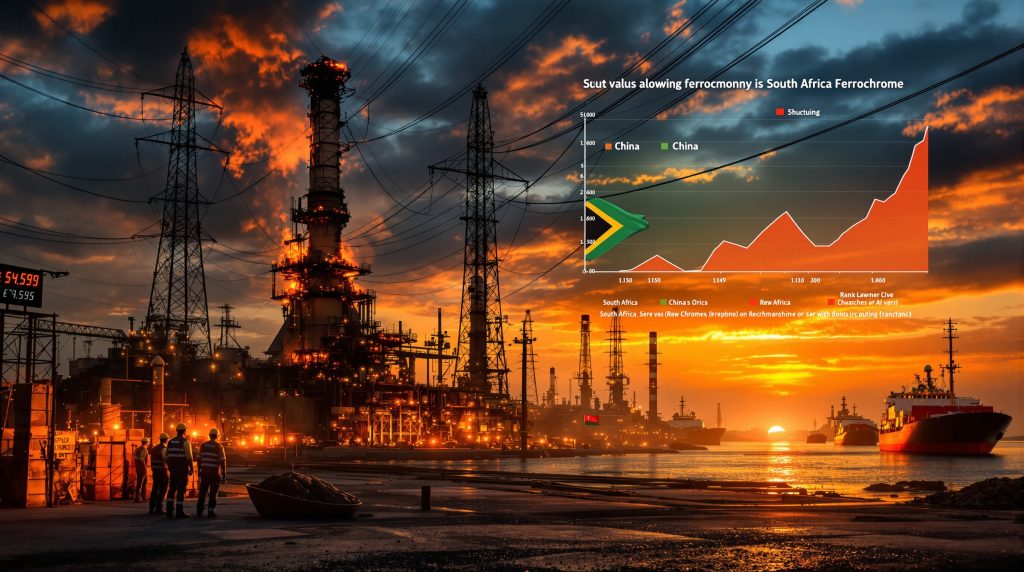
South Africa's Ferrochrome Industry Crisis: Battling Soaring Energy Costs South Africa's once-dominant ferrochrome industry faces an existential threat as electricity costs skyrocket, forcing widespread furnace closures and threatening thousands of jobs. The sector, critical to global stainless steel supply chains, stands at a precipice with major producers shuttering operations amid unsustainable energy expenses. This South Africa ferrochrome industry energy crisis represents a significant challenge for a country already struggling with mineral beneficiation in South Africa. The Scale of the Crisis The numbers tell a sobering story of an industry in free fall. Currently, all 22 of Glencore's ferrochrome furnaces sit idle, while only 3 of Samancor Chrome's 24 facilities remain operational. This unprecedented shutdown has already eliminated 2,000 direct jobs over the past two years, with the industry's economic contribution declining by 16% to R62 billion. Perhaps most alarming is the looming threat of an additional 2,500 job losses at Glencore operations alone, representing a devastating blow to mining communities and South Africa's industrial base. How Have Electricity Costs Impacted Ferrochrome Production? The Energy Cost Explosion The root cause of this industry collapse can be traced directly to South Africa's electricity crisis. Power tariffs have increased an astonishing eight-fold since 2008, creating an insurmountable competitive disadvantage. South African producers now face electricity costs approximately 50% higher than their Chinese competitors. This disparity proves catastrophic in an industry where electricity represents up to 60% of total production expenses. The ferrochrome smelting process requires maintaining temperatures above 1,700°C continuously, consuming approximately 7% of Eskom's total electrical output. Furthermore, ongoing mining industry evolution has not been able to offset these rising energy costs. Competitive Disadvantage Table Factor South Africa China Electricity Cost 8x increase since 2008 Lower, government-subsidized rates Power Reliability Frequent outages Stable supply Percentage of Production Cost Up to 60% Approximately 40% Operating Furnaces Minimal Expanding capacity Chrome Processing Declining Increasing The industry faces a double challenge: not only are electricity costs higher, but supply reliability remains problematic, with frequent outages disrupting the continuous smelting process necessary for ferrochrome production. What Are the Global Supply Chain Implications? Shifting Production Patterns The collapse of South Africa's ferrochrome capacity has triggered a fundamental restructuring of global supply chains. Rather than processing its abundant chrome resources domestically, South Africa now exports over 80% of its chrome ore directly to Chinese smelters. This shift represents a critical loss of value-addition opportunity for South Africa while strengthening China's control over global ferrochrome production. The United States, which relies heavily on South Africa as its largest chrome supplier, now faces increasing supply uncertainty for critical applications including jet engine components, specialized alloys, and defense equipment. Global stainless steel manufacturers are rapidly adapting their supply chains in response, often at the expense of long-standing relationships with South African producers. This restructuring creates ripple effects throughout the global metals industry, potentially affecting pricing and availability of stainless steel products worldwide. The global trade impacts extend far beyond the ferrochrome sector itself. Why is Government Intervention Crucial for Industry Survival? Proposed Support Measures In June 2025, the South African government approved an assistance package aimed at rescuing the beleaguered ferrochrome industry. This plan includes revised electricity tariff structures for energy-intensive industries and potential chrome ore export controls designed to promote domestic processing. However, implementation details and timeframes remain undefined, creating continued uncertainty for producers struggling to survive. Industry leaders warn that the current pace of action is insufficient given the immediate nature of the crisis. As Glencore Alloys CEO Japie Fullard starkly warned: "Electricity is our big problem. In the absence of a solution, South Africa is going to bleed." This sentiment was echoed by FAPA chairperson Nellis Bester, who emphasized: "There are plans on the table from government, but there's no timeframe. And we are running out of time." The lack of concrete timelines for implementation has left many producers questioning whether help will arrive before their remaining operations become financially unsustainable. What Are the Economic Consequences of Industry Collapse? Broader Economic Impact The ferrochrome industry's decline extends far beyond direct job losses. The sector supports thousands of indirect jobs throughout the supply chain, from mining to transportation to service industries. Each direct job lost typically results in 3-4 additional indirect job losses in surrounding communities. The industry also generates significant foreign exchange earnings for South Africa, contributing to the country's balance of trade. As production shifts offshore, these earnings diminish, placing additional pressure on the national economy. Mining communities face particularly severe socioeconomic impacts, with limited alternative employment opportunities in many areas where ferrochrome facilities operate. The loss of technical expertise and industrial capacity also represents a long-term structural challenge for South Africa's manufacturing sector. Job Loss Projections Timeframe Direct Jobs Lost Status Past 2 years 2,000 Already occurred Next 12 months 2,500+ At immediate risk Long-term 10,000+ At risk if no intervention These projections highlight the urgency of the situation, with thousands of additional jobs hanging in the balance if rapid intervention does not materialize. How Does South Africa's Chrome Value Chain Compare Globally? International Competitiveness Challenges South Africa holds approximately 70% of global chrome reserves, representing a strategic resource advantage that should position the country as a dominant force in ferrochrome production. However, the nation's share of global ferrochrome output has declined dramatically in recent years as production shifts to China. This represents a fundamental shift in the chrome value chain, with South Africa increasingly relegated to the role of raw material supplier rather than value-adding processor. Chinese producers benefit from both access to South African ore and significantly lower energy costs, creating a competitive advantage that South African smelters cannot match under current conditions. The industry requires structural reforms to remain viable, particularly regarding electricity pricing and supply reliability. Without addressing these fundamental challenges, South Africa risks permanent loss of its position in global ferrochrome markets. The evolving geopolitical mining landscape further complicates these industry dynamics. What Solutions Could Revitalize the Industry? Potential Recovery Strategies Several potential solutions could help revitalize South Africa's ferrochrome industry: Negotiated special electricity tariffs for energy-intensive users, reflecting the strategic importance of the sector and its significant contribution to employment and exports. Improved power generation reliability and grid stability to minimize production disruptions caused by outages. Strategic export duties on unprocessed chrome ore to incentivize domestic value addition and level the playing field for local producers. Investment in energy-efficient smelting technologies to reduce electricity consumption per ton of ferrochrome produced. Public-private partnerships for dedicated power generation facilities serving the ferrochrome industry, potentially including renewable energy solutions with mining decarbonisation benefits. Industry experts emphasize that a combination of these approaches, implemented swiftly, offers the best chance for industry survival. As FAPA chairperson Nellis Bester noted: "There are plans on the table from government, but there's no timeframe. And we are running out of time." FAQ: South Africa's Ferrochrome Industry Crisis Why is electricity cost so critical to ferrochrome production? Ferrochrome smelting requires enormous amounts of electricity to maintain temperatures above 1,700°C continuously. These high temperatures are necessary to create the chemical reactions that transform chrome ore into ferrochrome. When electricity represents up to 60% of production costs, price increases directly impact viability, quickly rendering operations unprofitable if costs rise too high. How does this affect global stainless steel production? South Africa has traditionally been a major ferrochrome supplier for stainless steel manufacturers worldwide. As production shifts to China, supply chains are being restructured, potentially affecting price stability and security of supply. Stainless steel producers must navigate new supplier relationships and potential quality variations, while also considering geopolitical factors that might impact future availability. What happens to South Africa's chrome ore if not processed domestically? Currently, over 80% of South Africa's chrome ore is being exported to China for processing, representing a significant loss of value-addition opportunity and economic benefits for South Africa. This pattern effectively transfers jobs, tax revenue, and economic development potential from South Africa to China, while leaving South Africa more vulnerable to commodity price fluctuations. Are there environmental implications to this industry shift? Yes. Chinese ferrochrome production often operates under less stringent environmental controls than South Africa's. The shift may result in higher global carbon emissions per ton of ferrochrome produced. Additionally, the long-distance shipping of raw ore rather than processed ferrochrome increases the carbon footprint of the overall supply chain, working against global climate objectives. Time Running Out for a Strategic Industry South Africa's ferrochrome industry energy crisis stands at a critical juncture where immediate, decisive action is required to prevent its collapse. With electricity costs rendering operations unviable and furnaces shutting down across the country, thousands more jobs hang in the balance. While government support measures have been approved in principle, implementation delays threaten the very survival of this strategic sector. The stark reality is that without swift intervention, South Africa's position in the global ferrochrome market may be permanently diminished. The consequences extend beyond immediate job losses to impact global supply chains, particularly for specialized applications in aerospace and defense industries. As production shifts to China, South Africa risks becoming merely an exporter of raw materials rather than a value-adding processor of its abundant chrome resources. Industry leaders emphasize that this is not a hypothetical threat but an unfolding reality. Without rapid implementation of electricity tariff reforms and strategic support for the sector, South Africa's position in the global ferrochrome industry may be irreversibly compromised, with far-reaching consequences for the country's industrial future. Are You Interested in Mineral Industry Market Intelligence? Discover how to stay ahead of critical mining industry shifts with Discovery Alert's proprietary Discovery IQ model, providing real-time alerts on significant ASX mineral discoveries and market-moving events like South Africa's ferrochrome crisis. Explore historic returns from major discoveries at Discovery Alert's discoveries page and position yourself to capitalise on the next market opportunity.