July 27, 2026
The Counter-Cyclical Logic Behind South Africa's Biggest Mine Restart in Years
Mining capital allocation follows a rhythm that is often counterintuitive to outside observers. The most durable value creation in the sector rarely emerges from decisions made at commodity price peaks, when optimism is abundant and competition for assets is fierce. Instead, the companies that consistently generate superior long-term returns tend to deploy capital during periods of price recovery, when structural supply-demand signals are becoming visible but speculative enthusiasm has not yet distorted asset valuations. It is within this framework that African Rainbow Minerals' decision to commit nearly R16 billion to restarting the Bokoni platinum mine and the Nkomati nickel mine deserves to be understood, not merely as a corporate announcement, but as a calculated bet on where South African mineral supply chains are heading over the next decade.
When big ASX news breaks, our subscribers know first
What the R16 Billion Capital Commitment Actually Signals
Reading Commodity Cycles Through Capital Deployment Behaviour
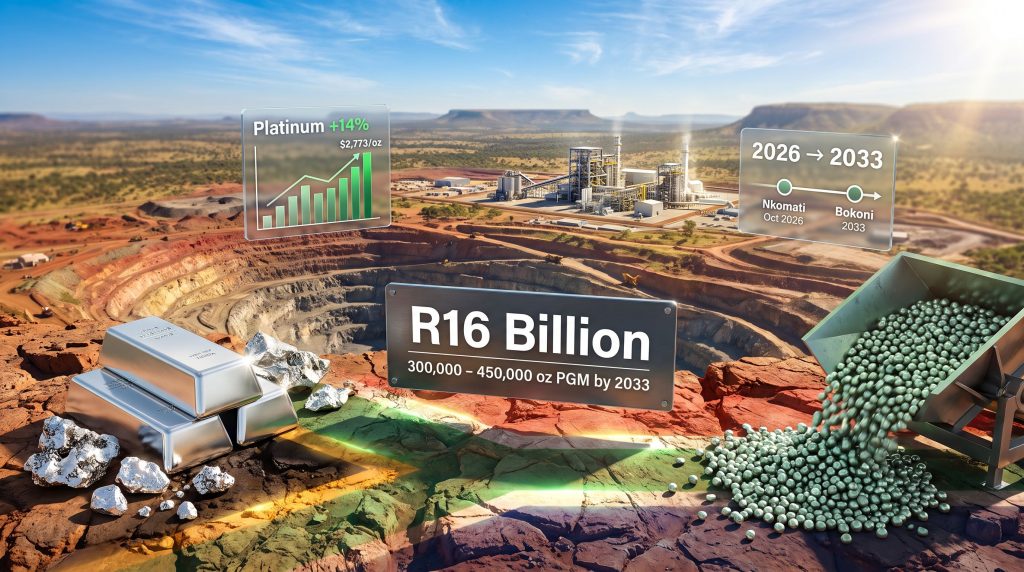
ARM reopens Bokoni platinum and Nkomati nickel mines at a moment when the PGM sector is neither in full-scale distress nor at speculative peak. Platinum prices were approximately 14% higher over the 12 months preceding the announcement, having scaled $2,773 per ounce in January 2026 before geopolitical pressures redirected speculative capital toward the US dollar. That retreat is precisely the kind of mid-cycle correction that creates decision-making confidence for management teams with strong balance sheets. Understanding platinum and palladium dynamics is therefore essential context for evaluating why ARM chose this particular moment to act.
The reason mining groups restart idled assets during recovery rather than at the peak is rooted in internal rate of return modelling. At peak prices, the market has typically already priced in optimistic scenarios, meaning any project approved at those levels carries elevated downside risk if sentiment shifts. At a durable price floor supported by structural fundamentals, however, the hurdle rate calculation looks considerably more defensible over a multi-year project horizon.
ARM's Balance Sheet as a Strategic Enabler
ARM's financial position gives the group an unusual degree of flexibility. The company held an estimated net cash position of approximately R9.5 billion as of end-June 2026, providing substantial internal funding capacity without requiring equity dilution.
The funding architecture for both projects reflects this strength:
- Primary reliance on ARM's own cash reserves
- Cash flow generated by Bokoni itself during the ramp-up phase contributing to ongoing capital requirements
- External debt facilities available as a contingency buffer, avoiding forced equity issuance
- Phased capital deployment across seven years at Bokoni, smoothing annual cash outflows and reducing single-period risk exposure
Citi, the investment bank, assessed the Bokoni commitment as a sound deployment of available capital, describing the strategic approach as prudent given the elevated PGM price environment over the prior year. Institutional endorsement of a long-duration restart of this scale carries meaningful weight, suggesting that the project's internal rate of return assumptions are considered credible at current and projected forward price levels.
Bokoni Platinum Mine: A Troubled Asset Being Given a Third Chance
Operational History and Why Previous Operators Failed
The Bokoni platinum mine, located near the town of Atok in South Africa's Limpopo Province, sits within one of the country's primary PGM-bearing geological corridors along the eastern limb of the Bushveld Igneous Complex. Its history is one of persistent operational difficulty. Both Anglo Platinum and Atlatsa Resources Corporation attempted to make the asset work before closing it in 2017, unable to reconcile its cost structure with prevailing market conditions.
ARM acquired Bokoni in 2021 for R3.5 billion, a contrarian capital decision during a period of sector distress. The group subsequently suspended operations in September 2025 when the existing concentrator capacity proved insufficient to cover fixed costs at the PGM prices prevailing at that time. What makes the current restart fundamentally different from previous attempts is the scale and specificity of the engineering solution being applied. Furthermore, the broader South Africa mining decline that has characterised the industry provides additional strategic justification for ARM's counter-cyclical positioning.
The R15.2 Billion Redevelopment Blueprint
Rather than attempting to rehabilitate Bokoni within its previous operational parameters, ARM is essentially rebuilding the mine's processing infrastructure from the ground up while simultaneously redefining its orebody focus. The redevelopment centres on the UG2 reef rather than the Merensky Reef that historically dominated South African PGM mining strategies.
| Metric | Detail |
|---|---|
| Total Capital Commitment | R15.2 billion |
| Development Timeline | 7 years |
| New Concentrator Capacity | 120,000 tons per month |
| Refurbished Existing Concentrator | 60,000 tons per month |
| Combined Processing Capacity | 180,000 tons per month |
| Target Annual PGM Production | 300,000 to 450,000 ounces |
| Target Achievement Year | 2033 |
| Mining Methods | Mechanised extraction and conventional stoping |
| Primary Orebody | UG2 Reef |
The dual mining methodology, combining mechanised extraction with conventional stoping, is not simply an operational hedge. It reflects the genuine geological variability within the UG2 at Bokoni, where ground conditions and reef geometry differ across different sections of the orebody. Mechanised mining delivers efficiency and lower labour intensity in areas suited to it, while conventional stoping retains the flexibility to access narrower or more structurally complex reef sections without sacrificing ore recovery.
Understanding the UG2 Reef and Why It Is Increasingly Central to South African PGM Strategy
The UG2 is a chromitite layer within the Bushveld Igneous Complex containing platinum, palladium, rhodium, and ruthenium. For much of the 20th century it was considered economically secondary to the Merensky Reef, which carried higher platinum grades and was more amenable to conventional mining methods. That calculus has shifted materially over the past two decades for several interconnected reasons.
The UG2's commercial competitiveness has improved significantly as palladium and rhodium prices rose to elevate the overall basket value of PGM concentrate produced from chromitite-hosted reef, making what was once considered a secondary resource economically compelling at scale.
Critically, Merensky Reef grades across the broader South African PGM industry have been declining as mines reach greater depth and extract progressively lower-quality ore. The relative strategic importance of UG2 resources has consequently increased. The UG2 also requires specific concentrator configurations to handle its chromite content, which explains a significant portion of the capital investment ARM is making in new processing infrastructure at Bokoni.
One lesser-known technical consideration is that UG2 concentrates typically carry higher chrome oxide content than Merensky-derived concentrates. Smelters must manage this carefully because excessive chrome content can damage furnace refractory linings. The investment in a purpose-designed concentrator plant addresses this by optimising chrome rejection at the flotation stage, producing a cleaner concentrate that meets smelter specifications and potentially commands better commercial terms.
How Bokoni Fits Within South Africa's Structural PGM Supply Outlook
The Supply Compression Thesis
ARM's stated rationale for committing to Bokoni explicitly references the likelihood of declining South African PGM output over the medium term as a fundamental demand-supply support factor. This is not a speculative position. South African PGM production has been under sustained structural pressure from ageing shaft infrastructure, rising electricity costs, water supply challenges, and labour productivity constraints that have compounded over years.
Industry-wide shaft closures and production curtailments across major South African PGM producers have progressively eroded the supply buffer available to global markets. A new Miningmx report in July 2026 on Northam Platinum's operations described the concept of a mine being extended indefinitely, framing it within the broader context of South Africa's supply crisis — a signal that even well-managed operations are facing the limits of their geological endowment.
Automotive Demand and the Hybrid Vehicle Factor
ARM's investment rationale acknowledges continued automotive demand as a durable foundation for PGM pricing, even as electric vehicle adoption accelerates. This reflects a nuanced understanding of how the energy transition is actually unfolding in practice. In addition, the scale of critical minerals demand driven by the global energy transition underpins the long-term case for PGM investment.
Internal combustion engine vehicles continue to represent the dominant source of platinum and palladium demand through catalytic converter applications. More significantly, hybrid vehicle penetration is extending this demand profile well beyond initial EV transition forecasts. Hybrids typically require catalytic converters of comparable complexity to pure ICE vehicles, meaning the transition toward electrification does not eliminate PGM demand at the rate many early models projected.
The growing adoption of hybrid powertrains in markets where full EV infrastructure remains limited may preserve catalytic converter demand longer than consensus forecasts assumed, providing a more extended runway for PGM producers than the purely binary ICE-versus-EV narrative implies.
The Nkomati Nickel Restart: A Fundamentally Different Strategic Logic
From Care and Maintenance to Active Production
The Nkomati Nickel Mine in Mpumalanga Province operates as an open-pit rather than underground operation, which gives its restart economics a different risk profile compared to Bokoni. Placed on care and maintenance in 2021 following sustained nickel price weakness, Nkomati's path to restart was significantly simplified by a corporate development that preceded the formal approval.
ARM became the sole owner of Nkomati following the exit of joint venture partner Nornickel from its 50% stake in July 2025. Sole ownership streamlined the governance structure and eliminated the need for joint venture partner alignment on restart decisions, removing a potential source of decision-making friction that can slow capital commitments in complex partnership structures.
| Metric | Detail |
|---|---|
| Total Capital Commitment | R753 million |
| Target Steady-State Production | 56,065 tons of nickel concentrate per annum |
| Plant Refurbishment Commencement | July 2026 |
| Open Pit Mining Resumption Target | October 2026 |
| Life of Mine | 13 years |
| Mining Method | Open pit |
| Off-Take Partner | Boliden Commercial AB (Sweden) |
The Boliden Off-Take Agreement and Its Strategic Significance
ARM secured a conditional off-take agreement with Boliden Commercial AB, a Swedish base metals mining and smelting group, prior to formally approving the Nkomati restart. The agreement was announced in April 2026, providing Nkomati with a defined route to market for its nickel concentrate into European industrial demand channels.
The commercial terms of the arrangement have not been publicly disclosed. What is significant, however, is the structural logic of the partnership. Boliden operates established smelting infrastructure in Scandinavia, providing a technically capable processing destination for South African nickel concentrate. European nickel demand is shaped by two intersecting forces: traditional stainless steel manufacturing and the emerging battery materials supply chain building across the continent.
Off-take agreements serve a specific financial function during mine restarts that is often underappreciated:
- They eliminate price discovery uncertainty during the most cash-intensive phase of the operation
- They provide a defined revenue expectation that supports project financing assumptions
- They signal counterparty confidence in the quality and deliverability of the product
- They reduce the commercial risk that lenders or internal capital committees must price into their approval decisions
The European dimension of the Boliden partnership is also relevant from a supply chain diversification perspective. European industrial policy has been actively oriented toward reducing dependence on Russian and Chinese mineral supply, and South African nickel sulphide concentrate represents a geographically and geologically distinct supply source.
The Nickel Market's Structural Headwind
Nkomati's restart does not occur in a benign nickel market environment. Global nickel markets have experienced significant oversupply pressure driven by the rapid expansion of Indonesian nickel growth, particularly from high-pressure acid leach and rotary kiln electric furnace processing facilities that have lowered the cost floor for nickel units in international markets.
The Indonesian nickel production expansion has been the defining structural force in global nickel markets since 2021, compressing benchmark prices and putting margin pressure on higher-cost sulphide producers operating in jurisdictions like South Africa and Canada.
Nkomati produces nickel sulphide concentrate, which carries a different quality profile from Indonesian laterite-derived nickel. Sulphide concentrate is generally more suitable for direct smelting into refined nickel and may carry premiums in markets where smelter configuration and battery-grade nickel chemistry are priorities. Whether those quality premiums are sufficient to support Nkomati's economics through a full 13-year mine life will depend on the specific commercial terms of the Boliden agreement and the trajectory of the nickel market recovery over that period.
Comparing Both Projects: Risk Profiles and Strategic Rationale
Side-by-Side Project Comparison
| Factor | Bokoni Platinum | Nkomati Nickel |
|---|---|---|
| Capital Commitment | R15.2 billion | R753 million |
| Development Timeline | 7 years | Near-term (mining from October 2026) |
| Mining Method | Underground (mechanised and conventional) | Open pit |
| Target Production | 300,000 to 450,000 PGM oz/year by 2033 | 56,065 tons nickel concentrate/year |
| Life of Mine | Long-duration redevelopment | 13 years |
| Primary Demand Driver | Automotive catalytic converters and industrial | European battery and stainless steel supply chains |
| Off-Take Arrangement | ARM balance sheet and market channels | Boliden Commercial AB (Sweden) |
| Funding Structure | ARM cash and debt facilities | ARM balance sheet |
| Primary Risk | PGM price volatility and 7-year execution | Nickel oversupply, concentrate premiums, logistics |
What Distinguishes a Phased Restart from a Greenfield Development
The distinction matters for how risk is priced and how execution timelines are assessed. Phased restarts at previously operating mines carry a fundamentally different risk profile from greenfield projects:
- The orebody geometry and metallurgical behaviour are already understood from prior operational experience, eliminating exploration risk
- Surface and underground infrastructure footprints exist, reducing the capital required to reach first ore
- Historical operational data informs updated mine planning models, improving the reliability of production forecasts
- Previously sunk capital effectively reduces the economic cost basis of the asset
- Key risks shift from geological uncertainty to execution efficiency, cost inflation, and commodity price trajectory
The combination of known geology and new processing infrastructure at Bokoni represents an attempt to retain the first four advantages while eliminating the technical bottleneck — inadequate concentrator capacity — that caused the previous suspension.
The next major ASX story will hit our subscribers first
Key Risks That Could Alter These Projects' Trajectories
PGM Price Sensitivity and Market Volatility
Platinum's move from $2,773 per ounce in January 2026 back to lower levels demonstrates how quickly speculative capital can exit the asset class in response to macroeconomic or geopolitical developments. A sustained PGM price decline below project break-even thresholds could trigger phasing delays or reallocation of capital across ARM's broader portfolio.
Execution Complexity Over Seven Years
Multi-year underground development projects in South Africa carry structural execution challenges beyond pure engineering complexity. According to the World Gold Council, energy reliability is among the most consistently cited risks for sub-Saharan mining operations, a concern that applies equally to PGM producers reliant on Eskom's grid:
- Electricity supply reliability from Eskom remains a persistent operational risk for energy-intensive mining and processing operations
- Mining consumables, steel, and energy cost inflation can erode projected economics if not managed through procurement strategy and hedging
- Labour relations in South Africa's deep-level mining sector have historically introduced production variability that is difficult to model precisely
- Ground conditions in deep UG2 mining can deviate from pre-development surveys, requiring engineering adaptation
The Broader Industry Signal
ARM's willingness to commit R15.2 billion to a previously troubled asset reflects a specific view about where South African PGM supply is heading. South Africa hosts the world's largest known PGM reserves within the Bushveld Igneous Complex, and structural production declines from ageing mines are creating a medium-term supply gap that new or restarted projects are positioned to partially address. The global shift away from Russian PGM supply, driven by sanctions and supply chain diversification priorities, further elevates the strategic value of South African production capacity.
For investors tracking the PGM sector, the simultaneous restart of a large-scale platinum asset and a nickel asset reflects portfolio construction logic at the corporate level: PGM and nickel price cycles have historically shown partial decorrelation, providing a degree of natural revenue hedging across ARM's production base.
This article is intended for informational purposes only and does not constitute financial or investment advice. Readers should conduct their own due diligence and consult qualified advisers before making investment decisions. Forward-looking statements, production targets, and financial projections referenced in this article are subject to material risks and uncertainties. Source reporting: David McKay, Miningmx, 23 July 2026.
Want to Stay Ahead of the Next Major Mineral Discovery on the ASX?
Discovery Alert's proprietary Discovery IQ model delivers real-time alerts on significant ASX mineral discoveries across platinum, nickel, and beyond, instantly turning complex mineral data into actionable insights for both short-term traders and long-term investors — explore historic discoveries and their returns to understand the opportunity, then begin your 14-day free trial at Discovery Alert to position yourself ahead of the broader market.