August 24, 2026
The global mining industry stands at a pivotal juncture where traditional investment patterns are undergoing fundamental transformation. As major industrial nations reassess their critical mineral dependencies and supply chain vulnerabilities, emerging market dynamics are creating unprecedented opportunities for strategic capital deployment. Within this shifting landscape, certain regions are experiencing accelerated development cycles that challenge conventional wisdom about resource investment timelines and risk profiles.
Mining opportunities in South America have evolved beyond simple commodity extraction ventures into complex strategic plays involving geopolitical positioning, technological innovation, and long-term resource security. The convergence of favourable geological endowments, improving regulatory frameworks, and increasing global demand for critical minerals has positioned the region as a focal point for institutional investors seeking exposure to the next generation of mining assets.
What Makes South America the World's Most Attractive Mining Investment Destination?
South America's emergence as a premier mining investment destination stems from multiple interconnected factors that create compelling value propositions for institutional capital. The region's geological diversity encompasses some of the world's most significant mineral provinces, spanning from the Andean Cordillera's copper-molybdenum porphyry systems to the lithium-rich salt flats of the Altiplano.
Critical Mineral Reserves Driving Global Investment Flows
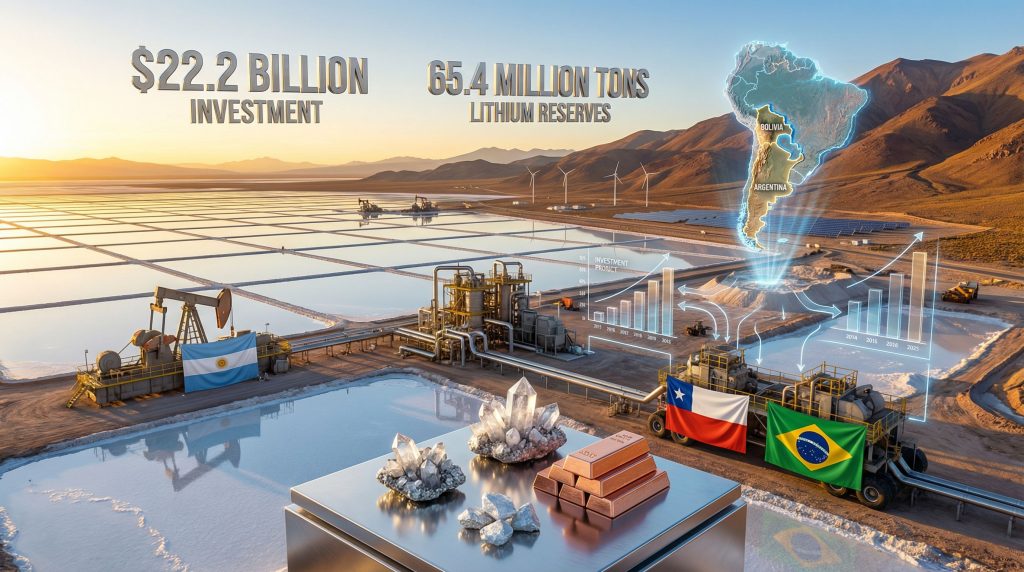
The concentration of strategic minerals across South American jurisdictions represents a unique convergence of geological fortune and modern industrial demand. Lithium resources in the region demonstrate particular strategic significance, with current geological surveys indicating substantial reserves distributed across multiple countries. The formation of these deposits through millennia of volcanic activity and climatic conditions has created extraction opportunities that combine scale with relatively favourable metallurgical characteristics.
Critical mineral concentration extends beyond lithium to encompass rare earth elements, particularly in Brazil's geological formations, where recent exploration activities have identified potentially significant deposits. The technical characteristics of these formations suggest processing methodologies that could prove economically viable under current market conditions, though substantial development capital and specialised expertise remain prerequisites for successful extraction.
Furthermore, the region's Argentina copper system continues to represent cornerstone assets for global industrial supply chains. The porphyry copper systems of Chile and Peru demonstrate ore body characteristics that support large-scale, long-life mining operations. These deposits typically feature grades that remain economically attractive even during periods of commodity price volatility, providing investors with downside protection and operational flexibility.
Political Stability and Regulatory Reform Creating Investment Confidence
Recent political developments across multiple South American jurisdictions have contributed to improved investment climates for mining ventures. Electoral outcomes in several countries have resulted in administrations that prioritise economic development through responsible resource extraction, creating policy environments more conducive to large-scale capital deployment.
Regulatory modernisation efforts have addressed historical concerns regarding permitting timelines, environmental compliance standards, and foreign investment protections. Several countries have implemented streamlined approval processes for mining projects that meet enhanced environmental and social criteria, reducing development timeline uncertainty that previously deterred institutional investors.
Consequently, mining permitting trends in key jurisdictions have clarified foreign ownership rights, tax treatment, and profit repatriation mechanisms. These legal framework improvements address fundamental investor concerns about capital security and return accessibility, particularly important for pension funds and sovereign wealth funds considering mining opportunities in South America.
Infrastructure Development Supporting Large-Scale Operations
Transportation infrastructure improvements across the region have enhanced project economics for mining ventures, particularly those targeting export markets. Major mining opportunities in South America are increasingly supported by port capacity expansions, rail network upgrades, and highway connectivity improvements that have reduced logistics costs and operational complexity for mining operations.
Power generation infrastructure development, with increasing emphasis on renewable energy sources, provides mining operations with more sustainable and potentially cost-effective electricity supply options. Solar and wind power integration in mining regions offers operational cost advantages while addressing environmental and social governance requirements increasingly important to institutional investors.
Water infrastructure management has evolved to address both operational needs and environmental concerns. Advanced water recycling technologies and regulatory frameworks for water usage have created more predictable operating conditions for water-intensive mining processes, reducing operational risk and improving long-term sustainability metrics.
When big ASX news breaks, our subscribers know first
How Are Geopolitical Shifts Reshaping South American Mining Investment Patterns?
Global geopolitical tensions have fundamentally altered the strategic calculus surrounding critical mineral investments, with South America emerging as a preferred destination for countries seeking to diversify their supply chains away from potentially volatile regions. The current U.S. administration's focus on critical mineral security has intensified American interest in establishing strategic partnerships with South American mining jurisdictions.
Electoral Outcomes Accelerating Permitting Processes Across the Region
Recent electoral cycles across several South American countries have produced governments with mandates to accelerate economic development through responsible resource extraction. These political shifts have translated into practical policy changes that directly impact mining investment timelines and project development certainty.
Permitting process reforms in multiple jurisdictions have reduced approval timelines through digital submission systems, streamlined inter-agency coordination, and clear milestone-based review procedures. These improvements address historical investor concerns about regulatory uncertainty and development delays that could impact project economics.
Administrative capacity building within mining regulatory agencies has improved the technical competency and processing efficiency of government oversight functions. Enhanced technical expertise within regulatory bodies reduces the likelihood of arbitrary decisions or uninformed policy changes that could negatively impact ongoing mining investments.
U.S.-China Competition Intensifying Capital Allocation Strategies
Strategic competition between major powers has created opportunities for South American countries to leverage their mineral resources for favourable investment terms and technology transfers. The U.S. government's critical mineral security initiatives have increased American companies' interest in establishing supply chain partnerships with regional mining operations.
Chinese state-owned enterprises and investment funds continue to pursue strategic mineral acquisitions throughout South America, creating competitive dynamics that can benefit local governments and mining companies through improved offer terms. This competition has resulted in enhanced infrastructure commitments and technology transfer agreements that benefit regional development.
European Union critical raw materials initiatives have added another dimension to international competition for South American mineral resources. European investment funds and industrial companies are increasingly evaluating partnership opportunities that could provide supply chain security for European manufacturing industries.
Regional Trade Agreements Opening New Investment Corridors
Trade agreement negotiations and implementations have created more favourable investment frameworks for mining operations targeting multiple markets. Regional economic integration initiatives have reduced barriers to cross-border mining investment and operations, enabling more efficient capital allocation across jurisdictions.
Bilateral investment treaties between South American countries and major developed economies have provided enhanced legal protections for foreign mining investments. These agreements typically include dispute resolution mechanisms and investment protection clauses that reduce political risk for international mining investors.
Tax treaty networks have improved the efficiency of cross-border mining investment structures, reducing withholding taxes and eliminating double taxation issues that previously complicated international mining finance arrangements.
Which Countries Offer the Highest ROI Potential for Mining Ventures?
Investment return potential across South American mining jurisdictions varies significantly based on geological endowments, regulatory environments, infrastructure quality, and market access considerations. Sophisticated investors increasingly utilise multi-factor analysis frameworks to evaluate country-specific opportunities within their broader portfolio strategies.
Argentina's Lithium Triangle: The Fastest-Growing Pipeline in Latin America
Argentina's northwestern provinces have emerged as a focal point for lithium development, with geological formations that support both traditional evaporation extraction methods and potentially more efficient direct lithium extraction technologies. The region's unique combination of high lithium concentrations and favourable climatic conditions creates operational advantages for multiple extraction methodologies.
Argentina's Mining Investment Landscape
| Province | Active Projects | Total Investment Value | Primary Commodities |
|---|---|---|---|
| Salta | 18 projects | $8.2 billion | Lithium, Copper |
| Jujuy | 16 projects | $7.4 billion | Lithium, Silver |
| Catamarca | 14 projects | $5.9 billion | Lithium, Gold |
Provincial governments in Argentina's lithium triangle have implemented competitive fiscal regimes designed to attract international mining investment whilst maintaining reasonable revenue participation for local communities. These frameworks typically feature progressive royalty structures that adjust based on commodity prices and production levels.
Technical advantages in Argentine lithium deposits include relatively high lithium concentrations in brine solutions and favourable evaporation conditions that reduce processing costs. However, water availability concerns and environmental compliance requirements necessitate sophisticated water management systems that add complexity to project development.
In addition, Argentina lithium insights reveal that infrastructure development in the region has accelerated to support growing mining activity, with road improvements, power grid extensions, and logistics facility construction creating more favourable operating conditions for mining companies.
Chile's Copper Expansion: Infrastructure-Ready Investment Zones
Chile's established mining infrastructure and regulatory framework provide significant advantages for copper expansion projects, particularly for investors seeking to minimise development risk through proven operational environments. The country's decades of large-scale mining experience have created specialised service industries and technical expertise that support efficient project development and operations.
Existing transportation infrastructure in Chile's mining regions provides immediate access to export markets through established port facilities and rail networks. This infrastructure advantage reduces project capital requirements and accelerates time to first production compared to greenfield developments in less developed regions.
Water management infrastructure and regulatory frameworks in Chile have evolved to address both operational needs and environmental concerns. Advanced water recycling technologies and established water rights systems provide operational certainty for water-intensive copper processing operations.
Power supply reliability in Chilean mining regions benefits from the country's integrated electricity grid and increasing renewable energy capacity. Mining operations can access both conventional and renewable power sources, providing operational flexibility and potentially favourable electricity costs.
Brazil's Rare Earth Potential: Untapped Value in Technical Development
Brazil's geological formations contain significant rare earth element deposits that remain largely underdeveloped compared to global production centres. Recent geological surveys have identified multiple deposit types across different regions, suggesting potential for diversified rare earth production that could serve various industrial applications.
Technical challenges associated with Brazilian rare earth development include complex mineralogy requiring sophisticated processing methods and potential environmental concerns related to radioactive elements commonly associated with rare earth deposits. These challenges necessitate specialised expertise and substantial development capital but create barriers to entry that could benefit early developers.
Market opportunities for Brazilian rare earth production have expanded due to global supply chain diversification efforts and increasing industrial demand for these materials. Established industrial relationships between Brazilian and international companies could facilitate offtake agreements and joint venture partnerships for rare earth development projects.
Regulatory frameworks for rare earth mining in Brazil are evolving to address both development facilitation and environmental protection requirements. Enhanced regulatory clarity could improve investor confidence and reduce development timeline uncertainty for rare earth projects.
What Investment Strategies Are Delivering the Strongest Returns?
Successful mining investment strategies in South America increasingly emphasise risk mitigation through diversified approaches that combine geological due diligence with sophisticated financial structuring. Institutional investors have developed frameworks that balance return potential with downside protection through strategic partnership arrangements and phased development approaches.
Joint Venture Models Reducing Capital Risk and Regulatory Exposure
Partnership structures between international investors and local mining companies have proven effective for managing both financial and political risks associated with South American mining investments. These arrangements typically combine international capital and technical expertise with local market knowledge and regulatory relationships.
Risk allocation within mining joint ventures allows investors to participate in upside potential whilst limiting exposure to development stage risks through structured capital contributions and milestone-based commitments. Successful joint ventures often feature complementary capabilities between partners, with international investors providing financing and technology whilst local partners contribute regulatory expertise and community relationships.
Operational control arrangements in joint ventures vary based on project stage and partner capabilities, with many successful structures featuring international operational management during construction and early production phases. These arrangements provide investors with greater control over capital deployment and operational decision-making during critical development periods.
Vertical Integration Strategies Capturing Full Value Chain Margins
Vertical integration opportunities in South American mining have expanded as companies seek to capture downstream processing margins and reduce supply chain risks. Integration strategies range from basic mineral processing and refining to advanced materials production and manufacturing partnerships.
Processing facility development within South American jurisdictions can provide significant economic advantages through reduced transportation costs, favourable energy prices, and proximity to raw material sources. Countries with established industrial infrastructure and technical expertise present the most attractive opportunities for value-added processing operations.
Technology partnerships for vertical integration often involve collaboration between mining companies and industrial end-users to develop specialised processing capabilities. These partnerships can provide secure offtake agreements and technical expertise whilst sharing development costs and risks between multiple parties.
Technology Partnerships Accelerating Project Development Timelines
Advanced mining technologies have become increasingly important for improving project economics and reducing environmental impacts in South American mining operations. Technology partnerships between mining companies and specialised service providers can accelerate development timelines whilst reducing capital requirements for individual projects.
Automation and digitalisation technologies offer particular advantages in South American mining operations, where skilled labour availability can be limited and remote locations create logistical challenges. Advanced monitoring and control systems can improve operational efficiency whilst reducing labour requirements and safety risks.
Environmental technology integration has become essential for meeting regulatory requirements and investor expectations regarding sustainable mining practices. Partnerships with environmental technology providers can improve project approval timelines and operational sustainability metrics whilst potentially reducing long-term operational costs.
The region has experienced unprecedented capital investment growth, with institutional investors recognising South America's combination of geological advantages, improving regulatory frameworks, and strategic mineral positioning. This investment momentum reflects fundamental shifts in global supply chain priorities and resource security considerations.
How Do Commodity-Specific Opportunities Vary Across the Region?
Different commodities present distinct opportunity profiles across South American jurisdictions, requiring specialised evaluation frameworks that consider geological characteristics, processing requirements, market dynamics, and infrastructure needs. Sophisticated investors increasingly develop commodity-specific expertise to optimise their investment strategies within the region.
Lithium Projects: Concentration Risk vs. Market Dominance
South America's lithium deposits represent a significant portion of global resources, with geological formations concentrated primarily in Argentina, Chile, and Bolivia. This concentration creates both strategic advantages and potential risks for investors seeking exposure to lithium market growth.
Lithium Investment Concentration Analysis:
South America controls approximately 60-65% of the world's identified lithium resources, with over 140 development projects across multiple stages of advancement. The total estimated investment required for these projects exceeds $40 billion, representing one of the largest concentrations of mineral development capital in global mining history.
Extraction methodology variations across South American lithium deposits create different risk and return profiles for investors. Traditional evaporation methods require lower capital investment but longer development timelines, whilst direct lithium extraction technologies offer faster production ramp-up at higher capital costs.
Market demand projections for lithium continue to support development of South American resources, with electric vehicle battery production driving consumption growth that could absorb substantially increased production from the region. However, technology evolution and alternative battery chemistries represent potential demand risks that investors must consider.
Copper Development: Long-Term Infrastructure Plays
Copper development opportunities in South America benefit from established infrastructure and proven geological systems, creating investment profiles that emphasise steady returns over extended operating periods. Large-scale copper operations typically require substantial initial capital but provide long-term cash flow generation through decades of production.
Ore grade considerations in South American copper deposits vary significantly, with some operations featuring grades well above global averages whilst others represent high-volume, lower-grade opportunities. Investment strategies must account for these variations in evaluating project economics and competitive positioning.
Processing technology advancement has enabled economic extraction from lower-grade deposits that were previously uneconomic, expanding development opportunities throughout South American copper provinces. Advanced metallurgical techniques and automation technologies continue to improve project economics for marginal deposits.
Infrastructure requirements for copper development often involve substantial capital commitments for transportation, power supply, and processing facilities. However, successful copper operations can support infrastructure development that benefits subsequent mining projects in the same region.
Rare Earth Elements: Early-Stage Opportunities with High Barriers to Entry
Rare earth element development in South America remains in early stages compared to lithium and copper, creating opportunities for investors willing to accept higher development risks in exchange for potentially significant returns. Technical complexity and specialised processing requirements create substantial barriers to entry that could protect successful developers from competition.
Processing expertise for rare earth elements requires sophisticated metallurgical capabilities and environmental management systems to handle radioactive and toxic materials safely. These requirements limit the number of companies capable of successful rare earth development, potentially creating favourable competitive dynamics for qualified developers.
Market opportunities for South American rare earth production have expanded due to supply chain diversification efforts by major industrial countries seeking alternatives to concentrated global production. End-user companies increasingly prioritise supply security over cost optimisation, creating premium pricing opportunities for reliable alternative suppliers.
Environmental compliance requirements for rare earth mining present both challenges and opportunities, with stringent standards creating development costs but also providing competitive advantages for operations that achieve superior environmental performance compared to global production centres.
What Are the Key Risk Factors Investors Must Navigate?
Mining investments in South America involve multiple risk categories that require sophisticated assessment and mitigation strategies. Successful investors develop comprehensive risk management frameworks that address political, operational, environmental, and market risks through diversification and hedging strategies.
Environmental Compliance Standards Varying by Jurisdiction
Environmental regulatory frameworks across South American countries demonstrate significant variation in standards, enforcement mechanisms, and compliance costs. These differences create both opportunities and risks for mining investors depending on their environmental capabilities and compliance strategies.
Water usage regulations present particular challenges for mining operations in water-stressed regions, with some jurisdictions implementing strict consumption limits and recycling requirements. Advanced water management technologies and regulatory compliance systems become essential competitive advantages in these environments.
Waste management requirements for mining operations have become increasingly stringent, with several countries implementing enhanced standards for tailings storage and mine closure. Compliance costs for these requirements can significantly impact project economics, making early-stage environmental planning essential for investment success.
Air quality and emissions standards affect mining operations in populated areas, with some jurisdictions implementing restrictions on dust generation and processing facility emissions. These requirements can influence site selection and processing technology choices, affecting project capital and operating costs.
Community Relations and Social Licence Requirements
Social acceptance of mining operations has become increasingly important for project success, with community opposition capable of delaying or preventing project development regardless of regulatory approval. Effective community engagement strategies have become essential components of successful mining investment approaches.
Indigenous rights and consultation requirements in several South American countries create additional complexity for mining project development. Projects affecting indigenous territories typically require extensive consultation processes and benefit-sharing arrangements that can influence project timelines and economics.
Local employment and procurement requirements in many jurisdictions mandate specific levels of local hiring and supplier utilisation. Whilst these requirements can add operational complexity, they also create opportunities for cost reduction and community support when managed effectively.
Benefit-sharing arrangements between mining companies and local communities have evolved beyond traditional royalty payments to include infrastructure development, education programmes, and economic development initiatives. These arrangements require long-term commitment and management resources but can provide sustainable social licence for mining operations.
Currency Volatility and Capital Repatriation Considerations
Currency risk management represents a critical component of South American mining investment strategies, with several countries experiencing significant exchange rate volatility that can impact investment returns. Hedging strategies and natural currency hedging through revenue and cost structure optimisation become essential risk management tools.
Risk-Adjusted Investment Attractiveness by Country
| Country | Regulatory Stability | Infrastructure Quality | Political Risk Score | Investment Grade |
|---|---|---|---|---|
| Chile | High | Excellent | Low | A+ |
| Peru | Medium-High | Good | Medium | A- |
| Argentina | Medium | Fair | Medium | B+ |
| Brazil | High | Good | Low | A |
Capital repatriation policies and foreign exchange controls in some jurisdictions create additional complexity for international mining investors. Understanding these policies and structuring investments to minimise repatriation constraints becomes essential for achieving target investment returns.
Banking system stability and foreign currency availability can affect mining operations' ability to conduct international transactions and access global supply chains. Investors must evaluate these factors when assessing operational risk for mining projects in different jurisdictions.
The next major ASX story will hit our subscribers first
Which Emerging Markets Present the Greatest Upside Potential?
Emerging mining markets within South America offer opportunities for investors seeking higher risk-adjusted returns through early-stage exposure to developing mineral provinces. These opportunities typically require specialised expertise and higher risk tolerance but can provide substantial returns for successful developers.
Ecuador's Gold Sector: Major Acquisitions Signalling Confidence
Ecuador's gold mining sector has attracted significant international investment through major acquisition transactions that demonstrate institutional confidence in the country's mineral potential. Recent large-scale transactions suggest that sophisticated investors view Ecuador as an attractive jurisdiction for gold development despite historical political risks.
Geological prospectivity in Ecuador extends beyond currently producing gold mines, with exploration activities identifying additional mineral systems that could support future development. The country's position within the Andean mineral belt suggests potential for discovery of additional world-class deposits.
Regulatory framework improvements in Ecuador have addressed many historical investor concerns regarding mining law stability and foreign investment protection. Recent policy changes demonstrate government commitment to attracting responsible mining investment through improved regulatory clarity and investor protections.
Infrastructure development requirements in Ecuador present both challenges and opportunities, with some mining regions requiring substantial transportation and power infrastructure investment. However, successful infrastructure development could unlock additional mining opportunities throughout the country.
Guyana's Mineral Exploration: Early-Stage Discovery Opportunities
Guyana's mineral exploration sector offers early-stage investment opportunities in a jurisdiction with significant geological potential and improving regulatory framework. The country's position within proven mineral provinces suggests potential for major discoveries that could generate substantial investment returns.
Gold exploration activities in Guyana have identified multiple prospective areas with geological characteristics similar to major gold deposits in neighbouring regions. Early-stage exploration investments could provide exposure to discovery upside whilst requiring relatively modest initial capital commitments.
Regulatory framework development in Guyana has focused on creating transparent and competitive processes for mineral rights allocation and environmental permitting. These improvements could reduce development risk and timeline uncertainty for successful exploration projects.
Infrastructure limitations in Guyana's mineral-prospective regions require consideration in investment planning, but the country's improving economic conditions and international investment interest suggest potential for infrastructure development that could support mining operations.
Colombia's Regulatory Modernisation: Opening Previously Restricted Areas
Colombia's mining regulatory modernisation efforts have opened new areas for mineral exploration and development that were previously restricted due to security concerns or regulatory limitations. These policy changes create opportunities for investors willing to evaluate emerging opportunities in improving operating environments.
Security improvements in Colombia's mining regions have reduced operational risks that previously deterred international mining investment. Enhanced security conditions enable exploration and development activities in areas with significant geological potential.
Coal mining operations in Colombia continue to attract international investment despite global energy transition trends, with high-quality metallurgical coal deposits maintaining market demand for steel production applications. These operations provide near-term cash flow opportunities whilst the country develops other mineral resources.
Diversification efforts in Colombia's mining sector include development of gold, silver, and other metallic minerals that could reduce the country's dependence on coal production. These diversification opportunities present investment options aligned with global mineral demand trends.
How Are Infrastructure Investments Supporting Mining Development?
Infrastructure development throughout South America has accelerated to support expanding mining operations, creating multiplicative effects that benefit multiple projects within the same regions. Strategic infrastructure investments often generate returns that extend beyond individual mining projects to support broader economic development.
Transportation Networks: Rail and Port Capacity Expansions
Rail network development and capacity expansion projects throughout South America have focused on connecting mineral-rich regions with export ports, reducing transportation costs and improving logistics reliability for mining operations. These infrastructure investments often require collaboration between multiple mining companies and government entities.
Port facility upgrades at key South American export terminals have enhanced capacity for handling mineral concentrates and processed materials. Specialised port infrastructure for different commodity types can significantly improve export efficiency and reduce logistics costs for mining operations.
Road infrastructure improvements in mining regions provide essential connectivity for personnel, equipment, and supplies whilst supporting local economic development. These improvements often feature cost-sharing arrangements between mining companies and government entities that benefit broader regional development.
Logistics integration systems that coordinate transportation between mines, processing facilities, and export terminals have become increasingly sophisticated, utilising digital tracking and optimisation technologies to improve efficiency and reduce costs.
Energy Infrastructure: Renewable Power Integration for Mining Operations
Renewable energy development for mining operations has accelerated throughout South America, driven by both cost advantages and environmental sustainability requirements. Solar and wind power projects specifically designed to serve mining operations can provide long-term cost stability and environmental benefits.
Power grid integration and expansion projects have improved electricity supply reliability for mining operations whilst enabling increased utilisation of renewable energy resources. Grid modernisation investments often benefit multiple industries beyond mining.
Energy storage technology deployment at mining operations enables better utilisation of renewable power sources whilst providing backup power for critical operations. Battery storage and other energy storage technologies are becoming standard components of mining power infrastructure.
Hybrid power systems combining renewable and conventional generation sources provide mining operations with energy security whilst reducing carbon emissions and potentially lowering power costs. These systems require sophisticated management but can provide significant operational advantages.
Digital Infrastructure: Remote Monitoring and Automation Capabilities
Telecommunications infrastructure development in mining regions has enabled advanced digital technologies that improve operational efficiency and safety whilst reducing labour requirements. Fibre optic networks and wireless communication systems support real-time monitoring and control capabilities.
Automation technology implementation in South American mining operations has advanced significantly, with remote-controlled equipment and autonomous systems improving productivity whilst reducing safety risks. These technologies require substantial infrastructure investment but can provide significant operational advantages.
Data management and analysis capabilities have become essential components of modern mining operations, requiring sophisticated information technology infrastructure and cybersecurity systems. Cloud computing and edge computing technologies enable advanced analytics whilst managing data security requirements.
Satellite communication systems provide backup connectivity for mining operations in remote locations whilst enabling integration with global supply chain management systems. These systems provide operational resilience and improve logistics coordination.
What Talent and Operational Considerations Drive Investment Success?
Human resource availability and operational expertise represent critical success factors for South American mining investments, with talent constraints potentially limiting project development regardless of geological or financial attractiveness. Strategic workforce development and operational planning become essential investment considerations.
Engineering Talent Availability Across Different Jurisdictions
Mining engineering expertise varies significantly across South American countries, with some jurisdictions featuring well-developed technical education systems and experienced professional pools whilst others require substantial training and development investments. Talent availability assessments become essential components of investment due diligence.
Specialised technical skills for advanced mining technologies and processing methods are particularly scarce in some regions, requiring partnerships with international engineering firms or substantial training investments. These requirements can significantly impact project development timelines and costs.
Technical education institutions in major South American mining countries have developed programmes specifically designed to serve mining industry workforce needs. Collaboration between mining companies and educational institutions can provide sustainable talent development whilst supporting local communities.
International talent mobility and work permit processes affect mining companies' ability to deploy specialised expertise where needed. Understanding these processes and developing appropriate workforce strategies becomes essential for complex mining operations.
Local Content Requirements and Partnership Obligations
Local content mandates in several South American jurisdictions require mining operations to utilise specified percentages of local labour, equipment, and services. Whilst these requirements add operational complexity, they can also reduce costs and improve community relationships when managed effectively.
Partnership requirements with local companies for certain services or supply functions create opportunities for cost reduction and knowledge transfer whilst meeting regulatory obligations. Successful partnerships require careful selection and management but can provide operational advantages.
Technology transfer expectations in some jurisdictions involve commitments to share technical knowledge and capabilities with local partners or institutions. These arrangements can create long-term value through improved local capabilities whilst meeting regulatory and social expectations.
Supplier development programmes that help local companies meet mining industry quality and safety standards can create sustainable supply chains whilst meeting local content requirements. These programmes require investment but can provide long-term operational benefits.
Technology Transfer Expectations and Intellectual Property Protections
Intellectual property protection frameworks vary across South American jurisdictions, requiring careful consideration of technology deployment strategies and protection mechanisms. Advanced mining technologies may require sophisticated legal structures to protect proprietary knowledge whilst enabling operational deployment.
Technology licensing arrangements for mining operations must balance operational efficiency with intellectual property protection requirements. These arrangements often involve complex legal structures that require specialised expertise to implement effectively.
Research and development collaboration opportunities with local institutions can provide access to specialised knowledge whilst meeting technology transfer expectations. These collaborations can enhance operational capabilities whilst supporting local technical development.
Cybersecurity requirements for advanced mining technologies have become increasingly important as operations become more digitally integrated. Protecting proprietary technologies and operational data requires sophisticated cybersecurity systems and protocols.
Strategic Investment Scenarios: 2026-2030 Outlook
Investment scenario planning for South American mining opportunities requires consideration of multiple variable factors that could significantly influence returns over the next several years. Sophisticated investors develop multiple scenario frameworks to guide capital allocation decisions and risk management strategies.
Base Case: Continued Political Stability Supporting 15-20% Annual Investment Growth
The base case scenario assumes continuation of current political trends toward mining-friendly policies across major South American jurisdictions, with stable regulatory frameworks and improving infrastructure supporting steady investment growth. This scenario projects annual investment increases in the mid-to-upper teens percentage range.
Commodity demand assumptions in the base case reflect continued global economic growth and energy transition acceleration, supporting demand for lithium, copper, and other critical minerals produced in South America. Price stability within historical ranges enables predictable project economics and investment planning.
Infrastructure development continues at current pace under base case assumptions, with transportation, power, and digital infrastructure improvements supporting mining sector growth without creating capacity constraints. Public-private partnership models continue to provide effective infrastructure financing mechanisms.
Technology adoption proceeds gradually under base case assumptions, with mining operations implementing proven technologies whilst managing adoption costs and workforce transition requirements. Productivity improvements support competitive positioning without requiring revolutionary technology changes.
Bull Case: Accelerated Permitting and Infrastructure Development Driving 25-30% Growth
The bull case scenario envisions accelerated policy reforms and infrastructure development that remove current constraints on mining sector growth, enabling annual investment increases in the 25-30% range. This scenario requires coordination between multiple government agencies and private sector participants.
Regulatory streamlining under the bull case includes digital permitting systems, coordinated inter-agency review processes, and clear timeline commitments that reduce project development uncertainty. These improvements attract increased institutional investor participation and accelerate project development timelines.
Infrastructure investment acceleration in the bull case involves major transportation and energy projects that unlock previously constrained mining regions whilst reducing operational costs for existing operations. These investments require substantial public and private sector cooperation but generate multiplicative economic benefits.
Technology adoption acceleration under bull case assumptions involves rapid deployment of automation, digitalisation, and environmental management technologies that significantly improve operational efficiency and environmental performance. Skilled workforce development keeps pace with technology deployment requirements.
Bear Case: Commodity Price Volatility and Regulatory Changes Limiting Growth to 5-10%
The bear case scenario considers potential headwinds including commodity price volatility, political instability, or regulatory setbacks that could constrain mining sector investment growth to single-digit annual increases. This scenario requires defensive investment strategies and enhanced risk management.
Political risk factors in the bear case include electoral outcomes that result in less mining-friendly policies, increased taxation, or regulatory uncertainty that deters international investment. Social opposition to mining operations could increase, creating project delays and cost increases.
Commodity market challenges under bear case assumptions include oversupply conditions, demand reduction from economic slowdown, or technology changes that reduce demand for specific minerals. Price volatility creates planning uncertainty and reduces project economics for marginal developments.
Infrastructure constraints in the bear case involve insufficient public investment in transportation and energy systems, creating bottlenecks that increase operational costs and limit expansion opportunities. Private sector infrastructure investment becomes more challenging due to reduced mining sector profitability.
Environmental and social compliance requirements could increase under the bear case, with enhanced standards raising operational costs and development timelines. Community opposition and environmental activism could create additional project risks and costs.
Most successful mining investments in South America require multi-year development horizons, with early-stage investors often achieving optimal returns through strategic exits to larger operators during construction phases. This pattern reflects the capital intensity and operational complexity of large-scale mining developments.
Investment Timeline Considerations
Mining investment success in South America typically requires development horizons extending 3-7 years from initial capital commitment to full production, with various exit strategies available at different development stages. Early-stage investors frequently optimise returns through structured exit strategies that capitalise on project de-risking and development progress.
Frequently Asked Questions
What represents the minimum investment threshold for meaningful mining opportunities in South America?
Entry-level exploration partnerships typically require $5-10 million in committed capital, whilst development-stage projects often demand $50-500 million depending on commodity type, project scale, and infrastructure requirements. Institutional investors generally require minimum commitment levels that justify due diligence costs and ongoing monitoring expenses.
How long do permitting processes typically require across different countries?
Chile and Peru average 18-24 months for major mining projects, reflecting their established regulatory frameworks and technical review capabilities. Argentina and Brazil demonstrate more variable timelines ranging from 12-36 months depending on environmental complexity and inter-agency coordination requirements.
Which financing structures gain the most acceptance from regional governments?
Joint ventures with local partners, project finance structures, and development bank partnerships receive preferential treatment in most jurisdictions. Sovereign wealth fund participation has become increasingly common, providing additional credibility and political support for major mining developments.
The convergence of geological advantages, improving regulatory frameworks, and strategic mineral positioning has established South America as a critical destination for global mining investment. Success in this dynamic environment requires sophisticated understanding of country-specific opportunities, commodity market dynamics, and operational excellence across multiple jurisdictions. As the mining industry evolution continues expanding global demand for critical minerals, South America's role in supplying these essential materials will likely strengthen, creating sustained mining opportunities in South America for qualified participants.
Ready to Capitalise on South America's Mining Boom?
Discovery Alert's proprietary Discovery IQ model delivers real-time notifications on significant ASX mineral discoveries, including emerging opportunities from companies with South American exposure and partnerships. Understand why major mineral discoveries can lead to substantial market returns by exploring Discovery Alert's dedicated discoveries page, showcasing historic examples of exceptional outcomes. Begin your 14-day free trial today to position yourself ahead of the market and gain instant access to actionable mining investment insights powered by advanced AI technology.