May 13, 2026
Exploring the Transformation of South American Mining Economics Through Strategic Infrastructure Investment
Vale copper investment in Brazil represents a paradigm shift in how established iron ore producers are reassessing their commodity portfolios amid unprecedented global demand for conductive metals. The global mining landscape faces unprecedented demand pressures as energy transition technologies require exponentially greater volumes of conductive metals. Within this paradigm shift, established iron ore producers are recognising that traditional commodity cycles no longer adequately explain structural market dynamics.
Brazil's position within Latin American copper supply chains presents unique advantages rooted in established mining infrastructure, regulatory familiarity, and operational expertise accumulated through decades of large-scale mineral extraction. Yet the country's copper production has historically remained modest compared to its regional neighbours.
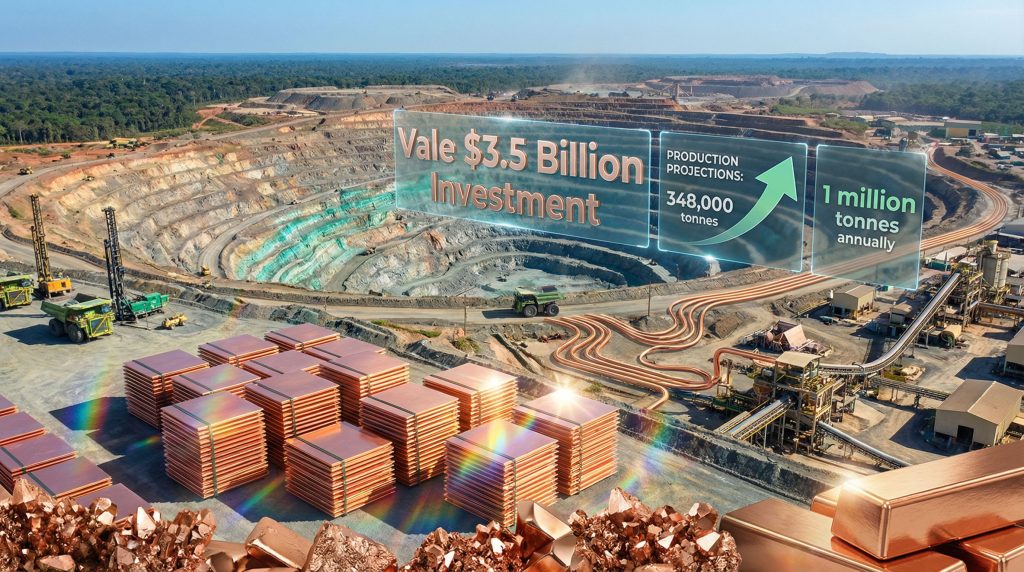
This analysis examines how a $3.5 billion capital deployment strategy by Vale could fundamentally alter Brazil's role in global copper markets while demonstrating the strategic value of satellite mine development over traditional greenfield approaches.
When big ASX news breaks, our subscribers know first
What Makes Brazil's Copper Investment Climate Suddenly Attractive to Mining Giants?
The convergence of multiple macro-economic factors has created compelling conditions for Vale copper investment in Brazil, driven primarily by structural demand shifts rather than cyclical price movements. Furthermore, understanding the key copper price drivers becomes essential for evaluating this investment opportunity.
Macro-Economic Drivers Behind Latin America's Copper Surge
Global copper demand projections indicate a dramatic acceleration in consumption patterns through 2035. The International Copper Association projects copper demand could increase from approximately 24 million tonnes in 2023 to between 35-40 million tonnes annually by 2035, driven primarily by energy transition infrastructure.
Renewable energy generation alone could account for 40% of new demand growth through 2035, according to the International Energy Agency's analysis of critical minerals in clean energy transitions. This demand profile differs fundamentally from historical copper consumption patterns, which were primarily industrial and construction-focused.
Electric vehicle production requirements further amplify this demand structure. Each electric vehicle requires approximately 3.5-4 kg of copper per vehicle, whilst traditional internal combustion engines use significantly more at 9-12 kg per vehicle. However, the total volume impact comes from production scale increases, with global EV manufacturing reaching 13.6 million units in 2023 and projected to reach 35 million units annually by 2030.
Infrastructure spending correlation with copper consumption becomes particularly relevant in the Latin American context. The Inter-American Development Bank values the regional infrastructure development pipeline at approximately $200+ billion across electric power, transportation, and water sectors (2023-2030), with copper intensity increasing substantially in grid modernisation projects.
Brazil's Strategic Positioning in Global Copper Supply Chains
Brazil's comparative advantage in copper development emerges from several structural factors that distinguish it from traditional copper-producing nations like Chile and Peru. In addition, the broader mining industry evolution provides context for understanding Brazil's emerging role.
The country's established mining regulatory framework, whilst complex, provides predictable pathways for expansion projects. Brazilian mining operations must comply with CONAMA (National Environmental Council) resolutions, specifically Resolution 1986/86 regarding environmental impact assessments, creating standardised procedures for project approval.
Logistical infrastructure represents another significant advantage. Brazil's existing export facilities and transportation networks, developed primarily for iron ore exports, can accommodate copper concentrate shipments with minimal additional capital investment.
Current market positioning shows Brazil producing approximately 350,000-400,000 tonnes of copper annually, representing a small fraction of global production compared to leaders like Codelco (Chile) at 1.7 million tonnes and Freeport-McMoRan at 1.4 million tonnes. This gap presents substantial opportunity for market share expansion.
How Does Vale's Carajás Strategy Compare to Traditional Copper Development Models?
Vale's approach to copper expansion through satellite mine development represents a strategic departure from conventional greenfield project models, offering superior capital efficiency and reduced execution risk. Moreover, investors seeking comprehensive copper investment strategies should examine this innovative approach closely.
Satellite Mine Development vs. Greenfield Projects
The comparative advantages of satellite development become evident when analysing project timelines and capital requirements:
| Development Approach | Permitting Duration | Capital Efficiency | Risk Profile | Infrastructure Requirements |
|---|---|---|---|---|
| Satellite Expansion | 3-7 years | High (15-25% cost reduction) | Lower | Leverage existing facilities |
| Greenfield Amazon | 10-15+ years | Medium | Higher | Complete new infrastructure |
| International Acquisition | Variable | Low | Highest | Integration complexity |
Satellite expansions leverage existing infrastructure and typically achieve 15-25% capital cost reductions compared to standalone greenfield projects, according to Wood Mackenzie's analysis of Latin American copper mining capital efficiency.
Environmental permitting in the Brazilian Amazon typically requires 18-36 months for environmental impact assessments, significantly shorter than establishing entirely new operational footprints. Indigenous consultation protocols, mandated under Brazilian Constitutional Article 231 and ILO Convention 169, follow established procedures when expanding existing mining complexes.
Infrastructure Leverage Economics
Vale's Salobo copper mine, which commenced production in 2016, provides the foundation for satellite development economics. The facility uses conventional open-pit mining with concentrator plant processing, creating opportunities for shared infrastructure utilisation.
Operational synergies include:
- Shared processing facilities: Concentrator plant capacity can accommodate additional throughput with incremental capital investment
- Transportation networks: Existing rail and port access reduces logistics development costs
- Workforce and expertise: Established operational teams minimise recruitment and training requirements
- Regulatory relationships: Ongoing environmental compliance and community engagement provide frameworks for expansion
Regulatory pathway optimisation strategies benefit from established relationships with Brazilian environmental agencies at both state and federal levels. Vale's existing environmental management systems in the Carajás region create templates for satellite project approval. Furthermore, implementing AI drilling innovations could enhance operational efficiency in these established systems.
What Are the Financial Engineering Aspects of Vale's $3.5 Billion Deployment?
The structured approach to capital allocation reflects sophisticated financial planning designed to minimise execution risk whilst maximising return on invested capital. Additionally, Vale's significant investment commitment demonstrates the potential scale of Vale's copper expansion strategy in the Carajás region.
Capital Allocation Timeline Analysis
Mining project capital deployment typically follows established phases aligned with production ramp trajectories and market condition validation. Industry best practices indicate:
- Foundation/Pre-development: 5-10% of total capital expenditure
- Development and infrastructure: 40-50% of total capital expenditure
- Production ramp-up and optimisation: 40-50% of total capital expenditure
This staged deployment reduces stranded asset risk by allowing project adjustments based on market conditions, technological developments, or operational performance.
Progressive investment schedules enable companies to validate market assumptions before committing full capital amounts. For copper mining projects, this approach proves particularly valuable given the long-term nature of demand forecasts and potential volatility in global economic conditions.
Return on Investment Projections
Break-even analysis for Brazilian copper operations typically considers both fixed and variable cost structures:
- Fixed costs: $1.20-1.60 per pound for well-established operations
- Variable costs: $0.80-1.20 per pound depending on ore grade and processing efficiency
- Break-even points: Generally occur at $1.80-2.20 per pound for marginal producers
Production volume scaling economics benefit from Brazil's relatively favourable cost position compared to higher-cost international operations. The country's stable energy costs and established supply chains support competitive production economics.
Market positioning value creation depends on Vale's ability to secure premium off-take agreements and long-term contracts that provide revenue stability throughout commodity cycles. However, comprehensive analysis of Brazil's Vale investment timeline reveals the ambitious scope of this expansion programme.
How Could This Investment Reshape Vale's Competitive Position in Global Copper Markets?
The scale of Vale copper investment in Brazil positions the company for significant market share expansion within the global copper industry hierarchy. Consequently, this strategic move could fundamentally alter competitive dynamics in global copper markets.
Production Volume Trajectory Analysis
Current global copper mine production leadership demonstrates the potential impact of successful expansion:
- Codelco (Chile): ~1.7 million tonnes annually
- Freeport-McMoRan (Indonesia/Peru): ~1.4 million tonnes annually
- Glencore (Multiple locations): ~1.3 million tonnes annually
- Vale (Current): ~350,000-400,000 tonnes annually
Successful execution of expansion plans could position Vale among global top-tier copper producers, representing an approximate doubling of current capacity and establishing the company as a significant force in global copper markets.
The timeline for achieving these production targets depends on successful execution of satellite mine development, market conditions supporting continued investment, and operational performance meeting projected parameters.
Market Share Implications
Market share expansion success depends on several critical factors:
- Global supply dynamics: Whether expanded Brazilian production coincides with supply deficits or surpluses
- Production cost positioning: Cost curve placement relative to competitors affects profit margins and market resilience
- Long-term contracting capability: Ability to secure premium off-take agreements with major consumers
Industry analysis suggests that copper market fundamentals support sustained investment in production capacity expansion, with structural demand from energy transition creating multi-decade demand visibility distinct from cyclical commodity dynamics.
What Are the Operational Risk Factors and Mitigation Strategies?
Large-scale copper expansion in the Brazilian Amazon involves multidimensional risk management encompassing environmental compliance, indigenous community relations, and political stability considerations. Moreover, the implementation of electric vehicles integration in mining operations presents both opportunities and challenges for operational efficiency.
Environmental and Regulatory Considerations
Brazilian Amazon mining operations face increasingly stringent environmental oversight, particularly following recent policy emphasis on deforestation reduction. Brazilian Amazon deforestation decreased by 64% in 2023 compared to 2022 and continued declining in early 2024, according to INPE monitoring data.
Environmental assessment requirements include:
- Environmental Impact Assessment (EIA – Estudo de Impacto Ambiental)
- Environmental Impact Report (RIMA – Relatório de Impacto Ambiental)
- Compliance with state and federal environmental agency requirements
- Ongoing monitoring and reporting obligations
Indigenous consultation protocols require engagement under Brazilian Constitutional Article 231 and ILO Convention 169, ratified by Brazil in 2002. These requirements mandate meaningful consultation with affected indigenous communities throughout project development and operation.
Political and regulatory stability risk mitigation involves maintaining consistent engagement with government agencies, environmental groups, and local communities to build sustainable operational consensus.
Technical Execution Challenges
Mining technology deployment in remote Amazon locations presents unique logistical and operational challenges:
Workforce Development: Latin American mining operations typically employ 1,000-3,000+ personnel per major copper mine, with local workforce development requirements creating both opportunities and obligations for community engagement.
Supply Chain Optimisation: Remote location operations require sophisticated supply chain management to ensure consistent equipment availability, maintenance capabilities, and operational continuity.
Technology Integration: Advanced mining techniques implementation in challenging geographical conditions requires careful planning and extensive testing before full-scale deployment.
The next major ASX story will hit our subscribers first
How Does This Investment Align with Global Copper Market Fundamentals?
Vale copper investment in Brazil aligns with several powerful demand drivers that distinguish current market conditions from historical commodity cycles. Furthermore, these market fundamentals support the strategic timing of this significant capital deployment.
Demand-Supply Balance Projections
Electric vehicle production forecasts indicate substantial copper requirement increases. Global EV production reached approximately 13.6 million units in 2023, with IEA projections indicating growth to 35 million units annually by 2030 in baseline scenarios.
Renewable energy capacity additions provide another significant demand driver. Solar and wind capacity additions reached approximately 385 GW globally in 2023, with projected growth to 620+ GW annually by 2030 in Net Zero scenarios, according to IRENA data.
Copper intensity calculations for energy infrastructure demonstrate the scale of demand implications:
- Solar PV installations: 15-20 tonnes copper per MW capacity
- Onshore wind turbines: 3.5-4 tonnes copper per MW capacity
- Electrical grid distribution: 1.5-2 tonnes copper per 100 km of transmission lines
Supply-demand balance indicators suggest the copper market has operated in deficit or tight balance conditions from 2020-2024, with projected supply-demand gaps of 4-6 million tonnes cumulatively by 2035 if production growth doesn't accelerate.
Price Volatility Management
Long-term contracting strategies become increasingly important as copper demand shifts toward infrastructure and technology applications with longer planning horizons than traditional industrial uses.
Currency hedging considerations prove particularly relevant for Brazilian operations, given the real's historical volatility against the US dollar, which serves as the primary pricing currency for copper sales.
Production flexibility optimisation enables operators to adjust output based on market conditions, though copper mining's capital-intensive nature limits short-term production adjustments compared to other commodities.
What Are the Broader Implications for Brazil's Mining Sector Development?
Vale copper investment in Brazil represents a significant catalyst for broader mining sector development and economic diversification within Brazil. Consequently, this investment could establish Brazil as a more prominent player in global copper markets.
Technology Transfer and Innovation Opportunities
Advanced mining technology adoption in Brazil has historically lagged behind Chilean and Peruvian standards in certain areas, creating substantial development opportunities:
- Digital mining and autonomous vehicles: Implementation of advanced automation technologies
- Advanced ore processing techniques: Deployment of sophisticated concentration and extraction methods
- Environmental monitoring and remediation technology: Integration of real-time environmental management systems
Local supplier development programmes create opportunities for Brazilian companies to develop specialised mining services capabilities, potentially establishing export industries for mining technology and services.
Research and development partnerships between Vale and Brazilian universities could accelerate innovation in tropical mining techniques, environmental management, and sustainable extraction practices.
Economic Multiplier Effects
Regional employment creation extends beyond direct mining jobs through supply chain and service sector development. Mining operations in remote regions typically generate employment multiplier effects of 2-3 additional jobs for each direct mining position.
Infrastructure development spillovers benefit broader regional economic development. Transportation networks, power generation, and telecommunications infrastructure developed for mining operations often serve multiple regional economic activities.
Export revenue diversification reduces Brazil's dependence on iron ore exports, which have historically dominated the country's mining sector contribution to foreign exchange earnings. Mining accounted for approximately 3.2% of Brazilian GDP in 2023 and represented 7-8% of total Brazilian exports.
How Should Investors Evaluate Vale's Copper Strategy Within Their Portfolios?
Investment analysis of Vale's copper expansion requires examination of both company-specific execution capabilities and broader market positioning within global copper supply chains. In addition, investors must consider the long-term implications of this strategic shift from iron ore concentration to copper diversification.
Investment Thesis Validation Framework
Production growth sustainability analysis should consider Vale's operational track record, available reserves, and execution capabilities for complex mining projects in challenging locations.
Capital efficiency benchmarking against peer companies provides context for evaluating the financial attractiveness of Brazilian copper development relative to alternative investment opportunities in Chile, Peru, or other established copper regions.
Management execution track record analysis becomes particularly important given the scale and complexity of Amazon region mining operations. Vale's experience with large-scale iron ore operations provides relevant capabilities, though copper mining involves different technical and market considerations.
Comparative Valuation Considerations
Peer company copper investment strategies offer benchmarks for evaluating Vale's approach. Major copper producers like Freeport-McMoRan and Glencore provide relevant comparisons for capital deployment efficiency and return generation.
Asset quality and reserve life evaluation requires assessment of ore grades, extraction costs, and long-term sustainability of copper production from Brazilian operations compared to international alternatives.
Disclaimer: This analysis contains forward-looking projections and assumptions about copper market conditions, production timelines, and investment returns. Actual results may differ materially from these projections due to market volatility, operational challenges, regulatory changes, or other factors beyond company control. Investors should conduct independent research and consider multiple scenarios when evaluating mining sector investments.
The success of Vale copper investment in Brazil depends on successful execution of complex operational plans, favourable market conditions, and continued political stability in Brazil. These factors introduce significant uncertainty that investors must carefully consider within their risk management frameworks.
Looking to Capitalise on Major Mining Discoveries?
Discovery Alert's proprietary Discovery IQ model delivers instant notifications on significant ASX mineral discoveries, transforming complex market data into actionable investment insights for both short-term traders and long-term investors. Visit Discovery Alert's dedicated discoveries page to explore historic examples of exceptional returns from major mineral discoveries, then begin your 14-day free trial to position yourself ahead of the market with real-time alerts powered by advanced AI technology.