July 23, 2026
When Energy Security Collides With Environmental Protection
Across advanced economies, the policy tension between securing reliable energy supplies and safeguarding sensitive natural environments has rarely been more acute. In Australia, that tension is crystallising around a single legislative proposal, with South Australia lifting the fracking ban reigniting a debate most observers assumed was settled. Understanding what is actually at stake requires stepping back from the politics and examining the structural forces that have made this moment almost inevitable.
When big ASX news breaks, our subscribers know first
Why Australia's East Coast Gas Market Is Under Severe Pressure
The 2030 Supply Shortfall and What It Actually Signals
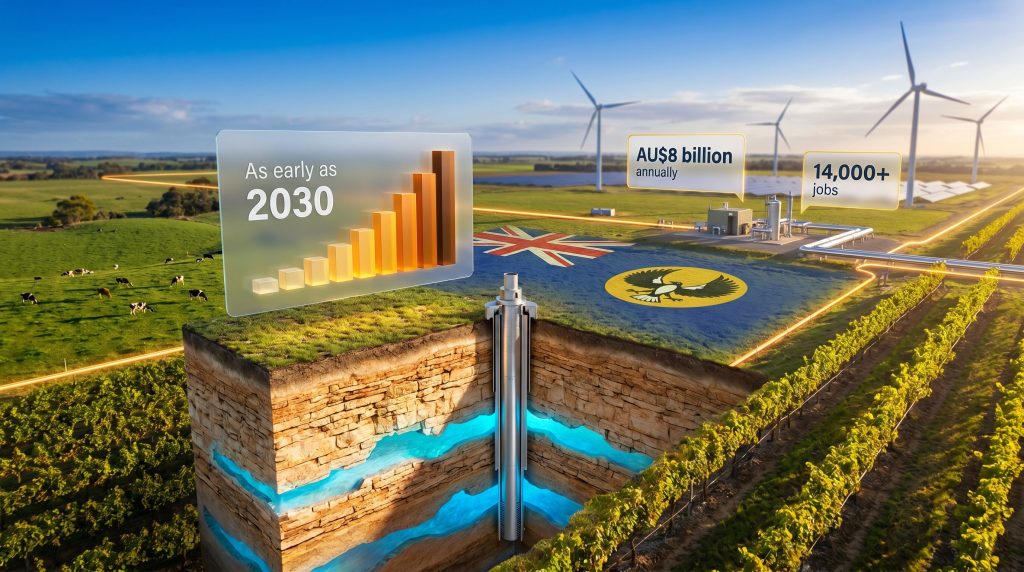
The Australian Energy Market Operator has formally projected a gas supply shortfall for south-eastern Australia emerging as early as 2030. This is not a worst-case scenario buried in a technical appendix — it is a central finding that has shifted the tenor of energy policy discussions across multiple state jurisdictions.
The structural drivers behind this projection are well understood within the industry, even if they receive limited public attention:
- Legacy basin production in south-eastern Australia has been declining for years as mature fields naturally deplete without sufficient new development replacing them
- Industrial gas demand, particularly from heavy manufacturing and energy-intensive processing, continues to grow rather than contract
- The LNG supply outlook remains constrained by infrastructure gaps and cost competitiveness challenges specific to the east coast market configuration
- The east coast gas market lacks the domestic reservation framework that gives Western Australia greater insulation from export-driven supply tightening
Market Structure Note: Western Australia mandates that a share of gas produced from LNG projects is reserved for domestic consumption. No equivalent federal reservation framework applies to the east coast, meaning export commitments can tighten domestic availability in ways that WA producers cannot replicate.
South Australia's Specific Vulnerability
South Australia occupies a paradoxical position in the national energy landscape. It has built one of the most advanced renewable electricity portfolios in the world, with wind and solar generation contributing the majority of its electricity supply. Yet that very achievement creates a structural dependency on gas as a dispatchable backup — the resource that fills the gaps when the sun does not shine and the wind does not blow.
That dependency is compounded by the state's industrial ambitions. The Whyalla Steelworks, which is undergoing a significant transformation, requires a reliable long-term gas supply as a core operational input. A recent reserve agreement between the South Australian government and Santos was structured specifically to support this industrial transformation — a signal that the state is already operating closer to its comfortable supply margins than most public commentary acknowledges.
| Factor | Current Status |
|---|---|
| AEMO-projected shortfall | As early as 2030 |
| Primary supply pressure | Declining legacy basin output |
| Industrial demand trajectory | Rising, particularly in manufacturing |
| Dispatchable gas role | Critical backup to renewable generation |
| Current fracking zones in SA | All regions except the Limestone Coast |
What South Australia Lifting the Fracking Ban Would Actually Mean
A Targeted Moratorium With a Specific History
The moratorium on hydraulic fracture stimulation in South Australia's Limestone Coast and South East region was introduced in 2018, reflecting concerns about the area's unique hydrogeological characteristics, high-value agricultural land, and the community values attached to both. Critically, fracking has been legally permitted across all other regions of South Australia since the 1960s — meaning this was never a state-wide prohibition but a geographically targeted carve-out applied to one particularly sensitive region.
This distinction matters enormously when evaluating the Premier's central argument: that a technique applied safely in other parts of the same state for more than six decades should at least be eligible for scientific assessment in the South East, rather than being rejected categorically before any site-specific evaluation occurs.
The Legislation: What It Does and Does Not Do
Premier Peter Malinauskas has been explicit that the bill being introduced to parliament would remove the blanket prohibition rather than approve any specific fracking operations. Under the proposed framework:
- Mining companies would gain the ability to apply for exploration licences in the South East
- Exploratory geological assessment, seismic surveys, and scientific studies would be conducted under existing regulatory requirements
- If viable resources were identified, a separate and distinct formal approval process would apply
- Any operational approval would require environmental impact assessment and extensive landowner engagement
- South Australia's existing petroleum and geothermal energy legislation would govern all phases
Policy Precision: The difference between lifting a prohibition and approving extraction is not merely semantic. It is the structural difference between a blanket rule applied regardless of evidence and a case-by-case assessment that weighs specific scientific and environmental data for each proposal.
Why the Limestone Coast Requires Its Own Assessment
The region presents engineering and environmental challenges that differ meaningfully from other parts of South Australia where fracking has operated without major documented incidents. The Limestone Coast sits above a karst aquifer system — a geology formed by the dissolution of soluble limestone rock that creates underground drainage networks, caves, and highly interconnected water movement pathways.
This karst architecture means that conventional assumptions about aquifer separation and groundwater flow may not hold in the same way they do in denser, less permeable geological formations. The primary community concern is not fracking in the abstract but the specific vulnerability of this groundwater system to contamination, given how deeply integrated those aquifers are with both agricultural water supply and the regional ecosystem.
The Economic Case: A Sector Already Generating Significant Value
What South Australia's Gas Industry Currently Contributes
South Australia's existing gas industry already demonstrates the scale at which a well-functioning gas sector can contribute to a state economy:
| Economic Metric | Current Estimated Value |
|---|---|
| Annual economic contribution | AU$8 billion |
| Jobs supported (direct and downstream) | 14,000+ |
| Current permitted fracking zones | All SA regions except Limestone Coast |
| Potential new exploration zone | South East / Limestone Coast |
Australian Energy Producers CEO Samantha McCulloch has emphasised that natural gas underpins energy reliability for households, commercial businesses, and major industrial operations across the state. The industry's position is that maintaining exploration optionality in the South East is necessary to preserve the conditions under which those contributions can continue and grow.
The Industrial Competitiveness Argument
The connection between gas supply security and South Australia's industrial base is not hypothetical. Energy-intensive industries require both price stability and supply certainty to make long-term capital investment decisions. When either is uncertain, investment either shifts interstate or internationally, or it simply does not occur.
The Whyalla Steelworks transformation illustrates this dependency concretely. The steelworks' industrial future is partly contingent on securing long-term gas supply at competitive prices. The government's reserve agreement with Santos reflects an acknowledgement that relying exclusively on spot market dynamics is insufficient to anchor major industrial transformation investment.
Furthermore, the broader argument made by industry advocates is that domestic gas development is structurally more cost-effective and supply-secure than dependence on LNG imports or interstate pipeline arrangements, both of which introduce additional cost layers, infrastructure dependencies, and counterparty risk into the supply chain. Concerns around Australia's energy exports similarly reinforce the case for strengthening domestic supply options.
The Debate: Where Support and Opposition Align
The Pro-Exploration Coalition
The grouping in favour of lifting the ban spans government, industry bodies, and producer organisations:
- SA Labor Government: Frames the move as pragmatic energy security policy rather than ideological energy expansion, emphasising the scientific assessment phase as distinct from extraction approval
- Australian Energy Producers: Formally endorses the announcement, connecting it to state energy security and industrial competitiveness
- SA Chamber of Mines and Energy: Supports the shift from blanket prohibition to evidence-based regulatory assessment
- Santos alignment: The pre-existing gas reserve agreement with the state government suggests the major producer is already embedded in the state's energy security planning
The Opposition: Community, Environment, and Agriculture
Opposition is concentrated among stakeholders with direct exposure to the region's land and water assets:
- Environmental advocacy groups have drawn attention to the apparent contradiction between South Australia's renewable energy leadership position and an expansion of fossil fuel exploration
- Farmers and winemakers in the region raise concerns about land access disruption and the potential reputational damage to high-value regional products
- Community members have expressed a sense that earlier government assurances about the permanence of the 2018 moratorium have been reversed, creating a trust deficit that extends beyond the specific policy question
Community Sentiment: "The concern among some residents is not only about groundwater risk in technical terms, but about whether regional communities can rely on government commitments made in the context of environmental protections. That trust dimension may prove as politically consequential as the environmental debate itself."
The Political Mathematics
The bill's passage is not assured. SA Labor does not hold a majority in the Legislative Council, and the Premier has publicly acknowledged that the bill could fail without support from the Liberal Party and/or One Nation in the Upper House. The public comment period opened alongside the announcement serves both to gather community input and to build a visible record of civic engagement before the critical Upper House vote.
How Hydraulic Fracturing Works and Where the Real Risks Lie
The Technical Process
Hydraulic fracture stimulation is a well-established extraction technique, but its application is always site-specific. The core process involves:
- Well drilling: A well is drilled vertically to the target formation, often transitioning to a horizontal section to maximise contact with the gas-bearing rock
- Wellbore casing and cementing: Steel casing is inserted and cemented into place, creating a sealed barrier between the wellbore and surrounding geological formations, including aquifers
- Perforation: The casing is perforated at the target depth to allow fluid contact with the formation
- High-pressure fluid injection: A mixture of water, sand (the proppant), and chemical additives is pumped at high pressure to create fractures in the rock
- Fracture propping: Sand particles lodge in the fractures, holding them open after pressure is released so gas can flow through
- Flowback and production: Gas flows back through the wellbore to the surface, accompanied by flowback fluid that requires treatment and management
The proppant — typically sand — is a critical component that determines how effectively fractures remain open and how efficiently gas can be produced. The selection of proppant size and specification is formation-specific and influences both production rates and long-term well performance.
Groundwater Risk: What the Evidence Shows
The primary documented risk in hydraulic fracturing operations is wellbore integrity failure — a breach in the casing or cement that allows fluids to migrate between geological formations. Modern casing standards and cementing protocols are specifically designed to prevent this, however the risk is not zero and depends heavily on the quality of construction, geological complexity, and ongoing monitoring.
For the Limestone Coast's karst geology, this risk profile is distinct from operations in conventional tight-rock formations for several reasons:
- Karst systems are highly interconnected, meaning contamination that reaches one part of the network can migrate further and faster than in conventional aquifer systems
- The dissolution features characteristic of limestone geology can create pathways for fluid movement that are difficult to fully characterise in advance
- Standard baseline aquifer assumptions used in other formations may underestimate the interconnectivity of the regional groundwater system
South Australia's existing petroleum legislation requires operators to conduct baseline environmental assessments, demonstrate wellbore integrity, and engage with landowners prior to any surface disturbance. These requirements would apply in the South East if the moratorium is lifted — but their adequacy for karst-specific risk is precisely what the scientific assessment phase would need to evaluate.
Lessons From Other Australian Jurisdictions
The Northern Territory's independent scientific inquiry into onshore gas development established a detailed conditions framework before approving hydraulic fracturing, demonstrating that evidence-based assessment can yield actionable conclusions rather than indefinite prohibition. Queensland's coal seam gas industry has operated under a regulated framework for more than a decade, generating an operational track record that includes both documented environmental management successes and areas where monitoring systems were stress-tested.
Neither jurisdiction's experience translates directly to the Limestone Coast because geological conditions differ. However, both demonstrate that regulatory frameworks can be designed and calibrated to site-specific risks rather than applying uniform standards regardless of local geology.
The next major ASX story will hit our subscribers first
What Happens Next: The Legislative and Regulatory Pathway
Parliamentary Milestones
The process from announcement to outcome involves several distinct stages:
- Bill introduction: The legislation is introduced to the SA House of Assembly, where the Labor government holds sufficient numbers for passage
- Lower House vote: Expected to pass given the government's position in the House of Assembly
- Public comment period: Community submissions inform both parliamentary debate and, if the bill passes, regulatory design
- Legislative Council vote: The critical decision point, requiring crossbench support from the Liberal Party and/or One Nation
- Regulatory framework development: If passed, the Department for Energy and Mining would develop specific conditions applicable to the South East region
If the Moratorium Is Lifted: A Multi-Year Timeline
Even if the bill passes, the path to any actual gas production in the South East would span multiple years at minimum:
- Phase 1: Geological and geophysical assessment through seismic surveys and desktop studies
- Phase 2: Exploratory drilling under individual regulatory approvals, environmental impact assessment, and landowner agreements
- Phase 3: Resource determination to establish whether commercially viable reserves exist
- Phase 4: Development application under a separate approval process if viable resources are confirmed
This multi-stage reality is important context for community concerns: lifting the ban does not mean drilling begins immediately. It means the evidence-gathering process that would determine whether drilling is justified can commence.
If the Bill Fails: Alternative Supply Pathways
A Legislative Council rejection would not eliminate the underlying supply problem that motivated the proposal. Alternative pathways for east coast gas security would include:
- Accelerated exploration in already-permitted SA regions and other eastern states
- Expanded interstate pipeline capacity and more active gas trading arrangements
- LNG import terminal development for south-eastern Australia, a concept that has been evaluated in various forms for several years
- Demand-side efficiency programs targeting industrial gas consumption
The Broader Context: Australia's Domestic Gas Dilemma
A National Pattern of Policy Reassessment
South Australia's reconsideration of its fracking moratorium reflects a pattern occurring across Australian jurisdictions as the gap between projected gas demand and available domestic supply narrows. The structural tension is straightforward: Australia is among the world's largest LNG exporters, yet domestic consumers on the east coast face supply constraints and price pressures that exporters operating from the same resource base do not experience in the same way.
Consequently, state-level decisions about exploration permitting have become focal points for national energy security debates in a way that would have seemed disproportionate a decade ago. What happens in South Australia's Legislative Council chamber has implications that extend well beyond the Limestone Coast. Shifting natural gas price trends at the national level only reinforce how consequential these state-level decisions have become.
Gas as a Transition Fuel: The Contested Middle Ground
The deeper strategic question is whether natural gas functions as a transition fuel that supports the shift to renewable energy by providing reliable dispatchable backup, or whether it represents a long-term emissions liability that prolongs fossil fuel dependency. The energy transition demand for cleaner alternatives is genuine and growing, yet gas remains operationally critical to grid stability in the short to medium term.
South Australia's situation encapsulates this tension precisely. The state has invested heavily in renewable generation and achieved a genuinely remarkable electricity sector transformation. Yet that transformation has increased rather than decreased the operational importance of gas for grid stability. The paradox is real and does not resolve easily in either direction.
Furthermore, South Australia lifting the fracking ban has drawn national and international attention as a test case for how resource-rich states balance environmental commitments with pragmatic energy security needs.
Disclaimer: This article contains forward-looking statements and projections sourced from publicly available forecasts, including those produced by AEMO and industry bodies. These projections are subject to change and do not represent guaranteed outcomes. Nothing in this article constitutes financial, investment, or legal advice. Readers should conduct independent research and seek professional advice before making decisions based on any information contained herein.
Frequently Asked Questions: South Australia Fracking Ban
What is the South Australia fracking ban?
The moratorium on hydraulic fracture stimulation in South Australia's South East and Limestone Coast region was introduced in 2018 to protect sensitive agricultural land and karst groundwater systems. Fracking remains legally permitted in all other parts of the state and has been conducted there since the 1960s.
Why is South Australia considering lifting the fracking ban now?
The Australian Energy Market Operator has projected a gas supply shortfall for south-eastern Australia as early as 2030. The state government argues that a blanket prohibition prevents even the preliminary scientific assessment of whether viable gas resources exist beneath the South East, making evidence-based decision-making impossible.
Would South Australia lifting the fracking ban mean drilling starts immediately?
No. Removing the moratorium would allow mining companies to apply for exploration licences and conduct geological and scientific assessments. Any actual hydraulic fracturing operations would require separate regulatory approvals, environmental impact assessments, and direct engagement with landowners.
What are the main concerns about lifting the ban?
Environmental groups and community members are primarily concerned about risks to the Limestone Coast's karst aquifer system and potential impacts on water quality and agricultural land. In addition, there is a trust dimension: some residents feel the government is reversing commitments made when the 2018 ban was introduced.
Who needs to support the bill for it to pass?
SA Labor does not control the Legislative Council. The bill requires crossbench support from the Liberal Party and/or One Nation to pass the Upper House.
How much does SA's existing gas industry contribute to the economy?
South Australia's gas industry currently contributes approximately AU$8 billion annually to the state economy and supports more than 14,000 jobs across production, processing, and downstream sectors.
Want to Stay Ahead of the Next Major ASX Resource Discovery?
Discovery Alert's proprietary Discovery IQ model delivers real-time alerts on significant ASX mineral discoveries — cutting through complex data to surface actionable opportunities the moment they are announced. Explore Discovery Alert's discoveries page to understand how historic finds have generated substantial returns, and begin your 14-day free trial today to position yourself ahead of the broader market.