June 11, 2026
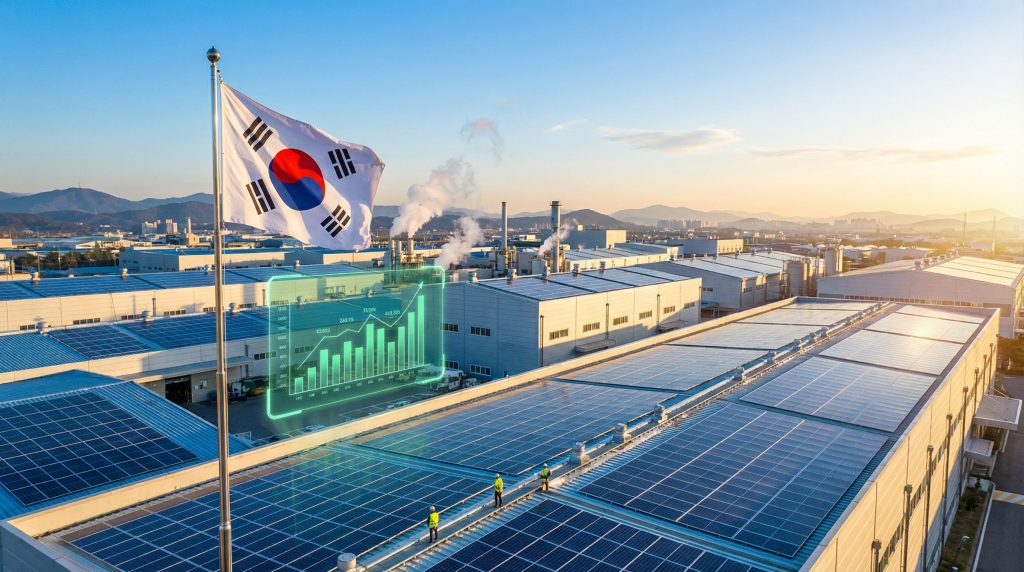
South Korea's aggressive industrial transformation is driving unprecedented changes in manufacturing energy infrastructure as the South Korea rooftop solar mandate reshapes how factories approach renewable generation. This regulatory initiative reflects broader geopolitical pressures and energy security concerns that are compelling industrial facilities across the nation to integrate solar technologies directly into their operations. Furthermore, the mandate represents a critical component of national decarbonisation benefits strategies while addressing supply chain vulnerabilities exposed by recent global disruptions.
Regulatory Framework Behind South Korea's Factory Solar Requirements
The South Korea rooftop solar mandate establishes comprehensive installation requirements for industrial facilities through a structured regulatory approach. New factory construction will face mandatory solar integration as part of the permitting process insights, while existing industrial complexes receive phased implementation timelines based on facility size and energy consumption patterns.
Policy Coverage Scope Overview:
| Facility Type | Implementation Timeline | Minimum Capacity | Exemptions Available |
|---|---|---|---|
| New Manufacturing Plants | Immediate upon construction | 500kW minimum | None for standard facilities |
| Existing Large Complexes | 24-month compliance period | Based on roof area | Historical buildings only |
| Industrial Parks | Coordinated rollout by 2028 | Collective targets | Emergency service facilities |
| Warehouse Facilities | 36-month implementation | 200kW minimum | Structural limitations |
The regulatory architecture integrates with existing Renewable Portfolio Standards through the Ministry of Climate, Energy and Environment. Compliance mechanisms include regular capacity audits, grid integration certifications, and penalty structures for non-compliance.
Factory operators must demonstrate both installation completion and operational capacity verification through quarterly reporting requirements. Additionally, enforcement protocols establish clear consequences for regulatory violations while providing technical assistance programs for smaller manufacturers.
The framework includes appeals processes for facilities facing legitimate structural or operational constraints that prevent solar installation. However, exemptions remain limited to ensure broad industry participation in renewable energy transformation.
When big ASX news breaks, our subscribers know first
Strategic Energy Security Drivers Behind Industrial Solar Acceleration
Geopolitical instability in energy-producing regions has accelerated South Korea's focus on domestic renewable generation capacity. The current Middle East crisis has highlighted vulnerabilities in import-dependent energy systems, prompting industrial policy makers to prioritise on-site generation capabilities across manufacturing sectors.
Import dependency reduction targets aim to decrease foreign energy reliance by 35% within the next decade. This strategic shift requires industrial facilities to become energy producers rather than passive consumers, fundamentally altering the relationship between manufacturing operations and grid infrastructure.
Manufacturing cost optimisation through on-site generation provides long-term operational advantages beyond immediate energy savings. Industrial facilities with integrated solar systems can:
- Reduce exposure to volatile electricity pricing
- Maintain production continuity during grid disruptions
- Access preferential financing for renewable energy investments
- Qualify for carbon reduction incentives and tax benefits
- Enhance competitiveness in export markets with sustainability requirements
Economic competitiveness in global markets increasingly depends on environmental credentials and energy independence. South Korean manufacturers implementing comprehensive solar integration position themselves advantageously for international contracts requiring verified sustainability metrics.
The Korean government's initiative represents a significant step towards energy security whilst addressing climate commitments through industrial sector transformation.
Technical Specifications and Infrastructure Implementation Challenges
Engineering requirements for factory solar systems demand sophisticated integration planning that balances energy generation with structural integrity. Industrial rooftops must support additional load calculations while maintaining safety standards for workers and equipment access.
Key Technical Standards for Industrial Solar Systems:
Structural Load Requirements: Industrial solar installations must account for wind resistance, snow loading, and seismic considerations specific to manufacturing environments. Roof reinforcement may be required for facilities exceeding 20 years of age.
Grid Integration Specifications: Systems require bidirectional inverters capable of managing both consumption and generation cycles. Smart meter installations enable real-time monitoring and automated load balancing.
Safety Protocol Standards: Emergency shutdown systems, fire suppression compatibility, and maintenance access pathways must meet industrial safety regulations while accommodating solar equipment.
Infrastructure readiness assessment reveals significant challenges in grid capacity management. Many industrial zones lack sufficient transmission infrastructure to handle bidirectional energy flows from multiple solar installations.
Distribution transformers require upgrades to manage variable generation patterns throughout daily production cycles. Consequently, energy storage integration becomes critical for facilities with irregular production schedules or high peak demand requirements.
Battery systems sized appropriately for industrial applications range from 500kWh to 5MWh depending on facility energy consumption patterns and backup power needs. Moreover, grid stability concerns emerge when multiple large-scale industrial solar systems operate within concentrated geographic areas.
Materials Demand Impact Across Solar Supply Chains
Aluminium market implications for solar infrastructure represent one of the most significant material demand shifts associated with industrial solar mandates. Frame and mounting structure requirements create substantial consumption increases across the aluminium supply chain.
Material Demand Projections for Industrial Solar Expansion:
| Material Category | Annual Demand Increase | Supply Chain Impact | Price Pressure Risk |
|---|---|---|---|
| Aluminium Frames | 150,000 metric tons | Moderate supply strain | 8-12% price increase |
| Steel Mounting | 200,000 metric tons | Manageable expansion | 3-5% price increase |
| Solar Glass | 2.5 million square metres | Capacity constraints | 15-20% price increase |
| Copper Wiring | 75,000 metric tons | Existing supply adequate | 2-4% price increase |
Aluminium consumption estimates for solar mounting systems require specialised alloy compositions that provide corrosion resistance and structural durability. Industrial installations demand heavier-duty mounting hardware compared to residential applications, increasing per-project aluminium requirements by approximately 40%.
Supply chain capacity analysis indicates potential bottlenecks in specialised solar aluminium products. Domestic aluminium producers may need to expand extrusion capabilities specifically for solar mounting applications to meet projected demand increases.
Broader industrial materials assessment encompasses steel components for ground-mounted systems, specialised glass for high-efficiency panels, and semiconductor materials for inverter systems. Furthermore, supply chain localisation opportunities emerge as domestic demand reaches scales that justify local production investments.
Import substitution potential exists for several solar components currently sourced internationally. Establishing domestic supply chains for critical materials reduces vulnerability to trade disruptions while supporting local employment in manufacturing sectors.
Financial Mechanisms Supporting Industrial Solar Adoption
Investment structure frameworks incorporate community participation models that distribute solar project benefits beyond factory operators. Local communities can purchase equity stakes in industrial solar installations, receiving proportional returns from energy sales and carbon credit revenues.
Profit-sharing arrangements typically allocate 15-25% of solar project returns to community investment pools. These mechanisms create local support for industrial renewable energy projects while providing residents with inflation-protected investment opportunities.
ROI Calculations for Industrial Solar Projects:
Small Manufacturing Facilities (500kW-1MW): Typical payback periods range from 6-8 years with annual energy savings of $85,000-$170,000. Total return on investment reaches 12-15% over 20-year system lifecycles.
Medium Industrial Complexes (1MW-5MW): Payback periods decrease to 5-7 years due to economies of scale. Annual savings range from $170,000-$850,000 with ROI approaching 15-18%.
Large Manufacturing Parks (5MW+): Accelerated payback of 4-6 years reflects optimal system sizing and bulk purchasing advantages. Annual savings exceed $850,000 with ROI potential of 18-22%.
Revenue distribution frameworks ensure equitable benefit sharing between industrial operators and community stakeholders. Transparent accounting systems track energy production, sales revenues, and operational costs to calculate appropriate profit distributions.
Cost-benefit analysis for factory operators extends beyond direct energy savings to include operational resilience values. Production continuity during grid outages provides substantial value for manufacturers with time-sensitive operations or perishable inventory management requirements.
International Benchmark Analysis of Industrial Solar Policies
Global industrial solar mandates demonstrate varying approaches to mandatory renewable integration across different economic and regulatory environments. European models emphasise gradual phase-in periods with extensive technical support programmes, while emerging markets often implement more aggressive timelines with limited compliance flexibility.
Global Industrial Solar Mandate Comparison:
| Country/Region | Mandate Scope | Implementation Timeline | Success Metrics |
|---|---|---|---|
| Germany | Manufacturing facilities >10MW demand | 5-year phase-in completed 2023 | 85% compliance rate |
| California, USA | New industrial construction only | Immediate upon permitting | 92% installation rate |
| Netherlands | All industrial roof space >1,000m² | 7-year implementation period | 78% completion status |
| China | Export-oriented manufacturing | Mandatory since 2024 | 96% compliance rate |
European industrial energy transition models prioritise grid integration stability and workforce retraining programmes. German manufacturers receive substantial technical assistance during solar installation planning, resulting in higher compliance rates but slower overall implementation speeds.
Chinese manufacturing solar integration achieves rapid deployment through centralised planning and state-directed financing. However, grid stability challenges emerge in regions with concentrated industrial solar capacity, requiring significant transmission infrastructure investments.
Best practices from leading markets emphasise the importance of coordinated implementation schedules that prevent grid overloading. Successful programmes include mandatory pre-installation grid impact assessments and coordinated timing requirements for large industrial zones.
International collaboration frameworks facilitate technology transfer and financing mechanisms for industrial solar projects. Bilateral agreements between South Korea and leading solar markets can accelerate implementation while reducing technology costs through bulk procurement arrangements.
The next major ASX story will hit our subscribers first
Grid Integration and Energy Storage Infrastructure Requirements
Managing solar variability in industrial applications requires sophisticated energy management systems that coordinate renewable generation with production scheduling. The duck curve phenomenon creates particular challenges for manufacturing facilities that operate continuous processes requiring stable power supply.
Peak demand alignment strategies become critical for optimising solar generation value. Industrial facilities can adjust production schedules to maximise use of solar generation during peak output hours, reducing grid electricity purchases and improving overall system economics.
Backup power system requirements for industrial facilities often exceed standard commercial applications due to critical process needs. Solar installations must integrate seamlessly with existing backup generators and uninterruptible power supplies to maintain operational continuity.
Grid Infrastructure Development Priorities:
- Transmission Capacity Expansion: Industrial zones require upgraded transmission lines capable of handling bidirectional power flows from multiple solar installations
- Substation Enhancement: Distribution substations need advanced voltage regulation equipment and automated switching capabilities
- Smart Grid Implementation: Real-time monitoring systems enable dynamic load management and grid stability optimisation
- Energy Storage Integration: Battery systems provide grid stabilisation services while offering backup power for critical industrial processes
Smart grid development requirements include advanced metering infrastructure that enables real-time communication between industrial solar systems and grid operators. Automated demand response capabilities allow temporary reduction in non-critical loads during grid stress periods.
Transmission infrastructure expansion needs focus on strengthening connections between industrial zones and major grid distribution centres. Inadequate transmission capacity can limit the value of distributed solar generation and create curtailment requirements during peak production periods.
Integration with South Korea's Broader Decarbonisation Strategy
National climate goals targeting 100 GW renewable capacity require coordinated implementation across multiple sectors beyond industrial manufacturing. The South Korea rooftop solar mandate represents approximately 15-20% of total renewable capacity targets, necessitating parallel developments in residential, commercial, and utility-scale solar deployment.
Coal phase-out timeline coordination ensures that renewable capacity additions align with fossil fuel retirement schedules. Industrial solar installations provide distributed generation that can partially offset coal plant closures while maintaining grid reliability.
Sectoral emission reduction contributions from industrial solar extend beyond direct electricity generation to include process heat applications. High-temperature heat pumps powered by solar electricity can replace natural gas burners in many manufacturing processes.
Cross-sector electrification synergies emerge as industrial facilities implement comprehensive renewable energy systems. Electric vehicle fleet charging infrastructure can utilise excess solar generation during low production periods, optimising overall system economics.
Heat pump adoption in industrial facilities requires significant electrical capacity that solar installations can provide without increasing grid demand. Geothermal and air-source heat pumps can replace fossil fuel heating systems when supported by adequate renewable generation capacity.
Hydrogen economy development connections create opportunities for industrial facilities to become hydrogen production centres using excess solar generation. Electrolysis systems can convert surplus renewable electricity into storable hydrogen for industrial processes or transportation applications.
The broader implications of this policy shift align with critical minerals energy transition requirements as demand for renewable technologies increases mineral extraction needs globally.
Implementation Challenges and Risk Assessment
Technical barriers to rapid solar expansion include skilled workforce availability for installation and maintenance operations. The accelerated timeline requires training programmes to develop sufficient technical expertise across multiple specialised trades.
Risk Assessment for Industrial Solar Implementation:
Grid Stability Concerns: Rapid expansion of distributed solar generation can create voltage regulation challenges and frequency stability issues. Advanced grid management systems and energy storage deployment are essential mitigation strategies.
Skilled Workforce Availability: Installation, maintenance, and system integration require specialised technical skills. Training programmes and certification standards need expansion to meet projected demand.
Technology Cost Fluctuations: Solar panel and battery storage costs remain volatile due to supply chain disruptions and material price variations. Long-term procurement contracts can provide cost certainty for industrial projects.
Economic barriers include initial capital requirements that may strain cash flow for smaller manufacturers. Financing mechanisms and government incentive programmes become critical for achieving broad industry participation in solar installation programmes.
Regulatory hurdles encompass permitting process optimisation needs that can delay project implementation. Streamlined approval procedures for standard solar installations can accelerate deployment while maintaining safety and quality standards.
Local government coordination requirements vary significantly across different industrial zones and municipal jurisdictions. Standardised approval processes and coordinated implementation schedules can reduce administrative complexity for multi-facility manufacturers.
Environmental impact assessment protocols must balance renewable energy benefits with potential ecological concerns. Rooftop installations generally have minimal environmental impact, but ground-mounted systems in industrial parks may require more detailed environmental review.
Strategic Implications for Industrial Competitiveness and Investment
Manufacturing sector transformation through mandatory solar integration creates competitive advantages for early adopters while potentially disadvantaging facilities that delay implementation. Energy cost differentials between solar-equipped and conventional facilities may influence location decisions for new industrial investments.
Foreign investment attraction through green credentials becomes increasingly important as international corporations prioritise sustainability in supply chain decisions. South Korean manufacturers with verified renewable energy integration can access premium contracts with environmentally conscious international buyers.
Export competitiveness in carbon-conscious markets requires documented renewable energy usage for manufactured products. Solar installation certificates and renewable energy tracking systems become valuable marketing tools for Korean exports to European and North American markets.
Green technology manufacturing opportunities emerge as domestic demand for solar components reaches scales that justify local production investments. Component manufacturing facilities can themselves implement solar installations, creating vertically integrated renewable energy supply chains.
Energy independence economic benefits extend beyond individual facilities to national economic resilience. Reduced energy import requirements improve trade balance while creating domestic employment opportunities in renewable energy sectors.
Industrial modernisation acceleration through solar integration often catalyses broader facility upgrades including energy efficiency improvements, process automation, and digital monitoring systems. These comprehensive upgrades enhance overall competitiveness beyond direct energy cost savings.
What Are the Long-term Economic Development Implications?
Long-term economic development implications include positioning South Korea as a leader in industrial renewable energy integration. This leadership can attract international partnerships and technology transfer opportunities that benefit the broader economy.
Implementation timeline realism requires careful coordination between regulatory requirements, infrastructure development, and industry capacity for rapid deployment. Successful execution demands flexible implementation schedules that accommodate legitimate technical constraints whilst maintaining overall programme momentum.
These developments reflect broader industry evolution trends as manufacturing sectors globally adapt to environmental regulations and energy security requirements. Furthermore, insights from recent innovation expo insights demonstrate how technological advances support industrial transformation initiatives.
How Will Stakeholder Coordination Affect Programme Success?
Stakeholder coordination effectiveness determines programme success across multiple government agencies, industrial associations, and community organisations. Clear communication channels and regular progress monitoring ensure coordinated implementation across diverse stakeholder groups.
Technology cost trajectory management through bulk procurement and long-term supply agreements can provide cost predictability for industrial solar projects. Government coordination of purchasing programmes may achieve economies of scale that benefit all participating manufacturers.
Future expansion potential includes extending similar mandates to residential and commercial sectors once industrial implementation demonstrates successful integration models. Regional policy replication opportunities may emerge as other countries observe South Korean industrial solar deployment outcomes.
This analysis is based on publicly available information and industry trends. Readers should conduct independent research and consult with qualified professionals before making investment or business decisions related to renewable energy projects or industrial policy developments.
Looking to Capitalise on Asia's Renewable Energy Infrastructure Boom?
Discovery Alert's proprietary Discovery IQ model delivers real-time notifications about significant mineral discoveries across critical materials sectors, including lithium, rare earths, and copper essential for solar technology expansion. Understanding how major mineral discoveries can generate substantial returns becomes crucial as renewable energy mandates drive unprecedented demand for these materials, and you can begin your 14-day free trial today to position yourself ahead of the market.