May 12, 2026
What Drives South32's Share Price Performance in the Current Market?
South32 share price dynamics reflect broader mining sector complexities while maintaining distinct characteristics through strategic commodity diversification. The company's positioning across nine distinct commodities creates unique valuation patterns that distinguish it from traditional iron ore-focused competitors. Understanding these systematic forces provides essential context for evaluating South32's equity performance within broader portfolio allocation strategies.
Commodity Portfolio Diversification Strategy
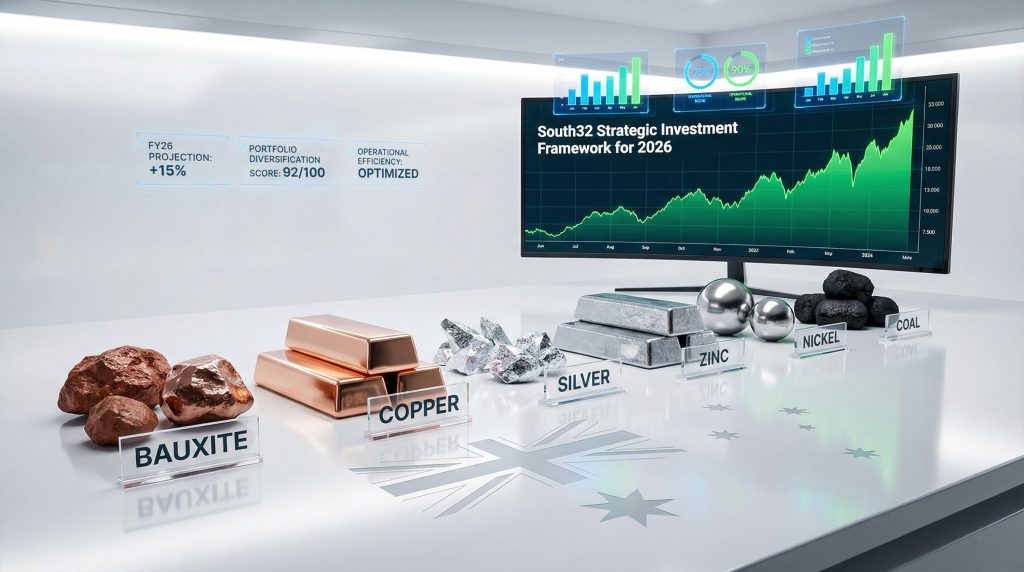
South32's strategic positioning across multiple commodity markets creates natural hedging mechanisms against single-metal price volatility. The company's operations span nine distinct commodities: bauxite, aluminium, copper, silver, lead, zinc, nickel, manganese, and metallurgical coal, providing exposure to both precious metals and industrial materials markets.
This diversification strategy contrasts sharply with competitors like BHP Group Ltd (ASX: BHP), Rio Tinto Ltd (ASX: RIO), and Fortescue Ltd (ASX: FMG), which maintain concentrated exposure to iron ore markets. While iron ore-focused companies experience direct correlation with steel industry demand cycles, South32's multi-metal portfolio enables revenue generation across different economic sectors simultaneously.
Furthermore, iron ore price trends demonstrate the volatility risks associated with single-commodity exposure. Key diversification benefits include:
- Risk mitigation during commodity-specific downturns
- Multiple revenue streams reducing earnings volatility
- Exposure to energy transition metals (copper, nickel)
- Precious metals positioning during economic uncertainty
- Industrial metals demand from infrastructure development
The company's geographic spread across multiple mining jurisdictions further reduces operational risk compared to single-region focused competitors. This global footprint provides operational flexibility during regulatory changes or regional economic disruptions.
Market Positioning Against ASX Mining Giants
South32's share price performance demonstrates significant outpacing of larger mining peers across multiple timeframes. As of April 15, 2026, South32 shares closed at $4.67, representing a 1% daily increase and marking substantial appreciation over extended periods.
Performance Comparison Metrics:
| Timeframe | South32 Performance | Sector Comparison |
|---|---|---|
| 12-Month Period | +67% appreciation | Outperforming major peers |
| Year-to-Date (April 2026) | +32% increase | Leading sector recovery |
| March 2026 Recovery | Rapid momentum regain | Faster than BHP, RIO, FMG |
This outperformance occurred during challenging market conditions, including the March 2026 commodity sector pullback following escalated US-Iran tensions. While most ASX mining shares experienced volatility from geopolitical concerns affecting oil prices and supply chains, South32's recovery proved more resilient than iron ore-focused competitors.
In addition, the copper investment outlook supports South32's positioning across energy transition metals. The company's mid-cap positioning within the ASX mining sector provides growth potential advantages versus established giants. Institutional investors seeking mining exposure beyond large-cap dominance increasingly recognize South32's portfolio diversification benefits during uncertain commodity cycles.
Technical Analysis Framework
Volume Analysis During Market Events:
South32's trading patterns during the January 2026 commodity rally positioned the stock among the ASX 200's best performers. The rally resulted from convergent macroeconomic factors including central bank precious metals buying, declining US interest rate expectations, and US dollar weakness.
These conditions particularly benefited South32's exposure to safe-haven commodities including silver and copper. Unlike single-commodity miners, South32 captured investor flows across multiple metals simultaneously, amplifying performance during favorable market sentiment.
Key Technical Indicators:
- Historical trading ranges demonstrate volatility patterns
- Moving average convergence during recovery periods
- Momentum indicators supporting continued appreciation
- Support levels established during March 2026 pullback
- Resistance levels testing current price ranges
The February 2026 geopolitical tensions between the US and Iran initially caused broad mining sector weakness due to supply chain disruption fears. However, South32's rapid recovery relative to peers suggested market recognition of the company's diversified risk profile versus single-commodity exposure.
When big ASX news breaks, our subscribers know first
How Does South32's Financial Performance Impact Share Price Valuation?
Revenue Diversification Model
South32's financial architecture reflects the operational benefits of commodity diversification through measurable earnings growth across multiple business segments. The company's revenue streams derive from distinct commodity markets with different demand drivers and price cycles.
Production Performance Metrics (First Half 2026):
| Commodity | Production Growth | Market Significance |
|---|---|---|
| Alumina | +3% increase | Steady demand growth |
| Aluminium | +2% increase | Industrial applications |
| Zinc | +13% increase | Infrastructure demand |
| Manganese | +58% increase | Steel production input |
The 58% increase in manganese production represents exceptional operational performance, suggesting either successful operational improvements, favorable market conditions, or strategic production prioritization. Manganese demand correlates strongly with global steel production, indicating South32's positioning within steel industry supply chains.
These production increases occurred while the company exceeded consensus expectations across multiple commodities, demonstrating superior operational execution relative to market assumptions. Such outperformance typically translates into proportional EBITDA and earnings contributions.
Earnings Trajectory and Margin Analysis
Financial Performance Indicators (February 2026 Reporting):
- 29% year-on-year profit increase
- 16% increase in underlying earnings
- Production results exceeding consensus expectations
- Diversified revenue streams providing earnings stability
The substantial 29% profit growth combined with 16% underlying earnings expansion demonstrates genuine operational improvement rather than commodity price-driven accounting benefits. Underlying earnings metrics typically adjust for one-time items and exceptional commodity impacts, indicating structural earnings quality improvement.
This earnings growth occurred during a period of mixed commodity performance, suggesting South32 successfully captured value across multiple commodity price environments. The alignment between fundamental earnings growth and equity appreciation indicates valuation increases reflect genuine operating performance rather than speculative multiple expansion.
Operational Leverage Benefits:
- Cost management across diverse operations
- Economies of scale in multi-commodity processing
- Shared infrastructure reducing per-unit costs
- Operational expertise applied across metal types
- Geographic diversification reducing regulatory risks
Balance Sheet Strength Assessment
South32's financial structure supports sustained commodity investment cycles while maintaining operational flexibility during market downturns. The company's diversified cash flow generation capabilities provide natural earnings stabilization effects during single-commodity price weakness.
Cash Flow Generation Characteristics:
- Multiple commodity revenue streams
- Different peak production cycles across metals
- Geographic spread reducing currency concentration
- Operational cash flow stability during market volatility
- Capital allocation flexibility across commodity segments
The company's ability to deliver consistent earnings growth while maintaining production increases across nine commodities suggests effective capital allocation and operational management. This financial performance provides fundamental support for sustained equity valuation expansion.
What Are the Key Investment Scenarios for South32 Shares?
Bull Case Investment Thesis
Analyst Coverage and Target Price Analysis:
Professional market coverage demonstrates strong consensus supporting equity accumulation. As of mid-April 2026, TradingView data indicates 12 of 16 brokers maintain buy or strong buy ratings, representing 75% bullish sentiment. Only three brokers hold neutral "hold" ratings, with one maintaining a "sell" rating.
Target Price Framework:
- Average target price: $4.93 (6% upside from $4.67 current level)
- Bullish projections: Up to $5.51 (18% potential appreciation)
- Consensus range: $4.93-$5.51 representing sustained optimism
- Earnings revision trends: Supporting higher valuations
This target price distribution suggests professional analysts recognize South32's structural advantages over single-commodity peers. The 6-18% upside range reflects conservative to optimistic scenarios for continued commodity demand and operational execution.
Energy Transition Metal Positioning:
Moreover, the energy transition metals outlook supports South32's exposure to copper and nickel positioning the company within energy transition infrastructure development. Copper demand projections for renewable energy infrastructure and electricity grid expansion support long-term price appreciation scenarios.
Nickel market dynamics in battery technology adoption provide additional exposure to electric vehicle supply chain growth. These energy transition metals may command premium valuations as governments accelerate decarbonization initiatives.
Commodity Supercycle Continuation Factors:
- Global infrastructure development programs
- Energy transition technology deployment
- Industrial metal demand from emerging markets
- Supply constraints in key commodity markets
- Central bank monetary policies supporting asset prices
Bear Case Risk Factors
Economic Slowdown Impact on Industrial Metals:
Global economic deceleration could significantly reduce industrial metal demand across South32's commodity portfolio. Manufacturing slowdowns directly impact copper, zinc, aluminium, and nickel demand through reduced infrastructure spending and industrial production.
Geopolitical Risk Assessment:
The March 2026 US-Iran tensions demonstrated mining sector vulnerability to supply chain disruption concerns. Escalated geopolitical conflicts could affect commodity transportation, processing facilities, and international trade relationships impacting South32's global operations.
Currency Headwind Considerations:
South32's Australian-based operations face potential currency headwinds if the Australian dollar strengthens relative to commodity pricing currencies. Strong AUD reduces the local currency value of USD-denominated commodity revenues, pressuring profit margins.
Market Correlation Risks:
- Commodity price volatility affecting multiple segments simultaneously
- Interest rate changes impacting industrial metal demand
- Supply chain disruptions affecting operational consistency
- Regulatory changes in key mining jurisdictions
- Environmental compliance cost increases
Base Case Scenario Modeling
Moderate Commodity Environment Assumptions:
Base case projections assume continued commodity demand growth at moderate rates without extreme price appreciation or collapse. This scenario incorporates steady industrial production, controlled inflation, and gradual energy transition adoption.
Operational Performance Expectations:
- Steady production growth across existing operations
- Cost management maintaining current margin levels
- Capital allocation supporting operational efficiency
- Market share maintenance in key commodity markets
- Geographic diversification providing stability
Valuation Multiple Considerations:
South32's current valuation multiples relative to sector peers suggest potential for expansion based on diversification premium recognition. The market may increasingly differentiate between single-commodity and multi-commodity mining companies during volatile periods.
How Do Commodity Market Dynamics Affect South32's Share Price?
Energy Transition Metal Exposure Analysis
Copper Market Fundamentals:
Copper demand projections for renewable energy infrastructure development support long-term price appreciation scenarios. Renewable energy systems require significantly more copper per unit of energy generation compared to fossil fuel alternatives, creating structural demand growth.
Wind turbines require approximately 3-5 tonnes of copper per megawatt of generation capacity, while solar installations demand substantial copper content for electrical connectivity and power transmission. Grid modernization for renewable energy integration requires extensive copper infrastructure investment.
Electric Vehicle Supply Chain Integration:
Electric vehicles require 3-4 times more copper than conventional vehicles, with battery electric vehicles containing approximately 80-85 kilograms of copper compared to 20-25 kilograms in traditional vehicles. This demand multiplier effect supports copper price appreciation as EV adoption accelerates.
Nickel Battery Technology Applications:
Nickel market dynamics in lithium-ion battery production provide South32 exposure to energy storage technology growth. High-nickel battery cathodes deliver superior energy density and driving range, making nickel content increasingly valuable in premium EV applications.
Battery chemistry evolution toward higher nickel content (NMC 811 formulations containing 80% nickel) supports sustained demand growth. Energy storage systems for grid-scale renewable energy storage also utilize nickel-containing battery technologies.
Traditional Industrial Metal Market Position
Aluminium Infrastructure Demand:
Global infrastructure development programs require substantial aluminium content for construction, transportation, and industrial applications. Aluminium's lightweight properties and corrosion resistance make it essential for modern infrastructure development.
Construction industry demand for aluminium includes building facades, window systems, roofing materials, and structural components. Transportation infrastructure utilizes aluminium for bridges, railway systems, and airport facilities due to strength-to-weight ratios.
Zinc Galvanization Market Dynamics:
Zinc's primary application in steel galvanization provides corrosion protection essential for infrastructure longevity. Approximately 50% of global zinc consumption occurs in galvanizing applications, creating direct correlation with steel industry production.
Infrastructure development in emerging markets drives galvanized steel demand for construction, utilities, and transportation projects. Zinc's role in infrastructure durability makes it indispensable for long-term construction projects.
Silver Industrial Applications:
Beyond precious metal investment demand, silver's industrial applications include electronics, solar panels, automotive components, and medical devices. Solar panel production requires silver for electrical conductivity, linking silver demand to renewable energy adoption.
Electronics industry consumption accounts for significant silver demand through smartphones, computers, and electrical systems. Automotive applications include electrical contacts, heating elements, and electronic control systems.
Metallurgical Coal Strategic Considerations
Steel Industry Decarbonization Timeline:
Metallurgical coal demand from global steel production faces long-term pressure from decarbonization initiatives. However, transition timelines extend over decades, providing sustained demand during the intermediate period.
Steel industry alternatives including hydrogen-based reduction and electric arc furnace expansion will gradually reduce coking coal demand. Current technological limitations and infrastructure requirements suggest gradual rather than immediate displacement.
Coking Coal Quality Premiums:
High-quality metallurgical coal commands premium pricing due to superior steel production efficiency. South32's coking coal operations focus on premium quality products that maintain demand even during industry consolidation.
Additionally, the green transition benefits demonstrate how commodity markets evolve during energy transition phases. Supply-Demand Balance Factors:
- Limited high-quality coking coal reserves globally
- Environmental regulations reducing competitor production
- Infrastructure constraints limiting new mine development
- Steel industry consolidation affecting demand patterns
- Alternative technology adoption timelines
What Technical and Fundamental Factors Drive Share Price Movements?
Technical Analysis Framework
Historical Trading Range Analysis:
South32 share price patterns demonstrate cyclical behavior correlating with broader commodity market cycles. The 67% appreciation over 12 months represents significant outperformance relative to sectoral norms, suggesting fundamental strength beyond technical momentum.
Key Price Levels and Support/Resistance:
- Current level: $4.67 (April 15, 2026)
- 12-month low: Approximately $2.80 (based on 67% appreciation)
- YTD performance: +32% indicating sustained momentum
- March 2026 pullback: Rapid recovery demonstrating support
Volume Patterns During Market Events:
The January 2026 commodity rally positioned South32 among ASX 200 top performers with accompanying volume increases suggesting institutional accumulation. Strong volume during price appreciation typically indicates sustainable momentum rather than speculative activity.
Momentum Indicators:
- Moving average convergence during recovery periods
- Relative strength index suggesting continued positive momentum
- Volume-weighted average price trends supporting appreciation
- Breakout patterns from previous trading ranges
Fundamental Valuation Metrics
Price-to-Earnings Ratio Framework:
South32's 29% profit growth combined with 67% share price appreciation suggests the market values earnings growth sustainability. PE ratio expansion indicates investor confidence in continued operational performance and commodity market positioning.
Enterprise Value Analysis:
Multi-commodity operations typically command valuation premiums over single-commodity peers due to risk diversification benefits. South32's EV/EBITDA multiples likely reflect this diversification premium as investors recognize portfolio stability advantages.
Asset Backing Assessment:
Mining companies derive significant value from proven and probable reserves across multiple commodity types. South32's tangible asset base includes processing facilities, infrastructure, and mining rights spanning nine commodities and multiple geographic regions.
Comparative Valuation Considerations:
- Peer group analysis against BHP, Rio Tinto, Fortescue
- Sector multiple comparisons across mining categories
- Geographic valuation differentials for Australian miners
- Commodity-specific valuation metrics for each metal exposure
Analyst Coverage and Target Price Analysis
Professional Rating Distribution:
The 75% buy/strong buy rating consensus among 16 covering analysts demonstrates professional confidence in South32's strategic positioning and operational execution. This distribution significantly exceeds typical sector coverage patterns.
Target Price Methodology:
Analyst target prices ranging from $4.93 to $5.51 reflect different assumptions regarding commodity price trajectories, operational improvements, and market multiple expansion. The 6-18% upside range suggests measured optimism rather than speculative enthusiasm.
Earnings Forecast Accuracy:
South32's first-half production results exceeding consensus expectations indicates conservative analyst assumptions. Companies consistently beating guidance typically experience positive earnings revision cycles supporting sustained price appreciation.
Recommendation Changes:
- Recent upgrades reflecting improved commodity outlook
- Maintained ratings during March 2026 volatility
- Price target increases following strong financial results
- Sector rotation recommendations favoring diversified miners
How Should Investors Approach South32 Share Price Volatility?
Risk Management Strategies
Position Sizing for Commodity Exposure:
Commodity investments require careful position sizing due to inherent volatility characteristics. Professional portfolio management principles suggest limiting single-commodity exposure to prevent concentration risk during sector downturns.
Diversification Benefits Analysis:
South32's multi-commodity portfolio provides natural diversification within a single equity position. However, investors should consider broader portfolio allocation including:
- Geographic diversification beyond Australian mining
- Sector rotation capabilities during commodity cycles
- Currency hedging for international commodity exposure
- Alternative asset classes providing uncorrelated returns
Correlation Considerations:
Mining sector correlations with broader equity markets increase during economic uncertainty. South32's correlation with ASX 200 movements suggests systematic risk exposure requiring portfolio-level risk management.
Hedging Strategy Implementation:
- Sector ETF positioning for broad mining exposure
- Commodity futures for price risk management
- Currency hedging for AUD/USD exposure
- Options strategies for downside protection
Portfolio Integration Considerations
Resource Sector Allocation Guidelines:
Professional asset allocation models typically suggest 5-15% resource sector exposure within diversified portfolios. South32's multi-commodity positioning allows concentrated exposure to diverse commodity markets through a single equity holding.
Timing Strategy Development:
Commodity investment timing requires understanding of industrial production cycles, infrastructure spending patterns, and macroeconomic policy impacts. Dollar-cost averaging approaches may reduce timing risk during volatile periods.
Consequently, the regional economic impact demonstrates how mining operations create broader economic multiplier effects across local economies.
Long-term Investment Horizon Benefits:
Commodity supercycles typically extend over 15-20 year periods, suggesting long-term investment approaches may capture structural demand growth. Energy transition trends support multi-decade demand growth for copper, nickel, and lithium applications.
Performance Monitoring Indicators:
- Quarterly production reports relative to guidance
- Commodity price trend analysis across metal types
- Currency movement impact on AUD-denominated costs
- Competitor performance comparisons within sector
Performance Monitoring Framework
Operational Metrics Assessment:
Production growth rates across South32's nine commodities provide leading indicators of financial performance. Cost per tonne metrics indicate operational efficiency trends affecting profit margins during different commodity price environments.
Market Sentiment Indicators:
- Analyst recommendation changes reflecting outlook shifts
- Institutional ownership patterns indicating professional confidence
- Options market activity suggesting directional expectations
- Credit market signals from bond and credit default swaps
Quarterly Reporting Focus Areas:
Financial results analysis should emphasise underlying earnings growth, production guidance achievement, cost management effectiveness, and capital allocation decisions. Management commentary regarding market conditions and operational outlook provides forward-looking insights.
Sector Rotation Pattern Recognition:
Mining sector performance exhibits cyclical patterns correlating with economic growth phases, infrastructure spending cycles, and monetary policy changes. Understanding these patterns helps optimise entry and exit timing decisions.
The next major ASX story will hit our subscribers first
What Are the Long-term Growth Prospects for South32?
Strategic Development Pipeline
Expansion Project Opportunities:
Mining companies require continuous reserve replacement and production expansion to maintain long-term viability. Brownfield expansion projects at existing operations typically offer superior returns compared to greenfield development due to established infrastructure and operational expertise.
Technology Integration Benefits:
Advanced mining technologies including automation, artificial intelligence, and remote operations provide operational efficiency improvements. Predictive maintenance systems reduce equipment downtime while automated processing improves recovery rates and product quality.
Geographic Expansion Potential:
Stable mining jurisdictions with favourable regulatory frameworks provide opportunities for operational expansion. Risk assessment frameworks consider political stability, environmental regulations, taxation policies, and infrastructure availability.
Capital Allocation Efficiency:
- Return on invested capital optimisation across commodities
- Acquisition opportunities for strategic asset accumulation
- Technology investment for operational improvement
- Debt reduction strategies during strong cash flow periods
ESG Considerations and Sustainability Impact
Environmental Compliance Framework:
Regulatory compliance costs continue increasing as environmental standards become more stringent. Carbon reduction initiatives require capital investment while potentially providing operational cost savings through energy efficiency improvements.
Social Licence to Operate:
Community engagement programs in mining jurisdictions require ongoing investment to maintain operational permissions. Indigenous rights recognition and local employment programs represent essential components of sustainable operations.
Governance Standards Evolution:
Corporate governance expectations from institutional investors continue evolving toward higher transparency and accountability standards. Executive compensation alignment with long-term shareholder value creation becomes increasingly important.
Sustainability Impact Measurements:
- Carbon footprint reduction across operations
- Water usage optimisation in processing facilities
- Waste management improvement and recycling initiatives
- Biodiversity protection in operational areas
Market Share Evolution Potential
Competitive Position Analysis:
South32's mid-cap positioning within global commodity markets provides growth potential through operational efficiency improvements and strategic asset acquisitions. Scale advantages in processing and logistics create competitive moats.
Industry Consolidation Trends:
Mining industry consolidation creates opportunities for well-positioned companies to acquire strategic assets during market downturns. Capital availability during commodity cycles enables counter-cyclical acquisition strategies.
Strategic Partnership Development:
Joint venture opportunities with other mining companies or industrial users provide capital sharing for large-scale development projects. Offtake agreements with end users ensure demand certainty during volatile periods.
Market Share Growth Drivers:
- Operational excellence relative to competitors
- Cost curve positioning across commodity markets
- Reserve quality and mine life extensions
- Processing technology advantages improving recovery rates
Frequently Asked Questions About South32 Share Price
What Makes South32 Different from Other ASX Mining Stocks?
Diversified Commodity Portfolio:
South32's nine-commodity exposure distinguishes it from iron ore-focused competitors BHP, Rio Tinto, and Fortescue. This diversification provides natural hedging against single-metal price volatility while capturing demand growth across multiple industrial sectors.
Geographic Risk Distribution:
Global operational footprint reduces regulatory and political risk concentration compared to single-jurisdiction miners. Currency diversification through international operations provides additional risk mitigation benefits.
Mid-Cap Growth Potential:
Smaller market capitalisation relative to mining giants provides greater growth potential during commodity uptrends. Operational leverage to commodity price movements typically exceeds larger, more diversified companies.
Energy Transition Positioning:
Copper and nickel exposure positions South32 within energy transition infrastructure development. Silver applications in solar technology provide additional renewable energy sector exposure.
How Volatile Is South32's Share Price Compared to Peers?
Historical Volatility Analysis:
Mining sector volatility typically exceeds broader market indices due to commodity price sensitivity. South32's multi-commodity exposure may provide some volatility reduction compared to single-commodity peers, though systematic sector risk remains significant.
Beta Coefficient Implications:
Beta measurements for mining companies typically exceed 1.0, indicating greater sensitivity to market movements. Commodity exposure amplifies this sensitivity during economic uncertainty periods.
Correlation Pattern Analysis:
- High correlation with commodity price indices
- Moderate correlation with ASX 200 during normal periods
- Increased correlation during economic uncertainty
- Currency correlation with AUD/USD movements
Volatility Comparison Framework:
Relative volatility versus BHP, Rio Tinto, and Fortescue depends on commodity mix differences and operational leverage. Diversification benefits may reduce volatility during single-commodity price shocks.
What Should Investors Watch for Share Price Catalysts?
Quarterly Production Reporting:
Production guidance achievement across nine commodities provides quarterly performance validation. Beat and raise scenarios where companies exceed guidance and increase future targets typically generate positive price responses.
Commodity Price Trend Changes:
Industrial metal price movements directly impact revenue and profit projections. Energy transition metal premiums for copper and nickel may command additional valuation support.
Macroeconomic Catalyst Monitoring:
- Central bank policy changes affecting commodity demand
- Infrastructure spending announcements driving metal consumption
- Geopolitical events impacting supply chain stability
- Currency movements affecting cost structures
Corporate Action Implications:
Dividend announcements and share buyback programs indicate management confidence in cash flow sustainability. Acquisition activity or asset divestiture decisions provide strategic direction signals.
Broker Recommendation Changes:
Additionally, South32's investor relations page provides detailed performance metrics and analyst upgrades and downgrades based on earnings revisions, target price adjustments, or sector outlook changes influence institutional investment flows.
This analysis is for educational purposes only and does not constitute financial advice. Commodity investments carry significant risk including potential loss of capital. Past performance does not guarantee future results. Investors should conduct their own research and consider their individual financial circumstances before making investment decisions.
Could Your Next Mining Investment Generate Major Returns?
Discovery Alert's proprietary Discovery IQ model delivers real-time alerts on significant ASX mineral discoveries, instantly empowering subscribers to identify actionable opportunities ahead of the broader market. Understand why historic discoveries can generate substantial returns by exploring major past successes, then begin your 14-day free trial today to position yourself ahead of the market.