June 5, 2026
The Invisible Architecture Behind Africa's Most Critical Resource Opportunity
Mineral wealth alone has never guaranteed economic transformation. History offers abundant evidence of resource-rich nations that failed to convert geological endowment into lasting prosperity, not because the minerals were absent, but because the institutional architecture required to attract, retain, and scale capital investment was never built. Southern Africa sits at precisely this inflection point today, and the mechanisms being assembled around its mineral sector will determine whether the region captures the full value of the global energy transition or watches that value flow elsewhere.
Understanding why Southern Africa mining partnerships have become the central strategic conversation across the SADC region requires moving beyond commodity prices and deposit sizes. The real story is structural: how governments, private operators, development finance institutions, and local communities align their interests around shared objectives, and what happens when they fail to do so.
When big ASX news breaks, our subscribers know first
The Structural Foundation: Mineral Endowment Without Institutional Architecture
The SADC region holds an extraordinary concentration of the minerals driving clean energy technology deployment globally. Each member state has meaningful exposure to at least two minerals appearing on critical minerals demand lists maintained by major economies including the European Union, the United States, and Japan. Copper, cobalt, platinum group metals, lithium, manganese, chromite, and graphite all appear across the region in commercially significant concentrations.
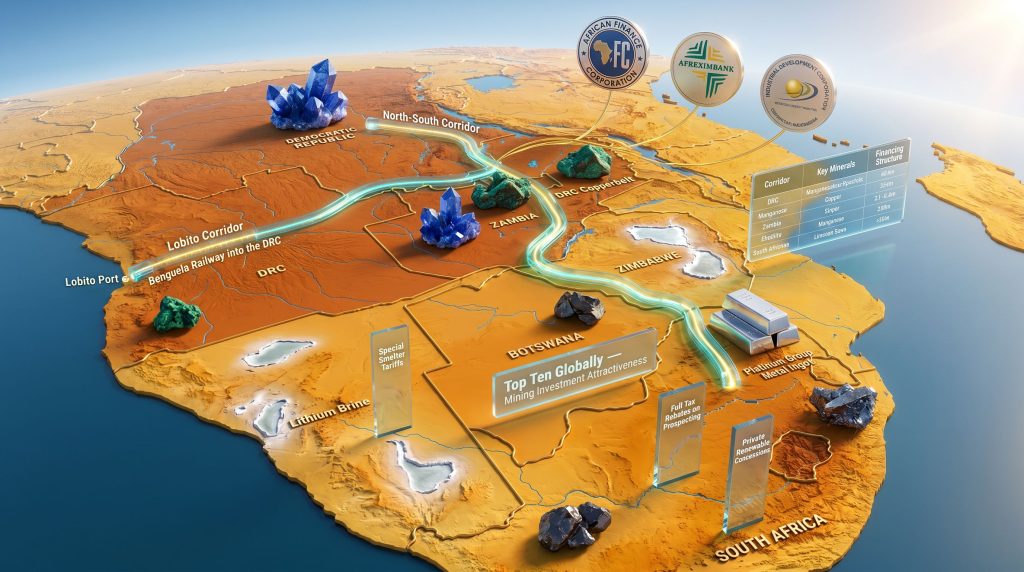
Yet this geological advantage has not translated into proportional investment flows. The Fraser Institute Annual Survey of Mining Companies, one of the most widely referenced tools for comparing investment attractiveness across global mining jurisdictions, consistently places the majority of SADC member states near the lower tiers of surveyed countries. Botswana is the notable exception, ranking within the top ten globally for investment attractiveness on a consistent basis, a performance that reflects deliberate policy choices rather than geological luck alone.
The challenge facing Southern Africa is not a shortage of mineral assets. It is a shortage of coordinated frameworks that translate geological endowment into investment-ready project pipelines.
The gap between resource wealth and realised investment is not primarily a geological problem. It is a governance and coordination problem, and that is precisely why partnerships have moved to the centre of the regional conversation.
What Functional Partnerships Actually Require
The word partnership is used so frequently in African mining discourse that it risks losing analytical meaning. Memoranda of understanding are signed, joint statements are issued, and forums are convened, but measurable outcomes often remain elusive. The Mining Industry Association of Southern Africa (MIASA) has been direct in acknowledging that there are far more examples of partnerships that have not delivered than those that have succeeded, a candid assessment that is rarely voiced openly in official settings.
Genuine partnership delivery requires alignment across several structural conditions simultaneously:
| Partnership Condition | Current Status Across SADC | Required Improvement |
|---|---|---|
| Regulatory predictability | Inconsistent across jurisdictions | Harmonised baseline standards |
| Government-private sector trust | Fragile in multiple countries | Structured social compacts |
| Infrastructure co-investment | Emerging through concession models | Scaled through DFI participation |
| Energy supply reliability | Improving but uneven | Dedicated industrial tariff structures |
| Beneficiation incentives | Policy-driven, often punitive | Incentive-led manufacturing frameworks |
The social licence dimension deserves particular attention. Communities in mining areas are increasingly articulate about their expectations, and the failure to establish clear, jointly monitored social compacts has derailed projects with sound economics and strong investor backing. Sustainable coexistence between mining operations and host communities depends on an integrated local development approach that creates alternative employment streams rather than positioning the mine as the sole economic anchor for an entire region.
Logistics Infrastructure: Where Partnerships Are Delivering Real Results
South Africa's rail crisis of the past decade provides both a cautionary tale and, more recently, a genuine example of public-private partnership producing measurable results. The deterioration of Transnet's rail network, caused by deferred maintenance, infrastructure theft, electricity theft, and skills loss, progressively undermined the country's capacity to export mineral volumes at scale. Mining companies operating across the North-South Corridor, which runs from the Democratic Republic of Congo through Zambia and Zimbabwe into South Africa, were furthermore forced to shift increasing volumes onto road freight, accelerating road degradation and compounding export delays.
The response came through a structured government-private sector collaboration convened under the leadership of the Office of the Presidency, establishing the National Logistics Coordinating Committee. The outcomes have been concrete:
- Government concessions granted to private operators for the revival and maintenance of mineral export rail lines
- Measurable improvement in coal export volumes as rail capacity recovered
- Transnet opening competitive bidding for port management, including the strategically important Port of Ngqura in the Eastern Cape
Beyond South Africa's domestic logistics challenges, two competing corridor frameworks are shaping regional mineral export infrastructure planning:
| Corridor | Route | Key Minerals | Financing Structure |
|---|---|---|---|
| North-South Corridor | DRC through Zambia, Zimbabwe to South Africa | Copper, cobalt, PGMs | Multi-government, African Finance Corporation |
| Lobito Corridor | Port of Lobito via Benguela Railway to DRC Copperbelt through Zambia | Copper, cobalt | African Finance Corporation, bilateral government support |
| Gas Pipeline Development | DRC to South Africa | Energy infrastructure | Development finance institutions |
The Lobito Corridor in particular has attracted significant attention for its potential to provide an alternative western export route for DRC copperbelt production, reducing dependence on southern corridor infrastructure and opening competitive freight dynamics that could lower costs across the board.
Regulatory Harmonisation: Alignment Without Uniformity
A common misconception in regional mining policy discussions is that harmonisation requires identical legislative frameworks across all jurisdictions. In practice, mining development is at materially different stages across SADC member states, and a one-size-fits-all approach would be neither achievable nor desirable. What is achievable, and urgently needed, is alignment on the key dimensions that most directly influence capital allocation decisions.
The SADC Secretariat has developed Regional Mining Protocols incorporating principles from the Regional Mining Vision, providing a framework for policy convergence without eroding national sovereignty. The core areas requiring alignment include:
- Mining taxation structures and royalty rates
- Ownership requirements and free-carried interest arrangements
- Local content obligations for goods and services procurement
- Environmental standards and rehabilitation requirements
- Export tariff structures for raw and processed minerals
The free-carried interest issue deserves specific attention because it is frequently cited as a meaningful deterrent to early-stage investment. Demanding equity participation without corresponding investment contribution in a sector characterised by high capital intensity, long payback periods, and commodity price cyclicality is widely regarded as structurally incompatible with the risk profile that exploration and development capital must absorb. When one jurisdiction imposes extreme ownership requirements, it does not simply lose investment to a neutral alternative; it actively redirects capital to neighbouring countries with more pragmatic frameworks, weakening the regional industry collectively.
Namibia's contrasting approach is instructive. The country offers full tax rebates on prospecting expenditure for projects that subsequently demonstrate viability and proceed to mining operations. Combined with government investment in geological mapping as a public good, this policy design reduces the financial risk carried by private explorers during the highest-risk phase of the investment cycle, when capital is most sensitive to policy uncertainty.
Energy Supply: The Bottleneck Determining Project Feasibility
Energy availability has emerged as the primary operational constraint limiting mining advancement across Southern Africa, particularly for processing and smelting operations that require consistent, affordable power supply. South Africa's announcement of special electricity tariffs for mineral smelters represents a significant policy signal, with direct implications for job preservation in the platinum group metals and manganese processing sectors.
The downstream consequence of this tariff structure is potentially significant: smelting operations that previously relocated to other jurisdictions, partly due to unreliable and expensive South African power supply, may now reassess reinvestment given the advantage of existing infrastructure that would be prohibitively expensive to replicate elsewhere. In addition, energy transition minerals security is increasingly shaping how major economies engage with Southern Africa's policy environment.
| Country | Energy Partnership Model | Mining Application | Status |
|---|---|---|---|
| South Africa | Special smelter tariffs + private renewable concessions | PGMs, coal, manganese | Active |
| Namibia | Full tax rebates on prospecting + government geological mapping | Critical minerals | Policy framework in place |
| Zambia | Bilateral power agreements + DFI energy financing | Copper, cobalt | Developing |
| DRC | Gas pipeline development to South Africa | Energy export + mining power supply | In progress |
The integration of private renewable energy into mining operations is accelerating as a parallel solution, with several major operators developing captive solar and wind generation to reduce dependence on grid supply and establish predictable long-term energy costs for project feasibility modelling.
The next major ASX story will hit our subscribers first
Beneficiation Policy: The Difference Between Rhetoric and Results
The principle that exporting raw mineral concentrates is economically equivalent to exporting employment and value-added growth is broadly accepted across the region. The policy challenge is not diagnostic agreement but implementation design. Several approaches have been deployed across SADC jurisdictions, with materially different investor responses:
| Approach | Mechanism | Risk Profile | Investor Response |
|---|---|---|---|
| Mandatory offtake to local processors | Compulsory sales below export price | High | Negative |
| Complete export bans without local capacity | Prohibition without processing infrastructure | Very high | Strongly negative |
| Tax incentives for downstream manufacturing | Rebates for new processing plants | Low | Positive |
| Joint investment models | Government-industry co-investment in processing | Medium | Constructive |
| Skills development rebates | Incentives for mineral-processing training | Low | Positive |
The pattern is clear: compulsory mechanisms that transfer value from producers to processors without compensating investment create structural losses that compound over time. Incentive-led frameworks that make downstream investment attractive rather than mandatory consistently generate better outcomes for both industry participants and government revenue.
Development Finance Institutions: The Missing Catalyst
Commercial bank appetite for greenfield mining infrastructure financing in frontier African jurisdictions remains limited by risk-return thresholds that most early-stage projects cannot meet. Development finance institutions fill a critical gap in this landscape, both by providing capital on terms that reflect development mandates rather than purely commercial returns, and by signalling project credibility to private co-investors. Furthermore, understanding broader African mining finance trends helps contextualise why DFI participation has become so structurally significant across SADC corridors.
Three institutions are particularly active across SADC Southern Africa mining partnerships:
- African Finance Corporation (AFC): Financing infrastructure across both the Lobito and North-South corridors, funded by contributions from multiple African governments, with a mandate to support transformative continental infrastructure
- Afreximbank: Providing trade finance and industrial development capital across the continent, with growing exposure to critical minerals value chains
- Industrial Development Corporation (IDC): South Africa-based development finance institution with a long track record of co-investing in mining and downstream processing projects
DFI participation in a project structure does more than provide capital. It functions as a form of institutional endorsement that reduces perceived sovereign and execution risk for private capital considering parallel investment in the same project or corridor. Consequently, mining private equity allocators increasingly treat DFI co-investment as a prerequisite for entering frontier African project structures.
The Global Competition for Southern Africa's Critical Minerals
The bilateral partnership landscape around Southern Africa's mineral sector has expanded dramatically as major economies compete to secure access to the materials underpinning clean energy technology supply chains. The United Kingdom has formalised a minerals partnership with South Africa covering exploration, production, processing, beneficiation, and supply chain sustainability, focused specifically on minerals required for clean energy applications. However, Europe's critical minerals supply chain ambitions are equally shaping how SADC governments approach bilateral negotiations with external partners.
| Partner | Primary Interest | Partnership Mechanism | Key Minerals |
|---|---|---|---|
| European Union | Critical Raw Materials Act supply security | Bilateral strategic partnerships | Lithium, cobalt, manganese, graphite |
| United Kingdom | Clean energy supply chain resilience | Formal minerals cooperation agreement | PGMs, lithium, graphite |
| United States | Supply chain diversification from China | Minerals Security Partnership | Cobalt, copper, rare earths |
| Japan (JOGMEC) | Long-term resource security | Exploration co-financing and technical cooperation | Cobalt, nickel, lithium |
| Gulf States | Industrial diversification | Sovereign wealth fund investments | Copper, chromium, phosphates |
| India | Battery materials and steel inputs | Government-to-government frameworks | Manganese, chromium, lithium |
The Five-Year Scenario Framework
Three credible scenarios describe how Southern Africa mining partnerships could shape the region's trajectory by 2030:
Scenario A: Accelerated Integration assumes SADC achieves meaningful policy alignment, corridor infrastructure delivery advances on schedule, and bilateral partnership frameworks translate into genuine investment flows. Fraser Institute rankings improve for at least five member states, and operational beneficiation projects generating downstream employment multiply across the region.
Scenario B: Fragmented Progress describes the more likely middle path, where individual jurisdictions with more enabling policy environments attract disproportionate capital while regional cohesion stalls on contested harmonisation priorities. Botswana and Namibia continue to outperform, while jurisdictions with more complex ownership requirements and less stable fiscal frameworks continue to underperform their geological potential.
Scenario C: Structural Stagnation reflects the outcome if trust deficits between governments and the private sector are not addressed. In this scenario, compliance-minimum private sector behaviour and punitive legislative frameworks create a self-reinforcing cycle of underinvestment that persists regardless of commodity price cycles.
Measurable success by 2030 would be evidenced by:
- Sustained growth in prospecting investment across SADC jurisdictions
- Expansion of active mining project pipelines supported by both private and DFI capital
- Operational beneficiation projects generating employment in downstream processing
- Development of alternative industries in mining-adjacent communities reducing social licence pressure on individual operations
- Demonstrable improvement in Fraser Institute investment attractiveness rankings for at least five SADC member states
The Trust Imperative: The Partnership No Agreement Can Create
Every structural priority identified above, logistics infrastructure, regulatory harmonisation, energy partnerships, beneficiation frameworks, and DFI engagement, depends ultimately on a condition that cannot be legislated or contracted: mutual trust between governments and the private sector.
When legislative frameworks are designed primarily to detect and penalise rather than to enable and correct, the signal they send to capital allocators is unambiguous. When minimum statutory compliance becomes the private sector's standard operating posture rather than a floor for genuine engagement, the same signal is transmitted from the other direction.
Where punitive legislative frameworks replace enabling policy environments, and where minimum compliance substitutes for genuine partnership commitment, the region's full mineral potential remains structurally inaccessible regardless of how favourable commodity prices become.
The most honest assessment of Southern Africa's current position is that the minerals are world-class, the bilateral interest is genuine, the DFI appetite is present, and the corridor infrastructure frameworks are advancing. What remains underbuilt is the foundational relationship between state and industry that transforms all of those inputs into sustained investment, employment, and economic transformation. For further reading on regional policy directions, the Minerals Council South Africa publishes detailed analyses on governance frameworks and investment conditions across the sector. Additionally, the WEF report on securing minerals for the energy transition offers a compelling global context for the structural challenges Southern Africa must navigate.
Key Structural Priorities at a Glance
| Priority Area | Current Gap | Partnership Solution |
|---|---|---|
| Logistics infrastructure | Rail deterioration, port inefficiency | Private concessions under government oversight |
| Energy supply | Unreliable power for processing operations | Industrial tariffs + private renewable integration |
| Regulatory alignment | Inconsistent taxation and ownership rules | SADC protocol-based harmonisation |
| Beneficiation | Raw export dependency | Incentive-led downstream investment frameworks |
| Community relations | Social licence fragility | Integrated development compacts |
| Investment attractiveness | Low Fraser Institute rankings for most SADC states | Policy reform + geological data investment |
| DFI engagement | Underutilised institutional capital | Structured co-investment frameworks |
| Government-private trust | Structural deficit across multiple jurisdictions | Transparent, jointly monitored social compacts |
This article contains forward-looking assessments and scenario projections based on current industry dynamics and publicly available policy information. These projections involve assumptions and uncertainties that may cause actual outcomes to differ materially. Nothing in this article constitutes financial or investment advice.
Ready to Position Yourself Ahead of the Next Major Mineral Discovery?
Discovery Alert's proprietary Discovery IQ model delivers real-time alerts on significant ASX mineral discoveries — instantly translating complex mineral data into actionable investment insights for both short-term traders and long-term investors. Explore historic examples of major discovery returns and begin your 14-day free trial today to secure a market-leading edge as Southern Africa's critical minerals story continues to unfold.