
August 14, 2026
How Southern Africa's Resource Diplomacy Reshapes Global Supply Chains
The contemporary geopolitical landscape increasingly rewards nations that master the art of resource leverage, transforming raw material endowments into strategic diplomatic currency. Across Southern Africa, countries with significant mineral and agricultural assets are pioneering new models of international engagement that transcend traditional trade relationships, creating comprehensive partnerships that encompass technology transfer, human capital development, and institutional capacity building.
This evolution reflects a fundamental shift from commodity-dependent exports toward value-added cooperation frameworks that position resource-rich nations as active participants in global supply chain architecture rather than passive suppliers of raw materials.
When big ASX news breaks, our subscribers know first
The Uranium Factor in Modern Energy Security
Namibia's uranium sector exemplifies how specialised commodities create unique diplomatic opportunities within global energy security frameworks. As Africa's leading uranium producer, Namibia controls substantial reserves that enable sophisticated negotiations with nuclear-capable nations seeking long-term supply security.
The country's uranium endowments provide extraordinary negotiating leverage in discussions with major powers, particularly those expanding civilian nuclear programs or maintaining existing reactor fleets. Understanding uranium market dynamics becomes crucial when examining how such strategic commodities influence international relationships.
This positioning enables Namibia to secure comprehensive cooperation agreements that extend far beyond simple commodity sales into areas including:
- Medical isotope production capabilities for healthcare applications
- Agricultural research programmes utilising nuclear technologies
- Regulatory framework development for nuclear safety standards
- Technical training initiatives for nuclear engineering professionals
Recent geological assessments suggest Namibia's uranium reserves exceed 400,000 tonnes, representing approximately 7% of global known uranium resources and positioning the country as a critical supplier within international nuclear fuel cycles.
Agricultural Technology Transfer Models
Modern agricultural partnerships increasingly emphasise knowledge-intensive cooperation over traditional commodity trading relationships. These arrangements typically involve comprehensive technology transfer programmes designed to enhance local agricultural productivity while securing reliable food supply chains for partner nations.
The broader mining industry evolution demonstrates how technological advancement across extractive sectors creates new opportunities for international cooperation.
Successful agricultural technology partnerships incorporate multiple dimensions:
- Precision farming technologies: GPS-guided equipment and soil monitoring systems
- Drought-resistant crop varieties: Climate-adapted agricultural genetics
- Food processing infrastructure: Value-added manufacturing capabilities
- Supply chain optimisation: Cold storage and logistics improvements
These partnerships often include institutional capacity building components that strengthen agricultural research institutions, improve extension services, and develop technical expertise within recipient countries.
What Drives Bilateral Trade Growth in Emerging Market Partnerships?
Understanding the mechanics behind rapidly expanding economic relationships between developing nations and established powers reveals systematic patterns that transcend individual country circumstances. The Namibia and Russia expand economic cooperation model demonstrates how structured diplomatic engagement translates into measurable commercial outcomes.
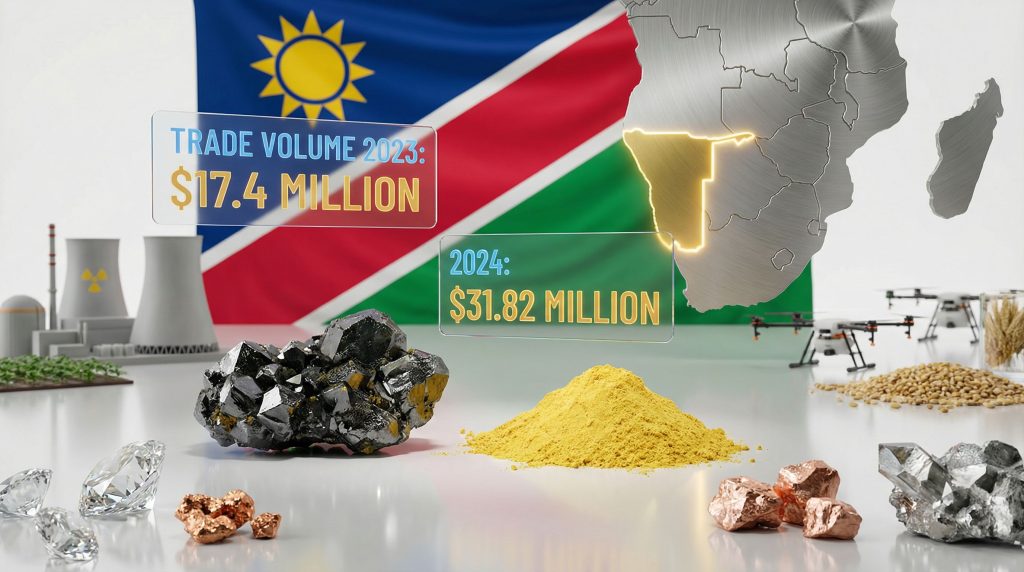
Recent bilateral trade performance between Namibia and Russia illustrates these dynamics, with trade volumes reaching $31.82 million in 2024 according to International Trade Center data, representing substantial growth from previous years and indicating successful implementation of cooperative frameworks established through regular diplomatic engagement.
Furthermore, bilateral economic cooperation agreements highlight how systematic diplomatic engagement creates tangible commercial benefits for both nations involved.
Trade Volume Analysis and Growth Trajectories
| Year | Trade Volume (USD Million) | Primary Export Categories | Import Categories |
|---|---|---|---|
| 2024 | $31.82 | Fish products, minerals, agricultural products, uranium | Nuclear technology, machinery, mechanical appliances |
| Projected 2025 | $45+ | Diversified commodities | Industrial equipment, technical systems |
The trade composition reveals sophisticated commercial relationships extending beyond raw material exchanges. Namibian exports include processed fish products and agricultural commodities alongside mineral resources, while imports encompass advanced technology and industrial equipment that support domestic economic development initiatives.
Investment Climate Optimisation Strategies
Creating attractive investment environments requires comprehensive institutional reforms addressing multiple barriers that typically discourage foreign capital deployment. Successful partnerships incorporate systematic approaches to investment climate enhancement.
Contemporary approaches to capital raising techniques demonstrate how modern investment frameworks can support bilateral economic development initiatives.
Regulatory Framework Improvements:
- Streamlined business registration procedures
- Transparent licensing and permitting processes
- Enhanced intellectual property protection mechanisms
- Efficient dispute resolution systems
Infrastructure Development Priorities:
- Transportation network expansion and modernisation
- Reliable energy supply systems
- Advanced telecommunications infrastructure
- Sophisticated financial services platforms
The 11th session of the intergovernmental commission on trade and economic cooperation held in Windhoek during March 2026 specifically emphasised investment climate improvements, with official statements highlighting the importance of creating favourable conditions for foreign investment and advancing negotiations on pending cooperation agreements.
Which Sectors Offer the Greatest Cooperation Potential?
Comprehensive economic partnerships typically prioritise sectors where both parties can achieve significant mutual benefits while addressing strategic national development objectives. The March 2026 Namibia-Russia commission identified eight priority cooperation areas: energy (including peaceful nuclear applications), mining, agriculture and food security, transport and logistics, education, healthcare, tourism, and defence and security.
Energy Sector Collaboration Framework
Nuclear energy partnerships represent particularly sophisticated cooperation models that encompass multiple technological and institutional dimensions. Additionally, the sustainability transformation in energy sectors creates new opportunities for environmentally conscious cooperation.
Peaceful Nuclear Applications:
- Medical isotope production for healthcare systems
- Agricultural research utilising nuclear technologies
- Industrial applications including materials testing
- Environmental monitoring and research programmes
Technology Transfer Components:
- Reactor design expertise and safety protocols
- Regulatory framework development and harmonisation
- Technical training programmes for nuclear professionals
- Research collaboration initiatives
The cooperation extends beyond uranium supply relationships to encompass comprehensive nuclear sector development, including regulatory capacity building, technical education programmes, and peaceful nuclear technology applications across multiple economic sectors.
Mining Sector Investment Opportunities
Modern mining partnerships increasingly emphasise beneficiation and value-added processing rather than raw material extraction alone. This approach creates more sophisticated industrial relationships that generate greater economic value for resource-rich nations.
Value Addition Strategies:
- Local mineral processing facilities
- Advanced extraction technology implementation
- Environmental standards enhancement programmes
- Infrastructure development supporting mining operations
These partnerships typically include commitments to technology transfer, local workforce development, and infrastructure improvements that benefit broader economic development beyond the mining sector itself.
How Do Intergovernmental Commissions Drive Economic Integration?
Formal diplomatic mechanisms provide essential institutional frameworks for translating strategic cooperation objectives into measurable commercial outcomes. The Namibia-Russia intergovernmental commission exemplifies how structured diplomatic engagement facilitates multi-sector economic integration.
Since establishing diplomatic relations in 1990, Namibia and Russia have conducted 11 sessions of their intergovernmental commission, creating consistent dialogue mechanisms that address political, economic, commercial, and humanitarian cooperation dimensions.
Commission Structure and Decision-Making Processes
Effective intergovernmental commissions typically operate through systematic organisational structures. In addition, understanding critical minerals strategy helps contextualise how countries position their resource assets within broader international cooperation frameworks.
Operational Components:
- Annual sessions: Regular meetings reviewing progress and establishing priorities
- Sector-specific working groups: Technical committees addressing specialised issues
- Private sector engagement platforms: Business forums connecting commercial entities
- Implementation monitoring systems: Progress tracking mechanisms ensuring accountability
The March 15-16, 2026 commission session in Windhoek addressed comprehensive cooperation across multiple sectors simultaneously, demonstrating the commission's capacity to coordinate complex multi-sector initiatives through systematic diplomatic engagement.
Agreement Implementation Timelines
Critical Success Factor: Effective economic cooperation requires clearly defined implementation schedules with measurable milestones to ensure sustained progress and mutual accountability between partner nations.
The commission's emphasis on advancing negotiations on pending agreements indicates systematic approaches to translating diplomatic dialogue into actionable commercial commitments with specific timelines and performance indicators.
The next major ASX story will hit our subscribers first
What Are the Geopolitical Implications of Diversified Partnerships?
Resource-rich nations increasingly pursue multi-alignment strategies that balance relationships with various global powers to maximise economic opportunities while preserving strategic autonomy. This approach reflects sophisticated understanding of contemporary geopolitical dynamics and the advantages of diversified international engagement.
Regional Influence Patterns
Southern African nations demonstrate growing expertise in converting natural resource endowments into diplomatic influence that extends beyond traditional North-South cooperation models. Countries like Namibia leverage their strategic assets to engage simultaneously with multiple global powers, creating competitive dynamics that enhance their negotiating positions.
This trend reflects broader shifts in international economic relationships, where middle powers successfully navigate between major power competition to advance their national development objectives through diversified partnerships.
Supply Chain Security Considerations
Diversified partnerships enhance supply chain resilience by reducing dependence on single trading relationships while creating competitive pressures that optimise commercial terms:
Risk Mitigation Benefits:
- Protection against trade disruption scenarios
- Competitive pricing through multiple partner options
- Access to diverse technological solutions
- Exposure to varied consumer markets
Strategic Autonomy Preservation:
- Reduced vulnerability to diplomatic pressure
- Enhanced negotiating leverage across relationships
- Balanced technology transfer opportunities
- Diversified investment source access
Which Industries Benefit Most from Technology Transfer Programmes?
Technology transfer initiatives typically generate greatest impact in sectors where recipient countries can achieve rapid productivity improvements while building sustainable competitive advantages. Agricultural and industrial sectors often demonstrate particular responsiveness to comprehensive technology transfer programmes.
Agricultural Modernisation Pathways
Agricultural technology partnerships create opportunities for systematic productivity enhancement across multiple dimensions. Moreover, expanding cooperation partnerships demonstrate how bilateral agreements translate into concrete technological advancement opportunities.
Technology Integration Areas:
- Precision agriculture systems: GPS-guided equipment and monitoring technologies
- Crop improvement programmes: Climate-adapted varieties and yield optimisation techniques
- Food processing development: Value-added manufacturing capabilities
- Supply chain enhancement: Storage, transportation, and logistics improvements
These programmes typically include institutional capacity building components that strengthen agricultural research capabilities, improve extension services, and develop technical expertise within recipient countries.
Industrial Capacity Building
Manufacturing sector development through technology transfer encompasses comprehensive approaches to industrial modernisation:
Development Components:
- Equipment modernisation: Advanced production machinery and systems
- Quality management systems: International standards compliance programmes
- Workforce development: Technical skills training initiatives
- Research collaboration: Joint development and innovation projects
Successful industrial technology transfer programmes typically include long-term technical support arrangements, maintenance training programmes, and gradual technology localisation strategies that build sustainable industrial capabilities.
How Do Investment Climate Improvements Attract Foreign Capital?
Creating attractive investment environments requires systematic addressing of institutional, regulatory, and infrastructure constraints that typically discourage foreign capital deployment. Successful investment climate optimisation involves coordinated reforms across multiple policy areas.
The March 2026 intergovernmental commission specifically emphasised creating favourable investment climate conditions, with officials expressing commitment to advancing negotiations on agreements designed to enhance foreign investment attractiveness.
Regulatory Reform Priorities
Investment climate enhancement typically addresses systematic regulatory constraints:
Key Reform Areas:
- Business registration streamlining: Simplified incorporation procedures
- Licensing system optimisation: Efficient permit acquisition processes
- Tax policy transparency: Clear fiscal frameworks and incentive structures
- Legal system strengthening: Effective dispute resolution mechanisms
These reforms create predictable operating environments that reduce investment risks and administrative burdens for foreign enterprises considering market entry.
Infrastructure Development Requirements
Foreign investment attraction requires adequate infrastructure supporting business operations across multiple dimensions:
Critical Infrastructure Elements:
- Transportation networks: Modern road, rail, and port facilities
- Energy supply systems: Reliable electricity generation and distribution
- Communications infrastructure: High-speed internet and telecommunications
- Financial services: Sophisticated banking and capital market access
Infrastructure development often represents significant components of bilateral cooperation agreements, with partner nations providing financing, technology, and technical expertise for major infrastructure projects that enhance overall investment attractiveness.
What Role Do Natural Resources Play in Modern Diplomacy?
Contemporary resource diplomacy transcends traditional commodity trading relationships, enabling smaller nations to engage major powers on increasingly equal terms while securing comprehensive development partnerships that extend far beyond raw material exchanges.
Strategic Resource Leverage
Countries with significant natural resource endowments can effectively utilise these assets as diplomatic tools:
Leverage Mechanisms:
- Enhanced negotiating positions: Superior bargaining power in trade discussions
- Technology access facilitation: Resource-for-technology exchange arrangements
- Infrastructure investment attraction: Development financing for resource-related projects
- Strategic partnership development: Long-term relationships based on mutual resource dependencies
Furthermore, the Namibia and Russia expand economic cooperation framework exemplifies how specialised commodities create unique diplomatic opportunities within global energy security frameworks, enabling comprehensive cooperation agreements that encompass technology transfer, human capital development, and institutional capacity building.
Sustainable Development Integration
Modern resource diplomacy increasingly incorporates environmental and social sustainability considerations:
Sustainability Components:
- Environmental standards implementation: Sustainable extraction and processing practices
- Community development programmes: Local benefit-sharing arrangements and social investment
- Human capital development: Education and training programmes supporting local capacity building
- Economic diversification initiatives: Strategies reducing dependence on single commodity exports
These approaches reflect growing recognition that sustainable resource development requires comprehensive partnerships addressing environmental protection, social development, and economic diversification simultaneously.
FAQ: Understanding Modern Economic Cooperation Models
How do bilateral trade commissions differ from multilateral trade agreements?
Bilateral commissions provide focused, country-specific frameworks that address unique partnership opportunities and challenges more rapidly than multilateral negotiations. They enable detailed discussion of sector-specific issues, customised cooperation arrangements, and rapid implementation of agreed initiatives without the complexity of multi-party consensus building.
What factors determine successful technology transfer outcomes?
Success depends primarily on recipient country absorption capacity, institutional quality, available human capital, and sustained commitment to implementation. Effective technology transfer requires adequate technical education infrastructure, supportive regulatory frameworks, and long-term partnerships that include ongoing technical support and knowledge transfer.
How do resource-rich countries balance multiple international partnerships?
Successful strategies involve diversifying partnerships across different sectors while maintaining consistent policy frameworks and avoiding conflicting commitments. Countries typically develop sector-specific partnerships with different international partners, ensuring complementary rather than competing relationships that maximise overall development benefits.
What are the primary benefits of intergovernmental commission structures?
These formal mechanisms provide consistent dialogue platforms, systematic progress monitoring, dispute resolution capabilities, and institutional memory that survives political transitions. They create predictable engagement frameworks that facilitate long-term planning and sustained cooperation across multiple sectors simultaneously.
How do modern partnerships differ from traditional aid relationships?
Contemporary cooperation models emphasise mutual benefit, technology transfer, and capacity building rather than one-way assistance. They typically involve comprehensive agreements addressing trade, investment, technology transfer, and institutional development simultaneously, creating more balanced and sustainable partnership structures.
Investment Disclaimer: This analysis is for informational purposes only and should not be construed as investment advice. Bilateral economic cooperation involves various risks including political, economic, and regulatory uncertainties that may affect outcomes. Readers should conduct independent research and consult qualified professionals before making investment decisions.
Further Exploration: Readers interested in African economic development initiatives can explore additional research from international development institutions, economic cooperation organisations, and academic institutions that analyse similar partnership frameworks across developing economies.
Looking to Capitalise on ASX Mineral Discovery Opportunities?
Discovery Alert's proprietary Discovery IQ model instantly identifies significant mineral discoveries across the Australian Stock Exchange, helping investors position themselves ahead of market movements in sectors like uranium and critical minerals. Explore how major mineral discoveries have generated exceptional returns for early investors, then begin your 14-day free trial today to secure your competitive advantage in the ASX mining sector.