July 15, 2026
The Soyo Gas Treatment Plant has become a cornerstone of West African gas infrastructure development, fundamentally reshaping how nations monetise hydrocarbon resources and reduce economic dependence on oil revenues. This major facility represents Angola's strategic pivot toward integrated hydrocarbon value chains that support broader economic diversification. Furthermore, the evolution from associated gas flaring to dedicated processing facilities reflects broader continental patterns where natural gas increasingly serves as both a bridge fuel for energy transition challenges and a cornerstone for industrial diversification across Sub-Saharan Africa.
Understanding Angola's Gas Processing Infrastructure Revolution
Non-Associated Gas Processing: A Fundamental Shift
The distinction between non-associated gas and traditional associated petroleum gas processing represents a fundamental operational transformation in Angola's energy sector. Non-associated gas extraction operates independently of oil production cycles, enabling dedicated optimisation of processing parameters, export scheduling, and domestic supply allocation. This contrasts sharply with associated gas, which historically suffered from flaring rates exceeding 10-15% of production due to inadequate downstream infrastructure.
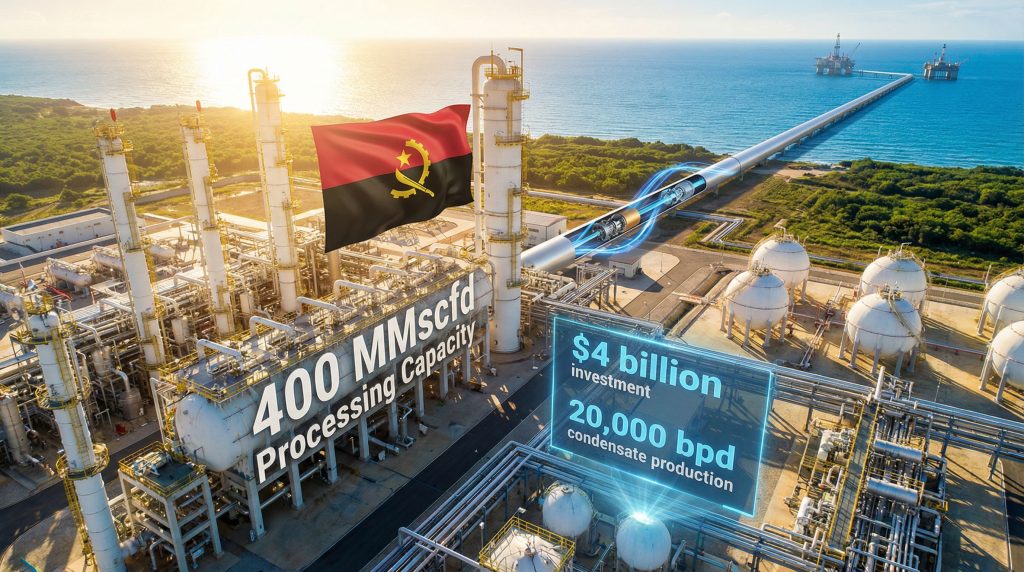
According to the World Bank's Flaring Reduction Programme, Angola ranked among Africa's leading gas-flaring nations during pre-2020 periods, with significant volumes lost due to insufficient processing capacity. The Soyo Gas Treatment Plant addresses this inefficiency through dedicated processing infrastructure designed to handle 400 million standard cubic feet per day (MMscfd), positioning it within the mid-tier category of global gas processing facilities.
However, the success of such large-scale energy projects often depends on broader market conditions and investment market impacts that can influence project economics.
The technical specifications of modern gas processing facilities typically include:
• Inlet receiving systems with multiphase metering and sand removal capabilities
• Gas-liquid separation through slug catchers and three-phase separators
• Hydrocarbon dew point control using refrigeration systems operating at -25°C to -35°C
• Condensate stabilisation reducing Reid vapour pressure to export specifications
• LNG pre-treatment incorporating mercury removal and water content control
Industry benchmarks indicate that facilities of this scale achieve gas recovery efficiency rates of 92-96%, with condensate yields ranging from 15-50 barrels per million cubic feet depending on reservoir fluid characteristics. The reported 20,000 barrels per day condensate production from the Soyo Gas Treatment Plant suggests approximately 50 barrels per million cubic feet, consistent with rich-gas-condensate reservoirs.
Strategic Location Analysis in Zaire Province
Zaire Province's positioning in northern Angola provides critical geographic advantages for gas processing and export operations. The province's coastal location facilitates maritime transport logistics whilst existing infrastructure from the Angola LNG facility creates operational synergies that reduce development costs and regulatory complexity.
The International Energy Agency's African Energy Outlook 2023 identifies coastal positioning of processing infrastructure as essential for reducing transmission losses and consolidating export logistics. Moreover, Soyo's established deep-water port facilities, developed initially for Angola LNG operations since 2008, provide proven export capabilities and regulatory frameworks that minimise development risk for complementary gas projects.
Key infrastructure advantages include:
• Existing port facilities with deep-water access for LNG carriers and condensate tankers
• Established regulatory frameworks through ANPG oversight and proven permitting processes
• Operational expertise from Angola LNG facility management and local workforce development
• Power generation infrastructure supporting processing facility operations
• Proximity to offshore fields reducing pipeline costs and transmission losses
The integration with Angola LNG's 1.1 billion cubic feet per day capacity creates opportunities for operational optimisation, shared infrastructure utilisation, and coordinated export scheduling. Consequently, this adjacency enables the Soyo Gas Treatment Plant to function as both a standalone processing facility and a complementary supply source for existing liquefaction infrastructure.
When big ASX news breaks, our subscribers know first
How Does the Soyo Plant Transform Angola's Energy Economics?
Investment Structure and Financial Framework
The consortium structure backing the Soyo Gas Treatment Plant reflects sophisticated international risk-sharing mechanisms typical of major African energy infrastructure projects. The partnership combines international operator expertise with state participation to balance commercial objectives and national economic interests.
| Stakeholder | Ownership % | Role |
|---|---|---|
| Azule Energy | 37.4% | Technical operator and development lead |
| Chevron | 31.0% | LNG integration and export coordination |
| Sonangol E&P | 19.8% | State participation and local content |
| TotalEnergies | 11.8% | Upstream integration and financing |
Azule Energy, formed through a joint venture between Eni, bp, and Equinor, brings deepwater extraction expertise from Angola's Pre-Salt blocks. Chevron's participation leverages its role as primary operator of Angola LNG since 2008, ensuring operational synergies and export market access.
The World Bank's Africa Energy Outlook 2023 indicates that public-private partnership models with balanced state participation typically reduce sovereign risk whilst ensuring local value capture. In addition, this structure enables international financing access whilst maintaining government oversight of strategic energy assets.
Typical financing frameworks for projects of this scale include:
• 60-70% debt financing through multilateral development banks and commercial syndication
• 30-40% equity contributions from operating partners
• Government guarantees for sovereign equity participation
• Export credit agency support for technology and equipment procurement
Revenue Diversification Beyond Oil Dependency
Angola's economic transformation through gas monetisation addresses critical structural vulnerabilities in the country's hydrocarbon-dependent fiscal model. According to the IMF's 2024 Article IV Consultation, Angola's hydrocarbon sector represents over 90% of government revenue and 95% of export earnings, creating significant exposure to oil price volatility and oil price stagnation concerns.
Gas monetisation pathways from the Soyo facility create multiple revenue streams:
1. LNG Export Markets
Long-term supply contracts, particularly with Asian markets, provide stable revenue flows less volatile than crude oil pricing. The International Gas Union's 2024 World LNG Report indicates that 65-70% of global LNG demand originates from China, India, Japan, and South Korea, creating substantial market opportunities for new suppliers.
2. Domestic Power Generation
Angola's power sector faces structural challenges with only 52% rural electrification according to World Bank energy access data. Gas-fired power plants offer lower capital expenditure than hydroelectric projects whilst providing more reliable generation than renewable sources within Angola's current grid infrastructure.
3. Industrial Feedstock Applications
Petrochemical, fertiliser, and specialty chemical production require energy-intensive gas inputs. The African Development Bank's African Chemicals Industry Outlook identifies secure gas supply as critical for domestic fertiliser production, addressing Angola's agricultural sector import dependencies whilst creating industrial employment.
Angola LNG currently exports approximately 5.2 million tonnes per annum (mtpa) according to IEA natural gas trade data. For instance, the additional processing capacity from Soyo can support expanded LNG production or provide base-load supply stability for existing operations.
What Technical Capabilities Define the Soyo Processing Operations?
Engineering Specifications and Processing Technology
The technical capabilities of the Soyo Gas Treatment Plant incorporate modern gas-condensate processing technology designed to optimise both gas extraction efficiency and liquid hydrocarbon recovery. According to Society of Petroleum Engineers technical standards, integrated gas-condensate facilities achieve superior economic returns through simultaneous optimisation of gas and liquid hydrocarbon streams.
| Technical Parameter | Specification | Industry Benchmark |
|---|---|---|
| Gas Processing Capacity | 400 MMscfd | Mid-tier facility range |
| Condensate Production | 20,000 bpd | Rich-gas reservoir typical |
| Pipeline System | Offshore connection | Standard transmission |
| Processing Efficiency | 92-96% recovery | Industry standard |
Core processing technology components include:
• Multiphase inlet systems with glycol dehydration and sand removal
• Three-phase separation for pressure and temperature conditioning
• Refrigeration systems preventing liquid dropout during transmission
• Condensate stabilisation achieving export vapour pressure specifications
• Mercury removal systems meeting LNG feed gas purity requirements
The facility's 20,000 barrels per day condensate production from 400 MMscfd gas processing implies approximately 50 barrels per million cubic feet condensate yield. This ratio indicates rich-gas-condensate reservoir characteristics typical of Angola's offshore fields, where liquid hydrocarbon content enhances project economics through dual-product monetisation.
Operational Integration with Angola LNG
The proximity between the Soyo Gas Treatment Plant and Angola LNG facilities creates opportunities for operational integration and infrastructure optimisation. Furthermore, Angola LNG's established 1.1 billion cubic feet per day liquefaction capacity provides proven export infrastructure and market access for processed gas from the new facility.
Integration benefits include:
• Pre-treatment coordination ensuring gas quality specifications for liquefaction
• Export logistics optimisation through shared port facilities and shipping schedules
• Operational expertise sharing reducing staffing costs and technical risk
• Maintenance coordination enabling shared equipment and specialised services
• Power generation synergies through integrated utility systems
The technical specifications for LNG feed gas typically require water content below 0.1 ppm, mercury removal to prevent equipment corrosion, and precise hydrocarbon dew point control. Consequently, the Soyo facility's processing technology addresses these requirements whilst maintaining flexibility for domestic market supply or alternative export pathways.
Why Does This Project Signal Angola's Industrial Transformation?
Energy Security and Domestic Supply Stability
The Soyo Gas Treatment Plant represents a strategic shift toward energy security through diversified domestic supply sources and reduced dependence on imported fuel for power generation. Angola's electricity sector has historically relied on hydroelectric generation supplemented by costly liquid fuel imports during drought periods or maintenance outages.
Gas-fired power generation offers 45-55% thermal efficiency compared to liquid fuel alternatives whilst providing dispatchable generation capacity. Moreover, Angola's installed generation capacity of approximately 15-17 GW faces constraints from fuel availability, particularly during dry seasons when hydroelectric output declines.
Domestic supply advantages include:
• Reduced flaring rates improving environmental compliance and resource utilisation
• Power sector reliability through baseload gas supply for thermal generation
• Industrial development support enabling energy-intensive manufacturing expansion
• Foreign exchange savings reducing liquid fuel import requirements
• Regional supply potential for neighbouring markets through pipeline export
The facility also supports Angola's commitment to gas flaring reduction under international environmental agreements. Historical flaring rates exceeding 10-15% of associated gas production represented both environmental concerns and economic inefficiency that dedicated processing infrastructure addresses.
Regulatory Framework Evolution
Angola's regulatory environment for gas development has evolved significantly since the implementation of the Gas Law in 2018, which established comprehensive frameworks for upstream development, midstream processing, and downstream utilisation. The Agência Nacional do Petróleo, Gás e Biocombustíveis (ANPG) serves as national concessionaire, managing licensing and regulatory oversight for gas sector development.
Key regulatory developments include:
• Streamlined permitting processes for gas infrastructure development
• Local content requirements ensuring domestic economic participation
• Environmental compliance frameworks addressing flaring reduction and emission controls
• Fiscal terms optimisation encouraging investment in gas processing infrastructure
• Domestic market obligations balancing export revenue with local supply security
The regulatory evolution aligns with Angola's broader economic diversification objectives, moving beyond traditional oil-focused policies toward integrated hydrocarbon development that supports industrial growth and energy security.
How Does Soyo Position Angola in Global Gas Markets?
Export Competitiveness Analysis
Angola's positioning in global gas markets benefits from geographic proximity to high-growth Asian markets and established LNG export infrastructure. The Atlantic Basin's connection to both European and Asian markets provides market flexibility and price optimisation opportunities compared to pipeline-dependent suppliers.
Competitive advantages include:
• Maritime transport flexibility enabling market diversification across regions
• Established customer relationships through Angola LNG operations since 2008
• Supply reliability enhanced by diversified processing and production sources
• Cost competitiveness leveraging existing infrastructure and operational expertise
• Long-term contract potential appealing to Asian buyers seeking supply security
The International Gas Union's analysis indicates that long-term contracts remain prevalent in Asian markets, with buyers prioritising supply security over spot market pricing flexibility. However, understanding global trade impacts remains crucial for Angola's positioning in these markets.
Global gas market volatility during 2022-2024 highlighted the importance of supply chain resilience and diversified sourcing. Angola's Atlantic Coast positioning provides strategic advantages for European markets seeking alternatives to pipeline imports whilst maintaining competitive access to growing Asian demand centres.
Future Development Pipeline Implications
The successful development of the Soyo Gas Treatment Plant establishes precedents for additional offshore and onshore gas projects throughout Angola's hydrocarbon-rich basins. The project demonstrates technical feasibility, regulatory efficiency, and commercial viability that supports expanded gas infrastructure development.
Future development opportunities include:
• Additional offshore discoveries in Angola's Pre-Salt and deepwater blocks
• Onshore gas development in sedimentary basins with established infrastructure access
• Processing capacity expansion supporting increased production from existing fields
• Regional integration projects connecting Angola to broader West African gas networks
• Downstream industrial development leveraging reliable gas feedstock availability
Angola's National Development Plan targets gas sector contribution of 25-30% of hydrocarbon revenues by 2030, requiring substantial infrastructure expansion beyond current capabilities. For instance, the Soyo Gas Treatment Plant provides a foundation for achieving these diversification objectives whilst demonstrating successful public-private partnership models for future developments.
What Investment Lessons Does the Soyo Project Offer?
Execution Excellence and Project Management
The reported completion ahead of schedule demonstrates effective project management and execution strategies in challenging African infrastructure environments. Complex offshore-onshore integration projects typically face technical, logistical, and regulatory challenges that can extend timelines and increase costs.
Project execution factors contributing to success include:
• Experienced consortium partners with proven Angola operational history
• Established regulatory relationships reducing permitting and approval delays
• Existing infrastructure leverage through Angola LNG facility proximity
• Local workforce development providing skilled labour and reducing expatriate costs
• Proven technology application minimising technical risk and startup challenges
The achievement of over 20 million safe work hours reflects robust safety management systems essential for complex energy infrastructure projects. Safety performance directly impacts project schedules, costs, and regulatory compliance in international energy development.
How Can Similar Projects Learn From Stakeholder Coordination?
The consortium structure demonstrates effective coordination between international operators, national oil companies, and government agencies. Successful public-private partnerships require alignment of commercial objectives with national development goals whilst managing diverse stakeholder interests. This experience provides valuable insights for developing effective investment strategies in emerging markets.
Partnership model advantages include:
• Risk distribution among experienced international and local partners
• Capital efficiency through multilateral financing and shared equity contributions
• Technology transfer enhancing local technical capabilities and workforce development
• Market access optimisation leveraging diverse partner relationships and expertise
• Regulatory coordination through state participation and established operator relationships
The model provides a framework for replicating successful energy infrastructure development across other African markets facing similar challenges of capital constraints, technical complexity, and regulatory coordination requirements.
The next major ASX story will hit our subscribers first
Strategic Implications for Angola's Energy Future
Long-term Economic Transformation Potential
The Soyo Gas Treatment Plant represents more than infrastructure development; it signals Angola's strategic pivot toward integrated hydrocarbon value chains that support broader economic diversification. The facility enables industrial development opportunities extending beyond traditional oil and gas extraction into manufacturing, chemicals, and power generation sectors.
Economic transformation opportunities include:
• Industrial manufacturing expansion through reliable, cost-competitive energy supply
• Petrochemical industry development utilising gas feedstock for domestic and export markets
• Agricultural sector support through domestic fertiliser production capabilities
• Power sector modernisation enabling industrial growth and improved energy access
• Foreign exchange optimisation reducing import dependencies whilst expanding export revenues
The World Bank's analysis of African industrial development emphasises energy availability as a primary constraint on manufacturing expansion. Angola's enhanced gas processing capability addresses this fundamental limitation whilst creating multiplier effects throughout the economy.
Regional Leadership in Gas Infrastructure Development
Angola's successful development positions the country as a regional leader in gas infrastructure development and establishes benchmarks for West African gas sector advancement. The project demonstrates technical feasibility, regulatory efficiency, and commercial viability that influences neighbouring countries' energy development strategies, as highlighted in Angola's broader energy transformation.
Regional impact considerations include:
• Technology transfer opportunities supporting capacity building across West Africa
• Regional supply integration through cross-border pipeline and LNG trade development
• Investment attraction demonstrating successful energy sector development models
• Environmental leadership addressing gas flaring reduction and emission control objectives
• Economic integration support enhancing regional energy security and trade relationships
The African Development Bank's Energy Sector Strategy identifies regional integration as critical for optimising energy resources and supporting continental economic development. Consequently, Angola's gas infrastructure advancement contributes to broader regional energy security and economic integration objectives.
This analysis is based on publicly available information and industry data. Investment decisions should consider comprehensive due diligence and professional financial advice. Projections regarding future performance involve uncertainties and risks that may affect actual outcomes.
Ready to Capitalise on the Next Major Energy Discovery?
Discovery Alert's proprietary Discovery IQ model delivers instant notifications on significant ASX mineral and energy discoveries, transforming complex market data into actionable investment insights for both short-term traders and long-term investors. Explore how major discoveries have generated substantial historical returns and begin your 30-day free trial today to position yourself ahead of the market.