May 20, 2026
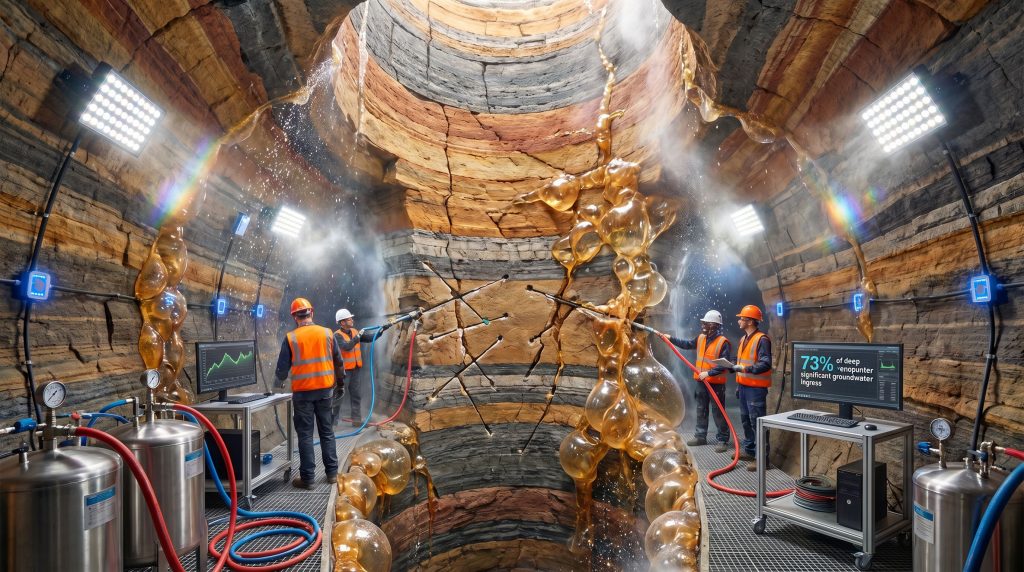
Managing groundwater infiltration represents one of the most technically demanding aspects of deep underground mining operations. As extraction activities extend beyond traditional depths, the intersection of geological complexity and hydrostatic pressure creates unprecedented challenges for mining engineers. The effectiveness of specialist water sealing in underground mining directly correlates with operational sustainability, safety protocols, and long-term project viability. Furthermore, advancements in mining industry evolution continue to drive innovation in these critical underground applications.
Engineering Challenges in Deep Underground Water Management
Underground mining operations encounter escalating hydrogeological complexities as depths exceed 500 meters below surface level. Research indicates that approximately 73% of deep mining operations experience significant groundwater infiltration issues, with flow rates varying dramatically from 50 liters per minute in stable formations to over 15,000 liters per minute in highly fractured geological systems.
Primary infiltration mechanisms include:
• Fractured bedrock systems with apertures exceeding 15mm width
• Geological intersection zones where multiple rock formations converge
• Blast-damaged rock zones extending 3-5 meters from excavation faces
• Historical mining workings creating preferential water flow pathways
• Seasonal water table fluctuations affecting pressure dynamics
The hydrostatic pressure environment intensifies these challenges substantially. Water pressure increases approximately 1 bar per 10 meters of depth, creating hydrostatic pressures exceeding 50 bar in operations below 500-meter depths. These extreme pressure conditions can overwhelm conventional drainage systems and compromise the structural integrity of underground workings.
Geological fault systems present additional complexity, particularly in metamorphic rock environments where foliated structures create intricate flow networks. Consequently, the unpredictable nature of these systems requires sophisticated assessment methodologies and adaptive sealing strategies.
When big ASX news breaks, our subscribers know first
Chemical Injection Technologies for High-Pressure Control
Modern chemical injection systems employ advanced polymer technologies to address high-pressure water infiltration scenarios. Polyurethane foam injection systems achieve volume expansions of 10-15 times their original size upon contact with water, creating flexible barriers capable of withstanding cyclic pressure variations inherent in underground environments.
Performance specifications for polyurethane systems include:
• Compressive strength ranging from 0.8 to 2.5 MPa
• Temperature resistance spanning -40°C to +90°C operational ranges
• Chemical resistance across pH levels from 4 to 12
• Permeability coefficients below 10⁻⁹ meters per second
• Cure times adjustable from 15 seconds to 180 seconds
Methacrylate gel systems offer precision sealing capabilities for micro-fracture networks. These low-viscosity formulations penetrate fractures as narrow as 0.1mm, creating permanent chemical barriers with adjustable gel times ranging from 30 seconds to 30 minutes. This temporal flexibility enables precise application timing aligned with varying geological conditions and operational constraints.
Advanced injection techniques incorporate:
• Pressure-regulated delivery systems maintaining 5-25 bar injection pressures
• Real-time flow monitoring detecting fracture saturation points
• Temperature-controlled formulations optimizing cure characteristics
• Multi-component mixing systems ensuring consistent chemical properties
The integration of automated injection equipment reduces personnel exposure while improving placement accuracy. GPS-guided positioning systems achieve ±50mm accuracy for injection hole placement, ensuring optimal seal coverage across targeted geological zones. Moreover, specialist water sealing capabilities have become increasingly critical as mining operations venture into more challenging geological environments.
Optimized Grouting Methodologies for Geological Variations
Grouting methodology selection depends critically on geological formation characteristics, fracture patterns, and hydrogeological conditions. Ring pattern configurations position injection holes in concentric circles at 1.5-2.0 meter spacing intervals, extending 3-5 meters beyond active water infiltration zones. This systematic approach achieves 85-95% flow reduction in fractured limestone and sandstone formations.
Sequential injection protocols follow established patterns:
-
Primary hole drilling at maximum spacing intervals
-
Secondary hole installation at 50% reduced spacing
-
Tertiary verification holes confirming seal integrity
-
Pressure testing validating barrier effectiveness
-
Long-term monitoring establishing performance baselines
Pressure-controlled injection systems maintain optimal delivery parameters through sophisticated monitoring equipment. Real-time analysis of injection pressure, flow rate variations, and pressure decay curves provides immediate feedback on grouting effectiveness and geological response patterns.
Critical monitoring parameters include:
• Flow rate variations indicating fracture saturation levels
• Pressure decay curves confirming material penetration depth
• Return flow analysis measuring seal effectiveness percentages
• Temperature monitoring ensuring optimal cure conditions
Curtain grouting techniques create comprehensive barriers across large geological zones. These methodologies prove particularly effective in sedimentary environments where layered formations allow horizontal injection patterns following natural bedding planes. In addition, the implementation of 3D geological modelling significantly enhances the precision of grouting pattern design and execution.
Chemical Formulation Performance Optimization
Chemical grouting material selection requires careful consideration of environmental conditions, geological characteristics, and performance requirements. Comparative analysis reveals significant performance differences between cementitious and chemical grout systems across multiple operational parameters.
| Performance Parameter | Cementitious Grouts | Chemical Grouts |
|---|---|---|
| Fracture Penetration | 2-5mm apertures | 0.1-15mm apertures |
| Setting Time Range | 45-120 minutes | 15 seconds-30 minutes |
| Flexibility Characteristics | Rigid structure | Flexible to semi-rigid |
| Chemical Resistance | High pH environments | Broad pH range (2-12) |
| Material Cost per m³ | $150-300 | $800-2,500 |
| Temperature Stability | Limited range | Extended range |
Specialized formulations address extreme operational conditions:
High-temperature applications: Silicate-based systems maintain structural stability at temperatures exceeding 60°C, essential for deep geothermal mining environments and high-temperature geological formations.
Acid mine drainage environments: Epoxy-modified polyurethanes demonstrate resistance to pH levels as low as 2.5, preventing seal degradation in sulfide-rich geological formations common in certain mining regions.
Dynamic stress conditions: Flexible polymer systems accommodate ground movement and seismic activity without compromising seal integrity, particularly important in tectonically active mining regions.
Material selection also considers long-term durability factors, including UV resistance for surface applications, chemical compatibility with existing infrastructure, and environmental impact assessments for regulatory compliance.
Advanced Monitoring Systems for Seal Verification
Contemporary monitoring technologies provide continuous assessment of seal performance through sophisticated sensor networks and data analysis systems. Electromagnetic flow meters positioned downstream from sealed zones deliver continuous monitoring capabilities with ±0.5% accuracy ratings, enabling precise detection of seal degradation or new infiltration sources.
Distributed pressure sensor arrays installed at 10-meter intervals along sealed zones detect multiple performance indicators:
• Hydrostatic pressure variations indicating structural seal integrity
• Dynamic pressure spikes suggesting new fracture development
• Long-term pressure trends affecting overall seal performance
• Seasonal pressure fluctuations requiring adaptive management strategies
Integration with Supervisory Control and Data Acquisition (SCADA) systems enables automated response protocols when measured parameters exceed predetermined operational thresholds. These systems can automatically adjust pumping rates, activate backup sealing procedures, or trigger emergency response protocols.
Advanced monitoring capabilities include:
• Wireless sensor networks reducing installation complexity
• Cloud-based data analysis providing remote monitoring capabilities
• Predictive analytics identifying potential failure modes
• Integration with mine management systems for operational coordination
Fiber optic monitoring systems offer additional capabilities for large-scale seal assessment. These technologies detect temperature variations, structural deformation, and moisture changes along extensive underground barriers. Furthermore, the evolution toward data-driven mining operations enhances the analytical capabilities of these monitoring systems significantly.
Comprehensive Safety Protocols for Underground Operations
Underground water sealing operations require stringent safety protocols addressing chemical exposure, atmospheric hazards, and emergency response procedures. Atmospheric monitoring systems continuously assess volatile organic compound (VOC) concentrations from resin systems, carbon dioxide accumulation in confined spaces, and oxygen depletion risks in sealed compartments.
Personnel safety requirements encompass:
• Chemical exposure monitoring with real-time detection capabilities
• Respiratory protection protocols for polymer injection operations
• Emergency evacuation procedures for uncontrolled water infiltration events
• Chemical exposure treatment protocols and medical response plans
• Equipment isolation procedures for pressure system failures
Injection equipment must comply with ATEX certification standards for explosive atmospheres, incorporating pressure relief systems rated at 150% above maximum operating pressures. These safety margins protect against catastrophic failure scenarios while maintaining operational flexibility.
Emergency response capabilities include:
• Rapid deployment teams for critical infiltration scenarios
• Backup sealing materials and equipment stockpiles
• Communication systems maintaining contact during emergency operations
• Coordination protocols with mine emergency response teams
Training programs ensure personnel understand chemical handling procedures, recognise atmospheric hazards, and respond appropriately to emergency situations. Regular safety audits and equipment inspections maintain operational readiness and regulatory compliance.
The next major ASX story will hit our subscribers first
Economic Analysis and Investment Justification
Cost-benefit analyses for water sealing investments demonstrate favourable returns through multiple value creation mechanisms. Direct implementation costs typically range from $500-2,000 per cubic metre of treated geological zone, with equipment mobilisation costs spanning $50,000-150,000 per project depending on complexity and geographical accessibility.
Specialist labour costs average:
• Senior grouting technicians: $1,200-1,800 per day
• Geological engineers: $1,500-2,200 per day
• Equipment operators: $800-1,200 per day
• Safety supervisors: $1,000-1,500 per day
Avoided cost benefits create substantial value propositions:
• Production downtime prevention: $25,000-100,000 per operational day
• Equipment protection from water damage: $500,000-5,000,000 in replacement costs
• Structural damage prevention: $1,000,000-10,000,000 in repair expenses
• Regulatory compliance maintenance avoiding shutdown penalties
Return on investment calculations typically demonstrate 3:1 to 8:1 ratios within 12-24 months through multiple benefit streams:
• Reduced pumping costs achieving 40-70% operational savings
• Increased operational availability improving productivity by 15-25%
• Extended equipment lifecycle increasing asset utilisation by 20-40%
• Enhanced safety records reducing insurance premiums and regulatory penalties
Long-term value creation extends beyond immediate operational benefits, contributing to mine life extension, resource recovery optimisation, and sustainable operational practices supporting environmental stewardship objectives.
Emerging Technologies and Innovation Trends
Nanotechnology applications represent significant advancement opportunities for grouting material performance. Nano-silica additives improve penetration capabilities into micro-fracture networks while enhancing long-term durability characteristics. These advanced formulations achieve 30% better penetration rates compared to conventional grouting materials, enabling treatment of previously inaccessible geological zones.
Smart material integration introduces self-healing capabilities through shape-memory polymers activated by environmental triggers such as temperature variations or pH changes. These materials automatically seal new micro-fractures as they develop, reducing maintenance requirements and improving long-term seal reliability.
Automated injection systems reduce personnel exposure while improving operational precision:
• Robotic platforms enabling remote operation in hazardous environments
• GPS-guided positioning achieving ±50mm placement accuracy
• Automated mixing systems ensuring consistent material properties
• Real-time quality control monitoring injection parameters
Digital twin technologies create virtual models of underground sealing systems, enabling predictive maintenance, optimisation of injection patterns, and scenario planning for complex geological conditions. Moreover, the integration of AI in mining technology promises to revolutionise how specialist water sealing in underground mining operations are planned and executed.
Advanced sensor technologies including:
• Distributed acoustic sensing detecting micro-seismic activity
• Chemical sensors monitoring grout cure progression
• 3D imaging systems mapping fracture networks
• Artificial intelligence analysing geological patterns and predicting optimal sealing strategies
These technological advances promise improved sealing effectiveness, reduced operational costs, and enhanced safety outcomes for underground mining operations.
Geological Condition Adaptation Strategies
Regional geological variations require specialised sealing approaches optimised for specific rock types and structural characteristics. Sedimentary rock environments with layered formations benefit from horizontal injection patterns following natural bedding planes. Success rates exceed 90% using low-viscosity acrylate systems with 2-5 minute gel times, allowing optimal penetration before cure initiation.
Igneous rock formations present crystalline structures with random fracture patterns requiring high-pressure injection techniques. Treatment protocols employ 15-25 bar injection pressures using expanding polyurethane systems specifically formulated for hard rock applications. Success correlates directly with fracture aperture mapping accuracy and injection timing precision.
Metamorphic rock challenges include foliated structures creating complex three-dimensional flow pathways. These environments require multi-stage treatment approaches combining chemical and cementitious systems to achieve comprehensive sealing across varying geological zones.
Geological assessment protocols include:
• Core sample analysis determining rock strength and porosity characteristics
• Hydrogeological testing measuring permeability and flow patterns
• Geophysical surveys mapping underground fracture networks
• Stress analysis evaluating ground movement potential
• Chemical analysis assessing groundwater composition and pH levels
Regional considerations affecting strategy selection:
• Seismic activity levels influencing material flexibility requirements
• Groundwater chemistry affecting grout compatibility
• Seasonal water table variations requiring adaptive sealing approaches
• Historical mining activities creating complex underground geometries
Understanding these geological variables enables engineering teams to select optimal sealing methodologies, predict performance outcomes, and develop contingency plans for challenging conditions. However, successful implementation often requires professional water control services to ensure technical expertise and proper execution across diverse geological environments.
Quality Assurance and Long-Term Performance
Post-installation testing protocols verify seal integrity through comprehensive evaluation methodologies. Hydraulic testing at 150% design pressure maintained for 24-48 hours confirms initial seal performance under operational stress conditions.
Core sampling programmes involve diamond drilling through treated zones, providing physical verification of grout penetration depth, cure quality, and structural integrity. These samples undergo laboratory analysis determining:
• Compressive strength measurements
• Permeability coefficient testing
• Chemical composition verification
• Durability assessment under accelerated ageing conditions
Long-term monitoring programmes establish performance baselines:
• Monthly flow rate measurements detecting gradual seal degradation
• Quarterly pressure testing confirming continued barrier effectiveness
• Annual visual inspections assessing visible seal condition changes
• Five-year comprehensive assessments evaluating overall system performance
Quality control measures throughout implementation:
• Material batch testing ensuring consistent chemical properties
• Injection parameter monitoring maintaining optimal delivery conditions
• Environmental condition documentation supporting performance correlation
• Personnel certification programmes ensuring skilled application techniques
Performance documentation includes:
• Before and after flow measurements quantifying treatment effectiveness
• Photographic records documenting seal placement and condition
• Chemical analysis reports confirming material specifications
• Maintenance schedules establishing ongoing care requirements
These quality assurance protocols ensure water sealing systems meet design specifications, maintain long-term effectiveness, and provide reliable performance data supporting future project planning and optimisation efforts. Additionally, the adoption of mining electrification trends influences the selection of monitoring equipment and automated systems for enhanced operational efficiency.
In conclusion, the implementation of specialist water sealing in underground mining requires comprehensive understanding of geological conditions, advanced chemical technologies, sophisticated monitoring systems, and strict quality assurance protocols. As mining operations continue to deepen and expand into more challenging environments, the importance of effective water management becomes increasingly critical for operational success, safety, and environmental stewardship.
Disclaimer: This article contains technical information and cost estimates that should be verified with qualified professionals before implementation. Mining operations involve inherent risks, and proper engineering assessment is essential for any water sealing project. Actual costs, performance outcomes, and safety requirements may vary significantly based on specific site conditions, geological characteristics, and regulatory requirements.
Looking to Invest in Advanced Mining Technologies?
Discovery Alert's proprietary Discovery IQ model delivers real-time alerts on significant ASX mineral discoveries, instantly empowering subscribers to identify actionable opportunities in companies pioneering cutting-edge mining solutions like specialist water sealing technologies. Stay ahead of the market by exploring Discovery Alert's dedicated discoveries page to understand why major mineral discoveries can generate substantial returns, then begin your 14-day free trial to position yourself ahead of the broader market.