June 4, 2026
Understanding Spodumene Concentrate Supply Agreements in Australia's Lithium Sector
Lithium supply chain security has evolved far beyond simple commodity trading relationships, with securing lithium supply becoming a strategic priority for global battery manufacturers. Modern battery material procurement requires sophisticated risk management frameworks that balance long-term supply certainty with price volatility exposure. As electric vehicle demand accelerates globally, the mechanisms governing spodumene concentrate agreements reflect broader strategic positioning within critical mineral markets. The Liontown spodumene supply deal with Canmax Technologies exemplifies this evolution in supply chain relationships.
The lithium supply chain's foundation rests on converting spodumene concentrate into battery-grade chemicals through multi-stage processing. This mineral concentrate serves as the primary feedstock for lithium hydroxide and lithium carbonate production, forming the essential link between mining operations and battery manufacturing. Recent market developments demonstrate how supply agreement structures have evolved to address both operational requirements and market volatility concerns.
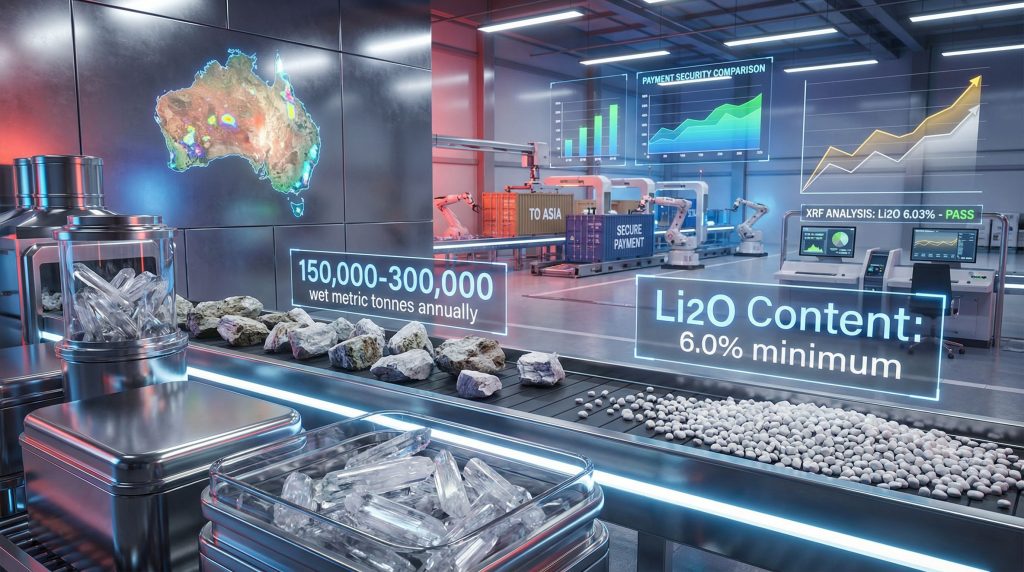
Spodumene concentrate must meet stringent purity specifications before chemical processing can commence. Industry standards typically require specific Li2O content levels, moisture parameters, and iron content limitations to ensure efficient downstream conversion. The concentrate undergoes rigorous testing protocols including XRF analysis for lithium content verification and moisture measurement procedures that directly impact transportation costs and processing efficiency.
What Makes Spodumene Concentrate Critical for Battery Manufacturing?
Australia's position as a dominant spodumene producer reflects the country's geological advantages and established mining infrastructure. The Kathleen Valley project exemplifies modern spodumene operations, having achieved first concentrate production in July 2024 while integrating approximately 80% renewable energy into its power supply. This renewable energy integration supports both cost competitiveness and sustainability credentials increasingly demanded by battery material supply chains.
Processing pathways from spodumene concentrate involve multiple conversion stages before reaching battery-grade specifications. The concentrate undergoes chemical treatment to produce lithium hydroxide or lithium carbonate, which then serves as feedstock for cathode precursor materials. Furthermore, each stage requires specific quality control measures and technical expertise that influence overall supply chain coordination, with battery-grade refining becoming increasingly sophisticated.
Technical Specifications and Quality Standards in Modern Offtake Deals
Contemporary spodumene supply agreements incorporate detailed technical specifications that extend beyond basic purity requirements. Moisture content parameters significantly impact transportation costs since contracts often specify wet metric tonnes rather than dry weight measurements. However, iron content limitations ensure downstream processing efficiency while preventing equipment contamination during chemical conversion processes.
Quality assurance protocols have standardised across the industry, with testing frequencies ranging from daily moisture measurements to weekly chemical composition analysis. These protocols support consistent product delivery while providing transparent benchmarks for contract compliance verification. Additionally, advanced analytical techniques including ICP-MS testing enable precise elemental composition monitoring throughout production cycles.
The Role of Index-Based Pricing in Lithium Supply Contracts
Pricing mechanisms within spodumene supply agreements have shifted toward index-based formulas rather than fixed-price structures or spot market referencing. This evolution reflects industry efforts to establish transparent price discovery while managing volatility exposure for both buyers and sellers. The Liontown spodumene supply deal with Canmax Technologies exemplifies this approach, incorporating pricing formulas linked to established spodumene concentrate indices.
Index-based pricing provides several advantages over alternative structures. Buyers gain protection against extreme price spikes while sellers maintain revenue correlation with market fundamentals. These formulas typically reference established benchmark indices that reflect broader market conditions rather than bilateral negotiations or volatile spot transactions. In addition, recent industry developments include standardisation efforts for auction-based pricing discovery, supporting more transparent market mechanisms.
When big ASX news breaks, our subscribers know first
How Do Chinese Battery Material Companies Secure Long-Term Lithium Supply?
Chinese lithium chemical manufacturers have developed sophisticated procurement strategies that prioritise supply security through geographic diversification and multi-year contract commitments. These companies typically balance various lithium feedstock sources including Australian spodumene, South American brine operations, and other global suppliers to optimise both cost and supply reliability considerations.
Strategic Procurement Patterns Among Asian Lithium Processors
Canmax Technologies' commitment to securing 150,000 wet metric tonnes annually from Liontown's Kathleen Valley project represents a strategic pattern observed across Chinese battery material companies. This approach involves establishing direct relationships with established producers rather than relying primarily on spot market transactions or trading intermediaries. Consequently, such agreements provide demand certainty for mining operations while ensuring feedstock availability for chemical processing facilities.
Long-term procurement strategies typically incorporate volume commitments that align with processing facility capacity planning. The two-year delivery window spanning 2027-2028 allows chemical manufacturers to coordinate production schedules with downstream battery material demand. This forward planning approach supports operational efficiency while managing inventory requirements across multi-stage processing operations.
Risk Management Through Geographic Diversification
Geographic diversification strategies among Chinese lithium processors reflect lessons learned from previous supply chain disruptions. Australian spodumene operations offer distinct advantages including established mining infrastructure, stable regulatory environments, and proximity to Asian processing facilities. These factors complement other global supply sources while reducing concentration risk within procurement portfolios.
Technical characteristics of different lithium sources influence procurement decisions beyond basic cost considerations. For instance, spodumene concentrate from Australian operations provides consistent quality specifications and established shipping infrastructure compared to emerging producer regions. Processing facilities optimise their operational parameters based on specific feedstock characteristics, supporting efficiency gains through supply source standardisation.
Letter of Credit Mechanisms in International Commodity Trading
International lithium transactions commonly employ sophisticated payment security mechanisms that protect both buyers and sellers throughout the contract lifecycle. Letter of credit instruments provide essential risk mitigation for large-volume commodity agreements, particularly when involving international counterparties across different regulatory jurisdictions.
Comparison of Payment Security Methods in Lithium Offtake Agreements
| Security Method | Risk Level | Processing Time | Cost Impact |
|---|---|---|---|
| Irrevocable Letter of Credit | Low | 5-10 days | 0.5-1.5% |
| Bank Guarantee | Medium | 3-7 days | 0.3-1.0% |
| Cash Advance | High | 1-2 days | Opportunity cost |
These payment mechanisms balance transaction security with operational efficiency requirements. Irrevocable letters of credit provide the highest security level while imposing moderate processing delays and costs. Bank guarantees offer intermediate risk protection with reduced processing complexity. Cash advance arrangements minimise processing time but create opportunity cost considerations for buyers while transferring significant risk exposure to sellers.
What Drives the Economics of Multi-Year Spodumene Supply Contracts?
Multi-year spodumene supply agreements reflect fundamental changes in lithium market dynamics and risk management approaches. Traditional spot market transactions have proven inadequate for supporting the capital-intensive infrastructure required for battery material supply chains. Furthermore, long-term contract structures enable more predictable revenue streams for producers while providing supply certainty for processors investing in downstream capacity expansion.
Volume Commitments and Production Scheduling Optimisation
The 150,000 wet metric tonne annual commitment within the Liontown spodumene supply deal with Canmax Technologies represents substantial volume coordination between mining operations and chemical processing facilities. This volume level typically comprises 15-20% of a mid-scale processing facility's annual feedstock requirements, providing supply security while maintaining flexibility for additional sourcing opportunities.
Production scheduling optimisation becomes critical when coordinating multi-year volume commitments with mining operations that experience natural variability in ore grades and processing throughput. Mining companies must balance contract obligations with operational realities including equipment maintenance cycles, weather impacts, and geological variations that influence concentrate production rates.
Inventory management strategies support contract compliance while optimising working capital requirements:
• Stockpile management during peak production periods
• Strategic inventory positioning near shipping infrastructure
• Quality assurance protocols for stored concentrate
• Transportation coordination with contract delivery schedules
Index-Linked Pricing Versus Fixed-Price Structures
Index-linked pricing mechanisms have gained preference over fixed-price structures due to their ability to balance risk exposure between contract counterparties. Fixed-price agreements create significant exposure to commodity price volatility, potentially creating unsustainable economics for either party depending on market movements. However, index-based formulas provide automatic adjustment mechanisms that maintain economic viability throughout contract terms.
Formula-linked pricing typically references established spodumene concentrate indices that reflect broader market conditions rather than bilateral negotiations. These indices incorporate transparent price discovery mechanisms including auction results and transaction data from multiple market participants. Recent industry developments suggest strengthening demand fundamentals, with auction results achieving prices significantly above prevailing spot levels.
Market Timing Strategies for 2027-2028 Delivery Windows
The selection of 2027-2028 as the delivery window for the Canmax Technologies agreement signals confidence in sustained lithium demand recovery and market stability. This timeline provides approximately 24 months from agreement announcement until delivery commencement, allowing both parties to optimise operational preparations while benefiting from anticipated market strengthening.
Market timing considerations reflect broader industry expectations regarding electric vehicle adoption rates and battery manufacturing capacity expansion. Chinese lithium processors are positioning for anticipated demand growth while Australian producers are scaling operations to meet long-term supply commitments. This coordination supports market stability while encouraging continued investment in lithium supply chain infrastructure.
"A typical two-year spodumene concentrate supply agreement involves 150,000-300,000 wet metric tonnes annually, with pricing formulas tied to established concentrate indices rather than spot market fluctuations."
How Are Australian Lithium Producers Positioning for Market Recovery?
Australian lithium producers are implementing comprehensive strategies that combine operational excellence with strategic market positioning to capitalise on anticipated demand recovery. These approaches encompass production optimisation, renewable energy integration, and diversified offtake structures that support long-term competitiveness within global battery material supply chains, particularly through Australian lithium innovations.
Production Capacity Scaling at Major Australian Operations
Kathleen Valley's progression from first concentrate production in July 2024 to major supply agreements demonstrates successful transition from development to commercial production phases. The facility's ability to commit 150,000 wet metric tonnes annually reflects achievement of substantial production capacity within approximately 30 months of initial operations. This timeline provides insights into typical ramp-up duration for modern spodumene operations.
Production ramp optimisation involves gradual capacity utilisation increases while maintaining quality specifications and operational reliability. Mining operations must balance throughput maximisation with equipment optimisation, ore grade management, and concentrate quality consistency. Successful ramp execution supports contract compliance while establishing operational credibility for future agreements.
Renewable Energy Integration in Lithium Processing
The Kathleen Valley project's integration of approximately 80% renewable energy into its power supply exemplifies sustainability initiatives increasingly important within battery material supply chains. This renewable energy utilisation supports cost competitiveness while providing environmental credentials demanded by downstream battery manufacturers and automotive OEMs prioritising carbon footprint reduction.
Renewable energy procurement strategies typically involve long-term power purchase agreements that provide cost stability while supporting mining operation sustainability goals. Solar and wind power integration requires careful coordination with processing schedules and energy storage systems to maintain operational reliability. These investments support long-term operational economics while enhancing market positioning with environmentally conscious customers.
Auction-Based Price Discovery Mechanisms
Liontown's participation in online auctions for spodumene concentrate represents adoption of transparent price discovery mechanisms that complement traditional bilateral contract negotiations. Recent auction results achieving prices significantly above prevailing spot levels suggest strengthening demand fundamentals and market confidence in lithium supply chain recovery.
Auction-based mechanisms provide several advantages over traditional pricing approaches. Transparent bidding processes establish market-based price discovery while enabling broader participation from potential buyers. Furthermore, these mechanisms support price benchmark establishment while providing producers with additional marketing channels beyond long-term contract agreements.
"Market Intelligence: Recent spodumene concentrate auctions have achieved prices significantly above prevailing spot levels, indicating strengthening demand fundamentals across the lithium supply chain."
What Role Do Tier-1 Automotive Partnerships Play in Lithium Supply Security?
Direct relationships between lithium producers and automotive OEMs represent strategic vertical integration initiatives that bypass traditional chemical processing intermediaries. These partnerships reflect automotive manufacturers' recognition that secure lithium supply requires direct engagement with mining operations rather than relying solely on battery material suppliers for feedstock procurement.
Balancing Direct OEM Contracts with Chemical Processor Agreements
Liontown's dual approach combining direct OEM relationships with Tesla and Ford Motor alongside chemical processor agreements with Canmax Technologies demonstrates sophisticated market positioning strategies. This diversified offtake structure provides multiple revenue channels while reducing concentration risk associated with single-customer dependencies.
Direct OEM partnerships offer distinct advantages:
• Long-term demand certainty from established automotive manufacturers
• Premium pricing potential through direct supply relationships
• Strategic partnerships supporting mining operation expansion planning
• Enhanced market credibility through Tier-1 automotive associations
Chemical processor agreements provide complementary benefits including operational flexibility, technical expertise in concentrate specifications, and access to diverse end-market applications beyond automotive batteries. This balanced approach optimises revenue potential while maintaining operational efficiency.
Geographic Distribution Strategies for Supply Chain Resilience
Supply chain resilience considerations influence how spodumene concentrate reaches different automotive manufacturing regions. Australian producers must coordinate shipping logistics to support OEM facilities across North America, Europe, and Asia while managing transportation costs and delivery reliability requirements. Geographic distribution strategies balance logistics optimisation with supply chain security considerations.
Transportation infrastructure coordination becomes critical when supporting multiple automotive OEMs with different geographic manufacturing footprints. Container shipping schedules, port capacity constraints, and regional inventory requirements influence supply chain design decisions. However, producers must maintain sufficient flexibility to redirect shipments based on changing automotive production schedules and market conditions.
Quality Assurance Requirements for Battery-Grade Materials
Automotive OEMs impose stringent quality assurance requirements that extend beyond standard chemical specifications to include traceability, sustainability verification, and supply chain transparency protocols. These requirements reflect automotive manufacturers' responsibility for battery performance, safety, and environmental compliance throughout vehicle lifecycles.
Quality control standards for automotive applications typically include:
• Enhanced testing protocols for battery-critical impurities
• Batch traceability systems supporting recall procedures
• Sustainability certification including carbon footprint documentation
• Supply chain transparency covering mining practices and labour standards
Technical Analysis: Spodumene Processing and Value Chain Integration
Spodumene concentrate processing involves complex technical procedures that convert mineral feedstock into battery-grade chemicals through multi-stage refinement operations. Understanding these technical processes provides essential context for evaluating supply agreements, pricing mechanisms, and quality requirements throughout the lithium value chain, particularly within the context of energy transition security.
From Concentrate to Battery-Grade Chemicals: Processing Pathways
The conversion pathway from spodumene concentrate to battery-grade chemicals requires sophisticated chemical processing expertise and specialised equipment infrastructure. Initial processing stages involve concentrate dissolution and purification procedures that remove impurities while concentrating lithium content to specifications required for battery applications.
Chemical conversion processes typically produce either lithium hydroxide or lithium carbonate depending on end-market requirements and technical specifications. Lithium hydroxide generally commands premium pricing due to its suitability for high-nickel battery chemistries preferred in electric vehicle applications. Processing pathway selection influences facility design, operating costs, and product market positioning.
Spodumene Processing Specifications for Battery Applications
| Parameter | Specification | Testing Method | Frequency |
|---|---|---|---|
| Li2O Content | 6.0% minimum | XRF Analysis | Per shipment |
| Moisture Content | <10% | Oven drying | Daily |
| Iron Content | <1.5% | ICP-MS | Weekly |
Capacity Utilisation Optimisation in Lithium Chemical Manufacturing
Chemical processing facilities require careful capacity planning to optimise throughput while maintaining product quality specifications. Feedstock quality variations from different spodumene sources influence processing parameters and capacity utilisation rates. Processors must balance multiple concentrate sources while maintaining consistent output specifications required for battery applications.
Operational optimisation involves coordinating concentrate inventory management with production scheduling and product delivery requirements. Processing facilities typically maintain feedstock inventory buffers to accommodate shipping schedule variations while ensuring continuous production operations. Additionally, technical expertise in process optimisation supports improved recovery rates and reduced operating costs.
Quality Control Standards for International Shipments
International spodumene concentrate shipments require comprehensive quality control protocols that ensure product specifications compliance throughout transportation and storage phases. Moisture content management becomes particularly critical since concentrate specifications typically reference wet metric tonnes while excess moisture increases transportation costs and storage complications.
Quality verification procedures include pre-shipment testing, loading supervision, and documentation protocols that support contract compliance and customer acceptance procedures. Chain of custody documentation ensures product traceability while preventing contamination during transportation and handling operations.
The next major ASX story will hit our subscribers first
Market Dynamics: Understanding Lithium Supply Agreement Timing
The strategic timing of lithium supply agreements reflects complex market dynamics including production ramp schedules, demand forecasting, and risk management considerations. Contemporary agreement structures balance operational requirements with market positioning strategies that optimise value creation for both producers and consumers, particularly within the evolving mining industry evolution.
Why 2027-2028 Delivery Windows Signal Market Confidence
The Canmax Technologies agreement specifying delivery during 2027-2028 demonstrates confidence in sustained lithium demand recovery and market stability throughout the contract period. This timeline provides approximately 24 months from agreement announcement until delivery commencement, enabling both parties to optimise operational preparations while benefiting from anticipated market strengthening.
Forward delivery windows reflect broader industry expectations regarding electric vehicle adoption rates, battery manufacturing capacity expansion, and lithium supply-demand balance evolution. Chinese lithium processors are positioning for anticipated demand growth while Australian producers are scaling operations to meet long-term supply commitments.
Production Ramp-Up Schedules and Capacity Planning
Kathleen Valley's progression from first production in July 2024 to major supply commitments beginning in 2027 represents a typical 30-month ramp period for modern spodumene operations. This timeline encompasses operational optimisation, equipment fine-tuning, and capacity utilisation increases required to achieve nameplate production rates.
Production ramp considerations include:
• Gradual throughput increases while maintaining quality specifications
• Equipment optimisation and maintenance procedure establishment
• Workforce training and operational procedure refinement
• Inventory accumulation supporting contract delivery requirements
Inventory Management in Volatile Commodity Markets
Effective inventory management strategies become crucial when coordinating multi-year supply agreements with volatile commodity market conditions. Producers must balance contract obligations with operational flexibility while managing working capital requirements and storage infrastructure constraints.
Strategic inventory positioning near shipping infrastructure reduces transportation costs while providing delivery schedule flexibility. Quality preservation during storage requires appropriate handling procedures and environmental controls that prevent concentrate degradation or contamination during extended storage periods.
Risk Assessment Framework for Long-Term Lithium Supply Contracts
Long-term lithium supply agreements require comprehensive risk assessment frameworks that address operational, financial, and market uncertainties throughout contract lifecycles. These frameworks support informed decision-making while providing mitigation strategies for various risk scenarios that could impact contract performance.
Operational Risk Mitigation Through Diversified Sourcing
Diversified sourcing strategies provide essential risk mitigation for chemical processors dependent on consistent feedstock supplies. The Liontown spodumene supply deal with Canmax Technologies represents one component of a broader procurement strategy that likely includes multiple suppliers and geographic sources to minimise concentration risk.
Operational risk considerations include mining operation disruptions, transportation infrastructure constraints, and quality specification variations that could impact processing facility operations. Processors typically maintain supplier diversity while establishing minimum volume commitments that support mining operation investment decisions.
Currency and Commodity Price Hedging Strategies
International lithium transactions involve currency exposure and commodity price volatility that require sophisticated hedging strategies. Australian dollar-denominated costs combined with US dollar-denominated revenues create currency risks that influence contract economics and profitability projections.
Index-based pricing formulas provide natural hedging against lithium price volatility while maintaining market linkage throughout contract terms. Additional hedging instruments including currency forwards and commodity derivatives support risk management objectives while preserving upside participation in favourable market conditions.
Force Majeure Provisions in International Mining Agreements
Force majeure provisions within long-term supply agreements address extraordinary circumstances that could prevent contract performance including natural disasters, regulatory changes, and infrastructure disruptions. These provisions balance risk allocation between contract parties while providing relief mechanisms for uncontrollable events.
Common force majeure categories include:
• Natural disasters affecting mining operations or transportation infrastructure
• Regulatory changes impacting export permits or environmental approvals
• Labour disputes affecting production or shipping operations
• Infrastructure failures including power supply or transportation systems
Consider a lithium chemical processor securing 150,000 tonnes annually through a two-year agreement. This volume represents approximately 15-20% of a mid-scale processing facility's annual feedstock requirements, providing supply security while maintaining flexibility for spot market opportunities.
Industry Outlook: Implications for Australian Lithium Export Strategy
Australian lithium export strategies are evolving to capitalise on the country's geological advantages while addressing changing global market dynamics and competitive pressures from emerging producer regions. Strategic positioning involves balancing short-term market opportunities with long-term sustainability and competitiveness considerations.
Competitive Positioning Against Other Global Suppliers
Australia's competitive positioning within global lithium markets reflects advantages including established mining infrastructure, stable regulatory environments, and proximity to Asian processing facilities. These factors support premium positioning compared to emerging producer regions while requiring continuous operational excellence and cost competitiveness maintenance.
Technical expertise in spodumene processing and established shipping infrastructure provide additional competitive advantages that support market share maintenance. Furthermore, Australian producers must balance cost competitiveness with quality assurance and supply reliability to maintain preferred supplier status among international customers.
Infrastructure Development Supporting Export Growth
Export infrastructure development including port capacity, transportation networks, and logistics coordination supports Australian lithium export growth potential. Strategic infrastructure investments optimise supply chain efficiency while reducing transportation costs and delivery lead times for international customers.
Renewable energy integration at mining operations supports sustainability credentials increasingly important within battery material supply chains. Infrastructure investments in renewable energy procurement and carbon footprint reduction enhance market positioning with environmentally conscious customers throughout the value chain.
Regulatory Considerations for International Trade Agreements
International trade agreements and regulatory frameworks influence Australian lithium export strategies through tariff structures, trade facilitation measures, and bilateral cooperation initiatives. Regulatory stability and transparent trade policies support long-term investment planning while encouraging international buyer confidence.
How do index-based pricing formulas work in spodumene contracts?
Index-based pricing formulas reference established market benchmarks that reflect broader industry pricing trends rather than bilateral negotiations. These formulas automatically adjust contract prices based on transparent market indicators, providing protection against extreme price volatility while maintaining market correlation.
What security measures protect buyers in international lithium deals?
International lithium transactions commonly employ irrevocable letters of credit, bank guarantees, and other financial instruments that provide payment security and performance assurance. These mechanisms balance transaction security with operational efficiency while accommodating international regulatory requirements.
Why are multi-year agreements becoming standard in lithium supply?
Multi-year agreements provide essential supply certainty for battery material supply chains while supporting mining operation investment decisions. These structures enable predictable revenue streams for producers and supply security for processors investing in downstream capacity expansion.
The evolution of lithium supply agreements reflects broader transformation within critical mineral markets as industries adapt to electrification trends and supply chain security requirements. Understanding these dynamics provides essential context for evaluating investment opportunities and strategic positioning within the rapidly evolving battery materials sector.
Looking to Capitalise on Australia's Lithium Supply Revolution?
Discovery Alert's proprietary Discovery IQ model delivers instant notifications on significant ASX mineral discoveries, including lithium developments that could shape Australia's position in global battery supply chains. With historic discoveries generating substantial returns and the lithium sector evolving through sophisticated supply agreements, subscribers gain access to actionable investment opportunities before broader market recognition. Begin your 30-day free trial today to position yourself ahead of the next major discovery announcement.