July 20, 2026
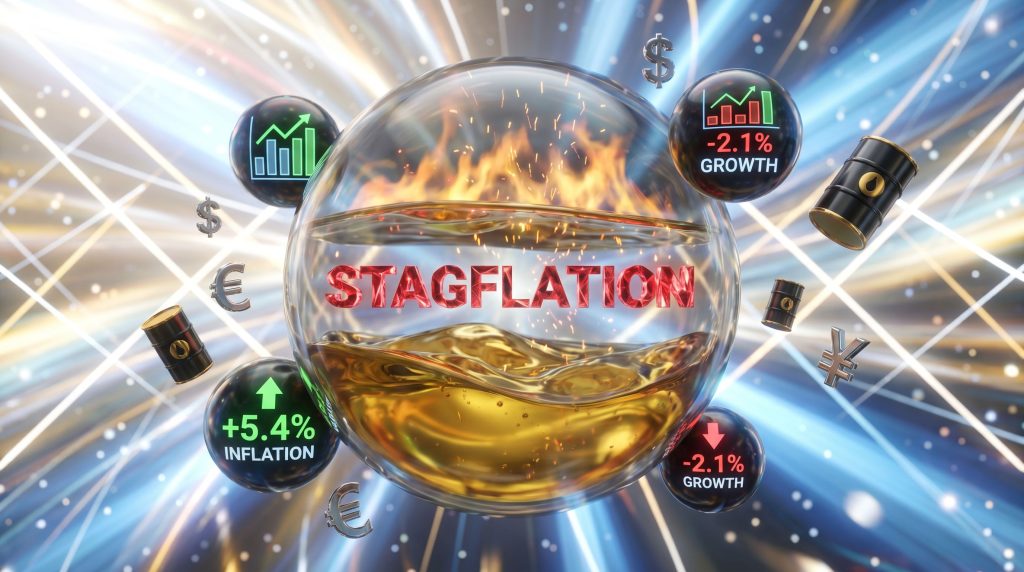
The global economy stands at a critical juncture where traditional monetary policy tools face unprecedented challenges. When energy prices surge beyond manageable thresholds, they trigger complex economic mechanisms that can destabilise entire financial systems. This stagflation alert phenomenon extends far beyond simple supply and demand dynamics, creating conditions where conventional economic wisdom fails to provide adequate solutions.
Understanding these energy-driven economic disruptions requires examining the intricate relationships between commodity markets, industrial production, and consumer behaviour. The modern economy's dependency on fossil fuels creates vulnerabilities that can rapidly transform from manageable market fluctuations into systemic threats to economic stability.
The Anatomy of Economic Stagnation Combined with Inflation
Defining the Perfect Economic Storm
Stagflation represents one of economics' most challenging scenarios, combining the worst aspects of recession with persistent inflation. This condition occurs when economic growth stagnates or contracts while prices continue rising, creating a policy dilemma for central banks and governments worldwide. Unlike traditional recessions where deflation often accompanies economic contraction, stagflation maintains inflationary pressures despite weakening demand.
The historical precedent for stagflation emerged during the 1970s oil crises, when OPEC's production restrictions quadrupled oil prices from approximately $3 to $12 per barrel. This supply shock demonstrated how energy price increases could simultaneously trigger inflation and economic stagnation, fundamentally challenging Keynesian economic models that assumed an inverse relationship between unemployment and inflation.
Traditional monetary policy becomes ineffective during stagflation because raising interest rates to combat inflation risks deepening economic stagnation, while lowering rates to stimulate growth may accelerate inflation. This creates a stagflation alert scenario where policymakers must choose between equally unpalatable options, often resulting in prolonged economic distress.
Current Economic Vulnerabilities
Today's global economy exhibits several characteristics that increase stagflation susceptibility compared to previous decades. Government debt levels in developed economies have reached historically high levels, limiting fiscal policy responses. Supply chain complexity has increased vulnerability to disruptions, while geopolitical tensions create additional uncertainty for energy markets.
The interconnected nature of modern manufacturing means that energy price shocks propagate rapidly through global production networks. A single disruption in oil supplies can affect transportation costs, manufacturing expenses, and consumer prices simultaneously across multiple economies, creating conditions ripe for stagflationary pressures.
When big ASX news breaks, our subscribers know first
Understanding the Three Critical Drivers of Stagflation
Supply-Side Inflation Mechanisms
Supply-side inflation differs fundamentally from demand-driven price increases in both its causes and economic effects. While demand-driven inflation typically results from excess money supply or strong consumer spending, supply-side inflation emerges from constraints in production capacity or input availability. Energy price increases represent the most potent form of supply-side shock because energy serves as an input to virtually all economic activities.
The transmission mechanism for energy-driven inflation operates through multiple channels:
- Direct cost increases in transportation and heating
- Manufacturing cost escalation in energy-intensive industries
- Secondary price effects as businesses pass through higher costs
- Wage pressure as workers demand compensation for higher living costs
Economic Growth Deceleration Indicators
Economic growth typically decelerates during energy price spikes through several mechanisms. High energy costs reduce corporate profit margins, forcing companies to reduce investment and employment. Consumer spending shifts toward necessary energy purchases, reducing demand for discretionary goods and services. This demand destruction creates a feedback loop where reduced economic activity further constrains growth.
Manufacturing industries face particular challenges during energy price spikes because they cannot easily substitute away from energy inputs in the short term. Chemical, steel, aluminium, and cement production all require substantial energy inputs, making these sectors vulnerable to margin compression when energy prices rise rapidly.
Employment Market Stress Patterns
Employment deterioration during stagflation follows distinct patterns that differ from typical recessions. Rather than widespread layoffs, employers often reduce hours, freeze hiring, or delay wage increases. This creates a situation where unemployment may not rise dramatically, but real wages decline as inflation outpaces nominal wage growth.
The wage-price spiral becomes a critical concern when workers demand compensation for inflation-eroded purchasing power. If employers grant wage increases to retain workers, this adds to production costs, potentially forcing additional price increases that perpetuate inflationary pressures.
| Economic Condition | Inflation Rate | GDP Growth | Unemployment | Policy Response |
|---|---|---|---|---|
| Stagflation | High (6-12%) | Low/Negative (-1% to 2%) | Rising | Limited options |
| Normal Recession | Low (0-3%) | Negative (-2% to -5%) | High | Stimulus spending |
| Hyperinflation | Extreme (>50%) | Highly negative | Variable | Currency reform |
How Energy Markets Drive Global Economic Disruption
The Energy-Economy Feedback Loop
Energy functions as the foundation of modern economic activity, making energy price fluctuations capable of triggering widespread economic disruption. Transportation systems, manufacturing processes, and logistics networks all depend heavily on fossil fuel inputs, creating vulnerability to energy price shocks that extends far beyond direct energy consumers.
When energy prices rise, the economic impact multiplies through interconnected supply chains. Transportation costs increase immediately, affecting the delivery of goods from raw materials to finished products. Manufacturing becomes more expensive, particularly in energy-intensive industries like chemicals, steel production, and paper manufacturing. These cost increases propagate through the economy as higher prices for intermediate goods affect downstream industries.
The 2022 supply chain disruptions provided a preview of how energy-related costs can trigger broader economic instability. Container shipping costs increased from approximately $1,500 to over $15,000 per container on major trade routes, contributing to global inflation reaching levels not seen in decades. Although shipping costs eventually normalised, the inflationary impact persisted through the economic system for months.
Regional Vulnerability Assessment
Different economies exhibit varying degrees of vulnerability to energy price shocks based on their energy dependency, economic structure, and policy frameworks. Energy-importing nations face immediate pressure when global oil prices rise, while energy-exporting countries may benefit from higher revenues but risk economic distortion from oil dependency.
Japan represents an extreme case of energy import dependency, importing over 90% of its primary energy needs. This makes the Japanese economy highly sensitive to global oil price fluctuations, with energy costs capable of significantly impacting both inflation and economic growth. The country's response to energy price shocks often involves increased industrial efficiency and energy conservation measures.
European Union economies face particular challenges due to their historical dependency on imported natural gas and oil. The 2022 energy crisis demonstrated how quickly energy price spikes could threaten industrial competitiveness and economic stability across the region. German manufacturing, heavily dependent on natural gas inputs, faced significant pressure as energy costs rose dramatically.
United States benefits from increased domestic energy production but remains integrated into global energy markets. Moreover, experts are closely monitoring the US economy and tariffs relationship, as the shale oil revolution has reduced American vulnerability to oil price shocks compared to previous decades, but the economy still experiences inflationary pressures when global energy prices rise significantly.
Critical Price Thresholds and Their Economic Impact
The $100-120 Barrel Threshold
Economic analysis consistently identifies oil prices between $100-120 per barrel as a critical threshold where energy costs transition from manageable business expenses to structural constraints on economic activity. Below this range, most economies can absorb energy price fluctuations through profit margin adjustments and modest efficiency improvements. Above this threshold, energy costs begin forcing systematic changes in business operations and consumer behaviour.
This price range represents a stagflation alert level because sustained prices above $100 per barrel historically correlate with both inflation acceleration and economic growth deceleration. The mathematical relationship stems from energy's role as both a production input and consumption necessity, creating inelastic demand that amplifies price impacts.
Research indicates that sustained oil prices above $100 per barrel for 12 consecutive months correlate with inflation acceleration of 1-2 percentage points above baseline trends while simultaneously reducing GDP growth by 0.3-0.7 percentage points.
Consumer Spending Reallocation Dynamics
When oil prices exceed critical thresholds, household energy expenditures can increase from typical levels of 3-4% of income to 6-8% or higher. This forces immediate reallocation of household budgets, with discretionary spending categories like dining, entertainment, and retail purchases experiencing reduced demand. Lower-income households face disproportionate impacts, as they may spend 10% or more of their income on energy costs.
The consumer response creates a demand destruction cycle that reinforces economic stagnation. As households reduce spending on non-energy items, businesses in affected sectors experience declining revenues, potentially leading to employment reductions and further weakening economic growth.
Mathematical Framework for Energy Impact Assessment
The economic impact of energy price increases can be estimated using energy intensity ratios and price elasticity calculations. For energy-importing developed economies, each $10 increase in oil prices typically reduces GDP growth by 0.1-0.3 percentage points over the following year, depending on the economy's energy efficiency and adaptability.
Calculation Example: If energy costs represent 5% of GDP and have a price elasticity of output of -0.5, then a 20% oil price increase would reduce GDP growth by approximately 0.5 percentage points (5% × -0.5 × 20% = -0.5%).
Labour Market Deterioration During Stagflation Periods
Employment Patterns Under Stagflation
Stagflationary periods create unique labour market dynamics that distinguish them from typical recessions. Rather than experiencing immediate widespread unemployment, workers often face gradual erosion of working conditions, reduced hours, and declining real wages. This pattern reflects employers' attempts to maintain operations while managing increased costs from energy price shocks.
During the 1970s stagflation, the United States added approximately 20 million jobs across the decade despite persistent economic challenges. However, real wages declined 2-3% in cumulative terms as inflation outpaced nominal wage growth. This demonstrates how stagflation can maintain employment levels while degrading worker living standards.
Job creation during stagflation often concentrates in lower-productivity service sectors while higher-productivity manufacturing employment stagnates or declines. This shift contributes to overall economic productivity weakness, reinforcing the stagnation component of stagflation.
Wage-Price Spiral Development
The wage-price spiral represents one of stagflation's most dangerous dynamics, where workers demand wage increases to offset inflation erosion, leading employers to raise prices to cover increased labour costs, which then justifies further wage demands. This self-reinforcing cycle becomes particularly problematic when inflation expectations become unanchored.
Once workers and businesses expect sustained high inflation, they begin negotiating contracts that assume continued price increases. Union contracts may include automatic cost-of-living adjustments, while businesses build inflation expectations into their pricing strategies. These expectations can become self-fulfilling, perpetuating inflationary pressures even after initial energy price shocks subside.
Breaking a wage-price spiral typically requires aggressive monetary policy action that demonstrates central bank commitment to restoring price stability, often at the cost of significant short-term economic disruption.
Central Bank Policy Constraints During Energy Crises
The Monetary Policy Trilemma
Central banks face unprecedented challenges during energy-driven stagflation because their primary tools become counterproductive or ineffective. The traditional monetary policy toolkit assumes that inflation and unemployment move in opposite directions, allowing policymakers to address one problem while accepting temporary increases in the other.
Energy price shocks create supply-side inflation that cannot be addressed through demand management. Raising interest rates to combat inflation may successfully reduce demand, but this approach risks deepening economic stagnation without addressing the underlying energy cost pressures driving price increases.
Conversely, lowering interest rates to stimulate economic growth may provide short-term relief but risks accelerating inflation if energy prices remain elevated. This creates a policy paralysis where neither traditional approach effectively addresses both aspects of stagflation simultaneously.
International Coordination Challenges
Modern stagflation challenges require coordinated international responses, but achieving such coordination proves difficult when different economies face varying degrees of energy dependency and inflation pressure. Countries with domestic energy production may be less willing to implement aggressive anti-inflation policies than energy importers facing severe price pressures.
Exchange rate movements during stagflation can amplify or moderate energy price impacts for different countries. Energy importers may experience additional inflationary pressure if their currencies weaken against major oil trading currencies, while energy exporters may benefit from improved terms of trade.
Central bank coordination becomes essential but challenging when stagflation affects multiple economies simultaneously. Conflicting national interests and different institutional mandates can impede the coordinated response necessary to address global stagflation effectively.
The next major ASX story will hit our subscribers first
Geopolitical Dimensions of Energy-Driven Economic Warfare
Strategic Petroleum Reserve Manipulation
Energy markets operate within geopolitical frameworks where oil-producing nations can leverage production decisions for strategic advantage. Unlike typical commodities, oil production is heavily concentrated among a relatively small number of countries, many of which coordinate production through OPEC and related organisations.
Strategic petroleum reserves and production quota decisions represent forms of economic leverage that can be deployed against energy-importing nations. When oil-producing countries reduce output below market-clearing levels, they effectively impose an economic tax on importing nations while benefiting from higher revenues per barrel sold.
Furthermore, analysts studying the oil price trade war dynamics note that this creates potential for energy to function as an economic weapon, where sustained high prices can undermine the economic stability of target nations. The stagflation alert threshold of $100-120 per barrel represents the price level where such economic pressure begins causing significant structural damage to importing economies.
OPEC Production Strategy and Market Impact
OPEC production quotas serve multiple purposes beyond simple price optimisation, including geopolitical signalling and economic pressure application. Production cuts during periods of stable demand can drive prices into stagflationary territory, transferring wealth from energy importers to exporters while potentially destabilising target economies.
The cartel's ability to maintain discipline in production cuts varies over time, but even partial compliance can significantly impact global oil prices. Market psychology often amplifies production cut announcements, with prices rising in anticipation of supply constraints even before physical shortages materialise.
Understanding OPEC production impact requires analysing both economic incentives and geopolitical objectives. Member countries may accept lower production levels if the resulting price increases generate sufficient revenue increases and provide strategic advantages against rival nations.
Trade Policy Interactions with Stagflation Risks
Tariff Impacts on Inflation and Growth
Trade restrictions can exacerbate stagflationary pressures by simultaneously increasing consumer prices and reducing economic efficiency. Tariffs on imported goods directly raise prices for consumers while potentially protecting domestic industries from competition. During periods of energy-driven inflation, additional tariff pressures can accelerate overall price increases.
The interaction between energy costs and trade policy creates compounding effects on economic growth. High energy prices reduce industrial competitiveness, making domestic production more expensive relative to imports. Consequently, tariffs intended to protect domestic industry from foreign competition may backfire by forcing consumers to purchase higher-priced domestic alternatives while energy costs remain elevated.
International trade disputes during energy crises can limit access to alternative supply sources, reducing economic flexibility when it is most needed. Moreover, the tariffs impact on markets demonstrates that countries maintaining open trade relationships during energy crises typically adjust more quickly to changed conditions than those implementing protectionist policies.
Supply Chain Weaponisation
Modern supply chains create vulnerabilities that can be exploited during geopolitical tensions, particularly when combined with energy price pressures. Countries may restrict exports of critical components or raw materials to pressure rivals, amplifying the economic disruption from energy price shocks.
The complexity of global manufacturing networks means that relatively small disruptions can have outsized impacts on final product availability and pricing. When combined with higher transportation costs from elevated energy prices, supply chain disruptions can trigger rapid inflation acceleration across multiple product categories.
| Trade Policy Response | Inflation Impact | Growth Impact | Stagflation Risk |
|---|---|---|---|
| Open Trade | Moderate increase | Mild decline | Low to Moderate |
| Selective Tariffs | Significant increase | Moderate decline | Moderate to High |
| Broad Protectionism | Severe increase | Sharp decline | High to Extreme |
Industrial Sector Vulnerabilities to Energy Price Shocks
Energy-Intensive Manufacturing Exposure
Certain manufacturing sectors face disproportionate vulnerability to energy price increases due to their production processes' energy intensity. Chemical manufacturing, steel production, aluminium refining, and cement production all require substantial energy inputs that cannot be easily substituted in the short term.
Chemical Industry: Energy costs typically represent 20-30% of total production expenses in basic chemical manufacturing. When energy prices double, chemical companies must either accept severe margin compression or pass through substantial price increases to customers, potentially triggering demand destruction.
Steel Production: Integrated steel mills require significant energy inputs for heating and processing raw materials. Energy cost increases can make domestic steel production uncompetitive with imports from countries with lower energy costs, potentially leading to plant closures and employment losses.
Aluminium Refining: Primary aluminium production is among the most energy-intensive industrial processes, with electricity costs representing up to 40% of production expenses. Sustained high energy prices can force aluminium smelters to curtail production or close permanently.
Deindustrialisation Risk Assessment
Prolonged energy price elevation above critical thresholds can trigger deindustrialisation in affected economies as manufacturers relocate production to regions with lower energy costs. Unlike temporary plant shutdowns, deindustrialisation represents permanent capacity loss that may not recover even after energy prices moderate.
The European experience during 2022-2023 energy price spikes demonstrated how quickly industrial competitiveness can erode when energy costs rise dramatically. Several chemical plants announced permanent closures or production relocations, representing industrial capacity that may never return to European production.
Deindustrialisation creates long-term economic scarring through:
- Permanent employment losses in high-productivity manufacturing sectors
- Reduced export capacity and worsened trade balances
- Loss of industrial expertise and supply chain capabilities
- Increased import dependency for manufactured goods
Consumer Sector Response to Energy Price Inflation
Retail Margin Compression
Retail businesses face dual pressures during energy-driven inflation from both increased transportation costs and reduced consumer discretionary spending. Delivery costs rise directly with fuel prices, while consumers reduce purchases of non-essential items to accommodate higher energy expenses in their budgets.
Retailers cannot easily pass through all cost increases during economic stagnation because consumer price sensitivity increases when household budgets tighten. This creates margin compression that can lead to store closures and employment reductions in the retail sector.
The timing of retail adjustment varies by segment, with luxury and discretionary retailers typically experiencing immediate demand reduction, while necessity retailers may see initial demand stability followed by margin pressure as cost increases accumulate.
Transportation and Logistics Cost Transmission
The logistics sector serves as a critical transmission mechanism for energy price increases throughout the economy. Freight transportation accounts for 9-12% of total logistics costs in most supply chains, making these costs sensitive to fuel price fluctuations.
Trucking companies typically implement fuel surcharges to manage energy cost volatility, but these adjustments may lag actual cost increases, creating temporary margin pressure. Air freight experiences even more dramatic cost impacts due to aviation fuel's direct relationship to crude oil prices.
The cumulative effect of logistics cost increases appears throughout the economy as higher prices for goods ranging from groceries to manufactured products. Even small percentage increases in transportation costs can significantly impact final product pricing when compounded across complex supply chains.
Investment Strategy During Stagflationary Periods
Historical Asset Class Performance
Asset class performance during stagflation differs significantly from typical recession or inflation periods, requiring specialised investment approaches. Traditional bonds perform poorly due to combination of rising yields and credit risk concerns, while equity performance varies dramatically by sector.
During the 1970s stagflation period:
- Stocks delivered negative real returns despite nominal gains
- Bonds experienced significant losses as yields rose faster than coupon payments
- Commodities provided strong inflation protection, particularly energy and precious metals
- Real Estate offered mixed results depending on local economic conditions
| Asset Class | 1973-1975 Performance | 1978-1981 Performance | Average Annual Return |
|---|---|---|---|
| S&P 500 | -37% (nominal) | +32% (nominal) | -2.4% (real) |
| 10-Year Treasury | -18% | -22% | -4.1% (real) |
| Gold | +73% | +126% | +18.7% (real) |
| Oil | +280% | +147% | +23.1% (real) |
Sector Rotation Patterns
Equity sector performance during stagflation follows predictable patterns based on companies' ability to maintain pricing power and manage energy cost pressures. Energy companies typically benefit from higher commodity prices, while energy-intensive industries face margin compression.
Outperforming Sectors:
- Energy exploration and production companies
- Basic materials producers with pricing power
- Utilities with regulated rate structures
- Consumer staples with strong brands
Underperforming Sectors:
- Energy-intensive manufacturing
- Consumer discretionary spending categories
- High-growth technology companies sensitive to interest rates
- Financial services facing credit quality concerns
Alternative Investment Considerations
Alternative investments gain importance during stagflation as traditional asset classes struggle to provide positive real returns. Commodity exposure provides direct inflation hedge benefits, whilst gold as inflation hedge offers potential protection against currency debasement.
Direct Commodity Investment: Energy futures, agricultural products, and precious metals can provide inflation protection, but require careful attention to storage costs, contango/backwardation patterns, and roll yield impacts.
Real Estate Investment: Property can offer inflation protection through rent escalation, but faces challenges from higher interest rates and economic stagnation. Location and property type selection become critical factors for success.
Currency Hedging: International diversification may provide protection against domestic stagflation, but currency volatility during crisis periods requires active management of foreign exchange exposure.
Policy Response Options and Limitations
Fiscal Policy Constraints
Government fiscal policy options become severely constrained during stagflation due to the conflicting nature of appropriate responses. Stimulative spending might address economic stagnation but risks accelerating inflation, while fiscal restraint might help control inflation but deepens economic contraction.
High government debt levels in many developed economies limit fiscal policy flexibility during stagflationary crises. Countries approaching debt sustainability concerns cannot implement large-scale stimulus programmes without risking sovereign debt crises, particularly if energy price shocks simultaneously increase government spending on energy subsidies.
Tax policy adjustments face similar trade-offs, with tax reductions potentially providing economic stimulus while reducing government revenue during periods when spending pressures increase. Energy price subsidies represent particularly challenging fiscal decisions, as they may provide short-term relief whilst creating long-term budget pressures.
Coordinated International Response Requirements
Effective stagflation response typically requires coordinated international action, but achieving such coordination proves difficult when countries face different degrees of energy exposure and economic pressure. Energy-exporting nations may resist production increases that would moderate global prices, while energy importers may pursue conflicting policy approaches.
International economic institutions play crucial roles during global stagflation episodes, but their effectiveness depends on member country cooperation and political consensus. The International Monetary Fund and World Bank can provide financial assistance and policy coordination, but require borrower country commitment to sometimes politically difficult adjustment programmes.
Currency coordination becomes essential during international stagflation episodes to prevent competitive devaluation and trade conflicts that can exacerbate economic stagnation. Central bank swap agreements and coordinated intervention may be necessary to maintain financial stability during crisis periods.
Structural Economic Reforms for Stagflation Prevention
Energy Diversification Strategies
Long-term stagflation prevention requires reducing economy-wide vulnerability to energy price shocks through diversification of energy sources and increased efficiency. Renewable energy development can provide price stability benefits in addition to environmental advantages, as solar and wind power have minimal variable costs once installations are complete.
Strategic petroleum reserves and alternative fuel infrastructure development offer partial insurance against energy price volatility, but require significant upfront investment and coordination between government and private sector actors. The effectiveness of such measures depends on scale and integration with broader energy security strategies.
Industrial policy supporting energy-efficient manufacturing processes can reduce sector vulnerability to energy price shocks while maintaining competitiveness. Government incentives for efficiency improvements may provide higher economic returns than direct energy subsidies during crisis periods.
Supply Chain Regionalisation
Reducing dependence on complex global supply chains can limit vulnerability to energy-driven transportation cost increases and geopolitical supply disruptions. Regional supply chain development may sacrifice some efficiency gains from global optimisation but provide greater resilience during crisis periods.
Benefits of Supply Chain Regionalisation:
- Reduced transportation costs and energy exposure
- Lower geopolitical risk from supply disruption
- Faster response to demand changes
- Improved quality control and coordination
Costs of Supply Chain Regionalisation:
- Higher production costs from reduced economies of scale
- Limited access to specialised suppliers and technologies
- Increased inventory requirements for buffer stocks
- Potential trade relationship deterioration
Current Economic Assessment and Stagflation Risk Evaluation
Present Economic Indicators
As of 2026, several economic indicators suggest elevated stagflation risks compared to historical norms, though full stagflation conditions have not yet materialised. Global inflation rates remain above central bank targets in many economies, while economic growth has decelerated from post-pandemic recovery peaks.
Energy price volatility continues affecting global economic conditions, with oil prices fluctuating around levels that historically correlate with stagflation risk. Geopolitical tensions in energy-producing regions maintain supply uncertainty that can trigger rapid price movements.
Labour market conditions show mixed signals, with employment levels remaining relatively stable in most developed economies but real wage growth lagging inflation in many sectors. This pattern resembles early-stage stagflation characteristics where nominal employment appears healthy whilst worker purchasing power erodes.
Regional Stagflation Risk Variation
Different global regions face varying degrees of stagflation risk based on energy dependency, economic structure, and policy frameworks:
European Union: High risk due to energy import dependency and limited domestic production alternatives. Industrial competitiveness faces significant pressure from elevated energy costs.
United States: Moderate risk with domestic energy production providing partial insulation from global price shocks. Fiscal and monetary policy flexibility remains greater than most developed economies.
Asia-Pacific: Mixed risk profile with energy-importing economies (Japan, South Korea) facing high vulnerability whilst resource-rich economies (Australia, Indonesia) may benefit from commodity price strength.
According to recent analysis by Australia's leading economists, the country is already experiencing early signs of stagflation, whilst the Australian Financial Review warns of potential stagflation risks ahead.
Historical Duration and Recovery Patterns
Stagflation Episode Timeline Analysis
Historical stagflation episodes typically persist for 3-7 years, depending on policy responses and underlying economic conditions. The 1970s experience demonstrates how multiple energy shocks can extend stagflationary periods, while aggressive monetary policy can eventually restore stability at significant short-term economic cost.
Recovery patterns from stagflation involve several distinct phases:
- Crisis Recognition (6-12 months): Acknowledgment that conventional policies are insufficient
- Policy Adjustment (12-24 months): Implementation of alternative approaches, often including aggressive monetary tightening
- Economic Adjustment (18-36 months): Painful but necessary restructuring as economy adapts to new conditions
- Recovery Emergence (24-48 months): Gradual restoration of growth with stable inflation
Policy Intervention Effectiveness
Successful stagflation resolution historically requires coordinated fiscal and monetary policy actions that address both inflation and stagnation components simultaneously. Half-measures or policies that focus on only one aspect of stagflation typically prove insufficient and may extend crisis duration.
The Federal Reserve's aggressive interest rate increases during the early 1980s demonstrated that monetary policy can break stagflation, but required accepting severe short-term economic costs including unemployment reaching 10.8% in 1982. This approach succeeded because it convincingly demonstrated central bank commitment to restoring price stability.
Modern economies may face different trade-offs due to higher debt levels and more complex financial systems, potentially requiring alternative approaches to stagflation resolution that balance inflation control with financial stability concerns.
Contemporary Stagflation Risks Versus Historical Precedents
Technological and Structural Differences
Today's economy exhibits both greater resilience and new vulnerabilities compared to the 1970s stagflation period. Technological advancement has improved energy efficiency and created alternative production methods that may moderate energy price impacts on certain sectors.
Resilience Factors:
- Improved energy efficiency across most sectors
- Renewable energy alternatives reducing fossil fuel dependency
- Advanced inventory management reducing supply chain vulnerabilities
- More sophisticated monetary policy tools and central bank communication
New Vulnerability Factors:
- Higher government debt levels limiting fiscal policy responses
- Complex global supply chains increasing disruption potential
- Financial system interconnectedness amplifying crisis transmission
- Climate change creating additional energy supply uncertainties
Central Bank Credibility Evolution
Modern central banks possess greater credibility and more sophisticated policy tools than their 1970s counterparts, potentially enabling more effective stagflation responses. Forward guidance and quantitative easing provide alternative approaches to traditional interest rate policy.
However, central bank independence faces political pressure during extended economic difficulties, particularly when aggressive anti-inflation policies conflict with employment objectives. Maintaining credibility during stagflation requires consistent policy implementation despite short-term political costs.
Key Monitoring Framework for Economic Stability
Critical Indicators for Stagflation Risk Assessment
Effective stagflation monitoring requires tracking multiple economic indicators that can provide early warning of developing conditions. Oil prices remain the primary trigger mechanism, but secondary indicators help assess economic vulnerability and policy effectiveness.
Primary Energy Indicators:
- Brent crude oil prices (threshold: $100-120/barrel)
- Natural gas prices relative to historical averages
- Refined product margins and availability
- Strategic petroleum reserve levels
Economic Response Indicators:
- Real wage growth versus inflation rates
- Industrial production in energy-intensive sectors
- Consumer spending patterns and budget reallocation
- Business investment levels and capacity utilisation
Financial Market Signals:
- Inflation-protected securities pricing and breakeven rates
- Currency exchange rates for energy-importing economies
- Commodity futures curves and volatility patterns
- Corporate credit spreads in vulnerable sectors
Portfolio Stress-Testing Recommendations
Investment portfolios require stress-testing against stagflation scenarios to identify vulnerabilities and appropriate hedging strategies. This analysis should consider both direct energy exposure and indirect effects through sector allocation and geographic diversification.
Stress Test Scenarios:
- Oil prices sustained above $120/barrel for 12+ months
- Inflation reaching 6-8% whilst GDP growth remains below 1%
- Central bank policy rate increases of 300-500 basis points
- Currency devaluation of 15-25% for energy-importing countries
Investment portfolios demonstrating resilience under these stress conditions typically maintain significant commodity exposure, energy sector allocations, and international diversification across energy-exporting economies. Traditional bond and growth stock allocations often require adjustment to maintain real purchasing power during stagflation.
This analysis is provided for educational purposes and does not constitute investment advice. Economic conditions can change rapidly, and readers should conduct their own research or consult qualified professionals before making investment decisions. Stagflation scenarios involve significant uncertainty, and historical patterns may not predict future outcomes.
Ready to Navigate Economic Uncertainty with Real-Time Market Intelligence?
Discovery Alert's proprietary Discovery IQ model delivers instant notifications on significant ASX mineral discoveries, helping investors capitalise on actionable opportunities even during volatile economic conditions like potential stagflation. With over 30 commodities simplified into clear, gold-equivalent metrics, subscribers gain crucial market advantages by exploring Discovery Alert's historic discovery returns and positioning themselves ahead of broader market movements. Begin your 14-day free trial today to access morning AI trade alerts that transform complex mineral data into immediate investment insights.