
June 13, 2026
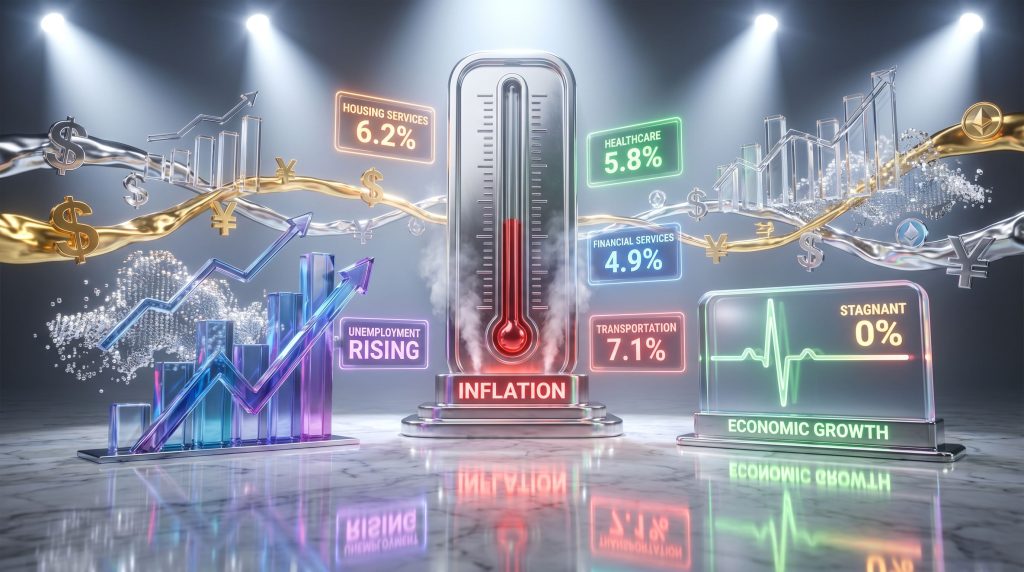
The convergence of labor market weakness, persistent services inflation, currency pressures, and environmental disruptions creates conditions reminiscent of 1970s stagflation. Unlike that historical period, current challenges include unprecedented debt levels, geopolitical realignment, and climate-related supply disruptions that complicate policy responses. Understanding the stagflation threat becomes crucial as central banks worldwide grapple with persistent price pressures whilst economic growth remains sluggish and labour markets show signs of structural deterioration.
Understanding the Stagflation Threat Framework
Stagflation represents an economic anomaly where inflation accelerates alongside rising unemployment and economic stagnation. This combination defies the traditional Phillips Curve relationship, which suggests an inverse correlation between inflation and unemployment rates.
The phenomenon emerged prominently during the 1970s when oil price shocks combined with expansionary monetary policy created a perfect storm of economic disruption. Current conditions mirror many aspects of that historical period, including supply chain vulnerabilities, energy price volatility, and monetary policy uncertainty.
Defining the Triple Economic Threat
Modern stagflation manifests through three interconnected mechanisms:
- Persistent inflation above central bank targets despite contractionary policy measures
- Economic growth rates falling below historical averages whilst productivity gains stagnate
- Labour market deterioration masked by statistical manipulation and workforce exits
The stagflation threat differs from typical recessions because monetary easing exacerbates inflation whilst failing to stimulate meaningful economic growth. This policy dilemma forces central banks to choose between combating inflation or supporting employment, often achieving neither objective effectively.
Current Economic Indicators Signal Structural Problems
Recent labour market data reveals troubling patterns beneath headline employment figures. According to veteran market analyst Greg Weldon, who has tracked economic cycles for over four decades, March 2026 employment data showed fundamental weaknesses despite apparently solid job creation numbers.
Whilst payrolls increased by 170,000 positions, the underlying dynamics painted a darker picture. Unemployment declined by 339,000 individuals, but this reduction occurred because 488,000 people exited the labour force entirely rather than finding employment. Over the preceding 12 months, 2.4 million individuals left the workforce whilst net payroll gains totalled only 260,000 positions.
This exodus pushed labour force participation to 61.9%, the lowest level since 1977 outside pandemic periods. When accounting for discouraged workers who stopped seeking employment, the effective unemployment rate reaches 5.6% rather than the officially reported 4.3%.
When big ASX news breaks, our subscribers know first
Currency Dynamics and Dollar Vulnerability
The U.S. dollar's role as the global reserve currency provides temporary insulation from stagflation pressures, but this advantage faces unprecedented challenges from geopolitical shifts and alternative monetary systems. Furthermore, US economy tariffs continue to reshape global trade dynamics.
The Petrodollar System Under Pressure
China's launch of Shanghai crude oil futures in 2018 marked a strategic inflection point for global energy markets. This development enables oil-producing nations to conduct transactions in yuan rather than dollars, gradually eroding the petrodollar system's monopolistic position.
The implications extend beyond energy markets into broader commodity trading arrangements. Countries increasingly pursue bilateral trade agreements that bypass dollar-denominated settlements, reducing global dollar demand over time. In addition, US–China trade war impact continues to influence these currency dynamics.
Geopolitical Realignment Affecting Reserve Currency Status
Strategic relationships between major economies continue evolving in ways that challenge dollar dominance. Recent political developments in Taiwan illustrate this trend, where opposition to increased military spending and closer examination of mainland China relationships signal potential shifts in regional alliances.
Key currency alternatives gaining traction include:
- Chinese renminbi for commodity transactions and regional trade
- Commodity-linked currencies such as the South African rand, Brazilian real, and Australian dollar
- Digital currencies offering alternatives to traditional correspondent banking systems
These developments occur gradually but create cumulative pressure on dollar demand, potentially triggering inflationary consequences for the United States when international holders reduce their reserve positions.
Labour Market Deterioration Masks Economic Weakness
Employment statistics require careful analysis to understand true labour market conditions, as headline numbers often obscure structural problems that contribute to stagflation risks.
Hidden Unemployment Behind Official Metrics
Labour force participation rates provide more insight than unemployment percentages because they capture individuals who have stopped seeking work. The current 61.9% participation rate represents a dramatic decline from pre-2008 levels above 66%.
Demographic factors partially explain this trend, including ageing baby boomers reaching retirement age. However, prime working-age participation (25-54 years) also shows concerning patterns, indicating structural employment challenges beyond normal retirement flows.
| Age Group | Participation Rate | Change from 2019 |
|---|---|---|
| 25-34 years | 82.1% | -1.8% |
| 35-44 years | 83.4% | -2.1% |
| 45-54 years | 80.2% | -1.9% |
| 55-64 years | 65.8% | -2.4% |
Skills Mismatches and Structural Employment Issues
Technology disruption creates permanent displacement for certain job categories whilst generating demand for skills that existing workers may lack. This structural mismatch contributes to persistent unemployment even during periods of apparent job growth.
Manufacturing employment continues declining as automation replaces routine tasks, whilst service sector jobs often provide lower wages and fewer benefits compared to displaced industrial positions. This dynamic reduces consumer purchasing power and economic multiplier effects.
Service Sector Inflation Persistence
Unlike goods inflation, which can decline rapidly when supply chains normalise, services inflation tends to exhibit greater persistence due to labour cost components and market structure characteristics.
Analysis of detailed price data reveals the extent of inflationary pressure across service categories. Of 81 services Consumer Price Index components tracked, 32% continue rising above 5% annually, whilst 26% exceed 6% year-over-year growth rates. Overall, 65% of services categories maintain inflation above the Federal Reserve's 2% target.
Housing and Shelter Cost Pressures
Housing represents the largest component of most household budgets and shows particular resistance to monetary policy interventions. Shelter inflation affects both renters and homeowners through different mechanisms:
- Rental market constraints from limited housing supply and regulatory barriers
- Homeownership costs including insurance, maintenance, and property taxes
- Geographic concentration of employment opportunities driving regional price disparities
Healthcare and Professional Services
Medical care inflation stems from structural industry characteristics including regulatory compliance costs, technological advancement expenses, and demographic pressures from ageing populations. These factors operate independently of broader economic cycles, creating persistent inflationary pressure regardless of monetary policy stance.
Professional services including legal, accounting, and consulting fees tend to track wage inflation rather than goods prices, making them less responsive to central bank interest rate adjustments.
Monetary Policy Effectiveness Limitations
Central banks face unprecedented challenges when traditional policy tools prove inadequate for addressing simultaneous inflation and economic weakness.
Interest Rate Policy Constraints During Stagflation
Rising interest rates can combat demand-driven inflation but prove counterproductive when price pressures originate from supply constraints or structural factors. Higher borrowing costs reduce business investment and consumer spending, potentially worsening economic stagnation without meaningfully addressing underlying inflationary forces.
The Federal Reserve's current policy stance attempts to balance these competing objectives, but historical precedent suggests limited success. During the 1970s stagflation period, stop-and-go monetary policy created additional uncertainty and volatility without resolving fundamental economic imbalances.
Quantitative Easing Side Effects
Asset purchase programmes designed to stimulate economic activity can exacerbate wealth inequality by inflating financial asset prices whilst providing limited benefit to median households. This dynamic reduces the consumption multiplier effects of monetary stimulus whilst potentially fuelling additional asset bubbles.
Money supply expansion through quantitative easing also creates long-term inflation risks when economic conditions normalise and excess liquidity flows into consumption rather than investment. Recent M2 money supply growth acceleration reinforces these concerns as Federal Reserve balance sheet expansion resumes.
Consumer Financial Stress Indicators
Household financial conditions provide early warning signals for economic deterioration, as consumer spending represents approximately 70% of U.S. gross domestic product.
Credit Market Stress Signals
Consumer credit metrics reveal significant stress across multiple categories:
- Credit card debt exceeds personal savings for typical households
- Credit card delinquency rates reach second-highest levels since 2008
- Subprime auto loan defaults achieve record highs despite relatively low unemployment
These patterns indicate households increasingly rely on credit to maintain consumption levels whilst real income growth fails to keep pace with inflation-adjusted living costs.
High-Income Household Concerns
Federal Reserve survey data shows even households earning above $100,000 annually expect income growth to merely match inflation rather than provide real purchasing power gains. This pessimistic outlook among higher-income demographics suggests broader economic confidence erosion.
Consumer spending intentions surveys increasingly show plans for reduced expenditures, a pattern rarely observed during normal economic expansions. This shift toward defensive financial behaviour can create self-fulfilling recessionary pressures.
The next major ASX story will hit our subscribers first
Investment Portfolio Implications
Stagflation environments require different investment approaches compared to normal economic cycles, as traditional stock-bond allocations may underperform during periods of simultaneous inflation and economic weakness. Consequently, tariffs and investment markets continue to influence portfolio construction strategies.
Traditional Asset Class Vulnerabilities
The classic 60% stock, 40% bond portfolio allocation faces challenges when both asset classes decline simultaneously. Bonds suffer from rising interest rates needed to combat inflation, whilst stocks struggle with reduced earnings growth and multiple compression during economic stagnation.
Historical stagflation periods show negative real returns for both stocks and bonds over extended timeframes, making traditional diversification strategies inadequate for wealth preservation.
Commodity and Hard Asset Allocation
Physical assets tend to outperform financial assets during inflationary periods, though timing and selection remain crucial for investment success. Energy sector investments benefit from both supply constraints and monetary debasement trends.
Precious metals serve dual purposes as inflation hedges and monetary alternatives during currency debasement periods. Gold as inflation hedge trading ranges between $4,500 and $5,000 per ounce reflect institutional recognition of these dynamics, whilst silver volatility between $70 and $80 per ounce creates tactical opportunities for experienced traders.
| Asset Class | Stagflation Performance | Risk Factors |
|---|---|---|
| Commodities | Positive | Volatility, storage costs |
| Energy | Strong positive | Geopolitical risks |
| Real Estate | Mixed | Interest rate sensitivity |
| Precious Metals | Positive | Price manipulation risks |
| TIPS | Moderate positive | Credit risk, liquidity |
Alternative Investment Strategies
Cryptocurrency adoption as a monetary hedge continues expanding, though volatility remains significant compared to traditional hard assets. Bitcoin and Ethereum serve different functions within digital asset portfolios, with institutional acceptance growing despite regulatory uncertainties.
International diversification through emerging market currencies linked to commodity demand offers potential benefits, particularly positions in Chinese renminbi, Brazilian real, and Australian dollar that benefit from resource demand rather than dollar strength.
Environmental and Climate Risk Multipliers
Climate change impacts on agricultural production and water resources create additional inflationary pressures that traditional economic models fail to capture adequately.
Agricultural Disruption Patterns
Western United States snow cover has reached record low levels, whilst Arctic sea ice coverage falls below 2012 minimums. These conditions, combined with a 25% probability of the strongest El Niño event on record according to NOAA forecasts, threaten agricultural production across multiple growing regions.
Food price inflation historically triggers broader social and economic instability, particularly in developing nations that spend larger portions of household income on basic necessities. Global supply chain integration means regional weather disruptions can affect worldwide food costs.
Water Resource Investment Implications
Artificial intelligence data centre expansion creates unprecedented water demand for cooling systems, competing with agricultural and municipal uses. Water-focused exchange-traded funds including PHO and PIO have outperformed broader market indices as scarcity pricing emerges in affected regions.
This resource competition adds structural inflation pressure independent of monetary policy decisions, creating additional challenges for central bank inflation targeting frameworks.
Policy Response Options and Limitations
Addressing stagflation requires coordinated fiscal and monetary policy approaches that differ significantly from responses to typical recessions or inflation episodes.
Historical Policy Lessons
The Volcker Federal Reserve's approach during the early 1980s successfully broke stagflation through aggressive interest rate increases that induced severe recession. This strategy required significant political courage and tolerance for short-term economic pain to achieve long-term price stability.
Modern political and economic constraints may prevent similar aggressive approaches, as highly leveraged government, corporate, and household debt levels create greater sensitivity to interest rate increases compared to 1980s conditions.
Supply-Side Policy Interventions
Addressing supply constraints requires different tools than demand management policies. Regulatory reform, infrastructure investment, and energy production incentives can alleviate bottlenecks that contribute to persistent inflation.
However, these structural changes require extended implementation timeframes and may not provide immediate relief during acute stagflation episodes. Political gridlock and special interest opposition often prevent necessary reforms until crisis conditions force action.
Are We Heading Toward a Global Economic Crisis?
The convergence of multiple risk factors suggests the stagflation threat represents more than a temporary economic adjustment. Global recession trends indicate structural vulnerabilities that traditional policy tools struggle to address effectively.
Leading economists predict that current economic conditions could persist for extended periods, requiring fundamental changes to investment strategies and policy frameworks. The combination of demographic shifts, technological disruption, and environmental pressures creates a unique challenge for policymakers worldwide.
Preparing for Extended Uncertainty
Investors and policymakers must prepare for scenarios where traditional economic relationships no longer hold. The combination of inflation persistence, economic stagnation, and currency volatility requires adaptive strategies rather than reliance on historical precedents.
Furthermore, the integration of global supply chains means regional disruptions can trigger worldwide economic consequences, amplifying the potential impact of stagflation conditions across multiple economies simultaneously.
Conclusion: Navigating the Stagflation Threat
The convergence of labour market weakness, persistent services inflation, currency pressures, and environmental disruptions creates conditions reminiscent of 1970s stagflation. Unlike that historical period, current challenges include unprecedented debt levels, geopolitical realignment, and climate-related supply disruptions that complicate policy responses.
Investors should prepare for extended periods where traditional asset allocations underperform whilst inflation erodes purchasing power. Diversification into hard assets, international currencies, and alternative investments may provide better protection than conventional portfolio strategies.
"The stagflation threat represents a fundamental challenge to modern economic policy frameworks and investment strategies. Understanding these dynamics provides the foundation for making informed decisions during a period of unprecedented economic complexity and uncertainty."
Disclaimer: This analysis is for educational purposes only and should not be considered personalised investment advice. Economic forecasts involve significant uncertainty, and past performance does not guarantee future results. Investors should conduct their own research and consider consulting qualified financial professionals before making investment decisions. Commodity and currency investments carry substantial risks including volatility, liquidity constraints, and potential total loss of capital.
Ready to Capitalise on Market Opportunities During Economic Uncertainty?
Discovery Alert's proprietary Discovery IQ model delivers real-time alerts on significant ASX mineral discoveries, providing actionable insights that help investors navigate challenging market conditions like stagflation. Understand why major mineral discoveries can generate substantial returns even during periods of economic volatility, and begin your 14-day free trial today to position yourself ahead of market uncertainty.