May 10, 2026
The Evolving Landscape of State-Owned Energy Partnerships
Latin American energy dynamics are experiencing a fundamental transformation as state-owned enterprises increasingly seek technological partnerships to address production challenges and expand operational capabilities. This shift reflects broader regional trends toward energy independence and strategic resource management in an era of volatile global markets and evolving geopolitical tensions.
The recent discussions surrounding the alliance between Petrobras and Pemex in the Gulf of Mexico represent more than traditional bilateral cooperation. They signal a new paradigm where technological expertise becomes the primary catalyst for international energy partnerships, particularly in challenging deepwater environments where operational complexity demands sophisticated technical solutions.
When big ASX news breaks, our subscribers know first
Strategic Framework Behind Brazil-Mexico Energy Cooperation
The proposed partnership between Brazil's Petrobras and Mexico's Pemex emerges from complementary national energy objectives and operational capabilities. Brazil's state oil company brings decades of ultra-deepwater expertise developed through pre-salt field operations, while Mexico offers extensive Gulf of Mexico acreage with significant untapped potential.
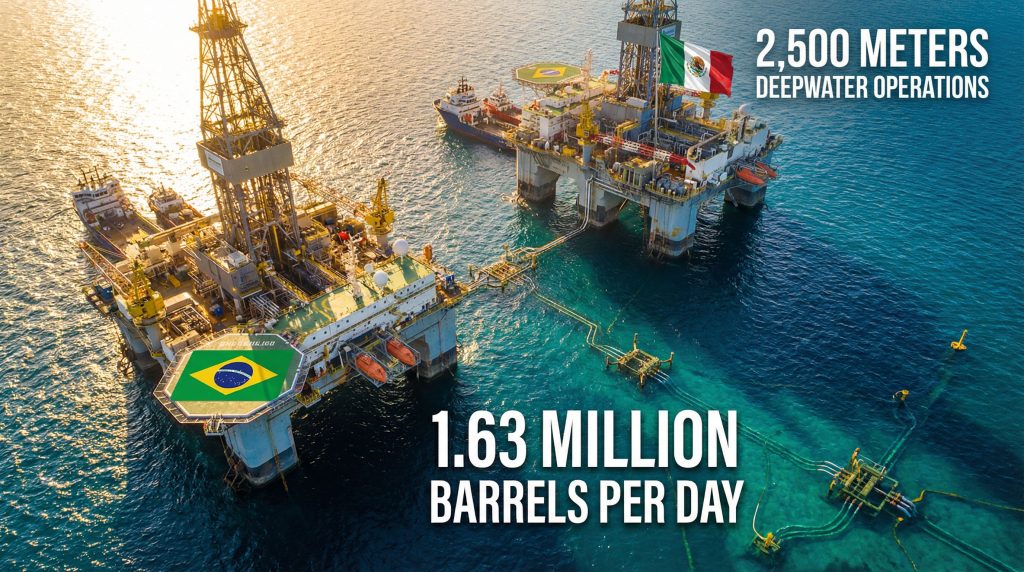
President Luiz Inácio Lula da Silva revealed in March 2026 that he proposed this partnership to Mexican President Claudia Sheinbaum following discussions with Magda Chambriard, Petrobras' executive president. The initiative targets deepwater exploration projects at approximately 2,500 meters depth, leveraging Brazil's established competencies in challenging offshore environments.
This collaboration framework represents a strategic departure from traditional foreign investment models in Mexico's energy sector. Rather than relying on international oil majors, the partnership maintains sovereign control while accessing critical technological capabilities through state-to-state cooperation.
Bilateral Political Momentum
The energy partnership builds on strengthening political and economic ties between Brazil and Mexico. Furthermore, government discussions on March 9, 2026, addressed enhanced economic relations and expressed formal interest in deeper energy sector cooperation, setting the stage for technical collaboration between the national oil companies.
The high-level political endorsement provides crucial governmental backing that helps navigate regulatory complexities. Moreover, it ensures sustained commitment despite potential policy changes in either country.
Petrobras' Pre-Salt Technology Advantage
Brazil's national oil company has established world-class expertise in ultra-deepwater operations through extensive pre-salt field development off Brazil's coast. This technological foundation directly addresses Mexico's primary constraint: limited commercial deepwater production despite holding significant Gulf of Mexico reserves.
The partnership model allows Mexico to access advanced subsea technologies, enhanced oil recovery techniques, and sophisticated drilling methodologies. Consequently, this arrangement avoids the political complications traditionally associated with private foreign investment in strategic energy sectors.
Technical Capabilities and Operational Synergies
Petrobras' operational experience exceeding 2,500 meters depth provides the technical foundation Mexico requires to unlock deepwater potential in the Gulf of Mexico. The Brazilian company's track record in challenging offshore environments offers proven methodologies for:
- Advanced subsea infrastructure development
- Sophisticated drilling technologies for ultra-deepwater conditions
- Comprehensive environmental management systems
- Enhanced oil recovery techniques optimised for deepwater reservoirs
The operational integration extends beyond pure technical considerations to include harmonising corporate cultures, technical standards, and regulatory frameworks between Brazilian and Mexican operations. However, this comprehensive approach ensures sustainable long-term collaboration rather than simple technology transfer.
Existing Gulf of Mexico Experience
Petrobras already maintains operational presence in the Gulf of Mexico through existing joint ventures. This provides familiarity with regional regulatory requirements and operational conditions. Furthermore, this established presence facilitates smoother partnership implementation and reduces integration risks associated with new market entry.
Economic Drivers and Production Challenges
Mexico's state oil company faces mounting pressure with production levels that have declined significantly. This creates urgent need for technological partnerships capable of reversing production trends without requiring massive capital outlays. The financial constraints affecting Pemex make technology-based partnerships particularly attractive compared to capital-intensive development alternatives.
For Brazil's national oil company, the alliance between Petrobras and Pemex in the Gulf of Mexico offers strategic international diversification and operational scale advantages. Additionally, expanding beyond Brazilian waters reduces geographic concentration risk while leveraging existing deepwater capabilities in new geological basins.
Furthermore, global oil price volatility continues to influence strategic planning for both companies. Similarly, OPEC production impact on regional energy markets remains a significant consideration for long-term partnership viability.
Financial Structure Considerations
The partnership must balance Pemex's financial constraints with Petrobras' investment capabilities and international expansion objectives. Consequently, optimal structures likely involve Brazilian technology and expertise contributions offset by Mexican acreage access and revenue sharing arrangements that reflect each partner's contributions.
| Partnership Element | Petrobras Contribution | Pemex Contribution |
|---|---|---|
| Technology Transfer | Pre-salt expertise | Gulf acreage access |
| Operational Capacity | Ultra-deepwater experience | Regional regulatory knowledge |
| Financial Structure | Technical investment | Revenue sharing potential |
| Market Position | International diversification | Production enhancement |
Deepwater projects involve substantial capital requirements and extended development timelines. Therefore, effective risk management requires comprehensive geological assessment, operational planning, and financial structuring to ensure sustainable returns for both state enterprises.
Regional Energy Security Implications
The partnership represents a strategic alternative to dependence on international oil majors. This allows both nations to maintain sovereign control over energy resources while accessing necessary technological capabilities. Additionally, this approach could establish precedents for future Latin American energy cooperation frameworks.
Strengthened regional production capabilities reduce reliance on volatile international markets and provide greater energy security for both nations. The alliance creates potential for a more robust Latin American energy ecosystem capable of responding to global supply disruptions.
Moreover, energy exports challenges faced by major producers globally highlight the importance of regional cooperation strategies.
Geopolitical Considerations
The state-to-state cooperation model demonstrates how national oil companies can leverage complementary strengths to address individual operational limitations. This approach offers an alternative to traditional private sector partnerships, particularly in politically sensitive energy sectors where national resource control remains paramount.
The alliance between Petrobras and Pemex in the Gulf of Mexico could influence broader regional energy integration strategies. Consequently, it potentially establishes Latin America as a more self-sufficient energy bloc with reduced dependence on external energy sources.
In addition, recent Venezuelan state oil reforms demonstrate the evolving nature of state-controlled energy enterprises in the region.
Technical Implementation Challenges
Gulf of Mexico deepwater projects require sophisticated subsea infrastructure, advanced drilling technologies, and comprehensive environmental management systems. The partnership must navigate complex geological conditions while maintaining operational safety standards consistent with international best practices.
Successful collaboration requires harmonising different corporate cultures, technical standards, and regulatory frameworks between Brazilian and Mexican operations. This integration challenge extends beyond technical considerations to include operational philosophies and risk management approaches.
Operational Integration Requirements
The partnership implementation involves coordinating:
- Regulatory Harmonisation: Aligning Brazilian and Mexican regulatory frameworks, environmental standards, and operational requirements
- Technical Standards: Integrating different equipment specifications, operational procedures, and safety protocols
- Risk Management: Establishing unified approaches to geological assessment, environmental protection, and operational safety
- Knowledge Transfer: Creating systematic processes for technology and expertise sharing between organisations
The next major ASX story will hit our subscribers first
Learning from Existing Partnerships
Pemex's existing international partnerships provide operational precedents for collaboration with foreign entities. For instance, the Trion field development with Woodside Energy and Lakach gas project with Grupo Carso offer valuable insights into partnership structures and operational integration challenges.
These experiences demonstrate Pemex's capacity to engage in international collaboration while maintaining operational oversight and regulatory compliance. Furthermore, the lessons learned from these partnerships inform structural approaches for the proposed Petrobras alliance.
Additionally, recent developments in Saudi exploration licenses show how state-owned enterprises are expanding international partnerships.
Partnership Development Timeline
The scheduled April 2026 meetings between Petrobras CEO Magda Chambriard and Mexican officials represent critical milestones for formalising partnership terms. These discussions will establish operational frameworks, investment structures, and development timelines for deepwater exploration initiatives.
The long-term strategic objectives include reversing Mexico's production decline trends while expanding Brazil's international operational footprint. Success metrics will encompass increased Mexican deepwater output, effective technology transfer implementation, and sustainable partnership profitability for both state enterprises.
Investment Structures and Capital Allocation
The alliance requires innovative financial structures that accommodate Pemex's debt constraints while enabling Petrobras to achieve international expansion objectives. Capital allocation strategies must balance risk distribution with return optimisation across extended development timelines typical of deepwater projects.
Effective partnership structures likely involve:
- Technology Investment: Petrobras provides specialised equipment, expertise, and operational support
- Acreage Contribution: Mexico offers access to promising deepwater areas with development potential
- Revenue Sharing: Proportional returns based on each partner's contributions and risk exposure
- Risk Management: Shared responsibility for operational, financial, and regulatory compliance risks
Future Scenarios and Success Indicators
Successful implementation of the alliance between Petrobras and Pemex in the Gulf of Mexico could significantly enhance Mexican deepwater production capabilities while establishing Petrobras as a leading international technology provider. This success would create precedents for expanded Latin American energy cooperation initiatives.
The partnership's broader implications extend to regional energy transformation potential. Successful bilateral cooperation could catalyse additional state-enterprise partnerships throughout Latin America. This evolution would strengthen regional energy independence while reducing dependence on external supply sources.
Market Impact and Industry Implications
The alliance demonstrates evolving models for state-owned enterprise collaboration in global energy markets. Success would validate technology-sharing approaches as alternatives to traditional capital-intensive partnership structures. Consequently, this could influence similar arrangements in other emerging markets.
According to Reuters analysis, the strategic partnership could reshape Gulf of Mexico development priorities. Additionally, BNAmericas reports suggest significant regional implications for deepwater exploration strategies.
The partnership represents a new paradigm where technological expertise becomes the primary catalyst for international energy cooperation, particularly in challenging operational environments requiring specialised capabilities.
The regional energy security benefits include enhanced supply chain resilience, reduced market volatility exposure, and strengthened capacity for coordinated responses to global energy disruptions affecting Latin American markets.
Regulatory Navigation and Political Support
Implementation success requires coordinating multiple regulatory frameworks, environmental standards, and operational requirements across Brazilian and Mexican jurisdictions. This harmonisation process involves numerous government agencies and regulatory bodies in both countries.
High-level political endorsement from Presidents Lula and Sheinbaum provides essential governmental support for navigating regulatory complexities and maintaining sustained partnership commitment. This political backing helps ensure continuity despite potential policy changes or electoral cycles.
The regulatory coordination encompasses:
- Environmental Compliance: Harmonising environmental impact assessment requirements and monitoring protocols
- Operational Standards: Aligning safety regulations, technical specifications, and operational procedures
- Financial Frameworks: Coordinating taxation, revenue sharing, and investment incentive structures
- Technology Transfer: Establishing intellectual property protections and knowledge sharing protocols
Disclaimer: This analysis is based on publicly available information and industry assessment. Energy sector partnerships involve substantial risks, extended development timelines, and uncertain outcomes. Readers should conduct independent research and consult qualified professionals before making investment or business decisions related to energy sector activities. Future performance of partnerships cannot be guaranteed based on historical precedents or current plans.
Ready to Capitalise on Energy Sector Opportunities?
Discovery Alert's proprietary Discovery IQ model delivers real-time alerts on significant ASX energy and mining discoveries, instantly empowering subscribers to identify actionable opportunities ahead of the broader market. Begin your 14-day free trial today and secure your market-leading advantage in the evolving resources sector.