August 11, 2026
The Strait of Hormuz Aluminum Supply Crisis: Understanding the Global Market Disruption
Global aluminum markets operate within an intricate web of geopolitical dependencies that can shift dramatically when critical shipping corridors face disruption. The recent escalation of tensions in the Persian Gulf has exposed how vulnerable Western aluminum supply chains have become to disruptions along strategic maritime routes. The Strait of Hormuz aluminum supply crisis stems from decades of industrial development that concentrated significant production capacity in politically unstable regions, creating systemic risks that extend far beyond regional boundaries.
The aluminum industry's reliance on specific geographic corridors represents a fundamental structural weakness that has been building for years. Unlike other commodities that benefit from diverse production centers and flexible transportation networks, aluminum smelting operations require massive infrastructure investments that cannot be easily relocated or substituted. Consequently, this creates a perfect storm when geopolitical events intersect with already constrained global supply conditions, particularly when considering broader energy security challenges affecting the region.
When big ASX news breaks, our subscribers know first
Critical Chokepoint: The Strait of Hormuz and Aluminum Supply Flows
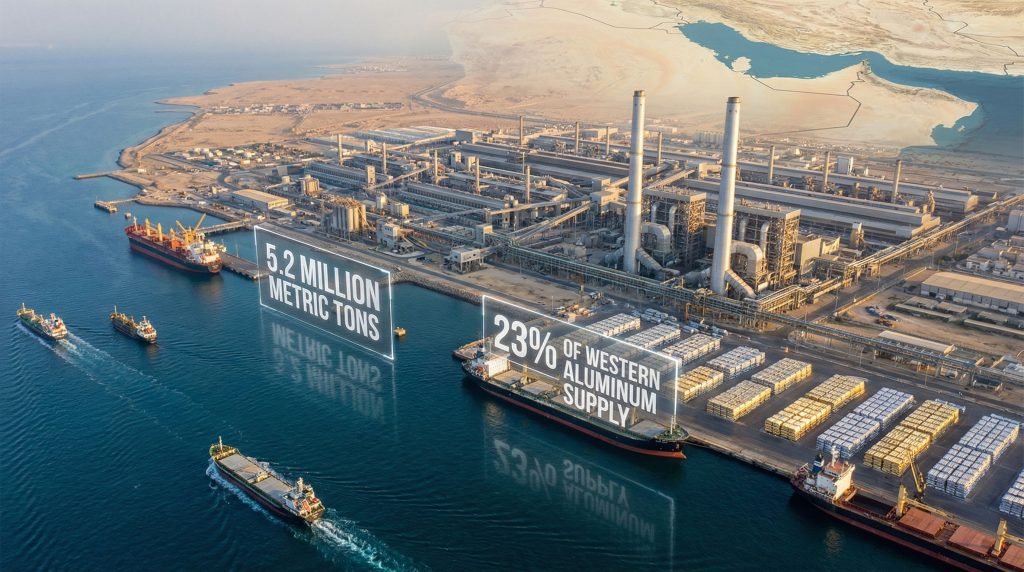
The Strait of Hormuz functions as more than a shipping lane for the global aluminum industry – it serves as the primary arterial route for approximately 23% of Western aluminum supply. This narrow waterway facilitates the movement of 5.2 million metric tons of refined aluminum annually, alongside 13 million tons of critical upstream materials including bauxite and alumina that feed global production networks.
Gulf Region Aluminum Production Infrastructure:
- UAE: 2.4 million metric tons annual capacity (8.2% of global non-Chinese output)
- Bahrain: 1.5 million metric tons annual capacity (5.1% of global non-Chinese output)
- Qatar: 0.7 million metric tons annual capacity (2.4% of global non-Chinese output)
- Saudi Arabia: 0.9 million metric tons annual capacity (3.1% of global non-Chinese output)
The region's strategic importance becomes apparent when considering that these four countries collectively represent 18.8% of global aluminum production outside China. Major operators including Emirates Global Aluminum, Aluminium Bahrain (Alba), and the Qatalum joint venture between Norsk Hydro and Qatar Aluminum Manufacturing Company have built their operations around uninterrupted access to global shipping networks through the Strait of Hormuz. Furthermore, the Saudi Arabia exploration impact on regional mineral production continues to shape supply dynamics across the Gulf.
Infrastructure Dependencies That Cannot Be Easily Replaced
Gulf aluminum producers face unique logistical constraints that make the Strait of Hormuz irreplaceable for their operations. Unlike crude oil tankers that can navigate alternative routes with relatively minor cost increases, aluminum supply chains involve specialized infrastructure that cannot be quickly reconfigured.
Critical bottlenecks include:
- Port specialization: Jebel Ali, Khalifa Port, and Sohar handle 78% of regional aluminum exports through specialized facilities designed specifically for aluminum handling
- Alumina storage limitations: Gulf smelters maintain only 21-28 days of alumina inventory, requiring consistent inbound shipments to maintain operations
- Energy infrastructure dependencies: Natural gas pipelines feeding smelter operations follow fixed routes that cannot be easily redirected
- Economic shipping constraints: Alternative routes via the Cape of Good Hope add 12-16 days transit time and increase freight costs by 35-42%
Smelter Shutdown Cascades: Technical and Economic Implications
When aluminum smelters shut down due to supply disruptions, they initiate a complex technical process that can take months to reverse. The current Strait of Hormuz aluminum supply crisis has forced several major producers to declare force majeure, triggering controlled shutdown procedures that will have lasting impacts on global supply availability.
Smelter Shutdown and Restart Timeline:
| Phase | Duration | Technical Requirements | Economic Impact |
|---|---|---|---|
| Controlled Shutdown | 7-14 days | Gradual pot line reduction | $12-18 million in lost production |
| Cold Shutdown | 21-35 days | Complete electrolyte solidification | $35-50 million in maintenance costs |
| Restart Preparation | 45-90 days | Equipment inspection and relining | $75-120 million capital requirement |
| Production Ramp-up | 90-180 days | Quality stabilization process | $200-300 million total restart cost |
The technical complexity of aluminum smelter operations means that even brief disruptions can create extended supply shortages. When Aluminium Bahrain and the Qatalum facility declared force majeure due to natural gas supply interruptions, they initiated shutdown procedures that industry experts estimate will remove 2.2 million tons of annual capacity from global markets for a minimum of six months.
Force Majeure Declarations and Contractual Implications
The legal framework surrounding force majeure declarations in the aluminum industry has evolved significantly following previous supply disruptions. Current contract structures typically include several key provisions that become activated during events like the Strait of Hormuz aluminum supply crisis:
Standard contractual protections:
- Upstream disruption clauses: Cover raw material supply interruptions lasting more than 30 days
- Infrastructure failure provisions: Address port access and shipping route blockades
- Geopolitical event coverage: Include armed conflict and sanctions scenarios
- Duration thresholds: Most contracts trigger force majeure after 45 days of sustained disruption
Industry analysts note that the cascading effects of force majeure declarations extend well beyond the immediate supply shortage. Automotive and aerospace manufacturers, who represent the largest consumers of aluminum products, often face contract renegotiations that persist long after the original crisis resolves.
Price Discovery Mechanisms in Crisis Conditions
The London Metal Exchange aluminum market has entered severe backwardation as a result of the Strait of Hormuz disruptions, with spot prices trading $47.40 per ton above three-month futures contracts. This represents the highest premium structure since 2019 and signals acute physical metal scarcity in global markets. Moreover, according to Reuters analysis, the risks to Western aluminum supply continue to escalate as regional tensions intensify.
Current market structure indicators:
- Spot premium: $47.40 per ton above 3-month futures
- Daily inventory drawdowns: 2,100 tons leaving LME warehouses
- Options volatility: Reaching four-year highs at 28.5%
- Forward curve pricing: Six-month contracts pricing in supply restoration assumptions
Regional Premium Explosions Across Key Markets
The Strait of Hormuz aluminum supply crisis has created unprecedented regional premium differentials as buyers compete for limited available metal. European and North American markets have experienced the most dramatic price increases due to their heavy reliance on Gulf region supply.
Regional Premium Analysis (USD per ton above LME base price):
| Region | Pre-Crisis Premium | Current Premium | Percentage Increase | Primary Drivers |
|---|---|---|---|---|
| Europe Rotterdam | $95 | $275 | +189% | Gulf supply loss, energy costs |
| US Midwest | $145 | $365 | +152% | Tariff effects, logistics constraints |
| Japan CIF | $85 | $195 | +129% | Shipping route disruption |
| Southeast Asia | $75 | $165 | +120% | Regional supply tightening |
Commodity strategists at major banks project that regional premiums could increase by an additional 50-75% if Strait of Hormuz disruptions extend beyond six months. The European market appears particularly vulnerable due to limited alternative supply sources and ongoing energy cost pressures that constrain domestic smelter restarts. In addition, tariffs impact markets globally, creating additional pressure on aluminum pricing structures.
Industry Exposure: Automotive and Aerospace Vulnerabilities
The automotive industry consumes approximately 29% of global aluminum production, making it highly exposed to supply disruptions from the Strait of Hormuz aluminum supply crisis. Modern vehicles contain an average of 180 kilograms of aluminum, concentrated in components that require specialized alloys with limited substitution possibilities.
High-risk automotive aluminum applications:
- Engine blocks and cylinder heads: Require high-purity aluminum alloys (A356, A319)
- Body panels and space frames: Volume-sensitive applications using 6000-series alloys
- Heat exchangers and cooling systems: Specialized 3000-series alloys with limited alternatives
- Wheels and suspension components: Performance-critical 7000-series aluminum applications
European automotive manufacturers face particular vulnerability due to their proximity to Gulf supply sources and limited inventory buffers. Most Tier 1 automotive suppliers maintain only 45-60 days of aluminum inventory, creating immediate exposure when supply chains experience disruption.
Aerospace Sector: Strategic Material Concerns
The aerospace industry's aluminum requirements present even greater challenges during supply crises due to strict certification requirements and performance specifications that limit material substitution options.
Critical aerospace aluminum specifications:
| Component Category | Required Grade | Supply Risk Level | Certification Timeline |
|---|---|---|---|
| Fuselage structures | 2024-T3, 7075-T6 | High | 18-24 months |
| Wing assemblies | 7050-T7451 | Very High | 24-36 months |
| Landing gear systems | 7075-T73 | High | 12-18 months |
| Engine components | A356-T6 cast alloy | Medium | 6-12 months |
Aerospace manufacturers cannot easily substitute aluminum grades due to rigorous certification processes that can take years to complete. This creates strategic vulnerabilities when specific grades become unavailable due to events like the current Strait of Hormuz aluminum supply crisis.
Global Inventory Analysis: The Hidden Supply Shortage
Current global aluminum inventories reveal a more precarious supply situation than headline figures suggest. Combined London Metal Exchange registered and off-warrant aluminum stocks ended February at 583,000 tons, representing the lowest level since 2020 and down from 3 million tons at the start of the decade.
LME Inventory Breakdown:
- Total LME stocks: 547,000 tons (March 2026)
- Available to Western buyers: Approximately 240,000 tons (excluding Russian-origin metal)
- Daily withdrawal rate: 2,850 tons average
- Critical threshold: 200,000 tons triggers industry supply emergency protocols
The pool of immediately accessible metal is significantly smaller than headline inventory figures suggest due to geopolitical restrictions. Russian aluminum accounted for 58% of warranted LME stocks at the end of January, but Western sanctions have made much of this metal inaccessible to European and North American buyers.
Off-Warrant Stocks: The Strategic Buffer
Off-warrant aluminum inventories represent critical buffer stocks held outside the formal exchange system. Industry estimates suggest these stocks provide approximately 540,000 tons of additional supply, though accessibility varies significantly based on holder type and geographic location.
Off-Warrant Inventory Distribution (Estimated):
| Stock Holder Category | Estimated Volume | Market Accessibility | Release Timeline |
|---|---|---|---|
| Producer strategic stocks | 180,000 tons | High | Immediate availability |
| Consumer working stocks | 220,000 tons | Medium | 30-90 day gradual release |
| Trading house stocks | 95,000 tons | High | Speculative buffer |
| Government strategic reserves | 45,000 tons | Low | Emergency situations only |
The next major ASX story will hit our subscribers first
Alternative Supply Routes: Economic and Logistical Constraints
Gulf aluminum producers facing Strait of Hormuz disruptions have limited alternative shipping routes, each presenting significant economic and logistical challenges that compound the global supply crisis. However, Fast Markets highlights how the closure of this critical waterway fuels serious supply concerns across both European and US markets.
Shipping Route Comparison Analysis:
| Alternative Route | Additional Distance | Transit Time Increase | Cost Impact | Capacity Limitations |
|---|---|---|---|---|
| Cape of Good Hope | +2,800 nautical miles | +8 days | +$180 per ton | Limited specialized vessels |
| Suez Canal (if accessible) | +700 nautical miles | +2 days | +$45 per ton | Canal capacity constraints |
| Overland rail transport | N/A | +14-21 days | +$280 per ton | Limited to 15% of sea capacity |
| Air freight (emergency) | N/A | -10 days | +$1,200 per ton | Reserved for critical applications |
The economic impact of route diversification becomes particularly severe when combined with insurance premium increases and specialized handling requirements for aluminum products. Industry logistics experts estimate that sustained use of alternative routes could add $300-450 per ton to delivered aluminum costs in key consuming markets.
Land-Based Transportation: Limited Viability
Overland transportation alternatives face fundamental capacity constraints that prevent them from serving as meaningful substitutes for sea-based aluminum shipping. Rail networks connecting the Gulf region to global markets can handle approximately 15% of current sea freight volumes, while trucking options remain economically viable only for high-value specialty alloys.
Land transport limitations:
- Rail capacity constraints: Existing networks designed for general cargo, not aluminum-specific loads
- Infrastructure bottlenecks: Limited rail connections between Gulf ports and major consuming regions
- Economic thresholds: Viable only for aluminum products valued above $4,500 per ton
- Transit time penalties: Add 14-21 days compared to direct sea routes
China's Production Constraints and Strategic Implications
China's role in global aluminum markets has shifted dramatically, creating additional pressures during the current Strait of Hormuz aluminum supply crisis. Chinese producers operate under a government-mandated annual production cap of 45.02 million tons, severely limiting the country's ability to offset Gulf supply disruptions through increased domestic production. Furthermore, the broader US-China trade disruption continues to complicate global aluminum trade flows.
Chinese Aluminum Market Evolution:
| Year | Production (MT) | Domestic Consumption (MT) | Net Export Position | Market Role |
|---|---|---|---|---|
| 2023 | 41.0 million | 38.5 million | +2.5 million surplus | Net exporter |
| 2024 | 43.2 million | 41.8 million | +1.4 million surplus | Declining surplus |
| 2025 | 44.5 million | 44.1 million | +0.4 million surplus | Near balance |
| 2026E | 45.0 million | 46.2 million | -1.2 million deficit | Projected net importer |
This fundamental shift from net exporter to net importer removes China as a potential buffer against supply disruptions elsewhere in the global system. Chinese aluminum demand growth of 3.2% annually through 2027 will continue absorbing domestic production capacity that previously served export markets.
Import Dependency and Strategic Vulnerabilities
China imported a record 2.5 million tons of primary aluminum in 2025 while simultaneously reducing semi-manufactured product exports by nearly 10% year-over-year. This dual trend – increased primary metal imports combined with reduced finished product exports – creates a Western market supply loss equivalent to approximately 600,000 tons annually.
The strategic implications extend beyond pure tonnage considerations. China's growing import dependency during periods of global supply stress, such as the current Strait of Hormuz aluminum supply crisis, creates competition between Chinese buyers and Western consumers for limited available metal from alternative sources.
Long-Term Strategic Implications for Aluminum Security
The current crisis exposes fundamental vulnerabilities in global aluminum supply chain architecture that require strategic responses across multiple dimensions. Industry participants must develop more resilient supply networks that can withstand future geopolitical disruptions without experiencing the severe market dislocations currently affecting global markets. Additionally, OPEC production impact decisions continue to influence energy costs that directly affect aluminum smelting economics.
Strategic recommendations for supply chain resilience:
For consuming industries:
- Establish multi-regional supplier networks with maximum 40% exposure to any single geographic region
- Increase strategic inventory buffers from current 30-45 days to 60-90 days
- Develop aluminum recycling capabilities to reduce primary metal dependency by 25-35%
- Invest in alternative material research for non-critical applications
For producing regions:
- Accelerate idle capacity restart programs in North America and Europe
- Develop strategic aluminum reserves equivalent to 90-120 days of consumption
- Invest in renewable energy infrastructure to support competitive smelting economics
- Strengthen bilateral trade relationships with geographically diverse producing nations
Geopolitical Risk Assessment Framework
Future aluminum supply security requires sophisticated risk assessment frameworks that account for multiple disruption scenarios and their cascading effects across global markets.
Supply Disruption Scenario Analysis:
| Disruption Scenario | Probability Assessment | Duration Estimate | Market Impact Severity | Recovery Timeline |
|---|---|---|---|---|
| Temporary Strait blockade (1-3 months) | 35% | Short-term | High supply stress | 6-12 months |
| Extended shipping disruption (6-12 months) | 20% | Medium-term | Very high price impact | 18-24 months |
| Permanent route insecurity | 8% | Long-term | Structural market changes | 3-5 years |
| Regional conflict escalation | 12% | Variable | Extreme volatility | Unpredictable |
Investment and Trading Strategy Framework
The Strait of Hormuz aluminum supply crisis creates both risks and opportunities for market participants across the aluminum value chain. Successful navigation requires understanding the interplay between physical supply constraints, financial market dynamics, and regional price differentials.
Aluminum Futures and Options Positioning
Current market conditions favour strategies that capitalise on supply scarcity while managing downside risks through structured approaches.
Recommended market positioning:
Bullish supply-constrained strategies:
- Long aluminum futures positions with 6-12 month time horizons
- Call option spreads targeting $4,200-4,500 per ton price levels
- Physical aluminum accumulation in accessible warehouse locations
- Equity exposure to non-Gulf aluminum producers with restart capability
Risk management approaches:
- Put spread protection for prices below $3,000 per ton
- Calendar spreads capitalising on current backwardation structure
- Cross-commodity hedges using copper and zinc relationships
- Currency hedges for non-USD aluminum transactions
Regional Arbitrage and Premium Capture
The geographic price dislocations created by the Strait of Hormuz aluminum supply crisis present arbitrage opportunities for participants with logistics capabilities and risk management expertise.
Arbitrage opportunity assessment:
- European-Asian premium spreads: Currently $110 per ton, historically $35 per ton
- US Midwest premium monetisation: Trading at $365 per ton versus $145 historical average
- LME-Shanghai exchange spreads: Presenting 8-12% arbitrage opportunities
- Physical-financial basis trading: Capitalising on inventory scarcity premiums
Projected Aluminum Price Scenarios (USD per ton):
| Time Horizon | Conservative Case | Base Case | Optimistic Case | Key Variables |
|---|---|---|---|---|
| 3 months | $3,200 | $3,650 | $4,200 | Disruption duration |
| 6 months | $2,900 | $3,400 | $4,500 | Alternative supply activation |
| 12 months | $2,700 | $3,200 | $3,800 | Smelter restart success |
| 24 months | $2,500 | $2,950 | $3,400 | New capacity commissioning |
The current Strait of Hormuz aluminum supply crisis represents more than a temporary market disruption – it exposes fundamental structural vulnerabilities in global aluminum supply chains that have developed over decades of industrial concentration in geopolitically unstable regions. Market participants who adapt their strategies to account for these realities while capitalising on the opportunities created by supply scarcity will be best positioned for both near-term success and long-term resilience in an increasingly complex global aluminum market environment.
Disclaimer: This analysis is for informational purposes only and does not constitute investment advice. Commodity markets involve substantial risk of loss and may not be suitable for all investors. Past performance does not guarantee future results. Market conditions and geopolitical situations can change rapidly, affecting commodity prices and availability. Readers should consult with qualified professionals before making investment decisions.
Ready to Capitalise on Critical Supply Chain Disruptions?
Discovery Alert's proprietary Discovery IQ model delivers real-time alerts on significant mineral discoveries that could reshape supply chains during global crises like the current aluminium shortage. With major disruptions creating unprecedented opportunities in both established and emerging mining companies, subscribers gain instant access to actionable insights that identify the next breakthrough discoveries ahead of the broader market. Begin your 14-day free trial today and position yourself to benefit from supply chain disruptions before they become headline news.