August 7, 2026
Maritime transportation networks form the backbone of global energy security, with critical chokepoints determining the flow of hydrocarbons that power modern economies. Among these strategic waterways, certain passages carry disproportionate influence over international energy markets, creating vulnerabilities that extend far beyond regional boundaries. Understanding these vulnerabilities requires examining both the immediate market mechanisms and the longer-term geopolitical implications of supply disruption scenarios, particularly when considering the strait of Hormuz blockade impact.
Energy market participants increasingly recognise that modern global trade operates through a network of critical infrastructure nodes, where relatively small geographic features can exert enormous influence over worldwide commodity flows. This concentration of strategic importance in narrow waterways creates asymmetric risks, where local disruptions can trigger cascade effects across multiple continents and economic sectors.
What Makes the Strait of Hormuz the World's Most Critical Energy Chokepoint?
The Strait of Hormuz represents the Persian Gulf's singular maritime outlet to international waters, creating an unavoidable transit point for regional energy exports. This narrow waterway, measuring approximately 21 miles at its widest point, channels an extraordinary volume of global energy trade through shipping lanes that span roughly 2 miles in each direction.
Geographic Vulnerability and Strategic Position
The strait's strategic significance stems from its unique geographic position connecting the Persian Gulf to the Gulf of Oman and Arabian Sea. This waterway serves as the only viable maritime route for energy exports from a region containing approximately 48 per cent of global proven oil reserves and 38 per cent of proven natural gas reserves.
The narrowness of the passage creates inherent bottleneck characteristics that cannot be easily bypassed. Alternative maritime routes would require vessels to circumnavigate Africa, adding 2-3 weeks to transit times and substantially increasing transportation costs. This geographic constraint forces all seaborne trade from Gulf producers through a single corridor, creating concentrated vulnerability.
Recent developments have highlighted this vulnerability. During February 2026, Iran's partial closure of the strait during military exercises demonstrated how quickly regional tensions can translate into global energy market concerns. Furthermore, the temporary restriction, lasting several hours, marked the first time Tehran had limited traffic through the waterway since heightened tensions with the United States over nuclear programme disputes.
Daily Energy Flow Statistics Through the Maritime Corridor
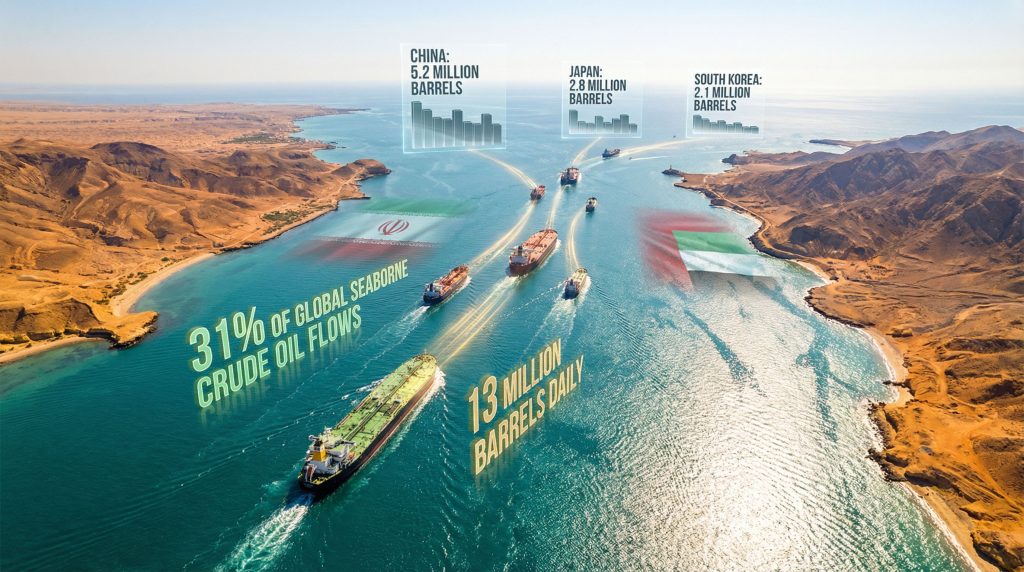
Energy flows through the Strait of Hormuz represent massive volumes by global standards. Approximately 13 million barrels of crude oil transit the strait daily, constituting roughly 31 per cent of global seaborne crude flows. This volume exceeds the daily consumption of most individual nations and represents a substantial portion of internationally traded petroleum.
Liquefied natural gas flows add another critical dimension to the strait's importance. Approximately 20 per cent of global LNG shipments pass through these waters, with Qatari exports forming the largest component of this traffic. Qatar's position as a leading LNG producer makes the strait essential for European and Asian gas markets, particularly during peak demand periods.
The concentration of energy flows creates a mathematical vulnerability where any disruption immediately affects global supply calculations. Unlike other chokepoints that handle more diversified cargo, the Strait of Hormuz focuses specifically on energy commodities, amplifying the potential for market disruption when transit is threatened.
Alternative Route Limitations and Cost Implications
Regional pipeline infrastructure provides limited alternatives to maritime transport through the strait. Existing pipeline capacity cannot accommodate the full volume of crude oil and natural gas normally shipped via tanker through the waterway. Saudi Arabia's East-West pipeline system offers partial capacity for crude oil bypass, but lacks the volume capability to replace strait-dependent flows entirely.
Transportation cost multipliers for alternative routing present significant economic barriers. Vessels forced to reroute around Africa face increased fuel costs, extended transit times, and higher insurance premiums. These factors combine to create transportation cost increases of 50-100 per cent for affected shipments, ultimately reflected in consumer energy prices.
The Red Sea route through the Suez Canal provides the closest alternative for reaching European markets, but requires overland transport from Gulf production facilities to Red Sea ports. This infrastructure limitation constrains the volume that can be redirected during strait disruptions.
When big ASX news breaks, our subscribers know first
How Would Different Blockade Scenarios Reshape Global Energy Markets?
Energy market modelling reveals distinct impact patterns depending on blockade characteristics, duration, and effectiveness. Each scenario type triggers different market responses, from immediate price volatility to longer-term supply chain reconfiguration. Understanding these patterns enables better preparation for potential disruption events, including the comprehensive strait of Hormuz blockade impact on worldwide markets.
Partial Closure vs. Complete Maritime Shutdown Analysis
Partial closures create market uncertainty while maintaining some supply flow, typically generating price volatility proportional to the perceived risk of escalation. During Iran's February 2026 military exercise, oil price movements responded immediately to the temporary restriction, with crude oil surging approximately 4.5 per cent on the first day following the announcement, then extending gains an additional 2 per cent to reach six-month highs.
Complete maritime shutdown scenarios would halt all 13 million barrels daily of crude oil flow and eliminate 20 per cent of global LNG shipments immediately. This scenario triggers fundamentally different market dynamics, as traders and consumers shift from risk assessment to supply replacement calculations.
The market psychology differs substantially between these scenarios. Partial closures often generate speculative premium increases as traders position for potential escalation. Complete blockades trigger immediate inventory drawdown planning and emergency reserve activation protocols across consuming nations.
Duration-Based Impact Modelling (7 Days vs. 30 Days vs. 6 Months)
Short-term blockades of 7 days primarily affect crude oil and LNG already in transit, while triggering significant price volatility. Oil markets can typically absorb brief disruptions through strategic reserve releases and spare production capacity activation from other regions. Price increases during this timeframe often range from 15-30 per cent above baseline levels.
Thirty-day blockades begin affecting supply chains more systematically. Asian refineries optimised for Gulf crude grades face operational challenges, while LNG importers activate alternative supplier arrangements. Price increases during this duration typically reach 40-60 per cent above normal levels, with some regional markets experiencing more severe impacts.
Extended blockades exceeding six months trigger structural market changes. Energy-importing economies implement demand rationing, industrial production shifts to less energy-intensive processes, and long-term supply relationships undergo permanent reconfiguration. Historical precedent suggests price increases of 100-200 per cent during extended supply disruptions of this magnitude.
| Blockade Duration | Oil Price Impact | Market Response | Strategic Actions |
|---|---|---|---|
| 7 Days | 15-30% increase | Speculative positioning | Reserve releases |
| 30 Days | 40-60% increase | Supply chain stress | Alternative sourcing |
| 6+ Months | 100-200% increase | Structural adjustment | Demand rationing |
Seasonal Variations in Global Energy Demand Response
Winter blockade scenarios create amplified disruption potential due to peak heating demand in Northern Hemisphere markets. LNG demand reaches seasonal highs during October through March, making strait disruptions during this period particularly impactful for European and Asian gas consumers.
Summer cooling demand in tropical and subtropical regions creates different vulnerability patterns. Middle Eastern oil production for power generation peaks during summer months, while petrochemical production operates at higher capacity to meet seasonal chemical and plastics demand.
Seasonal demand variations also affect the availability of alternative supplies. Russian pipeline gas exports traditionally peak during winter months, potentially providing partial offset for disrupted LNG flows. However, geopolitical tensions can complicate these alternative supply arrangements.
Which Global Economies Face the Greatest Strategic Risk?
Economic vulnerability to Strait of Hormuz blockade scenarios varies significantly based on import dependency, strategic reserve capacity, and alternative supply availability. Asian economies demonstrate the highest vulnerability due to geographic concentration of energy sourcing and maritime transport dependency, making the strait of Hormuz blockade impact particularly severe for this region.
Asia-Pacific Energy Import Dependency Matrix
China's energy vulnerability centres on massive import volumes, with approximately 5.2 million barrels daily transiting through the strait representing 60-70 per cent of total Chinese oil imports. Despite substantial strategic reserve development, China's rapid industrial growth creates consumption patterns that outpace reserve accumulation rates. Current reserve capacity provides 90-120 days of emergency supply, though this duration assumes normal economic activity levels.
Japan faces critical vulnerability despite maintaining the world's second-largest strategic petroleum reserve system. Daily imports of approximately 2.8 million barrels through the strait represent 80-90 per cent of Japanese oil consumption. Japan's strategic reserve capacity exceeds 180 days, providing substantial buffer capacity, but the economy's energy-intensive industrial structure amplifies the economic impact of sustained high energy prices.
South Korea demonstrates acute vulnerability through concentrated dependency and limited reserve capacity. Approximately 2.1 million barrels daily transit through the strait for Korean consumption, representing similar proportional dependency to Japan but with strategic reserves lasting only 90 days. Korea's petrochemical and shipbuilding industries face particular exposure to extended supply disruptions.
India's vulnerability profile differs qualitatively from Northeast Asian economies. Daily imports of approximately 1.9 million barrels through the strait represent substantial absolute volumes, but India maintains more diversified supply relationships with Russian, Central Asian, and African producers. Strategic reserve capacity of 60-90 days provides limited buffer, though India's lower per-capita energy consumption creates more flexibility for demand adjustment.
| Economy | Daily Oil Imports (Hormuz) | GDP Vulnerability Index | Strategic Reserve Duration |
|---|---|---|---|
| China | 5.2 million barrels | High | 90-120 days |
| Japan | 2.8 million barrels | Critical | 180+ days |
| South Korea | 2.1 million barrels | Critical | 90 days |
| India | 1.9 million barrels | Moderate-High | 60-90 days |
European Union's Relative Insulation Strategy
European energy security benefits from diversified supply sources, extensive pipeline infrastructure, and strategic reserve coordination mechanisms. While European refineries process substantial volumes of Middle Eastern crude, alternative suppliers from Russia, Norway, and Africa provide flexibility during supply disruptions.
The European Union's strategic petroleum reserve system operates through coordinated national reserves and emergency response protocols. Combined reserve capacity across EU member states exceeds 120 days of consumption, with emergency release mechanisms designed to stabilise prices during supply disruptions.
Natural gas dependency creates different vulnerability patterns for European consumers. While Middle Eastern LNG represents a smaller proportion of European gas consumption compared to pipeline supplies from Russia and Norway, seasonal demand variations can create temporary vulnerability during peak winter consumption periods.
North American Shale Production Advantage Analysis
United States domestic oil production capacity provides significant insulation from Middle Eastern supply disruptions. Shale oil production flexibility enables rapid capacity increases during high-price environments, creating natural market stabilisation mechanisms. In addition, the US rig counts decline during recent periods could potentially reverse rapidly during crisis scenarios.
Canadian oil sands production adds additional North American supply security, though pipeline capacity constraints limit the speed of production increases. The strategic petroleum reserve system provides emergency supply capacity, while domestic production growth potential reduces long-term vulnerability to Middle Eastern supply disruptions.
Mexico's energy relationship with North America creates regional supply integration benefits. While Mexico imports some refined products, regional trade relationships provide flexibility during global supply disruptions, reducing North American vulnerability compared to import-dependent regions.
What Are the Immediate Financial Market Consequences?
Financial markets demonstrate immediate sensitivity to Strait of Hormuz supply disruption threats, with transmission effects extending beyond energy commodity markets into currency, equity, and credit markets. These reactions often precede actual supply disruptions, reflecting market participants' risk assessment and hedging behaviour.
Oil Price Volatility Modelling and Historical Precedents
Contemporary market responses to strait disruption threats demonstrate the speed of financial market transmission. During Iran's February 2026 military exercise, crude oil prices surged 4.5 per cent on the first day, followed by additional gains of 2 per cent the following day, reaching six-month price highs. This immediate response pattern reflects algorithmic trading systems and futures market positioning rather than actual supply shortages.
Historical precedent from the 1980-1988 Iran-Iraq War provides insight into extended disruption scenarios. During this conflict, oil prices fluctuated between $10-40 per barrel, demonstrating the strait's price-setting power even during partial disruptions. However, absolute price levels during this period were substantially lower than contemporary markets, making percentage-based comparisons more relevant than absolute price levels.
Oil price volatility during supply disruption threats operates through multiple transmission mechanisms. Futures markets immediately reprice based on new supply risk assessments, while physical market participants adjust inventory management strategies. Hedging behaviour by airlines, shipping companies, and energy-intensive industries amplifies price movements as these sectors purchase price protection instruments.
Currency Devaluation Patterns in Energy-Importing Nations
Currency markets demonstrate systematic responses to energy supply disruption threats, with energy-importing nations experiencing downward pressure as energy import costs increase. The mechanism operates through current account deterioration, as higher energy import bills require increased foreign currency purchases.
Japanese yen depreciation during energy price shocks has historically remained limited, typically ranging 5-15 per cent due to Japan's overall current account surplus and deep capital markets. However, sustained energy price increases can overcome these stabilising factors, particularly when combined with other economic stresses.
Chinese yuan movements face constraints from state management of exchange rates, though pressure accumulates over time as energy import costs increase. The scale of Chinese energy imports means that sustained oil price increases can create substantial current account pressures despite export earnings.
Indian rupee depreciation has historically been more pronounced during energy crises, often ranging 15-25 per cent during major supply disruptions. India's current account deficit and smaller foreign currency reserves relative to economy size create greater vulnerability to external energy price shocks.
Stock Market Sector Rotation During Energy Crises
Equity markets demonstrate predictable sector rotation patterns during energy supply disruption scenarios. Energy sector stocks typically appreciate as higher commodity prices translate to improved profit margins for oil and gas producers. International oil companies with diversified production portfolios benefit particularly from supply disruption premiums.
Transportation sector stocks experience negative impacts due to higher fuel costs reducing operating margins. Airlines face immediate impacts from jet fuel price increases, while shipping companies encounter higher bunker fuel costs. These sectors often decline 10-20 per cent during major energy price spikes.
Petrochemical companies face complex impacts during energy disruptions. Higher feedstock costs reduce margins in the short term, but supply disruptions can create product scarcity that supports higher prices. The net effect depends on the company's specific product mix and contract structures.
During the 1980-1988 Iran-Iraq War, similar tensions caused oil prices to fluctuate between $10-40 per barrel, demonstrating the strait's price-setting power even with partial disruptions.
How Do Regional Powers Position Themselves During Maritime Disruption?
Regional power dynamics during Strait of Hormuz disruption scenarios reflect competing interests, economic incentives, and strategic positioning. Each major regional actor faces different cost-benefit calculations when evaluating maritime disruption scenarios, creating complex diplomatic and economic interactions that contribute to the strait of Hormuz blockade impact.
Gulf Cooperation Council Economic Defence Mechanisms
Saudi Arabia maintains the most substantial alternative export capacity through its East-West pipeline system, capable of bypassing the Strait of Hormuz for portions of its crude oil exports. This infrastructure provides strategic flexibility during regional tensions, though total capacity remains limited compared to maritime export volumes. Consequently, Saudi exploration licenses become increasingly important for maintaining global supply security.
The United Arab Emirates operates extensive port and pipeline infrastructure designed for energy export diversification. Dubai's role as a regional trading hub creates economic incentives to maintain open maritime routes, while Abu Dhabi's oil production capacity provides flexibility for production increases during supply disruptions.
Kuwait and Qatar face greater vulnerability to strait closure scenarios due to limited alternative export routes. Qatar's LNG exports depend heavily on maritime transport through the strait, creating economic incentives to support diplomatic solutions to regional tensions.
Regional coordination mechanisms within the Gulf Cooperation Council enable joint responses to supply disruption threats. Emergency production sharing agreements and coordinated strategic reserve management provide tools for maintaining regional energy security during crises.
Iran's Economic Self-Damage Assessment
Iran's economy demonstrates substantial vulnerability to its own blockade actions, as energy exports provide essential government revenue and foreign currency earnings. Prolonged closure of the strait would eliminate Iran's primary source of export income, creating domestic economic pressures that could outweigh strategic benefits.
The timing of Iran's February 2026 military exercise reflected broader regional tensions, occurring after renewed nuclear programme disputes with the United States. However, the temporary and limited nature of the closure suggested awareness of the economic costs associated with extended disruption.
Iranian strategic calculations must balance regional influence projection against economic survival requirements. Extended blockade scenarios would likely prove economically unsustainable for Iran unless accompanied by alternative revenue sources or external economic support.
Russia's Strategic Opportunity Window Analysis
Russian energy producers benefit from Strait of Hormuz disruption scenarios through higher global energy prices and increased demand for alternative supply sources. This creates strategic incentives for Russia to support regional tensions that reduce Middle Eastern supply reliability without directly involving Russian interests.
Pipeline capacity from Russia to European and Asian markets provides alternative supply routes during Middle Eastern disruptions. However, geopolitical tensions between Russia and major energy consumers can complicate these alternative supply relationships. Moreover, OPEC global influence continues to shape market dynamics even when alternative suppliers become more important.
Russian strategic petroleum reserves and production flexibility enable rapid response to global supply disruptions. Higher energy prices provide substantial fiscal benefits for the Russian government, creating economic incentives to support market conditions that maintain elevated commodity prices.
What Alternative Supply Chain Routes Could Emerge?
Supply chain adaptation during Strait of Hormuz disruption scenarios requires examining both existing alternative infrastructure and potential emergency capacity development. These alternatives face technical, economic, and geopolitical constraints that limit their effectiveness as complete substitutes for strait transit.
Red Sea and Suez Canal Capacity Expansion Potential
The Red Sea route through the Suez Canal provides the most viable alternative for reaching European markets, though requiring overland transport from Gulf production facilities to Red Sea ports. Saudi Arabia's East-West pipeline system currently handles limited volumes compared to total export capacity, but expansion potential exists for emergency capacity increases.
Egyptian cooperation becomes critical for sustained Red Sea routing, as increased tanker traffic through the Suez Canal generates additional transit revenue while supporting global energy security. However, canal capacity constraints could create bottlenecks during peak rerouting scenarios.
Port infrastructure along the Red Sea coast requires expansion to accommodate increased tanker traffic during extended strait closures. Investment in terminal capacity, storage facilities, and loading systems would be necessary to support sustained alternative routing.
Overland Pipeline Development Through Turkey and Central Asia
Turkish pipeline infrastructure offers potential alternative routing for natural gas supplies, with existing capacity serving European markets and expansion potential for emergency supply scenarios. However, political relationships between Gulf producers and Turkey can complicate pipeline development initiatives.
Central Asian pipeline networks provide alternative routing potential for reaching European and Asian markets, though requiring substantial infrastructure investment and multiple transit agreements. The geographic distances involved make these routes economically viable primarily during sustained high-price scenarios.
Pipeline security considerations become critical for overland alternatives, as terrestrial infrastructure faces different vulnerability patterns compared to maritime transport. Multiple border crossings and political jurisdictions create complex risk profiles for alternative pipeline routes.
Arctic LNG Route Viability During Extended Closures
Arctic LNG production from Russian and North American sources provides alternative supply potential during Middle Eastern disruptions, though seasonal navigation constraints limit year-round availability. Ice-class tanker capacity determines the volume that can be transported via Arctic routes during winter months.
Economic viability of Arctic LNG routes depends on global price levels, as higher transportation costs require sustained premium pricing to justify extended Arctic operations. Climate change impacts on Arctic ice coverage may gradually improve navigation conditions for year-round operations.
Infrastructure development in Arctic regions requires substantial capital investment and specialised technology for extreme climate operations. Strategic planning for Arctic LNG expansion must consider both commercial viability and energy security requirements during global supply disruptions.
The next major ASX story will hit our subscribers first
Which Industries Beyond Energy Face Cascading Disruption?
Strait of Hormuz blockade impacts extend beyond direct energy consumers to industries dependent on energy-intensive processes, petroleum-based feedstocks, and integrated global supply chains. These cascading effects often prove more economically damaging than direct energy cost increases.
Global Shipping and Logistics Cost Multiplication
Maritime shipping industry faces immediate impacts through rerouting requirements, increased fuel costs, and insurance premium spikes. Vessels forced to circumnavigate Africa encounter 2-3 week transit time extensions, disrupting global supply chain scheduling and inventory management systems.
Container shipping rates typically increase 20-40 per cent during major energy supply disruptions, as fuel costs represent substantial portions of operating expenses. These increases affect all internationally traded goods, not just energy commodities, creating broad-based inflation pressures.
Port congestion develops at alternative routes as shipping traffic concentrates at fewer transit points. Suez Canal capacity constraints and Red Sea port limitations create bottlenecks that extend delays beyond the initial rerouting requirements.
Insurance markets respond to increased maritime risk through higher premium rates for vessels transiting alternative routes. War risk insurance and piracy coverage costs increase substantially during regional instability, adding additional cost layers to international trade.
Petrochemical Manufacturing Supply Chain Breakdown
Petrochemical industry demonstrates acute vulnerability to strait disruption scenarios due to dependence on specific crude oil grades and natural gas feedstocks from Gulf producers. Many petrochemical facilities are optimised for particular crude oil characteristics, making feedstock substitution technically challenging and economically costly.
Plastic manufacturing supply chains face disruption through both feedstock availability and cost increases. Polyethylene, polypropylene, and other commodity plastics produced from Gulf-sourced materials encounter production constraints, affecting packaging, automotive, and consumer goods industries.
Pharmaceutical industry vulnerability operates through multiple transmission paths. Active pharmaceutical ingredients produced in petrochemical facilities face supply constraints, while packaging materials and medical device plastics encounter availability and cost pressures.
Fertiliser production represents critical vulnerability for global agricultural systems. Natural gas-based ammonia and urea production facilities depend heavily on Gulf gas supplies, creating potential food security implications during extended supply disruptions.
Agricultural Fertiliser Production Impact Assessment
Nitrogen fertiliser production requires substantial natural gas inputs for ammonia synthesis, making this sector particularly vulnerable to LNG supply disruptions. Approximately 20 per cent of global LNG shipments transit the strait, with significant portions destined for fertiliser production facilities in Asia.
Agricultural planting seasons create time-sensitive demand for fertiliser supplies, with limited substitution possibilities during critical growing periods. Spring planting seasons in major agricultural regions could face severe constraints if blockade scenarios coincide with peak fertiliser demand periods.
Food security implications extend beyond direct agricultural impacts to include increased food prices, reduced crop yields, and potential supply shortages in fertiliser-dependent agricultural systems. Regional food security becomes particularly critical in areas with limited agricultural productivity and high import dependency.
Global fertiliser trade patterns show concentrated production in regions dependent on Gulf energy supplies, creating systematic vulnerability. Alternative production capacity exists but requires time to scale up and may lack the capacity to fully replace disrupted supply sources.
How Do Strategic Petroleum Reserves Influence Crisis Duration?
Strategic petroleum reserve systems provide critical tools for managing supply disruption scenarios, though their effectiveness depends on coordination mechanisms, release timing, and reserve capacity relative to consumption levels. National reserves operate alongside private sector inventories to create multilayered supply security systems.
International Energy Agency Coordinated Release Protocols
The International Energy Agency maintains emergency response protocols designed to coordinate strategic reserve releases among member nations during major supply disruptions. These protocols trigger when supply disruptions exceed specific thresholds, typically involving loss of 7 per cent or more of global oil supply.
Coordinated releases provide more market impact than individual national actions, as simultaneous reserve deployment from multiple countries creates substantial supply injection. Historical coordinated releases have successfully moderated price increases during supply crises, though effectiveness depends on disruption duration and market conditions.
IEA member nations commit to maintaining strategic reserves equivalent to 90 days of net oil imports, though actual reserve levels vary significantly among members. Japan maintains reserves exceeding 180 days of consumption, while some member nations maintain minimum required levels.
Emergency response coordination requires balancing national interests with collective action benefits. Member nations may prioritise domestic supply security over international market stabilisation, creating coordination challenges during severe disruption scenarios.
National Reserve Depletion Timeline Calculations
Reserve depletion timelines vary substantially based on consumption patterns, reserve capacity, and release rates during emergency scenarios. Japan's 180+ day strategic reserve capacity provides the longest buffer among major consuming nations, though sustained high consumption could reduce this duration.
China's strategic reserve system has expanded rapidly over the past decade, currently providing 90-120 days of emergency supply capacity. However, China's rapid economic growth creates consumption increases that can outpace reserve accumulation, potentially reducing effective reserve duration during crisis scenarios.
United States strategic petroleum reserve capacity exceeds 700 million barrels, representing approximately 40-50 days of total consumption. Release capacity during emergency scenarios can reach 4-5 million barrels daily, providing substantial short-term supply injection capability.
European Union coordinated reserves provide collective capacity exceeding 120 days of consumption, with emergency release mechanisms designed for coordinated deployment. However, individual member nation reserves vary significantly, creating uneven protection across the region.
Private Sector Inventory Management During Uncertainty
Commercial inventory levels operate as the first buffer during supply disruption scenarios, with oil companies, refiners, and major consumers adjusting stock levels based on supply risk assessment. Private sector inventories typically respond more rapidly than strategic reserves to developing supply threats.
Refinery inventory management becomes critical during disruption scenarios, as facilities optimised for specific crude grades face operational constraints when switching to alternative supplies. Tank farm capacity and product specification requirements limit inventory flexibility during supply chain stress.
Airlines and shipping companies maintain jet fuel and bunker fuel inventories that provide operational buffers during price spikes and supply uncertainty. However, storage costs and working capital requirements limit the duration these sectors can maintain elevated inventory levels.
Financial market participants, including commodity trading firms and investment funds, adjust position sizing and risk management during supply disruption threats. These adjustments can amplify price volatility through speculative positioning and hedging activity.
What Long-Term Geopolitical Realignments Could Result?
Extended Strait of Hormuz disruption scenarios could accelerate structural changes in global energy systems, international trade relationships, and geopolitical alliance patterns. These longer-term effects often prove more significant than immediate economic disruption, forming part of the comprehensive strait of Hormuz blockade impact on international relations.
Accelerated Renewable Energy Investment Patterns
Energy security vulnerabilities demonstrated during supply disruption scenarios create political and economic incentives for renewable energy transition acceleration. European responses to Russian supply disruptions in 2022 provide precedent for rapid policy changes prioritising energy independence over economic optimisation.
Investment capital allocation shifts toward domestic renewable energy projects during supply security crises, as energy independence becomes prioritised over pure economic returns. Government policy support for renewable energy typically increases during and after major supply disruption events.
Technology deployment timelines for renewable energy systems may accelerate through emergency policy measures, expedited permitting processes, and increased public investment. However, manufacturing capacity constraints for renewable energy equipment can limit the speed of deployment expansion.
Grid infrastructure development requirements increase during renewable energy acceleration scenarios, as electricity storage and transmission systems require substantial investment to support higher renewable energy penetration rates.
Middle East Economic Diversification Imperatives
Gulf economies face increased pressure for economic diversification during supply disruption scenarios, as energy export revenue vulnerability becomes apparent. Economic development strategies emphasising non-energy sectors become more politically viable during periods of energy market instability.
Sovereign wealth fund allocation patterns may shift toward domestic diversification investments rather than international asset accumulation, as energy security considerations influence capital deployment strategies. Infrastructure, technology, and manufacturing investments within Gulf economies could increase.
Regional economic integration within the Middle East could accelerate as energy-producing nations seek to reduce dependence on global maritime trade routes. Increased trade relationships with neighbouring regions, including Africa and Central Asia, may develop as alternative economic partnerships.
Financial market development within Gulf economies becomes more critical for economic diversification, as reduced energy export revenues require alternative sources of economic growth and employment generation.
Naval Security Alliance Formation Dynamics
Maritime security cooperation mechanisms could expand beyond existing arrangements, as energy-importing nations recognise shared vulnerability to chokepoint disruptions. Naval cooperation agreements focused specifically on energy security may develop separately from broader military alliance structures.
Asian naval cooperation could intensify around energy supply route protection, with joint patrols and intelligence sharing arrangements focused on critical maritime corridors. Japan, South Korea, and Australia maintain substantial naval capabilities that could support coordinated energy security operations.
International legal frameworks for maritime energy security may develop through multilateral agreements establishing shared responsibilities for critical waterway protection. These frameworks could include coordinated response protocols, cost-sharing arrangements, and legal authorities for intervention.
Regional power competition over energy chokepoint control could intensify, as nations recognise the strategic value of influence over critical maritime corridors. This competition may involve infrastructure investment, alliance formation, and military positioning in key regions.
| Category | Winners | Losers | Neutral/Mixed |
|---|---|---|---|
| Energy Producers | US Shale, Norway, Canada | Gulf States, Iran | Russia (short-term gain) |
| Manufacturing | Domestic energy producers | Import-dependent Asia | EU (moderate impact) |
| Shipping | Alternative route operators | Gulf-based logistics | Insurance companies |
What Military and Diplomatic Resolution Mechanisms Exist?
Resolution of Strait of Hormuz blockade scenarios requires examining both military intervention capabilities and diplomatic negotiation frameworks. Historical precedent suggests that economic pressure often proves more effective than military action for resolving supply disruption crises, though tariffs impact markets in ways that complicate international coordination.
International Maritime Law Enforcement Options
United Nations Convention on the Law of the Sea provides legal framework for challenging blockade actions that interfere with international navigation rights. However, enforcement mechanisms depend on voluntary compliance and international cooperation rather than binding arbitration with enforcement authority.
Naval escort operations represent established precedent for protecting commercial shipping during regional conflicts. The 1987-1988 Operation Earnest Will, where U.S. Navy vessels escorted Kuwaiti tankers during the Iran-Iraq War, provides historical precedent for international intervention to maintain energy supply security.
International maritime coalitions could form for chokepoint protection, combining naval assets from multiple nations to ensure continued commercial navigation. Such coalitions require complex coordination agreements, rules of engagement, and cost-sharing arrangements among participating nations.
Insurance market mechanisms provide economic tools for managing blockade risks, as war risk coverage and Lloyd's of London maritime insurance create financial incentives for maintaining open shipping lanes. However, insurance markets can also amplify economic impacts through premium increases during risk periods.
Economic Sanctions vs. Military Intervention Cost-Benefit
Economic sanctions provide tools for imposing costs on nations implementing blockade strategies, though sanctions effectiveness depends on international coordination and target nation economic vulnerability. Iran's economy demonstrates substantial dependence on energy exports, creating leverage points for economic pressure.
Military intervention scenarios involve substantial costs and risks beyond immediate military expenses. Regional escalation potential, civilian casualties, and long-term occupation requirements create cost calculations that often exceed economic benefits of restored energy supplies.
Diplomatic negotiation often proves more cost-effective than military solutions for resolving supply disruption scenarios. Financial incentives, security guarantees, and face-saving mechanisms can provide more sustainable solutions than military intervention.
International coordination becomes critical for effective sanctions or military responses, as unilateral actions often lack sufficient economic impact or military capability to resolve regional conflicts involving major powers.
Multilateral Negotiation Framework Precedents
Historical resolution of Middle Eastern energy crises provides precedent for diplomatic approaches to supply disruption scenarios. The 1973 Arab Oil Embargo ended through negotiated settlement rather than military intervention, though this involved producer decisions rather than third-party blockade actions.
Regional security conferences could provide frameworks for negotiating chokepoint access agreements, with participating nations agreeing to respect international navigation rights in exchange for security guarantees and economic cooperation arrangements.
Economic compensation mechanisms may provide tools for resolving blockade scenarios, as financial payments to blocking nations could prove less expensive than prolonged supply disruption costs for consuming nations.
Third-party mediation through international organisations or neutral nations provides mechanisms for face-saving resolution of blockade scenarios, allowing all parties to claim success while restoring normal commercial operations.
How Can Global Markets Prepare for Future Chokepoint Vulnerabilities?
Preparation for future chokepoint disruption scenarios requires systematic analysis of vulnerability reduction options, from strategic reserve optimisation to supply chain diversification investments. Market participants and governments can implement protective measures that reduce exposure to disruption scenarios.
Strategic Reserve Optimisation Modelling
Reserve capacity calculations must balance storage costs against disruption risk scenarios, with optimal reserve levels depending on consumption patterns, alternative supply availability, and expected disruption duration. Japan's 180+ day reserve capacity represents aggressive preparation, while other nations maintain minimum required levels.
Geographic distribution of strategic reserves provides additional security against regional disruptions that could affect storage facilities. Multiple storage locations reduce vulnerability to localised damage while providing flexibility for emergency deployment.
Product specification diversity within strategic reserves enables greater flexibility during supply disruption scenarios, as different crude oil grades and refined products provide options for meeting varied consumption requirements.
Coordination mechanisms between national reserves and private sector inventories create more effective emergency response systems, as coordinated deployment provides greater market impact than independent actions.
Supply Chain Diversification Investment Priorities
Pipeline infrastructure development provides alternatives to maritime transportation for energy supplies, though requiring substantial capital investment and multiple transit agreements. Investment priorities should focus on routes that provide meaningful capacity supplements during disruption scenarios.
Production capacity development in politically stable regions reduces dependence on high-risk supply sources, with North American shale production providing successful precedent for rapid capacity development in response to market conditions.
Alternative energy development, including renewable energy systems and nuclear power, provides long-term vulnerability reduction through reduced import dependency. However, transition timelines require decades for substantial impact on energy security.
Technology investment in energy efficiency and conservation provides immediate vulnerability reduction through reduced consumption requirements, making existing reserves and alternative supplies more effective during disruption scenarios.
Early Warning System Development for Maritime Risks
Intelligence gathering and analysis systems focused on regional tensions can provide advance warning of potential disruption scenarios, enabling proactive preparation measures rather than reactive crisis management.
Financial market monitoring systems that track commodity futures, currency movements, and equity sector performance provide indicators of developing supply risk perceptions among market participants.
Shipping traffic monitoring and satellite surveillance systems enable real-time assessment of maritime corridor security, providing data for risk assessment and contingency planning purposes.
Regional diplomatic engagement programmes focused on energy security cooperation can help identify and address tensions before they escalate to supply disruption scenarios.
The interconnected nature of global energy systems means that chokepoint vulnerabilities require sustained attention and preparation. While complete elimination of risk remains impossible, systematic vulnerability reduction through diversified supply chains, strategic reserves, and international cooperation can substantially reduce the severity and duration of future disruption impacts.
Looking to Position Yourself Ahead of Global Energy Market Shifts?
Discovery Alert's proprietary Discovery IQ model identifies emerging opportunities in energy and commodity markets through real-time analysis of ASX mineral discoveries. Stay ahead of supply chain disruptions and geopolitical shifts by accessing actionable trading opportunities from Discovery Alert's discoveries page, where historic returns demonstrate the market advantage of early position taking. Begin your 14-day free trial today to gain critical market intelligence during these volatile global energy transitions.