May 14, 2026
The Strait of Hormuz and the New Logic of Conditional Access
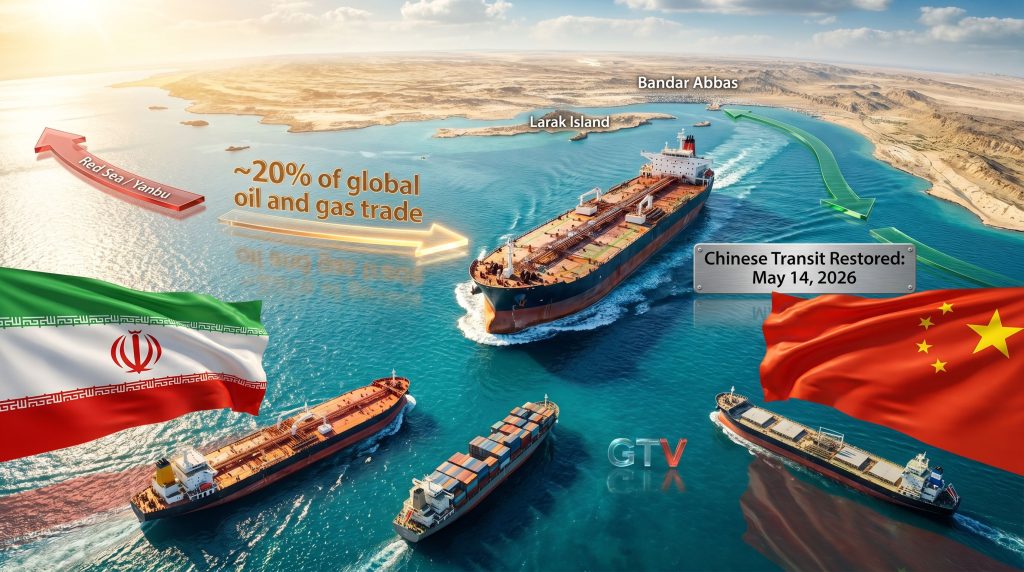
For decades, the strategic importance of the Strait of Hormuz has been framed almost entirely through the lens of volume. Roughly one-fifth of all globally traded oil and natural gas moves through this narrow body of water each year, a concentration of energy flow so extreme that no comparable chokepoint exists anywhere else on the planet. The waterway's significance has always been understood in terms of what would happen if it closed. What the events of 2026 have revealed, however, is a far more sophisticated and geopolitically potent scenario: not closure, but selective access. Iran allowing transit of Chinese vessels in Strait of Hormuz represents one of the most consequential shifts in global energy security architecture in recent memory, transforming the waterway from a passive geographic feature into an actively managed instrument of Iranian foreign policy.
When big ASX news breaks, our subscribers know first
From International Waterway to Controlled Access Zone
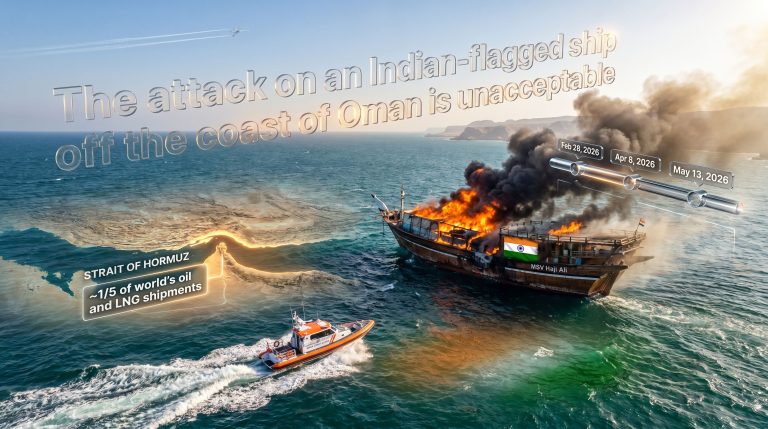
The sequence of events that triggered the current crisis began on February 28, 2026, when US and Israeli military strikes against Iran commenced. Iran's response was swift and economically targeted: severe restrictions on vessel transit through the Strait of Hormuz were imposed almost immediately, effectively converting an internationally recognised maritime corridor into a zone of Iranian military oversight.
The situation was further complicated when a US naval blockade on Iranian ports began a few days after a ceasefire was reached in early April 2026. Rather than resolving the transit crisis, the post-ceasefire blockade extended the period of uncertainty well beyond the active conflict phase, according to reporting by Arab News. The result was a waterway that remained functionally inaccessible or unreliable for most of the global shipping community for a period spanning late February through mid-May 2026.
What makes this episode analytically distinct from prior Hormuz crises is the granularity of Iran's enforcement. Previous threats to close the Strait were typically framed as binary propositions: open or closed, free passage or blockade. The 2026 framework introduced something more nuanced and, arguably, more durable as a geopolitical tool. Furthermore, Iran demonstrated that it could selectively permit or deny access based on a vessel's flag state, cargo type, and the diplomatic alignment of its associated nation, creating a tiered system that functions as both economic pressure and diplomatic signalling simultaneously.
The Architecture of Iran's Tiered Transit Framework
Understanding how Iran's selective access system operates in practice requires moving beyond the headline narrative of restrictions and examining the actual categories of treatment being applied to different vessel types. The geopolitical landscape surrounding this crisis has made such distinctions especially consequential for global commodity markets.
The broadest permission was granted to vessels carrying Iran-bound humanitarian and consumer goods. Grain shipments, pharmaceuticals, clothing, and similar cargo were reportedly permitted to proceed to Iranian ports, with grain-carrying vessels documented as having transited to Bandar Imam Khomeini during the peak restriction period. This carve-out served a dual function: it insulated Iran from accusations of self-imposed humanitarian harm while allowing Tehran to project an image of proportionality in its enforcement.
At the opposite end of the spectrum, vessels linked to nations Iran characterised as aligned with the US-Israeli military campaign were blocked without exception. This category created a broad zone of exclusion that effectively severed normal commercial shipping lanes for a significant portion of global maritime trade.
Between these two poles sat a more complex and operationally ambiguous zone encompassing Chinese-linked vessels. This middle category is where the most geopolitically significant developments of the crisis have unfolded, and it is the category that has attracted the most international attention.
Iran's selective transit policy transforms the Strait from a passive geographic feature into an active instrument of foreign policy. By granting access to China while restricting it from others, Tehran signals its alignment priorities and extracts diplomatic capital without formal treaty obligations.
Iran Allowing Transit of Chinese Vessels: How the Diplomatic Breakthrough Happened
The Formal Announcement and Its Context
The formal confirmation that Iran allowing transit of Chinese vessels in the Strait of Hormuz had become official policy came on May 14, 2026, when Iran's semi-official Fars news agency reported the development, citing an informed source. The announcement stated that the decision followed direct requests from China's foreign minister and its ambassador to Iran, with Tehran agreeing to facilitate passage for a number of Chinese ships within the framework of the two countries' strategic partnership, as reported by Arab News.
This was not a routine diplomatic exchange. The simultaneous deployment of both a foreign minister and an ambassador to press the same request represents a level of institutional commitment from Beijing that is unusual for what might superficially appear to be a commercial shipping matter. The decision to frame the request explicitly within the China-Iran strategic partnership framework rather than as a purely commercial or humanitarian appeal was equally deliberate.
The Significance of Timing
The timing of the announcement added another layer of geopolitical texture. It coincided with a state visit to China by US President Donald Trump, during which both Trump and Chinese President Xi Jinping jointly affirmed that the Strait of Hormuz must remain open for the free flow of energy. This convergence of US and Chinese messaging created a diplomatic environment in which Iran could grant Chinese vessels preferential access without the move being characterised as unilateral favouritism toward Beijing.
The practical significance of the policy change was immediately visible. A Chinese supertanker carrying approximately 2 million barrels of Iraqi crude successfully navigated the Strait on May 13–14, 2026, after having been stranded in the Gulf for more than two months due to the conflict, according to ship tracking data cited by Arab News. That single vessel movement encapsulates the scale of economic dislocation that the transit restrictions had generated.
What the Policy Shift Does and Does Not Mean for Chinese Shipping
One of the most important analytical cautions surrounding the May 14 announcement is the risk of overstating its practical implications. Arab News noted that it was not immediately clear how substantially the formal policy shift altered conditions on the ground, given that Iran had already indicated during the active conflict period that neutral vessels with Chinese connections could transit the Strait provided they coordinated with Iranian armed forces.
This contextual detail is critically important for shipping operators and supply chain analysts. The May announcement appears to represent a formalisation and diplomatic elevation of an arrangement that had already been operating informally, rather than a clean reversal of a blanket prohibition. The distinction matters because it means the operational environment for Chinese-linked shipping may be less transformed than headlines suggest.
The known conditions facing Chinese shipping operators attempting Hormuz transit include:
- Case-by-case coordination requirements with Iranian armed forces, a condition reported as pre-existing even before the formal May 2026 announcement
- Documentation submission potentially including vessel names, IMO numbers, and detailed voyage plans prior to receiving clearance
- Uncertainty over financial arrangements, with unverified industry reports suggesting transit fees or payments may be part of the approval process
- Unpredictable timelines, given that approval processes are reportedly not standardised or automatic even for qualifying vessels
The Divergence Within Chinese Shipping Strategy
Perhaps the most revealing dimension of China's response to the Hormuz crisis is the divergence that has emerged within the Chinese shipping sector itself. Despite the diplomatic progress secured at the ministerial level, major Chinese state-owned carriers have largely continued to reroute vessels via alternative ports, including Yanbu on the Red Sea, rather than engaging with the uncertain and potentially opaque Hormuz transit approval process.
This divergence reflects a rational risk-segmentation logic. Smaller, privately operated Chinese-linked shipping companies, which face stronger cost pressures and have less reputational exposure to sanctions risk, have been more willing to navigate the ambiguity of the Hormuz process on a case-by-case basis. Major state-owned enterprises, by contrast, face a different calculus in which reputational damage, potential secondary sanctions exposure, and operational unpredictability all weigh heavily against using the Strait.
| Operator Category | Preferred Routing Strategy | Primary Risk Driver |
|---|---|---|
| Major Chinese state-owned carriers | Red Sea / Yanbu rerouting | Sanctions exposure, reputational risk |
| Smaller Chinese-linked operators | Case-by-case Hormuz transit | Cost efficiency, timeline pressure |
| Iran-bound humanitarian cargo | Hormuz transit permitted | Low risk if cargo qualifies |
| Vessels from US/Israel-aligned nations | Excluded from Hormuz | No transit option available |
| Neutral-flag non-Chinese vessels | Highly uncertain | No clear policy framework |
The next major ASX story will hit our subscribers first
Global Energy Markets and the Systemic Cost of Partial Closure
The Hormuz crisis of 2026 has produced a set of lessons for global energy security planning that extend well beyond the immediate diplomatic resolution between Iran and China. The most fundamental of these is the demonstration that a partial and selective chokepoint restriction can generate sustained market uncertainty, freight rate volatility, and supply chain disruption at a level previously associated only with total blockades. These developments also intersect directly with broader global trade tensions that have been reshaping energy and commodity flows throughout the mid-2020s.
The stranding of a single supertanker carrying 2 million barrels of Iraqi crude for more than two months illustrates the direct economic cost of even selective access restrictions on a vessel-by-vessel basis. Multiply that scenario across hundreds of tankers and bulk carriers operating in the region, and the aggregate impact on energy import costs, insurance premiums, and logistical planning across Asia and Europe becomes significant. Consequently, the crisis has simultaneously accelerated existing trends toward maritime route diversification:
- Expanded utilisation of the Red Sea corridor and Suez Canal bypass routes is gaining strategic investment attention
- Overland pipeline alternatives, including the Abu Dhabi Crude Oil Pipeline that terminates at Fujairah on the Gulf of Oman and bypasses the Strait entirely, have attracted renewed interest from regional planners
- Energy-importing nations across East and Southeast Asia face intensified pressure to diversify both supply sources and transit routes to reduce Hormuz dependency
- The introduction of political alignment as a variable in transit rights modelling has created a new category of risk that existing maritime insurance and freight derivatives frameworks were not designed to price
The emergence of politically conditioned transit access, where a vessel's flag state or the diplomatic posture of its home nation determines passage rights through an internationally recognised strait, represents a significant and potentially precedent-setting departure from established freedom-of-navigation norms.
The Broader Strategic Logic: What Iran Is Actually Doing
Viewing Iran's Hormuz policy purely as a defensive or retaliatory measure misses the more sophisticated strategic architecture it reflects. Tehran has effectively demonstrated that it can deploy maritime access as a precision instrument, granting it to some, withholding it from others, and calibrating the terms of engagement in ways that generate ongoing diplomatic leverage without requiring either a complete closure or a complete opening.
The selective accommodation of Chinese shipping deepens Beijing's economic dependency on Iranian cooperation at a moment when China's energy import vulnerabilities are considerable. This dynamic also feeds directly into broader US-China trade impacts across the region, adding further complexity to an already fraught bilateral relationship. Furthermore, it signals to other regional and global powers the costs of placing Iran under military or economic pressure.
The US naval blockade on Iranian ports, while effective in sustaining economic pressure on Tehran, produced an unintended secondary consequence: it created conditions that incentivised Iran to deepen its operational partnership with China on energy logistics, accelerating a bilateral interdependency that may prove more durable than the immediate crisis that produced it. In addition, the oil trade and geopolitics dimension of this crisis is already reshaping how analysts model price risk and supply security across major energy-importing economies.
FAQ: Iran, China, and the Strait of Hormuz
Why Is Iran Allowing Chinese Vessels to Transit the Strait of Hormuz?
Iran agreed to facilitate transit for Chinese-linked shipping following formal diplomatic requests from China's foreign minister and its ambassador to Tehran. The arrangement is grounded in the existing China-Iran strategic partnership and was announced amid a joint US-China statement affirming that the Strait must remain open for global energy flows, as reported by Arab News on May 14, 2026.
When Did Transit Restrictions Begin?
Iran severely restricted Strait of Hormuz transit following the commencement of US and Israeli military strikes on February 28, 2026. A subsequent US naval blockade on Iranian ports, beginning shortly after a ceasefire in early April 2026, prolonged the waterway disruption beyond the active conflict phase.
Are All Chinese Vessels Now Automatically Permitted to Transit?
Not automatically. Industry sources indicate the process involves coordination with Iranian authorities and may require documentation submission in advance. Major Chinese state-owned carriers have largely continued to use alternative routing rather than engage with the approval process.
How Much Global Energy Trade Moves Through the Strait of Hormuz?
Approximately one-fifth of all globally traded oil and natural gas transits the Strait annually, making it the single most critical maritime energy chokepoint in the world. Monitoring crude oil market trends in this context remains essential for energy market participants.
What Is the Significance of the Trump-Xi Joint Statement on Hormuz?
The joint affirmation by both US and Chinese leadership that the Strait must remain open for free energy flows represented an unusual convergence of strategic interests between the two powers. It provided diplomatic context for Iran's partial reopening to Chinese shipping, allowing Tehran to frame the move as responsive to broad international pressure rather than a bilateral concession to Beijing.
What Cargo Has Iran Permitted Through the Strait During the Crisis?
Iran permitted vessels carrying humanitarian and consumer goods destined for Iranian ports, including grain, pharmaceuticals, clothing, and vehicles, alongside selectively approved Chinese-linked tankers and cargo ships. Vessels linked to nations Iran characterised as aligned with the US-Israeli campaign were blocked from transit.
Key Facts at a Glance
| Dimension | Key Finding |
|---|---|
| Crisis trigger | US-Israeli strikes from February 28, 2026; US port blockade from early April 2026 |
| Chinese transit formalised | May 14, 2026, following diplomatic engagement at foreign minister level |
| Chinese supertanker cargo | Approximately 2 million barrels of Iraqi crude |
| Supertanker stranding duration | More than two months |
| Global energy share at risk | Approximately one-fifth of global oil and natural gas trade |
| Major Chinese SOE response | Rerouting to Red Sea and Yanbu preferred over Hormuz transit |
| Joint US-China statement | Both nations affirmed Strait must remain open for free energy flow |
| Policy basis | China-Iran strategic partnership framework |
Readers seeking ongoing reporting on Persian Gulf energy dynamics and the broader conflict context can access related coverage through Arab News at arabnews.com, which provides continuous updates through its War in Iran series and associated regional analysis.
Disclaimer: This article contains analysis and interpretation of reported events and should not be construed as investment, legal, or geopolitical advice. Some operational details relating to Iranian transit approval processes remain unverified by independent sources and are noted as such. Readers are encouraged to consult primary sources and specialist advisers for decisions dependent on maritime routing, energy market positioning, or geopolitical risk assessment.
Want to Stay Ahead of Commodity Market Shifts Driven by Global Energy Disruptions?
When geopolitical events like the Hormuz crisis reshape energy and commodity flows, Discovery Alert's proprietary Discovery IQ model instantly identifies significant ASX mineral discoveries that may be influenced by these shifting dynamics — delivering real-time alerts directly to subscribers before the broader market reacts. Explore how historic mineral discoveries have generated substantial returns and begin your 14-day free trial today to position yourself ahead of the next major market-moving event.