May 15, 2026
The closure of the Strait of Hormuz has emerged as a critical threat to global energy security, demonstrating how strategic maritime chokepoints can rapidly disrupt international commerce and destabilise regional economies. Recent events in April 2026 highlighted the vulnerability of energy supply chains when diplomatic tensions escalate into operational restrictions on vital shipping routes.
Modern energy markets operate within an intricate web of interdependencies, where disruptions at singular geographic locations can cascade through multiple industries and affect billions of consumers worldwide. Understanding these systemic risks requires examining both immediate market responses and longer-term structural adaptations that emerge when traditional supply routes become unreliable or contested.
What Makes the Strait of Hormuz Critical to Global Energy Security?
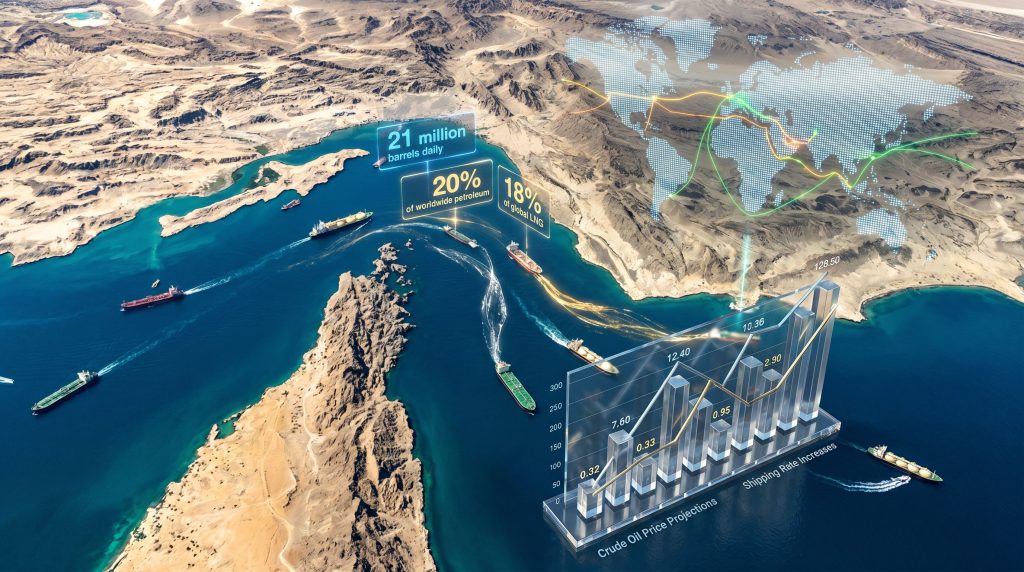
The strategic importance of this narrow waterway stems from its role as the primary transit route for Middle Eastern oil and gas exports. Around 20% of the world's oil and LNG ordinarily passes through the narrow strait, according to maritime tracking data, making it one of the most critical chokepoints in the global energy infrastructure.
This dependency extends beyond petroleum products to essential industrial inputs. A third of the world's key fertilizer chemicals pass through the strait, creating vulnerabilities in agricultural supply chains that affect food security across multiple continents. The closure has also majorly affected helium supply crisis exports, demonstrating how specialized industrial gases rely on these traditional shipping routes.
Geographic Constraints and Alternative Routes
The Strait of Hormuz lies between Iran and Oman, creating a natural bottleneck for vessels transiting between the Persian Gulf and international waters. This geographic positioning allows any controlling power to effectively monitor and potentially restrict the flow of energy exports from major producing nations in the region.
The baseline vessel traffic through this corridor highlights its operational significance. Before the current crisis, more than 120 vessels per day crossed the strait on average, representing a continuous flow of commercial traffic that supports global energy markets. Current restrictions have reduced this to minimal levels, with only three ships crossing on April 20, 2026, and just one making it through the day before.
Infrastructure Dependencies Beyond Oil
Energy infrastructure vulnerability extends across multiple commodity categories. The disruption of helium exports illustrates how specialized industrial supply chains depend on these traditional shipping routes, affecting industries from medical equipment manufacturing to semiconductor production.
Maritime security concerns have created operational challenges even during brief reopening periods. At least eight oil and gas tankers passed through the strait during a narrow window when access was temporarily restored, but industry participants remained cautious about resuming normal operations.
When big ASX news breaks, our subscribers know first
What Economic Scenarios Emerge from Prolonged Maritime Disruptions?
Market volatility during the April 2026 closure demonstrates how rapidly energy prices respond to supply route disruptions. Brent crude fell to US$88 per barrel after Iranian Foreign Minister Abbas Araghchi announced reopening, having traded above US$98 earlier that same day. This approximately $10 intraday swing illustrates the immediate price sensitivity to diplomatic announcements regarding strait access.
Immediate Market Response Patterns
Financial markets exhibited mixed responses to the reopening announcement, suggesting uncertainty about the sustainability of diplomatic solutions. Global markets rallied with the S&P 500 closing up 1.2%, while the CAC in Paris and DAX in Frankfurt both ended the day around 2% up. These moderate gains reflected cautious optimism rather than full confidence in normalised operations.
The rapid reversal of market sentiment became apparent when Iranian officials reimposed restrictions within 24 hours. This pattern demonstrates how announcement-driven price movements can create false signals for market participants attempting to assess longer-term supply security, particularly regarding the OPEC oil production impact of such disruptions.
| Market Indicator | Initial Response | Impact Duration | Reversal Effect |
|---|---|---|---|
| Brent Crude Price | -$10/barrel (day 1) | Single trading session | Restrictions reimposed |
| S&P 500 Index | +1.2% gain | One day | Uncertainty resumed |
| European Indices | +2% average gain | Limited duration | Diplomatic reversal |
Secondary Economic Ripple Effects
The psychological impact on shipping operators reveals deeper structural concerns beyond immediate price movements. As one oil and gas shipping operator explained to the BBC, brief reopening announcements don't change anything immediately, with companies maintaining risk-averse positioning and refusing to be among the first vessels attempting passage.
Kieran Tompkins, Senior Climate & Commodities Economist at Capital Economics, highlighted the operational constraints facing energy transport even during diplomatic breakthroughs. The ceasefire offered only a narrow window of opportunity for oil tankers to navigate the strait, load up, and exit, suggesting that policy announcements alone cannot restore normal commercial operations without sustained security guarantees.
Transportation cost escalation extends beyond direct fuel expenses to encompass maritime insurance and risk premiums. The targeting of vessels attempting passage, including attacks on Indian-flagged ships carrying crude oil, has created additional layers of operational risk that affect commercial calculations for shipping companies. This situation reflects broader concerns around trade war oil impact on regional shipping routes.
How Do Different Closure Duration Scenarios Affect Global Supply Chains?
The timeline of the current crisis provides insights into how rapidly supply chain adaptations occur under stress. The initial closure announcement on Friday, April 17, 2026, followed by reversal within 24 hours, demonstrates the fragility of diplomatic solutions and their limited effectiveness in restoring commercial confidence.
Short-Term Disruption Impacts
Even brief interruptions create significant logistical challenges for energy markets. During the narrow reopening window on Saturday, April 19, at least eight oil and gas tankers managed to pass through the strait, but this limited throughput represents a fraction of normal commercial traffic volumes.
The dramatic reduction in vessel movements illustrates immediate supply chain bottlenecks. Current traffic levels of three ships on April 20 and one ship on April 19 compare to the pre-war average of more than 120 vessels per day, representing a traffic reduction of over 95%.
Emergency protocols activated by various governments include fuel rationing and electricity consumption restrictions, indicating how quickly energy supply constraints translate into domestic policy measures. These responses suggest that strategic petroleum reserve utilisation and demand management become primary tools for maintaining energy security during prolonged disruptions.
Medium-Term Crisis Management
The escalation timeline reveals how diplomatic initiatives can deteriorate rapidly under geopolitical pressure. Iran's demand for the right to impose tolls on vessels transiting the waterway, even after any eventual peace deal, represents a fundamental shift in the terms for strait access that extends beyond temporary military restrictions.
Iran's Foreign Ministry Spokesperson Esmail Baghaei confirmed that Tehran has no plans for new talks with the US, describing American proposals as unserious and their demands as unrealistic. This diplomatic deadlock suggests that medium-term disruptions could extend well beyond initial military actions, contributing to broader oil price stagnation analysis.
The historical context of previous conflicts complicates resolution efforts. References to both the 2026 Strait of Hormuz crisis that began on February 28, 2026, and a 12-day war the previous year indicate recurring cycles of escalation that undermine long-term commercial planning for energy transport routes.
Extended Blockade Scenarios
Structural market transformation becomes inevitable under extended closure scenarios. Iran's restoration of the strait to its previous status under strict management and control by armed forces suggests institutionalised restrictions rather than temporary military measures.
The IRGC warning that approaching the Strait of Hormuz will be considered cooperation with the enemy, with offending vessels being targeted, creates legal and operational frameworks for sustained closure. These institutional mechanisms indicate preparation for extended confrontation rather than short-term tactical positioning.
International diplomatic responses, including India's summoning of the Iranian ambassador to convey deep concern about shooting incidents involving Indian-flagged ships, demonstrate how closure affects bilateral relationships beyond the primary conflict participants.
What Are the Cascading Effects Beyond Energy Markets?
Agricultural systems face immediate pressure through fertiliser supply disruptions. A third of the world's key fertilizer chemicals passing through the strait creates vulnerabilities for global food production, with farmers potentially facing input shortages during critical planting seasons.
Agricultural and Food Security Implications
The timing of fertiliser supply disruptions can have multiplier effects on agricultural productivity. Countries implementing fuel rationing and electricity restrictions demonstrate how energy supply constraints cascade through domestic economies, affecting both industrial production and consumer access to essential services.
Food price escalation becomes a secondary effect of energy transport disruptions, as agricultural input costs increase and distribution networks face higher transportation expenses. The combination of fertiliser shortages and elevated fuel costs creates compound pressures on global food systems.
Regional food security risks become particularly acute for nations dependent on both energy imports and agricultural inputs from affected supply routes. Import-dependent Middle Eastern and Asian countries face dual vulnerabilities from both energy and food supply chain disruptions.
Industrial Manufacturing Consequences
Specialised industrial supply chains experience disproportionate impacts from transport route closures. The major effects on helium exports demonstrate how niche industrial gases critical for semiconductor manufacturing, medical applications, and research activities depend on traditional shipping corridors.
Petrochemical feedstock availability constraints affect manufacturing industries requiring plastic and synthetic material inputs. These disruptions create cascading effects through automotive, construction, and consumer goods sectors that rely on petroleum-derived raw materials.
Manufacturing cost inflation emerges not only from direct energy price increases but also from supply chain restructuring costs. Companies face decisions about inventory management, alternative supplier development, and production facility utilisation that have long-term strategic implications for the energy security transition.
Transportation and Logistics Transformation
Maritime route optimisation requires fundamental reassessment of global shipping networks. Container ships struck by unknown projectiles off the northeast coast of Oman illustrate how security concerns extend beyond energy tankers to affect general commercial shipping.
The UK's Maritime Trade Operations Centre reporting system provides real-time incident documentation, including Islamic Revolutionary Guard Corps ships firing at tankers attempting passage. This institutional monitoring creates data for insurance companies and shipping operators to assess risk levels and pricing structures.
Fleet composition changes become necessary as companies evaluate vessel deployment strategies for longer alternative routes. The reluctance of shipping operators to be first through reopened passages reflects industry-wide risk assessment that prioritises operational security over short-term commercial opportunities.
Which Industries Face the Greatest Strategic Vulnerabilities?
Energy-intensive manufacturing sectors experience immediate pressure from both supply availability and cost escalation. The implementation of fuel rationing and electricity restrictions by various governments demonstrates how energy supply constraints translate directly into industrial production limitations.
Aviation Industry Constraints
Aviation fuel supply chains face dual pressures from both price volatility and availability constraints. The $10 intraday swing in Brent crude prices illustrates the type of cost uncertainty that affects airline operational planning and route optimisation decisions.
Flight operations require predictable fuel availability at destination airports, making alternative supply route development critical for maintaining international air transportation networks. Extended closure scenarios could necessitate fuel stop additions for long-haul flights serving routes dependent on Middle Eastern aviation fuel supplies.
Regional aviation hubs in the Middle East face particular vulnerabilities as both fuel costs and supply security affect their competitive positioning relative to alternative routing through European or Asian connection points.
Chemical Manufacturing Sector
Petrochemical feedstock supply chains demonstrate significant vulnerability to transport route disruptions. The dependence on petroleum-derived raw materials creates production planning challenges when traditional supply sources become unreliable or prohibitively expensive.
Chemical manufacturers with integrated refinery operations may maintain competitive advantages during supply disruptions, as internal feedstock production provides some insulation from external supply chain constraints. However, companies dependent on imported raw materials face more severe operational challenges.
Product pricing strategies become critical as manufacturers evaluate whether to absorb increased input costs or pass through price increases to downstream customers. Consumer resistance to cost increases complicates pricing decisions during periods of supply uncertainty.
Power Generation Infrastructure
Natural gas supply security affects electricity generation in regions dependent on LNG imports. The combined impact on 20% of the world's oil and LNG creates vulnerabilities for power systems that have transitioned away from coal toward cleaner natural gas generation.
Emergency coal plant reactivation represents a potential policy response to natural gas supply constraints, though this creates tension with climate policy objectives in many developed economies. Grid stability management requires backup generation capacity that may be more expensive and environmentally problematic.
Renewable energy acceleration becomes a strategic imperative as governments and utilities recognise the security advantages of domestic energy sources. Fast-track solar and wind project approvals may receive priority consideration as alternatives to import-dependent fossil fuel generation.
How Might Long-Term Geopolitical Realignments Reshape Energy Markets?
The institutional framework for strait closure suggests preparation for sustained confrontation rather than temporary tactical measures. Iran's Khatam al-Anbiya joint military command establishing strict management and control by armed forces indicates a structural shift in regional energy transport governance.
Strategic Alliance Evolution
Diplomatic isolation affects conflict resolution prospects as Iran's Foreign Ministry Spokesperson confirmed no plans for new talks with the US. The characterisation of American proposals as unserious and demands as unrealistic suggests fundamental disagreements about post-conflict strait access terms.
Historical precedent complicates trust-building efforts, with references to previous conflicts launched while active negotiations were ongoing. This pattern of diplomatic breakdown during talks creates institutional memory that affects future negotiation prospects and alliance formation.
International incident responses, such as India's diplomatic protest over attacks on Indian-flagged vessels, demonstrate how closure affects bilateral relationships beyond primary conflict participants. These secondary diplomatic effects can influence broader regional alliance structures, as detailed in comprehensive reports on the crisis.
Market Structure Transformation
Toll collection rights represent a fundamental challenge to traditional maritime law principles regarding international waterway access. Iran's demand to impose tolls on vessels transiting the strait, even after potential peace agreements, suggests permanent changes to the economic terms of energy transport.
The rejection of toll collection by the US indicates that post-conflict agreements may require addressing sovereignty and commercial access rights that extend beyond immediate military concerns. These institutional questions affect long-term commercial planning for energy transport infrastructure.
Pricing mechanism evolution may incorporate risk premiums that reflect ongoing geopolitical uncertainty rather than temporary supply disruptions. Regional premium development for secure supply routes could create permanent cost structures that favour alternative energy sources.
Investment Capital Reallocation
Energy security considerations drive infrastructure investment decisions as governments and companies evaluate supply route diversification options. The unreliability of diplomatic solutions creates incentives for developing alternative transport infrastructure that reduces dependence on contested waterways.
Technology innovation funding may accelerate development of energy storage systems that provide greater flexibility during supply disruptions. Battery storage and other grid stabilisation technologies become strategic investments for maintaining energy security during geopolitical crises.
Regional energy independence initiatives gain political support as governments recognise the economic and security costs of import dependence. Domestic production capability enhancement becomes a national security priority that influences energy policy and investment allocation decisions.
The next major ASX story will hit our subscribers first
What Risk Management Strategies Can Organisations Implement?
Corporate hedging approaches must account for both price volatility and supply availability risks. The rapid reversal from diplomatic breakthrough to renewed restrictions demonstrates that traditional price hedging instruments may provide incomplete protection during geopolitical crises.
Corporate Hedging Approaches
Financial instrument utilisation requires sophisticated risk assessment that accounts for both market volatility and operational constraints. The $10 intraday price swing in Brent crude illustrates the type of short-term volatility that can overwhelm traditional hedging positions if not properly structured.
Supply contract diversification becomes critical as companies recognise that geographic concentration creates vulnerabilities that cannot be fully addressed through financial hedging. The reluctance of shipping operators to be first through reopened passages demonstrates how operational risk affects commercial relationships.
Inventory optimisation requires balancing strategic stockpiling against carrying costs in uncertain supply environments. The narrow window for vessel transit during brief reopening periods suggests that companies maintaining higher inventory levels may have competitive advantages during disruptions.
Government Policy Responses
Emergency legislation frameworks become necessary for managing energy allocation during extended supply disruptions. The implementation of fuel rationing and electricity consumption restrictions by various governments demonstrates the policy tools available for demand management during crises.
Strategic reserve management requires coordinated release and replenishment programmes that account for both domestic needs and international cooperation obligations. The effectiveness of strategic reserve utilisation depends on the duration and severity of supply disruptions.
Diplomatic engagement acceleration includes conflict resolution and mediation efforts, though the current diplomatic deadlock illustrates the limitations of traditional diplomatic mechanisms when fundamental disagreements exist about post-conflict arrangements.
Industry Adaptation Mechanisms
Technology deployment focusing on energy efficiency and conservation measures provides partial mitigation for supply constraints. Industrial facilities can reduce energy intensity through operational modifications and equipment upgrades that decrease overall demand exposure.
Supply chain redesign requires developing relationships with alternative suppliers that reduce dependence on single-source routes. The concentration of 20% of world oil and LNG through a single chokepoint illustrates the systemic risk created by geographic concentration.
Production flexibility through multi-fuel capability and feedstock substitution allows manufacturers to adapt to changing input availability and pricing. Companies with operational flexibility can maintain production during supply disruptions that affect competitors with more rigid operational requirements.
Navigating Energy Security in an Uncertain World
The closure of the Strait of Hormuz represents a fundamental challenge to global energy security that extends far beyond temporary supply disruptions. The rapid cycle of diplomatic breakthrough and renewed restrictions demonstrates how traditional conflict resolution mechanisms may prove inadequate when fundamental disagreements exist about post-conflict governance arrangements.
Market responses during the April 2026 crisis reveal both the immediate sensitivity of energy prices to supply route access and the deeper structural challenges facing global energy security. The modest equity market gains despite oil price volatility suggest that investors recognise the limitations of diplomatic solutions without sustained security guarantees.
Industry participants' reluctance to resume normal operations even during brief reopening periods illustrates how commercial risk assessment extends beyond immediate price considerations to encompass operational security and long-term relationship management. This behavioural response indicates that market normalisation requires more than policy announcements or temporary cease-fire agreements.
The cascading effects across agricultural systems, manufacturing supply chains, and specialised industrial processes demonstrate the systemic interdependencies created by geographic concentration of critical infrastructure. Companies and governments that develop comprehensive risk management strategies, diversify supply sources, and invest in alternative technologies will be better positioned to maintain operational resilience during future geopolitical uncertainties.
Risk Management Considerations:
- Financial hedging alone provides incomplete protection during supply route disruptions
- Geographic diversification of supply sources reduces systemic vulnerabilities
- Strategic inventory management balances carrying costs against supply security
- Technology investments in efficiency and alternatives provide operational flexibility
- Diplomatic solutions require addressing fundamental governance and sovereignty questions
The intersection of energy security, geopolitical stability, and economic resilience continues to evolve as global supply chains adapt to an increasingly uncertain operating environment.
Ready to Capitalise on Energy Security Investment Opportunities?
Discovery Alert's proprietary Discovery IQ model identifies significant ASX mineral discoveries that could benefit from heightened energy security concerns, instantly delivering actionable insights on critical minerals and energy-related opportunities. Explore how major mineral discoveries can generate substantial returns by visiting Discovery Alert's dedicated discoveries page, then begin your 14-day free trial today to position yourself ahead of the market during these uncertain times.