
August 5, 2026
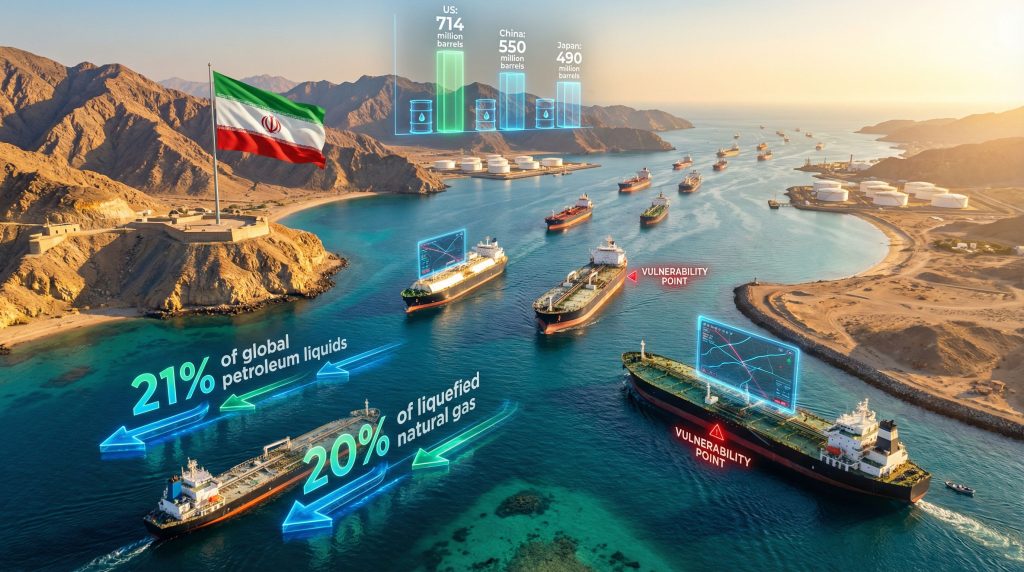
Global energy markets face unprecedented disruption scenarios when critical maritime chokepoints experience operational failures. Supply chain vulnerabilities embedded within petroleum transport infrastructure create cascading effects that extend far beyond immediate commodity pricing, revealing systemic dependencies that modern economies have developed around concentrated geographic corridors for energy flows. Furthermore, the potential for a Strait of Hormuz closure highlights the fragility of these essential supply routes.
Strategic Chokepoint Architecture Vulnerabilities
The concentration of global energy flows through narrow maritime passages represents one of the most significant structural weaknesses in contemporary supply chains. When examining critical energy chokepoints worldwide, Strait of Hormuz closure scenarios expose vulnerabilities that extend beyond traditional risk assessment models.
Approximately 21 million barrels per day of crude oil and petroleum products transit through this 24-mile waterway, representing roughly 22% of global crude oil production. This volume cannot be rerouted through alternative infrastructure within the critical first 72 hours of disruption, creating immediate supply constraints that reverberate through global markets.
The waterway's geographic constraints compound these vulnerabilities. At its narrowest point, the strait measures only 21 nautical miles, with shipping lanes restricted to 2-nautical-mile corridors separated by a buffer zone. Very Large Crude Carriers (VLCCs) must navigate predetermined routes, creating bottlenecks that can cascade into complete operational shutdowns during crisis scenarios.
Physical Infrastructure Limitations
Alternative routing through the Suez Canal adds 6,000+ nautical miles to journey times and increases transportation costs substantially. However, the Suez route can accommodate only 4-5 million barrels daily, representing less than 25% of typical Hormuz throughput. This capacity limitation means that even when alternative routes remain operational, they cannot compensate for full closure scenarios.
The Red Sea routing extends transit times by 12-14 days compared to direct Hormuz passage, while terminal handling costs increase by $0.50-1.50 per barrel due to congestion and reduced loading efficiency. These operational constraints create compounding effects when multiple tankers attempt simultaneous rerouting.
When big ASX news breaks, our subscribers know first
Market Disruption Mechanisms During Crisis Events
When Strait of Hormuz closure scenarios materialise, markets experience disruption through multiple simultaneous channels that amplify the initial supply shock. Price discovery mechanisms break down when benchmark crude grades become unavailable for physical transactions, forcing markets to resort to derivative pricing models.
During March 2-3, 2026, the strait experienced operational closure with no crude oil or LNG transits, resulting in strait closure which countries will be hit the most seeing Brent crude reaching $84 per barrel with uncertainty premiums of approximately $10 above pre-crisis baselines. This demonstrates how anticipation of closure generates measurable price impacts independent of actual supply shortfalls.
Insurance Market Amplification Effects
Marine insurance markets create secondary disruption mechanisms that extend beyond physical supply constraints. War risk insurance cancellations can increase shipping costs by 400-600%, making cargo movements economically unviable even when physical passage remains possible. Moreover, these effects can contribute to broader oil prices trade war implications across global markets.
Major insurers including Gard, Skuld, and NorthStandard implement systematic coverage withdrawals that follow predictable sequences:
- Hours 0-6: War risk insurance cancellation
- Hours 6-24: Shipping company cargo refusal
- Hours 24-72: Refinery force majeure declarations
- Days 3-7: Trade agreement suspensions
This cascade creates financial market stress that compounds supply uncertainty. Energy derivatives markets experience implied volatility spikes from normal levels of 20-30% to crisis levels of 80-120%, indicating severe market dysfunction beyond fundamental supply-demand imbalances.
Commodity Pricing Breakdown
When primary benchmark pricing mechanisms fail, markets resort to comparable pricing or derivative contract extrapolation. Asian naphtha cracks reached $135 per tonne premium during the March 2026 crisis, reflecting concerns that Middle Eastern naphtha supplies (1.2 million barrels daily from UAE and Qatar) could become stranded in the Persian Gulf.
Price reporting agencies like S&P Global Platts suspend assessments for affected crude grades, creating information gaps that exacerbate market uncertainty. Only grades loading outside the affected area (such as Murban and Oman) maintain active price discovery, leading to extreme spread volatility.
Regional Producer Emergency Response Strategies
Gulf producers have developed sophisticated bypass infrastructure specifically designed for Strait of Hormuz closure scenarios. These systems represent billions of dollars in strategic investments that provide partial mitigation capabilities during crisis periods.
Saudi Arabia's Red Sea Infrastructure Deployment
Saudi Aramco's East-West Pipeline provides 5 million barrels per day capacity for crude transport from eastern production facilities to Yanbu terminals on the Red Sea coast. This pipeline stretches 746 kilometers and includes 31 pump stations maintaining operational pressure across the route.
During the March 2026 crisis, Saudi Arabia announced exclusive routing of all crude exports through Yanbu terminals, demonstrating pre-positioned contingency planning. However, the Yanbu facilities experience annual maintenance shutdowns averaging 3-4 weeks, creating potential bottleneck risks during extended disruption periods.
The pipeline operates at pressures of approximately 65 bar and accommodates crude grades ranging from 20-35 degrees API. While designed for surge capacity, operations above 5.5 million barrels daily exceed pressure specifications, limiting emergency throughput expansion.
UAE's Northern Route Development
The Abu Dhabi Crude Oil Pipeline (ADCOP) represents the Emirates' primary Hormuz bypass strategy, with 1.8 million barrels daily capacity connecting onshore production facilities to Fujairah terminals. This infrastructure provides access to international waters without transiting the Strait proper.
Fujairah terminal storage capacity totals 16-18 million barrels across multiple tank farms, but loading infrastructure constraints become apparent during surge scenarios. Current facilities can accommodate 4-5 VLCC simultaneous loadings, creating export bottlenecks when multiple producers attempt emergency rerouting.
The ADCOP pipeline requires 8-12 hours for crude transit from production fields to export terminals, operating at maximum working pressure of 60 bar with intermediate pump stations providing system reliability.
Pipeline Capacity Constraints Analysis
Combined Middle Eastern bypass pipeline capacity totals approximately 8.3 million barrels daily, including:
| Pipeline System | Capacity (mb/d) | Operational Status | Constraints |
|---|---|---|---|
| Saudi East-West | 5.0 | Fully operational | Maintenance windows |
| UAE ADCOP | 1.8 | Fully operational | Terminal loading limits |
| Iraq-Turkey | 1.6 | Underutilised | Security concerns |
This combined capacity represents less than 40% of typical Hormuz throughput, demonstrating the impossibility of complete supply replacement through existing alternative infrastructure.
Asian Import Dependency Vulnerabilities
Asian economies face severe exposure to Strait of Hormuz closure scenarios due to concentrated import dependencies from Gulf producers. Strategic reserve capabilities provide temporary buffers, but duration limitations constrain their effectiveness during extended disruptions. Furthermore, soaring oil prices during such events exacerbate these vulnerabilities.
Import Dependency Analysis
| Country | Hormuz-Dependent Imports | Strategic Reserves | Coverage Duration |
|---|---|---|---|
| China | 45% of total imports | 550 million barrels | 85 days |
| Japan | 85% of total imports | 490 million barrels | 200 days |
| South Korea | 70% of total imports | 96-day coverage | 96 days |
| India | 60% of total imports | 74-day coverage | 74 days |
Chinese Refinery Response Patterns
Chinese refiners including Zhejiang Petrochemical and Fujian Refining announced operational curtailments in response to Middle Eastern supply disruptions during the March 2026 crisis. These facilities, partially owned by Saudi Aramco, represent approximately 600,000 barrels daily of processing capacity.
China's diplomatic pressure on Iran to maintain Hormuz operations reflects the country's structural vulnerability to supply disruptions. Chinese refineries' heavy dependence on Middle Eastern crude creates strategic leverage that regional producers can exploit in broader geopolitical negotiations. Additionally, these disruptions contribute to broader global trade disruptions.
Manufacturing Sector Cascade Effects
Petrochemical feedstock disruptions affect industrial production chains extending far beyond energy sectors. South Korea's chemical industry and Japan's automotive manufacturing face immediate input cost pressures when Gulf-sourced naphtha and condensate supplies become unavailable.
Approximately 35% of global ammonia production relies on Persian Gulf natural gas supplies, creating food security implications through fertiliser supply chain disruptions. This demonstrates how energy chokepoint closures generate cross-sector vulnerabilities affecting agricultural production worldwide.
Financial Market Cascade Mechanisms
Energy market disruptions create cascading effects through financial systems that amplify initial supply shocks. Commodity financing markets, derivatives trading, and counterparty risk management systems experience systematic stress during closure scenarios. Consequently, these effects often trigger an oil price rally as markets respond to supply constraints.
Futures Market Dysfunction
During Hormuz disruption scenarios, futures prices can diverge significantly from physical market transactions. Financial markets bid futures contracts 40-60% higher than physical cargo prices due to hedging activities and speculative positioning, creating artificial price discovery distortions.
Energy derivatives experience systematic failures when benchmark crude grades become unpriced. Options trading implies volatility levels exceeding 80-120% compared to normal conditions of 20-30%, indicating severe market stress beyond fundamental supply-demand analysis.
Tanker Rate Explosion
Freight rates for VLCC tankers experienced unprecedented increases during the March 2026 crisis, with Gulf-to-China voyages reaching $89 per metric tonne, representing a 560% increase since early January. These rate explosions reflect both physical constraints and insurance market withdrawals.
Currently, 55 fully loaded VLCC tankers remain anchored in the Persian Gulf awaiting crisis resolution, up 18 vessels since the initial February 28 escalation. This floating inventory represents approximately 110 million barrels of stranded crude oil supply.
Alternative Supply Chain Adaptations
When primary transport routes become unavailable, energy markets demonstrate remarkable adaptation capabilities through alternative sourcing, storage deployment, and demand adjustment mechanisms. However, these adaptations often accelerate the renewable energy transition as governments seek supply security.
Strategic Reserve Deployment Protocols
Government-controlled petroleum reserves provide critical supply buffers during disruption scenarios, though duration limitations constrain their long-term effectiveness:
- United States: 714 million barrel capacity, 90-day import coverage
- China: 550 million barrel capacity, 85-day import coverage
- Japan: 490 million barrel capacity, 200-day import coverage
- European Union: 390 million barrel capacity, 120-day import coverage
Floating Storage Deployment
Commercial floating storage units (FSUs) provide temporary supply flexibility during crisis periods. Current global floating storage capacity of approximately 180 million barrels offers limited but strategically valuable supply buffering capabilities.
Floating storage deployment requires 48-72 hours for full activation, creating critical timing windows during the initial phases of supply disruptions. Charter rates for floating storage vessels increase exponentially during crisis periods, reflecting both scarcity and strategic value.
Digital Trading Platform Evolution
Electronic trading systems implement alternative pricing mechanisms when traditional benchmark crudes become unavailable. Brent-Dubai spreads reaching multi-year highs reflect market adaptation to disrupted price discovery frameworks.
Trading platforms develop contingency pricing models based on historical spread relationships and derivative contract extrapolation. However, these systems struggle with unprecedented volatility levels that exceed historical parameters used for risk management calculations.
The next major ASX story will hit our subscribers first
Long-Term Infrastructure Investment Implications
Strait of Hormuz closure scenarios accelerate strategic infrastructure investments designed to reduce geographic concentration risks in energy supply chains. These investments are crucial for energy security investments that strengthen supply chain resilience.
Pipeline Development Acceleration
Projects like the proposed Iran-Pakistan-India pipeline gain renewed strategic importance despite previous political obstacles. Hormuz disruption scenarios provide economic justification for infrastructure investments that diversify transport options.
Alternative pipeline routes through Central Asia and Africa receive increased attention from both producers and consumers seeking to reduce dependence on Middle Eastern chokepoints. These projects require 5-7 year development timelines but provide permanent supply chain diversification.
Renewable Energy Transition Catalysts
Supply security concerns create political momentum for renewable energy deployment as governments seek reduced dependence on geographically concentrated fossil fuel supplies. Energy independence arguments gain traction when traditional supply chains experience disruption.
However, renewable energy infrastructure requires significantly longer deployment timelines compared to fossil fuel alternatives, limiting short-term supply security benefits.
Recovery Timeline Framework Analysis
Understanding recovery patterns from Strait of Hormuz closure scenarios requires analysis across multiple timeframes, each characterised by different adaptation mechanisms and constraint factors.
Short-Term Stabilisation (1-30 days)
Strategic reserve releases provide immediate supply buffers during the initial disruption phase. Government coordination enables coordinated releases totalling 50-100 million barrels globally, though political considerations may delay optimal timing.
Alternative routing through Red Sea and Suez Canal increases, though capacity limitations prevent full supply replacement. Demand destruction occurs naturally as prices reach economically unsustainable levels for marginal uses.
Medium-Term Adaptation (1-6 months)
Pipeline capacity utilisation maximises available alternative transport options. Saudi Arabia's East-West Pipeline and UAE's ADCOP system operate at surge capacity levels, though maintenance requirements limit sustained high-throughput operations.
Refinery run rate adjustments optimise available crude slate options as different crude grades become available through alternative supply chains. However, refinery optimisation typically requires 2-4 weeks for significant operational changes.
Long-Term Structural Changes (6+ months)
Permanent supply chain diversification reduces Middle Eastern dependence through long-term contract renegotiation and alternative supplier development. However, these changes require substantial time and capital investment for full implementation.
Infrastructure investment accelerates alternative transport development, though new pipeline and terminal construction typically requires 3-5 years for completion.
Strategic Implications for Energy Security
Strait of Hormuz closure scenarios demonstrate the critical importance of supply chain diversification and infrastructure redundancy in maintaining energy security. Current crisis patterns reveal both the vulnerabilities of concentrated transport systems and the adaptation capabilities of global energy markets.
The March 2026 disruption illustrates how geopolitical tensions can rapidly transform from regional conflicts into global supply security challenges. With Brent crude reaching $84 per barrel and analysts projecting potential $100+ pricing during extended closures, the economic implications extend far beyond energy sectors.
Effective energy security requires proactive infrastructure investment that extends beyond traditional crisis management approaches. This includes geographic diversification of supply sources, alternative transport route development, and strategic reserve capacity expansion to provide meaningful buffer capabilities during extended disruption periods.
The current crisis demonstrates that strategic preparedness must incorporate financial market dynamics, insurance sector responses, and technological solutions alongside traditional supply-demand analysis. Only comprehensive approaches that address the full spectrum of energy system vulnerabilities can provide meaningful resilience against future chokepoint disruptions.
This analysis is based on current market conditions and historical precedent. Energy markets remain highly volatile during geopolitical crisis periods, and actual outcomes may vary significantly from projected scenarios. Investors should conduct independent research and consider multiple risk factors when making energy-related investment decisions.
Looking to Capitalise on Energy Market Volatility?
Discovery Alert's proprietary Discovery IQ model delivers real-time alerts on significant mineral discoveries across critical sectors, including energy transition metals essential for supply chain diversification strategies. Navigate complex market conditions with actionable insights that turn commodity disruptions into strategic investment opportunities, positioning yourself ahead of broader market recognition during times of unprecedented energy volatility.