August 20, 2026
Global oil markets face unprecedented complexity as trade route disruptions trigger fundamental shifts in energy infrastructure and pricing mechanisms. The interconnected nature of petroleum distribution systems means that when critical chokepoints experience interference, the cascading effects ripple through multiple economic layers with remarkable speed and intensity. Understanding the implications of Strait of Hormuz closure scenarios becomes essential for energy security planning.
Energy Infrastructure Vulnerabilities in Modern Markets
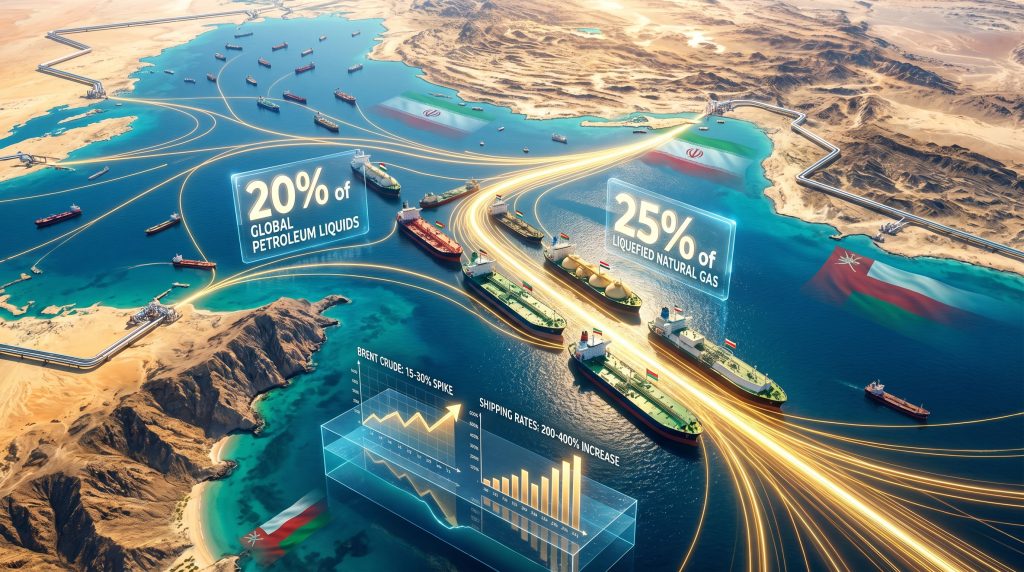
Maritime energy transport represents the backbone of global petroleum distribution, with several strategic waterways facilitating the majority of international oil and gas movements. The Strait of Hormuz stands as the most significant of these passages, channeling approximately 21 million barrels per day through its narrow 21-mile width between Iran and Oman.
This chokepoint handles roughly 20-21% of global petroleum trade, according to the U.S. Energy Information Administration. The strait comprises three shipping lanes with two outbound and one inbound channel, requiring Very Large Crude Carriers (VLCCs) to navigate single-file through deep-water passages. Transit time typically ranges from 12-14 hours, with maximum VLCC draft limitations of 15.5 meters creating additional logistical constraints.
Geographic and Technical Constraints:
- Navigable width: 21 miles (34 kilometers) at narrowest point
- Daily throughput: 21 million barrels of petroleum
- Transit lanes: Three total (2 outbound, 1 inbound)
- VLCC capacity: Single-file navigation required
- Draft limitations: 15.5 meters maximum depth
The absence of viable large-scale alternatives compounds the strategic importance of this waterway. Unlike oil pipelines that can provide bypass capabilities, LNG and crude oil export infrastructure remains geographically concentrated around Persian Gulf terminals, creating irreplaceable trade volume dependencies.
Historical precedent demonstrates the vulnerability of energy-dependent economies to chokepoint disruption. During the 1980-1988 Iran-Iraq War "Tanker Wars," approximately 544 ships sustained damage or destruction while transiting Hormuz, highlighting the risks inherent in concentrated maritime energy transport.
When big ASX news breaks, our subscribers know first
Market Response Mechanisms During Supply Disruptions
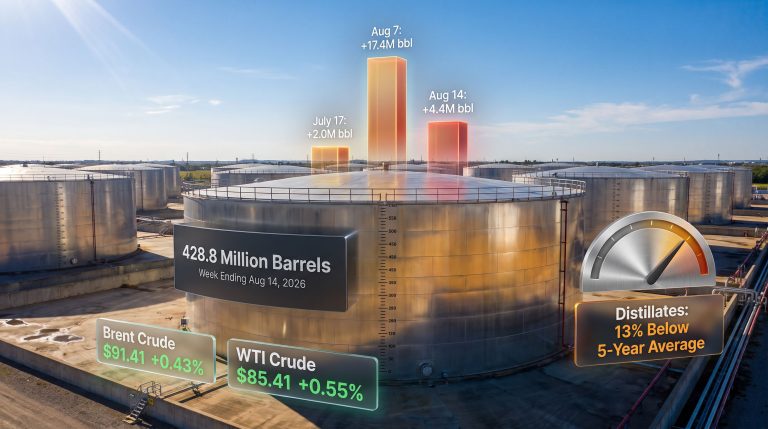
Recent market dynamics illustrate the immediate volatility that accompanies Strait of Hormuz closure events. According to data from maritime intelligence sources, crude oil prices experienced significant movements following conflicting announcements about strait accessibility. Brent crude fell 9.5% to approximately $89.89 per barrel after initial reopening announcements, while WTI declined more than 10% to $84.89 during the same period.
Immediate Price Response Patterns:
| Commodity | Price Movement | Timeframe |
|---|---|---|
| Brent Crude | -9.5% to $89.89/bbl | 24 hours |
| WTI Crude | -10% to $84.89/bbl | Same day |
| Regional Spreads | Increased volatility | Hours |
Alternative routing costs create substantial economic pressure on global shipping operations. The Cape of Good Hope routing adds approximately 5,600-5,800 nautical miles to standard Hormuz-Europe journeys, significantly exceeding preliminary estimates. This additional distance translates to roughly 16.7 additional sailing days for typical VLCC operations.
Furthermore, the oil price rally experienced during recent geopolitical tensions demonstrates how supply concerns amplify market volatility. Corrected Shipping Cost Analysis reveals that additional distance requirements create substantial cost pressures: 5,600-5,800 nautical miles (not 3,500 as initially estimated) mean extended transit time of 16.7 days average.
VLCC fuel consumption of 300 tons bunker fuel per day results in estimated additional fuel costs of $3.0 million per voyage (based on $600/ton average fuel cost). This represents a substantial upward revision from earlier projections and demonstrates the true economic impact of alternative routing requirements.
Real-time vessel tracking data confirms immediate market responses to closure events. As reported in maritime intelligence sources, some tanker convoys attempted passage while others executed U-turns in the Persian Gulf. These decisions reflect the uncertainty surrounding transit conditions and insurance coverage availability.
Industrial Sector Exposure and Vulnerability Assessment
Energy-intensive manufacturing sectors experience disproportionate impact during Strait of Hormuz closure scenarios. Petrochemical production, steel manufacturing, and aluminum smelting operations face immediate input cost pressures that can trigger production slowdowns within weeks of initial disruption.
Regional Import Dependency Analysis:
| Region | Middle East Dependency | Estimated Exposure |
|---|---|---|
| Japan | 70-85% | Critical |
| South Korea | 75-80% | Critical |
| India | ~60% | High |
| Europe | Variable by country | Moderate to High |
These dependency ratios reflect historical import patterns and demonstrate the vulnerability of major industrial economies to Persian Gulf supply disruptions. Japan's particularly high exposure stems from limited domestic energy resources and heavy reliance on Middle Eastern crude imports for refining operations.
Additional Vulnerable Sectors:
- Aviation industry: Jet fuel production directly tied to crude availability
- Electricity generation: Natural gas pricing correlations with oil markets
- Cement production: Energy-intensive manufacturing processes
- Shipping industry: Bunker fuel costs directly reflect crude price movements
However, analysts examining the broader OPEC production impact note that supply allocation decisions from major producers can mitigate some regional shortages. Maritime intelligence indicates real-time supply chain recalibration during closure events, with vessels making navigation decisions based on perceived risk levels.
Strategic Reserve Systems and Market Stabilisation
Strategic petroleum reserves serve as critical buffers during acute supply disruptions, though current capacity figures require substantial revision from preliminary estimates. The effectiveness of these systems becomes paramount when considering potential Strait of Hormuz closure impacts on global markets.
Verified Strategic Reserve Capacities:
| Country/Region | Verified Capacity | Coverage Period |
|---|---|---|
| United States | 414 million barrels | 60-90 days |
| China | 500-800 million barrels (estimated) | 60+ days |
| Japan | 324 million barrels | 100+ days |
| European Union | 90-120 million barrels | 90 days |
The U.S. Strategic Petroleum Reserve figure represents a significant downward revision from earlier projections, reflecting actual inventory levels as of 2024-2025. This adjustment affects calculations regarding global emergency response capacity and highlights the importance of accurate reserve assessments.
International Energy Agency coordinated release mechanisms can theoretically offset 30-45 days of lost Hormuz transit capacity, assuming optimal coordination and deployment. However, this calculation faces several practical constraints that challenge implementation effectiveness.
Reserve Deployment Challenges:
- Political coordination delays between member states
- Physical logistics constraints for rapid distribution
- Member state reserve depletion concerns
- Market timing and effectiveness considerations
Typical coordinated release capacity ranges from 2-4 million barrels per day from IEA member state reserves, representing approximately 2% of global daily consumption. While mathematically sufficient to offset Hormuz disruption for 30-60 days, practical deployment faces significant operational and political hurdles.
Alternative Supply Route Analysis and Infrastructure Capacity
Pipeline infrastructure provides limited but important alternative routing capabilities during Strait of Hormuz closure scenarios. Current operational status requires clarification for several major systems, as the availability of these alternatives significantly impacts market stability during disruptions.
Pipeline Bypass Capacity Assessment:
| Pipeline System | Claimed Capacity | Current Status |
|---|---|---|
| Trans-Arabian Pipeline (Tapline) | 4.8 million bpd | Currently inoperative |
| East-West Pipeline (Saudi Arabia) | ~4-5 million bpd | Operational but variable |
| Iraq-Turkey Pipeline | ~1.6 million bpd | Limited by geopolitical factors |
The Trans-Arabian Pipeline represents a critical data discrepancy, as this system was shut down in 1990 and remains largely dismantled. References to 4.8 million bpd capacity likely reflect historical capabilities or proposed reconstruction projects rather than current operational capacity.
Saudi Arabia's East-West pipeline infrastructure maintains functional capacity for crude transport, though exact throughput capabilities fluctuate based on maintenance schedules and production allocation decisions. The Iraq-Turkey pipeline system operates at variable capacity due to ongoing geopolitical tensions and infrastructure maintenance challenges.
Unconventional Supply Activation Potential:
- U.S. Shale Production: 13 million bpd current capacity with 1-2 million bpd rapid expansion potential
- Canadian Oil Sands: 5.5 million bpd current production; 0.5-1 million bpd expansion within 12-24 months
- Venezuelan Production: 750,000 bpd current output (severely declined from historical 3 million bpd)
- Russian Arctic Fields: Limited availability for Western markets due to sanctions
Consequently, recent maritime reports confirm real-time supply reallocation during closure events. Tanker fleets redirect to U.S. loading terminals as Middle Eastern supply becomes unavailable, validating theoretical alternative source activation scenarios. This dynamic reshuffling demonstrates market adaptability under pressure.
Maritime Insurance Market Dynamics and Risk Pricing
War risk insurance premiums experience dramatic escalation during Strait of Hormuz closure events, with premium multipliers historically ranging from 5-20 times normal rates depending on specific vessel types and cargo classifications. These insurance dynamics significantly influence shipping decisions and market pricing structures.
Maritime insurance markets implement immediate adjustments reflecting elevated regional risk profiles. Current ship tracking data confirms minimal traffic through restricted waters, indicating that insurance barriers effectively prevent commercial transit even during brief reopening periods.
War Risk Premium Escalation Factors:
- Vessel size and cargo value
- Flag state and ownership structure
- Insurance provider risk assessment
- Regional security conditions
- Alternative routing availability
Fleet redeployment economics demonstrate immediate market responsiveness to changing risk conditions. Furthermore, multiple oil tankers reversed course after attempting passage through the region, highlighting how trade war oil impact considerations influence operational decisions during tense periods.
These real-time operational decisions reflect insurance cost calculations and risk management protocols that prioritise cargo security over transit time efficiency during elevated threat periods. The interconnection between geopolitical tensions and insurance markets creates additional layers of complexity for energy traders.
The next major ASX story will hit our subscribers first
Long-Term Infrastructure Investment and Energy Transition Acceleration
Extended Strait of Hormuz closure periods catalyse massive infrastructure investments in alternative energy corridors and accelerate renewable energy adoption timelines. Governments and corporations seek supply security through diversification, fundamentally reshaping energy investment priorities.
Infrastructure Investment Acceleration:
- Pipeline Construction: New trans-regional pipeline projects receive expedited approval and funding
- Port Expansion: Non-Gulf loading facilities undergo rapid capacity enhancement
- Strategic Reserve Expansion: National governments increase emergency stockpile capacities
- Renewable Energy: Accelerated deployment to reduce fossil fuel dependency
Prolonged supply disruptions fundamentally alter energy investment priorities, with decision-makers prioritising supply security over traditional cost optimisation metrics. This shift drives long-term structural changes in global energy architecture that persist beyond immediate crisis resolution.
The International Energy Agency projects that Middle East oil and gas recovery could require up to two years following major infrastructure damage. This timeline emphasises the importance of alternative supply development and energy security planning for sustained market stability.
Central Bank Policy Responses and Monetary Implications
Central banks face complex trade-offs between combating energy-driven inflation and supporting economic growth during supply shock events. Historical precedent suggests coordinated international monetary responses, particularly when examining comprehensive oil price crash analysis from previous disruption periods.
Monetary Policy Coordination Mechanisms:
- Temporary inflation target flexibility to accommodate energy price spikes
- Enhanced liquidity provision to energy-dependent sectors
- Currency swap arrangements facilitating alternative energy purchases
- Emergency financing facilities for strategic reserve deployments
Energy-driven inflation presents unique challenges for monetary policymakers, as traditional interest rate tools may prove insufficient to address supply-side price pressures. Additionally, these tools risk economic contraction in energy-intensive sectors simultaneously.
The interconnected nature of global financial markets means that energy supply disruptions trigger coordinated central bank responses. These responses maintain financial system stability during periods of heightened commodity price volatility, requiring unprecedented international coordination.
How Do Geopolitical Events Reshape Energy Markets?
Strait of Hormuz closure events fundamentally alter global energy power balances, elevating the strategic importance of alternative energy exporters and transit route controllers. These shifts create lasting changes in international energy relationships that extend beyond immediate crisis periods.
Enhanced Strategic Importance:
- Alternative Energy Exporters: United States, Norway, Canada benefit from increased market share
- Transit Route Controllers: Egypt (Suez Canal), Turkey (Bosphorus) gain leverage
- Strategic Reserve Holders: Countries with release capabilities influence market stability
Prolonged disruptions trigger permanent shifts in global trade patterns, with energy-importing nations establishing diversified supplier relationships that persist beyond crisis resolution. These structural changes reshape long-term energy security planning and international economic relationships.
For instance, recent analysis of oil price movements during geopolitical tensions reveals how quickly markets adapt to changing supply scenarios. Current geopolitical developments demonstrate the complex interplay between energy supply security and diplomatic negotiations, with closure events serving as leverage mechanisms in broader international relations.
According to the Guardian's analysis, understanding these dynamics becomes crucial for predicting future energy market behaviour. The 2026 Strait of Hormuz crisis demonstrates how rapidly situations can escalate and affect global energy security.
Building Market Resilience Against Future Disruptions
Effective risk mitigation requires multi-layered approaches combining supply diversification, infrastructure redundancy, and financial risk management strategies. The complexity of modern energy markets demands comprehensive planning to address both immediate operational challenges and long-term structural vulnerabilities.
Supply Source Diversification Strategies:
- Geographic spread across multiple producing regions
- Fuel type diversification encompassing oil, gas, and renewable sources
- Strategic partnership development with reliable suppliers
- Long-term contract structures reducing spot market exposure
Infrastructure Redundancy Development:
- Multiple pipeline route construction projects
- Enhanced strategic reserve capacity expansion
- Flexible refining capabilities for various crude types
- Alternative port facilities reducing chokepoint dependencies
Financial Risk Management Tools:
- Commodity hedging strategies for price volatility protection
- Supply disruption insurance products
- Emergency financing facility establishment
- Coordinated international response mechanisms
Market participants increasingly recognise that traditional cost optimisation approaches must be balanced against supply security considerations. This balance becomes particularly critical for energy-dependent industries and economies with high import dependencies.
In addition, the development of alternative energy sources gains urgency during periods of supply uncertainty. Renewable energy investments accelerate as both governmental and corporate entities seek to reduce dependence on vulnerable supply chains.
Success in navigating future disruptions depends on proactive diversification investments, strategic infrastructure development, and coordinated international response mechanisms. These systems must be capable of rapidly deploying alternative supply solutions when primary routes face interruption.
The interconnected nature of global energy markets requires stakeholders to consider multiple scenarios when planning risk mitigation strategies. Furthermore, effective coordination between public and private sector entities becomes essential for maintaining energy security during crisis periods.
However, building resilience requires sustained investment and political commitment that extends beyond immediate crisis response. Long-term planning must account for evolving geopolitical landscapes and technological developments that could reshape energy infrastructure requirements.
Disclaimer: This analysis contains forward-looking assessments and market projections that involve inherent uncertainties. Readers should conduct independent research and consult qualified professionals before making investment or policy decisions based on this information. Energy market conditions remain highly volatile and subject to rapid change based on geopolitical developments.
Ready to Capitalise on Energy Market Volatility?
Discovery Alert's proprietary Discovery IQ model delivers real-time alerts on significant energy and commodity discoveries across the ASX, empowering subscribers to identify actionable opportunities ahead of broader market movements during periods of heightened volatility. Explore how major mineral discoveries can generate substantial returns and begin your 14-day free trial today to position yourself ahead of the market.