
August 13, 2026
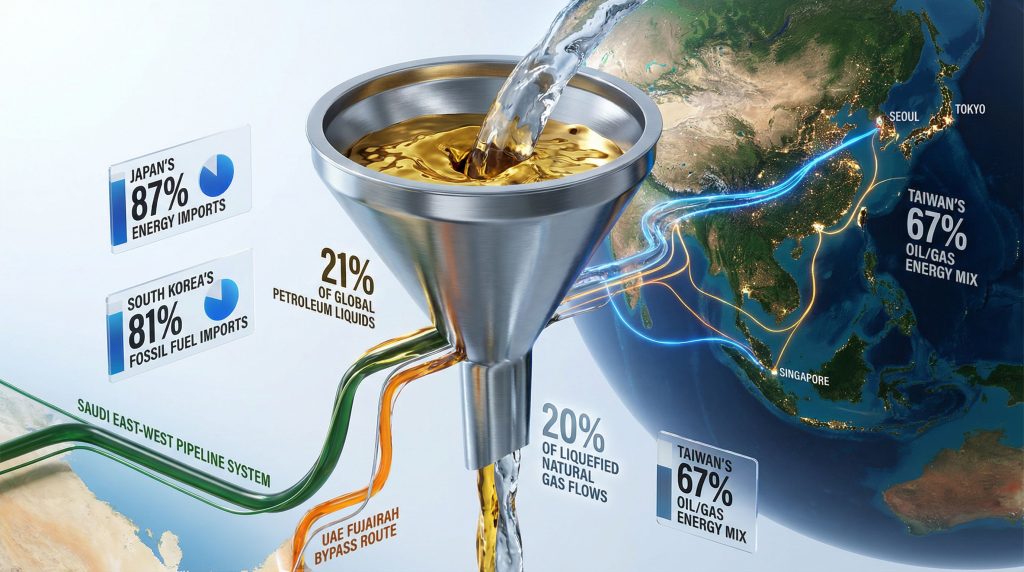
Global energy markets operate on delicate equilibrium systems where multiple interdependent variables create complex vulnerability patterns across regional economies. When critical supply corridors face disruption, the cascade effects extend far beyond simple supply-demand calculations, creating systemic risks that expose fundamental structural weaknesses in modern energy architecture. Understanding these dynamics requires examining how refined product markets diverge from crude oil systems during crisis periods, particularly within Asia's interconnected energy ecosystem. Furthermore, the oil price rally analysis demonstrates how geopolitical tensions amplify market volatility.
Understanding Regional Vulnerability Hierarchies During Supply Disruptions
The Strait of Hormuz closure impact on Asia's refined fuel supply creates a multi-tiered crisis framework affecting different economies through distinct vulnerability pathways. Unlike crude oil disruptions that can be partially mitigated through strategic reserve releases, refined product shortages create immediate operational constraints across industrial, transportation, and power generation sectors.
Current market data demonstrates this vulnerability differential clearly. Singapore gasoil prices reached $143.88 per barrel by March 13, representing a 57% increase from pre-crisis levels, while jet fuel experienced even more severe pressure, climbing 114% to $199.66 per barrel during the same timeframe. These price movements exceed crude oil volatility by substantial margins, confirming that refined product markets exhibit heightened sensitivity during geopolitical supply disruptions.
The regional import dependency structure reveals critical exposure points across Asian economies. In addition, the US oil production decline has further complicated global supply dynamics.
| Economy | Primary Vulnerability | Strategic Reserve Capacity | Critical Threshold |
|---|---|---|---|
| Australia | 900,000 bpd refined imports | 30 days fuel supply | 2-3 weeks |
| Indonesia | 600,000 bpd refined imports | Limited commercial stocks | 3-4 weeks |
| Japan | 87% energy import dependency | 21 days LNG reserves | 3 weeks |
| Taiwan | 78% Middle East LNG sourcing | 10 days LNG supply | 1-2 weeks |
| South Korea | 85% Gulf-sourced LNG | 28 days combined reserves | 3-4 weeks |
Critical Infrastructure Dependencies
Asia's coastal refining complexes operate on optimised inventory management systems that amplify supply shock impacts. Singapore's refining infrastructure processes approximately 1.4 million barrels per day across multiple facilities, yet maintains minimal strategic inventory buffers. When upstream crude supplies face disruption, these refineries cannot sustain operations without continuous feedstock delivery, creating immediate constraints on regional refined product availability.
The interconnected nature of Asia's energy infrastructure creates cascading vulnerability patterns. Australia's mining sector consumes approximately 40% of the nation's diesel supply, creating policy dilemmas where governments must choose between maintaining export-dependent mining operations and preserving fuel for domestic food distribution networks. Australia's role in the Strait of Hormuz vulnerability highlights the country's particular exposure to Middle Eastern supply disruptions.
When big ASX news breaks, our subscribers know first
Market Structure Differentials Between Crude and Refined Products
Refined product markets exhibit fundamentally different crisis response characteristics compared to crude oil systems, primarily due to inventory structure variations and institutional framework differences. While crude oil benefits from established Strategic Petroleum Reserve programmes globally, refined product markets operate predominantly on commercial inventory models without comparable strategic buffering capacity.
The International Energy Agency coordinates strategic petroleum reserve releases among member nations, providing approximately 90 days of global crude supply at current consumption levels. However, refined product shortages cannot be addressed through similar institutional mechanisms. China's strategic position, holding approximately 1.2 billion barrels of combined commercial and strategic crude stockpiles, demonstrates this limitation. Despite substantial crude inventory capacity, Chinese authorities implemented immediate refined fuel export restrictions beginning March 11, prioritising domestic energy security over regional market stabilisation.
Price Volatility Amplification Mechanisms
Historical analysis reveals consistent patterns where refined product price movements exceed crude oil volatility during Middle Eastern supply disruptions. Moreover, the OPEC production impact has created additional uncertainty in global markets:
- Diesel price multiplier effect: 2.3x crude price increases during regional crises
- Jet fuel premium expansion: 150-200% above normal price differentials
- Gasoline volatility coefficient: 1.8x crude oil price movements
Current market conditions confirm these relationships. Singapore gasoil increased 57% while crude oil prices rose approximately 40% during the same period, demonstrating a refined product price volatility premium of 1.43x crude movements during this crisis phase.
Jet fuel markets experience the most acute pressure due to specialised refining requirements and limited storage capacity. The 114% price increase to $199.66 per barrel reflects both supply-side constraints and demand-side inelasticity, as aviation operations cannot easily substitute alternative fuels or defer consumption during price spikes.
Strategic Response Frameworks and Government Policy Options
Regional governments face complex policy trade-offs when addressing sustained fuel shortages, particularly regarding demand management protocols and strategic reserve utilisation decisions. The effectiveness of these responses depends heavily on existing infrastructure capacity and inter-governmental coordination mechanisms.
Demand Rationing Implementation Models
Emergency fuel allocation systems typically follow hierarchical priority structures:
- Essential services preservation (healthcare, emergency response systems)
- Critical infrastructure maintenance (food distribution networks, power generation)
- Strategic industry protection (semiconductor manufacturing, pharmaceuticals)
- General industrial operations (manufacturing, mining, construction)
Australia's current response demonstrates this framework in practice. Government authorities released diesel and gasoline from reserves to address retail price spikes and consumer panic purchasing, while maintaining that adequate fuel supplies remain available. However, Australia's 30-day fuel supply threshold creates rapid escalation from market stress to national crisis scenarios.
Regional Cooperation Mechanisms
The crisis exposes fundamental tensions between national energy security priorities and regional economic stability objectives. China's decision to restrict refined fuel exports illustrates how strategic advantages can exacerbate regional supply shortages when governments prioritise domestic considerations over collaborative approaches.
Japan, South Korea, and China maintain substantial economic interdependencies through resource trade relationships that could provide leverage for fuel-sharing arrangements. Australia and Indonesia together supply more than 80% of Japan's coal imports and half of its LNG requirements, while providing 38% of South Korea's LNG and nearly 60% of its coal supplies. These dependency relationships create mutual vulnerability where resource exporters cannot sustain production without fuel imports, while resource importers cannot replace Australian and Indonesian supplies from alternative sources.
Investment Infrastructure and Market Adaptation Responses
Supply chain vulnerabilities create immediate investment opportunities across storage, transportation, and alternative energy infrastructure sectors. Regional economies recognising these structural weaknesses can accelerate energy security enhancement projects while positioning for post-crisis competitive advantages. Furthermore, tariffs and market impacts are reshaping global trade patterns.
Strategic Storage Expansion Requirements
Current refined product storage capacity across major Asian economies remains insufficient for sustained supply disruptions:
- Floating storage unit deployment offers flexible capacity increases
- Underground strategic reserve construction provides long-term security enhancement
- Multi-product terminal development improves supply chain resilience
Singapore's position as Asia's petroleum trading centre could expand significantly through increased storage capacity and refined product blending facility development. The city-state's strategic location and existing infrastructure provide natural advantages for regional fuel distribution hub expansion.
Technology Integration Opportunities
Advanced logistics management systems become critical during supply disruptions, enabling optimised distribution across available inventory. Predictive analytics for demand forecasting helps governments and commercial operators anticipate shortage patterns and implement proactive responses.
Alternative fuel development acceleration represents a longer-term structural response. Supply security concerns could drive renewable energy deployment, particularly in power generation sectors currently dependent on imported fuels. However, energy transition challenges remain significant across the region.
Geopolitical Leverage Dynamics and Recovery Scenarios
The crisis reveals complex interdependency networks where resource-exporting nations possess significant leverage over fuel-importing countries, yet cannot exercise this leverage without damaging their own economic interests. These relationships create opportunities for pragmatic cooperation despite broader geopolitical tensions.
Resource Export Leverage Mechanisms
Australia's mining operations consume substantial diesel volumes while generating export revenues critical to the national economy. Mining operations account for up to 40% of Australia's diesel consumption, creating policy tensions where fuel rationing directly constrains export production capacity.
China receives approximately 75% of its seaborne iron ore imports from Australia, making Chinese steel production vulnerable to Australian supply restrictions. Similarly, Japan and South Korea cannot easily replace Australian coal and LNG sources, creating mutual dependency where both resource exporters and importers face economic damage from sustained supply disruptions.
Alternative Supply Corridor Development
Emergency bypass infrastructure provides partial mitigation options, though capacity limitations and transportation time delays create ongoing vulnerability:
| Alternative Route | Daily Capacity | Transport Duration | Utilisation Constraints |
|---|---|---|---|
| Saudi East-West Pipeline | 7 million bpd | Immediate | 65% current utilisation |
| UAE Fujairah Bypass | 1.8 million bpd | Immediate | Limited tanker capacity |
| West African Sources | 800,000 bpd | 25-30 days | Infrastructure limitations |
| North American Exports | 2.1 million bpd | 15-20 days | Terminal capacity constraints |
The Saudi East-West Pipeline system maintains 35% spare capacity, providing approximately 2.4 million barrels per day of additional throughput capability. However, this capacity requires coordination with Saudi authorities and may prioritise domestic market stability over regional export commitments. Additionally, strategic oil releases and their limitations demonstrate the complexity of global energy security coordination.
The next major ASX story will hit our subscribers first
Long-Term Structural Transformation Implications
Crisis-driven supply chain adaptations often create permanent structural changes in energy market organisation. Asian economies experiencing acute vulnerability during this disruption period will likely implement systematic energy security enhancements extending well beyond crisis resolution.
Energy Security Infrastructure Investment Acceleration
Refined product strategic reserve development will likely receive priority attention across major Asian economies. Unlike crude oil strategic reserves, refined product stockpiling requires specialised storage infrastructure and inventory management systems accounting for product degradation and seasonal demand variations.
Regional cooperation frameworks may emerge from crisis experience, particularly among ASEAN member nations facing similar import dependency challenges. Fuel-sharing agreements and coordinated emergency response protocols could provide collective security benefits exceeding individual national capabilities.
Supply Chain Diversification Imperatives
Post-crisis energy procurement strategies will emphasise supplier diversification and supply corridor redundancy. Floating storage and regasification unit deployment offers flexibility for LNG importing nations, while overland pipeline development provides alternative routing options where geographically feasible.
Consequently, the Strait of Hormuz closure impact on Asia's refined fuel supply demonstrates how refined product markets create different vulnerability profiles than crude oil systems, requiring specialised policy responses and infrastructure investments. Asian economies with diversified supply sources, adequate strategic reserves, and flexible demand management capabilities will emerge from supply disruptions with enhanced competitive positioning and energy security frameworks.
In conclusion, the Strait of Hormuz closure impact on Asia's refined fuel supply reveals fundamental weaknesses in regional energy infrastructure that demand immediate attention from policymakers and investors alike.
Disclaimer: This analysis contains forward-looking scenarios and speculative assessments of market dynamics during supply disruption events. Actual market conditions, government responses, and economic impacts may differ significantly from the projections presented. Investors and policymakers should conduct independent analysis and consider multiple scenario outcomes when making strategic decisions related to energy security investments or policy implementations.
Looking to Capitalise on Energy Market Volatility?
Discovery Alert's proprietary Discovery IQ model delivers real-time alerts on significant ASX mineral discoveries, including energy and critical metals opportunities that emerge during periods of market uncertainty. Subscribers gain immediate insights into actionable investment opportunities, positioning themselves ahead of the broader market when supply chain disruptions create new investment landscapes across the resources sector.