June 21, 2026
The Strait of Hormuz: Understanding the World's Most Fragile Energy Artery
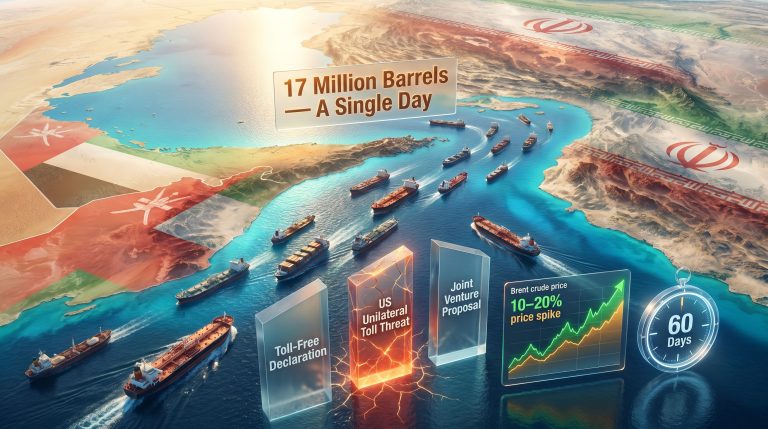
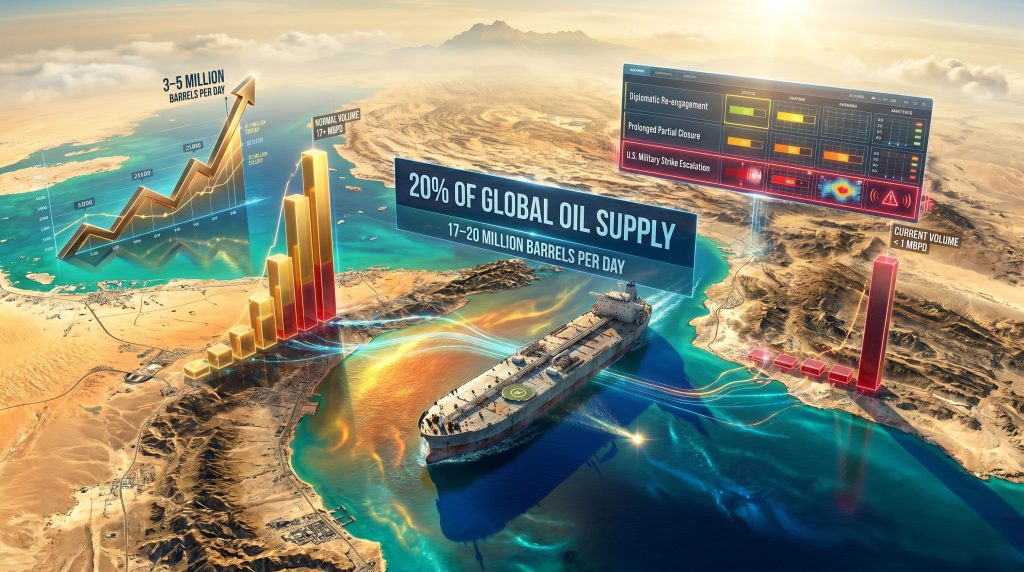
Few geographic features on Earth carry the economic weight of a narrow strip of water measuring just 33 kilometres at its tightest point. Trump threatens Iran with fresh strikes and Strait of Hormuz closure, and this escalation has once again placed the Persian Gulf at the centre of global energy security calculations. When this passage functions normally, roughly 17 to 20 million barrels of crude oil flow through it each day, accounting for approximately 20% of global oil supply. When it does not function normally, the consequences ripple outward with extraordinary speed.
The current crisis, centred on competing U.S. and Iranian demands playing out against a backdrop of active conflict in Lebanon, has thrust this chokepoint back into the centre of global attention. Understanding what is actually at stake requires moving beyond the daily exchange of threats and counterthreats, and examining the structural mechanics of why this particular waterway holds such asymmetric leverage over the global economy.
When big ASX news breaks, our subscribers know first
Why Maritime Chokepoints Create Outsized Risk
Unlike a disrupted pipeline that affects one commodity stream, a maritime chokepoint closure is a simultaneous multi-commodity shock. Crude oil, refined petroleum products, and liquefied natural gas all transit the same passage. When access is denied or restricted, no single category of energy commodity escapes the impact. Furthermore, the resulting oil market disruption tends to compound across multiple trading sessions before stabilising.
Historical precedents illustrate how quickly partial disruptions can become severe economic events:
- The 1973 Arab oil embargo produced a price increase exceeding 300% over approximately five months, triggering recessions across multiple developed economies.
- The 1980s Tanker War between Iran and Iraq sustained elevated freight risk premiums and price volatility for nearly eight years.
- The 2019 Houthi attack on Saudi Aramco infrastructure produced a short-term price spike of approximately 15%, which reversed within days once supply continuity was confirmed.
- The 2026 Strait closure, which preceded the current diplomatic episode, has been characterised as the largest disruption to global energy supplies in recorded history after persisting for nearly four months.
Strategic petroleum reserves maintained by OECD member nations provide a buffer of roughly 90 days under emergency drawdown conditions. This is not a trivial cushion, but it is also not infinite, and it does nothing to address the structural supply gap that emerges if a closure extends beyond that window.
"The Strait of Hormuz functions as a systemic leverage point, not merely a shipping lane. A single regional actor controlling access to it can exert pressure on the entire global economy without deploying large-scale conventional military force."
How the Current Escalation Unfolded
Approximately one week before June 21, 2026, U.S. and Iranian negotiators reached a memorandum of understanding that established a framework for de-escalation. The core terms included:
- Reopening of the Strait of Hormuz to commercial shipping.
- A halt to active hostilities across the region, explicitly including Lebanon.
- A 60-day negotiating window for discussions covering Iran's nuclear programme in exchange for phased sanctions relief and the unfreezing of blocked Iranian sovereign assets.
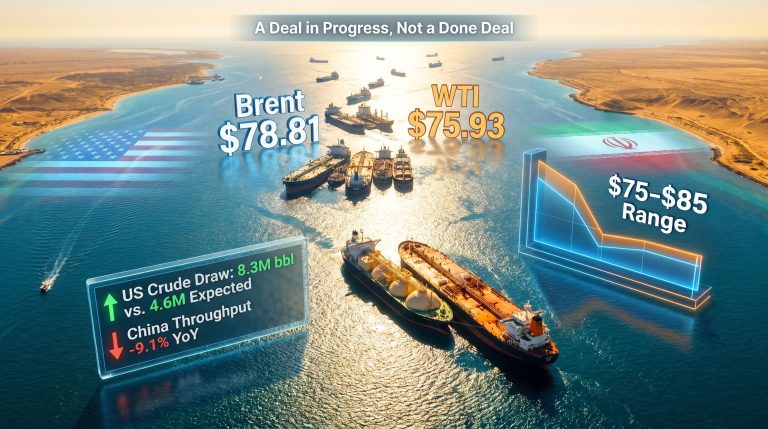
This represented the first formal diplomatic architecture between Washington and Tehran in the current conflict cycle. Its announcement triggered a significant decline in oil prices as markets priced in the prospect of restored supply. However, as geopolitical trade tensions have demonstrated repeatedly, such frameworks can unravel with alarming speed.
The fragility of that framework became apparent almost immediately. Iran's decision to re-close the strait was explicitly tied to what Tehran characterised as Washington's failure to enforce ceasefire terms in Lebanon. Iran's position was clear: nuclear negotiations cannot advance while conflict continues in Lebanon on terms Tehran considers unacceptable.
Iran also attached economic preconditions to any forward movement, specifically requiring sanctions waivers and asset unfreezing to begin before the next phase of talks could proceed.
The Dual-Track U.S. Response: Threats and Talks Simultaneously
Military Coercion Alongside Diplomacy
President Trump's public statements on June 21, 2026 threatened renewed military strikes on Iranian infrastructure, specifically referencing power generation facilities and transport networks, if Tehran did not reopen the strait. This framing positioned military force not as a final resort but as an active instrument of diplomatic coercion, consistent with a maximum pressure strategic posture.
At the same moment, Vice President JD Vance was attending quadrilateral talks at the Bürgenstock resort in Switzerland, meeting with Iranian officials alongside Qatari and Pakistani mediators. The U.S. delegation also included envoy Steve Witkoff and Jared Kushner, while Pakistan's Prime Minister Shehbaz Sharif and Army Chief Field Marshal Asim Munir represented Islamabad.
The simultaneous deployment of military threats and active diplomatic engagement creates a structural tension. Coercive language can strengthen a negotiator's leverage, but it also risks undermining the credibility of good-faith dialogue if the coercive track is perceived as dominant by the counterparty.
Iran's foreign ministry spokesperson confirmed that the June 21 talks would cover only the implementation of the existing memorandum, not the substantive issues originally envisaged for this phase.
Assessing the Real State of the Strait
A critical analytical distinction separates a formal military blockade from an effective commercial closure driven by risk perception and permit denial. Iran's mechanism does not require deploying naval vessels to physically block shipping. It operates through administrative means: by simply not issuing transit permits, Iran creates legal and liability ambiguity that most commercial operators will not accept.
| Indicator | Status as of June 21, 2026 |
|---|---|
| Official Iranian declaration | Strait re-closed to new shipping permits |
| Vessel transponder data | Single small tanker crossing recorded post-announcement |
| Pre-announcement vessel traffic | Dozens of ships transiting daily |
| U.S. government position | Disputed whether closure was fully in effect |
| Iranian military source (Fars) | No new permits being issued until further notice |
War risk insurance premiums for Persian Gulf transits have historically spiked sharply during periods of Iranian threat escalation. Without formal Iranian clearance, shipping companies face not only physical risk but also complex insurance, liability, and contractual exposure. This means Iran can achieve the functional economic impact of a closure without triggering the specific legal threshold that would mandate a direct U.S. military response under international maritime law frameworks. Consequently, the impact on crude oil trade geopolitics becomes immediate and profound.
The Lebanon Variable: A Regional Conflict Blocking a Global Deal
Israel's military campaign in Lebanon, which commenced in March 2026, has displaced more than one million Lebanese civilians. Lebanese authorities recorded 20 fatalities on Saturday, June 21, 2026, with specialist military units still working to dismantle unexploded Israeli ordnance including bombs weighing 1,000 and 2,000 pounds in southern towns.
A new ceasefire was announced on Friday, June 20, 2026, but Reuters correspondents documented continued Israeli strikes and active rescue operations at attack sites within 24 hours of the announcement. Vance described the situation as "inherently messy" and noted that some progress had been made in recent days, but that framing was interpreted by Iranian officials as insufficient commitment to enforcement.
By conditioning strait access on Lebanese ceasefire compliance, Iran has effectively inserted a variable largely outside direct U.S.-Iran bilateral control into the negotiating architecture. The U.S. cannot unilaterally guarantee Israeli military restraint, which means Iran retains the ability to cite ongoing Lebanon hostilities as justification for maintaining strait restrictions regardless of what Washington agrees to bilaterally.
This structure creates a negotiating complexity that disproportionately favours the party with fewer immediate economic pressures to resolve the impasse quickly.
The next major ASX story will hit our subscribers first
Scenario Analysis: Three Pathways Forward
The current situation admits at least three plausible trajectories, each carrying materially different implications for energy markets and geopolitical stability.
Scenario 1: Diplomatic Re-engagement (Moderate Probability)
Switzerland talks produce a partial agreement on Lebanon ceasefire implementation. Iran conditionally reopens the strait within 48 to 72 hours, oil markets partially reverse recent gains, and nuclear talks proceed toward a second phase within the 60-day MOU window. The primary vulnerability in this scenario is the fragility of any Lebanon ceasefire, where renewed violence could collapse the entire framework.
Scenario 2: Prolonged Partial Closure (Elevated Probability)
Iran maintains a de facto closure through permit denial without declaring a formal military blockade. Shipping volumes remain severely suppressed, and tanker re-routing via the Cape of Good Hope adds 10 to 14 days to voyage times while significantly increasing freight costs for Asia-Pacific importers. Oil prices recover toward or exceed pre-MOU levels. Diplomatic talks continue without substantive progress.
Scenario 3: Military Escalation (Lower Probability, Extreme Impact)
Trump threatens Iran with fresh strikes and Strait of Hormuz closure again in this scenario, and follows through on infrastructure strike threats. Iran responds with attacks on U.S. naval assets or regional partner infrastructure. The strait closes under active military conflict conditions, removing an estimated 3 to 5 million barrels per day from accessible markets in the immediate term. This scenario carries systemic recession risk for import-dependent economies.
"Scenario 3 holds a low base probability but a disproportionately large market impact. Energy futures markets are likely pricing a meaningful conflict premium into forward curves until diplomatic clarity emerges."
Regional Demand Exposure: Who Faces the Greatest Risk
The economic consequences of a prolonged closure are not uniformly distributed. Asia-Pacific economies carry by far the greatest exposure.
| Region | Strait Dependency | Vulnerability Rating |
|---|---|---|
| Asia-Pacific (Japan, South Korea, India, China) | Very High | Critical |
| Europe | Moderate-High | Significant |
| United States | Low-Moderate | Limited (domestic production buffer) |
| Sub-Saharan Africa | Low | Minimal direct exposure |
Japan and South Korea are structurally among the most exposed economies, importing the overwhelming majority of their crude oil from Persian Gulf sources with no meaningful domestic production alternative. India and China face similar dependency profiles, though both have been actively diversifying supply sources and building strategic reserves in recent years.
Saudi Arabia's East-West Pipeline and the Abu Dhabi Crude Oil Pipeline offer partial bypass capacity for some Gulf producers. However, neither infrastructure asset can absorb anything approaching the full volume that normally transits the strait. In addition, the constraints on global LNG supply amplify the challenge for gas-dependent economies seeking alternative sources.
The Nuclear Dimension and the 60-Day Window
Can a Deal Be Reached in Time?
The MOU's 60-day negotiating framework represents a compressed timeline for resolving what is arguably the most consequential nonproliferation challenge of the past two decades. Iran's nuclear programme has advanced materially since the 2015 Joint Comprehensive Plan of Action collapsed. Technical assessments broadly indicate that Iran now possesses the capability to enrich uranium to weapons-grade levels within a compressed timeframe if it chose to do so.
Iranian President Masoud Pezeshkian publicly characterised the negotiations as a vehicle for economic restoration, noting that the first concrete achievement of the diplomatic process was the restoration of access to some previously frozen Iranian financial resources. This framing reveals Tehran's immediate priority hierarchy: economic relief precedes nuclear concessions in Iran's sequencing logic.
The mismatch between Iran's insistence on economic deliverables before nuclear talks advance, and Washington's preference for nuclear constraints before full sanctions relief, represents the central structural obstacle to a durable agreement within the 60-day window.
The Precedent Problem: What This Crisis Signals to Other Actors
Beyond the immediate energy market implications, the current episode establishes a potentially replicable coercion model. If strait closure successfully extracts diplomatic engagement, economic concessions, and a structured negotiating framework from the world's largest military power, other state and non-state actors controlling critical maritime infrastructure will observe and recalibrate.
The Bab-el-Mandeb Strait in the Red Sea, the Malacca Strait in Southeast Asia, and the Turkish Straits connecting the Black Sea to the Mediterranean all represent chokepoints where analogous leverage could theoretically be deployed. The strategic calculus for actors in adjacent regions inevitably shifts when the coercive model demonstrates effectiveness, as recent peace deal attempts have made abundantly clear.
The crisis has also accelerated several structural energy market responses that were already underway:
- Renewed investment interest in alternative maritime routing infrastructure and bypass pipeline capacity.
- Accelerated strategic petroleum reserve policy reviews across OECD member nations.
- Increased urgency around energy diversification strategies in Japan, South Korea, and other structurally import-dependent Asian economies.
- Rising interest in domestic energy production expansion as a geopolitical risk management tool rather than purely an economic decision.
- Growing attention to OPEC market influence as member states navigate the implications of prolonged supply disruptions.
Key Questions for Market Participants
What Is the Most Sensitive Real-Time Indicator to Watch?
Vessel transponder data from the strait provides near-real-time evidence of whether commercial traffic is actually moving. A sustained return to pre-announcement crossing volumes would signal genuine de-escalation independent of diplomatic statements. A continued absence of commercial crossings, regardless of official claims about closure status, indicates the effective closure remains in force.
How Should Investors Interpret the Simultaneous Threats and Diplomacy?
The dual-track approach reflects deliberate strategic architecture rather than contradiction. Maximum pressure postures are designed to extract concessions by convincing counterparties that the coercive option is genuinely on the table. The risk for markets is that miscalculation on either side converts the coercive track into kinetic action, producing outcomes neither party intended.
What Does Iran's Economic Framing Reveal About Its Negotiating Priorities?
Tehran's public emphasis on economic restoration as the first achievement of diplomacy suggests that sanctions relief and asset unfreezing carry greater near-term political salience for Iranian leadership than nuclear architecture questions. This creates a potential negotiating pathway where early economic deliverables are exchanged for preliminary nuclear transparency measures, with deeper commitments deferred to later phases. Trump threatens Iran with fresh strikes and Strait of Hormuz closure once again should these early deliverables fail to materialise, which remains a real possibility given the current trajectory.
This article contains forward-looking scenario analysis and market commentary intended for informational purposes only. It does not constitute financial or investment advice. Geopolitical developments can evolve rapidly and unpredictably, and all scenarios discussed represent analytical frameworks rather than predictions of specific outcomes.
Want to Stay Ahead of the Resource Opportunities Emerging From Global Energy Disruptions?
When geopolitical crises reshape commodity markets with this kind of speed, Discovery Alert's proprietary Discovery IQ model scans ASX announcements in real time, delivering instant alerts on significant mineral discoveries — from energy commodities to the critical minerals driving supply chain diversification — so subscribers can identify actionable opportunities before the broader market reacts. Explore how historic ASX discoveries have generated substantial returns on Discovery Alert's discoveries page, and begin your 14-day free trial today to position yourself ahead of the next major market move.